















Gjør som tusenvis av andre bokelskere
Abonner på vårt nyhetsbrev og få rabatter og inspirasjon til din neste leseopplevelse.
Ved å abonnere godtar du vår personvernerklæring.Du kan når som helst melde deg av våre nyhetsbrev.

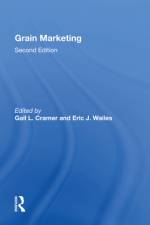
Grain Marketing explores the basic principles and concepts of grain marketing and analyzes the futures and options markets, agricultural policy, grain pricing, and grain marketing structures in the United States, Canada, and the European Community. This text helps students understand the world grain system, trains them to use futures and options, and explains how grain is marketed locally and internationally. The world grain industry affects our daily lives in ways both large and small. It influences what we consume for breakfast, lunch, and dinner and provides at least 40 percent of the world's food supply. The U.S. and world grain industry affects our income, our investments, and global politics. As world population and therefore global demand for grain grows, the volume handled by the U.S. grain industry will continue to expand, demanding not only improvement in crop yields but also continued efforts to compete in increasingly sophisticated international markets. This newly revised, fully updated text provides a practical, comprehensive overview of grain marketing that is useful to both the upper-level undergraduate studying agricultural marketing and the professional working in the industry. Grain Marketing blends several approaches to the study of commodity marketing, combining the institutional, functional, market structure, and analytical and behavioral systems approach to grain marketing. The book includes basic background information for newcomers to the subject of agricultural marketing as well as more rigorous treatment of advanced subjects. The books overall plan allows the student to follow the movement of the major grains, corn, wheat, and soybeans from farm production to final consumption. Along the way, it provides a detailed description of the worldwide system, encompassing local and multinational corporations, state agencies and boards, national trade and agricultural policies, and the cash and futures markets that serve this industry.
Mycotoxins are secondary metabolites produced by fungi in a wide range of foods (cereals, peanut, tree nuts, dried fruits, coffee, cocoa, grapes, spices...) both in the field and after harvest, particularly during storage. They can also be found in processed foods of plant origin, or by transfer, in food products of animal (milk, eggs, meat and offal). Mycotoxins are of major concern since they can cause acute or chronic intoxications in both humans and animals which are sometimes fatal. Many countries, particularly in Europe, have set maximum acceptable levels for mycotoxins in food and feed.The book reviews the latest literature and innovations on important aspects of mycotoxins, e.g. mycotoxin producing fungi and the related ecosystems, mycotoxin occurrence, toxicity, analysis and management. Quantitative estimation of impacts of climate change on mycotoxin occurrence have been made recently, using predictive modelling. There is also a growing interest in studying the occurrence and toxicity of multiple mycotoxins in food and feed, including emerging or modified forms of mycotoxins. Innovative tools have also developed to detect and quantify toxinogenic fungi and their toxins. In order to reduce the use of chemicals that are harmful to the environment and health of consumers, alternative methods of prevention and decontamination of mycotoxins were tested in pre- and post-harvest, using microorganisms, natural substances or radiation treatments.
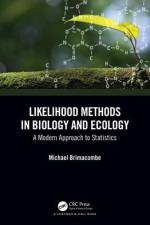
This book emphasizes the importance of the likelihood function in statistical theory and applications and discusses it in the context of biology and ecology. Bayesian and frequentist methods both use the likelihood function and provide differing but related insights. This is examined here both through review of basic methodology and also the integr
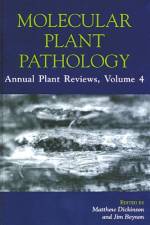
For the past century, it has been known that plants possess genetically inherited resistance mechanisms to combat phytopathogenic fungi, bacteria and viruses, and that the relationship between pathogens and host plants is highly specialized and complex. As techniques of molecular biology have developed over the past 25 years, our understanding of the molecular basis of these relationships has advanced significantly.Molecular Plant Pathology, the fourth volume in the Annual Plant Reviews series, discusses the ways by which molecular plant pathology can be exploited to control disease and thereby maximize crop yield. It covers the three main areas of plant pathology: how pathogens cause disease; (the molecular signaling that takes place between plant and pathogen); how plants resist disease (what is known about resistance genes, apoptosis, and systemic-acquired resistance); and how molecular plant pathology can be exploited to control disease.Since disease control is directly related to increased crop production, the topics covered in this book are of major economic significance. This economic importance coupled with the clear, concise coverage of the materials, render Molecular Plant Pathology an extremely useful reference for academic and industrial researchers in plant pathology and other related areas of study.Features
Explore the Health Effects of Fluoride PollutionFluoride in Drinking Water: Status, Issues, and Solutions establishes the negative impacts of naturally occurring fluoride on human health and considers the depth and scope of fluoride pollution on an international scale. The book discusses current global water quality and fluoride-related issues and draws overall awareness to the problems associated with fluoride in drinking water. Utilizing recent scientific studies to examine the current status of fluoride pollution, it provides a fundamental understanding of fluorosis, describes health problems associated with fluorosis, and discusses viable scientific solutions. The book places special emphasis on India, Africa, China, and other countries deeply affected by fluoride pollution.A single, comprehensive source covering health issues related to fluoride and its effect on humans, this book: Compiles information from scientific literature on the state of fluoride pollution Characterizes the human impacts of fluorosis Provides a comparative evaluation of technologies used for defluoridation Gives a comprehensive account of human health effects with appropriate scientific descriptions and photographs Includes detailed descriptions on the geochemistry of fluoride entry into groundwater aquifers Presents a case study that deals with the successful removal of fluoride from drinking water A vital resource for environmental and public health officials as well as academic researchers in the area, Fluoride in Drinking Water: Status, Issues, and Solutions covers human health issues associated with fluoride-rich water and describes relevant techniques for defluoridation that can be used to overcome the stress, issues, and challenges of natural fluoride in drinking water.
Power Cable Technology provides a precise understanding of the design, manufacture, installation, and testing of a range of electric power cables--from low-voltage, 1,000/1,100V cables to extra-high-voltage, 400kV cables--with reference to future trends in the industry. The authors' mantra is: know your cable. Thus, the book begins with a comprehensive overview of power cable design and manufacturing through the ages, and then: Describes the characteristics of the materials currently used in the production of various power cables Explains how to calculate the die orifice for drawing wires, how tolerance in manufacturing affects material weight and consumption, and how and why lubricants are used Addresses the formation, stranding, and insulation of the electrical conductors, as well as the sheathing, armouring, and protective covering of the power cables Delivers an in-depth discussion of quality systems, quality control, and performance testing Covers the many nuances of cable installation, including laying, jointing, and terminating Throughout, the authors emphasise consonance between design theory and practical application to ensure production of a quality power cable at a reasonable cost. They also underscore the importance of careful handling, making Power Cable Technology a must read for power cable engineers and technicians alike.
Overdispersion is commonly encountered in modelling data. Statisticians and those working in the application areas need to know how to deal with it, and this book provides a complete source for identifying and handling overdispersion. With increasing focus on modelling in the applied sciences, this book is a welcome addition to the modelling literature for researchers and practitioners working in biometrics, medicine, and epidemiology. It is also excellent supplementary reading for a graduate or graduate-level course in statistical modelling.
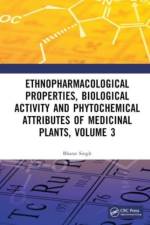
This book covers the morphological characteristics, ethnopharmacological properties, isolated and identified structurally diverse secondary metabolites, biological and pharmacological activities of medicinal plants. Ethnopharmacology is the systematic study of folklore/traditional medicines, which continue to provide innovative drugs and lead molecules for the pharmaceutical industry. In fact, plant secondary metabolites, used as a single molecule or as a mixture, are medicines that can be effective and safe even when synthetic drugs fail. Therefore, the description of these secondary metabolites as well as methods for the targeted expression and/or purification is of high interest.In addition to surveying the morphological features, ethnopharmacological properties, biological and pharmacological activities, and studies of clinical trials, this book offers a comprehensive treatment of 56 plant species. It also presents the cell culture conditions and various methods used for increasing the production of medicinally important secondary metabolites in plant cell cultures.This volume: - Provides the morphological features, habitat, and distribution of each species of 56 genera selected from the different regions of the world. - Presents ethnopharmacological applications of various species of included 56 genera of this book. Different species of 56 genera are used for ethnomedicinal uses by the people of various countries of the world.- Describes structures of various secondary metabolites identified in 56 plant species together with their biological and pharmacological activities.- Discusses strategies of secondary metabolites production, such as organ culture, pH, elicitation, hairy root cultures, light, and mutagenesis.- Provides a complete overview of each species of 56 genera and complete information up to year 2022.Ethnopharmacological Properties, Biological Activity and Phytochemical Attributes of Medicinal Plants is an important book for undergraduate and postgraduate students, pharmacologists, phytochemists, Ayurvedic practitioners, medical doctors, and biotechnologists interested in the ethnopharmacological properties, phytochemistry, and biological and pharmacological activities of plants.
This book is the first of a series of volumes on Built Heritage and Geotechnics, intended to reach a wide audience: professionals and academics in the fields of civil engineering, architecture, restoration and cultural heritage management, and even the wider public. The present volume provides essential information on the history of the construction of the Ghirlandina Tower in Modena, the techniques involved and the restoration works, and proves how the interaction with the supporting soil may explain the reasons behind the corrections that masons implemented during construction, the pattern of settlements suffered by the tower and the Cathedral and their mutual interaction.In addition to the above, there is one particular aspect that should capture the interest of a wide readership: in 1997 the Cathedral and the Ghirlandina Tower were included in the UNESCO World Heritage List, and it was recognized that the creation process shared by Lanfranco and Wiligelmo is a masterpiece of human creativity, in which a new dialectical relationship between architecture and sculpture was created in Romanesque art. The Modena complex bears exceptional witness to the cultural traditions of the 12th century in northern Italy's urban society, its organization, religious character, beliefs, and values all being reflected in the history of the buildings.
This book focuses on the development of exoskeletons, using modern design tools such as CAD, CAE and CAM software to aid engineers in choosing materials and designing the product, in testing, prototyping, manufacturing and industrial development.
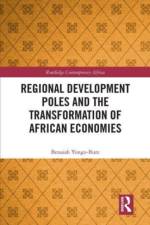
This book argues that the development of capital goods manufacturing industries in four relatively large African economies will create regional development poles, from which industrialization will spread to the smaller African countries. In this book, Benaiah Yongo-Bure explains the need for capital goods industries in Africa and shows how manufacturing can transform economies. He outlines the roles of the Democratic Republic of Congo (DRC), Ethiopia, Nigeria, and South Africa as potential regional development poles, showing how the existing economies, natural resources, and populations of these countries make them ideal candidates, while also considering possible challenges to industrialization. Finally, the author assesses what major infrastructural development is needed to link the countries and regions to increase the spread effects of economic growth. This book will be of interest to scholars and policy makers in economic development and regional development in Africa.
The handbook presents a compendium of the diverse and growing approaches to place from leading authors as well as less widely known scholars, providing a comprehensive yet cutting-edge overview of theories, concepts and creative engagements with place that resonate with contemporary concerns and debates. The volume moves away from purely western-based conceptions and discussions about place to include perspectives from across the world. It includes an introductory chapter, which outlines key definitions, draws out influential historical and contemporary approaches to the theorisation of place and sketches out the structure of the book, explaining the logic of the seven clearly themed sections. Each section begins with a short introductory essay that provides identifying key ideas and contextualises the essays that follow. The original and distinctive contributions from both new and leading authorities from across the discipline provide a wide, rich and comprehensive collection that chimes with current critical thinking in geography. The book captures the dynamism and multiplicity of current geographical thinking about place by including both state-of-the-art, in-depth, critical overviews of theoretical approaches to place and new explorations and cases that chart a framework for future research. It charts the multiple ways in which place might be conceived, situated and practised. This unique, comprehensive and rich collection will be an essential resource for undergraduate and graduate teaching, for experienced academics across a wide range of disciplines and for policymakers and place-marketers. It will provide an invaluable and up-to-date guide to current thinking across the range of disciplines, such as Geography, Sociology and Politics, and interdisciplinary fields such as Urban Studies, Environmental Studies and Planning.
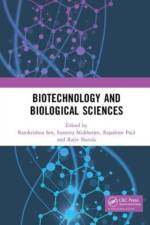
The application of Biotechnology dates back to the early era of civilization, when people first started to cultivate food crops. While the early applications are certainly still relevant, modern biotechnology is primarily associated with molecular biology, cloning and genetic engineering not only to increase the yield and to improve the quality of the crop but also its potential impact has touched upon virtually all domains of human interactions. Within the last 50 years, several key scientific discoveries revolutionized the biological sciences that facilitated the rapid growth of the biotechnology industry. 'Biotechnology and Biological Sciences III' contains the contributions presented at the 3rd International Conference on Biotechnology and Biological Sciences (BIOSPECTRUM 2019, Kolkata, India, 8-10 August 2019). The papers discuss various aspects of Biotechnology such as: microbial biotechnology, bioinformatics and drug designing, innovations in pharmaceutical industries and food processing industries, bioremediation, nano-biotechnology, and molecular-genetics, and will be of interest to academics and professionals involved or interested in these subject areas.
Thermal Energy Waste Recovery Technologies and Systems comprehensively covers thermal energy recovery technologies and systems. It considers thermal sources, working principles, products, application status, prospects, and challenges.In an effort to achieve energy security, carbon neutralization, and sustainable development, this book discusses waste recovery from thermal energy technologies and systems from varying temperatures. This book features case studies of advanced multi-generation systems for different industrial applications.This book is intended for senior undergraduate and graduate mechanical engineering students taking courses in thermal energy, energy systems, and renewable energy, as well as researchers studying thermal energy utilization, low-carbon technologies, thermal dynamic analysis, and energy system design.
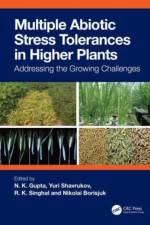
In the last 50 years, classical breeding has played a significant role in achieving higher crop productivity, but major crops have reached a plateau in their yield potential. Therefore, the current focus for sustainable intensification of agriculture is the use of biotechnological approaches to enhance the yield potential by combating the yield losses that occur due to abiotic stresses. The abiotic stresses are governed by multigenes, and therefore, a holistic approach is needed to get success in imparting stress tolerance to enhance the yield potential of our crops.Plants face multiple stress conditions during their life stages and adopt several physiological, biochemical, and molecular strategies to combat that, which are sometimes not sufficient to survive, particularly crop plants. The climate change era has created a need to understand the abiotic stresses in a holistic way. Therefore, a deep understanding of multiple abiotic stress mechanisms is necessary to develop crops tolerant to climate fluctuation.With this background, the outline of this book covers the following features: - Agriculture sustainability and molecular understanding of multiple stress tolerance- Systems biology for life-history strategies, conventional and genomic approaches above and underground- Genetic resources and molecular understanding of seed priming- Molecular signaling compounds, cell signal transduction, and crosstalk between plant growth hormones and regulators- Roles Transcription factors, LEA proteins, reactive oxygen species and alternative oxidase- Genome editing, metabolomics, and 'omics' technologies
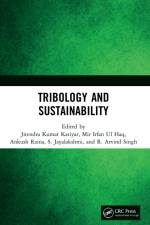
Tribology and Sustainability brings a vision of promoting a greener, cleaner and eco-friendly environment by highlighting sustainable solutions in tribology via the development of self-lubricating materials, green additives in lubricants, natural fibre-reinforced materials and biomimetic approaches. Backed by supporting schematic diagrams, data tables and illustrations for easy understanding, the book focuses on recent advancements in tribology and sustainability. Global sustainability and regional requirements are addressed through chapters on natural composites, green lubricants, biomedical systems and wind energy systems, with a dedicated chapter on a global sustainability scenario.FEATURESHighlights sustainability via new tribological approaches and how such methods are essentialCovers the theoretical aspects of various tribological topics concerning mechanical and material designs for energy-efficient systemsIncludes practical global sustainability based on the regional requirements of tribological research and sustainable impactReviews the tribology of green lubricants, green additives and lightweight materialsDiscusses topics related to biomimetics and biotribologyTribology and Sustainability will assist researchers, professionals and graduate students in tribology, surface engineering, mechanical design and materials engineering, including mechanical, aerospace, chemical and environmental engineering.
Sustainable Technologies for Water and Wastewater Treatment discusses relevant sustainable technologies for water and wastewater treatment pertaining to a nanoscale approach to water treatment and desalination, membrane-based technologies for water recovery and reuse, the energy and water nexus, degradation of organic pollutants, nascent technologies, bio and bio-inspired materials for water reclamation and integrated systems, and an overview of wastewater treatment plants. The book focuses on advanced topics including in situ generation of hydroxyl radicals, which can aid in the indiscriminate oxidation of any contaminant present in wastewater, making advanced oxidation processes commercially viable.Features:A comprehensive review of current and novel water and wastewater treatment technologies from a sustainability perspectiveAll the sustainable technologies, such as desalination, wastewater treatment, advanced oxidation processes, hydrodynamic cavitation, membrane-based technologies, sonosorption, and electrospun fibersDiscussion on reference materials for important research accomplishments in the area of water and environmental engineeringTheoretical aspects covering principles and instrumentationA summary on sustainability, including life cycle assessment (LCA), energy balance and large-scale implementation of advanced techniquesThis book is aimed at professionals, graduate students, and researchers in civil, chemical, environmental engineering, and materials science.a
Ever-increasing population growth, combined with ongoing climate change signals that agriculture will face great challenges in ensuring global food security by 2050. Sustainable Agriculture: Adaptation Strategies to Address Climate Change by 2050 presents in-depth analysis, case studies, and adaptation options.
Sundarbans, a UNESCO heritage site, is the world's largest single chunk of mangroves distributed on the Indian and Bangladesh coasts. The mangroves and associated ecosystems are one of the most fertile ecosystems of the earth. Sundarbans Mangrove Systems: A Geo-Informatics Approach portrays different perspectives of studying Sundarbans and mangroves using geospatial analysis. This book highlights the major issues with the Sundarbans mangrove forest, its future conservation strategies and its ecological importance using geo-informatics technology. It explains the usage of remote sensing data for providing information about the present state of mangroves and their tropic status, including assessment in terms of extent, density of community, condition, diversity, identifying potential habitats and heterogeneity. Furthermore, it discusses the use of hyperspectral remote sensing data for species level classification of mangroves, community zonation for biodiversity assessment and for preparing management plans for conservation.KEY FEATURESExclusively covers the ecological state of Sundarbans (mangrove systems) through geo-informatic studiesDescribes the application of a combination of geomorphological, biogeochemical and remote sensing methods to the analysis of temporal changesIncludes environmental factors affecting the health and decline of mangrovesCovers biodiversity and ecological controls in mangroves ecosystemsDiscusses a remote sensing approach for tropical forested island and mangroves mappingThis book is aimed at graduate students and researchers in environmental sciences, ecology, marine sciences, biology, geosciences and GIS/remote sensing areas.
Smart Cyber Physical Systems: Advances, Challenges and OpportunitiesISBN: 9780367337889Cyber Physical Systems (CPS) are the new generation of collaborative computational entities, with a prime focus on integration of the physical world and cyber space. Through a feedback mechanism, the system adapts itself to new conditions in real time. The scope of this book includes research experience by experts in CPS infrastructure systems, incorporating sustainability by embedding computing and communication in day-to-day applications. CPS, integrated with Blockchain, Artificial Intelligence, Internet of Things, Big Data, Cloud Computing and Communication, lay a foundation for the fourth industrial revolution, Industry 4.0. This book will be of immense use to practitioners in industries with a focus on autonomous and adaptive configuration, and on optimization, leading to increased agility, elasticity and cost effectiveness.The contributors of this book include renowned academics, industry practitioners and researchers. It offers a rigorous introduction to the theoretical foundations, techniques and practical solutions, through case studies. Building CPS with effective communication, control, intelligence and security is discussed in terms of societal and research perspectives.The objective of this book is to provide a forum for researchers and practitioners to exchange ideas and to achieve progress in CPS by highlighting applications, advances and research challenges. It is highly recommended to be used as a reference book for graduate and post-graduate level programmes in universities, with a focus on research in computer science-related courses.
Research and Evidence in Software Engineering: From Empirical Studies to Open Source Artifacts introduces advanced software engineering to software engineers, scientists, postdoctoral researchers, academicians, software consultants, management executives, doctoral students, and advanced level postgraduate computer science students.This book contains research articles addressing numerous software engineering research challenges associated with various software development-related activities, including programming, testing, measurements, human factors (social software engineering), specification, quality, program analysis, software project management, and more. It provides relevant theoretical frameworks, empirical research findings, and evaluated solutions addressing the research challenges associated with the above-mentioned software engineering activities.To foster collaboration among the software engineering research community, this book also reports datasets acquired systematically through scientific methods and related to various software engineering aspects that are valuable to the research community. These datasets will allow other researchers to use them in their research, thus improving the quality of overall research. The knowledge disseminated by the research studies contained in the book will hopefully motivate other researchers to further innovation in the way software development happens in real practice.
Re-envisioning Remote Sensing Applications: Perspectives from Developing Countries aims at discussing varied applications of remote sensing, with respect to upcoming technologies with diverse themes. Organized into four sections of overlapping areas of research, the book covers chapters with themes related to agriculture, soil and land degradation studies; hydrology, microclimates and climate change impacts; land use/land cover analysis applications; resource analysis and bibliometric studies, culminating with future research agenda. All the topics are supported via case studies and spatial data analysis. Features:Provides the applications of remote sensing in all fields through varied case studies and spatial data analysis Includes soil and land degradation, microclimates, and climate change impactsCovers remote sensing applications in broad areas of agriculture, hydrology, land use/land cover change and resource analysis Discusses usage of GPS-enabled smartphones and digital gadgets used for mapping and spatial analysisExplores future research agenda for applications of remote sensing in post-COVID scenarioThis book is of interest to researchers and graduate students in environmental sciences, remote sensing, GIS, agricultural scientists and managers, forestry scientists and managers, and water resources scientists and managers.
This book is a compilation of research papers and presentations from the Fourth Annual International Conference on Data Science, Machine Learning and Blockchain Technology (AICDMB 2023, Mysuru, India, 16-17 March 2023).
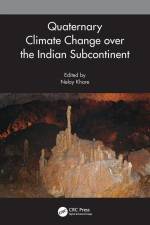
Quaternary studies provide the essential context for evaluation of what is happening with the earth's climate today, and to clarify our vulnerability to hazardous natural processes. This book covers scientific aspects of past and present climatic changes of the quaternary period focused on the Indian subcontinent via response of modern environmental conditions on climate proxies, reconstruction of paleoclimate, paleomonsoon, glacial geology, climate variabilities using dendrochronology, cave deposits including quaternary tectonics and climate change over the Himalayan region. It consists of data generated from different landforms including lakes, caves, rivers, swamps, pits, and trenches using different proxies. Aimed at researchers, graduate students, professionals in geology, geography and environmental sciences, micropaleontology, and Quaternary climate change, this book:Studies Quaternary climate using various proxies in varied environments on the Indian sub-continent Covers pertinent historical and environmental archives to understand the current climate scenarioDiscusses the impact of climate change on biotic and abiotic components Includes thorough review of paleoclimate change studies Devotes significant space to glacial geology and all glacial climate proxies
Abonner på vårt nyhetsbrev og få rabatter og inspirasjon til din neste leseopplevelse.
Ved å abonnere godtar du vår personvernerklæring.