









![Psychology and Social Sanity af Hugo M]nsterberg](https://cdnbackdoor.tales.as/thumbnail/150x225/00050/53322/cover.1498149198.jpg)













Gjør som tusenvis av andre bokelskere
Abonner på vårt nyhetsbrev og få rabatter og inspirasjon til din neste leseopplevelse.
Ved å abonnere godtar du vår personvernerklæring.Du kan når som helst melde deg av våre nyhetsbrev.

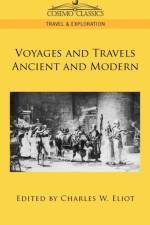
Of public diversions they have but one sort, and in all their meetings the same is still exhibited. Young men, such as make it their pastime, fling themselves naked and dance amongst sharp swords and the deadly points of javelins. From habit they acquire their skill, and from their skill a graceful manner; yet from hence drawn no gain or hire: though this adventurous gaiety has its reward, namely, that of pleasing the spectators.-from "Germany," by TacitusThe preeminent American educator of the 19th century, CHARLES WILLIAM ELIOT (1834-1926) believed that a sound liberal education could be achieved not through textbooks but by exploring firsthand the great books and great ideas of Western civilization. (Eliot knew a good education when he saw one: during his time as president of Harvard University, from 1869 till 1909, he transformed the school from a regional college to the preeminent educational institution in the United States.)In this 1909 collection-part of his 50-volume Harvard Classics, his dream library at the foundation of enlightened scholarship-Eliot gathers essential writings of ethnography and exploration. In their own voices, hear:. Herodotus, "the father of story-tellers," on the gods of ancient Egypt. Tacitus, in the "front rank" of ancient historians, on the Teutonic tribes of the Roman era. Sir Francis Drake, "the greatest of the naval adventurers of England of the time of Elizabeth," relates his historic 16th-century journey around the Straits of Magellan. Sir Walter Raleigh, "courtier and statesman, soldier and sailor, scientist and man of letters," tells of his 1594 discovery of Guiana. and others.
[T]he history of evolution in America... has been from the cosmic to the organic, has passed through the logical phases from supernatural election to natural selection.-from "The Forerunners of Evolutionism"From his perch at the beginning of the enlightened and scientific 20th century, Woodbridge Riley surveys the history of intellectualism in America. First published in 1915 and still delightfully informative, included is a comprehensive overview of philosophical movements in the United States:· Puritanism (of the early colonials)· Early Idealism (of Samuel Johnson and Jonathan Edwards)· Deism (of Franklin and Jefferson)· Materialism (and the influence of the French)· Realism (and the influence of the Scottish)· Transcendentalism (of Emerson, et. al.)· Evolutionism (of John Fiske and James Mark Baldwin)· Modern Idealism (and the influence of the Germans)· Pragmatism (of John Dewey and William James)· Modern Realism (of the scientific 20th century)From how we as a would-be nation conceived of God's place in politics before the Revolution to how we think about modern art and modern science, this is an invigorating read.American scholar WOODBRIDGE RILEY (1869-1933) was professor of philosophy at Vassar College and lecturer at the Sorbonne. He is also the author of The Founder of Mormonism (1903), and was a contributor to the four-volume Cambridge History of English Literature (1917-1921).
[S]urely that need not and ought not to be the whole of Christmas-only a single day or generosity, ransomed from the dull servitude of a selfish year,-only a single night of merry-making, celebrated in the slave-quarters of a selfish race! If every gift is the token of a personal thought, a friendly feeling, an unselfish interest in the joy of others, then the thought, the feeling, the interest, may remain after the gift is made.-from "Christmas-Giving and Christmas-Living"A popular pastor and poet at the turn of the 20th century, Henry Van Dyke sings the praises of acts of kindness and generosity, of good will and good cheer, and of the spirit of Christmas. First published in 1905 this charming volume includes:Ø a dream-story: The Christmas AngelØ a little essay: Christmas-Giving and Christmas-LivingØ a short Christmas sermon: Keeping ChristmasØ two Christmas prayers: For the Home and For Lonely FolksAlso available from Cosimo Classics: Van Dyke's The Spirit of AmericaOF INTEREST TO: lovers of ChristmasAmerican author and clergyman HENRY VAN DYKE (1852-1933) was pastor of Brick Presbyterian Church in New York City from 1883 to 1899 and professor of English literature at Princeton University from 1899 to 1923. He wrote numerous books of poetry and devotion, including Little Rivers (1895), The Other Wise Man (1896), and Fisherman's Luck (1899).
The mighty genius of Napoleon has so overshadowed all those beneath him that they have not received their due praise, nor their proper place in history.... But with weak men Napoleon never could have unsettled Europe, and founded and maintained his Empire. The Marshals who led his armies, and governed his conquered provinces, were men of native strength and genius; and as they stand grouped around their mighty chief, they form a circle of military leaders, the like of whom the world has never at one time beheld.-from the PrefaceWithin the reign of Napoleon still in the living memory of some, American author J. T. Headley took on the daunting task of rehabilitating the names and deeds of the emperor's righthand men, virtuoso military strategists and men of dauntless action eclipsed only by the brilliance of their leader. Gathered from essays that appeared in magazines in 1846, this striking two-volume work-notable in itself for being the first books published by the now legendary Scribner and Co.-offers an extraordinary and unparalleled look at Napoleon's most trusted generals.After a brief defense of Napoleon against British historians and an analysis of the emperor's character, Volume I introduces us to:. Marshal Berthier, Duke of Neufchatel, Prince of Wagram, whom Headley calls Napoleon's Boswell. Marshal Lannes, Duke of Montebello, a man of humble birth whose "reckless daring and unconquerable resolution" caught Napoleon's eye. Marshal Macdonald, Duke of Tarentum, as bold and steely as Bonaparte himself. as well as Augereau, Davoust, St. Cyr, Moncey, Mortier, and Soult.OF INTEREST TO: military historians, readers of biographies, students of the Napoleonic WarsAmerican writer and journalist JOEL TYLER HEADLEY (1813-1897) was an editor at the New York Tribune and wrote extensively on historical matters. Among his many books are Washington and his Generals (1847), Life of Cromwell (1848), and the bestselling Life of Washington (1857).
Abonner på vårt nyhetsbrev og få rabatter og inspirasjon til din neste leseopplevelse.
Ved å abonnere godtar du vår personvernerklæring.