

Gjør som tusenvis av andre bokelskere
Abonner på vårt nyhetsbrev og få rabatter og inspirasjon til din neste leseopplevelse.
Ved å abonnere godtar du vår personvernerklæring.Du kan når som helst melde deg av våre nyhetsbrev.

A "great storehouse of legends and traditions" according to translator E.A. Wallis Budge, 'The Kebra Nagast' most likely dates back to the sixth century AD, and provides an alternative view of many biblical stories. According to this ancient text, the kings of Ethiopia were descended from Solomon, King of Israel, and the Queen of Sheba; the Ark of the Covenant had been brought from Jerusalem to Aksum by Meyelek, the son of Solomon and the Queen of Sheba; and the God of Israel had transferred his place of abode on earth from Jerusalem to Aksum, the ecclesiastical and political capital of Ethiopia.". . .[O]nly in the Kebra Nagast, and not in the Bible. . . the bold assertion is made. . . that the Ark had gone from Jerusalem to Ethiopia."". . . [H]ow could the most important Biblical object in the world end up in the heart of Africa. . . ? The Kebra Nagast with a great deal of weight and historical authenticity. . . offers a clear answer to this question. . . as Ethiopia's claim to be the last resting place of the lost Ark remains unchallenged. . ." ". . . [T]he Kebra Nagast's audacious claim of a massive cover-up. . . [and] all information about the tragic loss of the Ark during Solomon's reign had been suppressed, which is why no mention is made of it in the Scriptures." ". . . a great epic. . . a remarkable document. . . erected above a solid foundation of historical truth."--Graham Hancock"The Sign and the Seal"E.A. WALLIS BUDGE was the curator of Egyptian and Assyrian Antiquities at the British Museum and he collected a large number of manuscripts. He is perhaps best known for translating "The Egyptian Book of The Dead," but he also created books of translated hieroglyphs, Egyptian religion, mythology, and magic. He was knighted in 1920.
A "great storehouse of legends and traditions" according to translator E.A. Wallis Budge, 'The Kebra Nagast' most likely dates back to the sixth century AD, and provides an alternative view of many biblical stories. According to this ancient text, the kings of Ethiopia were descended from Solomon, King of Israel, and the Queen of Sheba; the Ark of the Covenant had been brought from Jerusalem to Aksum by Meyelek, the son of Solomon and the Queen of Sheba; and the God of Israel had transferred his place of abode on earth from Jerusalem to Aksum, the ecclesiastical and political capital of Ethiopia.". . .[O]nly in the Kebra Nagast, and not in the Bible. . . the bold assertion is made. . . that the Ark had gone from Jerusalem to Ethiopia."". . . [H]ow could the most important Biblical object in the world end up in the heart of Africa. . . ? The Kebra Nagast with a great deal of weight and historical authenticity. . . offers a clear answer to this question. . . as Ethiopia's claim to be the last resting place of the lost Ark remains unchallenged. . ." ". . . [T]he Kebra Nagast's audacious claim of a massive cover-up. . . [and] all information about the tragic loss of the Ark during Solomon's reign had been suppressed, which is why no mention is made of it in the Scriptures." ". . . a great epic. . . a remarkable document. . . erected above a solid foundation of historical truth."--Graham Hancock"The Sign and the Seal"E.A. WALLIS BUDGE was the curator of Egyptian and Assyrian Antiquities at the British Museum and he collected a large number of manuscripts. He is perhaps best known for translating "The Egyptian Book of The Dead," but he also created books of translated hieroglyphs, Egyptian religion, mythology, and magic. He was knighted in 1920.
Ever want to know the secrets of how the successful became the successful? Gathered together in "Success and How to Attain It" are the thoughts of some of America's preeminent 19th century thinkers, who, at the instigation of General Daniel Butterfield, came together for a series of lectures at Union College from 1892 to 1895.
Does individuality survive death? Does death mean the end of our existence? The answers are yes and no. The message of this classic book is that individuality does indeed survive death, and that death is merely the beginning of a further chapter in human evolution. Told here are many eyewitness experiences had by the author with many great mediums in undertaking her quest to study Spiritualism. To tell her story, the author recounts words she heard at séances in a vivid, haunting manner to convey the stories of something beyond death. These experiences show that death is not the end and not something to be feared. Florence Marryat was a 19th-century novelist. She edited the journal London Society, wrote stage plays, and acted in her own company. She also traveled throughout England and America on lecture tours, and wrote more than 100 short stories and nearly 80 novels. In addition to 'There Is No Death", she wrote two other books on Spiritualism.
In this brief treatise, Carus traces the roots of his belief in the philosophical basis for mathematics and analyzes that basis after a historical overview of Euclid and his successors. He then examines his base argument and proceeds to a study of different geometrical systems, all pulled together in his epilogue, which examines matter, mathematics, and, ultimately, the nature of God.
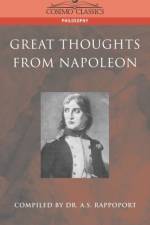
Compiled herein are the thoughts and quotes of Napoleon on everything from women ("A beautiful woman pleases the eye, a good woman pleases the heart; the first is a jewel, the second a treasure") to the reason to wage war ("We must either strike or be stricken") to humanity itself ("Humanity is grateful to those who astonish her").
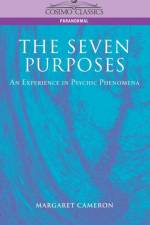
"The Twelve Lessons" offers a unique, early 20th century study of automatic writing, or involuntary, writing -- writing allegedly directed by a spirit or by the unconscious mind, is sure to challenge while it inspires. In 1918, Margaret Cameron wrote "The Seven Purposes", a report of the author's research on automatic, or involuntary, writing -- writing allegedly directed by a spirit or by the unconscious mind. As the author stated, these lessons were "personal communications coming through my pencil to various of my friends, the twelve impersonal communications." She adds, "They contain.an explanation of life, in modern terms fitted for our present understanding and intended to strengthen our constructive determination." She then concludes, "These repeated warnings of impending spiritual conflict.are given here word for word as they were given to me."
"The Seven Purposes" written by Margaret Cameron in 1918 is a report of personal experience in psychic phenomena. This is based on the author's research on automatic, or involuntary, writing--writing allegedly directed by a spirit or by the unconscious mind. This report has been arranged in three parts: first, the genesis and rapid development of the individual message; second, the Lessons; third, additional individual messages."The Seven Purposes" offers a unique, early-20th century study of automatic writing sure to challenge while it inspires. Margaret Cameron was a novelist and short story writer. She also wrote one-act plays and contributed to magazines.
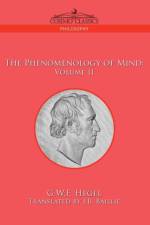
A sweeping investigation of how knowledge is obtained by means of absolute truth, including how the spirit reveals itself as absolute reality, The Phenomenology of Mind is an intellectual tour-de-force and represents a great philosophical works for the ages.Originally published in English in 1910, Hegel proffers his unique viewpoint that knowledge is not separated from, nor outside of, absolute reality - but that knowledge is itself reality, and posits that reality is mental and spiritual. Volume II includes: . [The Nature of] Free Concrete Mind: Spirit . Religion in General. Absolute KnowledgeAlso Available from Cosimo Classics: Hegel's The Phenomenology of Mind: Volume IGerman philosopher GEORG WILHELM FRIEDRICH HEGEL (1770-1831) was born in Stuttgart and studied at Tübingen, where his contemporaries included Schelling and the poet Hölderlin. As a philosophical disciple of Kant, Hegel was of the Idealist School of philosophers and remained an unparalleled influence on German philosophy throughout the 19th-century. Additional works by Hegel's include: The Objective Logic (1812-13), The Subjective Logic (1816), Encyclopedia of the Philosophical Sciencies in Outline (1817), and Philosophy of Right (1821).
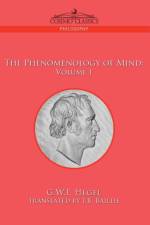
A sweeping investigation of how knowledge is obtained by means of absolute truth, including how the spirit reveals itself as absolute reality, The Phenomenology of Mind is an intellectual tour-de-force and represents a great philosophical works for the ages.Originally published in English in 1910, Hegel proffers his unique viewpoint that knowledge is not separated from, nor outside of, absolute reality - but that knowledge is itself reality, and posits that reality is mental and spiritual. Volume I includes: . On Scientific Knowledge in General. Intention and Method of the Argument of the Phenomenology. Consciousness and Self- Consciousness. [The Nature of] Free Concrete Mind: ReasonAlso Available from Cosimo Classics: Hegel's The Phenomenology of Mind: Volume IIGerman philosopher GEORG WILHELM FRIEDRICH HEGEL (1770-1831) was born in Stuttgart and studied at Tübingen, where his contemporaries included Schelling and the poet Hölderlin. As a philosophical disciple of Kant, Hegel was of the Idealist School of philosophers and remained an unparalleled influence on German philosophy throughout the 19th-century. Additional works by Hegel's include: The Objective Logic (1812-13), The Subjective Logic (1816), Encyclopedia of the Philosophical Sciencies in Outline (1817), and Philosophy of Right (1821).
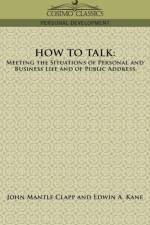
Conversation with family and intimate friends is somewhat in danger of becoming a little too informal, too laconic. Sometimes we take our own folks too much for granted. At its best, however, this is the acme of conversation, carrying the fullest meaning with least effort.-from "Social Conversation"This classic of developing confidence and poise when talking to absolutely anyone is full of sound, solid advice that is just as useful today as it was when it was first published in 1928. Two experts in public speaking-and private conversation-cover the full range of interpersonal communication:. at work: how to talk to your boss and your subordinates. in civic situations: how to communicate effectively at club and committee meetings. at home: how to enjoy personal conversations more. in public: giving a lively speech.The authors promise no "magic formula," just graceful guidance for becoming a more thoughtful and resolute speaker.JOHN MANTLE CLAPP (b. 1870) also wrote Doing Business by Letter and Language for Men of Affairs.EDWIN A. KANE was an instructor in public speaking at the College of the City of New York.
In the passage which I have just quoted from chap. xxxi. of ECCLESIASTICUS, it is said, that 'wine, measurably taken, and in season,' is a proper thing. This, and other such passages of the Old Testament, have given a handle to drunkards, and to extravagant people, to insist, that God intended that wine should be commonly drunk. No doubt of that. But, then, he could intend this only in countries in which he had given wine, and to which he had given no cheaper drink except water. If it be said, as it truly may, that, by the means of the sea and the winds, he has given wine to all countries, I answer that this gift is of no use to us now, because our government steps in between the sea and the winds and us.-from Advice to Young MenSon of an innkeeper, former soldier, champion of the working class, early anticorporate activist, and member of Parliament-William Cobbett experienced life to its fullest, and in this 1829 work, he shares the wisdom of his years with the youngsters of Britain. His advice encompasses:. why it's best to be civil but never servile. why education should be "by no means... despised". why a young man should not sport with the affections of a young woman. why it's best to avoid buying anything on credit. why it may be wise not to introduce servants into your household. why it's necessary to cure the vices of wives as soon as possible. why a father should strenuously oppose the smallpox vaccine for his children. why book-reading is wholly detrimental to young women. and much more.This quaint and charming lost classic will amuse readers young and old alike.Also available from Cosimo Classics: Cobbett's Rural Rides, Volumes 1 and 2.British journalist and radical WILLIAM COBBETT (1762-1835) published the weekly newsletter Political Register and is also the author of The Progress of a Ploughboy to a Seat in Parliament (1830).
Abonner på vårt nyhetsbrev og få rabatter og inspirasjon til din neste leseopplevelse.
Ved å abonnere godtar du vår personvernerklæring.