

Gjør som tusenvis av andre bokelskere
Abonner på vårt nyhetsbrev og få rabatter og inspirasjon til din neste leseopplevelse.
Ved å abonnere godtar du vår personvernerklæring.Du kan når som helst melde deg av våre nyhetsbrev.

The English reader has now, in the first three volumes of this Library, a complete collection of the historical writings of the Fathers, whose permanent value, as sources, is universally acknowledged. Several of them have never before appeared in English. The unavoidable delay in the publication of the third volume has been very annoying to the general editors and publishers, but the subscribers will be amply compensated by the addition of the writings of Rufinus, which were not promised in the prospectus. It is encouraging that this difficult and costly enterprise is beginning to be duly appreciated by competent judges on both sides of the Atlantic.
The English reader has now, in the first three volumes of this Library, a complete collection of the historical writings of the Fathers, whose permanent value, as sources, is universally acknowledged. Several of them have never before appeared in English. The unavoidable delay in the publication of the third volume has been very annoying to the general editors and publishers, but the subscribers will be amply compensated by the addition of the writings of Rufinus, which were not promised in the prospectus. It is encouraging that this difficult and costly enterprise is beginning to be duly appreciated by competent judges on both sides of the Atlantic.
The English reader has now, in the first three volumes of this Library, a complete collection of the historical writings of the Fathers, whose permanent value, as sources, is universally acknowledged. Several of them have never before appeared in English. The unavoidable delay in the publication of the third volume has been very annoying to the general editors and publishers, but the subscribers will be amply compensated by the addition of the writings of Rufinus, which were not promised in the prospectus. It is encouraging that this difficult and costly enterprise is beginning to be duly appreciated by competent judges on both sides of the Atlantic.
The English reader has now, in the first three volumes of this Library, a complete collection of the historical writings of the Fathers, whose permanent value, as sources, is universally acknowledged. Several of them have never before appeared in English. The unavoidable delay in the publication of the third volume has been very annoying to the general editors and publishers, but the subscribers will be amply compensated by the addition of the writings of Rufinus, which were not promised in the prospectus. It is encouraging that this difficult and costly enterprise is beginning to be duly appreciated by competent judges on both sides of the Atlantic.
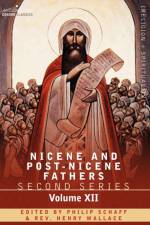
"The Council of Nicaea in 325 AD marked the beginning of a new era in Christianity. For the first time, doctrines were organized into a single creed. The Nicene and Post-Nicene Fathers did most of their writing during and after this important event in Church history. Unlike the previous era of Christian writing, the Nicene and Post-Nicene era is dominated by a few very important and prolific writers.In Volume IX of the 14-volume collected writings of the Nicenes and Post-Nicenes (first published between 1886 and 1889), readers will discover the early writings of Saint John Chrysostom, so named for his infamous gift with language. Mostly revered in the Eastern Orthodox Church, Chrysostom is more widely remembered for his writings that contributed to the Christian tradition of antisemitism and were exploited by the Nazis during World War II.In this book, he discusses his entry into the priesthood and offers sermons on a variety of topics, including demons and the proper conduct of Christians."
"The Council of Nicaea in 325 AD marked the beginning of a new era in Christianity. For the first time, doctrines were organized into a single creed. The Nicene and Post-Nicene Fathers did most of their writing during and after this important event in Church history. Unlike the previous era of Christian writing, the Nicene and Post-Nicene era is dominated by a few very important and prolific writers.In Volume VIII of the 14-volume collected writings of the Nicenes and Post-Nicenes (first published between 1886 and 1889), readers will find Saint Augustine¿s extensive treatment of the Psalms. Augustine took this book from the Old Testament and wove into it the revelation of Jesus as the savior of humanity. Through the skill of Augustine, it seems as though the Psalms had been written by an oracle who knew that eventually the messiah would come and wrote to pave the way.This volume is a valuable reference book for any Christian wishing to have the psalms illuminated and explained."
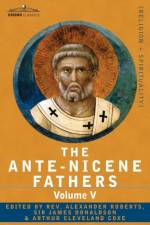
"The Council of Nicaea in 325 AD marked the beginning of a new era in Christianity. For the first time, doctrines were organized into a single creed. The Nicene and Post-Nicene Fathers did most of their writing during and after this important event in Church history. Unlike the previous era of Christian writing, the Nicene and Post-Nicene era is dominated by a few very important and prolific writers.In Volume V of the 14-volume collected writings of the Nicenes and Post-Nicenes (first published between 1886 and 1889), readers will discover Saint Augustine¿s rebuke of Pelagianism. This doctrine undermined Augustine¿s beliefs because it claimed that original sin did not exist. Since there was no original sin, humans were saved or lost based solely on their own will. This further meant that Jesus, while a great teacher and model human being, did not die to save humanity, negating a large portion of Christian doctrine. Augustine believed that salvation was available only by the grace of God working in conjunction with man¿s decision to live a good life.Spiritual seekers and students of history will find this work a thorough defense of Catholic theology."
"The Council of Nicaea in 325 AD marked the beginning of a new era in Christianity. For the first time, doctrines were organized into a single creed. The Nicene and Post-Nicene Fathers did most of their writing during and after this important event in Church history. Unlike the previous era of Christian writing, the Nicene and Post-Nicene era is dominated by a few very important and prolific writers.In Volume VII of the 14-volume collected writings of the Nicenes and Post-Nicenes (first published between 1886 and 1889), readers will discover Saint Augustine¿s commentaries on the writings of John and his first writings as a newly converted Christian. In the Soliloquies, Augustine reasons through his conversion, trying to justify his new faith; these are intensely personal journeys toward truth, the product of a thoughtful soul seeking comfort and reassurance.Spiritual seekers wavering in their faith may find both sections of this book helpful in exploring their beliefs."
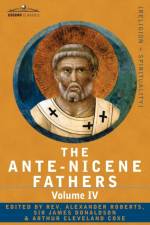
"The Council of Nicaea in 325 AD marked the beginning of a new era in Christianity. For the first time, doctrines were organized into a single creed. The Nicene and Post-Nicene Fathers did most of their writing during and after this important event in Church history. Unlike the previous era of Christian writing, the Nicene and Post-Nicene era is dominated by a few very important and prolific writers.In Volume IV of the 14-volume collected writings of the Nicenes and Post-Nicenes (first published between 1886 and 1889), readers will find Augustine¿s writings defending the Catholic church against the Manichaeans and the Donatists. Manichaeanism was a religion developed in Persia by the prophet Mani. According to this religion, creation has two parts: darkness and light. Light is God and has ten attributes. Opposing this, and coeternal with it, is darkness and its five attributes.Saint Augustine was originally a Manichaean, so his defense of Christianity against this religion comes from a deep understanding of its nature. Donatists were a group of believers who refused to forgive those who had renounced their faith during a time of persecution, which caused a schism in Christianity. In opposing these men, Augustine attempted to mend the rift.Those with an interest in ancient religions will find Augustine¿s writings on Manichaeanism one of the most important historical records of that religion¿s practices."
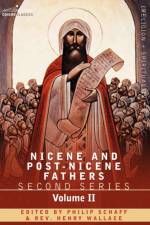
"The Council of Nicaea in 325 AD marked the beginning of a new era in Christianity. For the first time, doctrines were organized into a single creed. The Nicene and Post-Nicene Fathers did most of their writing during and after this important event in Church history. Unlike the previous era of Christian writing, the Nicene and Post-Nicene era is dominated by a few very important and prolific writers.In Volume III of the 14-volume collected writings of the Nicenes and Post-Nicenes (first published between 1886 and 1889), readers will find a complete collection of Saint Augustine¿s writings concerning Christian doctrine and ethics. On the Holy Trinity is one of his most important works, and Augustine spent a significant amount of time crafting it.Among the ethical considerations covered in the second half of the book readers will find essays on virginity, lying, patience, and proper care for the dead."
The English reader has now, in the first three volumes of this Library, a complete collection of the historical writings of the Fathers, whose permanent value, as sources, is universally acknowledged. Several of them have never before appeared in English. The unavoidable delay in the publication of the third volume has been very annoying to the general editors and publishers, but the subscribers will be amply compensated by the addition of the writings of Rufinus, which were not promised in the prospectus. It is encouraging that this difficult and costly enterprise is beginning to be duly appreciated by competent judges on both sides of the Atlantic.
"The Council of Nicaea in 325 AD marked the beginning of a new era in Christianity. For the first time, doctrines were organized into a single creed. The Nicene and Post-Nicene Fathers did most of their writing during and after this important event in Church history. Unlike the previous era of Christian writing, the Nicene and Post-Nicene era is dominated by a few very important and prolific writers.In Volume I of the 14-volume collected writings of the Nicenes and Post-Nicenes (first published between 1886 and 1889), readers will discover some of the writings of Saint Augustine, recognized as a great religious figure by many Christian sects. He is the patron of the Augustinian monks, who live their lives according to the values found in Augustine¿s writings.In the Confessions, Augustine speaks honestly about his sins as a youth and the saving grace he discovered when he found God. In the Letters, the true personality of Augustine shines through. He is one of the major theological resources of his time, and so through his correspondences, audiences can see what issues plagued the newly unified Christian religion and come to know the man who helped shape Western religion as we know it."
The English reader has now, in the first three volumes of this Library, a complete collection of the historical writings of the Fathers, whose permanent value, as sources, is universally acknowledged. Several of them have never before appeared in English. The unavoidable delay in the publication of the third volume has been very annoying to the general editors and publishers, but the subscribers will be amply compensated by the addition of the writings of Rufinus, which were not promised in the prospectus. It is encouraging that this difficult and costly enterprise is beginning to be duly appreciated by competent judges on both sides of the Atlantic.
The English reader has now, in the first three volumes of this Library, a complete collection of the historical writings of the Fathers, whose permanent value, as sources, is universally acknowledged. Several of them have never before appeared in English. The unavoidable delay in the publication of the third volume has been very annoying to the general editors and publishers, but the subscribers will be amply compensated by the addition of the writings of Rufinus, which were not promised in the prospectus. It is encouraging that this difficult and costly enterprise is beginning to be duly appreciated by competent judges on both sides of the Atlantic.
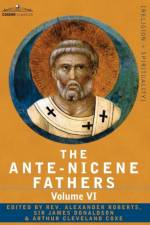
"One of the first great events in Christian history was the Council of Nicaea in 325 AD, convened to organize Christian sects and beliefs into a unified doctrine. The great Christian clergymen who wrote before this famous event are referred to as the Ante-Nicenes and the Apostolic Fathers, and their writings are collected here in a ten-volume set. The Ante-Nicenes lived so close to the time of Christ that their interpretations of the New Testament are considered more authentic than modern voices. But they are also real and flawed men, who are more like their fellow Christians than they are like the Apostles, making their words echo in the ears of spiritual seekers.In Volume VI of the 10-volume collected works of the Ante-Nicenes first published between 1885 and 1896, readers will find the writings of:¿ Gregory Thaumaturgus¿ Dionysius, pope of Alexandria¿ Julius Africanus, a Christian historian who wrote a history of the world from Creation to 221¿ bishops Antolius of Constantinople, Archelaus of Carchar, and Peter of Alexandria¿ Alexander of Cappadocia, bishop of Jerusalem until he was taken prisoner by the Romans¿ Theognostus, Pierius, and Thenas of Alexandria¿ Phileas, a philosopher from Thmuis¿ Pamphilus, patron of the library at Caesarea¿ Malchion, a rhetorician from Antioch¿ Alexander, bishop of Alexandria, who drew up the Acts during the Council of Nicaea¿ the martyr Methodius¿ Arnobius, an early Christian apologist"
This is a pre-1923 historical reproduction that was curated for quality. Quality assurance was conducted on each of these books in an attempt to remove books with imperfections introduced by the digitization process. Though we have made best efforts - the books may have occasional errors that do not impede the reading experience. We believe this work is culturally important and have elected to bring the book back into print as part of our continuing commitment to the preservation of printed works worldwide.
Abonner på vårt nyhetsbrev og få rabatter og inspirasjon til din neste leseopplevelse.
Ved å abonnere godtar du vår personvernerklæring.