





Gjør som tusenvis av andre bokelskere
Abonner på vårt nyhetsbrev og få rabatter og inspirasjon til din neste leseopplevelse.
Ved å abonnere godtar du vår personvernerklæring.Du kan når som helst melde deg av våre nyhetsbrev.

The English reader has now, in the first three volumes of this Library, a complete collection of the historical writings of the Fathers, whose permanent value, as sources, is universally acknowledged. Several of them have never before appeared in English. The unavoidable delay in the publication of the third volume has been very annoying to the general editors and publishers, but the subscribers will be amply compensated by the addition of the writings of Rufinus, which were not promised in the prospectus. It is encouraging that this difficult and costly enterprise is beginning to be duly appreciated by competent judges on both sides of the Atlantic.
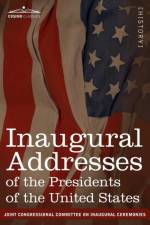
Through times of war and times of peace, times of prosperity and times of scarcity, through hours dark and bright, the continuation of the American government through legal, Constitutionally guaranteed means has never faltered. There can be no better representation of that marvel, unequalled in world history, than the inaugural addresses of incoming Presidents.This collection of the first speeches of each of the nation's new leaders, plus the subsequent inaugural words of reelected Presidents-Franklin Delano Roosevelt gave a record four inaugural addresses-gathers in one important volume the thoughts of every leader from George Washington to George Bush (41) as they entered office. Their words set the tenor for their administrations, and this firsthand document of American history is vital for understanding their work in the White House, and the legacy they left for the future ahead of them.
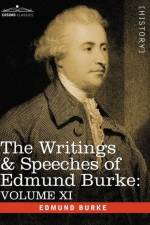
This 12-volume set contains the complete life works of EDMUND BURKE (1729-1797), Irish political writer and statesman. Educated at a Quaker boarding school and at Trinity College in Dublin, Burke's eloquence gained him a high position in Britain's Whig party, and he was active in public life. He supported limitations on the power of the monarch and believed that the British people should have a greater say in their government.In general, Burke spoke out against the persecutions perpetuated by the British Empire on its colonies, including America, Ireland, and India. Burke's speeches and writings influenced the great thinkers of his day, including America's Founding Fathers.In Volume XI, readers will find. "Report from the Committee of the House of Commons, Appointed to Inspect the Lords' Journals in Relation to Their Proceedings on the Trial of Warren Hastings, Esq.". "Speeches in the Impeachment of Warren Hastings, Esq."
First published in 1867, Capital, or Das Kapital, is the infamous treatise on economics and capitalism by Prussian revolutionary KARL MARX (1818-1883), who changed history with his 1848 book The Communist Manifesto.In this work, edited by Marx's friend, German philosopher FRIEDRICH ENGELS (1820-1895), Marx systematically analyzes the way the capitalist machine functions. In this academic work written for students and serious thinkers, he explores wages, competition, banking, rent, and the natural laws that seem to govern the development of capitalism without any oversight by the society in which it developed.Originally published in three volumes, Capital is here presented in five volumes. Volume III, Part 1 covers:. The Conversion of Surplus-Value into Profit and of the Rate of Surplus-Value into the Rate of Profit. Conversion of Profit into Average Profit. The Law of the Falling Tendency of the Rate of Profit. Transformation of Commodity-Capital and Money-Capital Into Commercial Capital and Financial Capital. Division of Profit Into Interest and Profits of Enterprise
Abonner på vårt nyhetsbrev og få rabatter og inspirasjon til din neste leseopplevelse.
Ved å abonnere godtar du vår personvernerklæring.