


















Gjør som tusenvis av andre bokelskere
Abonner på vårt nyhetsbrev og få rabatter og inspirasjon til din neste leseopplevelse.
Ved å abonnere godtar du vår personvernerklæring.Du kan når som helst melde deg av våre nyhetsbrev.

Julie A. Turnock tracks the use and evolution of special effects in 1970s filmmaking, a development as revolutionary to film as the form's transition to sound in the 1920s. Beginning with the classical studio era's early approaches to special effects, she follows the industry's slow build toward the significant advances of the late 1960s and early 1970s, which set the stage for the groundbreaking achievements of 1977. Turnock analyzes the far-reaching impact of the convincing, absorbing, and seemingly unlimited fantasy environments of that year's iconic films, dedicating a major section of her book to the unparalleled innovations of Star Wars and Close Encounters of the Third Kind. She then traces these films' technological, cultural, and aesthetic influence into the 1980s in the deployment of optical special effects as well as the "e;not-too-realistic"e; and hyper-realistic techniques of traditional stop motion and Showscan. She concludes with a critique of special effects practices in the 2000s and their implications for the future of filmmaking and the production and experience of other visual media.
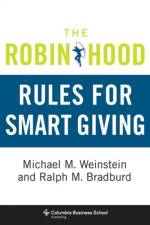
The Robin Hood Foundation is a charitable organization focused on alleviating poverty in New York City. Michael M. Weinstein is the foundation's senior vice president. In that role he developed its metrics-based approach, called "e;relentless monetization,"e; to ensure that the money the foundation receives and grants is used most effectively. Ralph M. Bradburd has served as long-time consultant to Robin Hood on matters of metrics. In this book Weinstein and Bradburd show how to implement the Robin Hood approach and explain how any nonprofit organizations or philanthropic donor can use it to achieve the greatest benefit from every philanthropic dollar. Drawing on their extensive knowledge, the authors devote specific chapters to the difficulties most frequently encountered by donors trying to measure the benefits of their initiatives.. This book provides straightforward, targeted advice for funding "e;smart"e; nonprofit programs.
August Turak is a successful entrepreneur, corporate executive, and award-winning author who attributes much of his success to living and working alongside the Trappist monks of Mepkin Abbey for seventeen years. As a frequent monastic guest, he learned firsthand from the monks as they grew an incredibly successful portfolio of businesses.Service and selflessness are at the heart of the 1,500-year-old monastic tradition's remarkable business success. It is an ancient though immensely relevant economic model that preserves what is positive and productive about capitalism while transcending its ethical limitations and internal contradictions. Combining vivid case studies from his thirty-year business career with intimate portraits of the monks at work, Turak shows how Trappist principles can be successfully applied to a variety of secular business settings and to our personal lives as well. He demonstrates that monks and people like Warren Buffett are wildly successful not despite their high principles but because of them. Turak also introduces other "e;transformational organizations"e; that share the crucial monastic business strategies so critical for success.
Using evolution as the template to understand growth, The Nature of Value takes a first-principles approach to explore the parallels between economic and ecological systems. Not only does Gogerty show how value is born out of tiny sparks of adaptive innovation, but he also explores the full scope of the economy as a complex network. He borrows from an array of disciplines-including anthropology, psychology, ecology, physics, sociology, and ethics-and, most revealing of all, examines how evolution's processes can help investors avoid risk and improve their allocation decisions. Starting with a look at how innovation creates value for firms, Gogerty considers the economic niches where companies compete and explores how they can create defensive moats to enhance their ability to survive. Throughout the book, Gogerty demonstrates how this ecological understanding of the economy can help allocators improve their performance, supporting his arguments with extensive data and years of practitioner experience from scientific, social, and economic disciplines. Gogerty's practical takeaways, couched in vivid explanations and accompanied by intuitive illustrations, help investors of all backgrounds gain fresh insight into the behavior of corporations and the economy in general.
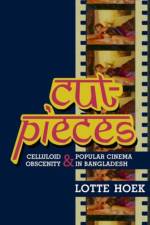
Imagine watching an action film in a small-town cinema hall in Bangladesh, and in between the gun battles and fistfights a short pornographic clip appears. This is known as a cut-piece, a strip of locally made celluloid pornography surreptitiously spliced into the reels of action films in Bangladesh. Exploring the shadowy world of these clips and their place in South Asian film culture, Lotte Hoek builds a rare, detailed portrait of the production, consumption, and cinematic pleasures of stray celluloid.Hoek's innovative ethnography plots the making and reception of Mintu the Murderer (2005, pseud.), a popular, Bangladeshi B-quality action movie and fascinating embodiment of the cut-piece phenomenon. She begins with the early scriptwriting phase and concludes with multiple screenings in remote Bangladeshi cinema halls, following the cut-pieces as they appear and disappear from the film, destabilizing its form, generating controversy, and titillating audiences. Hoek's work shines an unusual light on Bangladesh's state-owned film industry and popular practices of the obscene. She also reframes conceptual approaches to South Asian cinema and film culture, drawing on media anthropology to decode the cultural contradictions of Bangladesh since the 1990s.
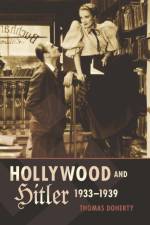
Between 1933 and 1939, representations of the Nazis and the full meaning of Nazism came slowly to Hollywood, growing more ominous and distinct only as the decade wore on. Recapturing what ordinary Americans saw on the screen during the emerging Nazi threat, Thomas Doherty reclaims forgotten films, such as Hitler's Reign of Terror (1934), a pioneering anti-Nazi docudrama by Cornelius Vanderbilt Jr.; I Was a Captive of Nazi Germany (1936), a sensational true tale of "e;a Hollywood girl in Naziland!"e;; and Professor Mamlock (1938), an anti-Nazi film made by German refugees living in the Soviet Union. Doherty also recounts how the disproportionately Jewish backgrounds of the executives of the studios and the workers on the payroll shaded reactions to what was never simply a business decision. As Europe hurtled toward war, a proxy battle waged in Hollywood over how to conduct business with the Nazis, how to cover Hitler and his victims in the newsreels, and whether to address or ignore Nazism in Hollywood feature films. Should Hollywood lie low, or stand tall and sound the alarm?Doherty's history features a cast of charismatic personalities: Carl Laemmle, the German Jewish founder of Universal Pictures, whose production of All Quiet on the Western Front (1930) enraged the nascent Nazi movement; Georg Gyssling, the Nazi consul in Los Angeles, who read the Hollywood trade press as avidly as any studio mogul; Vittorio Mussolini, son of the fascist dictator and aspiring motion picture impresario; Leni Riefenstahl, the Valkyrie goddess of the Third Reich who came to America to peddle distribution rights for Olympia (1938); screenwriters Donald Ogden Stewart and Dorothy Parker, founders of the Hollywood Anti-Nazi League; and Harry and Jack Warner of Warner Bros., who yoked anti-Nazism to patriotic Americanism and finally broke the embargo against anti-Nazi cinema with Confessions of a Nazi Spy (1939).
Winner of the prestigious Prix Goncourt award for biography, this remarkable portrait sheds new light on Virginia Woolf's relationships with her family and friends and how they shaped her work. Virginia Woolf: A Portrait blends recently unearthed documents, key primary sources, and personal interviews with Woolf's relatives and other acquaintances to render in unmatched detail the author's complicated relationship with her husband, Leonard; her father, Leslie Stephen; and her half-sister, Vanessa Bell. Forrester connects these figures to Woolf's mental breakdown while introducing the concept of "e;Virginia seule,"e; or Virginia alone: an uncommon paragon of female strength and conviction. Forrester's biography inhabits her characters and vivifies their perspective, weaving a colorful, intense drama that forces readers to rethink their understanding of Woolf, her writing, and her world.
Abe Kobo (1924-1993) was one of Japan's greatest postwar writers, widely recognized for his imaginative science fiction and plays of the absurd. However, he also wrote theoretical criticism for which he is lesser known, merging literary, historical, and philosophical perspectives into keen reflections on the nature of creativity, the evolution of the human species, and an impressive range of other subjects. Abe Kobo tackled contemporary social issues and literary theory with the depth and facility of a visionary thinker. Featuring twelve essays from his prolific career-including "e;Poetry and Poets (Consciousness and the Unconscious),"e; written in 1944, and "e;The Frontier Within, Part II,"e; written in 1969-this anthology introduces English-speaking readers to Abe Kobo as critic and intellectual for the first time. Demonstrating the importance of his theoretical work to a broader understanding of his fiction-and a richer portrait of Japan's postwar imagination-Richard F. Calichman provides an incisive introduction to Abe Kobo's achievements and situates his essays historically and intellectually.
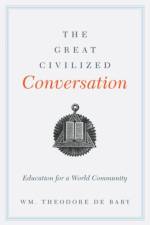
Having spent decades teaching and researching the humanities, Wm. Theodore de Bary is well positioned to speak on its merits and reform. Believing a classical liberal education is more necessary than ever, he outlines in these essays a plan to update existing core curricula by incorporating classics from both Eastern and Western traditions, thereby bringing the philosophy and moral values of Asian civilizations to American students and vice versa.The author establishes a concrete link between teaching the classics of world civilizations and furthering global humanism. Selecting texts that share many of the same values and educational purposes, he joins Islamic, Indian, Chinese, Japanese, and Western sources into a revised curriculum that privileges humanity and civility. He also explores the tradition of education in China and its reflection of Confucian and Neo-Confucian beliefs. He reflects on history's great scholar-teachers and what their methods can teach us today, and he dedicates three essays to the power of The Analects of Confucius, The Tale of Genji, and The Pillow Book of Sei Shonagon in the classroom.
The Matchmaker, the Apprentice, and the Football Fan moves between anarchic campuses, maddening communist factories, and the victims of China's economic miracle to showcase the absurdity, injustice, and socialist Gothic of everyday Chinese life. In "e;The Football Fan,"e; readers fall in with an intriguingly unreliable narrator who may or may not have killed his elderly neighbor for a few hundred yuan. The bemused antihero of "e;Reeducation"e; is appalled to discover that, ten years after graduating during the pro-democracy protests of 1989, his alma mater has summoned him back for a punitive bout of political reeducation with a troublesome ex-girlfriend. "e;Da Ma's Way of Talking"e; is a fast, funny recollection of China's picaresque late 1980s, told through the life and times of one of our student narrator's more controversial classmates; while "e;The Apprentice"e; plunges us into the comic vexations of life in a more-or-less planned economy, as an enthusiastic young graduate is over-exercised by his table-tennis-fanatic bosses, deprived of sleep by gambling-addicted colleagues, and stuffed with hard-boiled eggs by an overzealous landlady. Full of acute observations, political bite, and piercing insight into friendships and romance, these stories further establish Zhu Wen as a fearless commentator on human nature and contemporary China.
Personalized healthcare-or what the award-winning author Donna Dickenson calls "e;Me Medicine"e;-is radically transforming our longstanding "e;one-size-fits-all"e; model. Technologies such as direct-to-consumer genetic testing, pharmacogenetically developed therapies in cancer care, private umbilical cord blood banking, and neurocognitive enhancement claim to cater to an individual's specific biological character, and, in some cases, these technologies have shown powerful potential. Yet in others they have produced negligible or even negative results. Whatever is behind the rise of Me Medicine, it isn't just science. So why is Me Medicine rapidly edging out We Medicine, and how has our commitment to our collective health suffered as a result? In her cogent, provocative analysis, Dickenson examines the economic and political factors fueling the Me Medicine phenomenon and explores how, over time, this paradigm shift in how we approach our health might damage our individual and collective well-being. Historically, the measures of "e;We Medicine,"e; such as vaccination and investment in public-health infrastructure, have radically extended our life spans, and Dickenson argues we've lost sight of that truth in our enthusiasm for "e;Me Medicine."e; Dickenson explores how personalized medicine illustrates capitalism's protean capacity for creating new products and markets where none existed before-and how this, rather than scientific plausibility, goes a long way toward explaining private umbilical cord blood banks and retail genetics. Drawing on the latest findings from leading scientists, social scientists, and political analysts, she critically examines four possible hypotheses driving our Me Medicine moment: a growing sense of threat; a wave of patient narcissism; corporate interests driving new niche markets; and the dominance of personal choice as a cultural value. She concludes with insights from political theory that emphasize a conception of the commons and the steps we can take to restore its value to modern biotechnology.
A man kidnaps his two children, murders one, and attempts to kill the other. The prosecution seeks the death penalty, while the defense employs an unusual strategy to avoid the sentence. The defendant's attorneys turn to more than 100 examples of his artwork, created over many years, to determine whether he was mentally ill at the time he committed the crimes. Detailing an outstanding example of the use of forensic art therapy in a capital murder case, David Gussak, an art therapist contracted by the defense to analyze the images that were to be presented as evidence, recounts his findings and his testimony in court, as well as the future implications of his work for criminal proceedings.Gussak describes the role of the art therapist as an expert witness in a murder case, the way to use art as evidence, and the conclusions and assessments that professionals can draw from a defendant's artworks. He examines the effectiveness of expert testimony as communicated by the prosecution, defense, and court, and weighs the moral, ethical, and legal consequences of relying on such evidence. For professionals and general readers, this gripping volume presents a convincing account of the ability of art to reflect a damaged and dangerous psyche. A leading text on an emerging field, Art on Trial demonstrates the practical applications of an innovative approach to clinical assessment and treatment.
A number of economic, cultural, and contextual factors are driving urban America's obesity crisis, which can create chronic health conditions for those least able to manage them. Considering urban obesity through a social justice lens, this book is the first to help social workers and others develop targeted interventions for effective outcomes. The text dissects the problem of urban obesity in populations of color from individual, family, group, community, and policy perspectives. Beginning with a historical survey of urban obesity in communities of color, anti-obesity policies and programs, and the role of social work in addressing this threat, the volume follows with an analysis of the social, ecological, environmental, and spatial aggravators of urban obesity, such as the food industry's advertising strategies, which promote unhealthy choices; the failure of local markets to provide good food options; the lack of safe exercise spaces; and the paucity of heath education. Melvin Delgado reviews recent national obesity statistics; explores the connection between food stamps and obesity; and reveals the financial and social consequences of the epidemic for society as a whole. He concludes with recommendations for effective health promotion programs, such as youth-focused interventions, community gardens, and community-based food initiatives, and a unique consideration of urban obesity in relation to acts of genocide and national defense.
Two leading neuroscientists introduce the concepts of "e;cerebral plasticity"e; and the "e;regenerating brain,"e; describing what we know now about the processes through which the brain constantly reconstructs itself and the potential benefits this knowledge could have in addressing concerns for neurological, cognitive, and emotional health.The authors begin with a survey of the fundamental scientific developments that led to our current understanding of the regenerative mind, elucidating the breakthrough neurobiological studies that paved the way for our present understanding of the brain's plasticity and regenerative capabilities. They then discuss the application of these findings to such issues as depression, dyslexia, schizophrenia, and cognitive therapy, incorporating the latest technologies in neuroimaging, optogenetics, and nanotechnology. Their work shows the brain is anything but a static organ, ceasing to grow as human beings become adults. Rather, the brain is dynamic, evolving organically in relation to physical, cultural, historical, and affective stimuli, a plasticity that provides early hope to survivors of trauma and degenerative disorders.
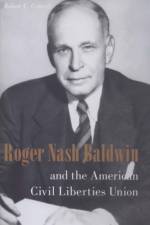
Roger Nash Baldwin's thirty-year tenure as director of the ACLU marked the period when the modern understanding of the Bill of Rights came into being. Spearheaded by Baldwin, volunteer attorneys of the caliber of Clarence Darrow, Arthur Garfield Hays, Osmond Frankel, and Edward Ennis transformed the constitutional landscape. Company police forces were dismantled. Antievolutionists were discredited (thanks to the Scopes Trial). Censorship of such works as James Joyce's Ulysses was halted. The Scottsboro Boys and Sacco and Vanzetti were defended. The right of free speech for communists and Ku Klux Klansmen alike was upheld, and the foundations were laid for an end to school segregation.Robert Cottrell's magnificent book recaptures the accomplishments and contradictions of the complicated man at the center of these events. Driven, vain, frugal, and tempestuous, America's greatest civil libertarian was initially also a staunch defender of Communist Russia, deferred to the U.S. government over the internment of Japanese Americans, and openly admired J. Edgar Hoover and Douglas MacArthur. His personal relationships were equally complex. Spanning a hundred years from the late 1800s through Baldwin's death in 1981, this riveting biography is an eye-opening view of the development of the American left.
By consulting the work of well-known and obscure al-Qaeda theoreticians, Michael W. S. Ryan finds jihadist terrorism strategy has more in common with the principles of Maoist guerrilla warfare than mainstream Islam. Encouraging strategists and researchers to devote greater attention to jihadi ideas rather than jihadist military operations, Ryan builds an effective framework for analyzing al-Qaeda's plans against America and constructs a compelling counternarrative to the West's supposed "e;war on Islam."e;Ryan examines the Salafist roots of al-Qaeda ideology and the contributions of its most famous founders, Osama Bin Laden and Ayman al-Zawahiri, in a political-military context. He also reads the Arabic-language works of lesser known theoreticians who have played an instrumental role in framing al-Qaeda's so-called war of the oppressed. These authors readily cite the guerrilla strategies of Mao, Che Guevara, and the mastermind of the Vietnam War, General Giap. They also incorporate the arguments of American theorists writing on "e;fourth-generation warfare."e; Through these texts, readers experience events as insiders see them, and by concentrating on the activities and pronouncements of al-Qaeda's thought leaders, especially in Yemen, they discern the direct link between al-Qaeda's tactics and trends in anti-U.S. terrorism. Ryan shows al-Qaeda's political-military strategy to be a revolutionary and largely secular departure from the classic Muslim conception of jihad, adding invaluable dimensions to the operational, psychological, and informational strategies already deployed by America's military in the region.
The depiction of personal and collective suffering in modern Chinese novels differs significantly from standard Communist accounts and many Eastern and Western historical narratives. Writers such as Yu Hua, Su Tong, Wang Anyi, Mo Yan, Han Shaogong, Ge Fei, Li Rui, and Zhang Wei skew and scramble common conceptions of China's modern development, deploying avant-garde narrative techniques from Latin American and Euro-American modernism to project a surprisingly "e;un-Chinese"e; dystopian vision and critical view of human culture and ethics.The epic narratives of modern Chinese fiction make rich use of magical realism, surrealism, and unusual treatments of historical time. Also featuring graphic depictions of sex and violence, as well as dark, raunchy comedy, these novels reflect China's recent history re-presenting the overthrow of the monarchy in the early twentieth century and the resulting chaos of revolution and war; the recurring miseries perpetrated by class warfare during the dictatorship of Mao Zedong; and the social dislocations caused by China's industrialization and rise as a global power. This book casts China's highbrow historical novels from the late 1980s to the first decade of the twenty-first century as a distinctively Chinese contribution to the form of the global dystopian novel and, consequently, to global thinking about the interrelations of utopia and dystopia.
This singular book illustrates how to edit a piece of prose and enhance its clarity of thought and felicity of style. The authors first present ten principles of effective composition, and then scrutinize three extended paragraphs, suggesting with remarkable specificity how to improve them. The volume also offers challenging practice questions, as well as two finished essays, one serious and one humorous, that demonstrate how attention to sound mechanics need not result in mechanical writing. Steven M. Cahn and Victor L. Cahn help readers deploy a host of corrective strategies, such as avoiding jargon, bombast, and redundancy; varying sentence structure; paring the use of adjectives and adverbs; properly deploying phrases and clauses; and refining an argument. Here is a book for all who seek to increase their facility in written communication.
Colleen Glenney Boggs puts animal representation at the center of the making of the liberal American subject. Concentrating on the formative and disruptive presence of animals in the writings of Frederick Douglass, Edgar Allan Poe, and Emily Dickinson, Boggs argues that animals are critical to the ways in which Americans enact their humanity and regulate subjects in the biopolitical state. Biopower, or a politics that extends its reach to life, thrives on the strategic ambivalence between who is considered human and what is judged as animal. It generates a space of indeterminacy in which animal representations intervene to define and challenge the parameters of subjectivity. The renegotiation of the species line produces a tension that is never fully regulated. Therefore, as both figures of radical alterity and the embodiment of biopolitics, animals are simultaneously exceptional and exemplary to the biopolitical state. An original contribution to animal studies, American studies, critical race theory, and posthumanist inquiry, Boggs thrillingly reinterprets a long and highly contentious human-animal history.
Rather than focus solely on theological concerns, this well-rounded introduction takes an expansive view of Islamic ideology, culture, and tradition, sourcing a range of historical, sociological, and literary perspectives. Neither overly critical nor apologetic, this book reflects the rich diversity of Muslim identities across the centuries and counters the unflattering, superficial portrayals of Islam that are shaping public discourse today.Aaron W. Hughes uniquely traces the development of Islam in relation to historical, intellectual, and cultural influences, enriching his narrative with the findings, debates, and methodologies of related disciplines, such as archaeology, history, and Near Eastern studies. Hughes's work challenges the dominance of traditional terms and concepts in religious studies, recasting religion as a set of social and cultural facts imagined, manipulated, and contested by various actors and groups over time. Making extensive use of contemporary identity theory, Hughes rethinks the teaching of Islam and religions in general and helps facilitate a more critical approach to Muslim sources. For readers seeking a non-theological, unbiased, and richly human portrait of Islam, as well as a strong grasp of Islamic study's major issues and debates, this textbook is a productive, progressive alternative to more classic surveys.
Digital and electronic technologies that act as extensions of our bodies and minds are changing how we live, think, act, and write. Some welcome these developments as bringing humans closer to unified consciousness and eternal life. Others worry that invasive globalized technologies threaten to destroy the self and the world. Whether feared or desired, these innovations provoke emotions that have long fueled the religious imagination, suggesting the presence of a latent spirituality in an era mistakenly deemed secular and posthuman.William Gaddis, Richard Powers, Mark Danielewski, and Don DeLillo are American authors who explore this phenomenon thoroughly in their work. Engaging the works of each in conversation, Mark C. Taylor discusses their sophisticated representations of new media, communications, information, and virtual technologies and their transformative effects on the self and society. He focuses on Gaddis's The Recognitions, Powers's Plowing the Dark, Danielewski's House of Leaves, and DeLillo's Underworld, following the interplay of technology and religion in their narratives and their imagining of the transition from human to posthuman states. Their challenging ideas and inventive styles reveal the fascinating ways religious interests affect emerging technologies and how, in turn, these technologies guide spiritual aspirations. To read these novels from this perspective is to see them and the world anew.
At a ceremony announcing the completion of the first draft of the human genome in 2000, President Bill Clinton declared, "e;I believe one of the great truths to emerge from this triumphant expedition inside the human genome is that in genetic terms, all human beings, regardless of race, are more than 99.9 percent the same."e; Yet despite this declaration of unity, biomedical research has focused increasingly on mapping that.1 percent of difference, particularly as it relates to race.This trend is exemplified by the drug BiDil. Approved by the FDA in 2005 as the first drug with a race-specific indication on its label, BiDil was originally touted as a pathbreaking therapy to treat heart failure in black patients and help underserved populations. Upon closer examination, however, Jonathan Kahn reveals a far more complex story. At the most basic level, BiDil became racial through legal maneuvering and commercial pressure as much as through medical understandings of how the drug worked. Using BiDil as a central case study, Kahn broadly examines the legal and commercial imperatives driving the expanding role of race in biomedicine, even as scientific advances in genomics could render the issue irrelevant. He surveys the distinct politics informing the use of race in medicine and the very real health disparities caused by racism and social injustice that are now being cast as a mere function of genetic difference. Calling for a more reasoned approach to using race in biomedical research and practice, Kahn asks readers to recognize that, just as genetics is a complex field requiring sensitivity and expertise, so too is race, particularly in the field of biomedicine.
Erich Fromm was a political activist, psychologist, psychoanalyst, philosopher, and one of the most important intellectuals of the twentieth century. Known for his theories of personality and political insight, Fromm dissected the sadomasochistic appeal of brutal dictators while also eloquently championing love-which, he insisted, was nothing if it did not involve joyful contact with others and humanity at large. Admired all over the world, Fromm continues to inspire with his message of universal brotherhood and quest for lasting peace.The first systematic study of Fromm's influences and achievements, this biography revisits the thinker's most important works, especially Escape from Freedom and The Art of Loving, which conveyed important and complex ideas to millions of readers. The volume recounts Fromm's political activism as a founder and major funder of Amnesty International, the National Committee for a Sane Nuclear Policy, and other peace groups. Consulting rare archival materials across the globe, Lawrence J. Friedman reveals Fromm's support for anti-Stalinist democratic movements in Central and Eastern Europe and his efforts to revitalize American democracy. For the first time, readers learn about Fromm's direct contact with high officials in the American government on matters of war and peace while accessing a deeper understanding of his conceptual differences with Freud, his rapport with Neo-Freudians like Karen Horney and Harry Stack Sullivan, and his association with innovative artists, public intellectuals, and world leaders. Friedman elucidates Fromm's key intellectual contributions, especially his innovative concept of "e;social character,"e; in which social institutions and practices shape the inner psyche, and he clarifies Fromm's conception of love as an acquired skill. Taking full stock of the thinker's historical and global accomplishments, Friedman portrays a man of immense authenticity and spirituality who made life in the twentieth century more humane than it might have been.
Even well-established democracies need reform, and any successful effort to reform democracies must look beyond conventional institutions-elections, political parties, special interests, legislatures and their relations with chief executives-to do so. Expanding a traditional vision of the institutions of representative democracy, Douglas A. Chalmers examines six aspects of political practice relating to the people being represented, the structure of those who make law and policy, and the links between those structures and the people. Chalmers concludes with a discussion of where successful reform needs to take place: we must pay attention to a democratic ordering of the constant reconfiguration of decision making patterns; we must recognize the crucial role of information in deliberation; and we must incorporate noncitizens and foreigners into the political system, even when they are not the principal beneficiaries.
Unfolding in the tense years of the Cultural Revolution (1966-1976), Trees Without Wind takes place in a remote Shanxi village in which a rare affliction has left the residents physically stunted. Director Liu, an older revolutionary and local commune head, becomes embroiled in a power struggle with Zhang Weiguo, a young ideologue who believes he is the model of a true revolutionary. Complicating matters is a woman named Nuanyu, who, like Zhang Weiguo and Director Liu, is an outsider untouched by the village's disease. "e;Wedded"e; to all of the male villagers, Nuanyu lives a polyandrous lifestyle based on necessity and at odds with the puritanical idealism of the Cultural Revolution. The deformed villagers, representing the manipulated masses of China, become pawns in the Party representatives' factional infighting. Director Liu and Zhang Weiguo's explosive tug-of-war is part of a larger battle among politics, self-interest, and passion gripping a world undone by ideological extremism. A collectively told narrative powered by distinctive subjectivities, Trees Without Wind is a milestone in the fictional treatment of a horrific event.
Seeking to reenergize Americans' passion for the space program, the value of further exploration of the Moon, and the importance of human beings on the final frontier, Claude A. Piantadosi presents a rich history of American space exploration and its major achievements. He emphasizes the importance of reclaiming national command of our manned program and continuing our unmanned space missions, and he stresses the many adventures that still await us in the unfolding universe. Acknowledging space exploration's practical and financial obstacles, Piantadosi challenges us to revitalize American leadership in space exploration in order to reap its scientific bounty.Piantadosi explains why space exploration, a captivating story of ambition, invention, and discovery, is also increasingly difficult and why space experts always seem to disagree. He argues that the future of the space program requires merging the practicalities of exploration with the constraints of human biology. Space science deals with the unknown, and the margin (and budget) for error is small. Lethal near-vacuum conditions, deadly cosmic radiation, microgravity, vast distances, and highly scattered resources remain immense physical problems. To forge ahead, America needs to develop affordable space transportation and flexible exploration strategies based in sound science. Piantadosi closes with suggestions for accomplishing these goals, combining his healthy skepticism as a scientist with an unshakable belief in space's untapped-and wholly worthwhile-potential.
Christopher Collins introduces an exciting new field of research traversing evolutionary biology, anthropology, archaeology, cognitive psychology, linguistics, neuroscience, and literary study. Paleopoetics maps the selective processes that originally shaped the human genus millions of years ago and prepared the human brain to play, imagine, empathize, and engage in fictive thought as mediated by language. A manifestation of the "e;cognitive turn"e; in the humanities, Paleopoetics calls for a broader, more integrated interpretation of the reading experience, one that restores our connection to the ancient methods of thought production still resonating within us.Speaking with authority on the scientific aspects of cognitive poetics, Collins proposes reading literature using cognitive skills that predate language and writing. These include the brain's capacity to perceive the visible world, store its images, and retrieve them later to form simulated mental events. Long before humans could share stories through speech, they perceived, remembered, and imagined their own inner narratives. Drawing on a wide range of evidence, Collins builds an evolutionary bridge between humans' development of sensorimotor skills and their achievement of linguistic cognition, bringing current scientific perspective to such issues as the structure of narrative, the distinction between metaphor and metonymy, the relation of rhetoric to poetics, the relevance of performance theory to reading, the difference between orality and writing, and the nature of play and imagination.
Refusing to cast gangs in solely criminal terms, Robert J. Duran, a former gang member turned scholar, recasts such groups as an adaptation to the racial oppression of colonization in the American Southwest. Developing a paradigm rooted in ethnographic research and almost two decades of direct experience with gangs, Duran completes the first-ever study to follow so many marginalized groups so intensely for so long, revealing their core characteristics, behavior, and activities within two unlikely American cities.Duran spent five years in Denver, Colorado, and Ogden, Utah, conducting 145 interviews with gang members, law enforcement officers, prosecutors, and other relevant individuals. From his research, he constructs a comparative outline of the emergence and criminalization of Latino youth groups, the ideals and worlds they create, and the reasons for their persistence. He also underscores the failures of violent gang suppression tactics, which have only further entrenched these groups within the barrio. Encouraging cultural activists and current and former gang members to pursue grassroots empowerment, Duran proposes new solutions to racial oppression that challenge and truly alter the conditions of gang life.
Making Sense of Tantric Buddhism fundamentally rethinks the nature of the transgressive theories and practices of the Buddhist Tantric traditions, challenging the notion that the Tantras were "e;marginal"e; or primitive and situating them instead-both ideologically and institutionally-within larger trends in mainstream Buddhist and Indian culture.Critically surveying prior scholarship, Wedemeyer exposes the fallacies of attributing Tantric transgression to either the passions of lusty monks, primitive tribal rites, or slavish imitation of Saiva traditions. Through comparative analysis of modern historical narratives-that depict Tantrism as a degenerate form of Buddhism, a primal religious undercurrent, or medieval ritualism-he likewise demonstrates these to be stock patterns in the European historical imagination.Through close analysis of primary sources, Wedemeyer reveals the lived world of Tantric Buddhism as largely continuous with the Indian religious mainstream and deploys contemporary methods of semiotic and structural analysis to make sense of its seemingly repellent and immoral injunctions. Innovative, semiological readings of the influential Guhyasamaja Tantra underscore the text's overriding concern with purity, pollution, and transcendent insight-issues shared by all Indic religions-and a large-scale, quantitative study of Tantric literature shows its radical antinomianism to be a highly managed ritual observance restricted to a sacerdotal elite. These insights into Tantric scripture and ritual clarify the continuities between South Asian Tantrism and broader currents in Indian religion, illustrating how thoroughly these "e;radical"e; communities were integrated into the intellectual, institutional, and social structures of South Asian Buddhism.
Although climate change has become the dominant concern of the twenty-first century, global powers refuse to implement the changes necessary to reverse these trends. Instead, they have neoliberalized nature and climate change politics and discourse, and there are indications of a more virulent strain of capital accumulation on the horizon. Adrian Parr calls attention to the problematic socioeconomic conditions of neoliberal capitalism underpinning the world's environmental challenges, and she argues that, until we grasp the implications of neoliberalism's interference in climate change talks and policy, humanity is on track to an irreversible crisis.Parr not only exposes the global failure to produce equitable political options for environmental regulation, but she also breaks down the dominant political paradigms hindering the discovery of viable alternatives. She highlights the neoliberalization of nature in the development of green technologies, land use, dietary habits, reproductive practices, consumption patterns, design strategies, and media. She dismisses the notion that the free market can solve debilitating environmental degradation and climate change as nothing more than a political ghost emptied of its collective aspirations. Decrying what she perceives as a failure of the human imagination and an impoverishment of political institutions, Parr ruminates on the nature of change and existence in the absence of a future. The sustainability movement, she contends, must engage more aggressively with the logic and cultural manifestations of consumer economics to take hold of a more transformative politics. If the economically powerful continue to monopolize the meaning of environmental change, she warns, new and more promising collective solutions will fail to take root.
Abonner på vårt nyhetsbrev og få rabatter og inspirasjon til din neste leseopplevelse.
Ved å abonnere godtar du vår personvernerklæring.