











Gjør som tusenvis av andre bokelskere
Abonner på vårt nyhetsbrev og få rabatter og inspirasjon til din neste leseopplevelse.
Ved å abonnere godtar du vår personvernerklæring.Du kan når som helst melde deg av våre nyhetsbrev.

We are crossing a new frontier in the evolution of computing and entering the era of cognitive systems. The victory of IBM's Watson on the television quiz show Jeopardy! revealed how scientists and engineers at IBM and elsewhere are pushing the boundaries of science and technology to create machines that sense, learn, reason, and interact with people in new ways to provide insight and advice.In Smart Machines, John E. Kelly III, director of IBM Research, and Steve Hamm, a writer at IBM and a former business and technology journalist, introduce the fascinating world of "e;cognitive systems"e; to general audiences and provide a window into the future of computing. Cognitive systems promise to penetrate complexity and assist people and organizations in better decision making. They can help doctors evaluate and treat patients, augment the ways we see, anticipate major weather events, and contribute to smarter urban planning. Kelly and Hamm's comprehensive perspective describes this technology inside and out and explains how it will help us conquer the harnessing and understanding of "e;big data,"e; one of the major computing challenges facing businesses and governments in the coming decades. Absorbing and impassioned, their book will inspire governments, academics, and the global tech industry to work together to power this exciting wave in innovation.
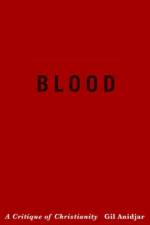
Blood, according to Gil Anidjar, maps the singular history of Christianity. As a category for historical analysis, blood can be seen through its literal and metaphorical uses as determining, sometimes even defining Western culture, politics, and social practices and their wide-ranging incarnations in nationalism, capitalism, and law.Engaging with a variety of sources, Anidjar explores the presence and the absence, the making and unmaking of blood in philosophy and medicine, law and literature, and economic and political thought from ancient Greece to medieval Spain, from the Bible to Shakespeare and Melville. The prevalence of blood in the social, juridical, and political organization of the modern West signals that we do not live in a secular age into which religion could return. Flowing across multiple boundaries, infusing them with violent precepts that we must address, blood undoes the presumed oppositions between religion and politics, economy and theology, and kinship and race. It demonstrates that what we think of as modern is in fact imbued with Christianity. Christianity, Blood fiercely argues, must be reconsidered beyond the boundaries of religion alone.
In this vivid memoir, Denis Guenoun excavates his family's past and progressively fills out a portrait of an imposing, enigmatic father. Rene Guenoun was a teacher and a pioneer, and his secret support for Algerian independence was just one of the many things he did not discuss with his teenaged son. To be Algerian, pro-independence, a French citizen, a Jew, and a Communist were not, to Rene's mind, dissonant allegiances. He believed Jews and Arabs were bound by an authentic fraternity and could only realize a free future together. Rene Guenoun called himself a Semite, a word that he felt united Jewish and Arab worlds and best reflected a shared origin. He also believed that Algerians had the same political rights as Frenchmen. Although his Jewish family was rooted in Algeria, he inherited French citizenship and revered the principles of the French Revolution. He taught science in a French lycee in Oran and belonged to the French Communist Party. His steadfast belief in liberty, equality, and fraternity led him into trouble, including prison and exile, yet his failures as an activist never shook his faith in a rational, generous future.Rene Guenoun was drafted to defend Vichy France's colonies in the Middle East during World War II. At the same time, Vichy barred him and his wife from teaching because they were Jewish. When the British conquered Syria, he was sent home to Oran, and in 1943, after the Allies captured Algeria, he joined the Free French Army and fought in Europe. After the war, both parents did their best to reconcile militant unionism and clandestine party activity with the demands of work and family. The Guenouns had little interest in Israel and considered themselves at home in Algeria; yet because he supported Algerian independence, Rene Guenoun outraged his French neighbors and was expelled from Algeria by the French paramilitary Organisation Armee Secrete. He spent his final years in Marseille. Gracefully weaving together youthful memories with research into his father's life and times, Denis Guenoun re-creates an Algerian past that proved lovely, intellectually provocative, and dangerous.
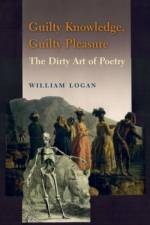
William Logan has been a thorn in the side of American poetry for more than three decades. Though he has been called the "e;most hated man in American poetry,"e; his witty and articulate reviews have reminded us how muscular good reviewing can be. These new essays and reviews take poetry at its word, often finding in its hardest cases the greatest reasons for hope. Logan begins with a devastating polemic against the wish to have critics announce their aesthetics every time they begin a review. "e;The Unbearable Rightness of Criticism"e; is a plea to read those critics who got it wrong when they reviewed Lyrical Ballads or Leaves of Grass or The Waste Land. Sometimes, he argues, such critics saw exactly what these books were-they saw the poems plain yet often did not see that they were poems. In such wrongheaded criticism, readers can recover the ground broken by such groundbreaking books.Logan looks again at the poetry of Wallace Stevens, Frank O'Hara, and Philip Larkin; at the letters of T. S. Eliot, Elizabeth Bishop, and Robert Lowell; and at new books by Louise Gluck and Seamus Heaney. Always eager to overturn settled judgments, Logan argues that World War II poets were in the end better than the much-lauded poets of World War I. He revisits the secretly revised edition of Robert Frost's notebooks, showing that the terrible errors ruining the first edition still exist. The most remarkable essay is "e;Elizabeth Bishop at Summer Camp,"e; which prints for the first time her early adolescent verse along with the intimate letters written to the first girl she loved.
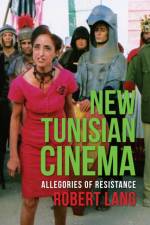
Tunisian cinema is often described as the most daring of all Arab cinemas. For many, Tunisia appeared to be a model of equipoise between "e;East"e; and "e;West,"e; and yet, during Zine El Abidine Ben Ali's presidency, from 1987 to 2011, the country became the most repressive state in the Maghreb. Against considerable odds, a generation of filmmakers emerged in the mid-1980s to make films that are allegories of resistance to the increasingly illiberal trends that were marking their society.In New Tunisian Cinema, Robert Lang focuses on eight films by some of the nation's best-known directors, including Man of Ashes (1986), Bezness (1992) and Making Of (2006) by Nouri Bouzid, Halfaouine (1990) by Ferid Boughedir, The Silences of the Palace (1994) by Moufida Tlatli, Essaida (1997) by Mohamed Zran, Bedwin Hacker (2002) by Nadia El Fani, and The TV Is Coming (2006) by Moncef Dhouib. He explores the political economy and social, historical, and psychoanalytic dimensions of these works and the strategies filmmakers deployed to preserve cinema's ability to shape debates about national identity. These debates, Lang argues, not only helped initiate the 2011 uprising that ousted Ben Ali's regime but also did much to inform and articulate the aspirations of the Tunisian people in the new millennium.
Raoul Moati intervenes in the critical debate that divided two prominent philosophers in the mid-twentieth century. In the 1950s, the British philosopher J. L. Austin advanced a theory of speech acts, or the "e;performative,"e; that Jacques Derrida and John R. Searle interpreted in fundamentally different ways. Their disagreement centered on the issue of intentionality, which Derrida understood phenomenologically and Searle read pragmatically. The controversy had profound implications for the development of contemporary philosophy, which, Moati argues, can profit greatly by returning to this classic debate. In this book, Moati systematically replays the historical encounter between Austin, Derrida, and Searle and the disruption that caused the lasting break between Anglo-American language philosophy and continental traditions of phenomenology and its deconstruction. The key issue, Moati argues, is not whether "e;intentionality,"e; a concept derived from Husserl's phenomenology, can or cannot be linked to Austin's speech-acts as defined in his groundbreaking How to Do Things with Words, but rather the emphasis Searle placed on the performativity and determined pragmatic values of Austin's speech-acts, whereas Derrida insisted on the trace of writing behind every act of speech and the iterability of signs in different contexts.
Paul Gionfriddo's son Tim is one of the "e;6 percent"e;-an American with serious mental illness. He is also one of the half million homeless people with serious mental illnesses in desperate need of help yet underserved or ignored by our health and social-service systems.In this moving, detailed, clear-eyed expose, Gionfriddo describes how Tim and others like him come to live on the street. Gionfriddo takes stock of the numerous injustices that kept his son from realizing his potential from the time Tim first began to show symptoms of schizophrenia to the inadequate educational supports he received growing up, his isolation from family and friends, and his frequent encounters with the juvenile justice system and, later, the adult criminal-justice system and its substandard mental health care. Tim entered adulthood with limited formal education, few work skills, and a chronic, debilitating disease that took him from the streets to jails to hospitals and then back to the streets. Losing Tim shows that people with mental illness become homeless as a result not of bad choices but of bad policy. As a former state policy maker, Gionfriddo concludes with recommendations for reforming America's ailing approach to mental health.
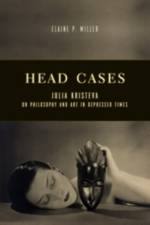
While philosophy and psychoanalysis privilege language and conceptual distinctions and mistrust the image, the philosopher and psychoanalyst Julia Kristeva recognizes the power of art and the imagination to unblock important sources of meaning. She also appreciates the process through which creative acts counteract and transform feelings of violence and depression. Reviewing Kristeva's corpus, Elaine P. Miller considers the intellectual's "e;aesthetic idea"e; and "e;thought specular"e; in their capacity to reshape depressive thought on both the individual and cultural level. She revisits Kristeva's reading of Walter Benjamin with reference to melancholic art and the imagination's allegorical structure; her analysis of Byzantine iconoclasm in relation to Freud's psychoanalytic theory of negation and Hegel's dialectical negativity; her understanding of Proust as an exemplary practitioner of sublimation; her rereading of Kant and Arendt in terms of art as an intentional lingering with foreignness; and her argument that forgiveness is both a philosophical and psychoanalytic method of transcending a "e;stuck"e; existence. Focusing on specific artworks that illustrate Kristeva's ideas, from ancient Greek tragedy to early photography, contemporary installation art, and film, Miller positions creative acts as a form of "e;spiritual inoculation"e; against the violence of our society and its discouragement of thought and reflection.
Iris Barry (1895-1969) was a pivotal modern figure and one of the first intellectuals to treat film as an art form, appreciating its far-reaching, transformative power. Although she had the bearing of an aristocrat, she was the self-educated daughter of a brass founder and a palm-reader from the Isle of Man. An aspiring poet, Barry attracted the attention of Ezra Pound and joined a demimonde of Bloomsbury figures, including Ford Maddox Ford, T. S. Eliot, Arthur Waley, Edith Sitwell, and William Butler Yeats. She fell in love with Pound's eccentric fellow Vorticist, Wyndham Lewis, and had two children by him.In London, Barry pursued a career as a novelist, biographer, and critic of motion pictures. In America, she joined the modernist Askew Salon, where she met Alfred Barr, director of the new Museum of Modern Art. There she founded the museum's film department and became its first curator, assuring film's critical legitimacy. She convinced powerful Hollywood figures to submit their work for exhibition, creating a new respect for film and prompting the founding of the International Federation of Film Archives. Barry continued to augment MoMA's film library until World War II, when she joined the Office of Strategic Services to develop pro-American films with Orson Welles, Walt Disney, John Huston, and Frank Capra. Yet despite her patriotic efforts, Barry's "e;foreignness"e; and association with such filmmakers as Luis Bunuel made her the target of an anticommunist witch hunt. She eventually left for France and died in obscurity. Drawing on letters, memorabilia, and other documentary sources, Robert Sitton reconstructs Barry's phenomenal life and work while recasting the political involvement of artistic institutions in the twentieth century.
Moving beyond identity politics while continuing to respect diverse entities and concerns, Whitney A. Bauman builds a planetary politics that better responds to the realities of a pluralistic world. Calling attention to the historical, political, and ecological influences shaping our understanding of nature, religion, humanity, and identity, Bauman collapses the boundaries separating male from female, biology from machine, human from more than human, and religion from science, encouraging readers to embrace hybridity and the inherent fluctuations of an open, evolving global community.As he outlines his planetary ethic, Bauman concurrently develops an environmental ethic of movement that relies not on place but on the daily connections we make across the planet. He shows how both identity politics and environmental ethics fail to realize planetary politics and action, limited as they are by foundational modes of thought that create entire worlds out of their own logic. Introducing a postfoundational vision not rooted in the formal principles of "e;nature"e; or "e;God"e; and not based in the idea of human exceptionalism, Bauman draws on cutting-edge insights from queer, poststructural, and deconstructive theory and makes a major contribution to the study of religion, science, politics, and ecology.
Columbia University began the second half of the twentieth century in decline, bottoming out with the student riots of 1968. Yet by the close of the century, the institution had regained its stature as one of the greatest universities in the world.According to the New York Times, "e;If any one person is responsible for Columbia's recovery, it is surely Michael Sovern."e; In this memoir, Sovern, who served as the university's president from 1980 to 1993, recounts his sixty-year involvement with the institution after growing up in the South Bronx. He addresses key issues in academia, such as affordability, affirmative action, the relative rewards of teaching and research, lifetime tenure, and the role of government funding. Sovern also reports on his many off-campus adventures, including helping the victims of the Tuskegee syphilis experiment, stepping into the chairmanship of Sotheby's, responding to a strike by New York City's firemen, a police riot and threats to shut down the city's transit system, playing a role in the theater world as president of the Shubert Foundation, and chairing the Commission on Integrity in Government.
It is commonly assumed that if the Sun suddenly turned into a black hole, it would suck Earth and the rest of the planets into oblivion. Yet, as prominent author and astrophysicist Jeffrey Bennett points out, black holes don't suck. With that simple idea in mind, Bennett begins an entertaining introduction to Einstein's theories of relativity, describing the amazing phenomena readers would actually experience if they took a trip to a black hole.The theory of relativity reveals the speed of light as the cosmic speed limit, the mind-bending ideas of time dilation and curvature of spacetime, and what may be the most famous equation in history: E = mc2. Indeed, the theory of relativity shapes much of our modern understanding of the universe. It is not "e;just a theory"e;-every major prediction of relativity has been tested to exquisite precision, and its practical applications include the Global Positioning System (GPS). Amply illustrated and written in clear, accessible prose, Bennett's book proves anyone can grasp the basics of Einstein's ideas. His intuitive, nonmathematical approach gives a wide audience its first real taste of how relativity works and why it is so important to science and the way we view ourselves as human beings.
Paul Cabot (1898-1994) was an innovative mutual fund manager and executive known for his strong character, charismatic personality, and trendsetting financial achievements. Iconoclastic and rebellious, Cabot broke free from the Boston Brahmin trustee mold to pursue new ways of investing and serving investment clients.Cabot founded one of the first mutual funds-State Street Investment Corporation-in the early 1920s, campaigned against the corrupt practices of certain other funds in the late 1920s, and lobbied on behalf of key New Deal securities legislation in the 1930s. As Harvard University treasurer, he increased the allocation of the endowment to equities just in time for the bull market of the 1950s, and as a corporate director in the 1960s he campaigned against conglomerates' abusive takeover strategies.Having spent nearly two decades working for Cabot's company, State Street Research & Management, as an analyst, research director, portfolio manager, and chief investment officer, Michael R. Yogg is well positioned to share the secrets behind Cabot's extraordinary success and relate the life of an extraordinary man. Cabot pioneered the use of fundamental stock analysis and was likely the first to take up the progressive practice of interviewing company managements. His accomplishments all stemmed from his passion for facts, finance, and creative thinking, as well as his unbreakable will, facets Yogg illuminates through privileged access to Cabot's papers and a wealth of interviews.
One of the leading textbooks in its field, Bringing Fossils to Life applies paleobiological principles to the fossil record while detailing the evolutionary history of major plant and animal phyla. It incorporates current research from biology, ecology, and population genetics, bridging the gap between purely theoretical paleobiological textbooks and those that describe only invertebrate paleobiology and that emphasize cataloguing live organisms instead of dead objects. For this third edition Donald R. Prothero has revised the art and research throughout, expanding the coverage of invertebrates and adding a discussion of new methodologies and a chapter on the origin and early evolution of life.
This innovative textbook reconfigures generalist social work practice for the twenty-first century. Incorporating historical, ethical, and global perspectives, the volume presents new conceptualizations, definitions, and explanations for social work practice and principles in the areas of assessment, relationships, communication, best practices, intervention, and differential use of self. Case studies fully discuss and illustrate the use of these approaches with real clients and provide a lens inclusive of geography and culture to promote social justice and human well-being, whether within one's own nation or across national borders. Recognizing that targeted practice with individuals is the key to successful outcomes, this textbook equips today's practitioners with the values, skills, and knowledge necessary for social work practice in a globalized world.
The house looked as if she'd brushed it over with a hurried hand. Things were open-drawers, cans, and closets. A pile of newspapers fanned out across the floor by the front door, and still I did not wonder. She must have dropped them as she ran, I thought. My mother was often late. But had I stopped to look, I would have seen the fear in the way the house had settled-a footstool that lay on its side, several books that had fallen from their shelves. When you count back, you can see a story from the end. I like that-the seemingly natural narrative that forms this way. With the end in my hand, the story becomes mine. I can have it all make sense, or I can lose my mind like she lost hers-like I lost her. But I can have my story. Walking the Night Road speaks to the experience of caring for a loved one with a terminal illness and the difficulties of encountering death. Alexandra Butler, daughter of the Pulitzer Prize-winning gerontologist Robert N. Butler and respected social worker and psychotherapist Myrna Lewis, composes a lyrical yet unsparing portrait of caring for her mother during her sudden, quick decline from brain cancer. Her rich account shares the strains of caregiving on both the provider and the person receiving care and recognizes the personal and professional sacrifices caregivers must make to fulfill the role. More than a memoir of dying and grief, Butler's account also tests many of the theories her parents pioneered in their work on healthy aging. Authors of such seminal works as Love and Sex After Sixty, Butler's parents were forced to rethink many of the tenets they lived by while Myrna was incapacitated, and Butler's father found himself relying heavily on his daughter to provide his wife's care. Butler's poignant and unflinching story is therefore a rare examination of the intimate aspects of aging and death experienced by practitioners who suddenly find themselves in the difficult position of the clients they once treated.
Over the last decade, audiences worldwide have become familiar with highly acclaimed films from the Romanian New Wave such as 4 Months, 3 Weeks and 2 Days (2007), The Death of Mr. Lazarescu (2005), and 12:08 East of Bucharest (2006). However, the hundred or so years of Romanian cinema leading to these accomplishments have been largely overlooked. This book is the first to provide in-depth analyses of essential works ranging from the silent period to contemporary productions. In addition to relevant information on historical and cultural factors influencing contemporary Romanian cinema, this volume covers the careers of daring filmmakers who approached various genres despite fifty years of Communist censorship. An important chapter is dedicated to Lucian Pintilie, whose seminal work, Reconstruction (1969), strongly inspired Romania's 21st-century innovative output. The book's second half closely examines both the 'minimalist' trend (Cristian Mungiu, Cristi Puiu, Corneliu Porumboiu, Radu Muntean) and the younger, but no less inspired, directors who have chosen to go beyond the 1989 revolution paradigm by dealing with the complexities of contemporary Romania.
In 1989, Texas executed Carlos DeLuna, a poor Hispanic man with childlike intelligence, for the murder of Wanda Lopez, a convenience store clerk. His execution passed unnoticed for years until a team of Columbia Law School faculty and students almost accidentally chose to investigate his case and found that DeLuna almost certainly was innocent. They discovered that no one had cared enough about either the defendant or the victim to make sure the real perpetrator was found. Everything that could go wrong in a criminal case did. This book documents DeLuna's conviction, which was based on a single, nighttime, cross-ethnic eyewitness identification with no corroborating forensic evidence. At his trial, DeLuna's defense, that another man named Carlos had committed the crime, was not taken seriously. The lead prosecutor told the jury that the other Carlos, Carlos Hernandez, was a "e;phantom"e; of DeLuna's imagination. In upholding the death penalty on appeal, both the state and federal courts concluded the same thing: Carlos Hernandez did not exist.The evidence the Columbia team uncovered reveals that Hernandez not only existed but was well known to the police and prosecutors. He had a long history of violent crimes similar to the one for which DeLuna was executed. Families of both Carloses mistook photos of each for the other, and Hernandez's violence continued after DeLuna was put to death. This book and its website (thewrongcarlos.net) reproduce law-enforcement, crime lab, lawyer, court, social service, media, and witness records, as well as court transcripts, photographs, radio traffic, and audio and videotaped interviews, documenting one of the most comprehensive investigations into a criminal case in U.S. history. The result is eye-opening yet may not be unusual. Faulty eyewitness testimony, shoddy legal representation, and prosecutorial misfeasance continue to put innocent people at risk of execution. The principal investigators conclude with novel suggestions for improving accuracy among the police, prosecutors, forensic scientists, and judges.
The intellectual and social theorist Yukichi Fukuzawa wrote An Encouragement of Learning (1872-1876) as a series of pamphlets while completing his critical masterpiece, An Outline of a Theory of Civilization (1875). These closely linked texts illustrate the core tenets of his philosophical outlook: freedom and equality as inherent to human nature, independence as the goal of any individual and nation, and the transformation of the Japanese mind as key to advancing in a rapidly evolving political and cultural world. In these essays, Fukuzawa advocated for the adoption of Western modes of education to help the Japanese people build a modern nation. He also believed that human beings' treatment of one another extended to and was reflected in their government's behavior, echoing the work of John Locke, Thomas Jefferson, and other Western thinkers in a classically structured Eastern text. This volume translates the full text into English and includes a chronology of Japanese history as it relates to Fukuzawa and his work. An introduction provides additional background on the life and influence of this profound thinker, and a selection of representative writings and suggestions for further reading fully introduce readers to the rare brilliance of his thought.
English-speaking readers might be surprised to learn that Alain Badiou writes fiction and plays along with his philosophical works and that they are just as important to understanding his larger intellectual project. In Ahmed the Philosopher, Badiou's most entertaining and accessible play, translated into English here for the first time, readers are introduced to Badiou's philosophy through a theatrical tour de force that has met with much success in France. Ahmed the Philosopher presents its comic hero, the "e;treacherous servant"e; Ahmed, as a seductively trenchant philosopher even as it casts philosophy itself as a comic performance. The comedy unfolds as a series of lessons, with each "e;short play"e; or sketch illuminating a different Badiousian concept. Yet Ahmed does more than illustrate philosophical abstractions; he embodies and vivifies the theatrical and performative aspects of philosophy, mobilizing a comic energy that exposes the emptiness and pomp of the world. Through his example, the audience is moved to a living engagement with philosophy, discovering in it the power to break through the limits of everyday life.
We think it is wise to accept reality, rather than fight for something that does not exist or might never be. But in Of Reality, Gianni Vattimo condemns this complacency, with its implicit support of the status quo. Instead he urges us to never stop questioning, contrasting, or overcoming reality, which is not natural, inevitable, or objective. Reality is a construct, reflecting, among other things, our greed, biases, and tendencies toward violence. It is no accident, Vattimo argues, that the call to embrace reality has emerged at a time when the inequalities of liberal capitalism are at their most extreme. Developed from his popular Gifford Lectures, this book advances a critical approach that recovers our interpretive powers and native skepticism toward normative claims. Though he recognizes his ideas invite charges of relativism, the philosopher counters with a discussion of truth, highlighting its longstanding ties to history and social circumstance. Truth is always contingent and provisional, and reason and reasonableness are bound to historical context. Truth is therefore never objective, and resistance to reality is our best hope to defeat the indifference that threatens the scope of freedom and democracy.
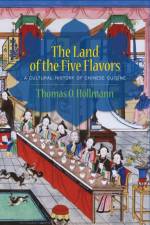
Renowned sinologist Thomas O. Hollmann tracks the growth of food culture in China from its earliest burial rituals to today's Western fast food restaurants, mapping Chinese cuisine's geographical variations and local customs, indigenous factors and foreign influences, trade routes, and ethnic associations. Hollmann details the food practices of major Chinese religions and the significance of eating and drinking in rites of passage and popular culture. He enriches his narrative with thirty of his favorite recipes and a selection of photographs, posters, paintings, sketches, and images of clay figurines and other objects excavated from tombs.Hollmann's award-winning history revisits the invention of noodles, the role of butchers and cooks in Chinese politics, debates over the origin of grape wines, and the causes of modern-day food contamination. He discusses local crop production, the use of herbs and spices, the relationship between Chinese food and economics, the influence of Chinese philosophy, and traditional dietary concepts and superstitions. Citing original Chinese sources, Hollmann uncovers fascinating aspects of daily Chinese life, constructing a multifaceted compendium that inspires a rich appreciation of Chinese arts and culture.
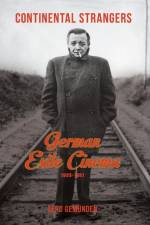
Hundreds of German-speaking film professionals took refuge in Hollywood during the 1930s and 1940s, making a lasting contribution to American cinema. Hailing from Austria, Hungary, Poland, Russia, and the Ukraine, as well as Germany, and including Ernst Lubitsch, Fred Zinnemann, Billy Wilder, and Fritz Lang, these multicultural, multilingual writers and directors betrayed distinct cultural sensibilities in their art. Gerd Gemunden focuses on Edgar G. Ulmer's The Black Cat (1934), William Dieterle's The Life of Emile Zola (1937), Ernst Lubitsch's To Be or Not to Be (1942), Bertolt Brecht and Fritz Lang's Hangmen Also Die (1943), Fred Zinnemann's Act of Violence (1948), and Peter Lorre's Der Verlorene (1951), engaging with issues of realism, auteurism, and genre while tracing the relationship between film and history, Hollywood politics and censorship, and exile and (re)migration.
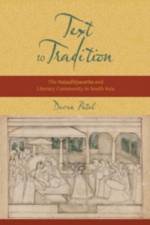
Written in the twelfth century, the Naisadhiyacarita (The Adventures of Nala, King of Nisadha) is a seminal Sanskrit poem beloved by South Asian literary communities for nearly a millennium. This volume introduces readers to the poem's author, his reading communities, the modes through which the poem has been read and used, the contexts through which it became canonical, its literary offspring, and the emotional power it still holds for the culture that values it.Text to Tradition privileges the intellectual, affective, and social forms of cultural practice that inform a region's people and institutions. It also proposes a new way to conduct literary historiography, understanding literary texts as "e;traditions"e; in their own right and emphasizing the various players and critical genres involved in their reception. The book underscores the importance of the close study of individual works to building a history of literary cultures. In addition, it creates a groundbreaking model for approaching the study of other venerated South Asian texts.
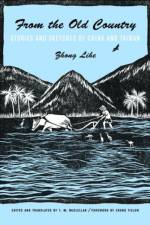
Though he lived most of his life in rural South Taiwan, Zhong Lihe spent several years in Manchuria and Peking, moving among an eclectic mix of ethnicities, social classes, and cultures. His fictional portraits unfold on Japanese battlefields and in Peking slums, as well as in the remote, impoverished hill-country villages and farms of his native Hakka districts. His scenic descriptions are deft and atmospheric, and his psychological explorations are acute. The first anthology to present his work in English, this volume features two novellas, ten short stories, and four short prose works.
Grounded in the personal narratives of twenty interracial couples with multiracial children, this volume uniquely explores interracial couples' encounters with racism and discrimination, partner difference, family identity, and counseling and therapy. It intimately portrays how race, class, and gender shape relationship dynamics and a partner's sense of belonging. Assessment tools and intervention techniques help professionals and scholars work effectively with multiracial families as they negotiate difference, resist familial and societal disapproval, and strive for increased intimacy. The book concludes with a discussion of interracial couples in cinema and literature, the sensationalization of multiracial relations in mass media, and how to further liberalize partner selection across racial borders.
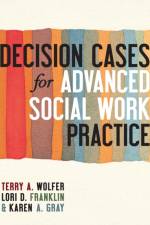
These fifteen cases take place in child welfare, mental health, hospital, hospice, domestic violence, refugee resettlement, veterans' administration, and school settings and reflect individual, family, group, and supervised social work practice. They confront common ethical and treatment issues and raise issues regarding practice interventions, programs, policies, and laws. Cases represent open-ended situations, encouraging students to apply knowledge from across the social work curriculum to develop problem-solving and critical-thinking skills.An instructor's manual with teaching notes is available by emailing: coursematerials@columbiauniversitypress.com.
A collage of original artwork, photographs, and ruminations that engage with modern and postmodern society, art, and technology.
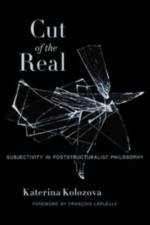
Following Francois Laruelle's nonstandard philosophy and the work of Judith Butler, Drucilla Cornell, Luce Irigaray, and Rosi Braidotti, Katerina Kolozova reclaims the relevance of categories traditionally rendered "e;unthinkable"e; by postmodern feminist philosophies, such as "e;the real,"e; "e;the one,"e; "e;the limit,"e; and "e;finality,"e; thus critically repositioning poststructuralist feminist philosophy and gender/queer studies.Poststructuralist (feminist) theory sees the subject as a purely linguistic category, as always already multiple, as always already nonfixed and fluctuating, as limitless discursivity, and as constitutively detached from the instance of the real. This reconceptualization is based on the exclusion of and dichotomous opposition to notions of the real, the one (unity and continuity), and the stable. The non-philosophical reading of postructuralist philosophy engenders new forms of universalisms for global debate and action, expressed in a language the world can understand. It also liberates theory from ideological paralysis, recasting the real as an immediately experienced human condition determined by gender, race, and social and economic circumstance.
The life course method compares an individual's long-life and late-life behaviors to gauge one's mental decay. Arguing the life course approach is the best and simplest model for tracking mental development, Lawrence J. Whalley unlocks the mysteries of brain functionality, illuminating the processes that affect the brain during aging, the causes behind these changes, and effective coping strategies. Whalley identifies the genetic factors that determine the pace of aging and the behaviors, starting in childhood, that influence how we age. Through vignettes, charts, and tables, he composes an accessible book for patients, family members, and caretakers struggling to make sense of a complex experience.
Abonner på vårt nyhetsbrev og få rabatter og inspirasjon til din neste leseopplevelse.
Ved å abonnere godtar du vår personvernerklæring.