












Gjør som tusenvis av andre bokelskere
Abonner på vårt nyhetsbrev og få rabatter og inspirasjon til din neste leseopplevelse.
Ved å abonnere godtar du vår personvernerklæring.Du kan når som helst melde deg av våre nyhetsbrev.

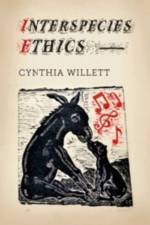
Interspecies Ethics explores animals' vast capacity for agency, justice, solidarity, humor, and communication across species. The social bonds diverse animals form provide a remarkable model for communitarian justice and cosmopolitan peace, challenging the human exceptionalism that drives modern moral theory. Situating biosocial ethics firmly within coevolutionary processes, this volume has profound implications for work in social and political thought, contemporary pragmatism, Africana thought, and continental philosophy.Interspecies Ethics develops a communitarian model for multispecies ethics, rebalancing the overemphasis on competition in the original Darwinian paradigm by drawing out and stressing the cooperationist aspects of evolutionary theory through mutual aid. The book's ethical vision offers an alternative to utilitarian, deontological, and virtue ethics, building its argument through rich anecdotes and clear explanations of recent scientific discoveries regarding animals and their agency. Geared toward a general as well as a philosophical audience, the text illuminates a variety of theories and contrasting approaches, tracing the contours of a postmoral ethics.
Starve and Immolate tells the story of leftist political prisoners in Turkey who waged a deadly struggle against the introduction of high security prisons by forging their lives into weapons. Weaving together contemporary and critical political theory with political ethnography, Banu Bargu analyzes the death fast struggle as an exemplary though not exceptional instance of self-destructive practices that are a consequence of, retort to, and refusal of the increasingly biopolitical forms of sovereign power deployed around the globe.Bargu chronicles the experiences, rituals, values, beliefs, ideological self-representations, and contentions of the protestors who fought cellular confinement against the background of the history of Turkish democracy and the treatment of dissent in a country where prisons have become sites of political confrontation. A critical response to Michel Foucault's Discipline and Punish, Starve and Immolate centers on new forms of struggle that arise from the asymmetric antagonism between the state and its contestants in the contemporary prison. Bargu ultimately positions the weaponization of life as a bleak, violent, and ambivalent form of insurgent politics that seeks to wrench the power of life and death away from the modern state on corporeal grounds and in increasingly theologized forms. Drawing attention to the existential commitment, sacrificial morality, and militant martyrdom that transforms these struggles into a complex amalgam of resistance, Bargu explores the global ramifications of human weapons' practices of resistance, their possibilities and limitations.
The health-care system in the United States is by far the most expensive in the world, yet its outcomes are decidedly mediocre in comparison with those of other countries. Poor communication between doctors and patients, Dennis Rosen argues, is at the heart of this disparity, a pervasive problem that damages the well-being of the patient and the integrity of the health-care system and society. Drawing upon research in biomedicine, sociology, and anthropology and integrating personal stories from his medical practice in three different countries (and as a patient), Rosen shows how important good communication between physicians and patients is to high-quality-and less-expensive-care. Without it, treatment adherence and preventive services decline, and the rates of medical complications, hospital readmissions, and unnecessary testing and procedures rise. Rosen illustrates the consequences of these problems from both the caregiver and patient perspectives and explores the socioeconomic and cultural factors that cause important information to be literally lost in translation. He concludes with a prescriptive chapter aimed at building the cultural competencies and communication skills necessary for higher-quality, less-expensive care, making it more satisfying for all involved.
The first book to unpack American cinema's long history of representing death, this work considers movie sequences in which the process of dying becomes an exercise in legibility and exploration for the camera. Reading attractions-based cinema, narrative films, early sound cinema, and films using voiceover or images of medical technology, C. Scott Combs connects the slow or static process of dying to formal film innovation throughout the twentieth century. He looks at Thomas Edison's Electrocuting an Elephant (1903), D. W. Griffith's The Country Doctor (1909), John Ford's How Green Was My Valley (1941), Billy Wilder's Sunset Boulevard (1950), Stanley Kubrick's 2001: A Space Odyssey (1968), and Clint Eastwood's Million Dollar Baby (2004), among other films, to argue against the notion that film cannot capture the end of life because it cannot stop moving forward. Instead, he shows how the end of dying occurs more than once and in more than one place, understanding death in cinema as constantly in flux, wedged between technological precision and embodied perception.
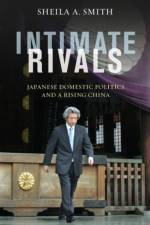
No country feels China's rise more deeply than Japan. Through intricate case studies of visits by Japanese politicians to the Yasukuni Shrine, conflicts over the boundaries of economic zones in the East China Sea, concerns about food safety, and strategies of island defense, Sheila A. Smith explores the policy issues testing the Japanese government as it tries to navigate its relationship with an advancing China. Smith finds that Japan's interactions with China extend far beyond the negotiations between diplomats and include a broad array of social actors intent on influencing the Sino-Japanese relationship. Some of the tensions complicating Japan's encounters with China, such as those surrounding the Yasukuni Shrine or territorial disputes, have deep roots in the postwar era, and political advocates seeking a stronger Japanese state organize themselves around these causes. Other tensions manifest themselves during the institutional and regulatory reform of maritime boundary and food safety issues. Smith scrutinizes the role of the Japanese government in coping with contention as China's influence grows and Japanese citizens demand more protection. Underlying the government's efforts is Japan's insecurity about its own capacity for change and its waning status as the leading economy in Asia. For many, China's rise means Japan's decline, and Smith suggests how Japan can maintain its regional and global clout as confidence in its postwar diplomatic and security approach diminishes.
Race, while drawn from the visual cues of human diversity, is an idea with a measurable past, an identifiable present, and an uncertain future. The concept of race has been at the center of both triumphs and tragedies in American history and has had a profound effect on the human experience. Race Unmasked revisits the origins of commonly held beliefs about the scientific nature of racial differences, examines the roots of the modern idea of race, and explains why race continues to generate controversy as a tool of classification even in our genomic age.Surveying the work of some of the twentieth century's most notable scientists, Race Unmasked reveals how genetics and related biological disciplines formed and preserved ideas of race and, at times, racism. A gripping history of science and scientists, Race Unmasked elucidates the limitations of a racial worldview and throws the contours of our current and evolving understanding of human diversity into sharp relief.
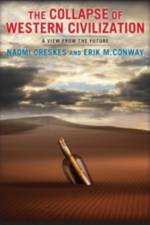
The year is 2393, and the world is almost unrecognizable. Clear warnings of climate catastrophe went ignored for decades, leading to soaring temperatures, rising sea levels, widespread drought and-finally-the disaster now known as the Great Collapse of 2093, when the disintegration of the West Antarctica Ice Sheet led to mass migration and a complete reshuffling of the global order. Writing from the Second People's Republic of China on the 300th anniversary of the Great Collapse, a senior scholar presents a gripping and deeply disturbing account of how the children of the Enlightenment-the political and economic elites of the so-called advanced industrial societies-failed to act, and so brought about the collapse of Western civilization. In this haunting, provocative work of science-based fiction, Naomi Oreskes and Eric M. Conway imagine a world devastated by climate change. Dramatizing the science in ways traditional nonfiction cannot, the book reasserts the importance of scientists and the work they do and reveals the self-serving interests of the so called "e;carbon combustion complex"e; that have turned the practice of science into political fodder. Based on sound scholarship and yet unafraid to speak boldly, this book provides a welcome moment of clarity amid the cacophony of climate change literature.
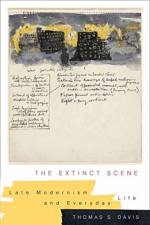
In 1935, the English writer Stephen Spender wrote that the historical pressures of his era should "e;turn the reader's and writer's attention outwards from himself to the world."e; Combining historical, formalist, and archival approaches, Thomas S. Davis examines late modernism's decisive turn toward everyday life, locating in the heightened scrutiny of details, textures, and experiences an intimate attempt to conceptualize geopolitical disorder.The Extinct Scene reads a range of mid-century texts, films, and phenomena that reflect the decline of the British Empire and seismic shifts in the global political order. Davis follows the rise of documentary film culture and the British Documentary Film Movement, especially the work of John Grierson, Humphrey Jennings, and Basil Wright. He then considers the influence of late modernist periodical culture on social attitudes and customs, and presents original analyses of novels by Virginia Woolf, Christopher Isherwood, and Colin MacInnes; the interwar travel narratives of W. H. Auden, Christopher Isherwood, and George Orwell; the wartime gothic fiction of Elizabeth Bowen; the poetry of H. D.; the sketches of Henry Moore; and the postimperial Anglophone Caribbean works of Vic Reid, Sam Selvon, and George Lamming. By considering this group of writers and artists, Davis recasts late modernism as an art of scale: by detailing the particulars of everyday life, these figures could better project large-scale geopolitical events and crises.
Ouyi Zhixu (1599-1655) was an eminent Chinese Buddhist monk who, contrary to his contemporaries, believed karma could be changed. Through vows, divination, repentance rituals, and ascetic acts such as burning and blood writing, he sought to alter what others understood as inevitable and inescapable. Drawing attention to Ouyi's unique reshaping of religious practice, Living Karma reasserts the significance of an overlooked individual in the modern development of Chinese Buddhism.While Buddhist studies scholarship tends to privilege textual analysis, Living Karma promotes a balanced study of ritual practice and writing, treating Ouyi's texts as ritual objects and his reading and writing as religious acts. Each chapter addresses a specific religious practice-writing, divination, repentance, vows, and bodily rituals-offering first a diachronic overview of each practice within the history of Chinese Buddhism and then a synchronic analysis of each phenomenon through close readings of Ouyi's work. This book sheds much-needed light on a little-known figure and his representation of karma, which proved to be a seminal innovation in the religious thought of late imperial China.
Since the days of early television, video has been an indispensable part of culture, society, and moving-image media industries. Over the decades, it has been an avant-garde artistic medium, a high-tech consumer gadget, a format for watching movies at home, a force for democracy, and the ultimate, ubiquitous means of documenting reality. In the twenty-first century, video is the name we give all kinds of moving images. We know it as an adaptable medium that bridges analog and digital, amateur and professional, broadcasting and recording, television and cinema, art and commercial culture, and old media and new digital networks. In this history, Michael Z. Newman casts video as a medium of shifting value and legitimacy in relation to other media and technologies, particularly film and television. Video has been imagined as more or less authentic or artistic than movies or television, as more or less democratic and participatory, as more or less capable of capturing the real. Techno-utopian rhetoric has repeatedly represented video as a revolutionary medium, promising to solve the problems of the past and the present-often the very problems associated with television and the society shaped by it-and to deliver a better future. Video has also been seen more negatively, particularly as a threat to movies and their culture. This study considers video as an object of these hopes and fears and builds an approach to thinking about the concept of the medium in terms of cultural status.
In Stereotype confronts the importance of cultural stereotypes in shaping the ethics and reach of global literature. Mrinalini Chakravorty focuses on the seductive force and explanatory power of stereotypes in multiple South Asian contexts, whether depicting hunger, crowdedness, filth, slums, death, migrant flight, terror, or outsourcing. She argues that such commonplaces are crucial to defining cultural identity in contemporary literature and shows how the stereotype's ambivalent nature exposes the crises of liberal development in South Asia.In Stereotype considers the influential work of Salman Rushdie, Aravind Adiga, Michael Ondaatje, Monica Ali, Mohsin Hamid, and Chetan Bhagat, among others, to illustrate how stereotypes about South Asia provide insight into the material and psychic investments of contemporary imaginative texts: the colonial novel, the transnational film, and the international best-seller. Probing circumstances that range from the independence of the Indian subcontinent to poverty tourism, civil war, migration, domestic labor, and terrorist radicalism, Chakravorty builds an interpretive lens for reading literary representations of cultural and global difference. In the process, she also reevaluates the fascination with transnational novels and films that manufacture global differences by staging intersubjective encounters between cultures through stereotypes.
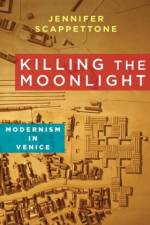
As a city that seems to float between Europe and Asia, removed by a lagoon from the tempos of terra firma, Venice has long seduced the Western imagination. Since the 1797 fall of the Venetian Republic, fantasies about the sinking city have engendered an elaborate series of romantic cliches, provoking conflicting responses: some modern artists and intellectuals embrace the resistance to modernity manifest in Venice's labyrinthine premodern form and temporality, whereas others aspire to modernize by "e;killing the moonlight"e; of Venice, in the Futurists' notorious phrase.Spanning the history of literature, art, and architecture-from John Ruskin, Henry James, and Ezra Pound to Manfredo Tafuri, Italo Calvino, Jeanette Winterson, and Robert Coover-Killing the Moonlight tracks the pressures that modernity has placed on the legacy of romantic Venice, and the distinctive strains of aesthetic invention that resulted from the clash. In Venetian incarnations of modernism, the anachronistic urban fabric and vestigial sentiment that both the nation-state of Italy and the historical avant-garde would cast off become incompletely assimilated parts of the new. Killing the Moonlight brings Venice into the geography of modernity as a living city rather than a metaphor for death, and presents the archipelago as a crucible for those seeking to define and transgress the conceptual limits of modernism. In strategic detours from the capitals of modernity, the book redrafts the confines of modernist culture in both geographical and historical terms.
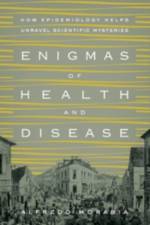
This book is the principal account of epidemiology's role in the development of effective measures to identify, prevent, and treat diseases. Throughout history, epidemiologists have challenged conventional knowledge, elucidating mysteries of causality and paving the way for remedies. From the outbreak of the bubonic plague, cholera, and cancer to the search for an effective treatment of AIDS and the origins of Alzheimer's disease, epidemiological thought has been crucial in shaping our understanding of population health issues. Alfredo Morabia's lucid retelling sheds new light on the historical triumphs of epidemiological research and allows for contemporary readers, patients, and nontechnical audiences to make sense of the immense amount of health information disseminated by the media. By drawing from both historical and contemporary sources, Morabia provides the reader with the tools to differentiate health beliefs from health knowledge. The book covers important topics, including the H1N1 swine flu epidemic, breast cancer, the effects of aspirin, and the link between cigarettes and lung cancer.
Leading paleontologist J. David Archibald explores the rich history of visual metaphors for biological order from ancient times to the present and their influence on humans' perception of their place in nature, offering uncommon insight into how we went from standing on the top rung of the biological ladder to embodying just one tiny twig on the tree of life. He begins with the ancient but still misguided use of ladders to show biological order, moving then to the use of trees to represent seasonal life cycles and genealogies by the Romans. The early Christian Church then appropriated trees to represent biblical genealogies. The late eighteenth century saw the tree reclaimed to visualize relationships in the natural world, sometimes with a creationist view, but in other instances suggesting evolution. Charles Darwin's On the Origin of Species (1859) exorcised the exclusively creationist view of the "e;tree of life,"e; and his ideas sparked an explosion of trees, mostly by younger acolytes in Europe. Although Darwin's influence waned in the early twentieth century, by midcentury his ideas held sway once again in time for another and even greater explosion of tree building, generated by the development of new theories on how to assemble trees, the birth of powerful computing, and the emergence of molecular technology. Throughout Archibald's far-reaching study, and with the use of many figures, the evolution of "e;tree of life"e; iconography becomes entwined with our changing perception of the world and ourselves.
In Winnebago Nation, popular critic James B. Twitchell takes a light-hearted look at the culture and industry behind the yearning to spend the night in one's car. For the young the roadtrip is a coming-of-age ceremony; for those later in life it is the realization of a lifelong desire to be spontaneous, nomadic, and free. Informed by his own experiences on the road, Twitchell recounts the RV's origins and evolution over the twentieth century; its rise, fall, and rebirth as a cultural icon; its growing mechanical complexity as it evolved from an estate wagon to a converted bus to a mobile home; and its role in bolstering and challenging conceptions of American identity. Mechanical yet dreamy, independent yet needful, solitary yet clubby, adventurous yet homebound, life in a mobile home is a distillation of the American character and an important embodiment of American exceptionalism, (Richie Rich and Hobo Hank spend time in essentially the same rig at the same campground, albeit for different reasons and in different levels of comfort.) The frontier may be tapped out but we still yearn for the exploratory life. Twitchell concludes with his thoughts on the future of RV communities and the possibility of mobile cities becoming a real part of the American landscape.
Leslie S. Pratch is a practicing psychologist who focuses on assessing and coaching executives who occupy or are candidates for top positions in business organizations. In this book, she shares insights from more than twenty years of executive evaluations and offers an empirical method of identifying executives who will be effective within organizations-and to flag those who will ultimately fail-by evaluating hidden aspects of personality and character. Pratch compares candidates with impressive careers and tries to determine which are likely to act with consistently high integrity and exhibit sound, timely judgment when faced with unanticipated business problems. Central to effective leadership is a psychological quality called "e;active coping,"e; which Pratch defines and explores by referencing case studies, historical figures, and her own scholarly work. This book speaks not only to those in hiring positions and their advisors but also more widely to leaders and anyone who wishes to learn more about their own character and the abilities of those around them. Pratch offers knowledge, asks questions, and challenges common perceptions, providing a practical tool for those in business and for the general reader.
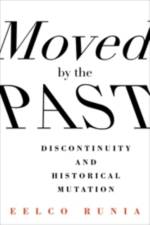
Historians go to great lengths to avoid confronting discontinuity, searching for explanations as to why such events as the fall of the Berlin Wall, George W. Bush's invasion of Iraq, and the introduction of the euro logically develop from what came before. Moved by the Past radically breaks with this tradition of predating the past, incites us to fully acknowledge the discontinuous nature of discontinuities, and proposes to use the fact that history is propelled by unforeseeable leaps and bounds as a starting point for a truly evolutionary conception of history. Integrating research from a variety of disciplines, Eelco Runia identifies two modes of being "e;moved by the past"e;: regressive and revolutionary. In the regressive mode, the past may either overwhelm us-as in nostalgia-or provoke us to act out what we believe to be solidly dead. When we are moved by the past in a revolutionary sense, we may be said to embody history: we burn our bridges behind us and create accomplished facts we have no choice but to live up to. In the final thesis of Moved by the Past, humans energize their own evolution by habitually creating situations ("e;catastrophes"e; or sublime historical events) that put a premium on mutations. This book therefore illuminates how every now and then we chase ourselves away from what we were and force ourselves to become what we are. Proposing a simple yet radical change in perspective, Runia profoundly reorients how we think and theorize about history.
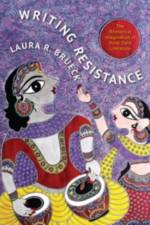
Writing Resistance is the first close study of the growing body of contemporary Hindi-language Dalit (low caste) literature in India. The Dalit literary movement has had an immense sociopolitical and literary impact on various Indian linguistic regions, yet few scholars have attempted to situate the form within contemporary critical frameworks. Laura R. Brueck's approach goes beyond recognizing and celebrating the subaltern speaking, emphasizing the sociopolitical perspectives and literary strategies of a range of contemporary Dalit writers working in Hindi.Brueck explores several essential questions: what makes Dalit literature Dalit? What makes it good? Why is this genre important, and where does it oppose or intersect with other bodies of Indian literature? She follows the debate among Dalit writers as they establish a specifically Dalit literary critical approach, underscoring the significance of the Dalit literary sphere as a "e;counterpublic"e; generating contemporary Dalit social and political identities. Brueck then performs close readings of contemporary Hindi Dalit literary prose narratives, focusing on the aesthetic and stylistic strategies deployed by writers whose class, gender, and geographic backgrounds shape their distinct voices. By reading Dalit literature as literature, this study unravels the complexities of its sociopolitical and identity-based origins.
Since the publication of The Savage Detectives in 2007, the work of Roberto Bolano (1953-2003) has achieved an acclaim rarely enjoyed by literature in translation. Chris Andrews, a leading translator of Bolano's work into English, explores the singular achievements of the author's oeuvre, engaging with its distinct style and key thematic concerns, incorporating his novels and stories into the larger history of Latin American and global literary fiction.Andrews provides new readings and interpretations of Bolano's novels, including 2666, The Savage Detectives, and By Night in Chile, while at the same time examining the ideas and narrative strategies that unify his work. He begins with a consideration of the reception of Bolano's fiction in English translation, examining the reasons behind its popularity. Subsequent chapters explore aspects of Bolano's fictional universe and the political, ethical, and aesthetic values that shape it. Bolano emerges as the inventor of a prodigiously effective "e;fiction-making system,"e; a subtle handler of suspense, a chronicler of aimlessness, a celebrator of courage, an anatomist of evil, and a proponent of youthful openness. Written in a clear and engaging style, Roberto Bolano's Fiction offers an invaluable understanding of one of the most important authors of the last thirty years.
Foreign-backed funding for education does not always stabilize a country and enhance its statebuilding efforts. Dana Burde shows how aid to education in Afghanistan bolstered conflict both deliberately in the 1980s through violence-infused, anti-Soviet curricula and inadvertently in the 2000s through misguided stabilization programs. She also reveals how dominant humanitarian models that determine what counts as appropriate aid have limited attention and resources toward education, in some cases fueling programs that undermine their goals.For education to promote peace in Afghanistan, Burde argues we must expand equal access to quality community-based education and support programs that increase girls' and boys' attendance at school. Referring to a recent U.S. effort that has produced strong results in these areas, Burde commends the program's efficient administration and good quality, and its neutral curriculum, which can reduce conflict and build peace in lasting ways. Drawing on up-to-date research on humanitarian education work amid conflict zones around the world and incorporating insights gleaned from extensive fieldwork in Afghanistan and Pakistan, Burde recalculates and improves a popular formula for peace.
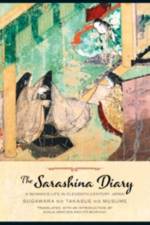
A thousand years ago, a young Japanese girl embarked on a journey from the wild East Country to the capital. She began a diary that she would continue to write for the next forty years and compile later in life, bringing lasting prestige to her family. Some aspects of the author's life and text seem curiously modern. She married at age thirty-three and identified herself as a reader and writer more than as a wife and mother. Enthralled by romantic fiction, she wrote extensively about the disillusioning blows that reality can deal to fantasy. The Sarashina Diary is a portrait of the writer as reader and an exploration of the power of reading to shape one's expectations and aspirations. As a person and an author, this writer presages the medieval era in Japan with her deep concern for Buddhist belief and practice. Her narrative's main thread follows a trajectory from youthful infatuation with romantic fantasy to the disillusionment of age and concern for the afterlife; yet, at the same time, many passages erase the dichotomy between literary illusion and spiritual truth. This new translation captures the lyrical richness of the original text while revealing its subtle structure and ironic meaning. The introduction highlights the poetry in the Sarashina Diary and the juxtaposition of poetic passages and narrative prose, which brings meta-meanings into play. The translators' commentary offers insight into the author's family and world, as well as the fascinating textual legacy of her work.
Eric Hayot teaches graduate students and faculty in literary and cultural studies how to think and write like a professional scholar. From granular concerns, such as sentence structure and grammar, to big-picture issues, such as adhering to genre patterns for successful research and publishing and developing productive and rewarding writing habits, Hayot helps ambitious students, newly minted Ph.D.'s, and established professors shape their work and develop their voices.Hayot does more than explain the techniques of academic writing. He aims to adjust the writer's perspective, encouraging scholars to think of themselves as makers and doers of important work. Scholarly writing can be frustrating and exhausting, yet also satisfying and crucial, and Hayot weaves these experiences, including his own trials and tribulations, into an ethos for scholars to draw on as they write. Combining psychological support with practical suggestions for composing introductions and conclusions, developing a schedule for writing, using notes and citations, and structuring paragraphs and essays, this guide to the elements of academic style does its part to rejuvenate scholarship and writing in the humanities.
Koichi Shinohara traces the evolution of Esoteric Buddhist rituals from the simple recitation of spells in the fifth century to complex systems involving image worship, mandala initiation, and visualization practices in the ninth century. He presents an important new reading of a seventh-century Chinese text called the Collected Dharani Sutras, which shows how earlier rituals for specific deities were synthesized into a general Esoteric initiation ceremony and how, for the first time, the notion of an Esoteric Buddhist pantheon emerged.In the Collected Dharani Sutras, rituals for specific deities were typically performed around images of the deities, yet Esoteric Buddhist rituals in earlier sources involved the recitation of spells rather than the use of images. The first part of this study explores how such simpler rituals came to be associated with the images of specific deities and ultimately gave rise to the general Esoteric initiation ceremony described in the crucial example of the All-Gathering mandala ritual in the Collected Dharani Sutras. The visualization practices so important to later Esoteric Buddhist rituals were absent from this ceremony, and their introduction would fundamentally change Esoteric Buddhist practice. This study examines the translations of dharani sutras made by Bodhiruci in the early eighth century and later Esoteric texts, such as Yixing's commentary on the Mahavairocana sutra and Amoghavajra's ritual manuals, to show how incorporation of visualization greatly enriched Esoteric rituals and helped develop elaborate iconographies for the deities. Over time, the ritual function of images became less certain, and the emphasis shifted toward visualization. This study clarifies the complex relationship between images and ritual, changing how we perceive Esoteric Buddhist art as well as ritual.
In these fascinating interviews, winemakers from the United States and abroad clarify the complex process of converting grapes into wine, with more than forty vintners candidly discussing how a combination of talent, passion, and experience shape the outcome of their individual wines. Each winemaker details their personal approach to the various steps required to convert grapes into wine. Natalie Berkowitz speaks to winemakers from different backgrounds who work in diverse wine-producing regions, including Chile, England, France, Germany, Greece, Israel, Italy, Portugal, Slovenia, Spain, and the United States. They talk about familiar and unfamiliar grape varietals, their struggles with local terroirs, and the vagaries of Mother Nature. Some represent small family wineries with limited production while others work for corporations producing hundreds of thousands of bottles. Each individual offers rare insight into how new technologies are revolutionizing historic winemaking practices. The interviews are supplemented with personal recipes and maps of winemaking regions. An aroma wheel captures the vast array of wine's complex flavors and aromas.
A professor, critic, and insatiable reader, Jenny Davidson investigates the passions that drive us to fall in love with certain sentences over others and the larger implications of our relationship with writing style. At once playful and serious, immersive and analytic, her book shows how style elicits particular kinds of moral judgments and subjective preferences that turn reading into a highly personal and political act. Melding her experiences as reader and critic, Davidson opens new vistas onto works by Jane Austen, Henry James, Marcel Proust, and Thomas Pynchon; adds richer dimension to critiques of W. G. Sebald, Alan Hollinghurst, Thomas Bernhard, and Karl Ove Knausgaard; and allows for a sophisticated appreciation of popular fictions by Stephen King, Neil Gaiman, Lionel Shriver, George Pelecanos, and Helen DeWitt. She privileges diction, syntax, point of view, and structure over plot and character, identifying the intimate mechanics that draw us in to literature's sensual frameworks and move us to feel, identify, and relate. Davidson concludes with a reading list of her favorite titles so others can share in her literary adventures and get to know better the imprint of her own reading style.
The 1970s brought a new understanding of the biological and intellectual impact of environmental crises on human beings. As efforts to prevent ecological and bodily injury aligned, a new literature of sickness emerged. "e;Ecosickness fiction"e; imaginatively rethinks the link between these forms of threat and the sick body to bring readers to environmental consciousness. Tracing the development of ecosickness through a compelling archive of contemporary U.S. novels and memoirs, Ecosickness in Contemporary U.S. Fiction establishes that we cannot comprehend environmental and medical dilemmas through data alone and must call on the sometimes surprising emotions that literary metaphors, tropes, and narratives deploy. In chapters on David Foster Wallace, Richard Powers, Leslie Marmon Silko, Marge Piercy, Jan Zita Grover, and David Wojnarowicz, Heather Houser shows how narrative affects such as wonder and disgust organize perception of an endangered world and orient us ethically toward it. The study builds the connective tissue between contemporary literature, ecocriticism, affect studies, and the medical humanities. It also positions ecosickness fiction relative to emergent forms of environmentalism and technoscientific innovations such as regenerative medicine and alternative ecosystems. Houser models an approach to contemporary fiction as a laboratory for affective changes that spark or squelch ethical projects.
Jerusalem's formal political borders reveal neither the dynamics of power in the city nor the underlying factors that make an agreement between Israel and the Palestinians so difficult. The lines delineating Israeli authority are frequently different from those delineating segregated housing or areas of uneven service provision or parallel national electoral districts of competing educational jurisdictions. In particular, the city's large number of holy sites and restricted religious compounds create enclaves that continually threaten to undermine the Israeli state's authority and control over the city. This lack of congruity between political control and the actual spatial organization and everyday use of the city leaves many areas of occupied East Jerusalem in a kind of twilight zone where citizenship, property rights, and the enforcement of the rule of law are ambiguously applied.Michael Dumper plots a history of Jerusalem that examines this intersecting and multileveled matrix and, in so doing, is able to portray the constraints on Israeli control over the city and the resilience of Palestinian enclaves after forty-five years of Israeli occupation. Adding to this complex mix is the role of numerous external influences-religious, political, financial, and cultural-so that the city is also a crucible for broader contestation. While the Palestinians may not return to their previous preeminence in the city, neither will Israel be able to assert a total and irreversible dominance. His conclusion is that the city will not only have to be shared but that the sharing will be based upon these many borders and the interplay between history, geography, and religion.
The apostle Paul deals extensively with gender, embodiment, and desire in his authentic letters, yet many of the contemporary philosophers interested in his work downplay these aspects of his thought. Christ Without Adam is the first book to examine the role of gender and sexuality in the turn to the apostle Paul in recent Continental philosophy. It builds a constructive proposal for embodied Christian theological anthropology in conversation with-and in contrast to-the "e;Paulinisms"e; of Stanislas Breton, Alain Badiou, and Slavoj iek.Paul's letters bequeathed a crucial anthropological aporia to the history of Christian thought, insofar as the apostle sought to situate embodied human beings typologically with reference to Adam and Christ, but failed to work out the place of sexual difference within this classification. As a result, the space between Adam and Christ has functioned historically as a conceptual and temporal interval in which Christian anthropology poses and re-poses theological dilemmas of embodied difference. This study follows the ways in which the appropriations of Paul by Breton, Badiou, and iek have either sidestepped or collapsed this interval, a crucial component in their articulations of a universal Pauline subject. As a result, sexual difference fails to materialize in their readings as a problem with any explicit force. Against these readings, Dunning asserts the importance of the Pauline Adam-Christ typology, not as a straightforward resource but as a witness to a certain necessary failure-the failure of the Christian tradition to resolve embodied difference without remainder. This failure, he argues, is constructive in that it reveals the instability of sexual difference, both masculine and feminine, within an anthropological paradigm that claims to be universal yet is still predicated on male bodies.
The launch of the Dutch East India Company in 1602 initiated Amsterdam's transformation from a regional market town into a dominant financial center. The Company introduced easily transferable shares, and within days buyers had begun to trade them. Soon the public was engaging in a variety of complex transactions, including forwards, futures, options, and bear raids, and by 1680 the techniques deployed in the Amsterdam market were as sophisticated as any we practice today.Lodewijk Petram's eye-opening history demystifies financial instruments by linking today's products to yesterday's innovations, tying the market's operation to the behavior of individuals and the workings of the world around them. Traveling back to seventeenth-century Amsterdam, Petram visits the harbor and other places where merchants met to strike deals. He bears witness to the goings-on at a notary's office and sits in on the consequential proceedings of a courtroom. He describes in detail the main players, investors, shady characters, speculators, and domestic servants and other ordinary folk, who all played a role in the development of the market and its crises. His history clarifies concerns that investors still struggle with today, such as fraud, the value of information, trust and the place of honor, managing diverging expectations, and balancing risk, and does so in a way that is vivid, relatable, and critical to understanding our contemporary financial predicament.
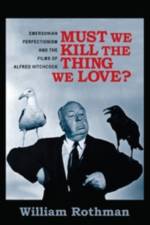
William Rothman argues that the driving force of Hitchcock's work was his struggle to reconcile the dark vision of his favorite Oscar Wilde quote, "e;Each man kills the thing he loves,"e; with the quintessentially American philosophy, articulated in Emerson's writings, that gave classical Hollywood movies of the New Deal era their extraordinary combination of popularity and artistic seriousness. A Hitchcock thriller could be a comedy of remarriage or a melodrama of an unknown woman, both Emersonian genres, except for the murderous villain and godlike author, Hitchcock, who pulls the villain's strings-and ours. Because Hitchcock believed that the camera has a murderous aspect, the question "e;What if anything justifies killing?,"e; which every Hitchcock film engages, was for him a disturbing question about his own art. Tracing the trajectory of Hitchcock's career, Rothman discerns a progression in the films' meditations on murder and artistic creation. This progression culminates in Marnie (1964), Hitchcock's most controversial film, in which Hitchcock overcame his ambivalence and fully embraced the Emersonian worldview he had always also resisted.Reading key Emerson passages with the degree of attention he accords to Hitchcock sequences, Rothman discovers surprising affinities between Hitchcock's way of thinking cinematically and the philosophical way of thinking Emerson's essays exemplify. He finds that the terms in which Emerson thought about reality, about our "e;flux of moods,"e; about what it is within us that never changes, about freedom, about America, about reading, about writing, and about thinking are remarkably pertinent to our experience of films and to thinking and writing about them. He also reflects on the implications of this discovery, not only for Hitchcock scholarship but also for film criticism in general.
Abonner på vårt nyhetsbrev og få rabatter og inspirasjon til din neste leseopplevelse.
Ved å abonnere godtar du vår personvernerklæring.