










Gjør som tusenvis av andre bokelskere
Abonner på vårt nyhetsbrev og få rabatter og inspirasjon til din neste leseopplevelse.
Ved å abonnere godtar du vår personvernerklæring.Du kan når som helst melde deg av våre nyhetsbrev.

Carrie Noland approaches Negritude as an experimental, text-based poetic movement developed by diasporic authors of African descent through the means of modernist print culture. Engaging primarily the works of Aime Cesaire and Leon-Gontran Damas, Noland shows how the demands of print culture alter the personal voice of each author, transforming an empirical subjectivity into a hybrid, textual entity that she names, after Theodor Adorno, an "e;aesthetic subjectivity."e; This aesthetic subjectivity, transmitted by the words on the page, must be actualized-performed, reiterated, and created anew-by each reader, at each occasion of reading. Lyric writing and lyric reading therefore attenuate the link between author and phenomenalized voice. Yet the Negritude poem insists upon its connection to lived experience even as it emphasizes its printed form. Ironically, a purely formalist reading would have to ignore the ways formal-and not merely thematic-elements point toward the poem's own conditions of emergence. Blending archival research on the historical context of Negritude with theories of the lyric "e;voice,"e; Noland argues that Negritude poems present a challenge to both form-based (deconstructive) theories and identity-based theories of poetic representation. Through close readings, she reveals that the racialization of the author places pressure on a lyric regime of interpretation, obliging us to reconceptualize the relation of author to text in poetries of the first person.
European intellectuals of the 1950s dismissed American culture as nothing more than cowboy movies and the A-bomb. In response, American cultural diplomats tried to show that the United States had something to offer beyond military might and commercial exploitation. Through literary magazines, traveling art exhibits, touring musical shows, radio programs, book translations, and conferences, they deployed the revolutionary aesthetics of modernism to prove-particularly to the leftists whose Cold War loyalties they hoped to secure-that American art and literature were aesthetically rich and culturally significant. Yet by repurposing modernism, American diplomats and cultural authorities turned the avant-garde into the establishment. They remade the once revolutionary movement into a content-free collection of artistic techniques and styles suitable for middlebrow consumption. Cold War Modernists documents how the CIA, the State Department, and private cultural diplomats transformed modernist art and literature into pro-Western propaganda during the first decade of the Cold War. Drawing on interviews, previously unknown archival materials, and the stories of such figures and institutions as William Faulkner, Stephen Spender, Irving Kristol, James Laughlin, and Voice of America, Barnhisel reveals how the U.S. government reconfigured modernism as a trans-Atlantic movement, a joint endeavor between American and European artists, with profound implications for the art that followed and for the character of American identity.
Eric Walrond (1898-1966) was a writer, journalist, caustic critic, and fixture of 1920s Harlem. His short story collection, Tropic Death, was one of the first efforts by a black author to depict Caribbean lives and voices in American fiction. Restoring Walrond to his proper place as a luminary of the Harlem Renaissance, this biography situates Tropic Death within the author's broader corpus and positions the work as a catalyst and driving force behind the New Negro literary movement in America.James Davis follows Walrond from the West Indies to Panama, New York, France, and finally England. He recounts his relationships with New Negro authors such as Countee Cullen, Charles S. Johnson, Zora Neale Hurston, Alain Locke, and Gwendolyn Bennett, as well as the white novelist Carl Van Vechten. He also recovers Walrond's involvement with Marcus Garvey's journal Negro World and the National Urban League journal Opportunity and examines the writer's work for mainstream venues, including Vanity Fair. In 1929, Walrond severed ties with Harlem, but he did not disappear. He contributed to the burgeoning anticolonial movement and print culture centered in England and fueled by C. L. R. James, George Padmore, and other Caribbean expatriates. His history of Panama, shelved by his publisher during the Great Depression, was the first to be written by a West Indian author. Unearthing documents in England, Panama, and the United States, and incorporating interviews, criticism of Walrond's fiction and journalism, and a sophisticated account of transnational black cultural formations, Davis builds an eloquent and absorbing narrative of an overlooked figure and his creation of modern American and world literature.
Set in contemporary Nagasaki, the six short stories in this collection draw a chilling portrait of the ongoing trauma of the detonation of the atomic bomb. Whether they experienced the destruction of the city directly or heard about it from survivors, the characters in these tales filter their pain and alienation through their Catholic faith, illuminating a side of Japanese culture little known in the West. Many of them are descended from the "e;hidden Christians"e; who continued to practice their religion in secret during the centuries when it was outlawed in Japan. Urakami Cathedral, the center of Japanese Christian life, stood at ground zero when the bomb fell.In "e;Birds,"e; a man in his sixties reflects on his life as a husband and father. Just a baby when he was found crying in the rubble near ground zero, he does not know who his parents were. His birthday is set as the day the bomb was dropped. In other stories, a woman is haunted by her brief affair with a married man, and the parents of a schizophrenic man struggle to come to terms with the murder their son committed. These characters battle with guilt, shame, loss, love, and the limits of human understanding. Ground Zero, Nagasaki vividly depicts a city and people still scarred by the memory of August 9, 1945.
Taking a panoramic view of Korea's dynamic literary production in the final decade of Japanese rule, When the Future Disappears locates the imprint of a new temporal sense in Korean modernism: the impression of time interrupted, with no promise of a future. As colonial subjects of an empire headed toward total war, Korean writers in this global fascist moment produced some of the most sophisticated writings of twentieth-century modernism.Yi T'aejun, Ch'oe Myongik, Im Hwa, So Insik, Ch'oe Chaeso, Pak T'aewon, Kim Namch'on, and O Changhwan, among other Korean writers, lived through a rare colonial history in which their vernacular language was first inducted into the modern, only to be shut out again through the violence of state power. The colonial suppression of Korean-language publications was an effort to mobilize toward war, and it forced Korean writers to face the loss of their letters and devise new, creative forms of expression. Their remarkable struggle reflects the stark foreclosure at the heart of the modern colonial experience. Straddling cultural, intellectual, and literary history, this book maps the different strategies, including abstraction, irony, paradox, and even silence, that Korean writers used to narrate life within the Japanese empire.
Winner of the Kobayashi Hideo Award, The Fall of Language in the Age of English lays bare the struggle to retain the brilliance of one's own language in this period of English-language dominance. Born in Tokyo but raised and educated in the United States, Minae Mizumura acknowledges the value of a universal language in the pursuit of knowledge yet also embraces the different ways of understanding offered by multiple tongues. She warns against losing this precious diversity.Universal languages have always played a pivotal role in advancing human societies, Mizumura shows, but in the globalized world of the Internet, English is fast becoming the sole common language of humanity. The process is unstoppable, and striving for total language equality is delusional-and yet, particular kinds of knowledge can be gained only through writings in specific languages.Mizumura calls these writings "e;texts"e; and their ultimate form "e;literature."e; Only through literature and, more fundamentally, through the diverse languages that give birth to a variety of literatures, can we nurture and enrich humanity. Incorporating her own experiences as a writer and a lover of language and embedding a parallel history of Japanese, Mizumura offers an intimate look at the phenomena of individual and national expression.
Since the 1990s, Chinese literary enthusiasts have explored new spaces for creative expression online, giving rise to a modern genre that has transformed Chinese culture and society. Ranging from the self-consciously avant-garde to the pornographic, web-based writing has introduced innovative forms, themes, and practices into Chinese literature and its aesthetic traditions. Conducting the first comprehensive survey in English of this phenomenon, Michel Hockx describes in detail the types of Chinese literature taking shape right now online and their novel aesthetic, political, and ideological challenges. Offering a unique portal into postsocialist Chinese culture, he presents a complex portrait of internet culture and control in China that avoids one-dimensional representations of oppression. The Chinese government still strictly regulates the publishing world, yet it is growing increasingly tolerant of internet literature and its publishing practices while still drawing a clear yet ever-shifting ideological bottom line. Hockx interviews online authors, publishers, and censors, capturing the convergence of mass media, creativity, censorship, and free speech that is upending traditional hierarchies and conventions within China-and across Asia.
The decades between 1970 and the end of the twentieth century saw the disciplines of history and anthropology draw closer together, with historians paying more attention to social and cultural factors and the significance of everyday experience in the study of the past. The people, rather than elite actors, became the focus of their inquiry, and anthropological insights into agriculture, kinship, ritual, and folk customs enabled historians to develop richer and more representative narratives. The intersection of these two disciplines also helped scholars reframe the legacies of empire and the roots of colonial knowledge.In this collection of essays and lectures, history's turn from high politics and formal intellectual history toward ordinary lives and cultural rhythms is vividly reflected in a scholar's intellectual journey to India. Nicholas B. Dirks recounts his early study of kingship in India, the rise of the caste system, the emergence of English imperial interest in controlling markets and India's political regimes, and the development of a crisis in sovereignty that led to an extraordinary nationalist struggle. He shares his personal encounters with archives that provided the sources and boundaries for research on these subjects, ultimately revealing the limits of colonial knowledge and single disciplinary perspectives. Drawing parallels to the way American universities balance the liberal arts and specialized research today, Dirks, who has occupied senior administrative positions and now leads the University of California at Berkeley, encourages scholars to continue to apply multiple approaches to their research and build a more global and ethical archive.
Hualien, on the Pacific coast of eastern Taiwan, and its mountains, especially Mount Qilai, were deeply inspirational for the young poet Yang Mu. A place of immense natural beauty and cultural heterogeneity, the city was also a site of extensive social, political, and cultural change in the twentieth century, from the Japanese occupation and the American bombings of World War II to the Chinese civil war, the White Terror, and the Cold War.Taken as a whole, these evocative and allusive autobiographical essays provide a personal response to history as Taiwan transitioned from a Japanese colony to the Republic of China. Yang Mu recounts his childhood experiences under the Japanese, life in the mountains in proximity to indigenous people as his family took refuge from the American bombings, his initial encounters and cultural conflicts with Nationalist soldiers recently arrived from mainland China, the subsequent activities of the Nationalist government to consolidate power, and the island's burgeoning new manufacturing society. Nevertheless, throughout those early years, Yang Mu remained anchored by a sense of place on Taiwan's eastern coast and amid its coastal mountains, over which stands Mount Qilai like a guardian spirit. This was the formative milieu of the young poet. Yang Mu seized on verse to develop a distinct persona and draw meaning from the currents of change reshuffling his world. These eloquent essays create an exciting, subjective realm meant to transcend the personal and historical limitations of the individual and the end of culture, "e;plundered and polluted by politics and industry long ago."e;
Video games, YouTube channels, Blu-ray discs, and other forms of "e;new"e; media have made theatrical cinema seem "e;old."e; A sense of "e;cinema lost"e; has accompanied the ascent of digital media, and many worry film's capacity to record the real is fundamentally changing. Yet the Surrealist movement never treated cinema as a realist medium and understood our perceptions of the real itself to be a mirage. Returning to their interpretation of film's aesthetics and function, this book reads the writing, films, and art of Luis Bunuel, Salvador Dali, Man Ray, Andre Breton, Andre Bazin, Roland Barthes, Georges Bataille, Roger Caillois, and Joseph Cornell and recognizes their significance for the films of David Cronenberg, Nakata Hideo, and Atom Egoyan; the American remake of the Japanese Ring (1998); and a YouTube channel devoted to Rock Hudson. Offering a positive alternative to cinema's perceived crisis of realism, this innovative study enriches the meaning of cinematic spectatorship in the twenty-first century.
Maya Deren (1917-1961) was a Russian-born American filmmaker, theorist, poet, and photographer working at the forefront of the American avant-garde in the 1940s and 1950s. Influenced by Jean Cocteau and Marcel Duchamp, she is best known for her seminal film Meshes of the Afternoon (1943), a dream-like experiment with time and symbol, looped narrative and provocative imagery, setting the stage for the twentieth-century's groundbreaking aesthetic movements and films.Maya Deren assesses both the filmmaker's completed work and her numerous unfinished projects, arguing Deren's overarching aesthetic is founded on principles of incompletion, contingency, and openness. Combining the contrasting approaches of documentary, experimental, and creative film, Deren created a wholly original experience for film audiences that disrupted the subjectivity of cinema, its standards of continuity, and its dubious facility with promoting categories of realism. This critical retrospective reflects on the development of Deren's career and the productive tensions she initiated that continue to energize film.
Over the course of the twentieth century, scientists came to accept four counterintuitive yet fundamental facts about the Earth: deep time, continental drift, meteorite impact, and global warming. When first suggested, each proposition violated scientific orthodoxy and was quickly denounced as scientific-and sometimes religious-heresy. Nevertheless, after decades of rejection, scientists came to accept each theory. The stories behind these four discoveries reflect more than the fascinating push and pull of scientific work. They reveal the provocative nature of science and how it raises profound and sometimes uncomfortable truths as it advances. For example, counter to common sense, the Earth and the solar system are older than all of human existence; the interactions among the moving plates and the continents they carry account for nearly all of the Earth's surface features; and nearly every important feature of our solar system results from the chance collision of objects in space. Most surprising of all, we humans have altered the climate of an entire planet and now threaten the future of civilization. This absorbing scientific history is the only book to describe the evolution of these four ideas from heresy to truth, showing how science works in practice and how it inevitably corrects the mistakes of its practitioners. Scientists can be wrong, but they do not stay wrong. In the process, astonishing ideas are born, tested, and over time take root.
This new text is based on Frederic G. Reamer's key reference for practitioners, Social Work Malpractice and Liability: Strategies for Prevention. Rooted in his own experiences as an expert witness in court and licensing board cases, the volume introduces the concepts of negligence, malpractice, and liability before turning to the subject of risk management. Reflecting on recent legal cases and research, Reamer identifies a variety of problems in the social work field relating to privacy and confidentiality, improper treatment and delivery of services, impaired practitioners, supervision, consultations and referrals, fraud and deception, and termination of service. He also explores the unprecedented ethical challenges created by new digital technologies-such as online counseling, video counseling, and practitioners' use of social networks and social media-and describes current issues relating to HIPAA compliance and access to electronic health records (EHR) and health information exchanges (HIE).He concludes with practical suggestions for social workers named as defendants in lawsuits and respondents in licensing board complaints.
Because researchers often treat baby boomers of color as belonging to one group, quality data on the individual status of specific racial populations is lacking, leading to insufficiently designed programs, policies, and services. The absence of data is a testament to the invisibility of baby boomers of color in society and deeply affects the practice of social work and other helping professions that require culturally sensitive approaches. Melvin Delgado rectifies this injustice by providing a comprehensive portrait of the status and unique assets of boomers of color. Using specific data, he grounds an understanding of boomers'financial, medical, and emotional needs within a historical, socioeconomic, cultural, and political context, resulting in tailored recommendations for meeting the challenges of a growing population. His research focuses on African American, Hispanic, Asian/Pacific Islander, and Native American older adults and addresses issues of financial security, employment stability, housing, and health care, which are often complicated by linguistic and cultural differences. Rather than treat baby boomers of color as a financial burden on society and its resources, Delgado recognizes their strengths and positive contributions to families and communities, resulting in an affirming and empowering approach to service.
Ideas of masculinity and femininity become sharply defined in war-reliant societies, resulting in a presumed enmity between men and women. This so-called "e;battle of the sexes"e; is intensified by the use of misogyny to encourage men and boys to conform to the demands of masculinity. These are among Tom Digby's fascinating insights shared in Love and War, which describes the making and manipulation of gender in militaristic societies and the sweeping consequences for men and women in their personal, romantic, sexual, and professional lives.Drawing on cross-cultural comparisons and examples from popular media, including sports culture, the rise of "e;gonzo"e; and "e;bangbus"e; pornography, and "e;internet trolls,"e; Digby describes how the hatred of women and the suppression of empathy are used to define masculinity, thereby undermining relations between women and men-sometimes even to the extent of violence. Employing diverse philosophical methodologies, he identifies the cultural elements that contribute to heterosexual antagonism, such as an enduring faith in male force to solve problems, the glorification of violent men who suppress caring emotions, the devaluation of men's physical and emotional lives, an imaginary gender binary, male privilege premised on the subordination of women, and the use of misogyny to encourage masculine behavior. Digby tracks the "e;collateral damage"e; of this disabling misogyny in the lives of both men and women, but ends on a hopeful note. He ultimately finds the link between war and gender to be dissolving in many societies: war is becoming slowly de-gendered, and gender is becoming slowly de-militarized.
Antoinette Fouque cofounded the Mouvement de Liberation des Femmes (MLF) in France in 1968 and spearheaded its celebrated Psychanalyse et Politique, a research group that informed the cultural and intellectual heart of French feminism. Rather than reject Freud's discoveries on the pretext of their phallocentrism, Fouque sought to enrich his thought by more clearly defining the difference between the sexes and affirming the existence of a female libido. By recognizing women's contribution to humanity, Fouque hoped "e;uterus envy,"e; which she saw as the mainspring of misogyny, could finally give way to gratitude and by associating procreation with women's liberation she advanced the goal of a parity-based society in which men and women could write a new human contract. The essays, lectures, and dialogues in this volume finally allow English-speaking readers to access the breadth of Fouque's creativity and activism. Touching on issues in history and biography, politics and psychoanalysis, Fouque recounts her experiences running the first women's publishing house in Europe; supporting women under threat, such as Aung San Suu Kyi, Taslima Nasrin, and Nawal El Saadaoui; and serving as deputy in the European Parliament. Her theoretical explorations discuss the ongoing development of feminology, a field she initiated, and, while she celebrates the progress women have made over the past four decades, she also warns against the trends of counterliberation: the feminization of poverty, the persistence of sexual violence, and the rise of religious fundamentalism.
Film Worlds unpacks the significance of the "e;worlds"e; that narrative films create, offering an innovative perspective on cinema as art. Drawing on aesthetics and the philosophy of art in both the continental and analytic traditions, as well as classical and contemporary film theory, it weaves together multiple strands of thought and analysis to provide new understandings of filmic representation, fictionality, expression, self-reflexivity, style, and the full range of cinema's affective and symbolic dimensions.Always more than "e;fictional worlds"e; and "e;storyworlds"e; on account of cinema's perceptual, cognitive, and affective nature, film worlds are theorized as immersive and transformative artistic realities. As such, they are capable of fostering novel ways of seeing, feeling, and understanding experience. Engaging with the writings of Jean Mitry, Pier Paolo Pasolini, Christian Metz, David Bordwell, Gilles Deleuze, and Hans-Georg Gadamer, among other thinkers, Film Worlds extends Nelson Goodman's analytic account of symbolic and artistic "e;worldmaking"e; to cinema, expands on French philosopher Mikel Dufrenne's phenomenology of aesthetic experience in relation to films and their worlds, and addresses the hermeneutic dimensions of cinematic art. It emphasizes what both celluloid and digital filmmaking and viewing share with the creation and experience of all art, while at the same time recognizing what is unique to the moving image in aesthetic terms. The resulting framework reconciles central aspects of realist and formalist/neo-formalist positions in film theory while also moving beyond them and seeks to open new avenues of exploration in film studies and the philosophy of film.
A distinctive feature of Ludwig Wittgenstein's work after 1930 was his turn to a conception of philosophy as a form of social inquiry, John G. Gunnell argues, and Thomas Kuhn's approach to the philosophy of science exemplified this conception. In this book, Gunnell shows how these philosophers address foundational issues in the social and human sciences, particularly the vision of social inquiry as an interpretive endeavor and the distinctive cognitive and practical relationship between social inquiry and its subject matter.Gunnell speaks directly to philosophers and practitioners of the social and human sciences. He tackles the demarcation between natural and social science; the nature of social phenomena; the concept and method of interpretation; the relationship between language and thought; the problem of knowledge of other minds; and the character of descriptive and normative judgments about practices that are the object of inquiry. Though Wittgenstein and Kuhn are often criticized as initiating a modern descent into relativism, this book shows that the true effect of their work was to undermine the basic assumptions of contemporary social and human science practice. It also problematized the authority of philosophy and other forms of social inquiry to specify the criteria for judging such matters as truth and justice. When Wittgenstein stated that "e;philosophy leaves everything as it is,"e; he did not mean that philosophy would be left as it was or that philosophy would have no impact on what it studied, but rather that the activity of inquiry did not, simply by virtue of its performance, transform the object of inquiry.
Journalists are being imprisoned and killed in record numbers. Online surveillance is annihilating privacy, and the Internet can be brought under government control at any time. Joel Simon, the executive director of the Committee to Protect Journalists, warns that we can no longer assume that our global information ecosystem is stable, protected, and robust. Journalists are increasingly vulnerable to attack by authoritarian governments, militants, criminals, and terrorists, who all seek to use technology, political pressure, and violence to set the global information agenda.Reporting from Pakistan, Russia, Turkey, Egypt, and Mexico, among other hotspots, Simon finds journalists under threat from all sides. The result is a growing crisis in information-a shortage of the news we need to make sense of our globalized world and fight human rights abuses, manage conflict, and promote accountability. Drawing on his experience defending journalists on the front lines, he calls on "e;global citizens,"e; U.S. policy makers, international law advocates, and human rights groups to create a global freedom-of-expression agenda tied to trade, climate, and other major negotiations. He proposes ten key priorities, including combating the murder of journalists, ending censorship, and developing a global free-expression charter to challenge the criminal and corrupt forces that seek to manipulate the world's news.
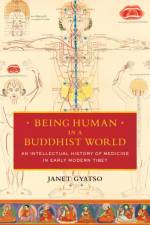
Critically exploring medical thought in a cultural milieu with no discernible influence from the European Enlightenment, Being Human in a Buddhist World reveals an otherwise unnoticed intersection of early modern sensibilities and religious values in traditional Tibetan medicine. It further studies the adaptation of Buddhist concepts and values to medical concerns and suggests important dimensions of Buddhism's role in the development of Asian and global civilization.Through its unique focus and sophisticated reading of source materials, Being Human adds a crucial chapter in the larger historiography of science and religion. The book opens with the bold achievements in Tibetan medical illustration, commentary, and institution building during the period of the Fifth Dalai Lama and his regent, Desi Sangye Gyatso, then looks back to the work of earlier thinkers, tracing a strategically astute dialectic between scriptural and empirical authority on questions of history and the nature of human anatomy. It follows key differences between medicine and Buddhism in attitudes toward gender and sex and the moral character of the physician, who had to serve both the patient's and the practitioner's well-being. Being Human in a Buddhist World ultimately finds that Tibetan medical scholars absorbed ethical and epistemological categories from Buddhism yet shied away from ideal systems and absolutes, instead embracing the imperfectability of the human condition.
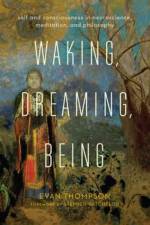
A renowned philosopher of the mind, also known for his groundbreaking work on Buddhism and cognitive science, Evan Thompson combines the latest neuroscience research on sleep, dreaming, and meditation with Indian and Western philosophy of mind, casting new light on the self and its relation to the brain. Thompson shows how the self is a changing process, not a static thing. When we are awake we identify with our body, but if we let our mind wander or daydream, we project a mentally imagined self into the remembered past or anticipated future. As we fall asleep, the impression of being a bounded self distinct from the world dissolves, but the self reappears in the dream state. If we have a lucid dream, we no longer identify only with the self within the dream. Our sense of self now includes our dreaming self, the "e;I"e; as dreamer. Finally, as we meditate-either in the waking state or in a lucid dream-we can observe whatever images or thoughts arise and how we tend to identify with them as "e;me."e; We can also experience sheer awareness itself, distinct from the changing contents that make up our image of the self. Contemplative traditions say that we can learn to let go of the self, so that when we die we can witness its dissolution with equanimity. Thompson weaves together neuroscience, philosophy, and personal narrative to depict these transformations, adding uncommon depth to life's profound questions. Contemplative experience comes to illuminate scientific findings, and scientific evidence enriches the vast knowledge acquired by contemplatives.
Masterminded by women, the Red Army Faction (RAF) terrorized West Germany from the 1970s to the 1990s. Afterimages of its leaders persist in the works of pivotal artists and writers, including Gerhard Richter, Elfriede Jelinek, and Slavoj iek. Why were women so prominent in the RAF? What does the continuing cultural response to the German armed struggle tell us about the representation of violence, power, and gender today? Engaging critical theory, Charity Scribner addresses these questions and analyzes signal works that point beyond militancy and terrorism. This literature and art discloses the failures of the Far Left and registers the radical potential that RAF women actually forfeited.After the Red Army Faction maps out a cultural history of militancy and introduces "e;postmilitancy"e; as a new critical term. As Scribner demonstrates, the most compelling examples of postmilitant culture don't just repudiate militancy: these works investigate its horizons of possibility, particularly on the front of sexual politics. Objects of analysis include as-yet untranslated essays by Theodor Adorno and Jurgen Habermas, as well as novels by Friedrich Durrenmatt and Judith Kuckart, Johann Kresnik's Tanztheaterstuck Ulrike Meinhof, and the blockbuster exhibition Regarding Terror at the Berlin Kunst-Werke. Scribner focuses on German cinema, offering incisive interpretations of films by Margarethe von Trotta, Volker Schlondorff, and Fatih Akin, as well as the international box-office success The Baader-Meinhof Complex. These readings disclose dynamic junctures among several fields of inquiry: national and sexual identity, the disciplining of the militant body, and the relationship between mass media and the arts.
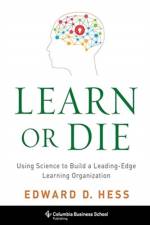
To compete with today's increasing globalization and rapidly evolving technologies, individuals and organizations must take their ability to learn-the foundation for continuous improvement, operational excellence, and innovation-to a much higher level. In Learn or Die, Edward D. Hess combines recent advances in neuroscience, psychology, behavioral economics, and education with key research on high-performance businesses to create an actionable blueprint for becoming a leading-edge learning organization. Learn or Die examines the process of learning from an individual and an organizational standpoint. From an individual perspective, the book discusses the cognitive, emotional, motivational, attitudinal, and behavioral factors that promote better learning. Organizationally, Learn or Die focuses on the kinds of structures, culture, leadership, employee learning behaviors, and human resource policies that are necessary to create an environment that enables critical and innovative thinking, learning conversations, and collaboration. The volume also provides strategies to mitigate the reality that humans can be reflexive, lazy thinkers who seek confirmation of what they believe to be true and affirmation of their self-image. Exemplar learning organizations discussed include the secretive Bridgewater Associates, LP; Intuit, Inc.; United Parcel Service (UPS); W. L. Gore & Associates; and IDEO.
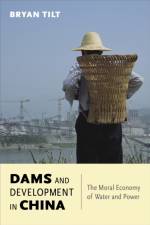
China is home to half of the world's large dams and adds dozens more each year. The benefits are considerable: dams deliver hydropower, provide reliable irrigation water, protect people and farmland against flooding, and produce hydroelectricity in a nation with a seeimingly insatiable appetite for energy. As hydropower responds to a larger share of energy demand, dams may also help to reduce the consumption of fossil fuels, welcome news in a country where air and water pollution have become dire and greenhouse gas emissions are the highest in the world. Yet the advantages of dams come at a high cost for river ecosystems and for the social and economic well-being of local people, who face displacement and farmland loss. This book examines the array of water-management decisions faced by Chinese leaders and their consequences for local communities. Focusing on the southwestern province of Yunnan-a major hub for hydropower development in China-which encompasses one of the world's most biodiverse temperate ecosystems and one of China's most ethnically and culturally rich regions, Bryan Tilt takes the reader from the halls of decision-making power in Beijing to Yunnan's rural villages. In the process, he examines the contrasting values of government agencies, hydropower corporations, NGOs, and local communities and explores how these values are linked to longstanding cultural norms about what is right, proper, and just. He also considers the various strategies these groups use to influence water-resource policy, including advocacy, petitioning, and public protest. Drawing on a decade of research, he offers his insights on whether the world's most populous nation will adopt greater transparency, increased scientific collaboration, and broader public participation as it continues to grow economically.
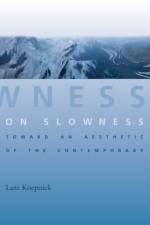
Speed is an obvious facet of contemporary society, whereas slowness has often been dismissed as conservative and antimodern. Challenging a long tradition of thought, Lutz Koepnick instead proposes we understand slowness as a strategy of the contemporary-a decidedly modern practice that gazes firmly at and into the present's velocity.As he engages with late twentieth- and early twenty-first-century art, photography, video, film, and literature, Koepnick explores slowness as a critical medium to intensify our temporal and spatial experiences. Slowness helps us register the multiple layers of time, history, and motion that constitute our present. It offers a timely (and untimely) mode of aesthetic perception and representation that emphasizes the openness of the future and undermines any conception of the present as a mere replay of the past. Discussing the photography and art of Janet Cardiff, Olafur Eliasson, Hiroshi Sugimoto, and Michael Wesely; the films of Peter Weir and Tom Tykwer; the video installations of Douglas Gordon, Willie Doherty, and Bill Viola; and the fiction of Don DeLillo, Koepnick shows how slowness can carve out spaces within processes of acceleration that allow us to reflect on alternate temporalities and durations.
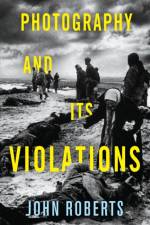
Theorists critique photography for "e;objectifying"e; its subjects and manipulating appearances for the sake of art. In this bold counterargument, John Roberts recasts photography's violating powers of disclosure and aesthetic technique as part of a complex "e;social ontology"e; that exposes the hierarchies, divisions, and exclusions behind appearances.The photographer must "e;arrive unannounced"e; and "e;get in the way of the world,"e; Roberts argues, committing photography to the truth-claims of the spectator over the self-interests and sensitivities of the subject. Yet even though the violating capacity of the photograph results from external power relations, the photographer is still faced with an ethical choice: whether to advance photography's truth-claims on the basis of these powers or to diminish or veil these powers to protect the integrity of the subject. Photography's acts of intrusion and destabilization, then, constantly test the photographer at the point of production, in the darkroom, and at the computer, especially in our 24-hour digital image culture. In this game-changing work, Roberts refunctions photography's place in the world, politically and theoretically restoring its reputation as a truth-producing medium.
Note-by-Note Cooking is a landmark in the annals of gastronomy, liberating cooks from the constraints of traditional ingredients and methods through the use of pure molecular compounds. 1-Octen-3-ol, which has a scent of wild mushrooms; limonene, a colorless liquid hydrocarbon that has the smell of citrus; sotolon, whose fragrance at high concentrations resembles curry and at low concentrations, maple syrup or sugar; tyrosine, an odorless but flavorful amino acid present in cheese-these and many other substances, some occurring in nature, some synthesized in the laboratory, make it possible to create novel tastes and flavors in the same way that elementary sound waves can be combined to create new sounds. Note-by-note cooking promises to add unadulterated nutritional value to dishes of all kinds, actually improving upon the health benefits of so-called natural foods. Cooking with molecular compounds will be far more energy efficient and environmentally sustainable than traditional techniques of cooking. This new way of thinking about food heralds a phase of culinary evolution on which the long-term survival of a growing human population depends. Herve This clearly explains the properties of naturally occurring and synthesized compounds, dispels a host of misconceptions about the place of chemistry in cooking, and shows why note-by-note cooking is an obvious-and inevitable-extension of his earlier pioneering work in molecular gastronomy. An appendix contains a representative selection of recipes, vividly illustrated in color.
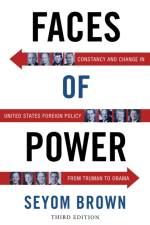
Seyom Brown's authoritative account of U.S. foreign policy from the end of the Second World War to the present challenges common assumptions about American presidents and their struggle with power and purpose. Brown shows Truman to be more anguished than he publicly revealed about the use of the atomic bomb; Eisenhower and George W. Bush to be more immersed in the details of policy formulation and implementation than generally believed; Reagan to be more invested in changing his worldview while in office than any previous president; and Obama to have modeled his military exit from Iraq and Afghanistan more closely to Nixon and Kissinger's exit strategy from Vietnam than he would like to admit. Brown's analyses of Obama's policies for countering terrorist threats at home and abroad, dealing with unprecedented upheavals in the Middle East, preventing the proliferation of nuclear weapons, and containing new territorial expansion by China and Russia reinforce the book's "e;constancy and change"e; theme, which shows that serving the interests of the most powerful country in the world transforms the Oval Office's occupant more than its occupant can transform the world.Praise for previous editions:"e;Systematic and informative... [Brown] has a gift for clear analysis that makes his book a useful contribution to the Cold War literature."e;-The Journal of American History"e;Comprehensive and clear... thorough without ever becoming dull, providing detailed analysis of decisions while never neglecting the environment within which they are made."e;-International Affairs"e;An excellent reference for those interested in United States foreign policy.... Well-written and well-researched, it is appropriate for use in both undergraduate and graduate courses."e;-International Journal"e;An analysis with difference-an important difference. Seyom Brown discusses United States policy from the perspective of how decision makers in the United States viewed their adversaries and the alternatives as those decision makers saw them.... Well worth the effort of a careful reading."e;-American Political Science Review
In the dazzling global metropolis of Shanghai, what has it meant to call this city home? In this account-part microhistory, part memoir-Jie Li salvages intimate recollections by successive generations of inhabitants of two vibrant, culturally mixed Shanghai alleyways from the Republican, Maoist, and post-Mao eras. Exploring three dimensions of private life-territories, artifacts, and gossip-Li re-creates the sounds, smells, look, and feel of home over a tumultuous century. First built by British and Japanese companies in 1915 and 1927, the two homes at the center of this narrative were located in an industrial part of the former "e;International Settlement."e; Before their recent demolition, they were nestled in Shanghai's labyrinthine alleyways, which housed more than half of the city's population from the Sino-Japanese War to the Cultural Revolution. Through interviews with her own family members as well as their neighbors, classmates, and co-workers, Li weaves a complex social tapestry reflecting the lived experiences of ordinary people struggling to absorb and adapt to major historical change. These voices include workers, intellectuals, Communists, Nationalists, foreigners, compradors, wives, concubines, and children who all fought for a foothold and haven in this city, witnessing spectacles so full of farce and pathos they could only be whispered as secret histories.
Surrogacy is India's new form of outsourcing, as couples from all over the world hire Indian women to bear their children for a fraction of the cost of surrogacy elsewhere with little to no government oversight or regulation. In the first detailed ethnography of India's surrogacy industry, Amrita Pande visits clinics and hostels and speaks with surrogates and their families, clients, doctors, brokers, and hostel matrons in order to shed light on this burgeoning business and the experiences of the laborers within it. From recruitment to training to delivery, Pande's research focuses on how reproduction meets production in surrogacy and how this reflects characteristics of India's larger labor system. Pande's interviews prove surrogates are more than victims of disciplinary power, and she examines the strategies they deploy to retain control over their bodies and reproductive futures. While some women are coerced into the business by their families, others negotiate with clients and their clinics to gain access to technologies and networks otherwise closed to them. As surrogates, the women Pande meets get to know and make the most of advanced medical discoveries. They traverse borders and straddle relationships that test the boundaries of race, class, religion, and nationality. Those who focus on the inherent inequalities of India's surrogacy industry believe the practice should be either banned or strictly regulated. Pande instead advocates for a better understanding of this complex labor market, envisioning an international model of fair-trade surrogacy founded on openness and transparency in all business, medical, and emotional exchanges.
Abonner på vårt nyhetsbrev og få rabatter og inspirasjon til din neste leseopplevelse.
Ved å abonnere godtar du vår personvernerklæring.