









Gjør som tusenvis av andre bokelskere
Abonner på vårt nyhetsbrev og få rabatter og inspirasjon til din neste leseopplevelse.
Ved å abonnere godtar du vår personvernerklæring.Du kan når som helst melde deg av våre nyhetsbrev.

W. G. Sebald's writing has been widely recognized for its intense, nuanced engagement with the Holocaust, the Allied bombing of Germany in WWII, and other episodes of violence throughout history. Through his inventive use of narrative form and juxtaposition of image and text, Sebald's work has offered readers new ways to think about remembering and representing trauma.In Sebald's Vision, Carol Jacobs examines the author's prose, novels, and poems, illuminating the ethical and aesthetic questions that shaped his remarkable oeuvre. Through the trope of "e;vision,"e; Jacobs explores aspects of Sebald's writing and the way the author's indirect depiction of events highlights the ethical imperative of representing history while at the same time calling into question the possibility of such representation. Jacobs's lucid readings of Sebald's work also consider his famous juxtaposition of images and use of citations to explain his interest in the vagaries of perception. Isolating different ideas of vision in some of his most noted works, including Rings of Saturn, Austerlitz, and After Nature, as well as in Sebald's interviews, poetry, art criticism, and his lecture Air War and Literature, Jacobs introduces new perspectives for understanding the distinctiveness of Sebald's work and its profound moral implications.
Born and raised in French Algeria, Assia Djebar and Helene Cixous represent in their literary works signs of conflict and enmity, drawing on discordant histories so as to reappraise the political on the very basis of dissensus.In a rare comparison of these authors' writings, Algerian Imprints shows how Cixous and Djebar consistently reclaim for ethical and political purposes the demarcations and dislocations emphasized in their fictions. Their works affirm the chance for thinking afforded by marginalization and exclusion and delineate political ways of preserving a space for difference informed by expropriation and nonbelonging. Cixous's inquiry is steeped in her formative encounter with the grudging integration of the Jews in French Algeria, while Djebar's narratives concern the colonial separation of "e;French"e; and "e;Arab,"e; self and other. Yet both authors elaborate strategies to address inequality and injustice without resorting to tropes of victimization, challenging and transforming the understanding of the history and legacy of colonized space.
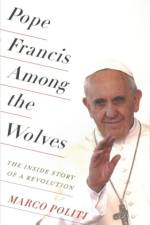
Marco Politi takes us deep inside the power struggle roiling the Roman Curia and the Catholic Church worldwide, beginning with Benedict XVI, the pope who famously resigned in 2013, and intensifying with the contested and unexpected election of Jorge Mario Bergoglio, archbishop of Buenos Aires, now known as Pope Francis. Politi's account balances the perspectives of Pope Francis's supporters, Benedict's sympathizers, and those disappointed members of the Catholic laity who feel alienated by the institution's secrecy, financial corruption, and refusal to modernize.Politi dramatically recounts the sexual scandals that have rocked the church and the accusations of money laundering and other financial misdeeds swirling around the Vatican and the Italian Catholic establishment. Pope Francis has tried to shine a light on these crimes, but his work has been met with resistance from entrenched factions. Politi writes of the decline in church attendance and vocations to the priesthood throughout the world as the church continues to prohibit divorced and remarried Catholics from receiving the communion wafer. He visits European parishes where women now perform the functions of missing male priests-and where the remaining parishioners would welcome the admission of women to the priesthood, if the church would allow it. Pope Francis's emphasis on pastoral compassion for all who struggle with the burden of family life has also provoked the ire of traditionalists in the Roman Curia and elsewhere. He knows from personal experience what life is like for the poor in Buenos Aires and other metropolises of the globalized world, and highlights the contrast between the vital, vibrant faith of these parishioners and the disillusionment of European Catholics. Pope Francis and his supporters are locked in a battle with the defenders of the traditional hard line and with ecclesiastical corruption. In this conflict, the future of Catholicism is at stake-and it is far from certain Francis will succeed in saving the institution from decline.
In many places around the world, relations between ethnic and religious groups that for long periods coexisted more or less amicably are now fraught with aggression and violence. This trend has profound international implications, threatening efforts to narrow the gap between rich and poor. Underscoring the need for sustained action, George Rupp urges the secular West to reckon with the continuing power of religious conviction and embrace the full extent of the world's diversity.While individualism is a powerful force in Western cultures and a cornerstone of Western foreign policy, it elicits strong resistance in traditional communities. Drawing on decades of research and experience, Rupp pushes modern individualism beyond its foundational beliefs to recognize the place of communal practice in our world. Affirming the value of communities and the productive role religion plays in many lives, he advocates new solutions to such global challenges as conflicts in the developing world, income inequality, climate change, and mass migration.
By 1915, Hollywood had become the epicenter of American filmmaking, with studio "e;dream factories"e; structuring its vast production. Filmmakers designed Hollywood studios with a distinct artistic and industrial mission in mind, which in turn influenced the form, content, and business of the films that were made and the impressions of the people who viewed them. The first book to retell the history of film studio architecture, Studios Before the System expands the social and cultural footprint of cinema's virtual worlds and their contribution to wider developments in global technology and urban modernism.Focusing on six significant early film corporations in the United States and France-the Edison Manufacturing Company, American Mutoscope and Biograph, American Vitagraph, Georges Melies's Star Films, Gaumont, and Pathe Freres-as well as smaller producers and film companies, Studios Before the System describes how filmmakers first envisioned the space they needed and then sourced modern materials to create novel film worlds. Artificially reproducing the natural environment, film studios helped usher in the world's Second Industrial Revolution and what Lewis Mumford would later call the "e;specific art of the machine."e; From housing workshops for set, prop, and costume design to dressing rooms and writing departments, studio architecture was always present though rarely visible to the average spectator in the twentieth century, providing the scaffolding under which culture, film aesthetics, and our relation to lived space took shape.
The Spring and Autumn (Chunqiu) is a chronicle kept by the dukes of the state of Lu from 722 to 481 B.C.E. Luxuriant Gems of the "e;Spring and Autumn"e; (Chunqiu fanlu) follows the interpretations of the Gongyang Commentary, whose transmitters sought to explicate the special language of the Spring and Autumn. The work is often ascribed to the Han scholar and court official Dong Zhongshu, but, as this study reveals, the text is in fact a compendium of writings by a variety of authors spanning several generations. It depicts a utopian vision of a flourishing humanity that they believed to be Confucius's legacy to the world.The Gongyang masters thought that Confucius had written the Spring and Autumn, employing subtle phrasing to indicate approval or disapproval of important events and personages. Luxuriant Gems therefore augments Confucian ethical and philosophical teachings with chapters on cosmology, statecraft, and other topics drawn from contemporary non-Confucian traditions. A major resource, this book features the first complete English-language translation of Luxuriant Gems, divided into eight thematic sections with introductions that address dating, authorship, authenticity, and the relationship between the Spring and Autumn and the Gongyang approach. Critically illuminating early Chinese philosophy, religion, literature, and politics, this book conveys the brilliance of intellectual life in the Han dynasty during the formative decades of the Chinese imperial state.
For theorists in search of a political theology that is more responsive to the challenges now facing Western democracies, this book tenders a new political economy anchored in a theory of value. The political theology of the future, Carl Raschke argues, must draw on a powerful, hidden impetus-the "e;force of God"e;-to frame a new value economy. It must also embrace a radical, "e;faith-based"e; revolutionary style of theory that reconceives the power of the "e;theological"e; in political thought and action.Raschke ties democracy's retreat to the West's failure to confront its decadence and mobilize its vast spiritual resources. Worsening debt, rising unemployment, and gross income inequality have led to a crisis in political representation and values that twentieth-century theorists never anticipated. Drawing on the thought of Hegel and Nietzsche as well as recent work by Michel Foucault, Jacques Derrida, Jean-Joseph Goux, Giorgio Agamben, and Alain Badiou, among others, Raschke recasts political theology for a new generation. He proposes a bold, uncompromising critical theory that acknowledges the enduring significance of Marx without his materialism and builds a vital, more spiritually grounded relationship between politics and the religious imaginary.
The Hidden God revisits the origins of American pragmatism and finds a nascent "e;posthumanist"e; critique shaping early modern thought. By reaching as far back as the Calvinist arguments of the American Puritans and their struggle to know a "e;hidden God,"e; this book brings American pragmatism closer to contemporary critical theory.Ryan White reads the writings of key American philosophers, including Jonathan Edwards, Ralph Waldo Emerson, William James, and Charles Sanders Peirce, against modern theoretical works by Niklas Luhmann, Richard Rorty, Jacques Derrida, Sharon Cameron, Cary Wolfe, and Gregory Bateson. This juxtaposition isolates the distinctly posthumanist form of pragmatism that began to arise in these early texts, challenging the accepted genealogy of pragmatic discourse and common definitions of posthumanist critique. Its rigorously theoretical perspective has wide implications for humanities research, enriching investigations into literature, history, politics, and art.
Nostalgia isn't what it used to be. For many of us, modern memory is shaped less by a longing for the social customs and practices of the past or for family heirlooms handed down over generations and more by childhood encounters with ephemeral commercial goods and fleeting media moments in our age of fast capitalism. This phenomenon has given rise to communities of nostalgia whose members remain loyal to the toys, television, and music of their youth. They return to the theme parks and pastimes of their upbringing, hoping to reclaim that feeling of childhood wonder or teenage freedom. Consumed nostalgia took definite shape in the 1970s, spurred by an increase in the turnover of consumer goods, the commercialization of childhood, and the skillful marketing of nostalgia. Gary Cross immerses readers in this fascinating and often delightful history, unpacking the cultural dynamics that turn pop tunes into oldies and childhood toys into valuable commodities. He compares the limited appeal of heritage sites such as Colonial Williamsburg to the perpetually attractive power of a Disney theme park and reveals how consumed nostalgia shapes how we cope with accelerating change. Today nostalgia can be owned, collected, and easily accessed, making it less elusive and often more fun than in the past, but its commercialization has sometimes limited memory and complicated the positive goals of recollection. By unmasking the fascinating, idiosyncratic character of modern nostalgia, Cross helps us better understand the rituals of recall in an age of fast capitalism.
Climate change threatens the economy of the United States in myriad ways, including increased flooding and storm damage, altered crop yields, lost labor productivity, higher crime, reshaped public-health patterns, and strained energy systems, among many other effects. Combining the latest climate models, state-of-the-art econometric research on human responses to climate, and cutting-edge private-sector risk-assessment tools, Economic Risks of Climate Change: An American Prospectus crafts a game-changing profile of the economic risks of climate change in the United States.This prospectus is based on a critically acclaimed independent assessment of the economic risks posed by climate change commissioned by the Risky Business Project. With new contributions from Karen Fisher-Vanden, Michael Greenstone, Geoffrey Heal, Michael Oppenheimer, and Nicholas Stern and Bob Ward, as well as a foreword from Risky Business cochairs Michael Bloomberg, Henry Paulson, and Thomas Steyer, the book speaks to scientists, researchers, scholars, activists, and policy makers. It depicts the distribution of escalating climate-change risk across the country and assesses its effects on aspects of the economy as varied as hurricane damages and violent crime. Beautifully illustrated and accessibly written, this book is an essential tool for helping businesses and governments prepare for the future.
Sight Unseen reveals the cultural and biological realities of race, gender, and sexual orientation from the perspective of the blind. Through ten case studies and dozens of interviews, Ellyn Kaschak taps directly into the phenomenology of race, gender, and sexual orientation among blind individuals, along with the everyday epistemology of vision. Kaschak's work reveals not only how the blind create systems of meaning out of cultural norms but also how cultural norms inform our conscious and unconscious interactions with others regardless of our physical ability to see.
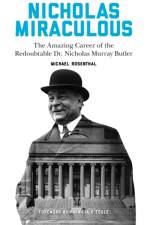
To those who loved him, like Teddy Roosevelt, he was "e;Nicholas Miraculous,"e; the fabled educator who had a hand in everything; to those who did not, like Upton Sinclair, he was "e;the intellectual leader of the American plutocracy,"e; a champion of "e;false and cruel ideals."e; Ezra Pound branded him "e;one of the more loathsome figures"e; of the age. Whether celebrated or despised, Nicholas Murray Butler (1862-1947) was undeniably an irresistible force who helped shape American history. With wit and irony, Michael Rosenthal traces Butler's rise to prominence as president of Columbia University, which he presided over for forty-four years and developed into one of the world's most distinguished institutions of research and teaching. Butler also won the Nobel Peace Prize and headed both the Carnegie Endowment and the American Academy of Arts and Letters, among innumerable other organizations. In 1920, he sought the Republican nomination for president, managing to garner more votes on the first ballot than the eventual winner, Warren Harding. Rosenthal's richly detailed, elegantly crafted narrative captures the mania and genius that propelled Butler to these extraordinary achievements and more. Thick with social, cultural, and political history, Nicholas Miraculous recreates Butler's prodigious career and the dynamic age that nourished him.
When the photographs depicting torture at Iraq's Abu Ghraib prison were released in 2004, U.S. politicians attributed the incident to a few bad apples in the American military, exonerated high-ranking members of the George W. Bush administration, promoted Guantanamo as a model prison, and dismissed the illegality of the CIA's use of "e;enhanced interrogation."e; By the end of the Bush administration, members of both major congressional parties had come to denounce enhanced interrogation as torture and argue for the closing of Guantanamo. What initiated this shift? In Talking About Torture, Jared Del Rosso reviews transcripts from congressional hearings and scholarship on denial, torture, and state violence to document this wholesale change in rhetoric and attitude toward the use of torture by the CIA and the U.S. military during the War on Terror. He plots the evolution of the "e;torture issue"e; in U.S. politics and its manipulation by politicians to serve various ends. Most important, Talking About Torture integrates into the debate about torture the testimony of those who suffered under American interrogation practices and demonstrates how the conversation continues to influence current counterterrorism policies, such as the reliance on drones.
Reading films, television dramas, reality shows, and virtual exhibits, among other popular texts, Engaging the Past examines the making and meaning of history for everyday viewers. Contemporary media can encourage complex interactions with the past that have far-reaching consequences for history and politics. Viewers experience these representations personally, cognitively, and bodily, but, as this book reveals, not just by identifying with the characters portrayed. Some of the works considered in this volume include the films Hotel Rwanda (2004), Good Night and Good Luck (2005), and Milk (2008); the television dramas Deadwood, Mad Men, and Rome; the reality shows Frontier House, Colonial House, and Texas Ranch House; and The Secret Annex Online, accessed through the Anne Frank House website, and the Kristallnacht exhibit, accessed through the Unites States Holocaust Museum website. These mass cultural texts cultivate what Alison Landsberg calls an "e;affective engagement"e; with the past, tying the viewer to an event or person and fostering a sense of intimacy that does more than transport the viewer back in time. Affect, she suggests, can also work to disorient the viewer, forcibly pushing him or her out of the narrative and back into his or her own body. By analyzing these specific popular history formats, Landsberg shows the unique way they provoke historical thinking and produce historical knowledge, prompting a reconsideration of what constitutes history and an understanding of how history works in the contemporary mediated public sphere.
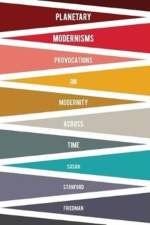
Drawing on a vast archive of world history, anthropology, geography, cultural theory, postcolonial studies, gender studies, literature, and art, Susan Stanford Friedman recasts modernity as a networked, circulating, and recurrent phenomenon producing multiple aesthetic innovations across millennia. Considering cosmopolitan as well as nomadic and oceanic worlds, she radically revises the scope of modernist critique and opens the practice to more integrated study.Friedman moves from large-scale instances of pre-1500 modernities, such as Tang Dynasty China and the Mongol Empire, to small-scale instances of modernisms, including the poetry of Du Fu and Kabir and Abbasid ceramic art. She maps the interconnected modernisms of the long twentieth century, pairing Joseph Conrad with Tayeb Salih, E. M. Forster with Arundhati Roy, Virginia Woolf with the Tagores, and Aime Cesaire with Theresa Hak Kyung Cha. She reads postcolonial works from Sudan and India and engages with the idea of Negritude. Rejecting the modernist concepts of marginality, othering, and major/minor, Friedman instead favors rupture, mobility, speed, networks, and divergence, elevating the agencies and creative capacities of all cultures not only in the past and present but also in the century to come.
As a growing number of contemporary novelists write for publication in multiple languages, the genre's form and aims are shifting. Born-translated novels include passages that appear to be written in different tongues, narrators who speak to foreign audiences, and other visual and formal techniques that treat translation as a medium rather than as an afterthought. These strategies challenge the global dominance of English, complicate "e;native"e; readership, and protect creative works against misinterpretation as they circulate. They have also given rise to a new form of writing that confounds traditional models of literary history and political community.Born Translated builds a much-needed framework for understanding translation's effect on fictional works, as well as digital art, avant-garde magazines, literary anthologies, and visual media. Artists and novelists discussed include J. M. Coetzee, Junot Diaz, Jonathan Safran Foer, Mohsin Hamid, Kazuo Ishiguro, Jamaica Kincaid, Ben Lerner, China Mieville, David Mitchell, Walter Mosley, Caryl Phillips, Adam Thirlwell, Amy Waldman, and Young-hae Chang Heavy Industries. The book understands that contemporary literature begins at once in many places, engaging in a new type of social embeddedness and political solidarity. It recasts literary history as a series of convergences and departures and, by elevating the status of "e;born-translated"e; works, redefines common conceptions of author, reader, and nation.
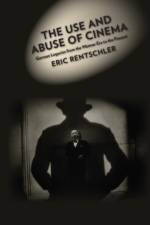
Eric Rentschler's new book, The Use and Abuse of Cinema, takes readers on a series of enthralling excursions through the fraught history of German cinema, from the Weimar and Nazi eras to the postwar and postwall epochs and into the new millennium. These journeys afford rich panoramas and nuanced close-ups from a nation's production of fantasies and spectacles, traversing the different ways in which the film medium has figured in Germany, both as a site of creative and critical enterprise and as a locus of destructive and regressive endeavor. Each of the chapters provides a stirring minidrama; the cast includes prominent critics such as Siegfried Kracauer and Rudolf Arnheim; postwar directors like Wolfgang Staudte, Rainer Werner Fassbinder, Wim Wenders, and Alexander Kluge; representatives of the so-called Berlin School; and exponents of mountain epics, early sound musicals, rubble films, and recent heritage features. A film history that is both original and unconventional, Rentschler's colorful tapestry weaves together figures, motifs, and stories in exciting, unexpected, and even novelistic ways.
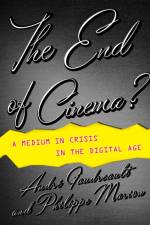
Is a film watched on a video screen still cinema? Have digital compositing, motion capture, and other advanced technologies remade or obliterated the craft? Rooted in their hypothesis of the "e;double birth of media,"e; Andre Gaudreault and Philippe Marion take a positive look at cinema's ongoing digital revolution and reaffirm its central place in a rapidly expanding media landscape.The authors begin with an overview of the extreme positions held by opposing camps in the debate over cinema: the "e;digitalphobes"e; who lament the implosion of cinema and the "e;digitalphiles"e; who celebrate its new, vital incarnation. Throughout, they remind readers that cinema has never been a static medium but a series of processes and transformations powering a dynamic art. From their perspective, the digital revolution is the eighth major crisis in the history of motion pictures, with more disruptions to come. Brokering a peace among all sides, Gaudreault and Marion emphasize the cultural practice of cinema over rigid claims on its identity, moving toward a common conception of cinema to better understand where it is headed next.
Stem cells and the emerging field of regenerative medicine are at the frontiers of modern medicine. These areas of scientific inquiry suggest that in the future, damaged tissue and organs might be repaired through personalized cell therapy as easily as the body repairs itself, revolutionizing the treatment of numerous diseases. Yet the use of stem cells is fraught with ethical and public policy dilemmas that challenge scientists, clinicians, the public health community, and people of good will everywhere. How shall we deal with these amazing biomedical advances, and how can we talk about potential breakthroughs with both moral and scientific intelligence? This book provides an innovative look at these vexing issues through a series of innovative Socratic dialogues that elucidate key scientific and ethical points in an approachable manner. Addressing the cultural and value issues underlying stem cell research while also educating readers about stem cells' biological function and medical applications, Stem Cell Dialogues features fictional characters engaging in compelling inquiry and debate. Participants investigate the scientific, political, and socioethical dimensions of stem cell science using actual language, analysis, and arguments taken from scientific, philosophical, and popular literature. Each dialogue centers on a specific, recognizable topic, such as the policies implemented by the George W. Bush administration restricting the use of embryonic stem cells; the potential role of stem cells in personalized medicine; the ethics of cloning; and the sale of eggs and embryos. Additionally, speakers debate the use of stem cells to treat paralysis, diabetes, stroke effects, macular degeneration, and cancer. Educational, entertaining, and rigorously researched (with 300 references to scientific literature), Stem Cell Dialogues should be included in any effort to help the public understand the science, ethics, and policy concerns of this promising field.
How should we evaluate the success of each person's life? Countering the prevalent philosophical perspective on the subject, Steven M. Cahn and Christine Vitrano defend the view that our well-being is dependent not on particular activities, accomplishments, or awards but on finding personal satisfaction while treating others with due concern.The authors suggest that moral behavior is not necessary for happiness and does not ensure it. Yet they also argue that morality and happiness are needed for living well, and together suffice to achieve that goal. Cahn and Vitrano link their position to elements within both the Hellenistic and Hebraic traditions, in particular the views of Epicurus and lessons found in the Book of Ecclesiastes. Written in an accessible style and illustrated with incisive vignettes drawn from history, literature, films, and everyday life, Happiness and Goodness is a compelling work of philosophy for anyone who seeks to understand the nature of a good life.
Flipping convention on its head, Eric Dietrich argues that science uncovers awe-inspiring, enduring mysteries, while religion, regarded as the source for such mysteries, is a biological phenomenon. Just like spoken language, Dietrich shows that religion is an evolutionary adaptation. Science is the source of perplexing yet beautiful mysteries, however natural the search for answers may be to human existence.Excellent Beauty undoes our misconception of scientific inquiry as an executioner of beauty, making the case that science has won the battle with religion so thoroughly it can now explain why religion persists. The book also draws deep lessons for human flourishing from the very existence of scientific mysteries. It is these latter wonderful, completely public truths that constitute some strangeness in the proportion, revealing a universe worthy of awe and wonder.
The first book to focus on the intersection of Western philosophy and the Asian martial arts, Striking Beauty comparatively studies the historical and philosophical traditions of martial arts practice and their ethical value in the modern world. Expanding Western philosophy's global outlook, the book forces a theoretical reckoning with the concerns of Chinese philosophy and the aesthetic and technical dimensions of martial arts practice.Striking Beauty explains the relationship between Asian martial arts and the Chinese philosophical traditions of Confucianism, Buddhism, and Daoism, in addition to Sunzi's Art of War. It connects martial arts practice to the Western concepts of mind-body dualism and materialism, sports aesthetics, and the ethics of violence. The work ameliorates Western philosophy's hostility toward the body, emphasizing the pleasure of watching and engaging in martial arts, along with their beauty and the ethical problem of their violence.
Like religion, playing and watching sports is a deeply meaningful, celebratory ritual enjoyed by millions across the world. The first scholarly work designed for use in both religion and sports courses, this collection develops and then applies a theoretically grounded approach to studying sports engagement globally and its relationship to modern-day issues of violence, difference, social protest, and belonging.Case studies explore the place of sports in mainstream faiths, such as Judaism, Islam, Buddhism, and Christianity, and lesser-known religious groups, particularly in Africa. It covers football, baseball, and basketball but also archery, soccer, bullfighting, judo, and track. Essays reflect all skill levels, from amateur to professional, and find surprising affinities among practices and cultures in locations as disparate as Germany and Japan, Spain and Saudi Arabia. Thoroughly examining a range of phenomena, this collection fully captures the unique overlap of two universal institutions and their interplay with human society, politics, and culture.
Dieter Grimm's accessible introduction to the concept of sovereignty ties the evolution of the idea to historical events, from the religious conflicts of sixteenth-century Europe to today's trends in globalization and transnational institutions. Grimm wonders whether recent political changes have undermined notions of national sovereignty, comparing manifestations of the concept in different parts of the world. Geared for classroom use, the study maps various notions of sovereignty in relation to the people, the nation, the state, and the federation, distinguishing between internal and external types of sovereignty. Grimm's book will appeal to political theorists and cultural-studies scholars and to readers interested in the role of charisma, power, originality, and individuality in political rule.
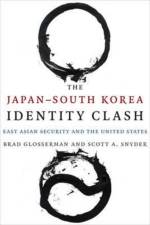
Japan and South Korea are Western-style democracies with open-market economies committed to the rule of law. They are also U.S. allies. Yet despite their shared interests, shared values, and geographic proximity, divergent national identities have driven a wedge between them. Drawing on decades of expertise, Brad Glosserman and Scott A. Snyder investigate the roots of this split and its ongoing threat to the region and the world.Glosserman and Snyder isolate competing notions of national identity as the main obstacle to a productive partnership between Japan and South Korea. Through public opinion data, interviews, and years of observation, they show how fundamentally incompatible, rapidly changing conceptions of national identity in Japan and South Korea-and not struggles over power or structural issues-have complicated territorial claims and international policy. Despite changes in the governments of both countries and concerted efforts by leading political figures to encourage U.S.-ROK-Japan security cooperation, the Japan-South Korea relationship continues to be hobbled by history and its deep imprint on ideas of national identity. This book recommends bold, policy-oriented prescriptions for overcoming problems in Japan-South Korea relations and facilitating trilateral cooperation among these three Northeast Asian allies, recognizing the power of the public on issues of foreign policy, international relations, and the prospects for peace in Asia.
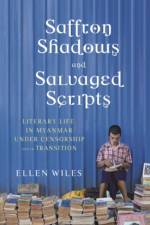
This book tells an ethnographic story of a secret literary culture that has recently emerged from its cocoon. Until 2012, Myanmar (also known as Burma) was ruled for fifty years by one of the most paranoid and repressive censorship regimes in history. The military junta enforced strict reading and writing restrictions in line with their ideology, feared writers' potential to trigger change, and did their best to keep Western books and influences out of the country. As part of an unexpected move toward democracy, the government has recently lifted the worst restrictions on reading and writing, giving rise to a new era in the country's literature and literary culture. While living in Myanmar in 2013, Ellen Wiles sought out the best of its contemporary writers and writing to begin uncovering the country's remarkable literary life and history. This book contains the experiences and recent output of nine Myanmar writers spanning three generations, featuring interviews and English-language translations of their work, along with political, legal, and artistic explorations. It includes men and women, fiction and poetry, reflecting the ripples of political and cultural change as they have moved across different groups and genres. A rare portrait of a people and place in transition, Wiles's work contributes both to the study of literature and culture in Myanmar and to the general study of art under censorship.
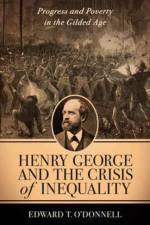
America's remarkable explosion of industrial output and national wealth at the end of the nineteenth century was matched by a troubling rise in poverty and worker unrest. As politicians and intellectuals fought over the causes of this crisis, Henry George (1839-1897) published a radical critique of laissez-faire capitalism and its threat to the nation's republican traditions. Progress and Poverty (1879), which became a surprise best-seller, offered a provocative solution for preserving these traditions while preventing the amassing of wealth in the hands of the few: a single tax on land values. George's writings and years of social activism almost won him the mayor's seat in New York City in 1886. Though he lost the election, his ideas proved instrumental to shaping a popular progressivism that remains essential to tackling inequality today.Edward T. O'Donnell's exploration of George's life and times merges labor, ethnic, intellectual, and political history to illuminate the early militant labor movement in New York during the Gilded Age. He locates in George's rise to prominence the beginning of a larger effort by American workers to regain control of the workplace and obtain economic security and opportunity. The Gilded Age was the first but by no means the last era in which Americans confronted the mixed outcomes of modern capitalism. George's accessible, forward-thinking ideas on democracy, equality, and freedom have tremendous value for contemporary debates over the future of unions, corporate power, Wall Street recklessness, government regulation, and political polarization.
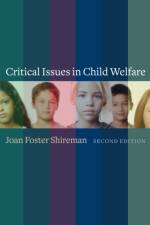
Reorganized for more effective classroom use, the second edition of Critical Issues in Child Welfare begins with an updated, thorough overview of the challenges currently facing at-risk children and families. A description of the child welfare system highlights issues that are discussed in more detail throughout the book. The text explores protective services, family preservation, foster care and residential care, adoption, services for adolescents, and training and retention of staff. New material highlights the recent discoveries of the impact of early trauma and stress on children's development, and the modifications currently taking place in the child welfare system in response to this new information. The book also examines the critical challenges of poverty and substance abuse, the importance of the community in shaping child welfare services, racial disproportionality in the system, the changing response of the system to LGBT issues, and services to ameliorate the difficulties of youth leaving the system.
Through the lens of real estate transactions from 1890 to 1920, Kevin McGruder offers an innovative perspective on Harlem's history and reveals the complex interactions between whites and African Americans at a critical time of migration and development. During these decades Harlem saw a dramatic increase in its African American population, and although most histories speak only of the white residents who met these newcomers with hostility, this book uncovers a range of reactions. Although some white Harlem residents used racially restrictive real estate practices to inhibit the influx of African Americans into the neighborhood, others believed African Americans had a right to settle in a place they could afford and helped facilitate sales. These years saw Harlem change not into a "e;ghetto,"e; as many histories portray, but into a community that became a symbol of the possibilities and challenges black populations faced across the nation. This book also introduces alternative reasons behind African Americans' migration to Harlem, showing that they came not to escape poverty but to establish a lasting community. Owning real estate was an essential part of this plan, along with building churches, erecting youth-serving facilities, and gaining power in public office. In providing a fuller, more nuanced history of Harlem, McGruder adds greater depth in understanding its development and identity as both an African American and a biracial community.
If, as Buddhism claims, the potential for awakening exists in all human beings, we should be able to map the phenomenon with the same science we apply to other forms of consciousness. A student of cognitive social science and a Zen practitioner for more than forty years, Richard P. Boyle brings his sophisticated perspective to bear on the development of a theoretical model for both ordinary and awakened consciousness.Boyle conducts probing interviews with eleven prominent Western Buddhist teachers (Shinzen Young, John Tarrant, Ken McLeod, Ajahn Amaro, Martine Batchelor, Shaila Catherine, Gil Fronsdal, Stephen Batchelor, Pat Enkyo O'Hara, Bernie Glassman, and Joseph Goldstein) and one scientist (James Austin) who have experienced awakening. From the paths they traveled to enlightenment and their descriptions of the experience, he derives three fundamental properties of awakened consciousness. He then constructs an overarching model that explains how Buddhist practices help free the mind from attachments to reality and the self and make possible the three properties of awakening. Specifically, these teachers describe how they worked to control attention and quiet the mind, detach from ideas and habits, and open themselves to compassion. Boyle's account incorporates current theories of consciousness, sociological insights, and research in neuroscience to advance the study of awakened consciousness and help an even greater number of people to realize it.
Abonner på vårt nyhetsbrev og få rabatter og inspirasjon til din neste leseopplevelse.
Ved å abonnere godtar du vår personvernerklæring.