


















Gjør som tusenvis av andre bokelskere
Abonner på vårt nyhetsbrev og få rabatter og inspirasjon til din neste leseopplevelse.
Ved å abonnere godtar du vår personvernerklæring.Du kan når som helst melde deg av våre nyhetsbrev.

Written by a renowned literary critic and legal historian, Practice Extended illuminates the intricacies of legal language and thought and the law's relationship to society, literature, and culture. Robert A. Ferguson details how judicial opinions are written, how legal thought and philosophy inform ideas, and how best to appreciate a courtroom novel. With chapters touching on a wide range of subjects, including immigration, eloquence, the U.S. Constitution, and the Supreme Court case over James Joyce's Ulysses, Practice Extended provides an ambitious argument for the importance of language in law and a much-needed analysis of the often vexed relationship between law and literature.Ferguson challenges the notion of law as a hermetic enterprise only accessible to experts. He reveals the discipline's relationships to history, religion, philosophy, psychology, anthropology, and the visual arts, offering a rich account of how the law has shaped and has been shaped by communal thought. He also recognizes the critical role of literature and other outside views in showcasing the social problems that law takes up. Practice Extended reflects Ferguson's crucial role as a pioneer in developing the field of law and literature. His writing reminds us of the need for a critical approach to the law that draws on the insights of literature to better understand political and legal history and the documents, laws, and arguments that shape our present. At the same time, this volume also showcases the ways in which the law has been integrated into works of literature, from Billy Budd to contemporary courtroom thrillers.
William Wells Brown (1814-1884) was a vocal abolitionist, a frequent antagonist of Frederick Douglass, and the author of Clotel, the first known novel by an African American. He was also an extensive plagiarist, copying at least 87,000 words from close to 300 texts. In this critical study of Brown's work and legacy, Geoffrey Sanborn offers a novel reading of the writer's plagiarism, arguing the act was a means of capitalizing on the energies of mass-cultural entertainments popularized by showmen such as P. T. Barnum. By creating the textual equivalent of a variety show, Brown animated antislavery discourse and evoked the prospect of a pleasurably integrated world.Brown's key dramatic protagonists were the "e;spirit of capitalization"e;-the unscrupulous double of Max Weber's spirit of capitalism-and the "e;beautiful slave girl,"e; a light-skinned African American woman on the verge of sale and rape. Brown's unsettling portrayal of these figures unfolded within a riotous patchwork of second-hand texts, upset convention, and provoked the imagination. Could a slippery upstart lay the groundwork for a genuinely interracial society? Could the fetishized image of a not-yet-sold woman hold open the possibility of other destinies? Sanborn's analysis of pastiche and plagiarism adds new depth to the study of nineteenth-century culture and the history of African American literature, suggesting modes of African American writing that extend beyond narratives of necessity and purpose, characterized by the works of Frederick Douglass and others.
In original and insightful ways, Caribbean writers have turned to Jewish experiences of exodus and reinvention, from the Sephardim expelled from Iberia in the 1490s to the "e;Calypso Jews"e; who fled Europe for Trinidad in the 1930s. Examining these historical migrations through the lens of postwar Caribbean fiction and poetry, Sarah Phillips Casteel presents the first major study of representations of Jewishness in Caribbean literature. Bridging the gap between postcolonial and Jewish studies, Calypso Jews enriches cross-cultural investigations of Caribbean creolization.Caribbean writers invoke both the 1492 expulsion and the Holocaust as part of their literary archaeology of slavery and its legacies. Despite the unequal and sometimes fraught relations between Blacks and Jews in the Caribbean before and after emancipation, Black-Jewish literary encounters reflect sympathy and identification more than antagonism and competition. Providing an alternative to U.S.-based critical narratives of Black-Jewish relations, Casteel reads Derek Walcott, Maryse Conde, Michelle Cliff, Jamaica Kincaid, Caryl Phillips, David Dabydeen, and Paul Gilroy, among others, to reveal a distinctive interdiasporic literature.
When Henry Luce announced in 1941 that we were living in the "e;American century,"e; he believed that the international popularity of American culture made the world favorable to U.S. interests. Now, in the digital twenty-first century, the American century has been superseded, as American movies, music, and video games are received, understood, and transformed.How do we make sense of this shift? Building on a decade of fieldwork in Cairo, Casablanca, and Tehran, Brian T. Edwards maps new routes of cultural exchange that are innovative, accelerated, and full of diversions. Shaped by the digital revolution, these paths are entwined with the growing fragility of American "e;soft"e; power. They indicate an era after the American century, in which popular American products and phenomena-such as comic books, teen romances, social-networking sites, and ways of expressing sexuality-are stripped of their associations with the United States and recast in very different forms. Arguing against those who talk about a world in which American culture is merely replicated or appropriated, Edwards focuses on creative moments of uptake, in which Arabs and Iranians make something unexpected. He argues that these products do more than extend the reach of the original. They reflect a world in which culture endlessly circulates and gathers new meanings.
The idea that Japanese art is produced through rote copy and imitation is an eighteenth-century colonial construct, with roots in Romantic ideals of originality. Offering a much-needed corrective to this critique, Michael Lucken demonstrates the distinct character of Japanese mimesis and its dynamic impact on global culture, showing through several twentieth-century masterpieces the generative and regenerative power of Japanese arts.Choosing a representative work from each of four modern genres-painting, film, photography, and animation-Lucken portrays the range of strategies that Japanese artists use to re-present contemporary influences. He examines Kishida Ryusei's portraits of Reiko (1914-1929), Kurosawa Akira's Ikiru (1952), Araki Nobuyoshi's photographic novel Sentimental Journey-Winter (1991), and Miyazaki Hayao's popular anime film Spirited Away (2001), revealing the sophisticated patterns of mimesis that are unique but not exclusive to modern Japanese art. In doing so, Lucken identifies the tensions that drive the Japanese imagination, which are much richer than a simple opposition between progress and tradition, and their reflection of human culture's universal encounter with change. This global perspective explains why, despite its non-Western origins, Japanese art has earned such a vast following.
The unification of North and South Korea is widely considered an unresolved and volatile matter for the global order, but this book argues capital has already unified Korea in a transnational form. As Hyun Ok Park demonstrates, rather than territorial integration and family union, the capitalist unconscious drives the current unification, imagining the capitalist integration of the Korean peninsula and the Korean diaspora as a new democratic moment.Based on extensive archival and ethnographic research in South Korea and China, The Capitalist Unconscious shows how the hegemonic democratic politics of the post-Cold War era (reparation, peace, and human rights) have consigned the rights of migrant laborers-protagonists of transnational Korea-to identity politics, constitutionalism, and cosmopolitanism. Park reveals the riveting capitalist logic of these politics, which underpins legal and policy debates, social activism, and media spectacle. While rethinking the historical trajectory of Cold War industrialism and its subsequent liberal path, this book also probes memories of such key events as the North Korean and Chinese revolutions, which are integral to migrants' reckoning with capitalist allures and communal possibilities. Casting capitalist democracy within an innovative framework of historical repetition, Park elucidates the form and content of the capitalist unconscious at different historical moments and dissolves the modern opposition among socialism, democracy, and dictatorship. The Capitalist Unconscious astutely explores the neoliberal present's past and introduces a compelling approach to the question of history and contemporaneity.
The 2008 financial collapse, the expansion of corporate and private wealth, the influence of money in politics-many of Wall Street's contemporary trends can be traced back to the work of fourteen critical figures who wrote, and occasionally broke, the rules of American finance. Edward Morris plots in absorbing detail Wall Street's transformation from a clubby enclave of financiers to a symbol of vast economic power. His book begins with J. Pierpont Morgan, who ruled the American banking system at the turn of the twentieth century, and ends with Sandy Weill, whose collapsing Citigroup required the largest taxpayer bailout in history. In between, Wall Streeters relates the triumphs and missteps of twelve other financial visionaries. From Charles Merrill, who founded Merrill Lynch and introduced the small investor to the American stock market; to Michael Milken, the so-called junk bond king; to Jack Bogle, whose index funds redefined the mutual fund business; to Myron Scholes, who laid the groundwork for derivative securities; and to Benjamin Graham, who wrote the book on securities analysis. Anyone interested in the modern institution of American finance will devour this history of some of its most important players.
Life, liberty, and the pursuit of cool have informed the American ethos since at least the 1970s. Whether we strive for it in politics or fashion, cool is big business for those who can sell it across a range of markets and media. Yet the concept wasn't always a popular commodity. Cool began as a potent aesthetic of post-World War II black culture, embodying a very specific, highly charged method of resistance to white supremacy and the globalized exploitation of capital.Way Too Cool follows the hollowing-out of "e;coolness"e; in modern American culture and its reflection of a larger evasion of race, racism, and ethics now common in neoliberal society. It revisits such watershed events as the 1960s Civil Rights Movement, second-wave feminism, the emergence of identity politics, 1980s multiculturalism, 1990s rhetorics of diversity and colorblindness, 9/11, and Hurricane Katrina, as well as the contemporaneous developments of rising mass incarceration and legalized same-sex marriage. It pairs the perversion of cool with the slow erasure of racial and ethical issues from our social consciousness, which effectively quashes our desire to act ethically and resist abuses of power. The cooler we become, the more indifferent we grow to the question of values, particularly inquiry that spurs protest and conflict. This book sounds an alarm for those who care about preserving our ties to an American tradition of resistance.
As editor of the quarterly Salmagundi for the past fifty years, Robert Boyers has been on the cutting edge of developments in politics, culture, and the arts. Reflecting on his collaborations and quarrels with some of the twentieth century's most transformative writers, artists, and thinkers, Boyers writes a wholly original intellectual memoir that rigorously confronts selected aspects of contemporary society. Organizing his chapters around specific ideas, Boyers anatomizes the process by which they fall in and out of fashion and often confuse those who most ardently embrace them. In provocative encounters with authority, fidelity, "e;the other,"e; pleasure, and a wide range of other topics, Boyers tells colorful stories about his own life and, in the process, studies the fate of ideas in a society committed to change and ill equipped to assess the losses entailed in modernity. Among the writers who appear in these pages are Susan Sontag and V. S. Naipaul, Jamaica Kincaid and J. M. Coetzee, as well as figures drawn from all walks of life, including unfaithful husbands, psychoanalysts, terrorists, and besotted beauty lovers.
Cecilia Sjoholm reads Hannah Arendt as a philosopher of the senses, grappling with questions of vision, hearing, and touch even in her political work. Constructing an Arendtian theory of aesthetics from the philosopher's fragmentary writings on art and perception, Sjoholm begins a vibrant new chapter in Arendt scholarship that expands her relevance for contemporary philosophers.Arendt wrote thoughtfully about the role of sensibility and aesthetic judgment in political life and on the power of art to enrich human experience. Sjoholm draws a clear line from Arendt's consideration of these subjects to her reflections on aesthetic encounters and works of art mentioned in her published writings and stored among her memorabilia. This delicate effort allows Sjoholm to revisit Arendt's political concepts of freedom, plurality, and judgment from an aesthetic point of view and incorporate Arendt's insight into current discussions of literature, music, theater, and visual art. Though Arendt did not explicitly outline an aesthetics, Sjoholm's work substantively incorporates her perspective into contemporary reckonings with radical politics and their relationship to art.
Santeria is an African-inspired, Cuban diaspora religion long stigmatized as witchcraft and often dismissed as superstition, yet its spirit- and possession-based practices are rapidly winning adherents across the world. Aisha M. Beliso-De Jesus introduces the term "e;copresence"e; to capture the current transnational experience of Santeria, in which racialized and gendered spirits, deities, priests, and religious travelers remake local, national, and political boundaries and reconfigure notions of technology and transnationalism.Drawing on eight years of ethnographic research in Havana and Matanzas, Cuba, and in New York City, Miami, Los Angeles, and the San Francisco Bay area, Beliso-De Jesus traces the phenomenon of copresence in the lives of Santeria practitioners, mapping its emergence in transnational places and historical moments and its ritual negotiation of race, imperialism, gender, sexuality, and religious travel. Santeria's spirits, deities, and practitioners allow digital technologies to be used in new ways, inciting unique encounters through video and other media. Doing away with traditional perceptions of Santeria as a static, localized practice or as part of a mythologized "e;past,"e; this book emphasizes the religion's dynamic circulations and calls for nontranscendental understandings of religious transnationalisms.
Eqbal Ahmad (1930?-1999) was a bold and original activist, journalist, and theorist who brought uncommon perspective to the rise of militant Islam, the conflict in Kashmir, the involvement of the United States in Vietnam, and the geopolitics of the Cold War. A long-time friend and intellectual collaborator of Ahmad, Stuart Schaar presents in this book previously unseen materials by and about his colleague, having traveled through the United States, India, Pakistan, western Europe, and North Africa to connect Ahmad's experiences to the major currents of modern history.Ahmad was the first to recognize that former ally Osama bin Laden would turn against the United States. He anticipated the rapidly shifting loyalties of terrorists and understood that overthrowing Saddam Hussein would provoke violence and sectarian strife in Iraq. Ahmad had great compassion for the victims of the proxy wars waged by the leading Cold War powers, and he frequently championed unpopular causes, such as the need to extend the rights of Palestinians and protect Bosnians and Kosovars in a disintegrating Yugoslavia. Toward the end of his life, Ahmad worked tirelessly to broker a peace between India and Pakistan and to prevent the spread of nuclear weapons throughout the subcontinent. As novel and necessary as ever, Ahmad's remarkable vision is here preserved and extended to reveal the extent to which he was involved in the political and historical conflicts of his time.
Reaching as far back as ancient times, Ronojoy Sen pairs a novel history of India's engagement with sport and a probing analysis of its cultural and political development under monarchy and colonialism, and as an independent nation. Some sports that originated in India have fallen out of favor, while others, such as cricket, have been adopted and made wholly India's own. Sen's innovative project casts sport less as a natural expression of human competition than as an instructive practice reflecting a unique play with power, morality, aesthetics, identity, and money.Sen follows the transformation of sport from an elite, kingly pastime to a national obsession tied to colonialism, nationalism, and free market liberalization. He pays special attention to two modern phenomena: the dominance of cricket in the Indian consciousness and the chronic failure of a billion-strong nation to compete successfully in international sporting competitions, such as the Olympics. Innovatively incorporating examples from popular media and other unconventional sources, Sen not only captures the political nature of sport in India but also reveals the patterns of patronage, clientage, and institutionalization that have bound this diverse nation together for centuries.
While many proponents of transracial adoption claim that American society is increasingly becoming "e;color-blind,"e; a growing body of research reveals that for transracial adoptees of all backgrounds, racial identity does matter. Rhonda M. Roorda elaborates significantly on that finding, specifically studying the effects of the adoption of black and biracial children by white parents. She incorporates diverse perspectives on transracial adoption by concerned black Americans of various ages, including those who lived through Jim Crow and the Civil Rights era. All her interviewees have been involved either personally or professionally in the lives of transracial adoptees, and they offer strategies for navigating systemic racial inequalities while affirming the importance of black communities in the lives of transracial adoptive families.In Their Voices is for parents, child-welfare providers, social workers, psychologists, educators, therapists, and adoptees from all backgrounds who seek clarity about this phenomenon. The author examines how social attitudes and federal policies concerning transracial adoption have changed over the last several decades. She also includes suggestions on how to revise transracial adoption policy to better reflect the needs of transracial adoptive families. Perhaps most important, In Their Voices is packed with advice for parents who are invested in nurturing a positive self-image in their adopted children of color and the crucial perspectives those parents should consider when raising their children. It offers adoptees of color encouragement in overcoming discrimination and explains why a "e;race-neutral"e; environment, maintained by so many white parents, is not ideal for adoptees or their families.
This vivid account of hustling in New York City explores the sociological reasons why con artists play their game and the psychological tricks they use to win it. Terry Williams and Trevor B. Milton, two prominent sociologists and ethnographers, spent years with New York con artists to uncover their secrets. The result is an unprecedented view into how con games operate, whether in back alleys and side streets or in police precincts and Wall Street boiler rooms.Whether it's selling bootleg goods, playing the numbers, squatting rent-free, scamming tourists with bogus stories, selling knockoffs on Canal Street, or crafting Ponzi schemes, con artists use verbal persuasion, physical misdirection, and sheer charm to convince others to do what they want. Williams and Milton examine this act of performance art and find meaning in its methods to exact bounty from unsuspecting tourists and ordinary New Yorkers alike. Through their sophisticated exploration of the personal experiences and influences that create a successful hustler, they build a portrait of unusual emotional and psychological depth. Their work also offers a new take on structure and opportunity, showing how the city's unique urban and social architecture lends itself to the perfect con.
The stories we tell in our attempt to make sense of the world-our myths and religion, literature and philosophy, science and art-are the comforting vehicles we use to transmit ideas of order. But beneath the quest for order lies the uneasy dread of fundamental disorder. True chaos is hard to imagine and even harder to represent. In this book, Martin Meisel considers the long effort to conjure, depict, and rationalize extreme disorder, with all the passion, excitement, and compromises the act provokes.Meisel builds a rough history from major social, psychological, and cosmological turning points in the imagining of chaos. He uses examples from literature, philosophy, painting, graphic art, science, linguistics, music, and film, particularly exploring the remarkable shift in the eighteenth and nineteenth centuries from conceiving of chaos as disruptive to celebrating its liberating and energizing potential. Discussions of Sophocles, Plato, Lucretius, Calderon, Milton, Haydn, Blake, Faraday, Chekhov, Faulkner, Wells, and Beckett, among others, are matched with incisive readings of art by Brueghel, Rubens, Goya, Turner, Dix, Dada, and the futurists. Meisel addresses the revolution in mapping energy and entropy and the manifold effect of thermodynamics. He then uses this chaotic frame to elaborate on purpose, mortality, meaning, and mind.
North America maintains the largest collection of archival materials relating to the Chinese Republican era (1911-1949) outside of China. Most of the archival materials are also unique, and the collections contain special materials supplementing historical records in China and Taiwan. In many cases, North America's holdings represent the best and only public access to the tumultuous Republican government and society of the first half of the twentieth century.An essential guide for researchers and students of Republican China, this volume, presented in both English and Chinese, covers personal papers, correspondences, memoirs, diaries, photographs, moving images, and other materials held at academic and research institutions across the United States and Canada. It includes concise descriptions of the people, organizations, and events connected to each entry and notes when certain collections are closely related and when materials are digitized for online access. The book corrects common errors associated with the library records of many archives and updates or completes information on the objects of these records. More than a straightforward itemization, this book adds significant depth to any research on the history and global import of China's modern development.
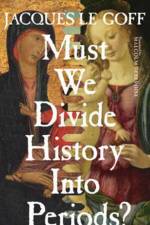
We have long thought of the Renaissance as a luminous era that marked a decisive break with the past, but the idea of the Renaissance as a distinct period arose only during the nineteenth century. Though the view of the Middle Ages as a dark age of unreason has softened somewhat, we still locate the advent of modern rationality in the Italian thought and culture of the fifteenth and sixteenth centuries. Jacques Le Goff pleads for a strikingly different view. In this, his last book, he argues persuasively that many of the innovations we associate with the Renaissance have medieval roots, and that many of the most deplorable aspects of medieval society continued to flourish during the Renaissance. We should instead view Western civilization as undergoing several "e;renaissances"e; following the fall of Rome, over the course of a long Middle Ages that lasted until the mid-eighteenth century. While it is indeed necessary to divide history into periods, Le Goff maintains, the meaningful continuities of human development only become clear when historians adopt a long perspective. Genuine revolutions-the shifts that signal the end of one period and the beginning of the next-are much rarer than we think.
Beyond Biofatalism is a lively and penetrating response to the idea that evolutionary psychology reveals human beings to be incapable of building a more inclusive, cooperative, and egalitarian society. Considering the pressures of climate change, unsustainable population growth, increasing income inequality, and religious extremism, this attitude promises to stifle the creative action we require before we even try to meet these threats. Beyond Biofatalism provides the perspective we need to understand that better societies are not only possible but actively enabled by human nature. Gillian Barker appreciates the methods and findings of evolutionary psychologists, but she considers their work against a broader background to show human nature is surprisingly open to social change. Like other organisms, we possess an active plasticity that allows us to respond dramatically to certain kinds of environmental variation, and we engage in niche construction, modifying our environment to affect others and ourselves. Barker uses related research in social psychology, developmental biology, ecology, and economics to reinforce this view of evolved human nature, and philosophical exploration to reveal its broader implications. The result is an encouraging foundation on which to build better approaches to social, political, and other institutional changes that could enhance our well-being and chances for survival.
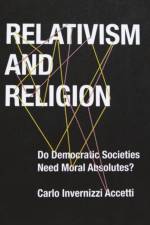
Moral relativism is deeply troubling for those who believe that, without a set of moral absolutes, democratic societies will devolve into tyranny or totalitarianism. Engaging directly with this claim, Carlo Invernizzi Accetti traces the roots of contemporary anti-relativist fears to the antimodern rhetoric of the Catholic Church and then rescues a form of philosophical relativism for modern, pluralist societies, arguing that this viewpoint provides the firmest foundation for an allegiance to democracy.In his analyses of the relationship between religious arguments and political authority and the implications of philosophical relativism for democratic theory, Accetti makes a far-ranging contribution to contemporary debates over the revival of religion in politics and the conceptual grounds for a commitment to democracy. He presents the first comprehensive genealogy of anti-relativist discourse and reclaims for English-speaking readers the overlooked work of Hans Kelsen on the connection between relativism and democracy. By engaging with contemporary attempts to replace the religious foundation of democratic values with a neo-Kantian conception of reason, Accetti also makes a powerful case for relativism as the best basis for a civic ethos that integrates different perspectives into democratic politics.
Many believe economic growth is incompatible with ecological preservation. Green Capital challenges this argument by shifting our focus away from the scarcity of raw materials and toward the deterioration of the great natural regulatory functions (such as the climate system, the water cycle, and biodiversity). Although we can find substitutes for scarce natural resources, we cannot replace a natural regulatory system, which is incredibly complex. It is therefore critical that we introduce a new price into the economy that measures the costs of damage to these regulatory functions. This change in perspective justifies such innovations as the carbon tax, which addresses not the scarcity of carbon but the inability of the atmosphere to absorb large amounts of carbon without upsetting the climate system. Brokering a sustainable peace between ecology and the economy, Green Capital describes a range of valuation schemes and their contribution to the goals of green capitalism, proposing a new approach to natural resources that benefits both businesses and the environment.
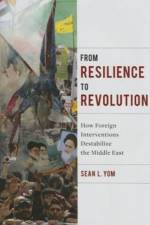
Based on comparative historical analyses of Iran, Jordan, and Kuwait, Sean L. Yom examines the foreign interventions, coalitional choices, and state outcomes that made the political regimes of the modern Middle East. A key text for foreign policy scholars, From Resilience to Revolution shows how outside interference can corrupt the most basic choices of governance: who to reward, who to punish, who to compensate, and who to manipulate.As colonial rule dissolved in the 1930s and 1950s, Middle Eastern autocrats constructed new political states to solidify their reigns, with varying results. Why did equally ambitious authoritarians meet such unequal fates? Yom ties the durability of Middle Eastern regimes to their geopolitical origins. At the dawn of the postcolonial era, many autocratic states had little support from their people and struggled to overcome widespread opposition. When foreign powers intervened to bolster these regimes, they unwittingly sabotaged the prospects for long-term stability by discouraging leaders from reaching out to their people and bargaining for mass support-early coalitional decisions that created repressive institutions and planted the seeds for future unrest. Only when they were secluded from larger geopolitical machinations did Middle Eastern regimes come to grips with their weaknesses and build broader coalitions.
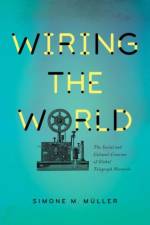
The successful laying of a transatlantic cable in 1866 remade world communications. A message could travel across the ocean in minutes, shrinking the space between continents, cultures, and nations. An eclectic group of engineers, entrepreneurs, politicians, and media visionaries then developed this technology into a telecommunications system that spread a particular vision of civilization-but not everyone wanted to wire the world the same way. Wiring the World is a cultural and social history that explores how the large Anglo-American cable companies won out over alternative visions. Bitter rivalries emerged over telegram prices, visions for world peace, scientific innovation, and the role of the nation-state. Such struggles determined the growth of cable technology, which in turn influenced world history. Filled with fascinating characters and new insights into pivotal events, Wiring the World traces globalization's diverse paths and close ties to business and politics.
This book introduces a process-based, patient-centered approach to palliative care that substantiates an indication-oriented treatment and radical reconsideration of our transition to death. Drawing on decades of work with terminally ill cancer patients and a trove of research on near-death experiences, Monika Renz encourages practitioners to not only safeguard patients' dignity as they die but also take stock of their verbal, nonverbal, and metaphorical cues as they progress, helping to personalize treatment and realize a more peaceful death. Renz divides dying into three parts: pre-transition, transition, and post-transition. As we die, all egoism and ego-centered perception fall away, bringing us to another state of consciousness, a different register of sensitivity, and an alternative dimension of spiritual connectedness. As patients pass through these stages, they offer nonverbal signals that indicate their gradual withdrawal from everyday consciousness. This transformation explains why emotional and spiritual issues become enhanced during the dying process. Relatives and practitioners are often deeply impressed and feel a sense of awe. Fear and struggle shift to trust and peace; denial melts into acceptance. At first, family problems and the need for reconciliation are urgent, but gradually these concerns fade. By delineating these processes, Renz helps practitioners grow more cognizant of the changing emotions and symptoms of the patients under their care, enabling them to respond with the utmost respect for their patients' dignity.
How did American schoolchildren, French philosophers, Russian Sinologists, Dutch merchants, and British lawyers imagine China and Chinese law? What happened when agents of presumably dominant Western empires had to endure the humiliations and anxieties of maintaining a profitable but precarious relationship with China? In Chinese Law in Imperial Eyes, Li Chen provides a richly textured analysis of these related issues and their intersection with law, culture, and politics in the eighteenth and nineteenth centuries.Using a wide array of sources, Chen's study focuses on the power dynamics of Sino-Western relations during the formative century before the First Opium War (1839-1842). He highlights the centrality of law to modern imperial ideology and politics and brings new insight to the origins of comparative Chinese law in the West, the First Opium War, and foreign extraterritoriality in China. The shifting balance of economic and political power formed and transformed knowledge of China and Chinese law in different contact zones. Chen argues that recovering the variegated and contradictory roles of Chinese law in Western "e;modernization"e; helps provincialize the subsequent Euro-Americentric discourse of global modernity.Chen draws attention to important yet underanalyzed sites in which imperial sovereignty, national identity, cultural tradition, or international law and order were defined and restructured. His valuable case studies show how constructed differences between societies were hardened into cultural or racial boundaries and then politicized to rationalize international conflicts and hierarchy.
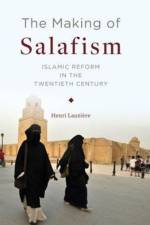
Some Islamic scholars hold that Salafism is an innovative and rationalist effort at Islamic reform that emerged in the late nineteenth century but gradually disappeared in the mid twentieth. Others argue Salafism is an anti-innovative and antirationalist movement of Islamic purism that dates back to the medieval period yet persists today. Though they contradict each other, both narratives are considered authoritative, making it hard for outsiders to grasp the history of the ideology and its core beliefs.Introducing a third, empirically based genealogy, The Making of Salafism understands the concept as a recent phenomenon projected back onto the past, and it sees its purist evolution as a direct result of decolonization. Henri Lauziere builds his history on the transnational networks of Taqi al-Din al-Hilali (1894-1987), a Moroccan Salafi who, with his associates, participated in the development of Salafism as both a term and a movement. Traveling from Rabat to Mecca, from Calcutta to Berlin, al-Hilali interacted with high-profile Salafi scholars and activists who eventually abandoned Islamic modernism in favor of a more purist approach to Islam. Today, Salafis tend to claim a monopoly on religious truth and freely confront other Muslims on theological and legal issues. Lauziere's pathbreaking history recognizes the social forces behind this purist turn, uncovering the popular origins of what has become a global phenomenon.
This beautifully illustrated, elegantly written textbook pairs the best research on the biochemical properties and physiological effects of medicinal plants with a fascinating history of their use throughout human civilization, revealing the influence of nature's pharmacopeia on art, war, conquest, and law. By chronicling the ways in which humans have cultivated plant species, extracted their active chemical ingredients, and investigated their effects on the body over time, Nature's Pharmacopeia also builds an unparalleled portrait of these special herbs as they transitioned from wild flora and botanical curiosities to commodities and potent drugs. The book opens with an overview of the use of medicinal plants in the traditional practices and indigenous belief systems of people in the Americas, Africa, Asia, and ancient Europe. It then connects medicinal plants to the growth of scientific medicine in the West. Subsequent chapters cover the regulation of drugs; the use of powerful plant chemicals-such as cocaine, nicotine, and caffeine-in various medical settings; and the application of biomedicine's intellectual frameworks to the manufacture of novel drugs from ancient treatments. Geared toward nonspecialists, this text fosters a deep appreciation of the complex chemistry and cultural resonance of herbal medicine, while suggesting how we may further tap the vast repositories of the world's herbal knowledge to create new pharmaceuticals.
In this masterful history, Eli Zaretsky reveals the power of Freudian thought to illuminate the great political conflicts of the twentieth century. Developing an original concept of "e;political Freudianism,"e; he shows how twentieth-century radicals, activists, and intellectuals used psychoanalytic ideas to probe consumer capitalism, racial violence, anti-Semitism, and patriarchy. He also underscores the continuing influence and critical potential of those ideas in the transformed landscape of the present. Zaretsky's conception of political Freudianism unites the two overarching themes of the last century-totalitarianism and consumerism-in a single framework. He finds that theories of mass psychology and the unconscious were central to the study of fascism and the Holocaust; to African American radical thought, particularly the struggle to overcome the legacy of slavery; to the rebellions of the 1960s; and to the feminism and gay liberation movements of the 1970s. Nor did the influence of political Freud end when the era of Freud bashing began. Rather, Zaretsky proves that political Freudianism is alive today in cultural studies, the study of memory, theories of trauma, postcolonial thought, film, media and computer studies, evolutionary theory and even economics.
In Marx After Marx, Harry Harootunian questions the claims of Western Marxism and its presumption of the final completion of capitalism. If this shift in Marxism reflected the recognition that the expected revolutions were not forthcoming in the years before World War II, its Cold War afterlife helped to both unify the West in its struggle with the Soviet Union and bolster the belief that capitalism remained dominant in the contest over progress. This book deprovincializes Marx and the West's cultural turn by returning to the theorist's earlier explanations of capital's origins and development, which followed a trajectory beyond Euro-America to Asia, Africa, and Latin America. Marx's expansive view shows how local circumstances, time, and culture intervened to reshape capital's system of production in these regions. His outline of a diversified global capitalism was much more robust than was his sketch of the English experience in Capital and helps explain the disparate routes that evolved during the twentieth century. Engaging with the texts of Lenin, Luxemburg, Gramsci, and other pivotal theorists, Harootunian strips contemporary Marxism of its cultural preoccupation by reasserting the deep relevance of history.
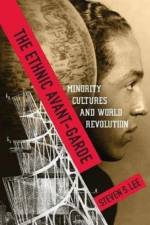
During the 1920s and 1930s, American minority artists and writers collaborated extensively with the Soviet avant-garde, seeking to build a revolutionary society that would end racial discrimination and advance progressive art. Making what Claude McKay called "e;the magic pilgrimage"e; to the Soviet Union, these intellectuals placed themselves at the forefront of modernism, using radical cultural and political experiments to reimagine identity and decenter the West. Shining rare light on these efforts, The Ethnic Avant-Garde makes a unique contribution to interwar literary, political, and art history, drawing extensively on Russian archives, travel narratives, and artistic exchanges to establish the parameters of an undervalued "e;ethnic avant-garde."e; These writers and artists cohered around distinct forms that mirrored Soviet techniques of montage, fragment, and interruption. They orbited interwar Moscow, where the international avant-garde converged with the Communist International. The book explores Vladimir Mayakovsky's 1925 visit to New York City via Cuba and Mexico, during which he wrote Russian-language poetry in an "e;Afro-Cuban"e; voice; Langston Hughes's translations of these poems while in Moscow, which he visited to assist on a Soviet film about African American life; a futurist play condemning Western imperialism in China, which became Broadway's first major production to feature a predominantly Asian American cast; and efforts to imagine the Bolshevik Revolution as Jewish messianic arrest, followed by the slow political disenchantment of the New York Intellectuals. Through an absorbing collage of cross-ethnic encounters that also include Herbert Biberman, Sergei Eisenstein, Paul Robeson, and Vladimir Tatlin, this work remaps global modernism along minority and Soviet-centered lines, further advancing the avant-garde project of seeing the world anew.
Abonner på vårt nyhetsbrev og få rabatter og inspirasjon til din neste leseopplevelse.
Ved å abonnere godtar du vår personvernerklæring.