
















Gjør som tusenvis av andre bokelskere
Abonner på vårt nyhetsbrev og få rabatter og inspirasjon til din neste leseopplevelse.
Ved å abonnere godtar du vår personvernerklæring.Du kan når som helst melde deg av våre nyhetsbrev.

Initially marketed as a life-saving advancement, flame retardants are now mired in controversy. Some argue that data show the chemicals are unsafe while others continue to support their use. The tactics of each side have far-reaching consequences for how we interpret new scientific discoveries.An experienced environmental sociologist, Alissa Cordner conducts more than a hundred interviews with activists, scientists, regulators, and industry professionals to isolate the social, scientific, economic, and political forces influencing environmental health policy today. Introducing "e;strategic science translation,"e; she describes how stakeholders use scientific evidence to support nonscientific goals and construct "e;conceptual risk formulas"e; to shape risk assessment and the interpretation of empirical evidence. A revelatory text for public-health advocates, Toxic Safety demonstrates that while all parties interested in health issues use science to support their claims, they do not compete on a level playing field and even good intentions can have deleterious effects.
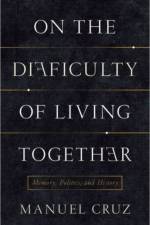
In On the Difficulty of Living Together, Manuel Cruz launches a nuanced study of memory and forgetting, defining their forms and uses, political meanings, and social and historical implications. Memory is not an intrinsically positive phenomenon, he argues, but an impressionable and malleable one, used to advance a variety of agendas. Cruz focuses on five memory models: that which is inherently valuable, that which legitimizes the present, that which supports retributive justice, that which is essential to mourning, and that which elicits renunciation or revelation. His methodical approach makes sense of memory's positive and negative effects, its contradictions, and its tensions. Cruz shows us that remembering is not necessarily an end in itself, nor is it a supreme value, immune to external influence. The exercise of memory guarantees nothing, though many insist it is a progressive act preventing the repetition of past mistakes. Tying the making of memory to the movements of history, Cruz prioritizes memory's political dimensions over its philosophical aspects and helps us remember its myriad uses.
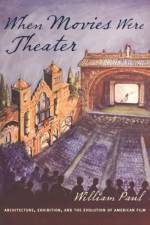
There was a time when seeing a movie meant more than seeing a film. The theater itself shaped the very perception of events on screen. This multilayered history tells the story of American film through the evolution of theater architecture and the surprisingly varied ways movies were shown, ranging from Edison's 1896 projections to the 1968 Cinerama premiere of Stanley Kubrick's 2001. William Paul matches distinct architectural forms to movie styles, showing how cinema's roots in theater influenced business practices, exhibition strategies, and film technologies.
David Brower (1912-2000) was a central figure in the modern environmental movement. His leadership, vision, and elegant conception of the wilderness forever changed how we approach nature. In many ways, he was a twentieth-century Thoreau. Brower transformed the Sierra Club into a national force that challenged and stopped federally sponsored projects that would have dammed the Grand Canyon and destroyed hundreds of millions of acres of our nation's wilderness. To admirers, he was tireless, passionate, visionary, and unyielding. To opponents and even some supporters, he was contentious and polarizing.As a young man growing up in Berkeley, California, Brower proved himself a fearless climber of the Sierra Nevada's dangerous peaks. After serving in the Tenth Mountain Division during World War II, he became executive director of the Sierra Club. This uncompromising biography explores Brower's role as steward of the modern environmental movement. His passionate advocacy destroyed lifelong friendships and, at times, threatened his goals. Yet his achievements remain some of the most important triumphs of the conservation movement. What emerges from this unique portrait is a rich and robust profile of a leader who took up the work of John Muir and, along with Rachel Carson, made environmentalism the cause of our time.
On April 15, 1837, a "e;long, gawky"e; Abraham Lincoln walked into Joshua Speed's dry-goods store in Springfield, Illinois, and asked what it would cost to buy the materials for a bed. Speed said seventeen dollars, which Lincoln didn't have. He asked for a loan to cover that amount until Christmas. Speed was taken with his visitor, but, as he said later, "e;I never saw so gloomy and melancholy a face."e; Speed suggested Lincoln stay with him in a room over his store for free and share his large double bed. What began would become one of the most important friendships in American history.Speed was Lincoln's closest confidant, offering him invaluable support after the death of his first love, Ann Rutledge, and during his rocky courtship of Mary Todd. Lincoln needed Speed for guidance, support, and empathy. Your Friend Forever, A. Lincoln is a rich analysis of a relationship that was both a model of male friendship and a specific dynamic between two brilliant but fascinatingly flawed men who played off each other's strengths and weaknesses to launch themselves in love and life. Their friendship resolves important questions about Lincoln's early years and adds significant psychological depth to our understanding of our sixteenth president.
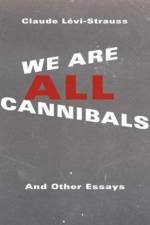
On Christmas Eve 1951, Santa Claus was hanged and then publicly burned outside of the Cathedral of Dijon in France. That same decade, ethnologists began to study the indigenous cultures of central New Guinea, and found men and women affectionately consuming the flesh of the ones they loved. "e;Everyone calls what is not their own custom barbarism,"e; said Montaigne. In these essays, Claude Levi-Strauss shows us behavior that is bizarre, shocking, and even revolting to outsiders but consistent with a people's culture and context. These essays relate meat eating to cannibalism, female circumcision to medically assisted reproduction, and mythic thought to scientific thought. They explore practices of incest and patriarchy, nature worship versus man-made material obsessions, the perceived threat of art in various cultures, and the innovations and limitations of secular thought. Levi-Strauss measures the short distance between "e;complex"e; and "e;primitive"e; societies and finds a shared madness in the ways we enact myth, ritual, and custom. Yet he also locates a pure and persistent ethics that connects the center of Western civilization to far-flung societies and forces a reckoning with outmoded ideas of morality and reason.
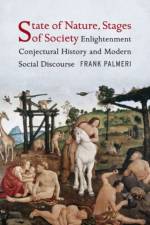
Frank Palmeri sees the conjectural histories of Rousseau, Hume, Herder, and other Enlightenment philosophers as a template for the development of the social sciences in the nineteenth and early twentieth centuries. Without documents or memorials, these thinkers, he argues, employed conjecture to formulate a naturalistic account of society's commercial and secular progression. Palmeri finds evidence of speculative frameworks in the political economy of Malthus, Martineau, Mill, and Marx. He traces the influence of speculative thought in the development of anthropology and ethnography in the 1860s, the foundational sociology of Comte and Spencer, and the sociology of religion pioneered by Weber, Durkheim, and Freud. Conjectural histories reveal a surprising ambivalence toward progress, modernity, and secularization among leading thinkers of the time, an attitude that affected texts as varied as Darwin's Descent of Man, Nietzsche's Genealogy of Morality, and the novels of Walter Scott, George Eliot, and H.G. Wells. Establishing the critical value of conjectural thinking in the study of modern forms of knowledge, Palmeri concludes his investigation with its return in the work of Foucault and in recent histories on early religion, political organization, and material life.
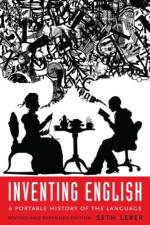
Seth Lerer tells a masterful history of the English language from the age of Beowulf to the rap of Eminem. Many have written about the evolution of grammar, pronunciation, and vocabulary, but only Lerer situates these developments within the larger history of English, America, and literature. This edition features a new chapter on the influence of biblical translation and an epilogue on the relationship of English speech to writing. A unique blend of historical and personal narrative, Inventing English is the surprising tale of a language that is as dynamic as the people to whom it belongs.
One hundred thousand Palestinians fled to Syria after being expelled from Palestine upon the establishment of the state of Israel in 1948. Integrating into Syrian society over time, their experience stands in stark contrast to the plight of Palestinian refugees in other Arab countries, leading to different ways through which to understand the 1948 Nakba, or catastrophe, in their popular memory. Conducting interviews with first-, second-, and third-generation members of Syria's Palestinian community, Anaheed Al-Hardan follows the evolution of the Nakba-the central signifier of the Palestinian refugee past and present-in Arab intellectual discourses, Syria's Palestinian politics, and the community's memorialization. Al-Hardan's sophisticated research sheds light on the enduring relevance of the Nakba among the communities it helped create, while challenging the nationalist and patriotic idea that memories of the Nakba are static and universally shared among Palestinians. Her study also critically tracks the Nakba's changing meaning in light of Syria's twenty-first-century civil war.
The literature of Adrienne Rich, Toni Morrison, Ana Castillo, and Chimamanda Ngozi Adichie teaches a risky, self-giving way of reading (and being) that brings home the dangers and the possibilities of suffering as an ethical good. Working the thought of feminist theologians and philosophers into an analysis of these women's writings, Cynthia R. Wallace crafts a literary ethics attentive to the paradoxes of critique and re-vision, universality and particularity, and reads in suffering a redemptive or redeemable reality.Wallace's approach recognizes the generative interplay between ethical form and content in literature, which helps isolate more distinctly the gendered and religious echoes of suffering and sacrifice in Western culture. By refracting these resonances through the work of feminists and theologians of color, her book also shows the value of broad-ranging ethical explorations into literature, with their power to redefine theories of reading and the nature of our responsibility to art and each other.
Just Life reorients ethics and politics around the generativity of mothers and daughters rather than the right to property and the sexual proprieties of the oedipal drama. Invoking two concrete universals-everyone is born of a woman and everyone needs to eat-Rawlinson rethinks labor and food as relationships that make ethical claims and sustain agency. Just Life counters the capitalization of bodies under biopower with the solidarity of sovereign bodies.
Vehement resentment and indignation are pervasive in societies emerging from dictatorship or civil conflict. How can institutions channel these emotions without undermining the prospects for democracy? Emphasizing the need to recognize and constructively engage negative public emotions, Mihaela Mihai contributes theoretically and practically to the growing field of transitional justice. Drawing on an extensive philosophical literature and case studies of democratic transitions in South Africa, South America, and Eastern Europe, her book rescues negative emotions from their bad reputation and highlights the obstacles and the opportunities such emotions create for democracy. By valorizing negative emotions, either through the judicial review of transitional justice bills or the criminal trials of victimizers, institutions realize the value of respect and concern for all while contributing to a culture that is hospitable to democracy.
Facing Climate Change explains why people refuse to accept evidence of a warming planet and shows how to move past partisanship to reach a consensus for action. A climate scientist and licensed Jungian analyst, Jeffrey T. Kiehl examines the psychological phenomena that twist our relationship to the natural world and their role in shaping the cultural beliefs that distance us further from nature. He also accounts for the emotions triggered by the lived experience of climate change and the feelings of fear and loss they inspire, which lead us to deny the reality of our warming planet.But it is not too late. By evaluating our way of being, Kiehl unleashes a potential human emotional understanding that can reform our behavior and help protect the Earth. Kiehl dives deep into the human brain's psychological structures and human spirituality's imaginative power, mining promising resources for creating a healthier connection to the environment-and one another. Facing Climate Change is as concerned with repairing our social and political fractures as it is with reestablishing our ties to the world, teaching us to push past partisanship and unite around the shared attributes that are key to our survival. Kiehl encourages policy makers and activists to appeal to our interdependence as a global society, extracting politics from the process and making decisions about our climate future that are substantial and sustaining.
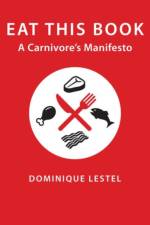
If we want to improve the treatment of animals, Dominique Lestel argues, we must acknowledge our evolutionary impulse to eat them and we must expand our worldview to see how others consume meat ethically and sustainably. The position of vegans and vegetarians is unrealistic and exclusionary. Eat This Book calls at once for a renewed and vigorous defense of animal rights and a more open approach to meat eating that turns us into responsible carnivores. Lestel skillfully synthesizes Western philosophical views on the moral status of animals and holistic cosmologies that recognize human-animal reciprocity. He shows that the carnivore's position is more coherently ethical than vegetarianism, which isolates humans from the world by treating cruelty, violence, and conflicting interests as phenomena outside of life. Describing how meat eaters assume completely-which is to say, metabolically-their animal status, Lestel opens our eyes to the vital relation between carnivores and animals and carnivores' genuine appreciation of animals' life-sustaining flesh. He vehemently condemns factory farming and the terrible footprint of industrial meat eating. His goal is to recreate a kinship between humans and animals that reminds us of what it means to be tied to the world.
In the early decades of the twentieth century, a vibrant theatrical culture took shape on New York City's Lower East Side. Original dramas, comedies, musicals, and vaudeville, along with sophisticated productions of Shakespeare, Ibsen, and Chekhov, were innovatively staged for crowds that rivaled the audiences on Broadway. Though these productions were in Yiddish and catered to Eastern European, Jewish audiences (the largest immigrant group in the city at the time), their artistic innovations, energetic style, and engagement with politics and the world around them came to influence all facets of the American stage. Vividly illustrated and with essays from leading historians and critics, this book recounts the heyday of "e;Yiddish Broadway"e; and its vital contribution to American Jewish life and crossover to the broader American culture. These performances grappled with Jewish nationalism, labor relations, women's rights, religious observance, acculturation, and assimilation. They reflected a range of genres, from tear-jerkers to experimental theater. The artists who came of age in this world include Stella Adler, Eddie Cantor, Jerry Lewis, Sophie Tucker, Mel Brooks, and Joan Rivers. The story of New York's Yiddish theater is a tale of creativity and legacy and of immigrants who, in the process of becoming Americans, had an enormous impact on the country's cultural and artistic development.
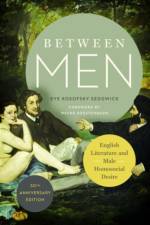
First published in 1985, Between Men was a decisive intervention in gender studies, a book that all but singlehandedly dislodged a tradition of literary critique that suppressed queer subjects and subjectivities. With stunning foresight and conceptual power, Eve Kosofsky Sedgwick's work opened not only literature but also politics, society, and culture to broader investigations of power, sex, and desire, and to new possibilities of critical agency.Illuminating with uncanny prescience Western society's evolving debates on gender and sexuality, Between Men still has much to teach us. With a new foreword by Wayne Koestenbaum emphasizing the work's ongoing relevance, Between Men engages with Shakespeare's Sonnets, Wycherley's The Country Wife, Sterne's A Sentimental Journey Through France and Italy, Hogg's The Private Memoirs and Confessions of a Justified Sinner, Tennyson's The Princess, Eliot's Adam Bede, Thackeray's The History of Henry Esmond, Esq., and Dickens's Our Mutual Friend and The Mystery of Edwin Drood, among many other texts. Its pathbreaking analysis of homosocial desire in Western literature remains vital to the future of queer studies and to explorations of the social transformations in which it participates.
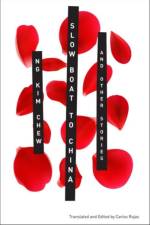
"e;Dream and Swine and Aurora,"e; "e;Deep in the Rubber Forest,"e; "e;Fish Bones,"e; "e;Allah's Will,"e; "e;Monkey Butts, Fire, and Dangerous Things"e;-Ng Kim Chew's stories are raw, rural, and rich with the traditions of his native Malaysia. They are also full of humor and spirit, demonstrating a deep appreciation for human ingenuity in the face of poverty, oppression, and exile. Ng creatively captures the riot of cultures that roughly coexist on the Malay Peninsula and its surrounding archipelago. Their interplay is heightened by the encroaching forces of globalization, which bring new opportunities for cultural experimentation, but also an added dimension of alienation. In prose that is intimate and atmospheric, these sensitively crafted, resonant stories depict the struggles of individuals torn between their ancestral and adoptive homes, communities pressured by violence, and minority Malaysian Chinese in dynamic tension with the Islamic Malay majority. Told through relatable characters, Ng's tales show why he has become a leading Malaysian writer of Chinese fiction, representing in mood, voice, and rhythm the dislocation of a people and a country in transition.
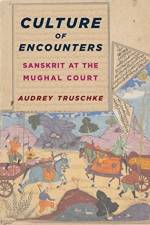
Culture of Encounters documents the fascinating exchange between the Persian-speaking Islamic elite of the Mughal Empire and traditional Sanskrit scholars, which engendered a dynamic idea of Mughal rule essential to the empire's survival. This history begins with the invitation of Brahman and Jain intellectuals to King Akbar's court in the 1560s, then details the numerous Mughal-backed texts they and their Mughal interlocutors produced under emperors Akbar, Jahangir (1605-1627), and Shah Jahan (1628-1658). Many works, including Sanskrit epics and historical texts, were translated into Persian, elevating the political position of Brahmans and Jains and cultivating a voracious appetite for Indian writings throughout the Mughal world. The first book to read these Sanskrit and Persian works in tandem, Culture of Encounters recasts the Mughal Empire as a polyglot polity that collaborated with its Indian subjects to envision its sovereignty. The work also reframes the development of Brahman and Jain communities under Mughal rule, which coalesced around carefully selected, politically salient memories of imperial interaction. Along with its groundbreaking findings, Culture of Encounters certifies the critical role of the sociology of empire in building the Mughal polity, which came to irrevocably shape the literary and ruling cultures of early modern India.
How can someone who condemns hunting, animal farming, and animal experimentation also favor legal abortion, which is the deliberate destruction of a human fetus? The authors of Beating Hearts aim to reconcile this apparent conflict and examine the surprisingly similar strategic and tactical questions faced by activists in the pro-life and animal rights movements. Beating Hearts maintains that sentience, or the ability to have subjective experiences, grounds a being's entitlement to moral concern. The authors argue that nearly all human exploitation of animals is unjustified. Early abortions do not contradict the sentience principle because they precede fetal sentience, and Beating Hearts explains why the mere potential for sentience does not create moral entitlements. Late abortions do raise serious moral questions, but forcing a woman to carry a child to term is problematic as a form of gender-based exploitation. These ethical explorations lead to a wider discussion of the strategies deployed by the pro-life and animal rights movements. Should legal reforms precede or follow attitudinal changes? Do gory images win over or alienate supporters? Is violence ever principled? By probing the connections between debates about abortion and animal rights, Beating Hearts uses each highly contested set of questions to shed light on the other.
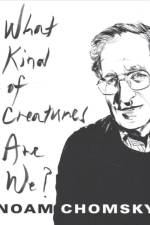
Noam Chomsky is widely known and deeply admired for being the founder of modern linguistics, one of the founders of the field of cognitive science, and perhaps the most avidly read political theorist and commentator of our time. In these lectures, he presents a lifetime of philosophical reflection on all three of these areas of research to which he has contributed for over half a century.In clear, precise, and non-technical language, Chomsky elaborates on fifty years of scientific development in the study of language, sketching how his own work has implications for the origins of language, the close relations that language bears to thought, and its eventual biological basis. He expounds and criticizes many alternative theories, such as those that emphasize the social, the communicative, and the referential aspects of language. Chomsky reviews how new discoveries about language overcome what seemed to be highly problematic assumptions in the past. He also investigates the apparent scope and limits of human cognitive capacities and what the human mind can seriously investigate, in the light of history of science and philosophical reflection and current understanding. Moving from language and mind to society and politics, he concludes with a searching exploration and philosophical defense of a position he describes as "e;libertarian socialism,"e; tracing its links to anarchism and the ideas of John Dewey, and even briefly to the ideas of Marx and Mill, demonstrating its conceptual growth out of our historical past and urgent relation to matters of the present.
Coming to Our Senses positions affect, or feeling, as our new cultural compass, ordering the parameters and possibilities of what can be known. From Facebook "e;likes"e; to Coca-Cola "e;loves,"e; from "e;emotional intelligence"e; in business to "e;emotional contagion"e; in social media, affect has displaced reason as the primary catalyst of global culture.Through examples of feeling in the books, film, music, advertising, cultural criticism, and political discourse of the United States and Latin America, Reber shows how affect encourages the public to "e;reason"e; on the strength of sentiment alone. Well-being, represented by happiness and health, and ill-being, embodied by unhappiness and disease, form the two poles of our social judgment, whether in affirmation or critique. We must then reenvision contemporary politics as operating at the level of the feeling body, so we can better understand the physiological and epistemological conditions affirming our cultural status quo and contestatory strategies for emancipation.
The domestic sex trafficking of minors is a problem of growing concern yet little critical attention. This book analyzes the forces behind the sex-trafficking industry in the United States and provides a much-needed reference for practitioners. It adopts a holistic approach, pursuing a nuanced exploration of these young people's experiences, their treatment, and outside efforts to combat sex trafficking.The book features interviews with service providers and experts, and incorporates recent research, thereby mapping the complex factors associated with young people's involvement in trading sex and the social connections that facilitate their behavior. It considers the experiences of both those who "e;choose"e; sex work and those who are forced into it by circumstances or third parties, and it discusses the networks of friends and close acquaintances who introduce newcomers to the trade. In addition, it takes a hard look at how local and federal responses to trafficking increase young people's vulnerability to trading sex. Urging policymakers and practitioners to move beyond the simple framework of "e;rescuing"e; victims and "e;punishing"e; villains, this book calls for policies and programs that focus on the failure of social and cultural systems and respond better to the young people caught in this web.
The bond siblings develop in childhood may be vastly different from the relationship that evolves in adulthood. Driven by affection but also characterized by ambivalence and ambiguity, adult sibling relationships can become hurtful, uncertain, competitive, or exhausting though the undercurrents of love and loyalty remain. An approach that recognizes the positive aspects of the changing sibling relationship, as well as those that need improvement, can restore healthy ties and rebuild family closeness.With in-depth case studies of more than 260 siblings over the age of forty and interviews with experts on mental health and family interaction, this book offers vital direction for traversing the emotional terrain of adult sibling relations. It pursues a richer understanding of ambivalence, a normal though little explored feeling among siblings, and how ambiguity about the past or present can lead to miscommunication and estrangement. For both professionals and general readers, this book clarifies the most confounding elements of sibling relationships and provides specific suggestions for realizing new, productive avenues of friendship in middle and later life-skills that are particularly important for siblings who must cooperate to care for aging parents or give immediate emotional or financial support to other siblings or family members.
Spanning the 1960s to the 2000s, these nonfiction writings showcase Shirley Hazzard's extensive thinking on global politics, international relations, the history and fraught present of Western literary culture, and postwar life in Europe and Asia. They add essential clarity to the themes that dominate her award-winning fiction and expand the intellectual registers in which her writings work.Hazzard writes about her employment at the United Nations and the institution's manifold failings. She shares her personal experience with the aftermath of the Hiroshima atomic bombing and the nature of life in late-1940s Hong Kong. She speaks to the decline of the hero as a public figure in Western literature and affirms the ongoing power of fiction to console, inspire, and direct human life, despite-or maybe because of-the world's disheartening realities. Cementing Hazzard's place as one of the twentieth century's sharpest and most versatile thinkers, this collection also encapsulates for readers the critical events defining postwar letters, thought, and politics.
In this original and provocative book, Colin Dayan tackles head-on the inexhaustible world, at once tender and fierce, of dogs and humans. We follow the tracks of dogs in the bayous of Louisiana, the streets of Istanbul, and the humane societies of the United States, and in the memories and myths of the humans who love them. Dayan reorients our ethical and political assumptions through a trans-species engagement that risks as much as it promises. She makes a powerful case for questioning what we think of as our deepest-held beliefs and, with dogs in the lead, unsettles the dubious promises of liberal humanism.Moving seamlessly between memoir, case law, and film, Dayan takes politics and animal studies in a new direction-one that gives us glimpses of how we can think beyond ourselves and with other beings. Her unconventional perspective raises hard questions and renews what it means for any animal or human to live in the twenty-first century. Nothing less than a challenge for us to confront violence and suffering even in the privileged precincts of modernity, this searing and lyrical book calls for another way to think the world. Theoretically sophisticated yet aimed at a broad readership, With Dogs at the Edge of Life illuminates how dogs-and their struggles-take us beyond sentimentality and into a form of thought that can make a difference to our lives.
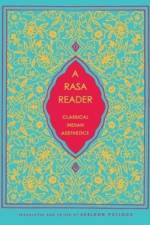
From the early years of the Common Era to 1700, Indian intellectuals explored with unparalleled subtlety the place of emotion in art. Their investigations led to the deconstruction of art's formal structures and broader inquiries into the pleasure of tragic tales. Rasa, or taste, was the word they chose to describe art's aesthetics, and their passionate effort to pin down these phenomena became its own remarkable act of creation.This book is the first in any language to follow the evolution of rasa from its origins in dramaturgical thought-a concept for the stage-to its flourishing in literary thought-a concept for the page. A Rasa Reader incorporates primary texts by every significant thinker on classical Indian aesthetics, many never translated before. The arrangement of the selections captures the intellectual dynamism that has powered this debate for centuries. Headnotes explain the meaning and significance of each text, a comprehensive introduction summarizes major threads in intellectual-historical terms, and critical endnotes and an extensive bibliography add further depth to the selections. The Sanskrit theory of emotion in art is one of the most sophisticated in the ancient world, a precursor of the work being done today by critics and philosophers of aesthetics. A Rasa Reader's conceptual detail, historical precision, and clarity will appeal to any scholar interested in a full portrait of global intellectual development. A Rasa Reader is the inaugural book in the Historical Sourcebooks in Classical Indian Thought series, edited by Sheldon Pollock. These text-based books guide readers through the most important forms of classical Indian thought, from epistemology, rhetoric, and hermeneutics to astral science, yoga, and medicine. Each volume provides fresh translations of key works, headnotes to contextualize selections, a comprehensive analysis of major lines of development within the discipline, and exegetical and text-critical endnotes, as well as a bibliography. Designed for comparativists and interested general readers, Historical Sourcebooks is also a great resource for advanced scholars seeking authoritative commentary on challenging works.
Drawing on extensive ethnographic fieldwork in Cambodia, Erik W. Davis radically reorients approaches toward the nature of Southeast Asian Buddhism's interactions with local religious practice and, by extension, reorients our understanding of Buddhism itself. Through a vivid study of contemporary Cambodian Buddhist funeral rites, he reveals the powerfully integrative role monks play as they care for the dead and negotiate the interplay of non-Buddhist spirits and formal Buddhist customs.Buddhist monks perform funeral rituals rooted in the embodied practices of Khmer rice farmers and the social hierarchies of Khmer culture. The monks' realization of death underwrites key components of the Cambodian social imagination: the distinction between wild death and celibate life, the forest and the field, and moral and immoral forms of power. By connecting the performative aspects of Buddhist death rituals to Cambodian history and everyday life, Davis undermines the theory that Buddhism and rural belief systems necessarily oppose each other. Instead, he shows Cambodian Buddhism to be a robust tradition with ethical and popular components extending throughout Khmer society.
Christian Metz is best known for applying Saussurean theories of semiology to film analysis. In the 1970s, he used Sigmund Freud's psychology and Jacques Lacan's mirror theory to explain the popularity of cinema. In this final book, Metz uses the concept of enunciation to articulate how films "e;speak"e; and explore where this communication occurs, offering critical direction for theorists who struggle with the phenomena of new media. If a film frame contains another frame, which frame do we emphasize? And should we consider this staging an impersonal act of enunciation? Consulting a range of genres and national trends, Metz builds a novel theory around the placement and subjectivity of screens within screens, which pulls in-and forces him to reassess-his work on authorship, film language, and the position of the spectator. Metz again takes up the linguistic and theoretical work of Benveniste, Genette, Casetti, and Bordwell, drawing surprising conclusions that presage current writings on digital media. Metz's analysis enriches work on cybernetic emergence, self-assembly, self-reference, hypertext, and texts that self-produce in such a way that the human element disappears. A critical introduction by Cormac Deane bolsters the connection between Metz's findings and nascent digital-media theory, emphasizing Metz's keen awareness of the methodological and philosophical concerns we wrestle with today.
Two major events occurred in the early centuries of Islam that determined its historical and spiritual development in the centuries that followed: the formation of the sacred scriptures, namely the Qur'an and the Hadith, and the chronic violence that surrounded the succession of the Prophet, manifesting in repression, revolution, massacre, and civil war. This is the first book to evaluate the writing of Islam's major scriptural sources within the context of these bloody, brutal conflicts. Conducting a philological and historical study of little-known though significant ancient texts, Mohammad Ali Amir-Moezzi rebuilds a Shi'ite understanding of Islam's early history and the genesis of its holy scriptures. At the same time, he proposes a fresh interpretative framework and a new data set for theorizing the early history of Islam, isolating the contradictions between Shi'ite and Sunni sources and their contribution to the tensions that rile these groups today.
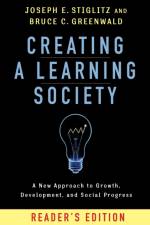
Since its publication Creating a Learning Society has served as an effective tool for those who advocate government policies to advance science and technology. It shows persuasively how enormous increases in our standard of living have been the result of learning how to learn, and it explains how advanced and developing countries alike can model a new learning economy on this example. Creating a Learning Society: Reader's Edition uses accessible language to focus on the work's central message and policy prescriptions. As the book makes clear, creating a learning society requires good governmental policy in trade, industry, intellectual property, and other important areas. The text's central thesis-that every policy affects learning-is critical for governments unaware of the innovative ways they can propel their economies forward.
Abonner på vårt nyhetsbrev og få rabatter og inspirasjon til din neste leseopplevelse.
Ved å abonnere godtar du vår personvernerklæring.