








Gjør som tusenvis av andre bokelskere
Abonner på vårt nyhetsbrev og få rabatter og inspirasjon til din neste leseopplevelse.
Ved å abonnere godtar du vår personvernerklæring.Du kan når som helst melde deg av våre nyhetsbrev.

After covering the genre's early history and theorizing its general characteristics, this volume then focuses on specific instances of sports films, such as the biopic, the sports history film, the documentary, the fan film, the boxing film, and explores issues such as gender, race, spectacle and silent comedy. Four major films are then closely analysed - Chariots of Fire, Field of Dreams, the Indian cricket epic Lagaan, and Oliver Stone's Any Given Sunday. While recording American film's importance to the genre, the book resists the conventional over-concentration on American cinema and sports by its attention to other cinemas, for example the British, Indian, Australian, South Korean, Thai, German, New Zealand, Spanish, and so on, with the many different sports they depict.
James Whale's Frankenstein (1931) spawned a phenomenon that has been rooted in world culture for decades. This cinematic Prometheus has generated countless sequels, remakes, rip-offs, and parodies in every media, and this granddaddy of cult movies constantly renews its followers in each generation. Along with an in-depth critical reading of the original 1931 film, this book tracks Frankenstein the monster's heavy cultural tread from Mary Shelley's source novel to today's Internet chat rooms.
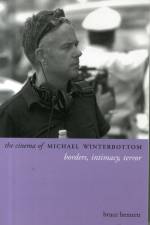
This comprehensive study of prolific British filmmaker Michael Winterbottom explores the thematic, stylistic, and intellectual consistencies running through his eclectic and controversial body of work. This volume undertakes a close analysis of a TV series directed by Winterbottom and sixteen of his films ranging from television dramas to transnational co-productions featuring Hollywood stars, and from documentaries to costume films. The critique is centered on Winterbottom's collaborative working practices, political and cultural contexts, and critical reception. Arguing that his work delineates a 'cinema of borders', this study examines Winterbottom's treatment of sexuality, class, ethnicity, and national and international politics, as well as his quest to adequately narrate inequality, injustice, and violence.
One of the last representatives of a brand of serious, high-art cinema, Alexander Sokurov has produced a massive oeuvre exploring issues such as history, power, memory, kinship, death, the human soul, and the responsibility of the artist. Through contextualization and close readings of each of his feature fiction films (broaching many of his documentaries in the process), this volume unearths a vision of Sokurov's films as equally mournful and passionate, intellectual, and sensual, and also identifies in them a powerful, if discursively repressed, queer sensitivity, alongside a pattern of tensions and paradoxes. This book thus offers new keys to understand the lasting and ever-renewed appeal of the Russian director's Janus-like and surprisingly dynamic cinema - a deeply original and complex body of work in dialogue with the past, the present and the future.
This is a book about how film encountered love in the course of its history. It is also a book about the philosophy of love. Since Plato, erotic love has been praised for leading the soul to knowledge. The vast tradition of poetry devoted to love has emphasized that love is a feeling. Love in Motion presents a new metaphysics and ontology of love as a reciprocal erotic relationship. The book argues that film has been particularly well suited for depicting love in this way, in virtue of its special narrative language. This is a language of expression that has developed in the course of film history. The book spans this history from early silent directors such as Joseph von Sternberg to contemporary filmmakers like Sophia Coppola. At the centre of this study is a comparison between Classical French and American love films of the forties and a series of modernist films by Luis Bunuel, Francois Truffaut and Wong Kar Wai.
Raul Ruiz, while considered one of the world's most significant filmmakers by several film critics, is yet to be the subject of any thorough engagement with his work in English. This volume sets out on this task by mapping, as fully as possible, Ruiz's cinematic trajectory across more than five decades of prolific work, up to his death in 2011; ranging from his earliest work in Chile to high-budget 'European' costume dramas culminating in Mysteries of Lisbon (2010). It does so by treating Ruiz's work-with its surrealist, magic realist, popular cultural, and neo-Baroque sources-as a type of 'impossible' cinematic cartography, mapping real, imaginary, and virtual spaces, and crossing between different cultural contexts, aesthetic strategies, and technical media. It argues that across the different phases of Ruiz's work identified, there are key continuities such as the invention of singular cinematic images and the interrogation of their possible and impossible combinations.
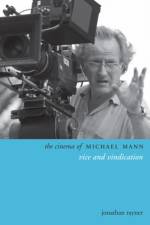
Michael Mann is one of the most important American filmmakers of the past forty years. His films exhibit the existential concerns of art cinema, articulated through a conspicuous and recognizable visual style and yet integrated within classical Hollywood narrative and genre frameworks. Since his beginnings as a screenwriter in the 1970s, Mann has become a key figure within contemporary American popular culture as writer, director, and producer for film and television. This volume offers a detailed study of Mann's feature films, from The Jericho Mile (1979) to Public Enemies (2009), with consideration also being given to parallels in the production, style, and characterization in his television work. It explores Mann's relationship with classical genres, his thematic concentration on issues of morality and masculinity, his film adaptations from literature, and the development and significance of his trademark visual style within modern American cinema.
Rising Sun and Divided Land provides a comprehensive, scholarly examination of the historical background, films, and careers of selected Korean and Japanese film directors. It examines eight directors: Fukasaku Kinji, Im Kwon-teak, Kawase Naomi, Miike Takashi, Lee Chang-dong, Kitano Takeshi, Park Chan-wook, and Kim Ki-duk and considers their work as reflections of personal visions and as films that engage with globalization, colonialism, nationalism, race, gender, history, and the contemporary state of Japan and South Korea. Each chapter is followed by a short analysis of a selected film, and the volume as a whole includes a cinematic overview of Japan and South Korea and a list of suggestions for further reading and viewing.
Aki Kaurismaki is an enigma, an eminent auteur who claims his films are a joke. Since 1983, Kaurismaki has produced classically-styled films filled with cinephilic references to film history. He has earned an international art-house audience and many prizes, influencing such directors as Jim Jarmusch, Quentin Tarantino, and Wes Anderson. Yet Kaurismaki is often depicted as the loneliest, most nostalgic of Finns (except when he promotes his films, makes political statements, and runs his many businesses). He is also depicted as a bohemian known for outlandish actions and statements. The Cinema of Aki Kaurismaki is the first comprehensive English-language study of this eccentric director. Drawing on revisionist approaches to film authorship, the text links the filmmaker and his films to the stories and issues animating film aesthetics and history, nostalgia, late modernity, politics, commerce, film festivals, and national cinema.
From Slacker (1991) to The School of Rock (2003), from Before Sunrise (1995) to Before Sunset (2004), from the walking and talking of his no/low-budget American independent films to conversing with the philosophical traditions of the European art house, Richard Linklater's films are some of the most critical, political, and spiritual achievements of contemporary world cinema. Examinations of Linklater's collaborative working practices and deployment of rotoscoping and innovative distribution strategies all feature in this book, which aspires to walk and talk with the filmmaker and his films. Informed by a series of original interviews with the artist, in both his hometown and frequent film location of Austin, Texas, this study of the director who made Dazed and Confused (1993), A Scanner Darkly (2006), and Bernie (2011) explores the theoretical, practical, contextual, and metaphysical elements of these works along with his documentaries and side-projects and finds fanciful lives and lucid dreams have as much to do with his work as generally alternative notions of America, contemporary society, cinema, and time.A
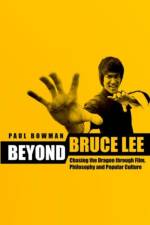
In order to understand Bruce Lee, we must look beyond Bruce Lee to the artist's intricate cultural and historical contexts. This work begins by contextualising Lee, examining his films and martial arts work, and his changing cultural status within different times and places. The text examines Bruce Lee's films and philosophy in relation to the popular culture and cultural politics of the 1960s and 1970s, and it addresses the resurgence of his popularity in Hong Kong and China in the twenty-first century. The study also explores Lee's ongoing legacy and influence in the West, considering his function as a shifting symbol of ethnic politics and the ways in which he continues to inform Hollywood film-fight choreography. Beyond Bruce Lee ultimately argues Lee is best understood in terms of "e;cultural translation"e; and that his interventions and importance are ongoing.
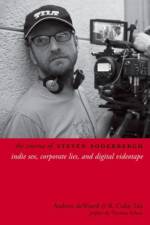
The industry's only director-cinematographer-screenwriter-producer-actor-editor, Steven Soderbergh is contemporary Hollywood's most innovative and prolific filmmaker. A Palme d'or and Academy Award-winner, Soderbergh has directed nearly thirty films, including political provocations, digital experiments, esoteric documentaries, global blockbusters, and a series of atypical genre films. This volume considers its slippery subject from several perspectives, analyzing Soderbergh as an expressive auteur of art cinema and genre fare, as a politically-motivated guerrilla filmmaker, and as a Hollywood insider. Combining a detective's approach to investigating the truth with a criminal's alternative value system, Soderbergh's films tackle social justice in a corporate world, embodying dozens of cinematic trends and forms advanced in the past twenty-five years. His career demonstrates the richness of contemporary American cinema, and this study gives his complex oeuvre the in-depth analysis it deserves.
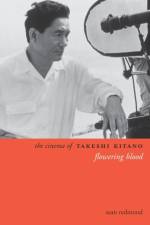
The Cinema of Takeshi Kitano: Flowering Blood is a detailed aesthetic, Deleuzian, and phenomenological exploration of Japan's finest currently-working film director, performer, and celebrity. The volume uniquely explores Kitano's oeuvre through the tropes of stillness and movement, becoming animal, melancholy and loss, intensity, schizophrenia, and radical alterity; and through the aesthetic temperatures of color, light, camera movement, performance and urban and oceanic space. In this highly original monograph, all of Kitano's films are given due consideration, including A Scene at the Sea (1991), Sonatine (1993), Dolls (2002), and Outrage (2010).
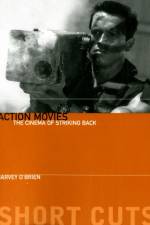
Action Movies: The Cinema of Striking Back is a study of action cinema, exploring the ethics and aesthetics of the genre with reference to its relatively short history. It moves from seminal classics like Bullitt (1968) and Dirty Harry (1971) through epoch-defining films like Rambo: First Blood Part II (1985) and Die Hard (1988) to revisions, reboots, and renewals in films like Kill Bill Vol. 1 (2003), Taken (2008), and The Expendables (2010). The action genre is a fusion of form and content: a cinema of action about action. It is a cinema of the will, configured as a decisive reaction to untenable circumstances. Action heroes take up arms against the sea of troubles that beset them, safe in the knowledge that if they don't do it, nobody will. Though this makes the action movie profoundly disturbing as an embodiment of moral ideology, its enduring appeal proves the appetite for assurance remains undiminished, even in the wake of 9/11.
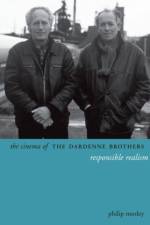
The brothers Jean-Pierre and Luc Dardenne have established an international reputation for their emotionally powerful realist cinema. Inspired by their home turf of Liege-Seraing, a former industrial hub of French-speaking southern Belgium, they have crafted a series of fiction films that blends acute observation of life on the social margins with moral fables for the postmodern age. This volume analyses the brothers' career from their leftist video documentaries of the 1970s and 1980s through their debut as directors of fiction films in the late 1980s and early 1990s to their six major achievements from The Promise (1996) to The Kid with a Bike (2011), an oeuvre that includes two Golden Palms at the Cannes film festival, for Rosetta (1999) and The Child (2005). It argues that the ethical dimension of the Dardennes' work complements rather than precludes their sustained expression of a fundamental political sensibility.
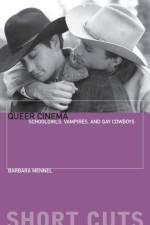
Queer Cinema: Schoolgirls, Vampires, and Gay Cowboys illustrates queer cinematic aesthetics by highlighting key films that emerged at historical turning points throughout the twentieth century. Barbara Mennel traces the representation of gays and lesbians from the sexual liberation movements of the roaring 1920s in Berlin to the Stonewall Rebellion in New York City and the emergence of queer activism and film in the early 1990s. She explains early tropes of queerness, such as the boarding school or the vampire, and describes the development of camp from 1950s Hollywood to underground art of the late 1960s in New York City. Mennel concludes with an exploration of the contemporary mainstreaming of gay and lesbian films and global queer cinema. Queer Cinema: Schoolgirls, Vampires and Gay Cowboys not only offers an introduction to a gay and lesbian film history, but also contributes to an academic discussion about queer subversion of mainstream film.
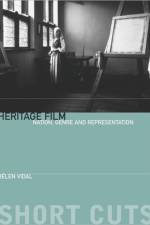
This volume provides a comprehensive introduction to the critical debates around the heritage film, from its controversial status in British cinema of the 1980s to its expansion into a versatile international genre in the 1990s and 2000s. This study explores the heritage film in light of questions of national identity in film and television, industry and funding, and history, gender and representation. Using a wide range of examples and including an in-depth analysis of three case studies - Girl with a Pearl Earring (2003), Joyeux Noel (2005) and The Queen (2006) - this book presents the heritage film as a thriving phenomenon at the centre of contemporary European cinema.
Iran's Organization for the Mobilization of the Oppressed (Sazeman-e Basij-e Mostazafan), commonly known as the Basij, is a paramilitary organization used by the regime to suppress dissidents, vote as a bloc, and indoctrinate Iranian citizens. Captive Society surveys the Basij's history, structure, and sociology, as well as its influence on Iranian society, its economy, and its educational system. Saied Golkar's account draws not only on published materials-including Basij and Revolutionary Guard publications, allied websites, and blogs-but also on his own informal communications with Basij members while studying and teaching in Iranian universities as recently as 2014. In addition, he incorporates findings from surveys and interviews he conducted while in Iran.
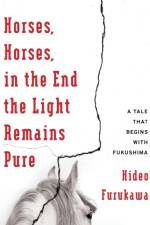
"e;As we passed from the city center into the Fukushima suburbs I surveyed the landscape for surgical face masks. I wanted to see in what ratios people were wearing such masks. I was trying to determine, consciously and unconsciously, what people do in response. So, among people walking along the roadway, and people on motorbikes, I saw no one with masks. Even among the official crossing guards outfitted with yellow flags and banners, none. All showed bright and calm. What was I hoping for exactly? The guilty conscience again. But then it was time for school to start. We began to see groups of kids on their way to school. They were wearing masks."e;Horses, Horses, in the End the Light Remains Pure is a multifaceted literary response to the earthquake, tsunami, and nuclear meltdown that devastated northeast Japan on March 11, 2011. The novel is narrated by Hideo Furukawa, who travels back to his childhood home near Fukushima after 3/11 to reconnect with a place that is now doubly alien. His ruminations conjure the region's storied past, particularly its thousand-year history of horses, humans, and the struggle with a rugged terrain. Standing in the morning light, these horses also tell their stories, heightening the sense of liberation, chaos, and loss that accompanies Furukawa's rich recollections. A fusion of fiction, history, and memoir, this book plays with form and feeling in ways reminiscent of Vladimir Nabokov's Speak, Memory and W. G. Sebald's The Rings of Saturn yet draws its own, unforgettable portrait of personal and cultural dislocation.
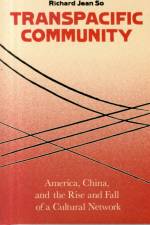
In the turbulent years after World War I, a transpacific community of American and Chinese writers and artists emerged to forge new ideas regarding aesthetics, democracy, internationalism, and the political possibilities of art. Breaking with preconceived notions of an "e;exotic"e; East, the Americans found in China and in the works of Chinese intellectuals inspiration for leftist and civil rights movements. Chinese writers and intellectuals looked to the American tradition of political democracy to inform an emerging Chinese liberalism. This interaction reflected an unprecedented integration of American and Chinese cultures and a remarkable synthesis of shared ideals and political goals.The transpacific community that came together during this time took advantage of new advances in technology and media, such as the telegraph and radio, to accelerate the exchange of ideas. It created a fast-paced, cross-cultural dialogue that transformed the terms by which the United States and China-or, more broadly, "e;West"e; and "e;East"e;-knew each other. Transpacific Community follows the left-wing journalist Agnes Smedley's campaign to free the author Ding Ling from prison; Pearl Buck's attempt to fuse Jeffersonian democracy with late Qing visions of equality in The Good Earth; Paul Robeson's collaboration with the musician Liu Liangmo, which drew on Chinese and African American traditions; and the writer Lin Yutang's attempt to create a typewriter for Chinese characters. Together, these individuals produced political projects that synthesized American and Chinese visions of equality and democracy and imagined a new course for East-West relations.
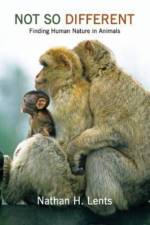
Animals fall in love, establish rules for fair play, exchange valued goods and services, hold "e;funerals"e; for fallen comrades, deploy sex as a weapon, and communicate with one another using rich vocabularies. Animals also get jealous and violent or greedy and callous and develop irrational phobias, just like us. Monkeys address inequality, wolves miss each other, elephants grieve for their dead, and prairie dogs name the humans they encounter. Human and animal behavior is not as different as once believed.In Not So Different, the biologist Nathan H. Lents argues that the same evolutionary forces of cooperation and competition have shaped both humans and animals. Identical emotional and instinctual drives govern our actions. By acknowledging this shared programming, the human experience no longer seems unique, but in that loss we gain a fuller appreciation of such phenomena as sibling rivalry and the biological basis of grief, helping us lead more grounded, moral lives among animals, our closest kin. Through a mix of colorful reporting and rigorous scientific research, Lents describes the exciting strides scientists have made in decoding animal behavior and bringing the evolutionary paths of humans and animals closer together. He marshals evidence from psychology, evolutionary biology, cognitive science, anthropology, and ethology to further advance this work and to drive home the truth that we are distinguished from animals only in degree, not in kind.
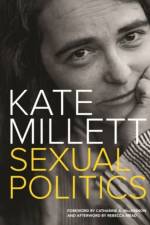
A sensation upon its publication in 1970, Sexual Politics documents the subjugation of women in great literature and art. Kate Millett's analysis targets four revered authors-D. H. Lawrence, Henry Miller, Norman Mailer, and Jean Genet-and builds a damning profile of literature's patriarchal myths and their extension into psychology, philosophy, and politics. Her eloquence and popular examples taught a generation to recognize inequities masquerading as nature and proved the value of feminist critique in all facets of life. This new edition features the scholar Catharine A. MacKinnon and the New Yorker correspondent Rebecca Mead on the importance of Millett's work to challenging the complacency that sidelines feminism.
Since the 1950s, Warren Buffett and his partners have backed some of the twentieth century's most profitable, trendsetting companies. But how did they know they were making the right investments? What did Buffet and his partners look for in an up-and-coming company, and how can others replicate their approach?A gift to Buffett followers who have long sought a pattern to the investor's success, Inside the Investments of Warren Buffett presents the most detailed analysis to date of Buffet's long-term investment portfolio. Yefei Lu, an experienced investor, starts with Buffett's interest in the Sanborn Map Company in 1958 and tracks nineteen more of his major investments in companies like See's Candies, the Washington Post, GEICO, Coca-Cola, US Air, Wells Fargo, and IBM. Accessing partnership letters, company documents, annual reports, third-party references, and other original sources, Lu pinpoints what is unique about Buffett's timing, instinct, use of outside knowledge, and postinvestment actions, and he identifies what could work well for all investors in companies big and small, domestic and global. His substantial chronology accounts for broader world events and fluctuations in the U.S. stock market, suggesting Buffett's most important trait may be the breadth of his expertise.
What Is a People? seeks to reclaim "e;people"e; as an effective political concept by revisiting its uses and abuses over time. Alain Badiou surveys the idea of a people as a productive force of solidarity and emancipation and as a negative tool of categorization and suppression. Pierre Bourdieu follows with a sociolinguistic analysis of "e;popular"e; and its transformation of democracy, beliefs, songs, and even soups into phenomena with outsized importance. Judith Butler calls out those who use freedom of assembly to create an exclusionary "e;we,"e; while Georges Didi-Huberman addresses the problem of summing up a people with totalizing narratives. Sadri Khiari applies an activist's perspective to the racial hierarchies inherent in ethnic and national categories, and Jacques Ranciere comments on the futility of isolating theories of populism when, as these thinkers have shown, the idea of a "e;people"e; is too diffuse to support them. By engaging this topic linguistically, ethnically, culturally, and ontologically, the voices in this volume help separate "e;people"e; from its fraught associations to pursue more vital formulations.Together with Democracy in What State?, in which Giorgio Agamben, Alain Badiou, Daniel Bensaid, Wendy Brown, Jean-Luc Nancy, Jacques Ranciere, Kristin Ross, and Slavoj iek discuss the nature and purpose of democracy today, What Is a People? expands an essential exploration of political action and being in our time.
The name elBulli is synonymous with creativity and innovation. Located in Catalonia, Spain, the three-star Michelin restaurant led the world to "e;molecular"e; or "e;techno-emotional"e; cooking and made creations, such as pine-nut marshmallows, rose-scented mozzarella, liquid olives, and melon caviar, into sensational reality. People traveled from all over the world-if they could secure a reservation during its six months of operation-to experience the wonder that chef Ferran Adria and his team concocted in their test kitchen, never offering the same dish twice. Yet elBulli's business model proved unsustainable. The restaurant converted to a foundation in 2011, and is working hard on its next revolution. Will elBulli continue to innovate? What must an organization do to create something new?Appetite for Innovation is an organizational analysis of elBulli and the nature of innovation. Pilar Opazo joined elBulli's inner circle as the restaurant transitioned from a for-profit business to its new organizational model. In this book, she compares this moment to the culture of change that first made elBulli famous, and then describes the novel forms of communication, idea mobilization, and embeddedness that continue to encourage the staff to focus and invent as a whole. She finds that the successful strategies employed by elBulli are similar to those required for innovation in art, music, business, and technology, proving the value of the elBulli model across organizations and industries.
What is the role of science in social work? Ian Shaw considers social work inventions, evidence-based practice, the history of scientific claims in social work practice, technology, and social work research methodology to demonstrate the significant role that scientific language and practice play in the complex world of social work.By treating science as a social action marked by the interplay of choice, activity, and constraints, Shaw links scientific and social work knowledge through the core themes of the nature of evidence, critical learning and understanding, justice, and the skilled evaluation of the subject. He shows specifically how to connect science, research, and the practical and speaks to the novel topics this integration introduces into the discipline, including experience, expertise, faith, tacit knowledge, judgment, interests, scientific controversies, and understanding.
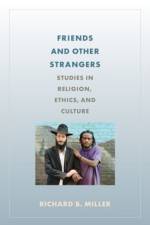
Friends and Other Strangers argues for expanding the field of religious ethics to address the normative dimensions of culture, interpersonal desires, friendships and family, and institutional and political relationships. Richard B. Miller urges religious ethicists to turn to cultural studies to broaden the range of the issues they address and to examine matters of cultural practice and cultural difference in critical and self-reflexive ways. Friends and Other Strangers critically discusses the ethics of ethnography; ethnocentrism, relativism, and moral criticism; empathy and the ethics of self-other attunement; indignation, empathy, and solidarity; the meaning of moral responsibility in relation to children and friends; civic virtue, war, and alterity; the normative and psychological dimensions of memory; and religion and democratic public life. Miller challenges distinctions between psyche and culture, self and other, and uses the concepts of intimacy and alterity as dialectical touchstones for examining the normative dimensions of self-other relationships. A wholly contemporary, global, and interdisciplinary work, Friends and Other Strangers illuminates aspects of moral life ethicists have otherwise overlooked.
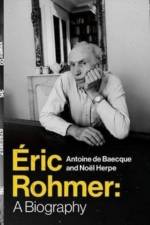
The director of twenty-five films, including My Night at Maud's (1969), which was nominated for a Best Picture Academy Award, and the editor in chief of Cahiers du cinema from 1957 to 1963, Eric Rohmer set the terms by which people watched, made, and thought about cinema for decades. Such brilliance does not develop in a vacuum, and Rohmer cultivated a fascinating network of friends, colleagues, and industry contacts that kept his outlook sharp and propelled his work forward. Despite his privacy, he cared deeply about politics, religion, culture, and fostering a public appreciation of the medium he loved.This exhaustive biography uses personal archives and interviews to enrich our knowledge of Rohmer's public achievements and lesser known interests and relations. The filmmaker kept in close communication with his contemporaries and competitors: Francois Truffaut, Jean-Luc Godard, Claude Chabrol, and Jacques Rivette. He held a paradoxical fascination with royalist politics, the fate of the environment, Catholicism, classical music, and the French nightclub scene, and his films were regularly featured at New York and Los Angeles film festivals. Despite an austere approach to life, Rohmer had a voracious appetite for art, culture, and intellectual debate captured vividly in this definitive volume.
Robert L. Belknap's theory of plot illustrates the active and passive roles literature plays in creating its own dynamic reading experience. Literary narrative enchants us through its development of plot, but plot tells its own story about the making of narrative, revealing through its structures, preoccupations, and strategies of representation critical details about how and when a work came into being.Through a rich reading of Shakespeare's King Lear and Dostoevsky's Crime and Punishment, Belknap explores the spatial, chronological, and causal aspects of plot, its brilliant manipulation of reader frustration and involvement, and its critical cohesion of characters. He considers Shakespeare's transformation of dramatic plot through parallelism, conflict, resolution, and recognition. He then follows with Dostoevsky's development of the rhetorical and moral devices of nineteenth-century Russian fiction, along with its epistolary and detective genres, to embed the reader in the murder Raskolnikov commits. Dostoevsky's reinvention of the psychological plot was profound, and Belknap effectively challenges the idea that the author abused causality to achieve his ideological conclusion. In a final chapter, Belknap argues that plots teach us novelistic rather than poetic justice. Operating according to their own logic, plots provide us with a compelling way to see and order our world.
Taste as Experience puts the pleasure of food at the center of human experience. It shows how the sense of taste informs our preferences for and relationship to nature, pushes us toward ethical practices of consumption, and impresses upon us the importance of aesthetics. Eating is often dismissed as a necessary aspect of survival, and our personal enjoyment of food is considered a quirk. Nicola Perullo sees food as the only portion of the world we take in on a daily basis, constituting our first and most significant encounter with the earth. Perullo has long observed people's food practices and has listened to their food experiences. He draws on years of research to explain the complex meanings behind our food choices and the thinking that accompanies our gustatory actions. He also considers our indifference toward food as a force influencing us as much as engagement. For Perullo, taste is value and wisdom. It cannot be reduced to mere chemical or cultural factors but embodies the quality and quantity of our earthly experience.
Abonner på vårt nyhetsbrev og få rabatter og inspirasjon til din neste leseopplevelse.
Ved å abonnere godtar du vår personvernerklæring.