





Gjør som tusenvis av andre bokelskere
Abonner på vårt nyhetsbrev og få rabatter og inspirasjon til din neste leseopplevelse.
Ved å abonnere godtar du vår personvernerklæring.Du kan når som helst melde deg av våre nyhetsbrev.

The Incident at Antioch is a key play marking Alain Badiou's transition from classical Marxism to a "e;politics of subtraction"e; far removed from party and state. Written with striking eloquence and extraordinary poetic richness, and shifting from highly serious emotional and intellectual drama to surreal comic interlude, the work features statesmen, workers, and revolutionaries struggling to reconcile the nature and practice of politics.This bilingual edition presents L'Incident d'Antioche in its original French and, on facing pages, an expertly executed English translation. Badiou adds a special preface, and an introduction by the scholar Kenneth Reinhard connects the play to Paul Claudel's The City, Saint Paul and the early history of the Church, and the innovative mathematical thinking of Paul Cohen. The translation includes Susan Spitzer's extensive notes clarifying allusions and quotations and hinting at Badiou's intentions. An interview with Badiou encompasses the play's settings, themes, and events, as well as his ongoing literary and conceptual experimentation on stage and off.
In this book, thirty-five young, recently diagnosed patients speak about schizophrenia and the process of recovery, while two specialists illuminate the medical science, psychoeducation, and therapeutic needs of those coping with the illness, as well as access to medical benefits and community resources. A remarkably inclusive guide, the volume informs patients, families, friends, and professionals, detailing the possible causes of schizophrenia, medications and side effects, the functioning of the brain, and the value of rehabilitation and other services. In their dialogues, participants confront shame, stigma, substance use, and relapse issues and the necessity of healthy eating, safe sex practices, and coping skills during recovery. Clinicians elaborate on the symptoms of schizophrenia, such as violent and suicidal thoughts, delusions, hallucinations, memory and concentration problems, trouble getting motivated or organized, and anxiety and mood disorders. Adopting an uplifting tone of manageability, the participants, authors, and clinicians of this volume offer more than advice they prescribe hope.
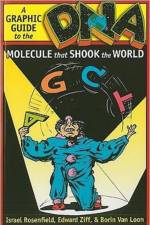
With humor, depth, and philosophical and historical insight, DNA reaches out to a wide range of readers with its graphic portrayal of a complicated science. Suitable for use in and out of the classroom, this volume covers DNA's many marvels, from its original discovery in 1869 to early-twentieth-century debates on the mechanisms of inheritance and the deeper nature of life's evolution and variety. Even readers who lack a background in science and philosophy will learn a tremendous amount from this engaging narrative. The book elucidates DNA's relationship to health and the cause and cure of disease. It also covers the creation of new life forms, nanomachines, and perspectives on crime detection, and considers the philosophical sources of classical Darwinian theory and recent, radical changes in the understanding of evolution itself. Already these developments have profoundly affected our notions about living things. Borin Van Loon's humorous illustrations recount the contributions of Gregor Mendel, Frederick Griffith, James Watson, and Francis Crick, among other biologists, scientists, and researchers, and vividly depict the modern controversies surrounding the Human Genome Project and cloning.
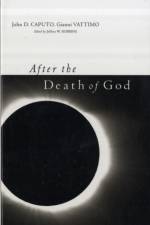
It has long been assumed that the more modern we become, the less religious we will be. Yet a recent resurrection in faith has challenged the certainty of this belief. In these original essays and interviews, leading hermeneutical philosophers and postmodern theorists John D. Caputo and Gianni Vattimo engage with each other's past and present work on the subject and reflect on our transition from secularism to postsecularism.As two of the figures who have contributed the most to the theoretical reflections on the contemporary philosophical turn to religion, Caputo and Vattimo explore the changes, distortions, and reforms that are a part of our postmodern faith and the forces shaping the religious imagination today. Incisively and imaginatively connecting their argument to issues ranging from terrorism to fanaticism and from politics to media and culture, these thinkers continue to reinvent the field of hermeneutic philosophy with wit, grace, and passion.
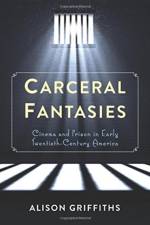
A groundbreaking contribution to the study of nontheatrical film exhibition, Carceral Fantasies tells the little-known story of how cinema found a home in the U.S. penitentiary system and how the prison emerged as a setting and narrative trope in modern cinema. Focusing on films shown in prisons before 1935, Alison Griffiths explores the unique experience of viewing cinema while incarcerated and the complex cultural roots of cinematic renderings of prison life.Griffiths considers a diverse mix of cinematic genres, from early actualities and reenactments of notorious executions to reformist exposes of the 1920s. She connects an early fascination with cinematic images of punishment and execution, especially electrocutions, to the attractions of the nineteenth-century carnival electrical wonder show and Phantasmagoria (a ghost show using magic lantern projections and special effects). Griffiths draws upon convict writing, prison annual reports, and the popular press obsession with prison-house cinema to document the integration of film into existing reformist and educational activities and film's psychic extension of flights of fancy undertaken by inmates in their cells. Combining penal history with visual and film studies and theories surrounding media's sensual effects, Carceral Fantasies illuminates how filmic representations of the penal system enacted ideas about modernity, gender, the body, and the public, shaping both the social experience of cinema and the public's understanding of the modern prison.
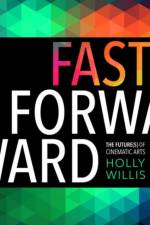
Cinema, the primary vehicle for storytelling in the twentieth century, is being reconfigured by new media in the twenty-first. Terms such as "e;worldbuilding,"e; "e;virtual reality,"e; and "e;transmedia"e; introduce new methods for constructing a screenplay and experiencing and sharing a story. Similarly, 3D cinematography, hypercinema, and visual effects require different modes for composing an image, and virtual technology, motion capture, and previsualization completely rearrange the traditional flow of cinematic production. What does this mean for telling stories? Fast Forward answers this question by investigating a full range of contemporary creative practices dedicated to the future of mediated storytelling and by connecting with a new generation of filmmakers, screenwriters, technologists, media artists, and designers to discover how they work now, and toward what end. From Chris Milk and Aaron Koblin's exploration of VR spherical filmmaking to Rebeca Mendez's projection and installation work exploring climate change to the richly mediated interactive live performances of the collective Cloud Eye Control, this volume captures a moment of creative evolution and sets the stage for imagining the future of the cinematic arts.
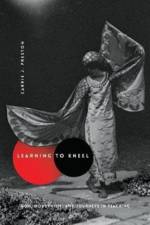
In this inventive mix of criticism, scholarship, and personal reflection, Carrie J. Preston explores the nature of cross-cultural teaching, learning, and performance. Throughout the twentieth century, Japanese noh was a major creative catalyst for American and European writers, dancers, and composers. The noh theater's stylized choreography, poetic chant, spectacular costumes and masks, and engagement with history inspired Western artists as they reimagined new approaches to tradition and form. In Learning to Kneel, Preston locates noh's important influence on such canonical figures as Pound, Yeats, Brecht, Britten, and Beckett. These writers learned about noh from an international cast of collaborators, and Preston traces the ways in which Japanese and Western artists influenced one another. Preston's critical work was profoundly shaped by her own training in noh performance technique under a professional actor in Tokyo, who taught her to kneel, bow, chant, and submit to the teachings of a conservative tradition. This encounter challenged Preston's assumptions about effective teaching, particularly her inclinations to emphasize Western ideas of innovation and subversion and to overlook the complex ranges of agency experienced by teachers and students. It also inspired new perspectives regarding the generative relationship between Western writers and Japanese performers. Pound, Yeats, Brecht, and others are often criticized for their orientalist tendencies and misappropriation of noh, but Preston's analysis and her journey reflect a more nuanced understanding of cultural exchange.
This history covers the filmmaking tradition often referred to as cinema militant, which emerged in France during the events of May 1968 and flourished for a decade. While some films produced were created by established filmmakers, including Chris Marker, Jean-Luc Godard, and William Klein, others were helmed by left-wing filmmakers working in the extreme margins of French cinema. This latter group gave voice to underrepresented populations, such as undocumented immigrants (sans papiers), entry-level factory workers (ouvriers specialises), highly intellectual Marxist-Leninist collectives, and militant special interest groups. While this book spans the broad history of this uncharted tradition, it particularly focuses on these lesser-known figures and works and the films of Cinelutte, Les groupes medvedkine, Atelier de recherche cinematographique, Cinethique, and the influential Marxist filmmaker Jean-Pierre Thorn. Each represent a certain tendency of this movement in French film history, offering an invaluable account of a tradition that also sought to share untold histories.
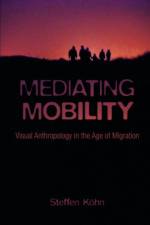
Images have become an integral part of the political regulation of migration: they help produce categories of legality versus illegality, foster stereotypes, and mobilize political convictions. Yet how are we to understand the relationship between these images and the political in the discourse surrounding migration? How can we, as anthropologists, migration scholars, or documentary filmmakers visually represent people who are excluded from political representation? And how can such visual representations gain political momentum? This volume not only considers the images that circulate with reference to migrants or draw attention to those that accompany, show, or conceal them. The book explores the phenomena of migration with the help of images. It offers an in-depth analysis of the documentary approaches of Ursula Biemann, Renzo Martens, Bouchra Khalili, Silvain George, Raphael Cuomo and Maria Iorio, Alex Rivera, and Rania Stepha, which evoke the particularities of migrant lifeworlds and examine urgent questions regarding the interrelations between politics and poetics, mobility and mediation, and the ethics of probability and possibility. The author also discusses his own cinematic practice in the making of Tell Me When... (2011), A Tale of Two Islands (2012), and Intimate Distance (2015), a trilogy of films that explore the potential to communicate the bodily, spatial, and temporal dimensions of the experience of migration.
In a controversial and tumultuous filmmaking career that spanned nearly fifty years, Robert Altman mocked, subverted, or otherwise refashioned Hollywood narrative and genre conventions. Altman's idiosyncratic vision and propensity for formal experimentation resulted in an uneven body of work: some rank failures and intriguing near-misses, as well as a number of great films that are among the most influential works of New American Cinema. While Altman always professed to have nothing authoritative to say about the state of contemporary society, this volume surveys all of his major films in their sociohistorical context to reposition the director as a trenchant satirist and social critic of postmodern America, depicted as a lonely wasteland of fraudulent spectacle, exploitative social relations, and unfulfilled solitaries in search of elusive community.
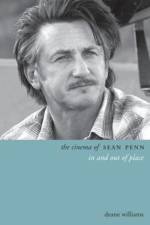
Although best known as an Academy Award winning actor, Sean Penn's directorial works The Indian Runner (1991), The Crossing Guard (1995), The Pledge (2001), and Into the Wild (2007), consist of some of the most interesting and singular films made in the United States over the past twenty years. Each of Penn's directorial films and much of the cinema he has acted in are set in an immediate past in which a "e;stalled"e; time and a restricted locale apply narrative constraints. At the same time, these films all feature a sophisticated web of intertextual relations, involving actors, songs, books, films, and directors, and the political lineage to which Penn belongs, which reveal the deep cultural structures that concern each particular film.
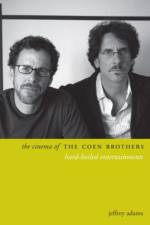
The films of the Coen brothers have become a contemporary cultural phenomenon. Highly acclaimed and commercially successful, over the years their movies have attracted increasingly larger audiences and spawned a subculture of dedicated fans. Shunning fame and celebrity, Ethan and Joel Coen remain maverick filmmakers, producing and directing independent films outside the Hollywood mainstream in a unique style combining classic genres like film noir with black comedy to tell off-beat stories about America and the American Dream. This study surveys Oscar-winning films, such as Fargo (1996) and No Country for Old Men (2007), as well as cult favorites, including O Brother, Where Art Thou? (2000) and The Big Lebowski (1998). Beginning with Blood Simple (1984), it examines major themes and generic constructs and offers diverse approaches to the Coens' enigmatic films. Pointing to the pulp fiction of Dashiell Hammett, James M. Cain, and Raymond Chandler, the study appreciates the postmodern aesthetics of the Coens' intertextual creativity.
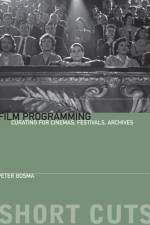
This study explores artistic choices in cinema exhibition, focusing on film theaters, film festivals, and film archives and situating film-curating issues within an international context. Artistic and commercial film availability has increased overwhelmingly as a result of the digitization of the infrastructure of distribution and exhibition. The film trade's conventional structures are transforming and, in the digital age, supply and demand can meet without the intervention of traditional gatekeepers-everybody can be a film curator, in a passive or active way. This volume addresses three kinds of readers: those who want to become film curators, those who want to research the film-curating phenomenon, and those critical cinema visitors who seek to investigate the story behind the selection process of available films and the way to present them.
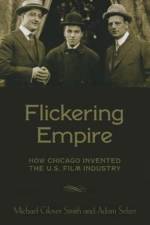
Flickering Empire tells the fascinating yet little-known story of how Chicago served as the unlikely capital of American film production in the years before the rise of Hollywood (1907-1913). As entertaining as it is informative, Flickering Empire straddles the worlds of academic and popular nonfiction in its vivid illustration of the rise and fall of the major Chicago movie studios in the mid-silent era (principally Essanay and Selig Polyscope). Colorful, larger-than-life historical figures, including Thomas Edison, Charlie Chaplin, Oscar Micheaux, and Orson Welles, are major players in the narrative-in addition to important though forgotten industry titans, such as "e;Colonel"e; William Selig, George Spoor, and Gilbert "e;Broncho Billy"e; Anderson.
Film and video create an illusory world, a reality elsewhere, and a material presence that both dramatizes and demystifies the magic trick of moving pictures. Beginning in the 1960s, artists have explored filmic and televisual phenomena in the controlled environments of galleries and museums, drawing on multiple antecedents in cinema, television, and the visual arts. This volume traces the lineage of moving-image installation through architecture, painting, sculpture, performance, expanded cinema, film history, and countercultural film and video from the 1960s, 1970s, and 1980s.Sound is given due attention, along with the shift from analogue to digital, issues of spectatorship, and the insights of cognitive science. Woven into this genealogy is a discussion of the procedural, political, theoretical, and ideological positions espoused by artists from the mid-twentieth century to the present. Historical constructs such as Peter Gidal's structural materialism, Maya Deren's notion of vertical and horizontal time, and identity politics are reconsidered in a contemporary context and intersect with more recent thinking on representation, subjectivity, and installation art.The book is written by a critic, curator, and practitioner who was a pioneer of British video and feminist art politics in the late 1970s. Elwes writes engagingly of her encounters with works by Anthony McCall, Gillian Wearing, David Hall, and Janet Cardiff, and her narrative is informed by exchanges with other practitioners. While the book addresses the key formal, theoretical, and historical parameters of moving-image installation, it ends with a question: "e;What's in it for the artist?"e;
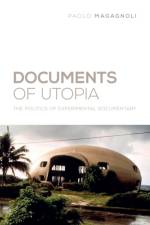
This timely volume discusses the experimental documentary projects of some of the most significant artists working in the world today: Hito Steyerl, Joachim Koester, Tacita Dean, Matthew Buckingham, Zoe Leonard, Jean-Luc Moulene, Ilya and Emilia Kabakov, Jon Thomson and Alison Craighead, and Anri Sala. Their films, videos, and photographic series address failed utopian experiments and counter-hegemonic social practices. This study illustrates the political significance of these artistic practices and critically contributes to the debate on the conditions of utopian thinking in late-capitalist society, arguing that contemporary artists' interest in the past is the result of a shift within the temporal organization of the utopian imagination from its futuristic pole toward remembrance. The book therefore provides one of the first critical examinations of the recent turn toward documentary in the field of contemporary art.
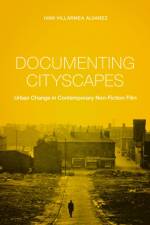
While film studies has traditionally treated the presence of the city in film as an urban text operating inside of a cinematic one, this approach has recently evolved into the study of cinema as a technology of place. From this perspective, Documenting Cityscapes explores the way the city has been depicted by nonfiction filmmakers since the late 1970s, paying particular attention to three aesthetic tendencies: documentary landscaping, urban self-portraits, and metafilmic strategies. Through the formal analysis of fifteen works from six different countries, this volume investigates how the rise of subjectivity has helped to develop a kind of gaze that is closer to citizens than to the institutions and corporations responsible for recent major transformations. Documenting Cityscapes therefore reveals the extent to which cinema has become an agent of urban change, in which certain films not only challenge the most controversial policies of late capitalism but also are able to produce spatiality themselves.
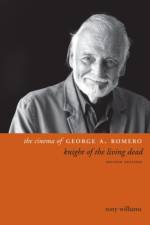
In this comprehensive portrait of horror's definitive director, Tony Williams ties George A. Romero's films to the development of literary naturalism and American culture, expanding the artist's creative footprint beyond his mastery of the "e;splatter movie"e; genre. Williams locates Romero's influences in the work of Emile Zola, the Entertainment Comics of the 1950s, and the novels of Stephen King, revealing the interdisciplinary depth of his seminal films Night of the Living Dead (1968), Creepshow (1982), Monkey Shines (1988), and The Dark Half (1992). For this second edition, Williams reads Romero's Bruiser (2000) against his more recent Land of the Dead (2005) and takes a fresh look at Diary of the Dead (2007) and Survival of the Dead (2009), two overlooked films that feature Romero's greatest achievements yet.
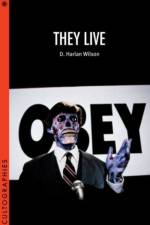
Born out of the cultural flamboyance and anxiety of the 1980s, They Live (1988) is a hallmark of John Carpenter's singular canon, combining the aesthetics of multiple genres and leveling an attack against the politics of Reaganism and the Cold War. The decision to cast the professional wrestler "e;Rowdy"e; Roddy Piper as his protagonist gave Carpenter the additional means to comment on the hypermasculine attitudes and codes indicative of the era. This study traces the development of They Live from its comic book roots to its legacy as a cult masterpiece while evaluating the film in light of the paranoid/postmodern theory that matured in the decidedly "e;Big 80s."e; Directed by a reluctant auteur, the film is examined as a complex work of metafiction that calls attention to the nature of cinematic production and reception as well as the dynamics of the cult landscape.
This study explores how five major directors-Pedro Almodovar, Alejandro Amenabar, Alex de la Iglesia, Guillermo del Toro, and Juan Jose Campanella-modeled their early careers on Hitchcock and his film aesthetics. In shadowing Hitchcock, their works embraced the global aspirations his movies epitomize. Each section of the book begins with an extensive study, based on newspaper accounts, of the original reception of Hitchcock's movies in either Spain or Latin America and how local preferences for genre, glamour, moral issues, and humor affected their success. The text brings a new approach to world film history, showcasing both the commercial and artistic importance of Hitchcock in Spain and Latin America
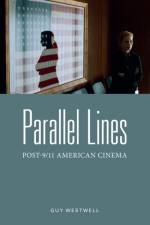
Parallel Lines describes how post-9/11 cinema, from Spike Lee's 25th Hour (2002) to Kathryn Bigelow's Zero Dark Thirty (2012), relates to different, and competing, versions of US national identity in the aftermath of the September 11 terrorist attacks. The book combines readings of individual films (World Trade Center, United 93, Fahrenheit 9/11, Loose Change) and cycles of films (depicting revenge, conspiracy, torture and war) with extended commentary on recurring themes, including the relationship between the US and the rest of the world, narratives of therapeutic recovery, questions of ethical obligation.The volume argues that post-9/11 cinema is varied and dynamic, registering shock and upheaval in the immediate aftermath of the attacks, displaying capacity for critique following the Abu Ghraib prisoner abuse scandal mid-decade, and seeking to reestablish consensus during Obama's troubled second term of office.
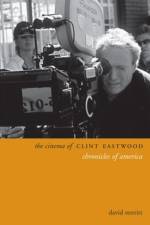
He became a movie star playing The Man With No Name, and today his name is known around the world. Measured by longevity, productivity, and profits, Clint Eastwood is the most successful actor-director-producer in American film history. This book examines the major elements of his career, focusing primarily on his work as a director but also exploring the evolution of his acting style, his long association with screen violence, his interest in jazz, and the political views - sometimes hotly controversial - reflected in his films and public statements. Especially fascinating is the pivotal question that divides critics and moviegoers to this day: is Eastwood a capable director with a photogenic face, a modest acting talent, and a flair for marketing his image? Or is he a true cinematic auteur with a distinctive vision of America's history, traditions, and values? From A Fistful of Dollars and Dirty Harry to Million Dollar Baby and beyond, The Cinema of Clint Eastwood takes a close-up look at one of the screen's most influential and charismatic stars.
Istvan Szabo is one of Hungary's most celebrated and best-known film directors, and the only Hungarian to have won an Academy Award for Best Foreign Language Film, for Mephisto (1981). In a career spanning over five decades Szabo has relentlessly examined the place of the individual in European history, particularly those caught up in the turbulent events of Central Europe and his own native Hungary. His protagonists struggle to find a place for themselves, some meaning in their lives, security and a sense of being, against a background of two world wars (Colonel Redl, Confidence), the Holocaust (Sunshine), the Hungarian Uprising and the Cold War (Father, 25 Fireman's Street, Taking Sides). This is the first English-language study of all his feature films and uses material from interviews with Szabo and his collaborators. Also included are chapters on his formative years, including his time at the famous Budapest Film Academy and the relationship of the state to the film industry in Hungary.
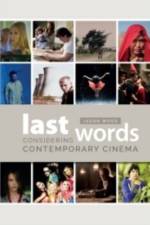
Last Words features extensive interviews with Christopher Nolan, Harmony Korine, Charlie Kaufmann, Nicolas Winding Refn, Wim Wenders, Michael Winterbottom, Christian Petzhold, and many others. Each interview is preceded by an overview of the director's work, and the volume's authoritative introductory essay explores the value of these directors and why they are rarely given an appropriate platform to discuss their craft.
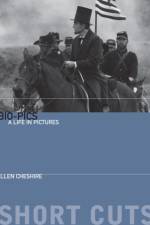
Bio-pics: A Life in Pictures offers a series of case studies which throw light on this most unique of genres. Is the bio-pic a genre in its own right? Or are such films merely footnotes in other more traditional genres such as the western or costume drama, depending on the historical figure under scrutiny. Unlike other genre forms bio-pics seemingly share no familiar iconography, codes or conventions. They can be set anywhere and at any time. What links them is quite simply that the films depict the life of an 'important' person. Through a carefully selected range of thematically linked (English-language) bio-pics released since 1990 this book explores key issues surrounding their resurgence, narrative structure, production, subject representation or misrepresentation, and critical response. The films under discussion are grouped around a profession (writers, singers, politicians, sportsmen, criminals, artists) allowing for comparisons to be drawn in approaches to similar subject matter.
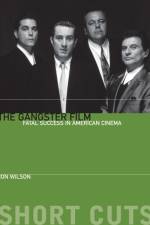
This volume examines the gangster film in its historical context with an emphasis on the ways the image of the gangster has adapted and changed as a result of socio-cultural circumstances. From its origins in Progressive-era reforms to its use as an indictment of corporate greed, the gangster film has often provided a template for critiquing American ideas and values concerning individualism, success, and business acumen. The gangster genre has also been useful in critically examining race and ethnicity in American culture in terms of "e;otherness."e; Films studied include Musketeers of Pig Alley (1912), The Racket (1928), The Captive City (1952), The Godfather, Part Two (1974), Goodfellas (1990), and Killing Them Softly (2012).
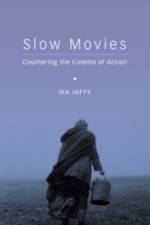
"e;In all film there is the desire to capture the motion of life, to refuse immobility,"e; Agnes Varda has noted. But to capture the reality of human experience, cinema must fasten on stillness and inaction as much as motion. Slow Movies investigates movies by acclaimed international directors who in the past three decades have challenged mainstream cinema's reliance on motion and action. More than other realist art cinema, slow movies by Lisandro Alonso, Nuri Bilge Ceylan, Pedro Costa, Jia Zhang-ke, Abbas Kiarostami, Cristian Mungiu, Alexander Sokurov, Bela Tarr, Gus Van Sant and others radically adhere to space-times in which emotion is repressed along with motion; editing and dialogue yield to stasis and contemplation; action surrenders to emptiness if not death.
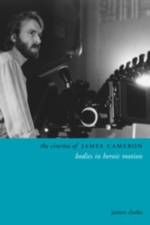
This timely volume explores the massively popular cinema of writer-director James Cameron. It couches Cameron's films within the evolving generic traditions of science fiction, melodrama, and the cinema of spectacle. The book also considers Cameron's engagement with the aesthetic of visual effects and the 'now' technology of performance-capture which is arguably moving a certain kind of event-movie cinema from photography to something more akin to painting. This book is explicit in presenting Cameron as an authentic auteur, and each chapter is dedicated to a single film in his body of work, from The Terminator to Avatar. Space is also given to discussion of Strange Days as well as his short films and documentary works.
Film Theory addresses the core concepts and arguments created or used by academics, critical film theorists, and filmmakers, including the work of Dudley Andrew, Raymond Bellour, Mary Ann Doane, Miriam Hansen, bell hooks, Siegfried Kracauer, Raul Ruiz, P. Adams Sitney, Bernard Stiegler, and Pier Paolo Pasolini. This volume takes the position that film theory is a form of writing that produces a unique cinematic grammar; and like all grammars, it forms part of the system of rules that govern a language, and is thus applicable to wider range of media forms. In their creation of authorial trends, identification of the technology of cinema as a creative force, and production of films as aesthetic markers, film theories contribute an epistemological resource that connects the technologies of filmmaking and film composition. This book explores these connections through film theorisations of processes of the diagrammatisation (the systems, methodologies, concepts, histories) of cinematic matters of the filmic world.
International Politics and Film introduces readers to the representational qualities of film but also draws attention to how the relationship between the visual and the spatial is constitutive of international politics. Using four themes-borders, the state of exception, homeland and distant others-the territorial and imaginative dimensions of international affairs in particular are highlighted. But this volume also makes clear that international politics is not just something "e;out there"e;; film helps us better understand how it is also part of everyday life within the state-affecting individuals and communities in different ways depending on axes of difference such as gender, race, class, age, and ethnicity.
Abonner på vårt nyhetsbrev og få rabatter og inspirasjon til din neste leseopplevelse.
Ved å abonnere godtar du vår personvernerklæring.