












Gjør som tusenvis av andre bokelskere
Abonner på vårt nyhetsbrev og få rabatter og inspirasjon til din neste leseopplevelse.
Ved å abonnere godtar du vår personvernerklæring.Du kan når som helst melde deg av våre nyhetsbrev.

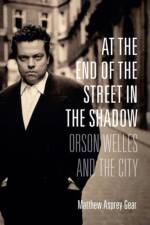
The films of Orson Welles inhabit the spaces of cities-from America's industrializing midland to its noirish borderlands, from Europe's medieval fortresses to its Kafkaesque labyrinths and postwar rubblescapes. His movies take us through dark streets to confront nightmarish struggles for power, the carnivalesque and bizarre, and the shadows and light of human character.This ambitious new study explores Welles's vision of cities by following recurring themes across his work, including urban transformation, race relations and fascism, the utopian promise of cosmopolitanism, and romantic nostalgia for archaic forms of urban culture. It focuses on the personal and political foundation of Welles's cinematic cities-the way he invents urban spaces on film to serve his dramatic, thematic, and ideological purposes.The book's critical scope draws on extensive research in international archives and builds on the work of previous scholars. Viewing Welles as a radical filmmaker whose innovative methods were only occasionally compatible with the commercial film industry, this volume examines the filmmaker's original vision for butchered films, such as The Magnificent Ambersons (1942) and Mr. Arkadin (1955), and considers many projects the filmmaker never completed-an immense "e;shadow oeuvre"e; ranging from unfinished and unreleased films to unrealized treatments and screenplays.
Li Zhi's iconoclastic interpretations of history, religion, literature, and social relations have fascinated Chinese intellectuals for centuries. His approach synthesized Confucian, Buddhist, and Daoist ethics and incorporated the Neo-Confucian idealism of such thinkers as Wang Yangming (1472-1529). The result was a series of heretical writings that caught fire among Li Zhi's contemporaries, despite an imperial ban on their publication, and intrigued Chinese audiences long after his death. Translated for the first time into English, Li Zhi's bold challenge to established doctrines will captivate anyone curious about the origins of such subtly transgressive works as the sixteenth-century play The Peony Pavilion or the eighteenth-century novel Dream of the Red Chamber. In A Book to Burn and a Book to Keep (Hidden), Li Zhi confronts accepted ideas about gender, questions the true identity of history's heroes and villains, and offers his own readings of Confucius, Laozi, and the Buddha. Fond of vivid sentiment and sharp expression, Li Zhi made no distinction between high and low literary genres in his literary analysis. He refused to support sanctioned ideas about morality and wrote stinging social critiques. Li Zhi praised scholars who risked everything to expose extortion and misrule. In this sophisticated translation, English-speaking readers encounter the best of this heterodox intellectual's vital contribution to Chinese thought and culture.
Scholars in the humanities and social sciences have turned to ethics to theorize politics in what seems to be an increasingly depoliticized age. Yet the move toward ethics has obscured the ongoing value of political responsibility and the vibrant life it represents as an effective response to power. Sounding the alarm for those who care about robust forms of civic engagement, this book fights for a new conception of political responsibility that meets the challenges of today's democratic practice. Antonio Y. Vazquez-Arroyo forcefully argues against the notion that modern predicaments of power can only be addressed ethically or philosophically through pristine concepts that operate outside of the political realm. By returning to the political, the individual is reintroduced to the binding principles of participatory democracy and the burdens of acting and thinking as a member of a collective. Vazquez-Arroyo historicizes the ethical turn to better understand its ascendence and reworks Adorno's dialectic of responsibility to reassert the political in contemporary thought and theory.
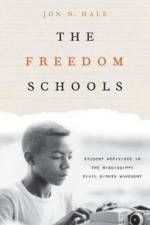
Created in 1964 as part of the Mississippi Freedom Summer, the Mississippi Freedom Schools were launched by educators and activists to provide an alternative education for African American students that would facilitate student activism and participatory democracy. The schools, as Jon N. Hale demonstrates, had a crucial role in the civil rights movement and a major impact on the development of progressive education throughout the nation. Designed and run by African American and white educators and activists, the Freedom Schools counteracted segregationist policies that inhibited opportunities for black youth. Providing high-quality, progressive education that addressed issues of social justice, the schools prepared African American students to fight for freedom on all fronts. Forming a political network, the Freedom Schools taught students how, when, and where to engage politically, shaping activists who trained others to challenge inequality. Based on dozens of first-time interviews with former Freedom School students and teachers and on rich archival materials, this remarkable social history of the Mississippi Freedom Schools is told from the perspective of those frequently left out of civil rights narratives that focus on national leadership or college protestors. Hale reveals the role that school-age students played in the civil rights movement and the crucial contribution made by grassroots activists on the local level. He also examines the challenges confronted by Freedom School activists and teachers, such as intimidation by racist Mississippians and race relations between blacks and whites within the schools. In tracing the stories of Freedom School students into adulthood, this book reveals the ways in which these individuals turned training into decades of activism. Former students and teachers speak eloquently about the principles that informed their practice and the influence that the Freedom School curriculum has had on education. They also offer key strategies for further integrating the American school system and politically engaging today's youth.
Melting ice sheets and warming oceans are causing the seas to rise. By the end of this century, hundreds of millions of people living at low elevations along coasts will be forced to retreat to higher and safer ground. Because of sea-level rise, major storms will inundate areas farther inland and will lay waste to critical infrastructure, such as water-treatment and energy facilities, creating vast, irreversible pollution by decimating landfills and toxic-waste sites. This big-picture, policy-oriented book explains in gripping terms what rising oceans will do to coastal cities and the drastic actions we must take now to remove vulnerable populations.The authors detail specific threats faced by Miami, New Orleans, New York, and Amsterdam. Aware of the overwhelming social, political, and economic challenges that would accompany effective action, they consider the burden to the taxpayer and the logistics of moving landmarks and infrastructure, including toxic-waste sites. They also show readers the alternative: thousands of environmental refugees, with no legitimate means to regain what they have lost. The authors conclude with effective approaches for addressing climate-change denialism and powerful arguments for reforming U.S. federal coastal management policies.
The evidence-based strategies in this volume close the achievement gap among students from all sociological backgrounds. Designed according to local needs assessments, they provide the services, programs, initiatives, and relationships that are crucial for children's success in school and life.These practices and programs include afterschool and summer sessions, early-childhood education, school-linked health and mental health services, family engagement, and youth leadership opportunities. This book addresses the policy and funding requirements that help these partnerships thrive and offers effective counterarguments against those who would question their value. The text describes strategies that work in both rural and urban contexts and includes a chapter evaluating school-community partnerships across the world. Because it involves collaborations across professions and organizations, the book's interdisciplinary approach will appeal to those in social work, education, psychology, public health, counseling, nursing, and public policy.
Katniss Everdeen (The Hunger Games), Bella Swan (Twilight), Tris Prior (Divergent), and other strong and resourceful characters have decimated the fairytale archetype of the helpless girl waiting to be rescued. Giving as good as they get, these young women access reserves of aggression to liberate themselves-but who truly benefits? By meeting violence with violence, are women turning victimization into entertainment? Are they playing out old fantasies, institutionalizing their abuse?In Hunting Girls, Kelly Oliver examines popular culture's fixation on representing young women as predators and prey and the implication that violence-especially sexual violence-is an inevitable, perhaps even celebrated, part of a woman's maturity. In such films as Kick-Ass (2010), The Girl with the Dragon Tattoo (2011), and Maleficent (2014), power, control, and danger drive the story, but traditional relationships of care bind the narrative, and even the protagonist's love interest adds to her suffering. To underscore the threat of these depictions, Oliver locates their manifestation of violent sex in the growing prevalence of campus rape, the valorization of woman's lack of consent, and the new urgency to implement affirmative consent apps and policies.
Dotan Leshem recasts the history of the West from an economic perspective, bringing politics, philosophy, and the economy closer together and revealing the significant role of Christian theology in shaping economic and political thought. He begins with early Christian treatment of economic knowledge and the effect of this interaction on ancient politics and philosophy. He then follows the secularization of the economy in liberal and neoliberal theory.Leshem draws on Hannah Arendt's history of politics and Michel Foucault's genealogy of economy and philosophy. He consults exegetical and apologetic tracts, homilies and eulogies, manuals and correspondence, and Church canons and creeds to trace the influence of the economy on Christian orthodoxy. Only by relocating the origins of modernity in Late Antiquity, Leshem argues, can we confront the full effect of the neoliberal marketized economy on contemporary societies. Then, he proposes, a new political philosophy that re-secularizes the economy will take shape and transform the human condition.
Independent Catholics are not formally connected to the pope in Rome. They practice apostolic succession, seven sacraments, and devotion to the saints. But without a pope, they can change quickly and experiment freely, with some affirming communion for the divorced, women's ordination, clerical marriage, and same-sex marriage. From their early modern origins in the Netherlands to their contemporary proliferation in the United States, these "e;other Catholics"e; represent an unusually liberal, mobile, and creative version of America's largest religion.In The Other Catholics, Julie Byrne shares the remarkable history and current activity of independent Catholics, who number at least two hundred communities and a million members across the United States. She focuses in particular on the Church of Antioch, one of the first Catholic groups to ordain women in modern times. Through archival documents and interviews, Byrne tells the story of the unforgettable leaders and surprising influence of these understudied churches, which, when included in Catholic history, change the narrative arc and total shape of modern Catholicism. As Pope Francis fights to soften Roman doctrines with a pastoral touch and his fellow Roman bishops push back with equal passion, independent Catholics continue to leap ahead of Roman reform, keeping key Catholic traditions but adding a progressive difference.
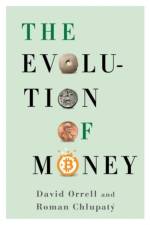
The sharing economy's unique customer-to-company exchange is possible because of the way in which money has evolved. These transactions have not always been as fluid as they are today, and they are likely to become even more fluid. It is therefore critical that we learn to appreciate money's elastic nature as deeply as do Uber, Airbnb, Kickstarter, and other innovators, and that we understand money's transition from hard currencies to cryptocurrencies like Bitcoin if we are to access their cooperative potential.The Evolution of Money illuminates this fascinating reality, focusing on the tension between currency's real and abstract properties and advancing a vital theory of money rooted in this dual exchange. It begins with the debt tablets of Mesopotamia and follows with the development of coin money in ancient Greece and Rome, gold-backed currencies in medieval Europe, and monetary economics in Victorian England. The book ends in the digital era, with the cryptocurrencies and service providers that are making the most of money's virtual side and that suggest a tectonic shift in what we call money. By building this organic time line, The Evolution of Money helps us anticipate money's next, transformative role.
In his Village Voice "e;Movie Journal"e; columns, Jonas Mekas captured the makings of an exciting movement in 1960s American filmmaking. Works by Andy Warhol, Gregory J. Markapoulos, Stan Brakhage, Jack Smith, Robert Breer, and others echoed experiments already underway elsewhere, yet they belonged to a nascent tradition that only a true visionary could identify. Mekas incorporated the most essential characteristics of these films into a unique conception of American filmmaking's next phase. He simplified complex aesthetic strategies for unfamiliar audiences and appreciated the subversive genius of films that many dismissed as trash. This new edition presents Mekas's original critiques in full, with additional material on the filmmakers, film studies scholars, and popular and avant-garde critics whom he inspired and transformed.
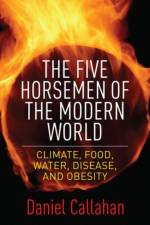
In recent decades, we have seen five perilous and interlocking trends dominate global discourse: irreversible climate change, extreme food and water shortages, rising chronic illnesses, and rampant obesity. Why can't we make any progress in counteracting these problems despite vast expenditures of intellectual, institutional, and social capital? What makes these global emergencies the "e;wicked problems"e; that resist our best efforts and only grow more daunting?Daniel Callahan, noted author and the nation's preeminent scholar in bioethics, examines these global problems and shines a light on the institutions, practices, and actors that block major change. We see partisan political and ideological forces, old-fashioned hucksters, and trumped-up scientific disagreements but also the problem of modern progress itself. Obesity, anthropogenic climate change, degenerative diseases, ecological degradation, and global famine are often the unintended consequences of unchecked industrial growth, insatiable eating habits, and technologically extended life spans. Only through well-crafted political, regulatory, industrial, and cultural counterstrategies can we change enough minds to check these threats. With big thinking on issues that are usually evaluated separately, this book is sure to scramble partisan divides and provoke unusual, heated debate.
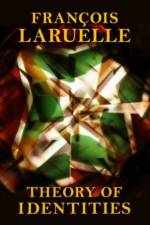
Francois Laruelle proposes a theory of identity rooted in scientific notions of symmetry and chaos, emancipating thought from the philosophical paradigm of Being and reconnecting it with the real world. Unlike most contemporary philosophers, Laruelle does not believe language, history, and the world shape identity but that identity determines our relation to these phenomena. Both critical and constructivist, Theory of Identities finds fault with contemporary philosophy's reductive relation to science and its attachment to notions of singularity, difference, and multiplicity, which extends this crude approach. Laruelle's new theory of science, its objects, and philosophy, introduces an original vocabulary to elaborate the concepts of determination, fractality, and artificial philosophy, among other ideas, grounded in an understanding of the renewal of identity. Laruelle's work repairs the rift between philosophical and scientific inquiry and rehabilitates the concept of identity that continental philosophers have widely criticized. His argument positions him clearly against Deleuze, Badiou, the new materialists, and other thinkers who stray too far from empirical approaches that might revitalize philosophy's practical applications.
In the 1960s, Americans combined psychedelics with Buddhist meditation to achieve direct experience through altered states of consciousness. As some practitioners became more committed to Buddhism, they abandoned the use of psychedelics in favor of stricter mental discipline, but others carried on with the experiment, advancing a fascinating alchemy called psychedelic Buddhism. Many think exploration with psychedelics in Buddhism faded with the revolutionary spirit of the sixties, but the underground practice has evolved into a brand of religiosity as eclectic and challenging as the era that created it. Altered States combines interviews with well-known figures in American Buddhism and psychedelic spirituality-including Lama Surya Das, Erik Davis, Geoffrey Shugen Arnold Sensei, Rick Strassman, and Charles Tart-and personal stories of everyday practitioners to define a distinctly American religious phenomenon. The nuanced perspective that emerges, grounded in a detailed history of psychedelic religious experience, adds critical depth to debates over the controlled use of psychedelics and drug-induced mysticism. The book also opens new paths of inquiry into such issues as re-enchantment, the limits of rationality, the biochemical and psychosocial basis of altered states of consciousness, and the nature of subjectivity.
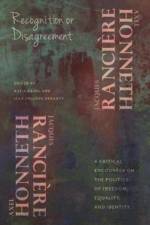
Axel Honneth is best known for his critique of modern society centered on a concept of recognition. Jacques Ranciere has advanced an influential theory of modern politics based on disagreement. Underpinning their thought is a concern for the logics of exclusion and domination that structure contemporary societies. In a rare dialogue, these two philosophers explore the affinities and tensions between their perspectives to provoke new ideas for social and political change.Honneth sees modern society as a field in which the logic of recognition provides individuals with increasing possibilities for freedom and is a constant catalyst for transformation. Ranciere sees the social as a policing order and the political as a force that must radically assert equality. Honneth claims Ranciere's conception of the political lies outside of actual historical societies and involves a problematic desire for egalitarianism. Ranciere argues that Honneth's theory of recognition relies on an overly substantial conception of identity and subjectivity. While impassioned, their exchange seeks to advance critical theory's political project by reconciling the rift between German and French post-Marxist traditions and proposing new frameworks for justice.
Satoko Shimazaki revisits three centuries of kabuki theater, reframing it as a key player in the formation of an early modern urban identity in Edo Japan and exploring the process that resulted in its re-creation in Tokyo as a national theatrical tradition. Challenging the prevailing understanding of early modern kabuki as a subversive entertainment and a threat to shogunal authority, Shimazaki argues that kabuki instilled a sense of shared history in the inhabitants of Edo (present-day Tokyo) by invoking "e;worlds,"e; or sekai, derived from earlier military tales, and overlaying them onto the present. She then analyzes the profound changes that took place in Edo kabuki toward the end of the early modern period, which witnessed the rise of a new type of character: the vengeful female ghost.Shimazaki's bold reinterpretation of the history of kabuki centers on the popular ghost play Tokaido Yotsuya kaidan (The Eastern Seaboard Highway Ghost Stories at Yotsuya, 1825) by Tsuruya Nanboku IV. Drawing not only on kabuki scripts but also on a wide range of other sources, from theatrical ephemera and popular fiction to medical and religious texts, she sheds light on the development of the ubiquitous trope of the vengeful female ghost and its illumination of new themes at a time when the samurai world was losing its relevance. She explores in detail the process by which nineteenth-century playwrights began dismantling the Edo tradition of "e;presenting the past"e; by abandoning their long-standing reliance on the sekai. She then reveals how, in the 1920s, a new generation of kabuki playwrights, critics, and scholars reinvented the form again, "e;textualizing"e; kabuki so that it could be pressed into service as a guarantor of national identity.
1964: Mods clash with Rockers in Brighton, creating a moral panic. 1973: ex-Mod band The Who release Quadrophenia, a concept album following young Mod Jimmy Cooper to the Brighton riots and beyond. 1979: Franc Roddam directs Quadrophenia, a film based on Pete Townshend's album narrative; its cult status is immediate. 2013: almost fifty years on from Brighton, this first academic study explores the lasting appeal of 'England's Rebel Without a Cause'. Investigating academic, music, press, and fan-based responses, Glynn argues that the 'Modyssey' enacted in Quadrophenia intrigues because it opens a hermetic subculture to its social-realist context; it enriches because it is a cult film that dares to explore the dangers in being part of a cult; it endures because of its 'emotional honesty', showing Jimmy as failing, with family, job, girl, and group; it excites because we all know that, at some point in our lives, 'I was there!'
Wrestling with the Angel is a meditation on contemporary political, legal, and social theory from a psychoanalytic perspective. It argues for the enabling function of formal and symbolic constraints in sustaining desire as a source of creativity, innovation, and social change.The book begins by calling for a richer understanding of the psychoanalytic concept of the symbolic and the resources it might offer for an examination of the social link and the political sphere. The symbolic is a crucial dimension of social coexistence but cannot be reduced to the social norms, rules, and practices with which it is so often collapsed. As a dimension of human life that is introduced by language-and thus inescapably "e;other"e; with respect to the laws of nature-the symbolic is an undeniable fact of human existence. Yet the same cannot be said of the forms and practices that represent and sustain it. In designating these laws, structures, and practices as "e;fictions,"e; Jacques Lacan makes clear that the symbolic is a dimension of social life that has to be created and maintained and that can also be displaced, eradicated, or rendered dysfunctional. The symbolic fictions that structure and support the social tie are therefore historicizable, emerging at specific times and in particular contexts and losing their efficacy when circumstances change. They are also fragile and ephemeral, needing to be renewed and reinvented if they are not to become outmoded or ridiculous. Therefore the aim of this study is not to call for a return to traditional symbolic laws but to reflect on the relationship between the symbolic in its most elementary or structural form and the function of constraints and limits.McNulty analyzes examples of "e;experimental"e; (as opposed to "e;normative"e;) articulations of the symbolic and their creative use of formal limits and constraints not as mere prohibitions or rules but as "e;enabling constraints"e; that favor the exercise of freedom. The first part examines practices that conceive of subjective freedom as enabled by the struggle with constraints or limits, from the transference that structures the "e;minimal social link"e; of psychoanalysis to constrained relationships between two or more people in the context of political and social movements. Examples discussed range from the spiritual practices and social legacies of Moses, Jesus, and Teresa of Avila to the political philosophy of Hannah Arendt and Jacques Ranciere. The second part is devoted to legal and political debates surrounding the function of the written law. It isolates the law's function as a symbolic limit or constraint as distinct from its content and representational character. The analysis draws on Mosaic law traditions, the political theology of Paul, and twentieth-century treatments of written law in the work of Carl Schmitt, Walter Benjamin, Sigmund Freud, Pierre Legendre, and Alain Badiou. In conclusion, the study considers the relationship between will and constraint in Kant's aesthetic philosophy and in the experimental literary works of the collective Oulipo.
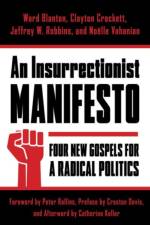
An Insurrectionist Manifesto contains four insurrectionary gospels based on Martin Heidegger's philosophical model of the fourfold: earth and sky, gods and mortals. Challenging religious dogma and dominant philosophical theories, they offer a cooperative, world-affirming political theology that promotes new life through not resurrection but insurrection. The insurrection in these gospels unfolds as a series of miraculous yet worldly practices of vital affirmation. Since these routines do not rely on fantasies of escape, they engender intimate transformations of the self along the very coordinates from which they emerge. Enacting a comparative and contagious postsecular sensibility, these gospels draw on the work of Slavoj iek, Giorgio Agamben, Catherine Malabou, Francois Laruelle, Peter Sloterdijk, and Gilles Deleuze yet rejuvenate scholarship in continental philosophy, critical race theory, the new materialisms, speculative realism, and nonphilosophy. They think beyond the sovereign force of the one to initiate a radical politics "e;after"e; God.
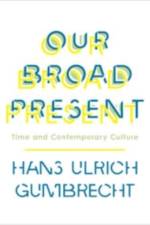
Considering a range of present-day phenomena, from the immediacy effects of literature to the impact of hypercommunication, globalization, and sports, Hans Ulrich Gumbrecht notes an important shift in our relationship to history and the passage of time. Although we continue to use concepts inherited from a "e;historicist"e; viewpoint, a notion of time articulated in the eighteenth and nineteenth centuries, the actual construction of time in which we live in today, which shapes our perceptions, experiences, and actions, is no longer historicist. Without fully realizing it, we now inhabit a new, unnamed space in which the "e;closed future"e; and "e;ever-available past"e; (a past we have not managed to leave behind) converge to produce an "e;ever-broadening present of simultaneities."e; This profound change to a key dimension of our existence has complex consequences for the way in which we think about ourselves and our relation to the material world. At the same time, the ubiquity of digital media has eliminated our tactile sense of physical space, altering our perception of our world. Gumbrecht draws on his mastery of the philosophy of language to enrich his everyday observations, traveling to Disneyland, a small town in Louisiana, and the center of Vienna to produce striking sketches of our broad presence in the world.
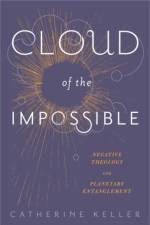
The experience of the impossible churns up in our epoch whenever a collective dream turns to trauma: politically, sexually, economically, and with a certain ultimacy, ecologically. Out of an ancient theological lineage, the figure of the cloud comes to convey possibility in the face of the impossible. An old mystical nonknowing of God now hosts a current knowledge of uncertainty, of indeterminate and interdependent outcomes, possibly catastrophic. Yet the connectivity and collectivity of social movements, of the fragile, unlikely webs of an alternative notion of existence, keep materializing--a haunting hope, densely entangled, suggesting a more convivial, relational world.Catherine Keller brings process, feminist, and ecopolitical theologies into transdisciplinary conversation with continental philosophy, the quantum entanglements of a "e;participatory universe,"e; and the writings of Nicholas of Cusa, Walt Whitman, A. N. Whitehead, Gilles Deleuze, and Judith Butler, to develop a "e;theopoetics of nonseparable difference."e; Global movements, personal embroilments, religious diversity, the inextricable relations of humans and nonhumans--these phenomena, in their unsettling togetherness, are exceeding our capacity to know and manage. By staging a series of encounters between the nonseparable and the nonknowable, Keller shows what can be born from our cloudiest entanglement.
Abed Azzam offers a fresh interpretation of Nietzsche's engagement with the work of Paul the Apostle, reorienting the relationship between the two thinkers while embedding modern philosophy within early Christian theology. Paying careful attention to Nietzsche's dialectics, Azzam situates the philosopher's thought within the history of Christianity, specifically the Pauline dialectics of law and faith, and reveals how atheism is constructed in relation to Christianity.Countering Heidegger's characterization of Nietzsche as an anti-Platonist, Azzam brings the philosopher closer to Paul through a radical rereading of his entire corpus against Christianity. This approach builds a compelling new history of the West resting on a logic of sublimation, from ancient Greece and early Judaism to the death of God. Azzam discovers in Nietzsche's philosophy a solid, tangible Pauline structure and virtual, fragile Greek content, positioning the thinker as a forerunner of the recent "e;return to Paul"e; led by Badiou, Agamben, iek, and Breton. By changing the focus of modern philosophical inquiry from "e;Nietzsche and philosophy"e; to "e;Nietzsche and Christianity,"e; Azzam initiates a major challenge to the primacy of Plato in the history of Western philosophy and narrow certainties regarding Nietzsche's relationship to Christian thought.
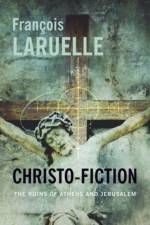
Francois Laruelle's lifelong project of "e;nonphilosophy,"e; or "e;nonstandard philosophy,"e; thinks past the theoretical limits of Western philosophy to realize new relations between religion, science, politics, and art. In Christo-Fiction Laruelle targets the rigid, self-sustaining arguments of metaphysics, rooted in Judaic and Greek thought, and the radical potential of Christ, whose "e;crossing"e; disrupts their circular discourse. Laruelle's Christ is not the authoritative figure conjured by academic theology, the Apostles, or the Catholic Church. He is the embodiment of generic man, founder of a science of humans, and the herald of a gnostic messianism that calls forth an immanent faith. Explicitly inserting quantum science into religion, Laruelle recasts the temporality of the cross, the entombment, and the resurrection, arguing that it is God who is sacrificed on the cross so equals in faith may be born. Positioning itself against orthodox religion and naive atheism alike, Christo-Fiction is a daring, heretical experiment that ties religion to the human experience and the lived world.
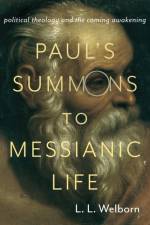
Taubes, Badiou, Agamben, iek, Reinhard, and Santner have found in the Apostle Paul's emphasis on neighbor-love a positive paradigm for politics. By thoroughly reexamining Pauline eschatology, L. L. Welborn suggests that neighbor-love depends upon an orientation toward the messianic event, which Paul describes as the "e;now time"e; and which he imagines as "e;awakening."e; Welborn compares the Pauline dialectic of awakening to attempts by Hellenistic philosophers to rouse their contemporaries from moral lethargy and to the Marxist idea of class consciousness, emphasizing the apostle's radical spirit and moral relevance.
Investing-the commitment of resources to achieve a return-affects individuals, families, companies, and nations, and has done so throughout history. Yet until the sixteenth century, investing was a privilege of only the elite classes. The story behind the democratization of investing is bound up with some of history's most epic events. It is also a tale rich with lessons for professional and everyday investors who hope to make wiser choices.This entertaining history doubles as a sophisticated account of the opportunities and challenges facing the modern investor. It follows the rise of funded retirement; the evolution of investment vehicles and techniques; investment misdeeds and regulatory reform; government economic policy; the development of investment theory; and the emergence of new investment structures. Norton Reamer and Jesse Downing map these trends and profile the battle between low cost index and exchange-traded funds, on the one hand, and the higher-fee hedge funds and private equity, on the other. By helping us understand this history and its legacy of risk, Reamer and Downing hope to better educate readers about the individual and societal impact of investing and ultimately level the playing field.
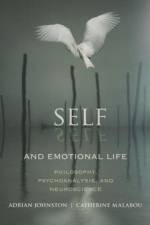
Adrian Johnston and Catherine Malabou defy theoretical humanities' deeply-entrenched resistance to engagements with the life sciences. Rather than treat biology and its branches as hopelessly reductive and politically suspect, they view recent advances in neurobiology and its adjacent scientific fields as providing crucial catalysts to a radical rethinking of subjectivity.Merging three distinct disciplines-European philosophy from Descartes to the present, Freudian-Lacanian psychoanalysis, and affective neuroscience-Johnston and Malabou triangulate the emotional life of affective subjects as conceptualized in philosophy and psychoanalysis with neuroscience. Their experiments yield different outcomes. Johnston finds psychoanalysis and neurobiology have the potential to enrich each other, though affective neuroscience demands a reconsideration of whether affects can be unconscious. Investigating this vexed issue has profound implications for theoretical and practical analysis, as well as philosophical understandings of the emotions.Malabou believes scientific explorations of the brain seriously problematize established notions of affective subjectivity in Continental philosophy and Freudian-Lacanian analysis. She confronts philosophy and psychoanalysis with something neither field has seriously considered: the concept of wonder and the cold, disturbing visage of those who have been affected by disease or injury, such that they are no longer affected emotionally. At stake in this exchange are some of philosophy's most important claims concerning the relationship between the subjective mind and the objective body, the structures and dynamics of the unconscious dimensions of mental life, the role emotion plays in making us human, and the functional differences between philosophy and science.
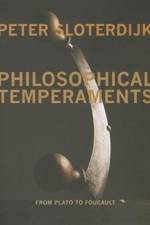
Peter Sloterdijk turns his keen eye to the history of western thought, conducting colorful readings of the lives and ideas of the world's most influential intellectuals. Featuring nineteen vignettes rich in personal characterizations and theoretical analysis, Sloterdijk's companionable volume casts the development of philosophical thinking not as a buildup of compelling books and arguments but as a lifelong, intimate struggle with intellectual and spiritual movements, filled with as many pitfalls and derailments as transcendent breakthroughs.Sloterdijk delves into the work and times of Aristotle, Augustine, Bruno, Descartes, Foucault, Fichte, Hegel, Husserl, Kant, Kierkegaard, Leibniz, Marx, Nietzsche, Pascal, Plato, Sartre, Schelling, Schopenhauer, and Wittgenstein. He provocatively juxtaposes Plato against shamanism and Marx against Gnosticism, revealing both the vital external influences shaping these intellectuals' thought and the excitement and wonder generated by the application of their thinking in the real world. The philosophical "e;temperament"e; as conceived by Sloterdijk represents the uniquely creative encounter between the mind and a diverse array of cultures. It marks these philosophers' singular achievements and the special dynamic at play in philosophy as a whole. Creston Davis's introduction details Sloterdijk's own temperament, surveying the celebrated thinker's intellectual context, rhetorical style, and philosophical persona.
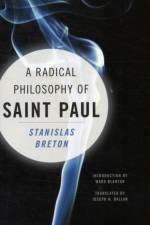
Stanislas Breton's A Radical Philosophy of Saint Paul, which focuses on the political implications of the apostle's writings, was an instrumental text in Continental philosophy's contemporary "e;turn to religion."e; Reading Paul's work against modern thought and history, Breton helped launch a reassessment of Marxism, introduce secular interpretations of biblical and theological traditions, develop "e;radical negativity"e; as a critical category, and rework modern political ideas through a theoretical lens. Newly translated and critically situated, this edition takes a fresh approach to Breton's classic work, reacquainting readers with the remarkable ways in which an ancient apostle can reset our understanding of the political. Breton begins with Paul's biography and the texts of his conversion, which challenge common conceptions of identity. He broaches the question of allegory and divine predestination, introduces the idea of subjectivity as an effect of power, and confronts Paul's critique of Law, which leads to an exploration of the logics and limits of agency and power. Breton develops these and other insights in relation to Paul's subversive reflections on the crucified messiah, which challenge meaning and reason and upend our current world order. Neither a coherent theologian nor a stable humanist, Breton's Paul becomes a fascinating figure of excess and madness, experiencing a kind of being that transcends philosophy, secularity, and religion.
While ancient civilizations worshipped strong, active emotions, modern societies have favored more peaceful attitudes, especially within the democratic process. We have largely forgotten the struggle to make use of thymos, the part of the soul that, following Plato, contains spirit, pride, and indignation. Rather, Christianity and psychoanalysis have promoted mutual understanding to overcome conflict. Through unique examples, Peter Sloterdijk, the preeminent posthumanist, argues exactly the opposite, showing how the history of Western civilization can be read as a suppression and return of rage. By way of reinterpreting the Iliad, Alexandre Dumas's Count of Monte Cristo, and recent Islamic political riots in Paris, Sloterdijk proves the fallacy that rage is an emotion capable of control. Global terrorism and economic frustrations have rendered strong emotions visibly resurgent, and the consequences of violent outbursts will determine international relations for decades to come. To better respond to rage and its complexity, Sloterdijk daringly breaks with entrenched dogma and contructs a new theory for confronting conflict. His approach acknowledges and respects the proper place of rage and channels it into productive political struggle.
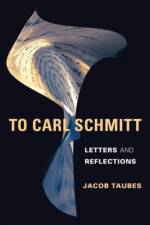
A philosopher, rabbi, religious historian, and Gnostic, Jacob Taubes was for many years a correspondent and interlocutor of Carl Schmitt (1888-1985), a German jurist, philosopher, political theorist, law professor-and self-professed Nazi. Despite their unlikely association, Taubes and Schmitt shared an abiding interest in the fundamental problems of political theology, believing the great challenges of modern political theory were ancient in pedigree and, in many cases, anticipated the works of Judeo-Christian eschatologists. In this collection of Taubes's writings on Schmitt, the two intellectuals work through ideas of the apocalypse and other central concepts of political theology. Taubes acknowledges Schmitt's reservations about the weakness of liberal democracy yet distances himself from his prescription to rectify it, arguing the apocalyptic worldview requires less of a rigid hierarchical social ordering than a community committed to the importance of decision making. In these writings, a sharper and more nuanced portrait of Schmitt's thought emerges, as well as a more complicated understanding of Taubes, who has shaped the work of Giorgio Agamben, Peter Sloterdijk, and other major twentieth-century theorists.
Abonner på vårt nyhetsbrev og få rabatter og inspirasjon til din neste leseopplevelse.
Ved å abonnere godtar du vår personvernerklæring.