

















Gjør som tusenvis av andre bokelskere
Abonner på vårt nyhetsbrev og få rabatter og inspirasjon til din neste leseopplevelse.
Ved å abonnere godtar du vår personvernerklæring.Du kan når som helst melde deg av våre nyhetsbrev.

Few people experience life inside of prison. Even fewer are charged with the formidable responsibility of deciding whether inmates should be released. In his twenty-four years on the Rhode Island Parole Board, Frederic G. Reamer has judged the fates of thousands of inmates, deciding which are ready to reenter society and which are not. It is a complicated choice that balances injury to victims and their families against an offender's capacity for transformation. With rich retellings of criminal cases-some banal, some brutal-On the Parole Board is a singular book that explains from an insider's perspective how a variety of factors play into the board's decisions: the ongoing effect on victims and their loved ones, the life histories of offenders, the circumstances of the crimes, and the powerful and often extraordinary displays of forgiveness and remorse. Pulling back the curtain on a process largely shrouded in mystery, Reamer lays bare the thorny philosophical issues of crime and justice and their staggering consequences for inmates, victims, and the public at large. Reamer and his colleagues often hope, despite encountering behavior at its worst, that criminals who have made horrible mistakes have the capacity for redemption. Yet that hope must be tempered with a realistic appraisal of risk, given the potentially grave consequences of releasing an inmate who may commit a future crime. This book will appeal to anyone interested in the complexities of the criminal justice system, the need to correct its injustices, and the challenges of those who must decide when justice has been served.
Many hospice social workers must address spiritual issues with their clients, but do not feel competent to do so effectively. This targeted volume draws upon multidisciplinary theory and research to advance a relational model of spiritually sensitive hospice care. The book will help readers elevate their spiritual competence and foster a relationship with their clients that will enrich the experience for all involved.Spirituality and Hospice Social Work helps practitioners understand various forms of spiritual assessment for use with their clients. The book teaches practitioners to recognize a client's spiritual needs and resources, as well as signs of spiritual suffering. It also discusses religious and spiritual practices that clients may use to enhance their spiritual coping. Spirituality and Hospice Social Work stresses the need for interdisciplinary collaboration with other members of the hospice team, along with the value of maintaining professional ethical standards when addressing spiritual issues. Throughout, the importance of spiritual sensitivity and its effect upon client well-being is emphasized.
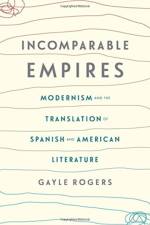
The Spanish-American War of 1898 seems to mark a turning point in both geopolitical and literary histories. The victorious American empire ascended and began its cultural domination of the globe in the twentieth century, while the once-mighty Spanish empire declined and became a minor state in the world republic of letters. But what if this narrative relies on several faulty assumptions, and what if key modernist figures in both America and Spain radically rewrote these histories at a foundational moment of modern literary studies?Following networks of American and Spanish writers, translators, and movements, Gayle Rogers uncovers the arguments that forged the politics and aesthetics of modernism. He revisits the role of empire-from its institutions to its cognitive effects-in shaping a nation's literature and culture. Ranging from universities to comparative practices, from Ezra Pound's failed ambitions as a Hispanist to Juan Ramon Jimenez's multilingual maps of modernismo, Rogers illuminates modernists' profound engagements with the formative dynamics of exceptionalist American and Spanish literary studies. He reads the provocative, often counterintuitive arguments of John Dos Passos, who held that "e;American literature"e; could only flourish if the expanding U.S. empire collapsed like Spain's did. And he also details both a controversial theorization of a Harlem-Havana-Madrid nexus for black modernist writing and Ernest Hemingway's unorthodox development of a version of cubist Spanglish in For Whom the Bell Tolls. Bringing together revisionary literary historiography and rich textual analyses, Rogers offers a striking account of why foreign literatures mattered so much to two dramatically changing countries at a pivotal moment in history.
A history that extends from the 1750s to the present, In Pursuit of Privilege recounts upper-class New Yorkers' struggle to create a distinct world guarded against outsiders, even as economic growth and democratic opportunity enabled aspirants to gain entrance. Despite their efforts, New York City's upper class has been drawn into the larger story of the city both through class conflict and through their role in building New York's cultural and economic foundations. In Pursuit of Privilege describes the famous and infamous characters and events at the center of this extraordinary history, from the elite families and wealthy tycoons of the eighteenth and nineteenth centuries to the Wall Street executives of today. From the start, upper-class New Yorkers have been open and aggressive in their behavior, keen on attaining prestige, power, and wealth. Clifton Hood sharpens this characterization by merging a history of the New York economy in the eighteenth century with the story of Wall Street's emergence as an international financial center in the late nineteenth and early twentieth centuries, as well as the dominance of New York's financial and service sectors in the 1980s. Bringing together several decades of upheaval and change, he shows that New York's upper class did not rise exclusively from the Gilded Age but rather from a relentless pursuit of privilege, affecting not just the urban elite but the city's entire cultural, economic, and political fabric.
Big Night (1996), Ratatouille (2007), and Julie and Julia (2009) are more than films about food-they serve a political purpose. In the kitchen, around the table, and in the dining room, these films use cooking and eating to explore such themes as ideological pluralism, ethnic and racial acceptance, gender equality, and class flexibility-but not as progressively as you might think. Feasting Our Eyes takes a second look at these and other modern American food films to emphasize their conventional approaches to nation, gender, race, sexuality, and social status. Devoured visually and emotionally, these films are particularly effective defenders of the status quo.Feasting Our Eyes looks at Hollywood films and independent cinema, documentaries and docufictions, from the 1990s to today and frankly assesses their commitment to racial diversity, tolerance, and liberal political ideas. Laura Lindenfeld and Fabio Parasecoli find women and people of color continue to be treated as objects of consumption even in these modern works and, despite their progressive veneer, American food films often mask a conservative politics that makes commercial success more likely. A major force in mainstream entertainment, American food films shape our sense of who belongs, who has a voice, and who has opportunities in American society. They facilitate the virtual consumption of traditional notions of identity and citizenship, reworking and reinforcing ingrained ideas of power.
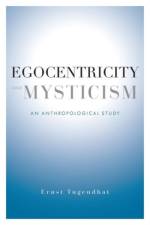
In Egocentricity and Mysticism, Ernst Tugendhat casts mysticism as an innate facet of what it means to be human-a response to an existential need for peace of mind. This need is created by our discursive practices, which serve to differentiate us from one another and privilege our respective first-person standpoints. Emphasizing the first person fuels a desire for mysticism, which builds knowledge of what binds us together and connects us to the world. Any intellectual pursuit that prompts us to "e;step back"e; from our egocentric concerns harbors a mystic kernel that manifests as a sense of awe, wonder, and gratitude. Philosophy, the natural sciences, and mathematics all engender forms of mystical experience as profound as any produced by meditation and asceticism. One of the most widely discussed books by a German philosopher in decades, Egocentricity and Mysticism is a philosophical milestone that clarifies in groundbreaking ways our relationship to language, social interaction, and mortality.
Businesses often find themselves trapped in a competitive dogfight, scratching and clawing for market share with products consumers view as largely undifferentiated. Conventional wisdom suggests that dogfights are to be expected as marketplaces mature, giving rise to the notion that there are "e;bad"e; industries where it is unlikely that any company can succeed. But there are notable exceptions in which enlightened executives have changed the rules to grasp the holy grail of business: long-term profitable growth. Rather than joining the dogfights raging within their industry, companies such as Apple, FedEx, and Starbucks have chosen to become metaphorical cats, continuously renewing their distinctive strategies to compete on their own terms.In If You're in a Dogfight, Become a Cat, Leonard Sherman draws on four decades of experience in management consulting, venture capital, and teaching business strategy at Columbia Business School to share practical advice on two of the most vexing issues facing business executives: why is it so hard to achieve long-term profitable growth, and what can companies do to break away from the pack?Sherman takes the reader on a provocative journey through the building blocks of business strategy by challenging conventional wisdom on a number of questions that will redefine management best practices:* What should be the overarching purpose of your business?* Do you really know what your strategy is?* Is there such a thing as a bad industry?* Where do great ideas come from and how do I find them?* What makes products meaningfully different?* What makes and breaks great brands?* How and when should I disrupt my own company?* What are the imperatives to achieving long-term profitable growth?Filled with dozens of illustrative examples of inspiring successes and dispiriting falls from grace, this book provides deep insights on how to become the cat in a dogfight, whether you are a CEO, mid-level manager, aspiring business school student, or curious observer interested in achieving sustained profitable growth.
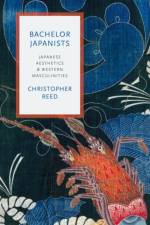
Challenging cliches of Japanism as a feminine taste, Bachelor Japanists argues that Japanese aesthetics were central to contests over the meanings of masculinity in the West. Christopher Reed draws attention to the queerness of Japanist communities of writers, collectors, curators, and artists in the tumultuous century between the 1860s and the 1960s.Reed combines extensive archival research; analysis of art, architecture, and literature; the insights of queer theory; and an appreciation of irony to explore the East-West encounter through three revealing artistic milieus: the Goncourt brothers and other japonistes of late-nineteenth-century Paris; collectors and curators in turn-of-the-century Boston; and the mid-twentieth-century circles of artists associated with Seattle's Mark Tobey. The result is a groundbreaking integration of well-known and forgotten episodes and personalities that illuminates how Japanese aesthetics were used to challenge Western gender conventions. These disruptive effects are sustained in Reed's analysis, which undermines conventional scholarly investments in the heroism of avant-garde accomplishment and ideals of cultural authenticity.
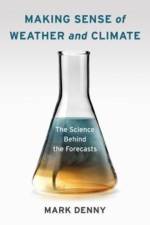
How do meteorologists design forecasts for the next day's, the next week's, or the next month's weather? Are some forecasts more likely to be accurate than others, and why? Making Sense of Weather and Climate takes readers through key topics in atmospheric physics and presents a cogent view of how weather relates to climate, particularly climate-change science. It is the perfect book for amateur meteorologists and weather enthusiasts, and for anyone whose livelihood depends on navigating the weather's twists and turns. Making Sense of Weather and Climate begins by explaining the essential mechanics and characteristics of this fascinating science. The noted physics author Mark Denny also defines the crucial differences between weather and climate, and then develops from this basic knowledge a sophisticated yet clear portrait of their relation. Throughout, Denny elaborates on the role of weather forecasting in guiding politics and other aspects of human civilization. He also follows forecasting's effect on the economy. Denny's exploration of the science and history of a phenomenon we have long tried to master makes this book a unique companion for anyone who wants a complete picture of the environment's individual, societal, and planetary impact.
Martin Heidegger was an ordinary Nazi and a loyal member of the provincial petty bourgeoisie. He was also a seminal thinker of the Continental tradition and one of the twentieth century's most important philosophers. How are we to make sense of this dual life? Should we factor Heidegger's domestic and political associations into our understanding of his thought, or should we treat his intellectual work independently of his abhorrent politics? How does any thinker reconcile the mundane with the ideal or the pursuit of philosophical inquiry with the demands of civic engagement?In Heidegger, Alain Badiou and Barbara Cassin immerse themselves in the philosopher's correspondence with his wife Elfride to answer these questions as they relate to Heidegger and all thinkers vulnerable to the politics of their times. They focus on Heidegger's tormented relationship with his wife, with Hannah Arendt, and with numerous other women, bringing an unusual level of intimacy to his personal and intellectual worlds.
Many books in Japanese have been devoted to the poet and critic Ishikawa Takuboku (1886-1912). Although he died at the age of twenty-six and wrote many of his best-known poems in the space of a few years, his name is familiar to every literate Japanese. Takuboku's early death added to the sad romance of the unhappy poet, but there has been no satisfactory biography of his life or career, even in Japanese, and only a small part of his writings have been translated. His mature poetry was based on the work of no predecessor, and he left no disciples. Takuboku stands unique.Takuboku's most popular poems, especially those with a humorous overlay, are often read and memorized, but his diaries and letters, though less familiar, contain rich and vivid glimpses of the poet's thoughts and experiences. They reflect the outlook of an unconstrained man who at times behaved in a startling or even shocking manner. Despite his misdemeanors, Takuboku is regarded as a national poet, all but a saint to his admirers, especially in the regions of Japan where he lived. His refusal to conform to the Japan of the time drove him in striking directions and ranked him as the first poet of the new Japan.
Over the past decade, American outlets such as PolitiFact, FactCheck.org, and the Washington Post's Fact Checker have shaken up the political world by holding public figures accountable for what they say. Cited across social and national news media, these verdicts can rattle a political campaign and send the White House press corps scrambling. Yet fact-checking is a fraught kind of journalism, one that challenges reporters' traditional roles as objective observers and places them at the center of white-hot, real-time debates. As these journalists are the first to admit, in a hyperpartisan world, facts can easily slip into fiction, and decisions about which claims to investigate and how to judge them are frequently denounced as unfair play. Deciding What's True draws on Lucas Graves's unique access to the members of the newsrooms leading this movement. Graves vividly recounts the routines of journalists at three of these hyperconnected, technologically innovative organizations and what informs their approach to a story. Graves also plots a compelling, personality-driven history of the fact-checking movement and its recent evolution from the blogosphere, reflecting on its revolutionary remaking of journalistic ethics and practice. His book demonstrates the ways these rising organizations depend on professional networks and media partnerships yet have also made inroads with the academic and philanthropic worlds. These networks have become a vital source of influence as fact-checking spreads around the world.
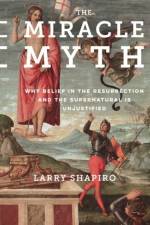
There are many who believe Moses parted the Red Sea and Jesus came back from the dead. Others are certain that exorcisms occur, ghosts haunt attics, and the blessed can cure the terminally ill. Though miracles are immensely improbable, people have embraced them for millennia, seeing in them proof of a supernatural world that resists scientific explanation.Helping us to think more critically about our belief in the improbable, The Miracle Myth casts a skeptical eye on attempts to justify belief in the supernatural, laying bare the fallacies that such attempts commit. Through arguments and accessible analysis, Larry Shapiro sharpens our critical faculties so we become less susceptible to tales of myths and miracles and learn how, ultimately, to evaluate claims regarding vastly improbable events on our own. Shapiro acknowledges that belief in miracles could be harmless, but cautions against allowing such beliefs to guide how we live our lives. His investigation reminds us of the importance of evidence and rational thinking as we explore the unknown.
Over a span of thirty years, twentieth-century French philosophers Emmanuel Levinas and Jacques Derrida held a conversation across texts. Sharing a Jewish heritage and a background in phenomenology, both came to situate their work at the margins of philosophy, articulating this placement through religion and literature. Chronicling the interactions between these thinkers, Sarah Hammerschlag argues that the stakes in their respective positions were more than philosophical. They were also political. Levinas's investments were born out in his writings on Judaism and ultimately in an evolving conviction that the young state of Israel held the best possibility for achieving such an ideal. For Derrida, the Jewish question was literary. The stakes of Jewish survival could only be approached through reflections on modern literature's religious legacy, a line of thinking that provided him the means to reconceive democracy. Hammerschlag's reexamination of Derrida and Levinas's textual exchange not only produces a new account of this friendship but also has significant ramifications for debates within Continental philosophy, the study of religion, and political theology.
Many have viewed the tribute system as China's tool for projecting its power and influence in East Asia, treating other actors as passive recipients of Chinese domination. China's Hegemony sheds new light on this system and shows that the international order of Asia's past was not as Sinocentric as conventional wisdom suggests. Instead, throughout the early modern period, Chinese hegemony was accepted, defied, and challenged by its East Asian neighbors at different times, depending on these leaders' strategies for legitimacy among their populations. This book demonstrates that Chinese hegemony and hierarchy were not just an outcome of China's military power or Confucian culture but were constructed while interacting with other, less powerful actors' domestic political needs, especially in conjunction with internal power struggles.Focusing on China-Korea-Japan dynamics of East Asian international politics during the Ming and High Qing periods, Ji-Young Lee draws on extensive research of East Asian language sources, including records written by Chinese and Korean tributary envoys. She offers fascinating and rich details of war and peace in Asian international relations, addressing questions such as: why Japan invaded Korea and fought a major war against the Sino-Korean coalition in the late sixteenth century; why Korea attempted to strike at the Ming empire militarily in the late fourteenth century; and how Japan created a miniature tributary order posing as the center of Asia in lieu of the Qing empire in the seventeenth century. By exploring these questions, Lee's in-depth study speaks directly to general international relations literature and concludes that hegemony in Asia was a domestic, as well as an international phenomenon with profound implications for the contemporary era.
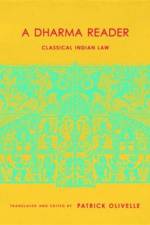
Whether defined by family, lineage, caste, professional or religious association, village, or region, India's diverse groups did settle on a concept of law in classical times. How did they reach this consensus? Was it based on religious grounds or a transcendent source of knowledge? Did it depend on time and place? And what apparatus did communities develop to ensure justice was done, verdicts were fair, and the guilty were punished?Addressing these questions and more, A Dharma Reader traces the definition, epistemology, procedure, and process of Indian law from the third century B.C.E. to the middle ages. Its breadth captures the centuries-long struggle by Indian thinkers to theorize law in a multiethnic and pluralist society. The volume includes new and accessible translations of key texts, notes that explain the significance and chronology of selections, and a comprehensive introduction that summarizes the development of various disciplines in intellectual-historical terms. It reconstructs the principal disputes of a given discipline, which not only clarifies the arguments but also relays the dynamism of the fight. For those seeking a richer understanding of the political and intellectual origins of a major twenty-first-century power, along with unique insight into the legal interactions among its many groups, this book offers exceptional detail, historical precision, and expository illumination.
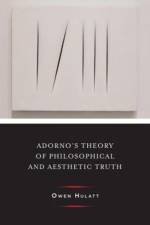
In Adorno's Theory of Philosophical and Aesthetic Truth, Owen Hulatt undertakes an original reading of Theodor W. Adorno's epistemology and its material underpinnings, deepening our understanding of his theories of truth, art, and the nonidentical. Hulatt's novel interpretation casts Adorno's theory of philosophical and aesthetic truth as substantially unified, supporting the thinker's claim that both philosophy and art are capable of being true.For Adorno, truth is produced when rhetorical "e;texture"e; combines with cognitive "e;performance,"e; leading to the breakdown of concepts that mediate the experience of the consciousness. Both philosophy and art manifest these features, although philosophy enacts these conceptual issues directly, while art does so obliquely. Hulatt builds a robust argument for Adorno's claim that concepts ineluctably misconstrue their objects. He also puts the still influential thinker into conversation with Hegel, Husserl, Frazer, Sohn-Rethel, Benjamin, Strawson, Dahlhaus, Habermas, and Caillois, among many others.
What can psychoanalysis, a psychological approach developed more than a century ago, offer us in an age of rapidly evolving, hard-to-categorize ideas of sexuality and the self? Should we abandon Freud's theories completely or adapt them to new findings and the new relationships taking shape in modern liberal societies? In a remarkably prescient series of lectures delivered in the early 1960s, the French philosopher Louis Althusser anticipated the challenges that psychoanalytic theory would face as politics moved away from structuralist frameworks and toward the elastic possibilities of anthropological and sociological thought.Psychoanalysis and the Human Sciences translates Althusser's remarkable seminars into English for the first time, making available to a wider audience the origins and potential future of radical political theory. Althusser takes the important step in these lectures of distinguishing psychoanalysis from psychology and especially psychiatry, which long resisted Freud's analytical concepts of the unconscious and overdetermination. By freeing psychoanalysis from this bind, Althusser can then apply these analytical concepts to the social and the political, integrated with Marxist theory. The result is an enlivened methodology for comprehending social organization and change that had a profound influence on the Frankfurt School and scholars who continue to work at the forefront of radical thought today: Judith Butler, Etienne Balibar, and Alain Badiou.
In the history of Western thought, friendship's relationship to politics is checkered. Friendship was seen as key to understanding political life in the ancient world, but it was then ignored for centuries. Today, friendship has again become a desirable framework for political interaction. In Friendship Reconsidered, P. E. Digeser contends that our rich and varied practices of friendship multiply and moderate connections to politics. Along the way, she sets forth a series of ideals that appreciates friendship's many forms and its dynamic relationship to individuality, citizenship, political and legal institutions, and international relations. Digeser argues that, as a set of practices bearing a family resemblance to one another, friendship calls our attention to the importance of norms of friendly action and the mutual recognition of motive. Focusing on these attributes clarifies the place of self-interest and duty in friendship and points to its compatibility with the pursuit of individuality. She shows how friendship can provide islands of stability in a sea of citizen-strangers and, in a delegitimized political environment, a bridge between differences. She also explores how political and legal institutions can both undermine and promote friendship. Digeser then looks to the positive potential of international friendships, in which states mutually strive to protect the just character of one another's institutions and policies. Friendship's repertoire of motives and manifestations complicates its relationship to politics, Digeser concludes, but it can help us realize the limits and possibilities for generating new opportunities for cooperation.
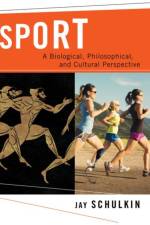
Sports are as varied as the people who play them. We run, jump, and swim. We kick, hit, and shoot balls. We ride sleds in the snow and surf in the sea. From the Olympians of ancient Greece to today's professional athletes, from adult pickup soccer games to children's gymnastics classes, people at all levels of ability at all times and in all places have engaged in sport. What drives this phenomenon?In Sport, the neuroscientist Jay Schulkin argues that biology and culture do more than coexist when we play sports-they blend together seamlessly, propelling each other toward greater physical and intellectual achievement. To support this claim, Schulkin discusses history, literature, and art-and engages philosophical inquiry and recent behavioral research. He connects sport's basic neural requirements, including spatial and temporal awareness, inference, memory, agency, direction, competitive spirit, and endurance, to the demands of other human activities. He affirms sport's natural role as a creative evolutionary catalyst, turning the external play of sports inward and bringing insight to the diversion that defines our species. Sport, we learn, is a fundamental part of human life.
When journalists, developers, surf tourists, and conservation NGOs cast Papua New Guineans as living in a prior nature and prior culture, they devalue their knowledge and practice, facilitating their dispossession. Paige West's searing study reveals how a range of actors produce and reinforce inequalities in today's globalized world. She shows how racist rhetorics of representation underlie all uneven patterns of development and seeks a more robust understanding of the ideological work that capital requires for constant regeneration.
In Unspeakable Histories, William Guynn focuses on the sensation of encountering past events through film. Film is capable, he argues, of triggering moments of heightened awareness in which the barrier between the past and the present can fall and the reality of the past we thought lost can be momentarily rediscovered in its material being. In his readings of seven exceptional works depicting twentieth century atrocities, Guynn explores the emotional resonance that still adheres to traumatic historical events. Guynn considers dimensions of experience that historiography leaves untouched. Yael Hersonski's A Film Unfinished (2010) deconstructs scenes from the Nazi propaganda film Das Ghetto through the testimony of ghetto survivors. Andrzej Wajda's Katyn (2007) revivifies the murder of the Polish officer corps (in which Wajda's father perished) by Stalin's security forces during the Second World War. Andrei Konchalovsky's Siberiade (1979) reimagines the turbulent history of the Soviet Union from the perspective of an isolated Siberian village. Larissa Shepitko's The Ascent (1977) evokes the existential drama Soviet partisans faced during the Nazi occupation. Patricio Guzman's Nostalgia for the Light (2011) examines the vestiges of human experience, including the scattered remains of Pinochet's victims, alive in the aridity of the Atacama Desert. Rithy Panh's S-21 (2003) reawakens events of the Cambodian genocide through dramatic confrontation with some of its executioners, and Joshua Oppenheimer's The Act of Killing (2012) films the perpetrators of the Indonesian genocide as they restage scenes of killings and torture. Inspired by the work of Walter Benjamin, Frank Ankersmit, Joseph Mali, and Simon Schama, Guynn argues that the film medium, more immediate than language, is capable of restoring the affective dimension of historical experience, rooted in the deepest reaches of our minds.
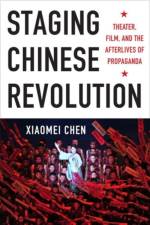
Staging Chinese Revolution surveys fifty years of theatrical propaganda performances in China, revealing a dynamic, commercial capacity in works often dismissed as artifacts of censorship. Spanning the 1960s through the 2010s, Xiaomei Chen reads films, plays, operas, and television shows from an interdisciplinary and comparative perspective, demonstrating how, in a socialist state with "e;capitalist characteristics,"e; propaganda performance turns biographies, memoirs, and war stories into mainstream ideological commodities, legitimizing the state and its right to rule. Analyzing propaganda performance also brings contradictions and inconsistencies to light that throw common understandings about propaganda's purpose into question.Chen focuses on revisionist histories that stage the lives of the "e;founding fathers"e; of the Communist Party, such as Chen Duxiu, Mao Zedong, and Deng Xiaoping, and the engaging mix of elite and ordinary characters that animate official propaganda in the private and public sphere. Taking the form of "e;personal"e; memories and representing star and youth culture and cyberspace, contemporary Chinese propaganda appeals through multiple perspectives, complicating relations among self, subject, agent, state building, and national identity. Chen treats Chinese performance as an extended form of political theater confronting critical issues of commemoration, nostalgia, state rituals, and contested history. It is through these reenactments that three generations of revolutionary leaders loom in extraordinary ways over Chinese politics and culture.
Jews and the American Religious Landscape explores major complementary facets of American Judaism and Jewish life through a comprehensive analysis of contemporary demographic and sociological data. Focusing on the most important aspects of social development-geographic location, socioeconomic stratification, family dynamics, group identification, and political orientation-the volume adds empirical value to questions concerning the strengths of Jews as a religious and cultural group in America and the strategies they have developed to integrate successfully into a Christian society.With advanced analyses of data gathered by the Pew Research Center, Jews and the American Religious Landscape shows that Jews, like other religious and ethnic minorities, strongly identify with their religion and culture. Yet their particular religiosity, along with such factors as population dispersion, professional networks, and education, have created different outcomes in various contexts. Living under the influence of a Christian majority and a liberal political system has also cultivated a distinct ethos of solidarity and egalitarianism, enabling Judaism to absorb new patterns in ways that mirror its integration into American life. Rich in information thoughtfully construed, this book presents a remarkable portrait of what it means to be an American Jew today.
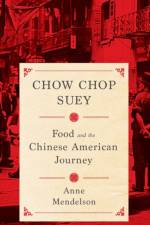
Chinese food first became popular in America under the shadow of violence against Chinese aliens, a despised racial minority ineligible for United States citizenship. The founding of late-nineteenth-century "e;chop suey"e; restaurants that pitched an altered version of Cantonese cuisine to white patrons despite a virulently anti-Chinese climate is one of several pivotal events in Anne Mendelson's thoughtful history of American Chinese food. Chow Chop Suey uses cooking to trace different stages of the Chinese community's footing in the larger white society.Mendelson begins with the arrival of men from the poorest district of Canton Province during the Gold Rush. She describes the formation of American Chinatowns and examines the curious racial dynamic underlying the purposeful invention of hybridized Chinese American food, historically prepared by Cantonese-descended cooks for whites incapable of grasping Chinese culinary principles. Mendelson then follows the eventual abolition of anti-Chinese immigration laws and the many demographic changes that transformed the face of Chinese cooking in America during and after the Cold War. Mendelson concludes with the post-1965 arrival of Chinese immigrants from Taiwan, Southeast Asia, and many regions of mainland China. As she shows, they have immeasurably enriched Chinese cooking in America but tend to form comparatively self-sufficient enclaves in which they, unlike their predecessors, are not dependent on cooking for a white clientele.
Soon after the end of World War II, a majority of the nearly 7 million Japanese civilians and serviceman who had been posted overseas returned home. Heeding the call to rebuild, these veterans helped remake Japan and enjoyed popularized accounts of their service. For those who took longer to be repatriated, such as the POWs detained in labor camps in Siberia and the fighters who spent years hiding in the jungles of islands in the South Pacific, returning home was more difficult. Their nation had moved on without them and resented the reminder of a humiliating, traumatizing defeat. Homecomings tells the story of these late-returning Japanese soldiers and their struggle to adapt to a newly peaceful and prosperous society. Some were more successful than others, but they all charted a common cultural terrain, one profoundly shaped by media representations of the earlier returnees. Japan had come to redefine its nationhood through these popular images. Yoshikuni Igarashi explores what Japanese society accepted and rejected, complicating the definition of a postwar consensus and prolonging the experience of war for both Japanese soldiers and the nation. He throws the postwar narrative of Japan's recovery into question, exposing the deeper, subtler damage done to a country that only belatedly faced the implications of its loss.
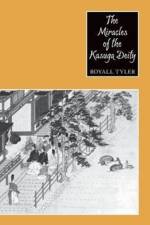
In this annotated translation and study of an early fourteenth-century Japanese devotional picture scroll set, Royall Tyler illuminates the complex relationships between medieval Japanese religion and politics, text, and art. The Kasuga Gongen genki ("e;The Miracles of the Kasuga Deity"e;) mingles text and painting on silk to tell the tale of miraculous events at the Kasuga shrine in Nara, a site favored by the dominant Fujiwara clan for centuries. The work's values are aristocratic, but the text sheds light on the syncretic nature of the era's religious practices, allowing Tyler to collapse the distinction between high and low forms of medieval Japanese religion. Tyler provides a detailed examination of the scrolls, the shrine, and their history and political role. He also elucidates the scrolls' relationship to literary genre and religious practice, including the interaction between Shintoism and Buddhism. His copious annotations describe the work's historical context, as well as its religious and cultural influences. This study is essential for scholars of religion, art historians, and cultural historians alike.
Exploring poetry scrapbooks, old-time radio show recordings, advertising verse, corporate archives, and Hallmark greeting cards, among other unconventional sources, Mike Chasar casts American poetry as an everyday phenomenon consumed and created by a vast range of readers. He shows how American poetry in the first half of the twentieth century and its reception helped set the stage for the dynamics of popular culture and mass media today. Poetry was then part and parcel of American popular culture, spreading rapidly as the consumer economy expanded and companies exploited its profit-making potential. Poetry also offered ordinary Americans creative, emotional, political, and intellectual modes of expression, whether through scrapbooking, participation in radio programs, or poetry contests. Reenvisioning the uses of twentieth-century poetry, Chasar provides a richer understanding of the innovations of modernist and avant-garde poets and the American reading public's sophisticated powers of feeling and perception.
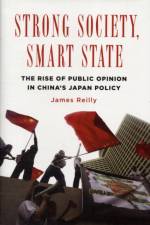
The rise and influence of public opinion on Chinese foreign policy reveals a remarkable evolution in authoritarian responses to social turmoil. James Reilly shows how Chinese leaders have responded to popular demands for political participation with a sophisticated strategy of tolerance, responsiveness, persuasion, and repression-a successful approach that helps explain how and why the Communist Party continues to rule China.Through a detailed examination of China's relations with Japan from 1980 to 2010, Reilly reveals the populist origins of a wave of anti-Japanese public mobilization that swept across China in the early 2000s. Popular protests, sensationalist media content, and emotional public opinion combined to impede diplomatic negotiations, interrupt economic cooperation, spur belligerent rhetoric, and reshape public debates. Facing a mounting domestic and diplomatic crisis, Chinese leaders responded with a remarkable reversal, curtailing protests and cooling public anger toward Japan. Far from being a fragile state overwhelmed by popular nationalism, market forces, or information technology, China has emerged as a robust and flexible regime that has adapted to its new environment with remarkable speed and effectiveness. Reilly's study of public opinion's influence on foreign policy extends beyond democratic states. It reveals how persuasion and responsiveness sustain Communist Party rule in China and develops a method for examining similar dynamics in different authoritarian regimes. He draws upon public opinion surveys, interviews with Chinese activists, quantitative media analysis, and internal government documents to support his findings, joining theories in international relations, social movements, and public opinion.
Despite the destabilizing potential of governing of a vast territory and a large multicultural population, the centralized government of the People's Republic of China has held together for decades, resisting efforts at local autonomy. By analyzing Beijing's strategies for maintaining control even in the reformist post-Mao era, Centrifugal Empire reveals the unique thinking behind China's approach to local governance, its historical roots, and its deflection of divergent interests.Centrifugal Empire examines the logic, mode, and instrument of local governance established by the People's Republic, and then compares the current system to the practices of its dynastic predecessors. The result is an expansive portrait of Chinese leaders' attitudes toward regional autonomy and local challenges, one concerned with territory-specific preoccupations and manifesting in constant searches for an optimal design of control. Jae Ho Chung reveals how current communist instruments of local governance echo imperial institutions, while exposing the Leninist regime's savvy adaptation to contemporary issues and its need for more sophisticated inter-local networks to keep its unitary rule intact. He casts the challenges to China's central-local relations as perennial, since the dilution of the system's "e;socialist"e; or "e;Communist"e; character will only accentuate its fundamentally Chinese-or centrifugal-nature.
Abonner på vårt nyhetsbrev og få rabatter og inspirasjon til din neste leseopplevelse.
Ved å abonnere godtar du vår personvernerklæring.