









Gjør som tusenvis av andre bokelskere
Abonner på vårt nyhetsbrev og få rabatter og inspirasjon til din neste leseopplevelse.
Ved å abonnere godtar du vår personvernerklæring.Du kan når som helst melde deg av våre nyhetsbrev.

Before his mysterious murder in 1975, Pier Paolo Pasolini had become famous-and infamous-not only for his groundbreaking films and literary works but also for his homosexuality and criticism of capitalism, colonialism, and Western materialism. In Pier Paolo Pasolini: Performing Authorship, Gian Maria Annovi revisits Pasolini's oeuvre to examine the author's performance as a way of assuming an antagonistic stance toward forms of artistic, social, and cultural oppression. Annovi connects Pasolini's notion of authorship to contemporary radical artistic practices and today's multimedia authorship.Annovi considers the entire range of Pasolini's work, including his poetry, narrative and documentary film, dramatic writings, and painting, as well as his often scandalous essays on politics, art, literature, and theory. He interprets Pasolini's multimedia authorial performance as a masochistic act to elicit rejection, generate hostility, and highlight the contradictions that structure a repressive society. Annovi shows how questions of authorial self-representation and self-projection relate to the artist's effort to undermine the assumptions of his audience and criticize the conformist practices that the culture industry and mass society impose on the author. Pasolini reveals the critical potential of his spectacular celebrity by using the author's corporeal or vocal presence to address issues of sexuality and identity, and through his strategic self-fashioning in films, paintings, and photographic portraits he destabilizes the audience's assumptions about the author.
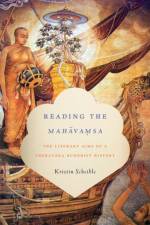
Vamsa is a dynamic genre of Buddhist history filled with otherworldly characters and the exploits of real-life heroes. These narratives collapse the temporal distance between Buddha and the reader, building an emotionally resonant connection with an outsized religious figure and a longed-for past. The fifth-century Pali text Mahavamsa is a particularly effective example, using metaphor and other rhetorical devices to ethically transform readers, to stimulate and then to calm them. Reading the Mahavamsa advocates a new, literary approach to this text by revealing its embedded reading advice (to experience samvega and pasada) and affective work of metaphors (the Buddha's dharma as light) and salient characters (nagas). Kristin Scheible argues that the Mahavamsa requires a particular kind of reading. In the text's proem, special instructions draw readers to the metaphor of light and the nagas, or salient snake-beings, of the first chapter. Nagas are both model worshippers and unworthy hoarders of Buddha's relics. As nonhuman agents, they challenge political and historicist readings of the text. Scheible sees these slippery characters and the narrative's potent and playful metaphors as techniques for refocusing the reader's attention on the text's emotional aims. Her work explains the Mahavamsa's central motivational role in contemporary Sri Lankan Buddhist and nationalist circles. It also speaks broadly to strategies of reading religious texts and to the internal and external cues that give such works lives beyond the page.
For decades after World War II, Japan chose to focus on soft power and economic diplomacy alongside a close alliance with the United States, eschewing a potential leadership role in regional and global security. Since the end of the Cold War, and especially since the rise of Prime Minister Shinzo Abe, Japan's military capabilities have resurged. In this analysis of Japan's changing military policy, Andrew L. Oros shows how a gradual awakening to new security challenges has culminated in the multifaceted "e;security renaissance"e; of the past decade.Despite openness to new approaches, however, three historical legacies-contested memories of the Pacific War and Imperial Japan, postwar anti-militarist convictions, and an unequal relationship with the United States-play an outsized role. In Japan's Security Renaissance Oros argues that Japan's future security policies will continue to be shaped by these legacies, which Japanese leaders have struggled to address. He argues that claims of rising nationalism in Japan are overstated, but there has been a discernable shift favoring the conservative Abe and his Liberal Democratic Party. Bringing together Japanese domestic politics with the broader geopolitical landscape of East Asia and the world, Japan's Security Renaissance provides guidance on this century's emerging international dynamics.
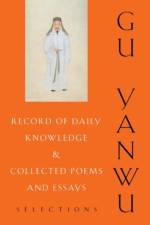
Gu Yanwu pioneered the late-Ming and early Qing-era practice of Han Learning, or Evidential Learning, favoring practical over theoretical approaches to knowledge. He strongly encouraged scholars to return to the simple, ethical precepts of early Confucianism, and in his best-known work, Rizhi lu (Record of Daily Knowledge), he applied this paradigm to literature, government, economics, history, education, and philology. This volume includes translations of selected essays from Rizhi lu and Gu Yanwu's Shiwen Ji (Collected Poems and Essays), along with an introduction explaining the personal and political dimensions of the scholar's work.Gu Yanwu wrote the essays and poems featured in this volume while traveling across China during the decades immediately after the fall of the Ming Dynasty. They merge personal observation with rich articulations of Confucian principles and are, as Gu said, "e;not old coin but copper dug from the hills."e; Like many of his contemporaries, Gu Yanwu believed the Ming Dynasty had suffered from an overconcentration of power in its central government and recommended decentralizing authority while strengthening provincial self-government. In his introduction, Ian Johnston recounts Gu Yanwu's personal history and reviews his published works, along with their scholarly reception. Annotations accompany his translations, and a special essay on feudalism by Tang Dynasty poet and scholar Liu Zongyuan (773-819) provides insight into Gu Yanwu's later work on the subject.
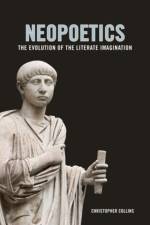
The quest to understand the evolution of the literary mind has become a fertile field of inquiry and speculation for scholars across literary studies and cognitive science. In Paleopoetics, Christopher Collins's acclaimed earlier title, he described how language emerged both as a communicative tool and as a means of fashioning other communicative tools-stories, songs, and rituals. In Neopoetics, Collins turns his attention to the cognitive evolution of the writing-ready brain. Further integrating neuroscience into the popular field of cognitive poetics, he adds empirical depth to our study of literary texts and verbal imagination and offers a whole new way to look at reading, writing, and creative expression. Collins begins Neopoetics with the early use of visual signs, first as reminders of narrative episodes and then as conventional symbols representing actual speech sounds. Next he examines the implications of written texts for the play of the auditory and visual imagination. To exemplify this long transition from oral to literate artistry, Collins examines a wide array of classical texts-from Homer and Hesiod to Plato and Aristotle and from the lyric innovations of Augustan Rome to the inner dialogues of St. Augustine. In this work of "e;big history,"e; Collins demonstrates how biological and cultural evolution collaborated to shape both literature and the brain we use to read it.
Love Letters from Golok chronicles the courtship between two Buddhist tantric masters, Tare Lhamo (1938-2002) and Namtrul Rinpoche (1944-2011), and their passion for reinvigorating Buddhism in eastern Tibet during the post-Mao era. In fifty-six letters exchanged from 1978 to 1980, Tare Lhamo and Namtrul Rinpoche envisioned a shared destiny to "e;heal the damage"e; done to Buddhism during the years leading up to and including the Cultural Revolution. Holly Gayley retrieves the personal and prophetic dimensions of their courtship and its consummation in a twenty-year religious career that informs issues of gender and agency in Buddhism, cultural preservation among Tibetan communities, and alternative histories for minorities in China.The correspondence between Tare Lhamo and Namtrul Rinpoche is the first collection of "e;love letters"e; to come to light in Tibetan literature. Blending tantric imagery with poetic and folk song styles, their letters have a fresh vernacular tone comparable to the love songs of the Sixth Dalai Lama, but with an eastern Tibetan flavor. Gayley reads these letters against hagiographic writings about the couple, supplemented by field research, to illuminate representational strategies that serve to narrate cultural trauma in a redemptive key, quite unlike Chinese scar literature or the testimonials of exile Tibetans. With special attention to Tare Lhamo's role as a tantric heroine and her hagiographic fusion with Namtrul Rinpoche, Gayley vividly shows how Buddhist masters have adapted Tibetan literary genres to share private intimacies and address contemporary social concerns.
Soon after the American Revolution, ?certain of the founders began to recognize the strategic significance of Asia and the Pacific and the vast material and cultural resources at stake there. Over the coming generations, the United States continued to ask how best to expand trade with the region and whether to partner with China, at the center of the continent, or Japan, looking toward the Pacific. Where should the United States draw its defensive line, and how should it export democratic principles? In a history that spans the eighteenth century to the present, Michael J. Green follows the development of U.S. strategic thinking toward East Asia, identifying recurring themes in American statecraft that reflect the nation's political philosophy and material realities.Drawing on archives, interviews, and his own experience in the Pentagon and White House, Green finds one overarching concern driving U.S. policy toward East Asia: a fear that a rival power might use the Pacific to isolate and threaten the United States and prevent the ocean from becoming a conduit for the westward free flow of trade, values, and forward defense. By More Than Providence works through these problems from the perspective of history's major strategists and statesmen, from Thomas Jefferson to Alfred Thayer Mahan and Henry Kissinger. It records the fate of their ideas as they collided with the realities of the Far East and adds clarity to America's stakes in the region, especially when compared with those of Europe and the Middle East.
The right to own property is something we generally take for granted. For refugees living in camps, in some cases for as long as generations, the link between citizenship and property ownership becomes strained. How do refugees protect these assets and preserve communal ties? How do they maintain a sense of identity and belonging within chaotic settings?Protection Amid Chaos follows people as they develop binding claims on assets and resources in challenging political and economic spaces. Focusing on Palestinians living in refugee camps in Lebanon and Jordan, it shows how the first to arrive developed flexible though legitimate property rights claims based on legal knowledge retained from their homeland, subsequently adapted to the restrictions of refugee life. As camps increased in complexity, refugees merged their informal institutions with the formal rules of political outsiders, devising a broader, stronger system for protecting their assets and culture from predation and state incorporation. For this book, Nadya Hajj conducted interviews with two hundred refugees. She consults memoirs, legal documents, and findings in the United Nations Relief Works Agency archives. Her work reveals the strategies Palestinian refugees have used to navigate their precarious conditions while under continuous assault and situates their struggle within the larger context of communities living in transitional spaces.
"e;We found so much to say, to share, to learn.... For it wasn't just the Marquis de Sade profile and the sporty thighs-and-calves that seduced me. It was even more, perhaps, or certainly just as much, the speed at which you used to read, and still do."e;-Julia Kristeva"e;We're married, Julia and I, that's a fact, but we each have our own personalities, our own name, activities, and freedom. Love is the full recognition of the other in their otherness. If this other is very close to you, as in this case, it seems to me that what's at stake is harmony within difference. The difference between men and women is irreducible; there's no possibility of fusion."e;-Philippe SollersMarriage as a Fine Art is an enchanting series of exchanges in which Julia Kristeva and Philippe Sollers, married for fifty years, speak candidly about their love. Though they live separately, Kristeva and Sollers are fully committed to each other. Their bond is intellectual and psychological, passionate and mundane. They share everything when together, and lose themselves in their interests when apart. Their marriage is art, rich with history and meaning, idiosyncratic, and dynamic in its expression. Yet it is also as common as they come. Kristeva and Sollers have lived through the same challenges, peaks, and lulls as all married couples do. With humor and honesty, they elaborate on these moments, turning marriage's familiar aspects into exceptional examples of relating, struggling, transcending, and being. Marriage as a Fine Art is a rare chance to know these intellectuals-and marriage-more intimately.
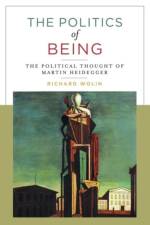
Martin Heidegger's ties to Nazism have tarnished his stature as one of the towering figures of twentieth-century philosophy. The publication of the Black Notebooks in 2014, which revealed the full extent of Heidegger's anti-Semitism and enduring sympathy for National Socialism, only inflamed the controversy. Richard Wolin's The Politics of Being: The Political Thought of Martin Heidegger has played a seminal role in the international debate over the consequences of Heidegger's Nazism. In this edition, the author provides a new preface addressing the effect of the Black Notebooks on our understanding of the relationship between politics and philosophy in Heidegger's work. Building on his pathbreaking interpretation of the philosopher's political thought, Wolin demonstrates that philosophy and politics cannot be disentangled in Heidegger's oeuvre. Volkisch ideological themes suffuse even his most sublime philosophical treatises. Therefore, despite Heidegger's profundity as a thinker, his critique of civilization is saturated with disturbing anti-democratic and anti-Semitic leitmotifs and claims.
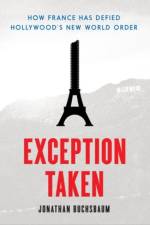
In Exception Taken, Jonathan Buchsbaum examines the movements that have emerged in opposition to the homogenizing force of Hollywood in global filmmaking. While European cinema was entering a steady decline in the 1980s, France sought to strengthen support for its film industry under the new Mitterrand government. Over the following decades, the country lobbied partners in the European Economic Community to design strategies to protect the audiovisual industries and to resist cultural free-trade pressures in international trade agreements. These struggles to preserve the autonomy of national artistic prerogatives emboldened many countries to question the benefits of accelerated globalization.Led by the energetic minister of culture Jack Lang, France initiated a series of measures to support all sectors of the film industry. Lang introduced laws mandating that state and private television invest in the film industry, effectively replacing the revenue lost from a shrinking theatrical audience for French films. With the formation of the European Union in 1992, Europe passed a new treaty (Maastricht) that extended its legal purview to culture for the first time, setting up the dramatic confrontation over the General Agreement on Trade and Tariffs (GATT) in 1993. Pushed by France, the EU fought the United States over the idea that countries should preserve their right to regulate cultural activity as they saw fit. France and Canada then initiated a campaign to protect cultural diversity within UNESCO that led to the passage of the Convention on Cultural Diversity in 2005. As France pursued these efforts to protect cultural diversity beyond its borders, it also articulated "e;a certain idea of cinema"e; that did not simply defend a narrow vision of national cinema. France promoted both commercial cinema and art cinema, disproving announcements of the death of cinema.
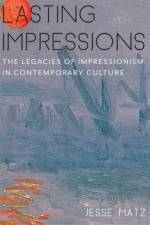
Impressionism captured the world's imagination in the late nineteenth century and remains with us today. Portraying the dynamic effects of modernity, impressionist artists revolutionized the arts and the wider culture. Impressionism transformed the very pattern of reality, introducing new ways to look at and think about the world and our experience of it. Its legacy has been felt in many major contributions to popular and high culture, from cubism and early cinema to the works of Zadie Smith and W. G. Sebald, from advertisements for Pepsi to the observations of Oliver Sacks and Malcolm Gladwell. Yet impressionism's persistence has also been a problem, a matter of inauthenticity, superficiality, and complicity in what is merely "e;impressionistic"e; about culture today. Jesse Matz considers these two legacies-the positive and the negative-to explain impressionism's true contemporary significance. As Lasting Impressions moves through contemporary literature, painting, and popular culture, Matz explains how the perceptual role, cultural effects, and social implications of impressionism continue to generate meaning and foster new forms of creativity, understanding, and public engagement.
Since its emergence in the mid-nineteenth century as the nation's "e;metropolis,"e; New York has faced the most challenging housing problems of any American city, but it has also led the nation in innovation and reform. The horrors of the tenement were perfected in New York at the same time that the very rich were building palaces along Fifth Avenue; public housing for the poor originated in New York, as did government subsidies for middle-class housing.A standard in the field since its publication in 1992, A History of Housing in New York City traces New York's housing development from 1850 to the present in text and profuse illustrations. Richard Plunz explores the housing of all classes, with comparative discussion of the development of types ranging from the single-family house to the high-rise apartment tower. His analysis is placed within the context of the broader political and cultural development of New York City. This revised edition extends the scope of the book into the city's recent history, adding three decades to the study, covering the recent housing bubble crisis, the rebound and gentrification of the five boroughs, and the ecological issues facing the next generation of New Yorkers. More than 300 illustrations are integrated throughout the text, depicting housing plans, neighborhood changes, and city architecture over the past 130 years. This new edition also features a foreword by the distinguished urban historian Kenneth T. Jackson.
What do we value? Why do we value it? And in a neoliberal age, can morality ever displace money as the primary means of defining value? These are the questions that drove David Foster Wallace, a writer widely credited with changing the face of contemporary fiction and moving it beyond an emotionless postmodern irony. Jeffrey Severs argues in David Foster Wallace's Balancing Books that Wallace was also deeply engaged with the social, political, and economic issues of the twentieth and twenty-first centuries. A rebellious economic thinker, Wallace satirized the deforming effects of money, questioned the logic of the monetary system, and saw the world through the lens of value's many hidden and untapped meanings. In original readings of all of Wallace's fiction, from The Broom of the System and Infinite Jest to his story collections and The Pale King, Severs reveals Wallace to be a thoroughly political writer whose works provide an often surreal history of financial crises and economic policies.As Severs demonstrates, the concept of value occupied the intersection of Wallace's major interests: economics, work, metaphysics, mathematics, and morality. Severs ranges from the Great Depression and the New Deal to the realms of finance, insurance, and taxation to detail Wallace's quest for balance and grace in a world of excess and entropy. Wallace showed characters struggling to place two feet on the ground and restlessly sought to "e;balance the books"e; of a chaotic culture. Explaining why Wallace's work has galvanized a new phase in contemporary global literature, Severs draws connections to key Wallace forerunners Don DeLillo, Thomas Pynchon, and William Gaddis, as well as his successors-including Dave Eggers, Teddy Wayne, Jonathan Lethem, and Zadie Smith-interpreting Wallace's legacy in terms of finance, the gift, and office life.
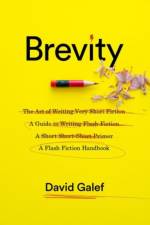
In Brevity, David Galef provides a guide to writing flash fiction, from tips on technique to samples by canonical and contemporary authors to provocative prompts that inspire powerful stories in a little space. Galef traces the genre back to its varied origins, from the short-short to nanofiction, with examples that include vignettes, prose poems, character sketches, fables, lists, twist stories, surrealism, and metafiction. The authors range from the famous, such as Colette and Borges, to today's voices, like Roxane Gay and Bruce Holland Rogers. A writer and longtime creative writing teacher, Galef also shows how flash fiction skills translate to other types of writing. Brevity is an indispensable resource for anyone working in this increasingly popular form. For more information, see davidgalef.com/brevity.
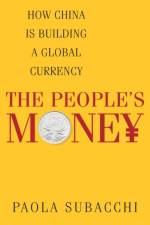
Many of the world's major economies boast dominant international currencies. Not so for China. Its renminbi has lagged far behind the pound, the euro, and the dollar in global circulation-and for good reason. China has long privileged economic policies that have fueled development at the expense of the renminbi's growth, and it has become clear that the underpowered currency is threatening China's future. The nation's leaders now face the daunting task of strengthening the currency without losing control of the nation's economy or risking total collapse. How are they approaching this challenge?In The People's Money, Paola Subacchi introduces readers to China's monetary system, mapping its evolution over the past century and, particularly, its transformation since Deng Xiaoping took power in 1978. Subacchi revisits the policies that fostered the country's economic rise while at the same time purposefully creating a currency of little use beyond China's borders. She shows the key to understanding China's economic predicament lies in past and future strategies for the renminbi. The financial turbulence following the global crisis of 2008, coupled with China's ambitions as a global creditor and chief economic power, has forced the nation to reckon with the limited international circulation of the renminbi. Increasing the currency's reach will play a major role in securing China's future.
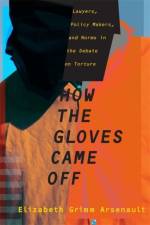
The treatment of detainees at Abu Ghraib prison, Guantanamo Bay, and far-flung CIA "e;black sites"e; after the attacks of 9/11 included cruelty that defied legal and normative prohibitions in U.S. and international law. The antitorture stance of the United States was brushed aside. Since then, the guarantee of American civil liberties and due process for POWs and detainees has grown muddled, threatening the norms that sustain modern democracies. How the Gloves Came Off considers the legal and political arguments that led to this standoff between civility and chaos and their significant consequences for the strategic interests and standing of the United States. Unpacking the rhetoric surrounding the push for unitary executive action in wartime, How the Gloves Came Off traces the unmaking of the consensus against torture. It implicates U.S. military commanders, high-level government administrators, lawyers, and policy makers from both parties, exposing the ease with which powerful actors manipulated ambiguities to strip detainees of their humanity. By targeting the language and logic that made torture thinkable, this book shows how future decision makers can craft an effective counternarrative and set a new course for U.S. policy toward POWs and detainees. Whether leaders use their influence to reinforce a prohibition of cruelty to prisoners or continue to undermine long-standing international law will determine whether the United States retains a core component of its founding identity.
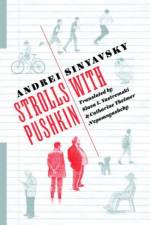
Andrei Sinyavsky wrote Strolls with Pushkin while confined to Dubrovlag, a Soviet labor camp, smuggling the pages out a few at a time to his wife. His irreverent portrait of Pushkin outraged emigres and Soviet scholars alike, yet his "e;disrespect"e; was meant only to rescue Pushkin from the stifling cult of personality that had risen up around him. Anglophone readers who question the longstanding adoration for Pushkin felt by generations of Russians will enjoy tagging along on Sinyavsky's strolls with the great poet, discussing his life, fiction, and famously untranslatable poems. This new edition of Strolls with Pushkin also includes a later essay Sinyavsky wrote on the artist, "e;Journey to the River Black."e;
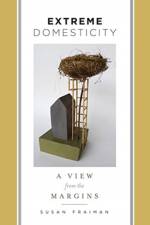
Domesticity gets a bad rap. We associate it with stasis, bourgeois accumulation, banality, and conservative family values. Yet in Extreme Domesticity, Susan Fraiman reminds us that keeping house is just as likely to involve dislocation, economic insecurity, creative improvisation, and queered notions of family. Her book links terms often seen as antithetical: domestic knowledge coinciding with female masculinity, feminism, and divorce; domestic routines elaborated in the context of Victorian poverty, twentieth-century immigration, and new millennial homelessness. Far from being exclusively middle-class, domestic concerns are shown to be all the more urgent and ongoing when shelter is precarious.Fraiman's reformulation frees domesticity from associations with conformity and sentimentality. Ranging across periods and genres, and diversifying the archive of domestic depictions, Fraiman's readings include novels by Elizabeth Gaskell, Sandra Cisneros, Jamaica Kincaid, Leslie Feinberg, and Lois-Ann Yamanaka; Edith Wharton's classic decorating guide; popular women's magazines; and ethnographic studies of homeless subcultures. Recognizing the labor and know-how needed to produce the space we call "e;home,"e; Extreme Domesticity vindicates domestic practices and appreciates their centrality to everyday life. At the same time, it remains well aware of domesticity's dark side. Neither a romance of artisanal housewifery nor an apology for conservative notions of home, Extreme Domesticity stresses the heterogeneity of households and probes the multiplicity of domestic meanings.
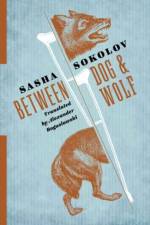
Sasha Sokolov is one of few writers to have been praised by Vladimir Nabokov, who called his first novel, A School for Fools, "e;an enchanting, tragic, and touching book."e; Sokolov's second novel, Between Dog and Wolf, written in 1980, has long intimidated translators because of its complex puns, rhymes, and neologisms. Language rather than plot motivates the story-the novel is often compared to James Joyce's Finnegans Wake-and time, characters, and death all prove unstable. The one constant is the Russian landscape, where the Volga is a more-crossable River Styx, especially when it freezes in winter. Sokolov's fiction has hugely influenced contemporary Russian writers. Now, thanks to Alexander Boguslawski's bold and superb translation, English readers can access what many consider to be his best work.
Many investors believe that success in investing is either luck or clairvoyance. In Rational Investing, finance professor Hugues Langlois and asset manager Jacques Lussier present the current state of asset management and clarify the conundrum of luck versus skill. The core of Rational Investing is a framework for smart investing built around three performance drivers: balancing exposure to risk factors, efficiently diversifying bad luck, and taking advantage of relative mispricings in financial markets. With clear examples from model multi-asset-class portfolios, Langlois and Lussier show how to implement performance drivers like institutional investors with access to extensive resources, as well as nonprofessional investors who are constrained to small-scale transactions. There are few investment products, whether traditional or alternative, discretionary or systematic, fundamental or quantitative, whose performance cannot be analyzed through this framework. Langlois and Lussier illuminate the structure of financial markets and the mechanics of sustainable investing so any investor can become a rational player, from the nonprofessional investor with a basic knowledge of statistics all the way to seasoned investment professionals wishing to challenge their understanding of the asset management industry.
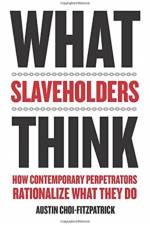
Drawing on fifteen years of work in the antislavery movement, Austin Choi-Fitzpatrick examines the systematic oppression of men, women, and children in rural India and asks: How do contemporary slaveholders rationalize the subjugation of other human beings, and how do they respond when their power is threatened? More than a billion dollars have been spent on antislavery efforts, yet the practice persists. Why? Unpacking what slaveholders think about emancipation is critical for scholars and policy makers who want to understand the broader context, especially as seen by the powerful. Insight into those moments when the powerful either double down or back off provides a sobering counterbalance to scholarship on popular struggle. Through frank and unprecedented conversations with slaveholders, Choi-Fitzpatrick reveals the condescending and paternalistic thought processes that blind them. While they understand they are exploiting workers' vulnerabilities, slaveholders also feel they are doing workers a favor, often taking pride in this relationship. And when the victims share this perspective, their emancipation is harder to secure, driving some in the antislavery movement to ask why slaves fear freedom. The answer, Choi-Fitzpatrick convincingly argues, lies in the power relationship. Whether slaveholders recoil at their past behavior or plot a return to power, Choi-Fitzpatrick zeroes in on the relational dynamics of their self-assessment, unpacking what happens next. Incorporating the experiences of such pivotal actors into antislavery research is an immensely important step toward crafting effective antislavery policies and intervention. It also contributes to scholarship on social change, social movements, and the realization of human rights.
In this passionate and powerful book-part manifesto, part plan of action-the renowned economist Jeffrey D. Sachs offers a practical strategy to move America, seemingly more divided than ever, toward a new consensus: sustainable development. Sustainable development is a holistic approach that emphasizes economic, social, and environmental objectives in shaping policy. In focusing too much on economic growth, the United States has neglected rising economic inequality and dire environmental threats. Now, even growth is imperiled.Sachs explores issues that have captivated the nation and political debate, including infrastructure, trade deals, energy policy, the proper size and role of government, the national debt, and income inequality. Not only does he provide illuminating and accessible explanations of the forces at work in each case, but he also presents specific policy solutions. His argument rises above the pessimism born of political paralysis, economic stagnation, and partisanship to devise a brighter way forward, achievable both individually and collectively. In Building the New American Economy, Sachs shows how the United States can find a path to renewed economic progress that is fair and environmentally sustainable.
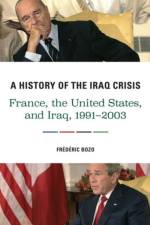
In March 2003, the United States and Great Britain invaded Iraq to put an end to the regime of Saddam Hussein. The war was launched without a United Nations mandate and was based on the erroneous claim that Iraq had retained weapons of mass destruction. France, under President Jacques Chirac and Foreign Minister Dominique de Villepin, spectacularly opposed the United States and British invasion, leading a global coalition against the war that also included Germany and Russia. The diplomatic crisis leading up to the war shook both French and American perceptions of each other and revealed cracks in the transatlantic relationship that had been building since the end of the Cold War.Based on exclusive French archival sources and numerous interviews with former officials in both France and the United States, A History of the Iraq Crisis retraces the international exchange that culminated in the 2003 Iraq conflict. It shows how and why the Iraq crisis led to a confrontation between two longtime allies unprecedented since the time of Charles de Gaulle, and it exposes the deep and ongoing divisions within Europe, the Atlantic alliance, and the international community as a whole. The Franco-American narrative offers a unique prism through which the American road to war can be better understood.
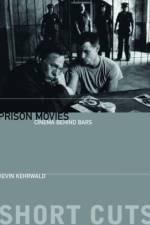
Prison Movies: Cinema Behind Bars traces the public fascination with incarceration from the silent era to the present. Often considered an offshoot of the gangster film, the prison film precedes the gangster film and is in many ways its opposite. Rather than focusing on tragic figures heading for a fall, the prison film focuses on fallen characters seeking redemption. The gangster's perverse pursuit of the American dream is irrelevant to the prisoner for whom that dream has already failed. At their core, prison films are about self-preservation at the hands of oppressive authority. Like history itself, prison films display long stretches of idleness punctuated by eruptions of violence, dangerous moments that signify liberation and the potential for change. The enclosed world of the prison is a highly effective microcosm, one that forces characters and audiences alike to confront vexing issues of race, class, gender, and sexuality. These portrayals of men and women behind bars have thrived because they deal with such fundamental human themes as freedom, individuality, power, justice, and mercy.Films examined include The Big House (1930), I Want to Live! (1958), The Defiant Ones (1958), Cool Hand Luke (1967), Midnight Express (1978), Escape from Alcatraz (1979), The Shawshank Redemption (1994), and Starred Up (2013).
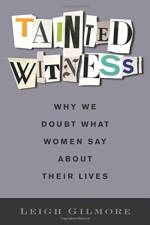
In 1991, Anita Hill's testimony during Clarence Thomas's Senate confirmation hearing brought the problem of sexual harassment to a public audience. Although widely believed by women, Hill was defamed by conservatives and Thomas was confirmed to the Supreme Court. The tainting of Hill and her testimony is part of a larger social history in which women find themselves caught up in a system that refuses to believe what they say. Hill's experience shows how a tainted witness is not who someone is, but what someone can become. Why are women so often considered unreliable witnesses to their own experiences? How are women discredited in legal courts and in courts of public opinion? Why is women's testimony so often mired in controversies fueled by histories of slavery and colonialism? How do new feminist witnesses enter testimonial networks and disrupt doubt? Tainted Witness examines how gender, race, and doubt stick to women witnesses as their testimony circulates in search of an adequate witness. Judgment falls unequally upon women who bear witness, as well-known conflicts about testimonial authority in the late twentieth and early twenty-first centuries reveal. Women's testimonial accounts demonstrate both the symbolic potency of women's bodies and speech in the public sphere and the relative lack of institutional security and control to which they can lay claim. Each testimonial act follows in the wake of a long and invidious association of race and gender with lying that can be found to this day within legal courts and everyday practices of judgment, defining these locations as willfully unknowing and hostile to complex accounts of harm. Bringing together feminist, literary, and legal frameworks, Leigh Gilmore provides provocative readings of what happens when women's testimony is discredited. She demonstrates how testimony crosses jurisdictions, publics, and the unsteady line between truth and fiction in search of justice.
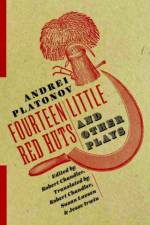
In this essential collection of Andrei Platonov's plays, the noted Platonov translator Robert Chandler edits and introduces The Hurdy-Gurdy (translated by Susan Larsen), Fourteen Little Red Huts (translated by Chandler), and Grandmother's Little Hut (translated by Jesse Irwin). Written in 1930 and 1933, respectively, The Hurdy-Gurdy and Fourteen Little Red Huts constitute an impassioned and penetrating response to Stalin's assault on the Soviet peasantry. They reflect the political urgency of Bertolt Brecht and anticipate the tragic farce of Samuel Beckett but play out through dialogue and characterization that is unmistakably Russian. This volume also includes Grandmother's Little Hut, an unfinished play that represents Platonov's later, gentler work.
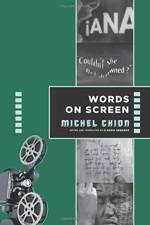
Michel Chion is well known in contemporary film studies for his innovative investigations into aspects of cinema that scholars have traditionally overlooked. Following his work on sound in film in Audio-Vision and Film, a Sound Art, Words on Screen is Chion's survey of everything the seventh art gives us to read on screen. He analyzes titles, credits, and intertitles, but also less obvious forms of writing that appear on screen, from the tear-stained letter in a character's hand to reversed writing seen in mirrors. Through this examination, Chion delves into the multitude of roles that words on screen play: how they can generate narrative, be torn up or consumed but still remain in the viewer's consciousness, take on symbolic dimensions, and bear every possible relation to cinematic space.With his characteristic originality, Chion performs a poetic inventory of the possibilities of written text in the film image. Taking examples from hundreds of films spanning years and genres, from the silents to the present, he probes the ways that words on screen are used and their implications for film analysis and theory. In the process, he opens up and unearths the specific poetry of visual text in film. Exhaustively researched and illustrated with hundreds of examples, Words on Screen is a stunning demonstration of a creative scholar's ability to achieve a radically new understanding of cinema.
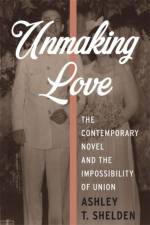
The contemporary novel does more than revise our conception of love-it explodes it, queers it, and makes it unrecognizable. Rather than providing union, connection, and completion, love in contemporary fiction destroys the possibility of unity, harbors negativity, and foregrounds difference. Comparing contemporary and modernist depictions of love to delineate critical continuities and innovations, Unmaking Love locates queerness in the novelistic strategies of Ian McEwan, Zadie Smith, Hanif Kureshi, Alan Hollinghurst, and Hari Kunzru. In their work, "e;queer love"e; becomes more than shorthand for sexual identity. It comes to embody thwarted expectations, disarticulated organization, and unnerving multiplicity. In queer love, social forms are deformed, affective bonds do not bind, and social structures threaten to come undone. Unmaking Love draws on psychoanalysis and gender and sexuality studies to read love's role in contemporary literature and its relation to queer negativity.
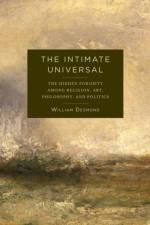
William Desmond sees religion, art, philosophy, and politics as essential and distinctive modes of human practice, manifestations of an intimate universality that illuminates individual and social being. They are also surprisingly permeable phenomena, and by observing their relations, Desmond captures notes of a clandestine conversation that transforms ontology.
Abonner på vårt nyhetsbrev og få rabatter og inspirasjon til din neste leseopplevelse.
Ved å abonnere godtar du vår personvernerklæring.