




















Gjør som tusenvis av andre bokelskere
Abonner på vårt nyhetsbrev og få rabatter og inspirasjon til din neste leseopplevelse.
Ved å abonnere godtar du vår personvernerklæring.Du kan når som helst melde deg av våre nyhetsbrev.

Over the past decade, software companies have increasingly monopolized the flow of venture capital, starving support for scientific research and its transformative discoveries. New medicines, cheaper and faster personal computers, and other life-changing developments all stem from investment in science. In the past, these funds led to steam engines, light bulbs, microprocessors, 3D printers, and even the Internet. In Venture Investing in Science, the venture capitalist Douglas W. Jamison and the investment author Stephen R. Waite directly link financial support to revolutionary advancements in physics, computers, chemistry, and biology and make a passionate case for continued investing in science to meet the global challenges of our time.Clean air and water, cures for intractable diseases, greener public transportation, cheaper and faster communication technologies-these are some of the rich opportunities awaiting venture capital investment today. Jamison and Waite focus on how early-stage companies specializing in commercializing transformative technologies based on deep science have been shunned by venture capitalists, and how the development of such companies have been hampered by structural changes in capital markets and government regulation over the past decade. The authors argue that reinvigorating science-based technological innovation is crucial to reactivating the economic dynamism that lifts living standards and fuels prosperity over time.
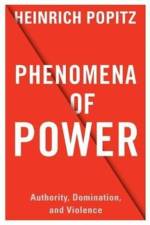
In Phenomena of Power, one of the leading figures of postwar German sociology reflects on the nature, and many forms of, power. For Heinrich Popitz, power is rooted in the human condition and is therefore part of all social relations. Drawing on philosophical anthropology, he identifies the elementary forms of power to provide detailed insight into how individuals gain and perpetuate control over others. Instead of striving for a power-free society, Popitz argues, humanity should try to impose limits on power where possible and establish counterpower where necessary.Phenomena of Power delves into the sociohistorical manifestations of power and breaks through to its general structures. Popitz distinguishes the forms of the enforcement of power as well as of its stabilization and institutionalization, clearly articulating how the mechanisms of power work and how to track them in the social world. Philosophically trained, historically informed, and endowed with keen observation, Popitz uses examples ranging from the way passengers on a ship organize deck chairs to how prisoners of war share property to illustrate his theory. Long influential in German sociology, Phenomena of Power offers a challenging reworking of one of the essential concepts of the social sciences.
Living Through Loss is the first book to identify the many ways in which people experience loss over the course of life and to discuss the interventions most effective at each stage of life. The authors' starting point is that loss comes in many forms and can include not only suffering the death of a person one loves but also giving birth to a child with disabilities, living with chronic illness, or being abused, assaulted, or otherwise traumatized. They approach loss from the perspective of the resilience model, which acknowledges the capacity of people to integrate loss into their lives, and write sensitively about the role of age, race, culture, sexual orientation, gender, and spirituality in a person's response to loss. More than a comprehensive source on loss, the volume is distinguished by the authors' beautiful use of clients' experiences-and their own-thus making their book definitive and indelible.
Throughout her life, Diana Trilling (1905-1996) wrote about profound social changes with candor and wisdom, first for The Nation and later for Partisan Review, Harpers, and such popular magazines as Vogue and McCalls. She went on to publish five books, including the best-selling Mrs. Harris: The Death of the Scarsdale Diet Doctor, written when she was in her late seventies. She was also one half of one of the most famous intellectual couples in the United States. Diana Trilling's life with Columbia University professor and literary critic Lionel Trilling was filled with secrets, struggles, and betrayals, and she endured what she called her "e;own private hell"e; as she fought to reconcile competing duties and impulses at home and at work. She was a feminist, yet she insisted that women's liberation created unnecessary friction with men, asserting that her career ambitions should be on equal footing with caring for her child and supporting her husband. She fearlessly expressed sensitive, controversial, and moral views, and fought publicly with Lillian Hellman, among other celebrated writers and intellectuals, over politics. Diana Trilling was an anticommunist liberal, a position often misunderstood, especially by her literary and university friends. And finally, she was among the "e;New Journalists"e; who transformed writing and reporting in the 1960s, making her nonfiction as imaginative in style and scope as a novel. The first biographer to mine Diana Trilling's extensive archives, Natalie Robins tells a previously undisclosed history of an essential member of New York City culture at a time of dynamic change and intellectual relevance.
The Triassic period is generally viewed as the beginning of the Age of Dinosaurs. For paleontologists, however, it also marks the rise of the world's first modern land ecosystems.Over the past three decades, extensive, worldwide fieldwork has led to the discovery of many new species of Triassic animals and plants, suggesting that faunal and floral changes already began in the Middle Triassic and were more protracted than previously thought. The Late Triassic is a pivotal time in the evolution of life on land, with many of the major groups of present-day vertebrates and insects first appearing in the fossil record. This book provides the first detailed overview of life on land during the Triassic period for advanced students and researchers. Noted vertebrate paleontologists Hans-Dieter Sues and Nicholas C. Fraser also review the biotic changes of this period and their possible causes.
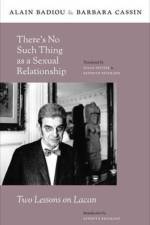
Published in 1973, "e;L'Etourdit"e; was one of the French philosopher Jacques Lacan's most important works. The book posed questions that traversed the entire body of Lacan's psychoanalytical explorations, including his famous idea that "e;there is no such thing as a sexual relationship,"e; which seeks to undermine our certainties about intimacy and reality. In There's No Such Thing as a Sexual Relationship, Alain Badiou and Barbara Cassin take possession of Lacan's short text, thinking "e;with"e; Lacan about his propositions and what kinds of questions they raise in relation to knowledge. Cassin considers the relationship of the real to language through a Sophist lens, while the Platonist Badiou unpacks philosophical claims about truth. Each of their contributions echoes back to one another, offering new ways of thinking about Lacan, his seminal ideas, and his role in advancing philosophical thought.
Art Nouveau thrived from the late 1890s through the First World War. The international design movement reveled in curvilinear forms and both playful and macabre visions and had a deep impact on cinematic art direction, costuming, gender representation, genre, and theme. Though historians have long dismissed Art Nouveau as a decadent cultural mode, its tremendous afterlife in cinema proves otherwise. In Cinema by Design, Lucy Fischer traces Art Nouveau's long history in films from various decades and global locales, appreciating the movement's enduring avant-garde aesthetics and dynamic ideology. Fischer begins with the portrayal of women and nature in the magical "e;trick films"e; of the Spanish director Segundo de Chomon; the elite dress and decor design choices in Cecil B. DeMille's The Affairs of Anatol (1921); and the mise-en-scene of fantasy in Raoul Walsh's The Thief of Bagdad (1924). Reading Salome (1923), Fischer shows how the cinema offered an engaging frame for adapting the risque works of Oscar Wilde and Aubrey Beardsley. Moving to the modern era, Fischer focuses on a series of dramatic films, including Michelangelo Antonioni's The Passenger (1975), that make creative use of the architecture of Antoni Gaudi; and several European works of horror-The Abominable Dr. Phibes (1971), Deep Red (1975), and The Strange Color of Your Body's Tears (2013)-in which Art Nouveau architecture and narrative supply unique resonances in scenes of terror. In later chapters, she examines films like Klimt (2006) that portray the style in relation to the art world and ends by discussing the Art Nouveau revival in 1960s cinema. Fischer's analysis brings into focus the partnership between Art Nouveau's fascination with the illogical and the unconventional and filmmakers' desire to upend viewers' perception of the world. Her work explains why an art movement embedded in modernist sensibilities can flourish in contemporary film through its visions of nature, gender, sexuality, and the exotic.
Some of the worst corporate meltdowns over the past sixty years can be traced to passive directors who favored operational shortcuts over quality growth strategies. Thinking primarily about placating institutional investors, selective stockholders, proxy advisors, and corporate management, these inattentive and deferential board members have relied on short-term share price increases to sustain their companies long term. Driven by a desire for prosperity, not posterity, these actions can doom any company. In The Activist Director, attorney Ira M. Millstein looks back at fifty years of counseling companies, nonprofits, and governments to actively govern their corporations and constituencies. From the threat of bankruptcy and the ConEd blackout of 1970s New York City, to the meltdown of Drexel Burnham Lambert in the late 1980s, to the turnaround of General Motors in the mid-1990s, Millstein takes readers into the boardrooms of several of the greatest catastrophes and success stories of America's best-known corporations. His solution lies at the top: a new breed of activist directors who partner with management and reject short-term outlooks, plan a future based on growth and innovation, and take responsibility for corporate organization, strategy, and efficiency. What questions should we ask of potential board members and how do we know they'll be active? Millstein offers pragmatic suggestions for recruiting activist directors to the boardroom to secure the future of the corporation.
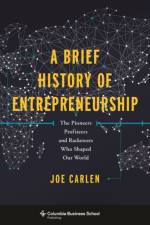
A Brief History of Entrepreneurship charts how the pursuit of profit by private individuals has been a prime mover in revolutionizing civilization. Entrepreneurs often butt up against processes, technologies, social conventions, and even laws. So they circumvent, innovate, and violate to obtain what they want. This creative destruction has brought about overland and overseas trade, colonization, and a host of revolutionary technologies-from caffeinated beverages to the personal computer-that have transformed society.Consulting rich archival sources, including some that have never before been translated, Carlen maps the course of human history through nine episodes when entrepreneurship reshaped our world. Highlighting the most colorful characters of each era, he discusses Mesopotamian merchants' creation of the urban market economy; Phoenician merchant-sailors intercontinental trade, which came to connect Africa, Asia, and Europe; Chinese tea traders' invention of paper money; the colonization of the Americas; and the current "e;flattening"e; of the world's economic playing field. Yet the pursuit of profit hasn't always moved us forward. From slavery to organized crime, Carlen explores how entrepreneurship can sometimes work at the expense of others. He also discusses the new entrepreneurs who, through the nascent space tourism industry, are leading humanity to a multiplanetary future. By exploring all sides of this legacy, Carlen brings much-needed detail to the role of entrepreneurship in revolutionizing civilization.
Despite social and economic advances around the world, poverty and disease persist, exacerbated by the mounting challenges of climate change, natural disasters, political conflict, mass migration, and economic inequality. While governments commit to addressing these challenges, traditional public and philanthropic dollars are not enough. Here, innovative finance has shown a way forward: by borrowing techniques from the world of finance, we can raise capital for social investments today. Innovative finance has provided polio vaccines to children in the DRC, crop insurance to farmers in India, pay-as-you-go solar electricity to Kenyans, and affordable housing and transportation to New Yorkers. It has helped governmental, commercial, and philanthropic resources meet the needs of the poor and underserved and build a more sustainable and inclusive prosperity. Capital and the Common Good shows how market failure in one context can be solved with market solutions from another: an expert in securitization bundles future development aid into bonds to pay for vaccines today; an entrepreneur turns a mobile phone into an array of financial services for the unbanked; and policy makers adapt pay-for-success models from the world of infrastructure to human services like early childhood education, maternal health, and job training. Revisiting the successes and missteps of these efforts, Georgia Levenson Keohane argues that innovative finance is as much about incentives and sound decision-making as it is about money. When it works, innovative finance gives us the tools, motivation, and security to invest in our shared future.
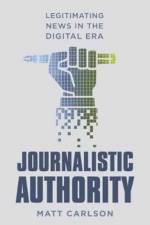
When we encounter a news story, why do we accept its version of events? Why do we even recognize it as news? A complicated set of cultural, structural, and technological relationships inform this interaction, and Journalistic Authority provides a relational theory for explaining how journalists attain authority. The book argues that authority is not a thing to be possessed or lost, but a relationship arising in the connections between those laying claim to being an authority and those who assent to it. Matt Carlson examines the practices journalists use to legitimate their work: professional orientation, development of specific news forms, and the personal narratives they circulate to support a privileged social place. He then considers journalists' relationships with the audiences, sources, technologies, and critics that shape journalistic authority in the contemporary media environment. Carlson argues that journalistic authority is always the product of complex and variable relationships. Journalistic Authority weaves together journalists' relationships with their audiences, sources, technologies, and critics to present a new model for understanding journalism while advocating for practices we need in an age of fake news and shifting norms.
More than Mom's apple pie, peanut butter is the all-American food. With its rich, roasted-peanut aroma and flavor; caramel hue; and gooey, consoling texture, peanut butter is an enduring favorite, found in the pantries of at least 75 percent of American kitchens. Americans eat more than a billion pounds a year. According to the Southern Peanut Growers, a trade group, that's enough to coat the floor of the Grand Canyon (although the association doesn't say to what height).Americans spoon it out of the jar, eat it in sandwiches by itself or with its bread-fellow jelly, and devour it with foods ranging from celery and raisins ("e;ants on a log"e;) to a grilled sandwich with bacon and bananas (the classic "e;Elvis"e;). Peanut butter is used to flavor candy, ice cream, cookies, cereal, and other foods. It is a deeply ingrained staple of American childhood. Along with cheeseburgers, fried chicken, chocolate chip cookies (and apple pie), peanut butter is a consummate comfort food. In Creamy and Crunchy are the stories of Jif, Skippy, Peter Pan; the plight of black peanut farmers; the resurgence of natural or old-fashioned peanut butter; the reasons why Americans like peanut butter better than (almost) anyone else; the five ways that today's product is different from the original; the role of peanut butter in fighting Third World hunger; and the Salmonella outbreaks of 2007 and 2009, which threatened peanut butter's sacred place in the American cupboard. To a surprising extent, the story of peanut butter is the story of twentieth-century America, and Jon Krampner writes its first popular history, rich with anecdotes and facts culled from interviews, research, travels in the peanut-growing regions of the South, personal stories, and recipes.
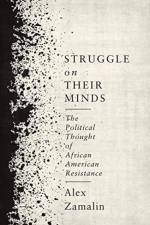
American political thought has been shaped by those who fought back against social inequality, economic exclusion, the denial of political representation, and slavery, the country's original sin. Yet too often the voices of African American resistance have been neglected, silenced, or forgotten. In this timely book, Alex Zamalin considers key moments of resistance to demonstrate its current and future necessity, focusing on five activists across two centuries who fought to foreground slavery and racial injustice in American political discourse. Struggle on Their Minds shows how the core values of the American political tradition have been continually challenged-and strengthened-by antiracist resistance, creating a rich legacy of African American political thought that is an invaluable component of contemporary struggles for racial justice.Zamalin looks at the language and concepts put forward by the abolitionists David Walker and Frederick Douglass, the antilynching activist Ida B. Wells, the Black Panther Party organizer Huey Newton, and the prison abolitionist Angela Davis. Each helped revise and transform ideas about power, justice, community, action, and the role of emotion in political action. Their thought encouraged abolitionists to call for the eradication of slavery, black journalists to chastise American institutions for their indifference to lynching, and black radicals to police the police and to condemn racial injustice in the American prison system. Taken together, these movements pushed political theory forward, offering new language and concepts to sustain democracy in tense times. Struggle on Their Minds is a critical text for our contemporary moment, showing how the political thought that comes out of resistance can energize the practice of democratic citizenship and ultimately help address the prevailing problem of racial injustice.
One morning while reading Barron's, Kara Newman took note of a casual bit of advice offered by famed commodities trader Jim Rogers. "e;Buy breakfast,"e; he told investors, referring to the increasing value of pork belly and frozen orange juice futures. The statement inspired Newman to take a closer look at agricultural commodities, from the iconic pork belly to the obscure peppercorn and nutmeg. The results of her investigation, recorded in this fascinating history, show how contracts listed on the Chicago Mercantile Exchange can read like a menu and how market behavior can dictate global economic and culinary practice. The Secret Financial Life of Food reveals the economic pathways that connect food to consumer, unlocking the mysteries behind culinary trends, grocery pricing, and restaurant dining. Newman travels back to the markets of ancient Rome and medieval Europe, where vendors first distinguished between "e;spot sales"e; and "e;sales for delivery."e; She retraces the storied spice routes of Asia and recounts the spice craze that prompted Christopher Columbus's journey to North America, linking these developments to modern-day India's bustling peppercorn market. Newman centers her history on the transformation of corn into a ubiquitous commodity and uses oats, wheat, and rye to recast America's westward expansion and the Industrial Revolution. She discusses the effects of such mega-corporations as Starbucks and McDonalds on futures markets and considers burgeoning markets, particularly "e;super soybeans,"e; which could scramble the landscape of food finance. The ingredients of American power and culture, and the making of the modern world, can be found in the history of food commodities exchange, and Newman connects this unconventional story to the how and why of what we eat.
A companion to Andrew F. Smith's critically acclaimed and popular Eating History: Thirty Turning Points in the Making of American Cuisine, this volume recounts the individuals, ingredients, corporations, controversies, and myriad events responsible for America's diverse and complex beverage scene. Smith revisits the country's major historical moments-colonization, the American Revolution, the Whiskey Rebellion, the temperance movement, Prohibition, and its repeal-and he tracks the growth of the American beverage industry throughout the world. The result is an intoxicating encounter with an often overlooked aspect of American culture and global influence. Americans have invented, adopted, modified, and commercialized tens of thousands of beverages-whether alcoholic or nonalcoholic, carbonated or caffeinated, warm or frozen, watery or thick, spicy or sweet. These include uncommon cocktails, varieties of coffee and milk, and such iconic creations as Welch's Grape Juice, Coca-Cola, root beer, and Kool-Aid. Involved in their creation and promotion were entrepreneurs and environmentalists, bartenders and bottlers, politicians and lobbyists, organized and unorganized criminals, teetotalers and drunks, German and Italian immigrants, savvy advertisers and gullible consumers, prohibitionists and medical professionals, and everyday Americans in love with their brew. Smith weaves a wild history full of surprising stories and explanations for such classic slogans as "e;taxation with and without representation;"e; "e;the lips that touch wine will never touch mine;"e; and "e;rum, Romanism, and rebellion."e; He reintroduces readers to Samuel Adams, Thomas Jefferson, George Washington, and the colorful John Chapman (Johnny Appleseed), and he rediscovers America's vast literary and cultural engagement with beverages and their relationship to politics, identity, and health.
How can Daoism, China's indigenous religion, give us the aesthetic, ethical, political, and spiritual tools to address the root causes of our ecological crisis and construct a sustainable future? In China's Green Religion, James Miller shows how Daoism orients individuals toward a holistic understanding of religion and nature. Explicitly connecting human flourishing to the thriving of nature, Daoism fosters a "e;green"e; subjectivity and agency that transforms what it means to live a flourishing life on earth.Through a groundbreaking reconstruction of Daoist philosophy and religion, Miller argues for four key, green insights: a vision of nature as a subjective power that informs human life; an anthropological idea of the porous body based on a sense of qi flowing through landscapes and human beings; a tradition of knowing founded on the experience of transformative power in specific landscapes and topographies; and an aesthetic and moral sensibility based on an affective sensitivity to how the world pervades the body and the body pervades the world. Environmentalists struggle to raise consciousness for their cause, Miller argues, because their activism relies on a quasi-Christian concept of "e;saving the earth."e; Instead, environmentalists should integrate nature and culture more seamlessly, cultivating through a contemporary intellectual vocabulary a compelling vision of how the earth materially and spiritually supports human flourishing.
The award-winning climate scientist Michael E. Mann and the Pulitzer Prize-winning political cartoonist Tom Toles have been on the front lines of the fight against climate denialism for most of their careers. They have witnessed the manipulation of the media by business and political interests and the unconscionable play to partisanship on issues that affect the well-being of billions. The lessons they have learned have been invaluable, inspiring this brilliant, colorful escape hatch from the madhouse of the climate wars. The Madhouse Effect portrays the intellectual pretzels into which denialists must twist logic to explain away the clear evidence that human activity has changed Earth's climate. Toles's cartoons collapse counter-scientific strategies into their biased components, helping readers see how to best strike at these fallacies. Mann's expert skills at science communication aim to restore sanity to a debate that continues to rage against widely acknowledged scientific consensus. The synergy of these two climate science crusaders enlivens the gloom and doom of so many climate-themed books-and may even convert die-hard doubters to the side of sound science.
Gnosticism is a countercultural spirituality that forever changed the practice of Christianity. Before it emerged in the second century, passage to the afterlife required obedience to God and king. Gnosticism proposed that human beings were manifestations of the divine, unsettling the hierarchical foundations of the ancient world. Subversive and revolutionary, Gnostics taught that prayer and mediation could bring human beings into an ecstatic spiritual union with a transcendent deity. This mystical strain affected not just Christianity but many other religions, and it characterizes our understanding of the purpose and meaning of religion today.In The Gnostic New Age, April D. DeConick recovers this vibrant underground history to prove that Gnosticism was not suppressed or defeated by the Catholic Church long ago, nor was the movement a fabrication to justify the violent repression of alternative forms of Christianity. Gnosticism alleviated human suffering, soothing feelings of existential brokenness and alienation through the promise of renewal as God. DeConick begins in ancient Egypt and follows with the rise of Gnosticism in the Middle Ages, the advent of theosophy and other occult movements in the nineteenth and early twentieth centuries, and contemporary New Age spiritual philosophies. As these theories find expression in science-fiction and fantasy films, DeConick sees evidence of Gnosticism's next incarnation. Her work emphasizes the universal, countercultural appeal of a movement that embodies much more than a simple challenge to religious authority.
In Al-Qaeda's Revenge: The 2004 Madrid Train Bombings, Fernando Reinares tells the story of "e;3/11"e; - the March 11, 2004, bombings of commuter trains in Madrid, which killed 191 people and injured more than 1,800. He examines the development of an al-Qaeda conspiracy in Spain from the 1990s through the formation of the 3/11 bombing network beginning in March 2002, and discusses the preparations for and fallout from the attacks. Reinares draws on judicial, police, and intelligence documents to which he had privileged access, as well as on personal interviews with officials in Spain and elsewhere. His full analysis links the Madrid bombings to al-Qaeda's senior leadership and unveils connections between 3/11 and 9/11.Al-Qaeda's Revenge, Spain's counterpart to The 9/11 Commission Report, was a bestseller in Spain.
By the 1970s, the Brooklyn piers had become a wasteland on the New York City waterfront. Today, they have been transformed into a stunning park that is enjoyed by countless Brooklynites and visitors from across New York City and around the world. A History of Brooklyn Bridge Park recounts the grassroots, multivoiced, and contentious effort, beginning in the 1980s, to transform Brooklyn's defunct piers into a beautiful, urban oasis. The movement to resist commercial development on the piers reveals how concerned citizens came together to shape the future of their community. After winning a number of battles, park advocates, stakeholders, and government officials collaborated to create a thoroughly unique city park that takes advantage of the water and the 'Manhattan skyline, combining an innovative design with vibrant cultural programming. From start to finish, this history emphasizes the contributions, collaborations, and spirited disagreements that made the planning and construction of Brooklyn Bridge Park a model of natural urban development and public-private partnership. The book includes interviews with Brooklyn residents, politicians, activists, urban planners, landscape architects, and other key participants in the fight for the park. The story of Brooklyn Bridge Park also speaks to larger issues confronting all cities, including the development of postindustrial spaces and the ways to balance public and private interests without sacrificing creative vision or sustainable goals.
"e;Fragile families"e;-unmarried parents who struggle emotionally and financially-are one of the primary targets of the Healthy Marriage Initiative, a federal policy that has funded marriage education programs in nearly every state. These programs, which encourage marriage by teaching relationship skills, are predicated on the hope that married couples can provide a more emotionally and financially stable home for their children. Healthy marriage policy promotes a pro-marriage culture in which two-parent married families are considered the healthiest. It also assumes that marriage can be a socioeconomic survival mechanism for low-income families, and an engine of upward mobility. Through interviews with couples and her own observations and participation in marriage education courses, Jennifer M. Randles challenges these assumptions and critically examines the effects of such classes on participants. She takes the reader inside healthy marriage classrooms to reveal how their curricula are reflections of broader issues of culture, gender, governance, and social inequality. In analyzing the implementation of healthy marriage policy, Randles questions whether it should target individual behavior or the social and economic context of that behavior. The most valuable approach, she concludes, will not be grounded in notions of middle-class marriage culture. Instead, it will reflect the fundamental premise that love and commitment thrive most within the context of social and economic opportunity.
The first philosophers of the Frankfurt School famously turned to the psychoanalytic theories of Sigmund Freud to supplement their Marxist analyses of ideological subjectification. Since the collapse of their proposed "e;marriage of Marx and Freud,"e; psychology and social theory have grown apart to the impoverishment of both. Returning to this union, Benjamin Y. Fong reconstructs the psychoanalytic "e;foundation stone"e; of critical theory in an effort to once again think together the possibility of psychic and social transformation. Drawing on the work of Hans Loewald and Jacques Lacan, Fong complicates the famous antagonism between Eros and the death drive in reference to a third term: the woefully undertheorized drive to mastery. Rejuvenating Freudian metapsychology through the lens of this pivotal concept, he then provides fresh perspective on Theodor Adorno, Max Horkheimer, and Herbert Marcuse's critiques of psychic life under the influence of modern cultural and technological change. The result is a novel vision of critical theory that rearticulates the nature of subjection in late capitalism and renews an old project of resistance.
The past thirty years have seen dozens of otherwise successful investors try to improve education through the application of market principles. They have funneled billions of dollars into alternative schools, online education, and textbook publishing, and they have, with surprising regularity, lost their shirts.In Class Clowns, professor and investment banker Jonathan A. Knee dissects what drives investors' efforts to improve education and why they consistently fail. Knee takes readers inside four spectacular financial failures in education: Rupert Murdoch's billion-dollar effort to reshape elementary education through technology; the unhappy investors-including hedge fund titan John Paulson-who lost billions in textbook publisher Houghton Mifflin; the abandonment of Knowledge Universe, Michael Milken's twenty-year mission to revolutionize the global education industry; and a look at Chris Whittle, founder of EdisonLearning and a pioneer of large-scale transformational educational ventures, who continues to attract investment despite decades of financial and operational disappointment.Although deep belief in the curative powers of the market drove these initiatives, it was the investors' failure to appreciate market structure that doomed them. Knee asks: What makes a good education business? By contrasting rare successes, he finds a dozen broad lessons at the heart of these cautionary case studies. Class Clowns offers an important guide for public policy makers and guardrails for future investors, as well as an intelligent expose for activists and teachers frustrated with the repeated underperformance of these attempts to shake up education.
Theory for the Working Sociologist makes social theory easy to understand by revealing sociology's hidden playbook. Fabio Rojas argues that sociologists use four different theoretical "e;moves"e; when they try to explain the social world: how groups defend their status, how people strategically pursue their goals, how values and institutions support each other, and how people create their social reality. Rojas uses famous sociological studies to illustrate these four types of theory and show how students and researchers may apply them to their interests. The guiding light of the book is the concept of the "e;social mechanism,"e; which clearly and succinctly links causes and effects in social life.Drawing on dozens of empirical studies that define modern sociology and focusing on the nuts and bolts of social explanation, Rojas reveals how areas of study within the field of sociology that at first glance seem dissimilar are, in fact, linked by shared theoretical underpinnings. In doing so, he elucidates classical and contemporary theory, and connects both to essential sociological findings made throughout the history of the field. Aimed at undergraduate students, graduate students, journalists, and interested general readers who want a more formal way to understand social life, Theory for the Working Sociologist presents the underlying themes of sociological thought using contemporary research and plain language.
Acclaimed historian Harry Harootunian calls attention to the boundaries, real and theoretical, that compartmentalize the world around us. In one of the first works to explore on equal footing European and Japanese conceptions of modernity-as imagined in the writings of Georg Simmel and Walter Benjamin, as well as ethnologist Yanagita Kunio and Marxist philosopher Tosaka Jun-Harootunian seeks to expose the problematic nature of scholarly categories. In doing so, History's Disquiet presents intellectual genealogies of such orthodox notions as "e;field"e; and "e;modernity"e; and other concepts intellectuals in the East and West have used to understand the changing world around them. Contrasting reflections on everyday life in Japan and Europe, Harootunian shows how responses to capitalist society were expressed in similar ways: social critics in both regions alleged a broad sense of alienation, particularly among the middle class. However, he also points out that Japanese critics viewed modernity as a condition in which Japan-without the lengthy period of capitalist modernization that characterized Europe and America-was either "e;catching up"e; with those regions or "e;copying"e; them. As elegantly written as it is controversial, this book is both an invitation for rethinking intellectual boundaries and an invigorating affirmation that such boundaries can indeed be broken down.
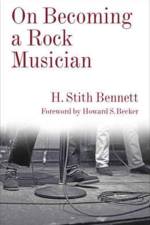
In the 1960s and 1970s, becoming a rock musician was fundamentally different than playing other kinds of music. It was a learned rather than a taught skill. In On Becoming a Rock Musician, sociologist H. Stith Bennett observes what makes someone a rock musician and what persuades others to take him seriously in this role. The book explores how bands form; the backstage and onstage reality of playing in a band; how bands promote themselves and interact with audiences and music professionals like DJs; and the role of performance.
Leading jihadist groups such as al-Qaeda and the Islamic State dominate through cooperation in the form of knowledge sharing, resource sharing, joint training exercises, and operational collaboration. They build alliances and lesser partnerships with other formal and informal terrorist actors to recruit foreign fighters and spread their message worldwide, raising the aggregate threat level for their declared enemies. Whether they consist of friends or foes, whether they are connected locally or online, these networks create a wellspring of support for jihadist organizations that may fluctuate in strength or change in character but never runs dry. Nexus of Global Jihad identifies types of terrorist actors, the nature of their partnerships, and the environments in which they prosper to explain global jihadist terrorism's ongoing success and resilience.Nexus of Global Jihad brings to light an emerging style of "e;networked cooperation"e; that works alongside interorganizational terrorist cooperation to establish bonds of varying depth and endurance. Case studies use recently declassified materials to illuminate al-Qaeda's dealings from Iran to the Arabian Peninsula and the informal actors that power the Sharia4 movement. The book proposes policies that increase intelligence gathering on informal terrorist actors, constrain enabling environments, and disrupt terrorist networks according to different types of cooperation. It is a vital text for strategists and scholars struggling to understand a growing spectrum of terrorist groups working together more effectively than ever before.
Down the Up Staircase tells the story of one Harlem family across three generations, connecting its journey to the historical and social forces that transformed Harlem over the past century. Bruce D. Haynes and Syma Solovitch capture the tides of change that pushed blacks forward through the twentieth century-the Great Migration, the Harlem Renaissance, the early civil rights victories, the Black Power and Black Arts movements-as well as the many forces that ravaged black communities, including Haynes's own. As an authority on race and urban communities, Haynes brings unique sociological insights to the American mobility saga and the tenuous nature of status and success among the black middle class.In many ways, Haynes's family defied the odds. All four great-grandparents on his father's side owned land in the South as early as 1880. His grandfather, George Edmund Haynes, was the founder of the National Urban League and a protege of eminent black sociologist W. E. B. Du Bois; his grandmother, Elizabeth Ross Haynes, was a noted children's author of the Harlem Renaissance and a prominent social scientist. Yet these early advances and gains provided little anchor to the succeeding generations. This story is told against the backdrop of a crumbling three-story brownstone in Sugar Hill that once hosted Harlem Renaissance elites and later became an embodiment of the family's rise and demise. Down the Up Staircase is a stirring portrait of this family, each generation walking a tightrope, one misstep from free fall.
Engaging the whole spectrum of public-policy issues affecting gays and lesbians from a humanistic and philosophical approach, Richard Mohr uses the tools of his trade to assess the logic and ethics of gay rights. Focusing on ideas and values, Mohr's nuanced case for legal and social acceptance applies widely held ethical principles to various issues, including same-sex marriage, AIDS, and gays in the military. By drawing on cultural-, legal-, and ethical-based arguments, Mohr moves away from tired political rhetoric and reveals the important ways in which the struggle for gay rights and acceptance relates to mainstream American society, history, and political life.Mohr forcefully counters moralistic and religious arguments regularly invoked to keep gay men and women from achieving the same rights as heterosexuals. He examines the nature of prejudices and other cultural forces that work against lesbian and gay causes and considers the role that sexuality plays in the national rituals by which Americans define themselves. In his support of same-sex marriage, Mohr defines matrimony as the development and maintenance of intimacy through the means by which people meet their basic needs and carry out their everyday living. Mohr contends that this definition, in both its legal and moral sense, applies equally to homosexual and heterosexual couples. Mohr also considers gays and lesbians as community members as he explores the prospect for greater legal and social inclusion. He concludes by suggesting that recent progress in addressing civil rights for gays and lesbians and the nation's symbolic use of gay issues on both sides of the political spectrum calls for a culturally focused gay politics.
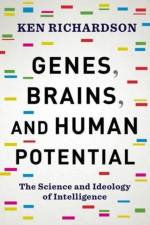
For countless generations people have been told that their potential as humans is limited and fundamentally unequal. The social order, they have been assured, is arranged by powers beyond their control. More recently the appeal has been to biology, specifically the genes, brain sciences, the concept of intelligence, and powerful new technologies. Reinforced through the authority of science and a growing belief in bio-determinism, the ordering of the many for the benefit of a few has become more entrenched. Yet scientists are now waking up to the influence of ideology on research and its interpretation. In Genes, Brains, and Human Potential, Ken Richardson illustrates how the ideology of human intelligence has infiltrated genetics, brain sciences, and psychology, flourishing in the vagueness of basic concepts, a shallow nature-versus-nurture debate, and the overhyped claims of reductionists. He shows how ideology, more than pure science, has come to dominate our institutions, especially education, encouraging fatalism about the development of human intelligence among individuals and societies. Genes, Brains, and Human Potential goes much further: building on work being done in molecular biology, epigenetics, dynamical systems, evolution theory, and complexity theory, it maps a fresh understanding of intelligence and the development of human potential. Concluding with an upbeat message for human possibilities, this synthesis of diverse perspectives will engender new conversations among students, researchers, and other interested readers.
Abonner på vårt nyhetsbrev og få rabatter og inspirasjon til din neste leseopplevelse.
Ved å abonnere godtar du vår personvernerklæring.