







Gjør som tusenvis av andre bokelskere
Abonner på vårt nyhetsbrev og få rabatter og inspirasjon til din neste leseopplevelse.
Ved å abonnere godtar du vår personvernerklæring.Du kan når som helst melde deg av våre nyhetsbrev.

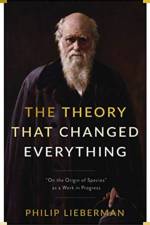
The renowned cognitive scientist Philip Lieberman demonstrates that there is no better guide to the world's living-and still evolving-things than Darwin and that the phenomena he observed are still being explored at the frontiers of science. Lieberman relates the insights that led to groundbreaking discoveries in both Darwin's time and our own.
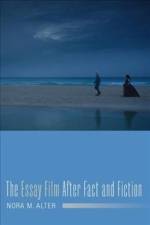
Nora M. Alter reveals the essay film to be a hybrid genre that fuses the categories of feature, art, and documentary film. The essay film draws on a variety of forms and approaches; in the process, it fundamentally alters the shape of cinema. The Essay Film After Fact and Fiction locates the genre's origins and follows its transformations.
J. David Archibald explores how Darwin first came to the conclusion that species had evolved in different regions throughout the world. Carefully retracing Darwin's gathering of evidence and the evolution of his thinking, Origins of Darwin's Evolution achieves a new understanding of how Darwin crafted his transformative theory.
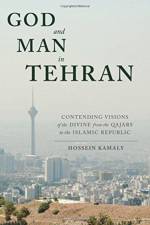
God and Man in Tehran explores the historical processes that have made and unmade contending visions of God in Iran's capital. Hossein Kamaly examines how notions of the divine have been mobilized, contested, and transformed, emphasizing the role played by divergent conceptualizations of nature, reason, law, morality, and authority.
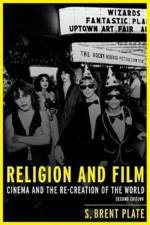
Religion and Film introduces readers to both religious studies and film studies by focusing on the formal similarities between cinema and religious practices and on the ways they each re-create the world. S. Brent Plate shows that by paying attention to the ways films are constructed, we can shed new light on myths and rituals and vice versa.
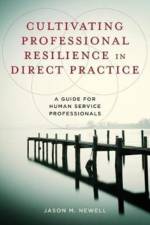
Overwhelming evidence indicates that new social workers going into child welfare or other trauma-related care discover emotional challenges. In a textbook that bridges the gap between theoretical and pragmatic approaches, Jason M. Newell provides a solution by conceptualizing self-care as the key to professional resilience.
The 1976 premiere of Face to Face came at the height of director-screenwriter Ingmar Bergman's career, yet today Face to Face is a largely overlooked and dismissed work. This book tells the story of its rise and fall and presents a new portrait of Bergman as a political artist exploring a new medium with huge public impact: television.
Tamara Lothian shows a path to the reconstruction of the economy in the service of both growth and inclusion that would reignite economic growth by democratizing the market. Law and the Wealth of Nations offers a progressive approach to the supply side of the economy and proposes innovation in our fundamental economic arrangements.
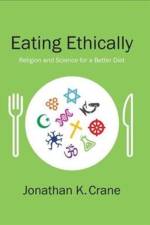
By intertwining ancient wisdom from Judaism, Christianity, and Islam with cutting-edge research, Jonathan K. Crane demonstrates that ethical eating is a means to achieve both personal health and social cohesion. Grounded in science and tradition, Eating Ethically shows us what it truly means to eat well.
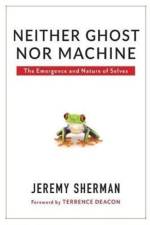
Jeremy Sherman distills Terrence Deacon's breakthrough natural science hypothesis for the emergence of agents and agency, selves and aims in an otherwise aimless universe. The theory cuts a new path through the dualistic spirit vs. mechanism debate, unifying the hard and soft sciences and suggesting new solutions to philosophical mysteries.
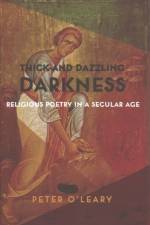
Peter O'Leary reads a diverse set of writers to argue for the importance of religious poetry in twentieth- and twenty-first-century American literature. He traces a poetic genealogy that begins with Whitman and Dickinson and continues today to defend the value and meaning of religious poetry against the grain of a secular society.
Dominik Finkelde rereads the tradition of German idealism for the potential of transformative acts capable of revolutionizing the social order. He engages thinkers typically seen as opposed-Kant, Hegel, and Lacan-to develop the concept of excessive subjectivity, which is characterized by nonconformist acts that reshape the contours of ethical life.
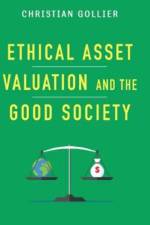
Christian Gollier offers a powerful method for transforming societal goals of shared prosperity into the cornerstone of financial decision making. Ethical Asset Valuation and the Good Society builds a bridge between welfare economics and finance theory to provide a framework for establishing what asset prices should be on the basis of moral values.
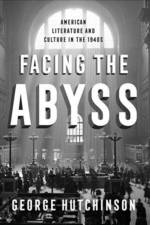
George Hutchinson offers readings of individual works and the larger intellectual and cultural scene to reveal the 1940s as a period of profound and influential accomplishment. Facing the Abyss examines the relation of aesthetics to politics, the idea of universalism, and connections across racial, ethnic, and gender divisions.
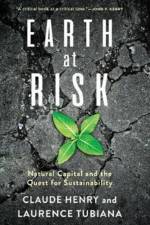
Earth at Risk shows what a world organized along the principles of sustainability could look like, building on the experience of the 2015 Paris Climate Conference. Though formidable obstacles remain, Claude Henry and Laurence Tubiana present the case for collective initiatives and change that build momentum for implementation and action.
Terence Roehrig provides a detailed and comprehensive look at the nuclear umbrella in northeast Asia in the broader context of deterrence theory and U.S. strategy. Roehrig argues that the nuclear umbrella is most important as a political signal demonstrating commitment to the defense of allies and as a tool to prevent further nuclear proliferation.
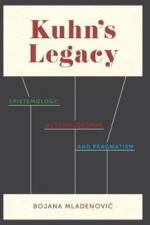
Bojana Mladenovic offers a novel analysis of Thomas Kuhn's central philosophical project. Kuhn's Legacy demonstrates the vitality of Kuhn's philosophical project and its importance for the study of the philosophy and history of science today.
The Casa Italiana has represented Italian culture on Columbia University's campus since 1927. Celebrating the Casa's ninetieth anniversary, From Da Ponte to the Casa Italiana documents and recounts the history of the individuals, both Italian and American, who contributed to the formation of Columbia University's rich tradition of Italian studies.
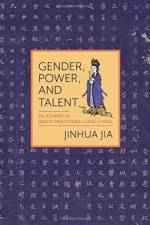
Jinhua Jia draws on a wealth of previously untapped sources to explain how Daoist priestesses marked themselves as a distinct gendered religious and social group. The first comprehensive study of the lives and roles of Daoist priestesses in Tang China, Gender, Power, and Talent restores women to the landscape of Chinese religion and literature.
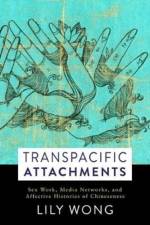
Lily Wong studies the transpacific mobility and mobilization of the sex worker figure, illuminating the intersectional politics of racial, sexual, and class structures. Transpacific Attachments examines shifting depictions of Chinese sex workers in popular media from the early twentieth century to the present.
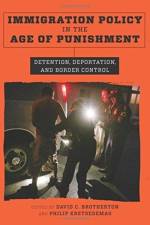
This book takes a critical, interdisciplinary, and transnational look at immigration enforcement. It connects neoliberal governance, global labor markets, and the national obsession with securing borders to recast deportation, detention, and border-control policies in the United States and worldwide in terms of a decades-long "age of punishment."
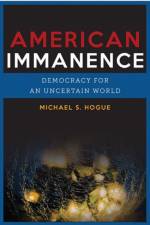
American Immanence seeks to replace the dominant American political tradition, which has resulted in global social, economic, and environmental injustices, with a new form of political theology, its dominant feature a radical democratic politics. Michael S. Hogue explores the potential of a dissenting immanental tradition in American religion.
First published in 1979, Morals and Markets Is a pathbreaking study exploring the development of life insurance in the United States. Viviana A. Rotman Zelizer combines economic history and a sociological perspective to advance a novel interpretation of the life insurance industry.
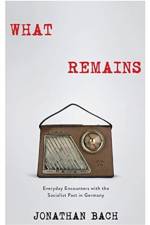
Jonathan Bach examines the afterlife of East Germany following the fall of the Berlin Wall, as things and places from the socialist past continue to circulate and shape the politics of memory. What Remains traces the effects of these artifacts, arguing for a rethinking of the role of the everyday as a site of reckoning with difficult pasts.
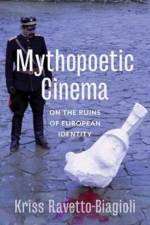
Mythopoetic Cinema explores how contemporary European filmmakers question the constant need to provide new identities, a new Europe, and with it a new European cinema after the fall of the Soviet Union. Kriss Ravetto-Biagioli analyzes how filmmakers question the ability of the moving image to challenge conventional ways of understanding history.
This book probes the production history, initial reception, aesthetics, and legacy of Jim Jarmusch's Stranger Than Paradise in order to understand its place in the cult film canon. It explores early-1980s New York downtown culture and Jarmusch's involvement in music, as well as reflecting on the film's status alongside Jarmusch's subsequent output.
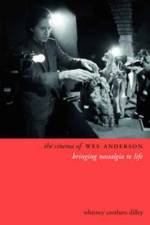
Wes Anderson's films, such as Rushmore (1998) and The Royal Tenenbaums (2001), are made in a style so distinctive that his films are often recognizable from a single frame. This book explores the filmic and literary influences that have helped make Anderson a major voice in twenty-first-century "indie" culture.
Abonner på vårt nyhetsbrev og få rabatter og inspirasjon til din neste leseopplevelse.
Ved å abonnere godtar du vår personvernerklæring.