











Gjør som tusenvis av andre bokelskere
Abonner på vårt nyhetsbrev og få rabatter og inspirasjon til din neste leseopplevelse.
Ved å abonnere godtar du vår personvernerklæring.Du kan når som helst melde deg av våre nyhetsbrev.

Bryan C. Price offers a data-driven examination of leadership decapitation tactics in counterterrorism. Analyzing hundreds of cases of leadership turnover from over two hundred terrorist groups, Price demonstrates that the loss of top leaders significantly reduces terror groups' life spans.
Vincent Bruyere offers an invitation to look at the present we live in through a fresh lens: the difference between storage and burial in the age of sustainability science. He reflects on the nature and significance of perishability in a culture of preparedness and survival.
Michelle Pannor Silver considers how we confront the mismatch between idealized and actual retirement. She follows doctors, CEOs, elite athletes, professors, and homemakers during their transition to retirement as they struggle to recalibrate their sense of purpose and self-worth.
Nan Z. Da offers an in-depth study of nineteenth-century Sino-U.S. literary interactions that highlights their lack of transpacific interpollination. Intransitive Encounter is an unconventional and theoretically rich reflection on global meetings and imaginings that do not fit the patterns proclaimed by postcolonial and literary studies.
This book is a primer for readers of all levels on the coming energy transition and its global consequences. Bruce Usher provides a concise yet comprehensive explanation for the growth in wind and solar energy; the trajectory of the transition from fossil fuels to renewables; and the implications for industries, countries, and the climate.
Belief in wizard-saints who protect their devotees and intervene in the world is widespread among Burmese Buddhists. The Buddha's Wizards is a historically informed, ethnographic study that explores the supernatural landscape of Buddhism in Myanmar to explain the persistence of wizardry as a form of lived religion in the modern era.
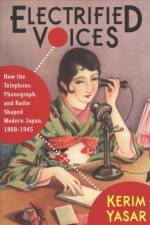
Kerim Yasar traces the origins of the modern soundscape, showing how the revolutionary nature of sound technology and the rise of a new auditory culture played an essential role in the formation of Japanese modernity. Electrified Voices is a far-reaching cultural history of the telegraph, telephone, phonograph, radio, and early sound film in Japan.
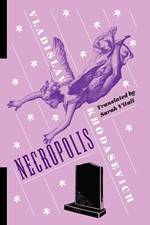
Necropolis is an unconventional literary memoir from Vladislav Khodasevich, hailed by Vladimir Nabokov as "the greatest Russian poet of our time." In each of the book's nine chapters, Khodasevich memorializes a significant figure of Russia's literary Silver Age, and in the process writes an insightful obituary of the era.
C. Heike Schotten offers a critique of U.S. settler-colonial empire that draws on political, queer, and critical indigenous theory to reframe the concept of terrorism. She provides an anatomy of the War on Terror's moralism, arguing for a new interpretation of biopolitics that is focused on sovereignty and desire rather than racism and biology.
How to Read a Japanese Poem offers a comprehensive approach to making sense of traditional Japanese poetry of all genres and periods. Steven D. Carter explains to Anglophone students the methods of composition and literary interpretation used by Japanese poets, scholars, and critics from ancient times to the present.
Benedicte Boisseron investigates the relationship between race and the animal in the history and culture of the Americas and the black Atlantic, exposing a hegemonic system that compulsively links and opposes blackness and animality to measure the value of life.
This second edition of Social Work Practice builds on the first edition's success at synthesizing the latest theories and practice models; helping and change processes; empirical findings; and practice skills, and demonstrates how these interlinked dimensions contribute to the EPAS 215-endorsed model of holistic competence.
Hannah Catherine Davies offers a new lens on nineteenth-century globalization by exploring the ways in which the crises of 1873 challenged notions of economic and moral order. She maps the dual "transatlantic speculations": the financial speculation that led to these panics as well as the interpretative speculations that sprouted in their wake.
Margaret Mih Tillman offers a novel perspective on the political and scientific dimensions of experiments with early childhood education. Raising China's Revolutionaries is an important work of institutional and transnational history that illuminates the evolution of modern concepts of childhood in twentieth-century China.
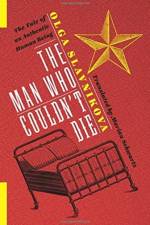
In the chaos of early 199s Russia, a paralyzed veteran's wife and stepdaughter conceal the Soviet Union's collapse from him in order to keep him-and his pension-alive, until it turns out the tough old man has other plans. Olga Slavnikova's The Man Who Couldn't Die is an instant classic of post-Soviet Russian literature.
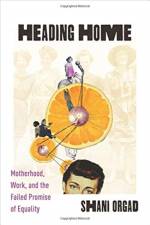
Heading Home reveals the stark gap between the promise of gender equality and women's experience of continued injustice. It draws on in-depth interviews with highly educated London women who left paid employment to take care of their children, juxtaposed with media and policy depictions of women, work, and family.
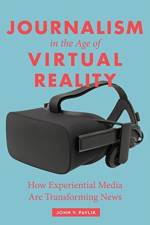
John V. Pavlik argues that a new form of media has emerged: experiential news, which delivers not just news stories but also news experiences, in which the consumer engages as a participant or virtual eyewitness in immersive, multisensory, and interactive narratives.
Nico Baumbach revisits the much-maligned tradition of seventies film theory to reconsider: What does it mean to call cinema political? He explores how cinema can condition philosophy through its own means, challenging received ideas about what is seeable, sayable, and doable.
Sarah Tyson makes a powerful case for how redressing women's exclusion can make philosophy better. She argues that engagements with historical thinkers typically afforded little authority can transform the field.
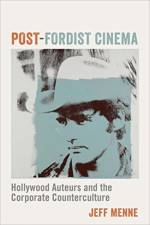
Jeff Menne rewrites the history of the New Hollywood boom of the late 1960s and 1970s, arguing that auteur theory served to reconcile directors to Hollywood's corporate project. Post-Fordist Cinema sheds new light on the cultural myth of the great director and the birth of the "creative economy."
In The Stigma Effect, psychologist Patrick W. Corrigan examines the unintended consequences of mental health campaigns and proposes new policies in their place. He argues that effective strategies require leadership by those with lived experience, as their stories replace ideas of incompetence and dangerousness with ones of hope and empowerment.
The New Stock Market covers a wide range of issues including the practices of high-frequency traders, insider trading, manipulation, short selling, broker-dealer practices, and trading venue fees and rebates. The book illuminates both the existing regulatory structure of our equity trading markets and how we can improve it.
Mely Caballero-Anthony examines how non-traditional security challenges have changed state behavior and security practices in Southeast Asia and the wider East Asia region. She analyzes how non-state actors are engaging with states, regional organizations, and institutional frameworks to address multifaceted problems.
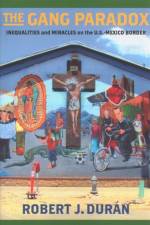
Robert J. Duran analyzes the impact of deportation, incarceration, and racialized perceptions of criminality on Latino families and youth along the U.S.-Mexico border. He finds significantly less gang membership and activity than common fearmongering claims would have us believe.
Economist Neeraj Kaushal investigates the rising anxiety in host countries and tests common complaints against immigration. She finds that immigration, on balance, is beneficial. It is neither the volume nor pace of immigration, but the willingness of nations to accept, absorb, and manage new flows of immigration that is fueling disaffection.
Cheryl Regehr explores the intersection between workplace stress, trauma exposure, and professional decision-making in social workers. She weaves together practice experience, research on the impact of stress and trauma on performance in other high-risk professions, and the empirical study of competence and decision-making in social work practice.
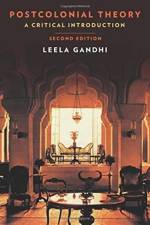
Leela Gandhi's Postcolonial Theory is a landmark description of the field of postcolonial studies in theoretical terms and its intellectual context. The revised edition of this classic work reaffirms its status as a useful starting point for readers new to the field and a provocative account that opens up possibilities for debate.
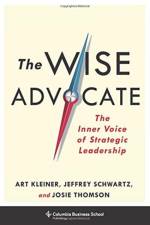
This book gives a transformative explanation of how cutting-edge neuroscience can help business leaders set a course toward better management. Strategic leaders, it shows, play the role of wise advocates: able to go beyond day-to-day transactional behavior to a longer-term, broader perspective that articulates their organization's deeper purpose.
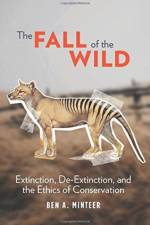
Ben A. Minteer calls for reflection on the ethical dilemmas of species loss and recovery in an increasingly human-driven world. He probes the tension between our impulse to do whatever it takes and the risk of pursuing strategies that undermine our broader commitment to the preservation of wildness.
Benjamin I. Cook brings together climate science, hydrology, and ecology to provide a synthetic overview of drought and its environmental and social consequences. Drought is a critical interdisciplinary text that will be essential reading for a broad range of students in earth science and environmental and sustainability studies.
Abonner på vårt nyhetsbrev og få rabatter og inspirasjon til din neste leseopplevelse.
Ved å abonnere godtar du vår personvernerklæring.