



















Gjør som tusenvis av andre bokelskere
Abonner på vårt nyhetsbrev og få rabatter og inspirasjon til din neste leseopplevelse.
Ved å abonnere godtar du vår personvernerklæring.Du kan når som helst melde deg av våre nyhetsbrev.

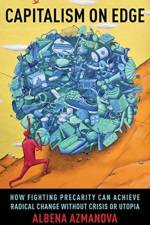
Capitalism on Edge offers a novel diagnosis of the current moment to reveal that the potential for sweeping transformation must come from an unexpected direction. Albena Azmanova demonstrates that capitalism is not on its deathbed, revolution is not in the cards, and utopianism cannot steer us toward a brighter future.
Wendy Brown explains the hard-right turn in Western politics. She argues that neoliberalism's intensification of nihilism coupled with its accidental wounding of white-male supremacy generates an apocalyptic populism willing to destroy the world rather than endure a future in which this supremacy disappears.
Fu Ping is a keenly observed portrait of the lives of lower-class women in Shanghai in the early years of the People's Republic of China. Wang Anyi, one of contemporary China's most acclaimed authors, explores the daily lives of migrants from rural areas and other people on the margins of urban life.
In Gendered Morality, Zahra Ayubi rethinks the tradition of Islamic philosophical ethics from a feminist critical perspective. She calls for a philosophical turn in the study of gender in Islam based on resources for gender equality that are unlocked by feminist engagement with the Islamic ethical tradition.
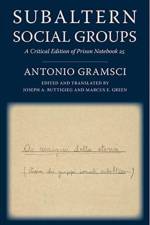
This volume presents the first complete translation of Antonio Gramsci's notes on the concept of subalternity, including the prison notebook devoted to the theme of subaltern social groups. It includes a critical apparatus that clarifies Gramsci's history, culture, and sources and contextualizes these ideas against his earlier writings and letters.
Among contemporary Russian writers, Yuz Aleshkovsky stands out for his vivid imagination, his mixing of realism and fantasy, and his virtuosic use of the rich tradition of Russian obscene language. Nikolai Nikolaevich and Camouflage, two novels written in the 1970s, display Aleshkovsky's linguistic gifts and keen observations of Soviet life.
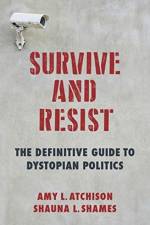
In Survive and Resist, Amy Atchison and Shauna Shames explore the ways in which dystopian narratives help explain how real-world politics work. They draw on classic and contemporary fiction, films, and TV shows-as well as their real-life counterparts-to offer funny and accessible explanations of key political concepts.
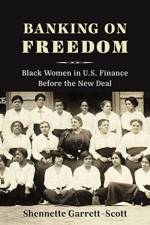
Shennette Garrett-Scott explores black financial innovation and its transformative impact on U.S. capitalism through the story of the St. Luke Bank in Richmond, Virginia: the first and only bank run by black women. Banking on Freedom offers an unparalleled account of how black women carved out economic, social, and political power.
Franz Prichard offers a pathbreaking analysis of the works wrought from Japan's intensive urbanization in the 1960s and 1970s. He maps the ways in which Japanese filmmakers, writers, photographers, and other artists came to grips with the entwined ecologies of a drastic transformation.
Dexter R. Voisin provides a compelling and social justice-oriented analysis of current trends in neighborhood violence in light of the historical and structural factors that have reproduced entrenched patterns of racial and economic inequality. He features the powerful voices and insights of black youth in Chicago and their parents and communities.
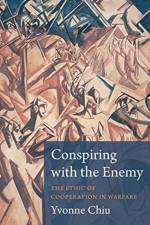
In Conspiring with the Enemy, Yvonne Chiu offers a new understanding of why and how enemies work together to constrain violence in warfare. Chiu argues that what she calls an ethic of cooperation is found in modern warfare to such an extent that it is often taken for granted.
Anna M. Gade explores the religious and cultural foundations of Islamic environmentalisms. She blends textual and ethnographic study to offer a comprehensive and interdisciplinary account of the legal, ethical, social, and political principles underlying Muslim commitments to the earth.
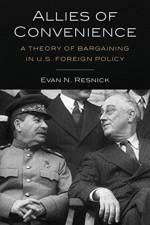
Evan N. Resnick examines the negotiating tables between the United States and its allies of convenience since World War II and sets forth a novel theory of alliance bargaining. Resnick's neoclassical realist theory explains why U.S. leaders negotiate less effectively with unfriendly autocratic states than with friendly liberal ones.
Ariel Rogers rethinks the history of moving images by exploring how experiments with screen technologies in and around the 1930s changed the way films were produced, exhibited, and experienced. She challenges conventional narratives about the novelty of the twenty-first-century multiscreen environment.
Phillip Maciak examines filmic depictions of Jesus to argue that cinema developed as a model technology of secularism, training viewers for belief in a secular age. Cinematic depictions of an appearing and disappearing Christ became a powerful vehicle for Americans to navigate a rapidly modernizing society.
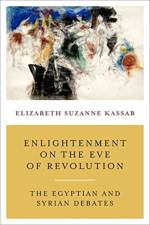
Elizabeth Suzanne Kassab offers a groundbreaking analysis of Egyptian and Syrian debates over enlightenment and their import for the 2011 uprisings. Enlightenment on the Eve of Revolution is the first book to document these debates for the Anglophone audience and to analyze their importance for contemporary intellectual life and politics.
Kerwin Kaye offers an ethnographic account of drug courts and mandatory treatment centers as a system of coercion, demonstrating how the state uses notions of rehabilitation as a means of social regulation. Enforcing Freedom presents a critical perspective on the punitive side of criminal-justice reform and points toward alternative paths forward.
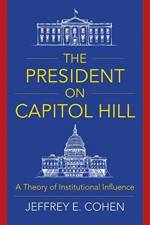
Jeffrey E. Cohen demonstrates that existing research has underestimated the president's power to sway Congress. The President on Capitol Hill offers a compelling perspective on presidential-congressional relations and develops a new theory of presidential influence.
Empowering the Great Energy Transition demonstrates that a transition away from carbon-intensive energy sources is inevitable-if we can overcome the forces supporting incumbent technologies. It provides an expert analysis of the achievable steps that citizens, organizational leaders, and policy makers can take.
Alex Zamalin offers a groundbreaking examination of African American visions of utopia and their counterutopian counterparts. Considering figures linked to racial separatism, postracialism, anticolonialism, Pan-Africanism, and Afrofuturism, he argues that the black utopian tradition continues to challenge American political thought and culture.
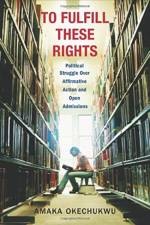
In To Fulfill These Rights, Amaka Okechukwu offers a historically informed sociological account of the struggles over affirmative action and open admissions in higher education. Through case studies of policy retrenchment at public universities, she documents the rollback of inclusive policies in the context of shifting race and class politics.
Klotsvog is a novel about being Jewish in the Soviet Union and the historical trauma of World War II-and it's a novel about the petty dramas and demons of one wonderfully vain woman. Maya Abramovna Klotsvog has had quite a life, and she wants you to know all about it.
Hunter Vaughan offers a new history of the movies from an environmental perspective, arguing that how we make and consume films has serious ecological consequences. He examines the environmental effects of filmmaking from Hollywood classics to the digital era, considering how screen media shapes and reflects our understanding of the natural world.
Sarah Street and Joshua Yumibe provide a revelatory history of how the use of color in film led the way in creating a chromatically vibrant culture. Focusing on the final decade of silent film, Chromatic Modernity portrays the 1920s as a pivotal and profoundly chromatic period of cosmopolitan exchange, collaboration, and experimentation.
Female Fighters explains why some rebel groups deploy women in combat while others exclude women from their ranks, and the strategic implications of this decision. Examining a vast original dataset on female fighters in over 250 organizations, Reed M. Wood argues rebel groups can gain considerable strategic advantages by including women fighters.
In the 1990s, Jurgen Habermas and John Rawls had a famous exchange in the Journal of Philosophy. In this book, James Gordon Finlayson examines the Habermas-Rawls debate in context and considers its wider implications.
Elizabeth A. Herbin-Triant investigates early-twentieth-century campaigns for residential segregation laws in North Carolina to show how the version of white supremacy supported by middle-class white people differed from that supported by elites. Class divides halted Jim Crow from mandating separate neighborhoods for black and white southerners.
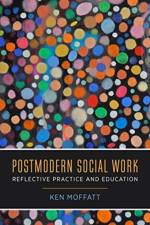
Ken Moffatt turns to postmodern philosophy's grappling with late capitalism and the omnipresence of technology in order to develop a new approach to reflective social work practice and critical pedagogy. He attempts to reconcile postmodern thinkers with the realities of teaching social work to diverse student populations in a precarious era.
In Art of Memories, Vincent Antonin Lepinay documents the Hermitage's curatorial practices in an innovative consideration of the museum as a cultural laboratory. Lepinay analyzes the tensions between the museum as a space of exploration of the collections and as a culture heavily invested in self-protection from the outside world.
Jeffrey Israel offers an innovative argument for the power of playfulness in popular culture to make our capacity for coexistence imaginable. He explores how people from different backgrounds can pursue justice together, even as they play with their divisive grudges, prejudices, and desires in their cultural lives.
Abonner på vårt nyhetsbrev og få rabatter og inspirasjon til din neste leseopplevelse.
Ved å abonnere godtar du vår personvernerklæring.