





Gjør som tusenvis av andre bokelskere
Abonner på vårt nyhetsbrev og få rabatter og inspirasjon til din neste leseopplevelse.
Ved å abonnere godtar du vår personvernerklæring.Du kan når som helst melde deg av våre nyhetsbrev.

Craig Etcheson, one of the world's foremost experts on the Cambodian genocide and its aftermath, draws on decades of experience to trace the evolution of transitional justice in the country from the late 1970s to the present. He considers how war crimes tribunals come into existence, how they operate and unfold, and what happens in their wake.
L. Benjamin Rolsky examines the ways in which American liberalism has helped shape cultural conflict since the 1970s through the story of how television writer and producer Norman Lear galvanized the religious left. He foregrounds the roles played by popular culture, television, and media in America's religious history.
Viral Modernism reveals the literary and cultural impact of one of the deadliest plagues in history, the influenza pandemic of 1918-1919, bringing to light how it shaped canonical works of fiction and poetry. Elizabeth Outka shows how and why the contours of modernism shift when we account for the pandemic's hidden but widespread presence.
In Things with a History, Hector Hoyos argues that the roles of objects in recent Latin American fiction offer a way to integrate materialisms old and new, transforming our understanding of how things shape social and political relations.
Views from the Streets explains the dramatic transformation of black street gangs on Chicago's South Side during the early twenty-first century. Drawing on years of community work and in-depth interviews with gang members, Roberto R. Aspholm sheds new light on why gang violence persists and what might be done to address it.
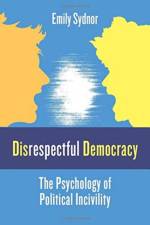
Disrespectful Democracy offers a new account of the relationship between incivility and political behavior based on a key individual predisposition-conflict orientation. Drawing on a range of original surveys and experiments, Emily Sydnor contends that the rise of incivility in political media has transformed political involvement.
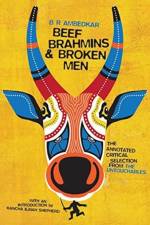
B. R. Ambedkar spent his life battling Untouchability and instigating the end of the caste system. In his 1948 book The Untouchables, he sought to trace the origin of Untouchability. Beef, Brahmins, and Broken Men is an annotated selection from this work, produced in a time when the oppression of and discrimination against Dalits remains pervasive.
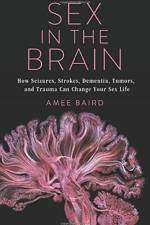
Amee Baird explores memorable cases of brain injuries and disease that have effected significant changes in sexual behavior and reveals what these exceptional stories have to say about human sexuality. Each chapter includes striking personal accounts, many from individuals Baird has met in her clinical practice, of unexpected changes in sexuality.
Paek Nam-nyong's Friend is a tale of marital intrigue, abuse, and divorce in North Korea. This groundbreaking translation of one of North Korea's most popular writers offers English-language readers a page-turner full of psychological tension as well as a revealing portrait of a society that is typically seen as closed to the outside world.
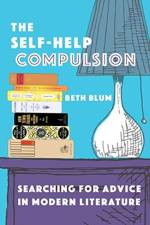
The Self-Help Compulsion reveals the profound entanglement of modern literature and commercial advice from the late nineteenth century to the present day. Beth Blum explores popular reading practices in which people turn to literature in search of practical advice alongside modern writers' rebukes of such instrumental purposes.
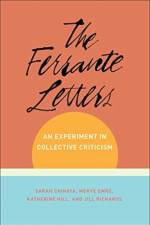
In The Ferrante Letters, four critics create a series of epistolary readings of the Neapolitan Quartet that also develops new ways of reading and thinking together. In a series of intertwined, original, and daring readings of Elena Ferrante's work and her fictional world, they strike a tone that falls between the seminar and the book club.
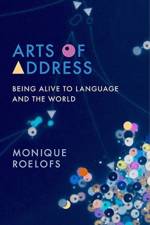
Monique Roelofs offers a pathbreaking systematic model of the field of address and puts it to work in the arts, critical theory, and social life. Drawing on a wide array of theoretical and artistic sources and challenging disciplinary boundaries, she illuminates its significance to cultural existence and to our reflexive aesthetic engagement in it.
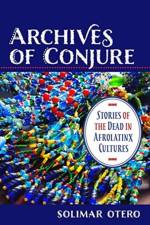
Solimar Otero explores how Afrolatinx spirits guide collaborative spiritual-scholarly activist work through rituals and the creation of material culture. By examining spirit mediumship through a Caribbean cross-cultural poetics, she shows how divinities and ancestors serve as active agents in shaping the experiences of gender, sexuality, and race.
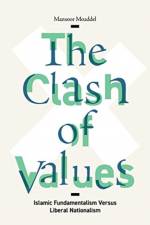
Mansoor Moaddel provides groundbreaking empirical data to demonstrate how the collision between Islamic fundamentalism and liberal nationalism explains the Middle East and North Africa's present and will determine its future. Offering a rigorous perspective on social change, The Clash of Values disentangles the region's political complexity.
This book is a primer on the essential science for grasping the workings of climate change and climate prediction. It is accessible for readers with little to no background in science, with an emphasis on the needs of those studying sustainable development.
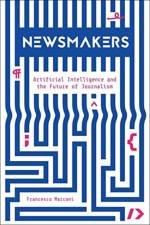
Will the use of artificial intelligence, algorithms, and smart machines be the end of journalism as we know it-or its savior? Francesco Marconi, who has led the development of the Associated Press and Wall Street Journal's use of AI in journalism, offers a new perspective on the potential of these technologies.
This volume presents two memoirs by famous men of letters, Reminiscences of the Plum Shadows Convent by Mao Xiang (1611-93) and Miscellaneous Records of Plank Bridge by Yu Huai (1616-96), that recall times spent with courtesans. They evoke the courtesan world in the final decades of the Ming dynasty and the aftermath of its collapse.
Perpetrator Cinema explores a new trend in the cinematic depiction of genocide that has emerged in Cambodian documentary in the late twentieth- and early twenty-first centuries. Raya Morag analyzes how Post-Khmer Rouge Cambodian documentarians propose a direct confrontation between the first-generation survivor and the perpetrator of genocide.
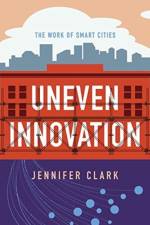
Jennifer Clark reframes the smart city concept within the trajectory of uneven development of cities and regions, as well as the long history of technocratic solutions to urban policy challenges. She considers the potential of emerging technologies as well as their capacity to exacerbate existing inequalities and even produce new ones.
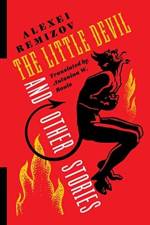
Alexei Remizov was one of the greatest writers of the Russian Symbolist movement. In the thirteen stories collected in this volume, his exceptional stylistic achievements are on full display. The Little Devil and Other Stories includes works from across Remizov's career encompassing his thematic preoccupations and stylistic experimentation.
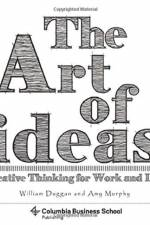
The Art of Ideas brings together business concepts with stories of creativity in art, politics, and history to provide a visual and accessible guide to the art and science of new and useful ideas. Accompanied by charming and inviting illustrations, William Duggan and Amy Murphy help unlock the secret to creativity in business and in life.
The sociologist Terry Williams returns to the cocaine culture of Harlem in the 1980s and '90s with an ethnographic account of a club he calls Le Boogie Woogie. He explores the life of a cast of characters that includes regulars and bar workers, dealers and hustlers, following social interaction around the club's active bar.
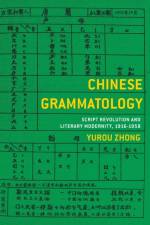
For nearly half of the twentieth century, reformers waged war on the Chinese script. In Chinese Grammatology, Yurou Zhong traces the origins, transmutations, and containment of this script revolution to provide a groundbreaking account of its formative effects on Chinese literature and culture and lasting implications.
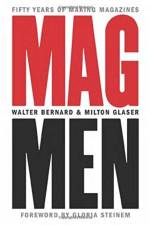
For more than fifty years, Walter Bernard and Milton Glaser have revolutionized the look of magazine journalism. In Mag Men, Bernard and Glaser recount their storied careers, offering insiders' perspective on some of the most iconic design work of the twentieth century.
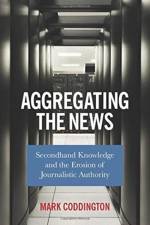
Mark Coddington gives a vivid account of the work of aggregation-how such content is produced, what its values are, and how it fits into today's changing journalistic profession. Aggregating the News explores how aggregators weigh sources, reshape news narratives, and manage life on the fringes of journalism.
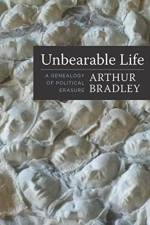
Arthur Bradley explores the power to render life unlived from ancient Rome through the War on Terror. He argues that sovereignty is the power to decide what counts as being alive and what does not: to make life "unbearable," unrecognized as having lived or died.
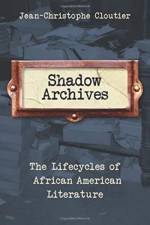
Shadow Archives brings to life a slew of newly discovered texts to tell the stories of black special collections and their struggle for institutional recognition. Jean-Christophe Cloutier offers revelatory readings of major African American writers and provides a nuanced view of how archives shape literary history.
Partha Chatterjee reconsiders the concept of popular sovereignty in order to explain today's dramatic outburst of movements claiming to speak for "the people." To uncover the roots of populism, Chatterjee traces the twentieth-century trajectory of the welfare state and neoliberal reforms.
Risk, Choice, and Uncertainty offers a new narrative of the three-century history of the study of decision making, tracing how crucial ideas have evolved and telling the stories of the thinkers who shaped the field. George G. Szpiro examines economics from theories of optimal decision making to behavioral science.
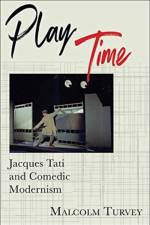
Malcolm Turvey examines Jacques Tati's unique comedic style and evaluates its significance for the history of film and modernism. Richly illustrated with images from the director's films, Play Time offers an illuminating and original understanding of Tati's work.
Abonner på vårt nyhetsbrev og få rabatter og inspirasjon til din neste leseopplevelse.
Ved å abonnere godtar du vår personvernerklæring.