




Gjør som tusenvis av andre bokelskere
Abonner på vårt nyhetsbrev og få rabatter og inspirasjon til din neste leseopplevelse.
Ved å abonnere godtar du vår personvernerklæring.Du kan når som helst melde deg av våre nyhetsbrev.

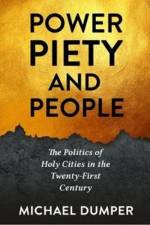
Michael Dumper explores the causes and consequences of contemporary conflicts in holy cities. He offers five case studies of important disputes, beginning with Jerusalem, often seen as the paradigmatic example of a holy city in conflict, and discussing Cordoba, Banaras, Lhasa, and George Town in Malaysia.
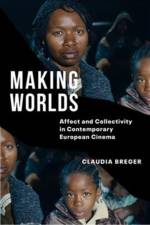
Claudia Breger argues that contemporary European cinema provides ways of thinking about and feeling collectivity that can challenge the twenty-first century's political trends. Through a new model of cinematic worldmaking, Making Worlds examines how films produce unexpected and destabilizing affects that invite viewers to imagine new connections.
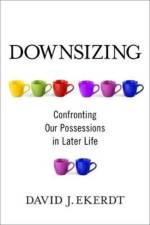
Drawing on in-depth interviews with recent movers in over a hundred diverse U.S. households, David Ekerdt analyzes the downsizing process and what it says about the meaning and management of possessions. He details how households approach and accomplish downsizing, exploring the decision-making process and the effectiveness of different strategies.
Focusing on Baltimore's wealthiest, whitest neighborhoods, Paige Glotzer offers a new understanding of the deeper roots of suburban segregation. She argues that the mid-twentieth-century policies that favored exclusionary housing were the culmination of a long-term effort by developers to use racism to structure suburban real estate markets.
In the late nineteenth and early twentieth centuries, radical women's movements and the avant-gardes were often in contact with one another. Jill Richards argues that these movements were deeply interconnected. Rather than focus on the demand for the vote, The Fury Archives turns to the daily practices and social worlds of feminist action.
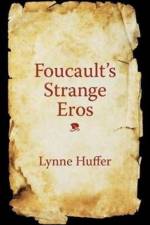
In this deeply original consideration of Foucault's erotic ethics, Lynne Huffer provocatively rewrites Foucault as a Sapphic poet. She uncovers eros as a mode of thought that erodes the interiority of the thinking subject.
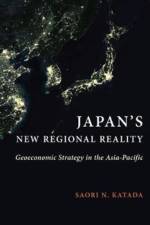
Japan's New Regional Reality offers a comprehensive analysis of Japan's geoeconomic strategy that reveals the country's role in shaping regional economic order in the Asia-Pacific. Saori N. Katada explains Japanese foreign economic policy in light of both international and domestic dynamics.
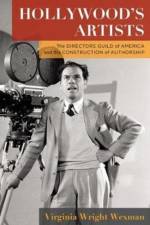
Virginia Wright Wexman offers a groundbreaking history of how movie directors became cinematic auteurs that reveals and pinpoints the influence of the Directors Guild of America. Hollywood's Artists sheds new light on the ways in which the DGA has shaped the role and image of directors both within the Hollywood system and in the culture at large.
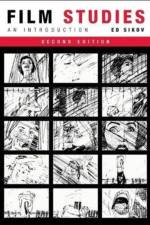
Film Studies is a concise and indispensable introduction to the formal study of cinema. The second edition to this best-selling textbook adds two new chapters: "Film and Ideology" and "Film Studies in the Age of Digital Cinema."
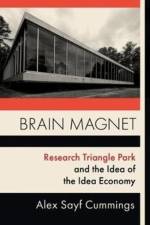
Alex Sayf Cummings reveals the significance of North Carolina's Research Triangle Park to the emergence of the high-tech economy in a postindustrial United States. Brain Magnet pinpoints how it sheds new light on the origins of today's urban landscape, in which innovation is lauded as the engine of economic growth against a backdrop of inequality.
This book is about how, when, and why our dead visit us. Allan Kellehear-a medical sociologist and expert on death, dying, and palliative care-has gathered data and conducted studies on deathbed visions across cultures.
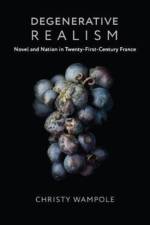
Examining key novels by Michel Houellebecq, Frederic Beigbeder, Aurelien Bellanger, Yann Moix, and other French writers, Christy Wampole identifies and critiques an emergent tendency toward "degenerative realism."
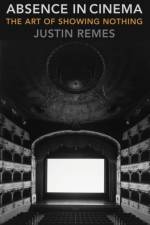
Justin Remes demonstrates how omissions of expected elements can spur viewers to interpret and understand the nature of film in new ways. Through a careful analysis of a broad array of avant-garde works, Absence in Cinema reveals that films must be understood not only in terms of what they show but also what they withhold.
Hugo Marcus (1880-1966) was a man of many names and many identities. In German, Jew, Muslim, Gay, Marc David Baer uses Marcus's life and work to shed new light on a striking range of subjects, including German Jewish history and anti-Semitism, Islam in Europe, Muslim-Jewish relations, and the history of the gay rights struggle.
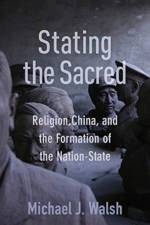
Stating the Sacred offers a novel approach to nation-state formation, arguing that its most critical element is how the state sacralizes the nation. Focusing primarily on China, Michael J. Walsh argues that the foundational role of the sacred makes all nation-states religious states.
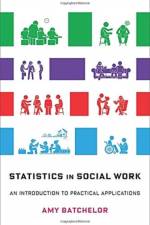
This concise and approachable introduction to statistics limits its coverage to the concepts most relevant to social workers. Besides presenting key concepts, it focuses on real-world examples that students will encounter in a social work practice.
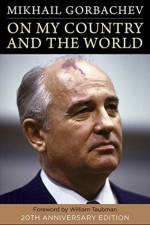
Drawing on his own experience, rich archival material, and a keen sense of history and politics, Mikhail Gorbachev speaks his mind on a range of subjects concerning Russia's past, present, and future place in the world. Here is Gorbachev on the October Revolution, the Cold War, and key figures such as Lenin, Stalin, and Yeltsin.
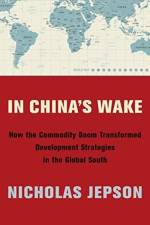
Nicholas Jepson shows how Chinese demand not only transformed commodity markets but also provided resource-rich states with the financial leeway to set their own policy agendas. He combines analysis of China-led structural change with fine-grained detail on how the boom played out across fifteen different resource-rich countries.
In The Brain in Context, bioethicist Jonathan D. Moreno and neuroscientist Jay Schulkin provide an accessible account of the evolution of neuroscience and the neuroscience of evolution. They describe today's transformative devices, theories, and methods, and they show how theorizing about the brain and experimenting with it often go hand in hand.
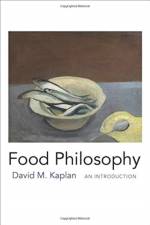
This book is an introduction to the philosophical dimensions of food. David M. Kaplan shows how the different branches of philosophy contribute to a broader understanding of food and emphasizes how different narratives help us navigate the complex world of food.
In this book, two national-security experts put the exploits of America's special operation forces in historical and strategic context. This second edition of United States Special Operations Forces, revised throughout to account for lessons learned in the twelve years since its first publication, includes two new case studies.
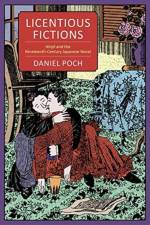
Nineteenth-century Japanese literary discourse and narrative developed a striking preoccupation with ninjo-literally "human emotion," but often used in reference to amorous feeling and erotic desire. In Licentious Fictions, Daniel Poch investigates the significance of ninjo in defining the literary modernity of nineteenth-century Japan.
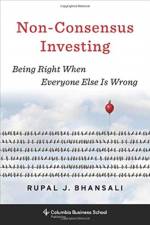
At a time when many proclaim the death of active investing, Rupal J. Bhansali makes a call for its renaissance. Non-Consensus Investing is a must-read for anyone who seeks to understand why active investing disappointed and how it can succeed.
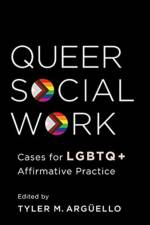
This collection of case studies offers real-life scenarios from a range of social work scholars, educators, and practitioners, representing diverse sexualities, genders, and intersectional identities. Together, they demonstrate contemporary, multilevel, queer-affirming social work practice with LGBTQ+ people and communities.
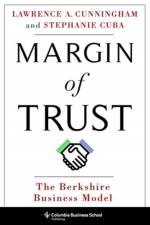
Margin of Trust is the first book to distill Warren Buffett's approach to management and corporate life. It provides a definitive analysis of the tenets of the Berkshire Hathaway, system, its costs and benefits, and how it can be adapted for other organizations.
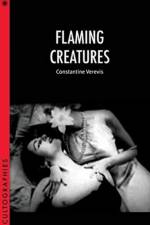
Banned soon after its first midnight screenings, Jack Smith's incendiary Flaming Creatures (1963) quickly became a cause celebre of the New York underground. This study of Smith's magnum opus explores its status as a cult film that appropriates the visual texture, erotic nuance, and overt fabrication of old Hollywood exoticism.
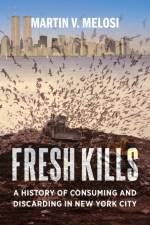
Fresh Kills-a monumental 2,200-acre structure on Staten Island-was once the world's largest landfill. Martin V. Melosi provides a comprehensive chronicle of Fresh Kills that offers new insights into the growth and development of New York City and the relationship among consumption, waste, and disposal.
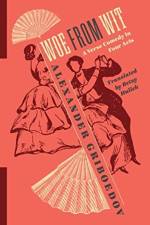
Alexander Griboedov's Woe from Wit is one of the masterpieces of Russian drama. A verse comedy set in Moscow high society after the Napoleonic wars, it offers sharply drawn characters and clever repartee, mixing meticulously crafted banter and biting social critique.
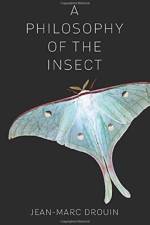
The philosopher and historian of science Jean-Marc Drouin contends that insects pose a fundamental challenge to philosophy. Exploring the questions of what insects are and what scientific, aesthetic, ethical, and historical relationships they have with humanity, he argues that they force us to reconsider our ideas of the animal and the social.
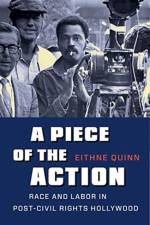
Eithne Quinn reveals how Hollywood catalyzed racial politics in the decade after the passage of the Civil Rights Act, through representation on screen as well as in battles over jobs and resources behind the scenes. Based on extensive archival research and detailed discussions of films, this book examines the limits of Hollywood liberalism.
Abonner på vårt nyhetsbrev og få rabatter og inspirasjon til din neste leseopplevelse.
Ved å abonnere godtar du vår personvernerklæring.