
Gjør som tusenvis av andre bokelskere
Abonner på vårt nyhetsbrev og få rabatter og inspirasjon til din neste leseopplevelse.
Ved å abonnere godtar du vår personvernerklæring.Du kan når som helst melde deg av våre nyhetsbrev.

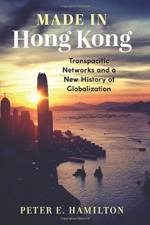
Between 1949 and 1997, Hong Kong transformed from a struggling British colonial outpost into a global financial capital. Made in Hong Kong delivers a new narrative of this metamorphosis, revealing Hong Kong both as a critical engine in the expansion and remaking of postwar global capitalism and as the linchpin of Sino-U.S. trade since the 1970s.
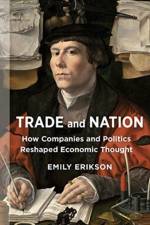
In the seventeenth century, English economic theorists lost interest in the moral status of exchange and became increasingly concerned with the roots of national prosperity. Emily Erikson brings together historical, comparative, and computational methods to explain the institutional forces that brought about this transformation.
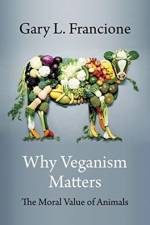
Why Veganism Matters presents the case for the personhood of nonhuman animals and for veganism in a clear and accessible way that does not require any philosophical or legal background. This book offers a persuasive and powerful argument for all readers who care about animals but are not sure whether they have a moral obligation to be vegan.
In Second Time Around, D. A. Miller seizes the opportunity of DVDs and streaming media; across thirteen essays, he watches digitally restored films by directors from Mizoguchi to Pasolini and from Hitchcock to Honda, looking to find not only what he first saw in them but also what he was then kept from seeing.
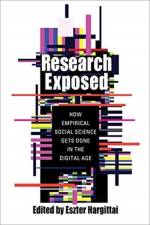
Research Exposed offers in-depth, behind-the-scenes accounts of doing empirical social science in the era of digital communication. Through firsthand descriptions of innovative research projects, it shares lessons learned from over a dozen scholars' cutting-edge work.
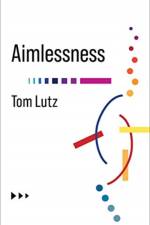
Aimlessness collects ideas and stories from around the world that value indirection, wandering, getting lost, waiting, meandering, lingering, sitting, laying about, daydreaming, and other ways to be open to possibility, chaos, and multiplicity.
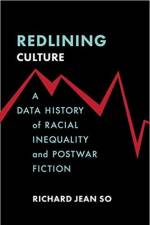
Richard Jean So draws on big data, computational methods, literary history, and close readings to offer an unprecedented analysis of racial inequality in American publishing that reveals the persistence of an extreme bias toward white authors.
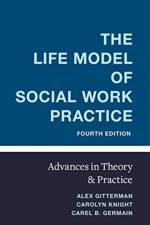
The Life Model of Social Work Practice was the first textbook to introduce the ecological perspective into social work practice. This fourth edition brings it up to date by expanding and deepening this perspective, integrating contemporary theory and research findings with numerous case illustrations drawn from a wide range of practice contexts.
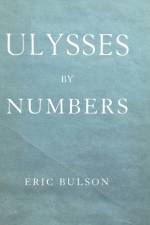
Ulysses has been read obsessively for a century. What if instead of focusing on the words to understand the structure, design, and history of Joyce's masterpiece, we pay attention to the numbers? Taking a computational approach, Ulysses by Numbers lets us see the novel's basic building blocks in a significantly new light.
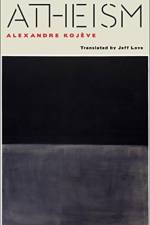
Atheism is an erudite and open-ended exploration of profound questions of estrangement, death, suicide, and the infinite that demonstrates the range and the provocative power of Alexandre Kojeve's thought.
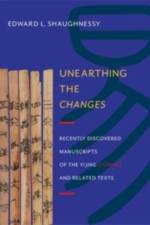
Three archeological discoveries that reorient scholarship on early chinese civilization.
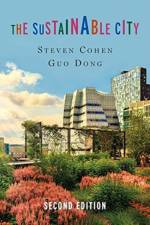
Steven Cohen presents an approachable and applicable guide to urban sustainability that highlights how new, greener trends in city development touch our lives on a daily basis. Replete with recommendations and insights, The Sustainable City has invaluable lessons for anyone seeking to link public policy to promoting a sustainable lifestyle.
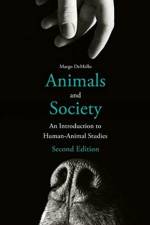
Considering that much of human society is structured through its interaction with non-human animals, and since human society relies heavily on the exploitation of animals to serve human needs, human-animal studies has become a rapidly expanding field of research, featuring a number of distinct positions, perspectives, and theories that require nuanced explanation and contextualization.The first book to provide a full overview of human-animal studies, this volume focuses on the conceptual construction of animals in American culture and the way in which it reinforces and perpetuates hierarchical human relationships rooted in racism, sexism, and class privilege. Margo DeMello considers interactions between humans and animals within the family, the law, the religious and political system, and other major social institutions, and she unpacks the different identities humans fashion for themselves and for others through animals. Essays also cover speciesism and evolutionary continuities; the role and preservation of animals in the wild; the debate over zoos and the use of animals in sports; domestication; agricultural practices such as factory farming; vivisection; animal cruelty; animal activism; the representation of animals in literature and film; and animal ethics. Sidebars highlight contemporary controversies and issues, with recommendations for additional reading, educational films, and related websites. DeMello concludes with an analysis of major philosophical positions on human social policy and the future of human-animal relations.
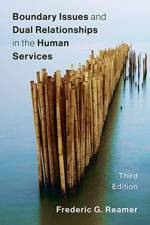
Should a therapist disclose personal information to a client, accept a client's gift, or provide a former client with a job? Is it appropriate to exchange email or text messages with clients or correspond with them on social networking websites? Some acts, such as initiating a sexual relationship with a client, are clearly prohibited, yet what about more subtle interactions, such as hugging or accepting invitations to a social event? Is maintaining a friendship with a former client or client's relative a conflict of interest that ultimately subverts the client-practitioner relationship? Frederic G. Reamer, a certified authority on professional ethics, offers a frank analysis of a range of boundary issues and their complex formulations. He confronts the ethics of intimate and sexual relationships with clients and former clients, the healthy parameters of practitioners' self-disclosure, electronic relationships with clients, the giving and receiving of gifts and favors, the bartering of services, and the unavoidable and unanticipated circumstances of social encounters and geographical proximity. With case studies addressing challenges in the mental health field, school contexts, child welfare, addiction programs, home-healthcare, elder services, and prison, rural, and military settings, Reamer offers effective, practical risk-management models that prevent problems and help balance dual relationships.
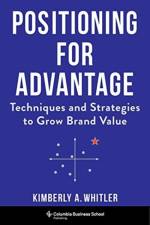
Positioning for Advantage is a comprehensive how-to guide for creating, building, and executing effective brand strategies. Kimberly A. Whitler identifies essential marketing strategy techniques and moves through the major stages of positioning a brand to achieve in-market advantage.
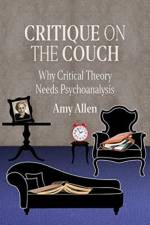
Does critical theory still need psychoanalysis? Amy Allen offers a cogent and convincing defense of its ongoing relevance. She draws on Freud, Klein, and Lacan to develop a more realistic strand of psychoanalytic thinking that centers on notions of loss, negativity, ambivalence, and mourning.
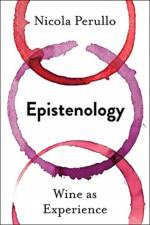
In Epistenology, Nicola Perullo argues that wine comes to life not in the abstract space of the professional tasting but in the real world of shared experiences. Interweaving philosophical arguments with personal reflections and literary examples, this book is a journey with wine that shows how it makes life more creative and free.
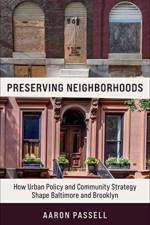
Historic preservation is typically regarded as an elitist practice. Through rich case studies of Baltimore and Brooklyn, Aaron Passell complicates this story, exploring how community activists and local governments use historic preservation to accelerate or slow down neighborhood change.
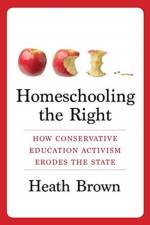
Heath Brown provides a novel analysis of the homeschooling movement and its central role in conservative efforts to shrink the public sector. He traces the aftereffects of the passage of state homeschool policies in the 1980s and the results of ongoing conservative education activism on the broader political landscape.
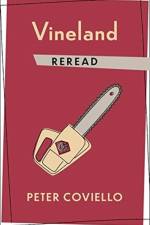
Vineland is hardly anyone's favorite Thomas Pynchon novel. However, for Peter Coviello, the oft-overlooked book opens up new ways of thinking about Pynchon's writing and about how we read and how we live in the rough currents of history.
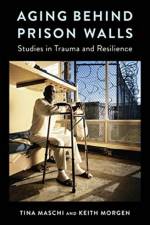
Tina Maschi and Keith Morgen offer a data-driven and compassionate analysis of the lives of incarcerated older people. The book draws on extensive quantitative and qualitative research as well as national datasets.
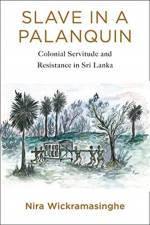
Nira Wickramasinghe uncovers the traces of slavery in the history and memory of the Indian Ocean world, exploring moments of revolt in the lives of enslaved people in Sri Lanka in the wake of abolition. Slave in a Palanquin offers a vital new portrait of the local and transnational worlds of the colonial-era Asian slave trade in the Indian Ocean.
Written collectively by a team of leading qualitative and quantitative sociologists of culture, Measuring Culture provides both the definitive introduction to the sociological literature on culture as well as a critical set of case studies for methods courses across the social sciences.
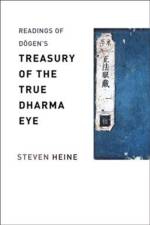
The Treasury of the True Dharma Eye (Shobogenzo) is the masterwork of Dogen (1200-1253), founder of the Soto Zen Buddhist sect in Kamakura-era Japan. Steven Heine provides a comprehensive introduction to this essential Zen text, offering a textual, historical, literary, and philosophical examination of Dogen's treatise.
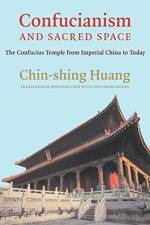
This book brings together studies from Chin-shing Huang's decades-long research into Confucius temples that individually and collectively consider Confucianism as religion. It offers keen insights into Confucius temples and their significance in the intertwined intellectual, political, social, and religious histories of imperial China.
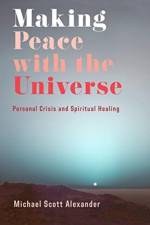
In Making Peace with the Universe, Michael Scott Alexander reads diverse classic religious accounts as masterpieces of therapeutic insight. He recasts spiritual confessions as case histories of therapy, showing how they remain radical and deeply meaningful even in an age of scientific psychology.
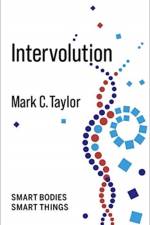
Mark C. Taylor explores how technological change is weaving together smart things and smart bodies to create new forms of life. He reveals that we are already cyborgs, integral cogs in what will become a superorganism of bodies and things.
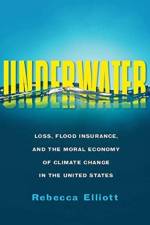
Rebecca Elliott explores how families, communities, and governments confront problems of loss as the climate changes. She offers the first in-depth account of the politics and social effects of the U.S. National Flood Insurance Program, in an incisive consideration of the dilemmas of moral economy underlying insurance.
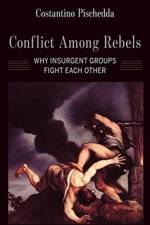
Why do rebel groups frequently clash instead of cooperating against their shared enemy, the state? Examining the dynamics of civil wars in Iraq, Ethiopia, Lebanon, Sri Lanka, and Syria, Costantino Pischedda argues that infighting is a calculated response by rebel groups to perceived opportunities and vulnerabilities.
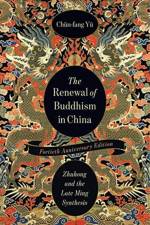
First published in 1981, Chun-fang Yu's The Renewal of Buddhism in China challenged the conventional view that Buddhism had reached its height under the Tang dynasty (618-907) and steadily declined afterward. This fortieth anniversary edition features an updated introduction by the author speaking to the ongoing relevance of this classic work.
Abonner på vårt nyhetsbrev og få rabatter og inspirasjon til din neste leseopplevelse.
Ved å abonnere godtar du vår personvernerklæring.