
Gjør som tusenvis av andre bokelskere
Abonner på vårt nyhetsbrev og få rabatter og inspirasjon til din neste leseopplevelse.
Ved å abonnere godtar du vår personvernerklæring.Du kan når som helst melde deg av våre nyhetsbrev.

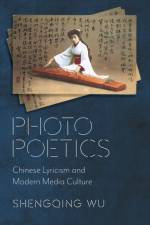
Shengqing Wu explores how the new medium of photography was transformed by Chinese aesthetic culture. She details the complex negotiations between poetry and photography in the late Qing and early Republican eras, examining the ways traditional textual forms collaborated with the new visual culture.
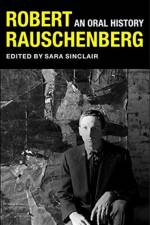
Robert Rauschenberg is a work of collaborative oral biography that tells the story of one of the twentieth century's great artists through a series of interviews with key figures in his life-family, friends, former lovers, professional associates, studio assistants, and collaborators.
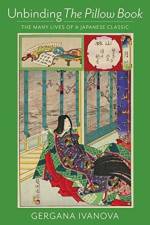
Gergana Ivanova explores how The Pillow Book and its author have been read from the seventeenth century to the present. She shows how various ideologies have influenced the text and shaped interactions among its different versions, in the first book-length study in English of the reception history of Sei Shonagon.
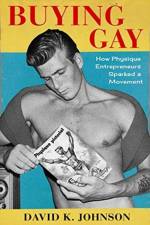
David K. Johnson tells the story of the physique magazine produced by and for gay men to show how gay commerce was not a byproduct of the gay-rights movement but an important catalyst for it. He offers a vivid look into the lives of physique entrepreneurs and their customers, presenting a wealth of illustrations.
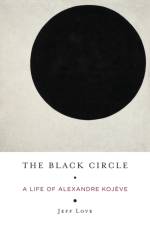
Jeff Love reinterprets Alexandre Kojeve's works, showing him to be a provocative thinker who challenged modernity's valuation of self-interest. Joining intellectual history, close textual analysis, and philosophy, The Black Circle reveals Kojeve's thought as a profound critique of capitalist individualism and a timely meditation on human freedom.
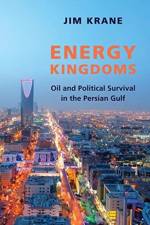
Jim Krane takes readers inside the monarchies to consider the conundrum facing the Gulf states. He traces the history of their energy use and policies, looking in particular at how energy subsidies have distorted demand.
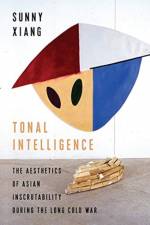
Sunny Xiang offers a new way of understanding the American cold war in Asia by tracing aesthetic manifestations of "Oriental inscrutability" across a wide range of texts. She puts interrogation reports, policy memos, and field notes into conversation with novels, poems, documentaries, and mixed media work.
Nicknamed the International Express, the New York City Transit Authority 7 subway line runs through a highly diverse series of ethnic and immigrant neighborhoods in Queens. People from Andean South America, Central America, China, India, Italy, Korea, Mexico, Pakistan, Poland, Romania, and Vietnam, as well as residents of a number of gentrifying blue-collar and industrial neighborhoods, fill the busy streets around the stations. The 7 train is a microcosm of a specifically urban, New York experience, in which individuals from a variety of cultures and social classes are forced to interact and get along with one another. For newcomers to the city, mastery of life in the subway space is a step toward assimilation into their new home.In International Express, the French ethnographer Stephane Tonnelat and his collaborator William Kornblum, a native New Yorker, ride the 7 subway line to better understand the intricacies of this phenomenon. They also ask a group of students with immigrant backgrounds to keep diaries of their daily rides on the 7 train. What develops over time, they find, is a set of shared subway competences leading to a practical cosmopolitanism among riders, including immigrants and their children, that changes their personal values and attitudes toward others in small, subtle ways. This growing civility helps newcomers feel at home in an alien city and builds what the authors call a "e;situational community in transit."e; Yet riding the subway can be problematic, especially for women and teenagers. Tonnelat and Kornblum pay particular attention to gender and age relations on the 7 train. Their portrait of integrated mass transit, including a discussion of the relationship between urban density and diversity, is invaluable for social scientists and urban planners eager to enhance the cooperative experience of city living for immigrants and ease the process of cultural transition.
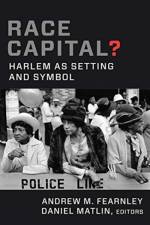
Leading scholars consider crucial aspects of Harlem's social, political, and intellectual history, its artistic, cultural, and economic life, and its representation across an array of media and genres. Race Capital? models new Harlem scholarship that interrogates exceptionalism while taking seriously the importance of place and locality.
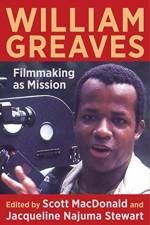
William Greaves is one of the most significant and compelling American filmmakers of the past century. This volume provides the first comprehensive overview of Greaves's remarkable career.
At Home and Abroad bridges the divide in the study of American religion, law, and politics between domestic and international, bringing together diverse authors to explore ties across conceptual and political boundaries. They examine the ideas, people, and institutions that provide links between domestic and foreign religious politics and policies.
Bringing together essays by prominent critics, Information: Keywords highlights the humanistic nature of information practices and concepts by thinking through key terms. It describes and anticipates directions for how the humanities can contribute to our understanding of information from a range of theoretical, historical, and global perspectives.
N. Katherine Hayles traces the emergence of what she identifies as the postprint condition, exploring how the interweaving of print and digital technologies has changed not only books but also language, authorship, and what it means to be human.
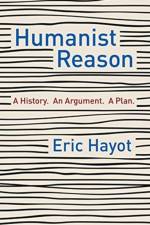
Eric Hayot argues that it is time to make a positive case for what the humanities are and what they can become. Humanist Reason lays out a new vision that moves beyond traditional disciplines to demonstrate what the humanities can tell us about our world.
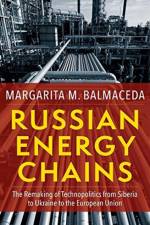
Margarita M. Balmaceda follows Russia's three largest fossil-fuel exports-natural gas, oil, and coal-from production in Siberia through transportation via Ukraine to final use in Germany in order to understand the tension between energy as threat and as opportunity.
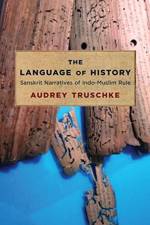
For over five hundred years, Muslim dynasties ruled parts of northern and central India. Scholars have long drawn upon works written in Persian and Arabic about this epoch, yet they have neglected the many histories that India's learned elite wrote about Indo-Muslim rule in Sanskrit. Audrey Truschke offers a groundbreaking analysis of these texts.
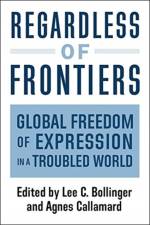
This volume brings together leading experts from a variety of fields to critically evaluate the extent to which global norms on freedom of expression and information have been established and which actors and institutions have contributed to their diffusion.
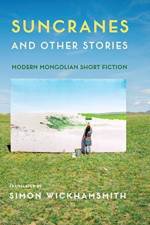
Suncranes and Other Stories showcases a range of powerful voices from Mongolia's modern literary traditions. Spanning the years following the socialist revolution of 1921 through the early twenty-first century, these stories offer vivid portraits of nomads, revolution, and the endless steppe.
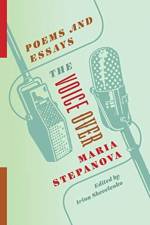
Maria Stepanova is one of the most powerful and distinctive voices of Russia's first post-Soviet literary generation. The Voice Over brings together two decades of Stepanova's work, showcasing her range, virtuosity, and creative evolution.
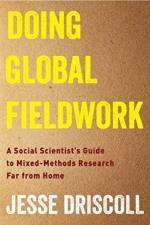
Jesse Driscoll offers a how-to guide for social scientists who are considering extended mixed-methods international fieldwork. Doing Global Fieldwork is an up-to-date handbook for graduate students and social science researchers of all stripes who need blunt, no-nonsense advice about how to make the best of their time in the field.
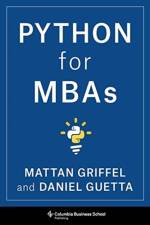
This book is an introduction to programming with Python for MBA students and others in business positions who need a crash course. Beginning with fundamentals such as variables, strings, lists, and functions, it builds up to data analytics and practical ways to derive value from large and complex datasets.
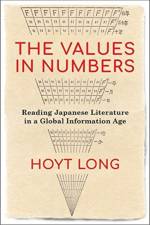
Hoyt Long offers both a reinterpretation of modern Japanese literature through computational methods and an introduction to the history, theory, and practice of looking at literature through numbers. He weaves explanations of these methods and their application together with reflection on the kinds of reasoning such methodologies facilitate.
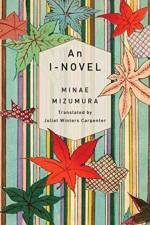
Minae Mizumura's An I-Novel is a semi-autobiographical work that takes place over the course of a single day in the 1980s. This formally daring novel radically broke with Japanese literary tradition and offers a luminous meditation on how a person becomes a writer.
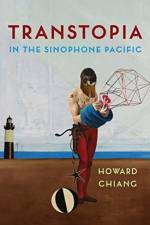
Howard Chiang proposes a new paradigm for doing transgender history in which geopolitics assumes central importance. Defined as the antidote to transphobia, transtopia challenges a minoritarian view of transgender experience and makes room for the variability of transness on a historical continuum.
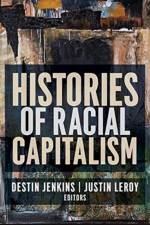
This book brings together for the first time distinguished and rising scholars to consider the utility of the concept of racial capitalism across historical settings. By theorizing and testing racial capitalism in different circumstances, this book shows its analytical and political power for today's scholars and activists.
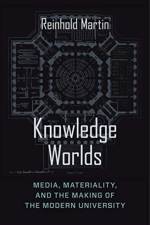
Knowledge Worlds reconceives the university as a media complex through which knowledge is made, conveyed, and withheld. Reinhold Martin argues that the material infrastructures of the modern university reveal the ways in which knowledge is created and reproduced in different kinds of institutions.
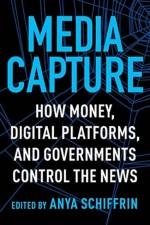
This book features pathbreaking analysis from journalists and academics of the changing nature and peril of media capture-how formerly independent institutions fall under the sway of governments, plutocrats, and corporations. Contributors analyze diverse cases of media capture worldwide, many drawn from firsthand experience.
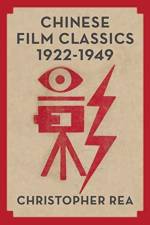
Chinese Film Classics, 1922-1949 is an essential guide to the first golden age of Chinese cinema. Christopher Rea reveals the uniqueness and complexity of Republican China's cinematic masterworks, from the comedies and melodramas of the silent era to talkies and musicals of the 1930s and 1940s.
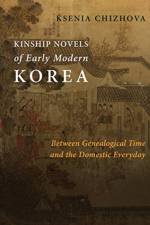
The lineage novel flourished in Korea from the late seventeenth to the early twentieth century. Ksenia Chizhova foregrounds lineage novels and the domestic world in which they were read to recast the social transformations of Choson Korea and the development of early modern Korean literature.
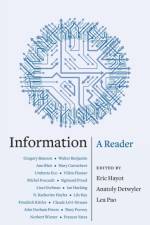
Information: A Reader provides an introduction to the concept of information in historical, literary, and cultural studies. It features excerpts from more than forty texts by theorists and critics who have helped establish the notion of the "information age" or expand upon it.
Abonner på vårt nyhetsbrev og få rabatter og inspirasjon til din neste leseopplevelse.
Ved å abonnere godtar du vår personvernerklæring.