



















Gjør som tusenvis av andre bokelskere
Abonner på vårt nyhetsbrev og få rabatter og inspirasjon til din neste leseopplevelse.
Ved å abonnere godtar du vår personvernerklæring.Du kan når som helst melde deg av våre nyhetsbrev.

In The Alchemy of Disease, John Whysner offers an accessible and compelling history of toxicology and its key findings. He details the experiments and discoveries that revealed the causal connections between chemical exposures and diseases.
Fandango and Other Stories presents a selection of essential short fiction by Alexander Grin, Russia's counterpart to Robert Louis Stevenson, Edgar Allan Poe, and Alexandre Dumas. Grin's ingenious plots explore conflicts of the individual and society in a romantic world populated by a cast of eccentric, cosmopolitan characters.
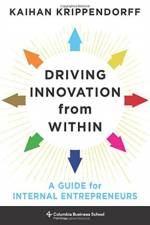
Kaihan Krippendorff reveals how many of the modern world's most impactful creations were invented by passionate employee-innovators. He lays out a step-by-step playbook to unlock innovation from the inside, mapping the barriers that frustrate efforts to disrupt from within and providing tools to remove them.
Leor Halevi tells the story of the Islamic trials of technological and commercial innovations of the late nineteenth and early twentieth centuries. Shedding light on culture, commerce, and consumption in Cairo and other colonial cities, Modern Things on Trial is a groundbreaking account of Islam's material transformation in a globalizing era.
Barriers Down reveals the unexpected origins of freedom of information in political, economic, and cultural battles in the postwar period. Diana Lemberg traces how the United States shaped media around the world under the banner of the "free flow of information," showing how the push for global media access acted as a vehicle for American power.
Acclaimed philosopher Catherine Malabou traces the modern metamorphoses of intelligence, seeking to understand how neurobiological and neurotechnological advances have transformed our present-day view. She emphasizes the intertwined, networked relationships among the biological, the technological, and the symbolic.
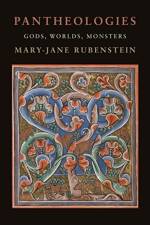
Mary-Jane Rubenstein provides a conceptual genealogy of pantheisms. What makes pantheism "monstrous"-at once repellent and seductive-is that it scrambles the raced and gendered distinctions that Western philosophy and theology insist on drawing between activity and passivity, spirit and matter, animacy and inanimacy, and creator and created.
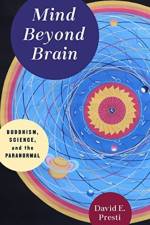
Neuroscientist David E. Presti, with the assistance of other researchers, explores how evidence for anomalous phenomena-such as near-death experiences, apparent memories of past lives, apparitions, and other so-called psi or paranormal phenomena, including telepathy, clairvoyance, and precognition-can influence the Buddhism-science conversation.
Mari Ruti combines theoretical reflection, cultural critique, feminist politics, and personal anecdotes to analyze the prevalence of bad feelings in everyday life. Proceeding from a playful engagement with Freud's idea of penis envy, Ruti fans out to a broader consideration of neoliberal pragmatism and a trenchant critique of gender relations.
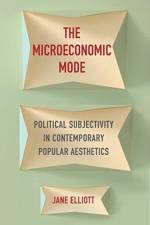
Literature, film, and television have become obsessed with the intersection of survival and choice. Jane Elliott analyzes this new and distinctive aesthetic phenomenon, which she calls the microeconomic mode, through close readings that show how an aesthetics of choice has reshaped contemporary understanding of what it means to be human.
The first English translation of this remarkable 1910 novel by Alexei Remizov, Sisters of the Cross is a masterpiece of early modernist fiction. It tell the story of a poor clerk who rebels against the suffering and humiliation afflicting his own life and the women he encounters in the tenement building where he lives in Petersburg.
In this Ming-era novel, historical narrative, raucous humor, and the supernatural are interwoven to tell the tale of an attempt to overthrow the Song dynasty. Quelling the Demons' Revolt is centered on the rebellion led by Wang Ze in 1047-48, warning of the vulnerability of a world plagued by demonic forces as well as mundane corruption.
This volume culls the most important and provocative research and policy analysis in the child welfare field and is an essential guide for understanding the burgeoning field of children's services.
Aimed at the general reader, this introduction to Japanese literature assumes no previous knowledge of Japanese culture. The author presents a series of essays which provide an overview of pre-modern Japanese poetry and fiction, as well as theatre and aesthetics.
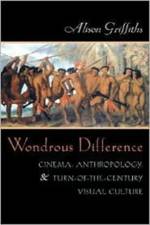
This innovative book focuses on the contested origins of ethnographic film from the late nineteenth century to the 1920s, vividly depicting the dynamic visual culture of the period as it collided with the emerging discipline of anthropology and the new technology of motion pictures.
Assembled in this book are translations of kanshi poetry - verse written in classical Chinese, but read as Japanese - by Ema Saiko (1787-1861) who distinguished herself as a writer of kanashi at a time when composition of Chinese was the strict province of men.
Involuntary clients are individuals who are required to see a professional (such as juveniles on probation) or pressured to seek help (such as alcoholics threatened with the desertion of a spouse). This book presents an analysis of the involuntary transaction and suggests ways to act within it.
Drawn from Peter H. Lee's Sourcebook of Korean Civilization, Volume One, this abridged introductory collection offers students and general readers primary readings in the social, intellectual, and religious traditions of Korean from ancient times through the sixteenth century.
A revolutionary archaeological discovery-considered by some to be as momentous as the revelation of the Dead Sea Scrolls-sheds fascinating new light on one of the most important texts of ancient Chinese civilization.
Like haiku, tanka is a short, classical verse form that has attracted considerable attention in this century. This is the first collection of modern tanka available in English.
Ch'ae Manshik is one of the most accomplished modern Korean writers yet is underrepresented in English translation because of the challenges posed by his distinctive voice and colloquial style. Sunset: A Ch'ae Manshik Reader is the first English-language anthology of his works and features a variety of genres-novella, short fiction, anecdotal essay, travel writing, children's story, one-act play, three-act play, and roundtable discussion.This anthology moves beyond the usual "e;representative works"e; to provide a well-rounded selection of writing by one of Korea's most innovative and memorable voices, drawing on Ch'ae's ten-volume Complete Works. This edition also provides a comprehensive introduction outlining the limitations of existing approaches to Ch'ae. It contextualizes the anthology's contents both in terms of the author's career and the rich Korean tradition of intertextuality and intermediality that he reflects from the country's earliest times to the new millennium.
Russ Meyer's Faster, Pussycat! Kill! Kill! (1965) is an enigma. A box-office failure when initially released on the grindhouse circuit, it has since been embraced by art-house audiences, and referenced in countless films, television series, and songs. A riot of styles and story cliches lifted from biker, juvenile delinquency, and beach party movies, it has the coherence of a dream, and the improvisatory daring of a jazz solo. John Waters has called it the greatest movie ever made, and Quentin Tarantino has long promised to remake it. But what draws them, and so many other cult fans to Pussycat? To help answer that question, this book looks at the production and critical reception of the film, its place within the cultural history of the 1960s, its representations of gender and sexuality, and the specific ways it meets the criteria of a cult film.
Widely used since the mid-twentieth century, GDP (gross domestic product) has become the world's most powerful statistical indicator of national development and progress. Practically all governments adhere to the idea that GDP growth is a primary economic target, and while criticism of this measure has grown, neither its champions nor its detractors deny its central importance in our political culture.In The Power of a Single Number, Philipp Lepenies recounts the lively history of GDP's political acceptance-and eventual dominance. Locating the origins of GDP measurements in Renaissance England, Lepenies explores the social and political factors that originally hindered its use. It was not until the early 1900s that an ingenuous lone-wolf economist revived and honed GDP's statistical approach. These ideas were then extended by John Maynard Keynes, and a more focused study of national income was born. American economists furthered this work by emphasizing GDP's ties to social well-being, setting the stage for its ascent. GDP finally achieved its singular status during World War II, assuming the importance it retains today. Lepenies's absorbing account helps us understand the personalities and popular events that propelled GDP to supremacy and clarifies current debates over the wisdom of the number's rule.
"e;Where were you when I laid the foundation of the earth?"e; God asks Job in the "e;Whirlwind Speech,"e; but Job cannot reply. This passage-which some environmentalists and religious scholars treat as a "e;green"e; creation myth-drives renowned ecologist H. H. Shugart's extraordinary investigation, in which he uses verses from God's speech to Job to explore the planetary system, animal domestication, sea-level rise, evolution, biodiversity, weather phenomena, and climate change. Shugart calls attention to the rich resonance between the Earth's natural history and the workings of religious feeling, the wisdom of biblical scripture, and the arguments of Bible ethicists. The divine questions that frame his study are quintessentially religious, and the global changes humans have wrought on the Earth operate not only in the physical, chemical, and biological spheres but also in the spiritual realm. Shugart offers a universal framework for recognizing and confronting the global challenges humans now face: the relationship between human technology and large-scale environmental degradation, the effect of invasive species on the integrity of ecosystems, the role of humans in generating wide biotic extinctions, and the future of our oceans and tides.
Abonner på vårt nyhetsbrev og få rabatter og inspirasjon til din neste leseopplevelse.
Ved å abonnere godtar du vår personvernerklæring.