

























Gjør som tusenvis av andre bokelskere
Abonner på vårt nyhetsbrev og få rabatter og inspirasjon til din neste leseopplevelse.
Ved å abonnere godtar du vår personvernerklæring.Du kan når som helst melde deg av våre nyhetsbrev.

The First Political Order is a groundbreaking demonstration that the persistent and systematic subordination of women underlies all other institutions, with wide-ranging implications for global security and development. It offers a new paradigm for understanding insecurity, instability, autocracy, and violence.
Karl Coplan shares his personal journey of attempting to cut back on carbon without giving up the amenities of a suburban middle-class lifestyle. Live Sustainably Now shows that there does not have to be a trade-off between the ethical obligation to maintain a sustainable carbon footprint and the belief that life should be fulfilling and fun.
Identifying a crucial link between poetic form and the forming of attention, Lucy Alford offers a new terminology for how poetic attention works and how attention becomes a subject and object of poetry. She combines close readings of a wide variety of poems with research in the philosophy, aesthetics, and psychology of attention.
From the Spanish Inquisition to Nazi Germany to the United States today, ordinary people have often chosen to turn in their neighbors to the authorities. In Judge Thy Neighbor, Patrick Bergemann provides a theoretical framework for understanding the motives for denunciations in terms of institutional structures and incentives.
Evan Friss traces the colorful and fraught history of bicycles-and bicyclists-in New York City. He uncovers the bicycle's place in the city over time, showing how the bicycle has served as a mirror of the city's changing social, economic, infrastructural, and cultural politics.
This book brings together leading scholars in social and political philosophy to develop new perspectives on recognition and its role in social life. It begins with a debate between Axel Honneth and Judith Butler, the first sustained engagement between these two major thinkers on this subject.
This book brings together leading scholars in social and political philosophy to develop new perspectives on recognition and its role in social life. It begins with a debate between Axel Honneth and Judith Butler, the first sustained engagement between these two major thinkers on this subject.
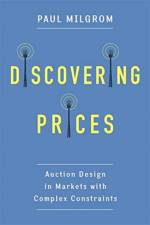
Traditional economic theory studies idealized markets in which prices alone can guide efficient allocation, with no need for central organization. Such models build from Adam Smith's famous concept of an invisible hand, which guides markets and renders regulation or interference largely unnecessary. Yet for many markets, prices alone are not enough to guide feasible and efficient outcomes, and regulation alone is not enough, either. Consider air traffic control at major airports. While prices could encourage airlines to take off and land at less congested times, prices alone do just part of the job; an air traffic control system is still indispensable to avoid disastrous consequences. With just an air traffic controller, however, limited resources can be wasted or poorly used. What's needed in this and many other real-world cases is an auction system that can effectively reveal prices while still maintaining enough direct control to ensure that complex constraints are satisfied.In Discovering Prices, Paul Milgrom-the world's most frequently cited academic expert on auction design-describes how auctions can be used to discover prices and guide efficient resource allocations, even when resources are diverse, constraints are critical, and market-clearing prices may not even exist. Economists have long understood that externalities and market power both necessitate market organization. In this book, Milgrom introduces complex constraints as another reason for market design. Both lively and technical, Milgrom roots his new theories in real-world examples (including the ambitious U.S. incentive auction of radio frequencies, whose design he led) and provides economists with crucial new tools for dealing with the world's growing complex resource allocation problems.
The Imjin War (1592-1598) was a grueling conflict that wreaked havoc on the towns and villages of the Korean Peninsula. The involvement of Chinese, Japanese, and Korean forces, not to mention the regional scope of the war, was the largest the world had seen, and the memory dominated East Asian memory until World War II. Despite massive regional realignments, Korea's Choson Dynasty endured, but within its polity a new, national discourse began to emerge. Meant to inspire civilians to rise up against the Japanese army, this potent rhetoric conjured a unified Korea and intensified after the Manchu invasions of 1627 and 1636.By documenting this phenomenon, JaHyun Kim Haboush offers a compelling counternarrative to Western historiography, which ties Korea's idea of nation to the imported ideologies of modern colonialism. She instead elevates the formative role of the conflicts that defined the second half of the Choson Dynasty, which had transfigured the geopolitics of East Asia and introduced a national narrative key to Korea's survival. Re-creating the cultural and political passions that bound Choson society together during this period, Haboush reclaims the root story of solidarity that helped Korea thrive well into the modern era.
The Story of the Stone is widely held to be the greatest work of Chinese literature. This book is a straightforward guide to a complex classic. Each chapter of the companion summarizes and comments on each chapter of the novel, providing English-speaking readers with the cultural context to enjoy the story and understand its world.
Initially created to counteract broadcasts from Nazi Germany, the BBC's Eastern Service became a cauldron of global modernism and an unlikely nexus of artistic exchange. Daniel Ryan Morse demonstrates the significance of the Eastern Service for global Anglophone literature and literary broadcasting.
Super Polluters offers a groundbreaking global analysis of carbon pollution caused by the generation of electricity. The sociologists Don Grant, Andrew Jorgenson, and Wesley Longhofer analyze a novel dataset on the carbon dioxide emissions and structural attributes of thousands of fossil-fueled power plants around the world.
Mary C. Rawlinson offers a critical analysis of Hegel's Phenomenology of Spirit that exposes three crucial elisions: Hegel's effacements of sexual difference, human mortality, and literary style. Demonstrating the power of Hegel's phenomenological method, The Betrayal of Substance is a magisterial rereading of this challenging masterwork.
In this major intellectual history, Ira Katznelson examines the works of Hannah Arendt, Robert Dahl, Richard Hofstadter, Karl Polanyi, and others. In light of their epoch's calamities, these intellectuals insisted that the tradition of Enlightenment thought required a new realism, a good deal of renovation, and much recommitment.
The so-called Chicago school has been a dominant presence in sociology since it emerged around the University of Chicago in the early decades of the twentieth century. Jean-Michel Chapoulie's groundbreaking book on the development and influence of the Chicago tradition provides a unique perspective on the history of social science.
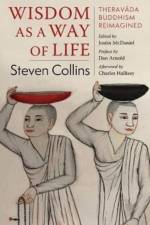
This wide-ranging and powerful book argues that Theravada Buddhism provides ways of thinking about the self that can reinvigorate the humanities and offer broader insights into how to learn and how to act.
Richard Kearney offers a timely call for the cultivation of the basic human need to touch and be touched. Making the case for the complementarity of touch and technology, this book is a passionate plea to recover a tangible sense of community and the joys of life with others.
Ada Smailbegovic shows how twentieth- and twenty-first-century writers have intermingled scientific methodologies with poetic form to reveal unfolding processes of change. Poetics of Liveliness moves across scales to explore the realms of molecules, fibers, tissues, and clouds.
In the aftermath of the cataclysmic Maoist period, three Tibetan Buddhist scholars living and working in the People's Republic of China became intellectual heroes. Nicole Willock reveals how they negotiated the political tides of the twentieth century, shedding new light on Sino-Tibetan relations and Buddhism during this turbulent era.
Japan, 1972 takes an early-seventies year as a vantage point for understanding how Japanese society came to terms with cultural change. Yoshikuni Igarashi examines a broad selection of popular film, television, manga, and other media, exposing the underpinnings of mass culture and investigating deeper anxieties over agency and masculinity.
Founded in 1676, Mindroeling monastery became a key site for Buddhist education and a Tibetan civilizational center. Dominique Townsend investigates the ritual, artistic, and cultural practices inculcated at Mindroeling to demonstrate how early modern Tibetans integrated Buddhist and worldly activities through training in aesthetics.
The trauma experts Mark C. Russell and Charles Figley offer an impassioned and meticulous critique of the systemic failures in military mental health care in the United States. The book offers actionable prescriptions for change and a comprehensive approach to significantly improving military mental health.
Jennifer Egan described her Pulitzer Prize-winning novel A Visit from the Goon Squad as a combination of Proust and The Sopranos. In rereading the book, Ivan Kreilkamp takes Egan up on her comparison, showing how it blends a concern with the status of the novel today with an elegiac meditation on how we experience the passage of time.
Henning Hillmann examines the merchant community of Saint-Malo, Brittany, a key port in the French Atlantic economy, to shed light on the local networks that linked commerce and conflict in early modern Europe. He combines rich descriptions of privateering campaigns with quantitative network analysis of partnership ties over more than a century.
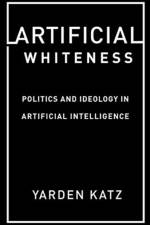
Yarden Katz reveals the ideology embedded in the concept of artificial intelligence, contending that it both serves and mimics the logic of white supremacy. Only by seeing the connection between artificial intelligence and whiteness can we prioritize alternatives to the conception of AI as an all-encompassing technological force.
Si Nae Park examines how the culture of Choson Seoul gave rise to a new vernacular literary form (yadam), anonymously and unofficially circulating tales. She focuses on the collection Repeatedly Recited Stories of the East, which was written in a new medium in which Literary Sinitic is hybridized with the vernacular realities of Choson society.
Zhou History Unearthed offers both a novel understanding of early Chinese historiography and a fully annotated translation of Xinian (String of Years), the most notable historical manuscript from the state of Chu. Yuri Pines details the importance of Xinian and other recently discovered texts for our understanding of history writing in Zhou China.
This book offers a lively exploration of the mathematics, physics, and neuroscience that underlie music. Written for musicians and music lovers with any level of science and math proficiency, including none, Music, Math, and Mind demystifies how music works while testifying to its beauty and wonder.
Sara Hsu and Jianjun Li explore the transformative potential of China's financial-technology industry, describing the risks and rewards for participants as well as the impact on consumers. Offering expert analysis of market potential, risks, and competition, as well as case studies of firms, China's Fintech Explosion is a must-read.
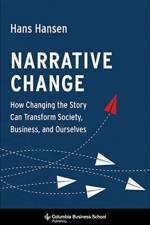
Hans Hansen offers readers a powerful model for creating significant organizational, social, and institutional change. He unpacks the lessons of the fight to change capital punishment in Texas, revealing how narratives shape our everyday lives and how we can construct new narratives to enact positive change.
Abonner på vårt nyhetsbrev og få rabatter og inspirasjon til din neste leseopplevelse.
Ved å abonnere godtar du vår personvernerklæring.