






Gjør som tusenvis av andre bokelskere
Abonner på vårt nyhetsbrev og få rabatter og inspirasjon til din neste leseopplevelse.
Ved å abonnere godtar du vår personvernerklæring.Du kan når som helst melde deg av våre nyhetsbrev.

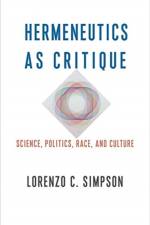
Lorenzo C. Simpson offers a persuasive and powerful argument that hermeneutics is a valuable tool not only for critical theory but also for addressing many of the urgent issues of today. He shows its utility for unpacking intractable debates in the philosophy of science, multiculturalism, social epistemology, and racial and social justice.
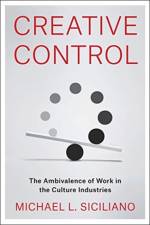
Michael L. Siciliano draws on nearly two years of ethnographic research as a participant-observer in a Los Angeles music studio and a multichannel YouTube network to explore the contradictions of creative work. Creative Control explains why "cool" jobs help us understand how workers can participate in their own exploitation.
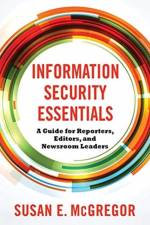
This book is an essential guide to protecting news writers, sources, and organizations in the digital era. Susan E. McGregor provides a systematic understanding of the key technical, legal, and conceptual issues that anyone teaching, studying, or practicing journalism should know.
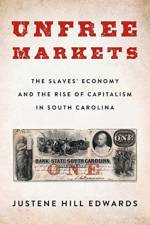
Justene Hill Edwards illuminates the inner workings of the slaves' economy and the strategies that enslaved people used to participate in the market. Focusing on South Carolina from the colonial period to the Civil War, she examines how the capitalist development of slavery influenced the economic lives of enslaved people.
Jason Schnittker investigates the social, cultural, medical, and scientific underpinnings of the modern mental state. He explores how anxiety has been understood from the late nineteenth century to the present day and why it has assumed a more central position in how we think about mental health.
Jonardon Ganeri explores philosophical reflections from many of the world's intellectual cultures, ancient and modern, on how each of us creates an inner world. This book is a thought-provoking consideration of the value-or peril-of turning one's gaze inward for all readers who have sought to map the geography of the mind.
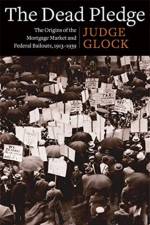
Today, the federal government underwrites a financial system built around mortgage lending. In The Dead Pledge, Judge Glock reveals the surprising origins of this entanglement in forgotten economic ideas and policies that held sway from the early twentieth century through the Great Depression.
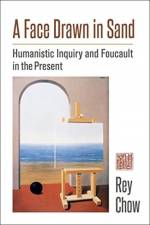
Rey Chow rearticulates the plight of the humanities in the age of global finance and neoliberal mores through a focus on Foucault's concept "outside." She foregrounds a nonutilitarian approach, stressing anew the intellectual and pedagogical objectives fundamental to humanistic inquiry.
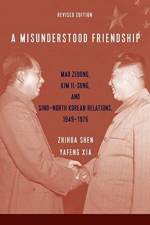
Diplomatic historians Zhihua Shen and Yafeng Xia draw on previously untapped primary source materials revealing tensions and rivalries to offer a unique account of the China-North Korea relationship. They unravel the twists and turns in high-level diplomacy between China and North Korea from the late 1940s to the death of Mao Zedong in 1976.
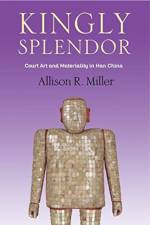
Many of the finest objects of the Western Han dynasty have been excavated from the tombs of kings, who administered local provinces on behalf of the emperors. Allison R. Miller paints a new picture of elite art production by revealing the contributions of the kings to Western Han artistic culture.
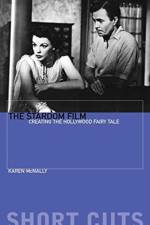
Since the movie industry's earliest days, Hollywood has mythologized itself through stories of stardom. In the first book to focus exclusively on these modern fairy tales, Karen McNally traces the history of this genre from silent cinema to contemporary film and television to show its significance to both Hollywood and broader American culture.
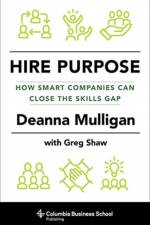
Deanna Mulligan offers a practical look at the effects of automation and why the private sector needs to lead the charge in shaping a values-based response. With a focus on the power of education, she proposes that the solutions to workforce upheaval lie in reskilling and retraining for individuals and companies adapting to rapid change.
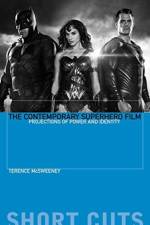
Terence McSweeney provides a concise and up-to-date overview of the superhero genre. He lays out its narrative codes and conventions, exploring why it appeals to diverse audiences and what it has to say about the world in the first two decades of the twenty-first century.
This book provides an insider's view for anyone looking to understand family offices as well as how to best serve and advise them. Veteran practitioners William I. Woodson and Edward V. Marshall offer a thorough guide to family offices: why wealthy families create them, what they do, and how to manage them effectively.
Alberto Mira offers a new account of how pop music revolutionized the Hollywood musical. He shows that while the Hollywood system ceased producing large-scale traditional musicals, different pop strains-disco, rock 'n' roll, doo-wop, glam, and hip-hop-renewed the genre, giving it a new life.
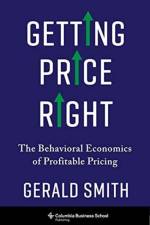
Combining perceptive insights from behavioral economics with leading-edge ideas on price management, this book offers a new approach to pricing. Gerald Smith demonstrates why understanding, reframing, and refining everyday pricing processes-one's pricing orientation-results in a better long-term pricing strategy.
Thomas Berry (1914-2009) was one of the twentieth century's most prescient and profound thinkers. The first biography of Berry, this book illuminates his remarkable vision and its continuing relevance for achieving transformative social change and environmental renewal.
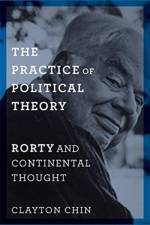
Clayton Chin presents a critical reconstruction of the work of Richard Rorty that argues that that Rorty provides us with unrecognized tools for resolving key foundational issues. The Practice of Political Theory is an important response to the vexed questions of justification and pluralism.
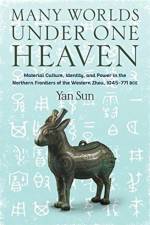
Many Worlds Under One Heaven analyzes a wide range of newly excavated materials to offer a new perspective on political and cultural change under the Western Zhou. Examining tombs, bronze inscriptions, and other artifacts, Yan Sun challenges the Zhou-centered view with a frontier-focused perspective that highlights the roles of multiple actors.
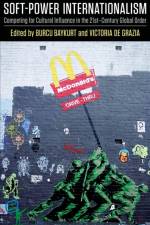
This book is a global comparative history of how "soft power" came to define the interregnum between the celebration of global capitalism in the 1990s and the recent resurgence of nationalism and authoritarianism. It brings together case studies from the European Union, China, Brazil, Turkey, and the United States.
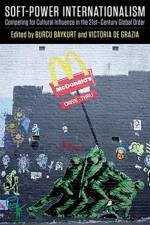
This book is a global comparative history of how "soft power" came to define the interregnum between the celebration of global capitalism in the 1990s and the recent resurgence of nationalism and authoritarianism. It brings together case studies from the European Union, China, Brazil, Turkey, and the United States.
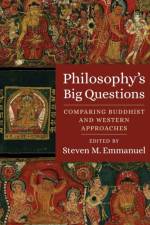
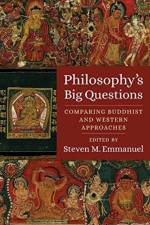
The essays in this book turn to the major figures and texts of the Buddhist tradition in order to expand and enrich our thinking on enduring philosophical questions. Featuring striking and generative comparisons, Philosophy's Big Questions offers readers new conceptual tools, methods, and insights for the pursuit of a good and happy life.
The essays in this book turn to the major figures and texts of the Buddhist tradition in order to expand and enrich our thinking on enduring philosophical questions. Featuring striking and generative comparisons, Philosophy's Big Questions offers readers new conceptual tools, methods, and insights for the pursuit of a good and happy life.
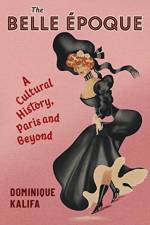
The years before the First World War have long been romanticized as a zenith of French culture-the "Belle Epoque." Dominique Kalifa traces the making-and the imagining-of the Belle Epoque to reveal how and why it became a cultural myth.
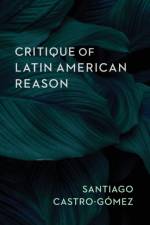
Critique of Latin American Reason is one of the most important philosophical texts to have come out of South America in recent decades. First published in 1996, it offers a sweeping critique of the foundational schools of thought in Latin American philosophy and critical theory.
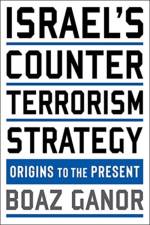
Boaz Ganor provides an authoritative analysis of Israel's approach to counterterrorism throughout its existence. The book features revelatory personal testimony from senior Israeli decision makers who have played pivotal roles in counterterrorism strategy.
Eva von Redecker reconsiders critical theory's understanding of radical change in order to offer a bold new account of how revolution occurs. She argues that revolutions are not singular events but extended processes: beginning from the interstices of society, they succeed by gradually rearticulating social structures toward a new paradigm.
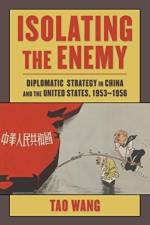
Tao Wang offers a new account of Sino-American relations in the mid-1950s that situates the two great powers in their international context. He reveals how both the United States and China adopted a policy of attempting to isolate their adversary and explores how Chinese and American leaders perceived and reacted to each other's strategies.
To Deter and Punish examines why and how the United States and its Western European allies came to treat nonstate "terrorists" as a key threat. Silke Zoller traces Western state officials' responses to terrorism from the first Palestinian hijacking in 1968 to Ronald Reagan's militarization of counterterrorism in the early 1980s.
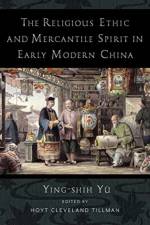
The preeminent historian Ying-shih Yu offers a magisterial examination of religious and cultural influences in the development of China's early modern economy. He investigates how evolving forms of Buddhism, Confucianism, and Daoism created and promulgated their own concepts of the work ethic from the late seventh century into the Qing dynasty.
Abonner på vårt nyhetsbrev og få rabatter og inspirasjon til din neste leseopplevelse.
Ved å abonnere godtar du vår personvernerklæring.