







Gjør som tusenvis av andre bokelskere
Abonner på vårt nyhetsbrev og få rabatter og inspirasjon til din neste leseopplevelse.
Ved å abonnere godtar du vår personvernerklæring.Du kan når som helst melde deg av våre nyhetsbrev.

Hannah Arendt, Herbert Marcuse, Alexander Solzhenitsyn, and Edward Said each steered major intellectual and political schools of thought in American political discourse after World War II, yet none of them was American, which proved crucial to their ways of arguing and reasoning both in and out of the American context. In an effort to convince their audiences they were American enough, these thinkers deployed deft rhetorical strategies that made their cosmopolitanism feel acceptable, inspiring radical new approaches to longstanding problems in American politics. Speaking like natives, they also exploited their foreignness to entice listeners to embrace alternative modes of thought. Intimate Strangers unpacks this "e;stranger ethos,"e; a blend of detachment and involvement that manifested in the persona of a prophet for Solzhenitsyn, an impartial observer for Arendt, a mentor for Marcuse, and a victim for Said. Yet despite its many successes, the stranger ethos did alienate many audiences, and critics continue to dismiss these thinkers not for their positions but because of their foreign point of view. This book encourages readers to reject this kind of critical xenophobia, throwing support behind a political discourse that accounts for the ideals of citizens and noncitizens alike.
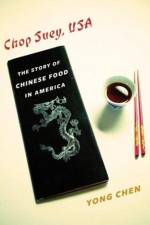
American diners began to flock to Chinese restaurants more than a century ago, making Chinese food the first mass-consumed cuisine in the United States. By 1980, it had become the country's most popular ethnic cuisine. Chop Suey, USA offers the first comprehensive interpretation of the rise of Chinese food, revealing the forces that made it ubiquitous in the American gastronomic landscape and turned the country into an empire of consumption.Engineered by a politically disenfranchised, numerically small, and economically exploited group, Chinese food's tour de America is an epic story of global cultural encounter. It reflects not only changes in taste but also a growing appetite for a more leisurely lifestyle. Americans fell in love with Chinese food not because of its gastronomic excellence but because of its affordability and convenience, which is why they preferred the quick and simple dishes of China while shunning its haute cuisine. Epitomized by chop suey, American Chinese food was a forerunner of McDonald's, democratizing the once-exclusive dining-out experience for such groups as marginalized Anglos, African Americans, and Jews. The rise of Chinese food is also a classic American story of immigrant entrepreneurship and perseverance. Barred from many occupations, Chinese Americans successfully turned Chinese food from a despised cuisine into a dominant force in the restaurant market, creating a critical lifeline for their community. Chinese American restaurant workers developed the concept of the open kitchen and popularized the practice of home delivery. They streamlined certain Chinese dishes, such as chop suey and egg foo young, turning them into nationally recognized brand names.
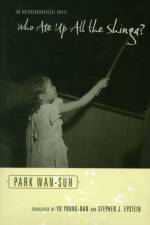
Park Wan-suh is a best-selling and award-winning writer whose work has been widely translated and published throughout the world. Who Ate Up All the Shinga? is an extraordinary account of her experiences growing up during the Japanese occupation of Korea and the Korean War, a time of great oppression, deprivation, and social and political instability.Park Wan-suh was born in 1931 in a small village near Kaesong, a protected hamlet of no more than twenty families. Park was raised believing that "e;no matter how many hills and brooks you crossed, the whole world was Korea and everyone in it was Korean."e; But then the tendrils of the Japanese occupation, which had already worked their way through much of Korean society before her birth, began to encroach on Park's idyll, complicating her day-to-day life. With acerbic wit and brilliant insight, Park describes the characters and events that came to shape her young life, portraying the pervasive ways in which collaboration, assimilation, and resistance intertwined within the Korean social fabric before the outbreak of war. Most absorbing is Park's portrait of her mother, a sharp and resourceful widow who both resisted and conformed to stricture, becoming an enigmatic role model for her struggling daughter. Balancing period detail with universal themes, Park weaves a captivating tale that charms, moves, and wholly engrosses.
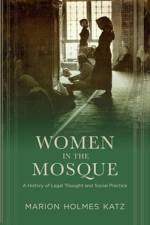
Juxtaposing Muslim scholars' debates over women's attendance in mosques with historical descriptions of women's activities within Middle Eastern and North African mosques, Marion Holmes Katz shows how over the centuries legal scholars' arguments have often reacted to rather than dictated Muslim women's behavior. Tracing Sunni legal positions on women in mosques from the second century of the Islamic calendar to the modern period, Katz connects shifts in scholarly terminology and argumentation to changing constructions of gender. Over time, assumptions about women's changing behavior through the lifecycle gave way to a global preoccupation with sexual temptation, which then became the central rationale for limits on women's mosque access. At the same time, travel narratives, biographical dictionaries, and religious polemics suggest that women's usage of mosque space often diverged in both timing and content from the ritual models constructed by scholars. Katz demonstrates both the concrete social and political implications of Islamic legal discourse and the autonomy of women's mosque-based activities. She also examines women's mosque access as a trope in Western travelers' narratives and the evolving significance of women's mosque attendance among different Islamic currents in the twentieth century.
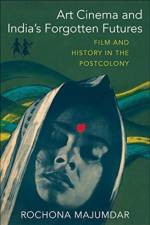
Rochona Majumdar examines key works of Indian art cinema to demonstrate how film emerged as a mode of doing history and that, in so doing, it anticipated some of the most influential insights of postcolonial thought. She analyzes the films of Satyajit Ray, Mrinal Sen, and Ritwik Ghatak as well as a host of film society publications.
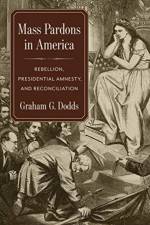
This book is the first comprehensive study of how presidential mass pardons have helped put domestic insurrections to rest. Graham G. Dodds examines when and why presidents have issued mass pardons and amnesties to deal with domestic rebellion and attempt to reunite the country.
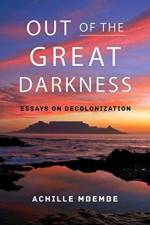
Achille Mbembe is one of the world's most profound critics of colonialism and its consequences. In Out of the Dark Night, he offers a rich analysis of the paradoxes of the postcolonial moment that points toward new liberatory models of community and humanity.
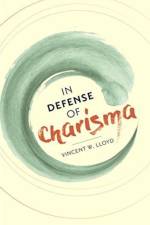
In Defense of Charisma develops an account of moral charisma that weaves insights from politics, ethics, and religion together with reflections on contemporary culture. Vincent W. Lloyd distinguishes between authoritarian charisma, which furthers the interests of the powerful, and democratic charisma, which prompts us to discover new possibilities.
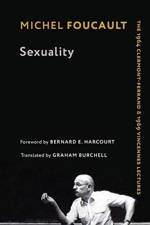
Michel Foucault's interest in the history of sexuality began as early as the 1960s, when he taught two courses on the subject. These lectures offer crucial insight into the development of Foucault's thought yet have remained unpublished until recently. This book presents Foucault's lectures on sexuality for the first time in English.
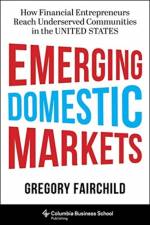
Gregory Fairchild introduces readers to the rising set of entrepreneurs whose efforts to reach marginalized groups are reshaping the emerging markets of the United States. He explores how minority-owned and community-development institutions are achieving innovations in financial services to further economic development and reduce inequality.
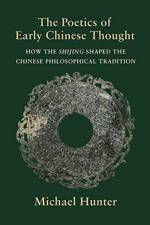
How the Shijing Shaped the Chinese Philosophical Tradition.
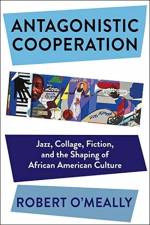
Jazz Collage Fiction and the Shaping of African American Culture.
Under what circumstances are civil-war combatants more or less likely to commit ethnic violence? Nils Hagerdal examines the Lebanese civil war to offer a new theory that highlights the interplay of ethnicity and intelligence gathering.
Alessia Ricciardi revisits questions about Elena Ferrante's identity to show how the problem of authorship is deeply intertwined with the novels' literary ambition and politics. Ricciardi reads Ferrante's fiction as world literature, foregrounding the alleged writer Anita Raja's work as a translator.
Tom Phuong Le offers a novel explanation of Japan's reluctance to remilitarize that foregrounds the relationship between demographics and security. Japan's Aging Peace demonstrates how changing perceptions of security across generations has culminated in a culture of antimilitarism that constrains efforts to pursue a more martial foreign policy.
Abonner på vårt nyhetsbrev og få rabatter og inspirasjon til din neste leseopplevelse.
Ved å abonnere godtar du vår personvernerklæring.