



Gjør som tusenvis av andre bokelskere
Abonner på vårt nyhetsbrev og få rabatter og inspirasjon til din neste leseopplevelse.
Ved å abonnere godtar du vår personvernerklæring.Du kan når som helst melde deg av våre nyhetsbrev.

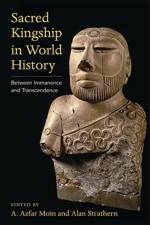
Sacred kingship has been the core political form, in small-scale societies and in vast empires, for much of world history. This collaborative and interdisciplinary book recasts the relationship between religion and politics by exploring this institution in long-term and global comparative perspective.
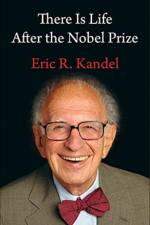
Neuroscientist Eric R. Kandel recounts his remarkable career since receiving the Nobel in 2000. He takes readers through his lab's scientific advances as well as his efforts to promote public understanding of science and to put brain science and art into conversation.
Roger Murray (1911-1998) was a crucial figure in the history of value investing. This book offers a compelling account of Murray's multifaceted career alongside a series of remarkable lectures he gave late in his life that encapsulated his philosophy of investing.
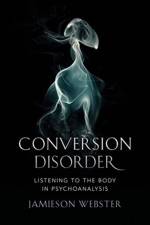
Part memoir, part clinical case, part theoretical investigation, this book searches for the body. Jamieson Webster traces conversion's shifting meanings in an intimate account of her own conversion from patient to psychoanalyst, as well as her continual struggle to apprehend the complexities of the patient's body.
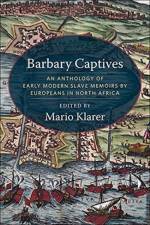
In the early modern period, hundreds of thousands of Europeans, both men and women, were abducted by pirates, sold on the slave market, and enslaved in North Africa. Barbary Captives brings together a selection of early modern slave narratives in English translation for the first time.
In the early modern period, hundreds of thousands of Europeans, both men and women, were abducted by pirates, sold on the slave market, and enslaved in North Africa. Barbary Captives brings together a selection of early modern slave narratives in English translation for the first time.
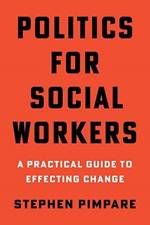
This book is a concise, accessible guide to help social workers understand how politics and policy making really work-and what they can do to help their clients and their communities. It offers informed, practical grounding in the mechanics of policy making and the tools that activists and outsiders can use to take on an entrenched system.
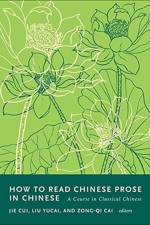
This book is at once a guided introduction to Chinese nonfictional prose and an innovative textbook for the study of classical Chinese. It is a companion volume to How to Read Chinese Prose: A Guided Anthology, designed for Chinese-language learners.
This book is at once a guided introduction to Chinese nonfictional prose and an innovative textbook for the study of classical Chinese. It is a companion volume to How to Read Chinese Prose: A Guided Anthology, designed for Chinese-language learners.
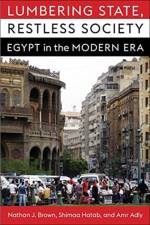
Lumbering State, Restless Society offers a comprehensive and compelling understanding of modern Egypt. Nathan J. Brown, Shimaa Hatab, and Amr Adly guide readers through crucial developments in Egyptian politics, society, and economics from the middle of the twentieth century through the present.
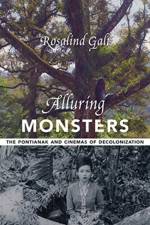
The pontianak, a terrifying female vampire ghost, is a powerful figure in Malay cultures. Exploring how and why the pontianak found new life in postcolonial Southeast Asian film and society, Rosalind Galt reveals the importance of cinema to histories and theories of decolonization.
Leading scientists, philosophers, historians, and public intellectuals debate the big questions. These public dialogues model constructive engagement between the sciences and the humanities-and show why intellectual cooperation is necessary to shape our collective future.
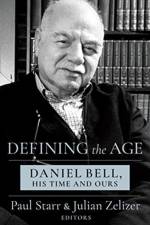
In Defining the Age, Paul Starr and Julian Zelizer bring together a group of distinguished contributors to consider how Daniel Bell's ideas captured their historical moment and continue to provide profound insights into today's world.
Daniel Talbot changed the way the Upper West Side-and art-house audiences around the world-went to the movies. In Love with Movies is his memoir of a rich life as the impresario of the legendary Manhattan theaters he owned and operated and as a highly influential film distributor.
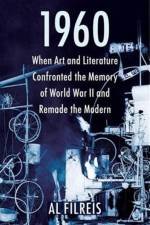
Al Filreis recasts 1960 as a turning point to offer a groundbreaking account of postwar culture. He examines an eclectic group of artistic, literary, and intellectual figures who strove to create a new language to reckon with the trauma of World War II and to imagine a new world.
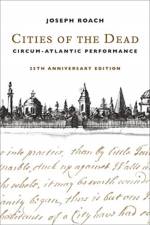
Takes a look at the continuum of intercultural exchange that reinvents, recreates, and restores history. Complemented with fifty-five illustrations, including photos of Mardi Gras Indians, this work employs a study of the culture. It explores cultural connections over place and time, showing through examples how performance revises the past.
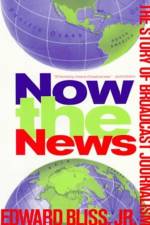
This now-classic text by an insider, a former writer-producer at CBS News, chronicles the history of broadcast journalism in the U.S. from its beginning in radio through its rise as the most pervasive and powerful news medium.
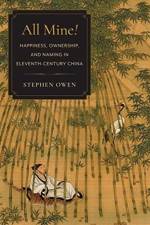
Stephen Owen contends that in the new money economy of the Song Dynasty, writers became preoccupied with the question of whether material things can bring happiness. In a series of essays, All Mine! offers strikingly original readings of major eleventh-century figures.
Elena Fratto examines the relationship between literature and medicine at the turn of the twentieth century. She traces how writers including Dostoevsky, Tolstoy, and Bulgakov responded to medical and public health prescriptions, arguing that they provide alternative ways of thinking about the limits and possibilities of human agency and free will.
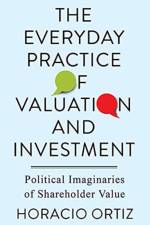
Horacio Ortiz provides a critical analysis of the social institutions and practices that produce and regulate stock pricing and valuation. Drawing on ethnographic fieldwork conducted among financial professionals in New York and Paris, this book shows how the political imaginaries that underpin financial markets legitimize global inequalities.
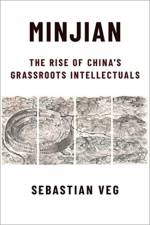
Sebastian Veg explores the rise of minjian-unofficial, unaffiliated, and among the people-intellectuals and how they have profoundly transformed China's public culture. Minjian documents how, amid deep structural shifts, grassroots thinker-activists began to work outside academia or policy institutions in an embryonic public sphere.
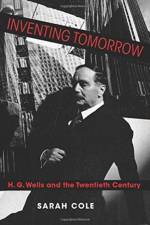
Inventing Tomorrow provides a definitive account of H. G. Wells's work and ideas. Sarah Cole illuminates his distinctive style as well as his interventions into social and political thought, arguing that he embodies twentieth-century literature at its most expansive and engaged.
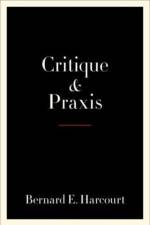
Bernard E. Harcourt calls for moving beyond the complacency of decades of philosophical detours and to harness critical thought to the need for action. Critique and Praxis advocates for a new path forward that constantly challenges each one of us to ask what more we can do to realize a society based on equality and justice.
My Brilliant Friends is an innovative group biography of three friendships forged in second-wave feminism. Poignant and politically charged, the book is a captivating personal account of the complexities of women's bonds.
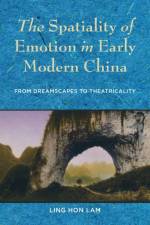
Ling Hon Lam gives a deeply original account of the history of emotions in Chinese literature centered on the idea of emotion as space. Tracing how the emotion-realm underwent significant transformations from the dreamscape to theatricality in sixteenth- to eighteenth-century China, this book is a major rethinking of key terms in Chinese culture.
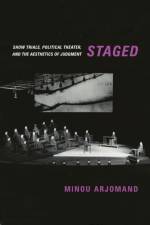
Minou Arjomand draws on a rich archive of postwar German and American performances to reveal theater as a place for forms of judgment that are inadmissible in a courtroom but indispensable for public life. Staged weaves together theater history and political philosophy into a powerful case for the importance of theaters as democratic institutions.
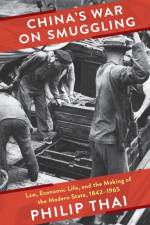
Philip Thai chronicles the vicissitudes of smuggling in modern China to demonstrate how defiance helped the state redefine its power. China's War on Smuggling traces how different regimes sought to police maritime trade and the unintended consequences their campaigns unleashed, offering new insights into Chinese social, legal, and economic history.
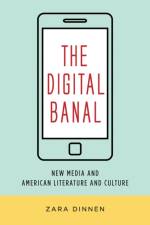
Zara Dinnen analyzes a range of contemporary novels, films, and artworks to contend that we live in the condition of the "digital banal," not noticing the affective and political novelty of our relationship to digital media. The Digital Banal recovers the shrouded disturbances that can help us recognize and antagonize our media environment.
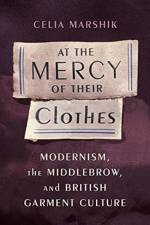
In much of modern fiction, it is the clothes that make the character. Garments embody personal and national histories. They convey wealth, status, aspiration, and morality (or a lack thereof). They suggest where characters have been and where they might be headed, as well as whether or not they are aware of their fate. At the Mercy of Their Clothes explores the agency of fashion in modern literature, its reflection of new relations between people and things, and its embodiment of a rapidly changing society confronted by war and cultural and economic upheaval. In some cases, people need garments to realize themselves. In other cases, the clothes control the person who wears them. Celia Marshik's study combines close readings of modernist and middlebrow works, a history of Britain in the early twentieth century, and the insights of thing theory. She focuses on four distinct categories of modern clothing: the evening gown, the mackintosh, the fancy dress costume, and secondhand attire. In their use of these clothes, we see authors negotiate shifting gender roles, weigh the value of individuality during national conflict, work through mortality, and depict changing class structures. Marshik's dynamic comparisons put Ulysses in conversation with Rebecca, Punch cartoons, articles in Vogue, and letters from consumers, illuminating opinions about specific garments and a widespread anxiety that people were no more than what they wore. Throughout her readings, Marshik emphasizes the persistent animation of clothing-and objectification of individuals-in early-twentieth-century literature and society. She argues that while artists and intellectuals celebrated the ability of modern individuals to remake themselves, a range of literary works and popular publications points to a lingering anxiety about how political, social, and economic conditions continued to constrain the individual.
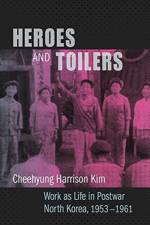
Heroes and Toilers offers an unprecedented account of life and labor in postwar North Korea that looks at both governance and popular resistance. Cheehyung Harrison Kim traces the state's pursuit of progress through industrialism and examines how ordinary people challenged the state every step of the way.
Abonner på vårt nyhetsbrev og få rabatter og inspirasjon til din neste leseopplevelse.
Ved å abonnere godtar du vår personvernerklæring.