








Gjør som tusenvis av andre bokelskere
Abonner på vårt nyhetsbrev og få rabatter og inspirasjon til din neste leseopplevelse.
Ved å abonnere godtar du vår personvernerklæring.Du kan når som helst melde deg av våre nyhetsbrev.

The culmination of more than fifty years of research by the foremost living expert on plant classification, Diversity and Classification of Flowering Plants is an important contribution to the field of plant taxonomy.
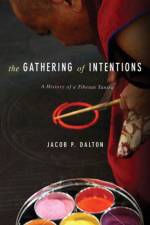
The Gathering of Intentions reads a single Tibetan Buddhist ritual system through the movements of Tibetan history, revealing the social and material dimensions of an ostensibly timeless tradition. By subjecting tantric practice to historical analysis, the book offers new insight into the origins of Tibetan Buddhism, the formation of its canons, the emergence of new lineages and ceremonies, and modern efforts to revitalize the religion by returning to its mythic origins.The ritual system explored in this volume is based on the Gathering of Intentions Sutra, the fundamental "e;root tantra"e; of the Anuyoga class of teachings belonging to the Nyingma ("e;Ancient"e;) school of Tibetan Buddhism. Proceeding chronologically from the ninth century to the present, each chapter features a Tibetan author negotiating a perceived gap between the original root text-the Gathering of Intentions-and the lived religious or political concerns of his day. These ongoing tensions underscore the significance of Tibet's elaborate esoteric ritual systems, which have persisted for centuries, evolving in response to historical conditions. Rather than overlook practice in favor of philosophical concerns, this volume prioritizes Tibetan Buddhism's ritual systems for a richer portrait of the tradition.
Hitchcock Annual volume 25 is scheduled to be published in early 2022. Planned contents include examinations of the production conditions of Hitchcock's films, close readings of several key films, and review essays on current biographical and critical work on Hitchcock.
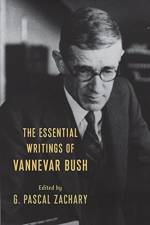
The influence of Vannevar Bush on the history and institutions of twentieth-century American science and technology is staggeringly vast. Edited by Bush's biographer, G. Pascal Zachary, this collection presents more than fifty of Bush's most important works across four decades.
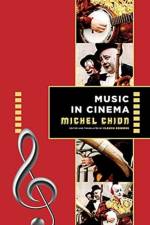
Michel Chion is renowned for his explorations of the significance of frequently overlooked elements of cinema, particularly the role of sound. In this inventive and inviting book, Chion considers how cinema has deployed music. He shows how music and film not only complement but also transform each other.
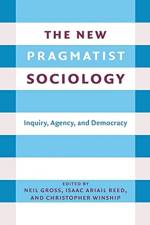
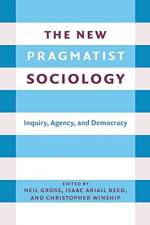
In The New Pragmatist Sociology, Neil Gross, Isaac Ariail Reed, and Christopher Winship assemble a range of sociologists to address essential ideas in the field and their historical and theoretical connection to classical pragmatism.
In The New Pragmatist Sociology, Neil Gross, Isaac Ariail Reed, and Christopher Winship assemble a range of sociologists to address essential ideas in the field and their historical and theoretical connection to classical pragmatism.
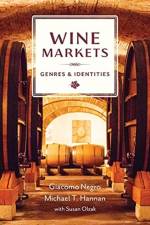
Drawing on a decade of fieldwork in Italy and France as well as interviews with critics and data analysis, this book provides an unprecedented sociological account of the dynamics of wine markets. It shows how the concepts of genre and collective identity explain producers' choices, whether they are selling traditional or nonconventional wines.
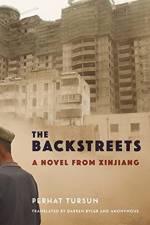
The Backstreets is an astonishing novel by a preeminent contemporary Uyghur author who was disappeared by the Chinese state. Perhat Tursun follows an unnamed Uyghur man who comes to the capital of Xinjiang. Seeking to escape the pain and poverty of the countryside, he finds only cold stares and rejection.
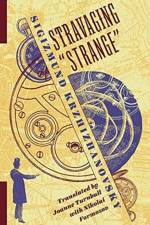
This book presents three tales that encapsulate Sigizmund Krzhizhanovsky's gift for creating philosophical, satirical, and lyrical phantasmagorias. It also includes excerpts from his notebooks-aphoristic glimpses of his worldview, moods, humor, and writing methods-and reminiscences of Krzhizhanovsky by his lifelong companion, Anna Bovshek.
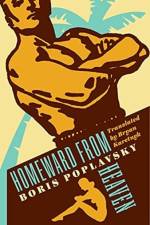
Homeward from Heaven is Boris Poplavsky's masterpiece, written just before his life was cut short by a drug overdose at the age of thirty-two. Set in Paris and on the French Riviera, it recounts the escapades, malaise, and love affairs of a bohemian group of Russian expatriates.
In the early eighteenth century, the noblewoman Ogimachi Machiko composed a memoir of Yanagisawa Yoshiyasu, the powerful samurai she had served as a concubine for twenty years. Elegant, poetic, and revealing, In the Shelter of the Pine is the most significant work of literature by a woman of Japan's early modern era.
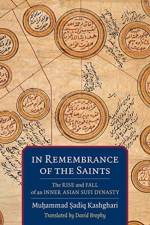
In the late eighteenth century, Muhammad Sadiq Kashghari wrote an account of religious and political conflicts in the Tarim Basin, part of present-day Xinjiang, on the eve of the Qing conquest. This volume presents the complete, long recension of In Remembrance of the Saints, translated for the first time into any language.
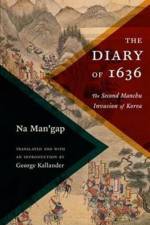
After a Choson faction realigned Korea with the Ming dynasty, the Manchu attacked in 1627 and again a decade later, forcing Korea to support the newly founded Qing dynasty. The Korean scholar-official Na Man'gap (1592-1642) recorded the second Manchu invasion in the only first-person account chronicling the dramatic Korean resistance.
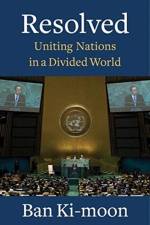
Resolved is Ban Ki-moon's personal account of his ten years at the helm of the world body at a time of historic turmoil and promise. He explores past flashpoints to offer the story of diplomatic lessons learned.
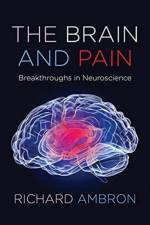
The Brain and Pain explores the present and future of pain management, providing a comprehensive understanding based on the latest discoveries from many branches of neuroscience. Current and thorough, it will be invaluable for a range of people seeking to understand their options for treatment as well as students in neuroscience and medicine.
Michael J. Green provides a groundbreaking and comprehensive account of Japan's strategic thinking under Prime Minister Abe Shinzo. He explains the foundational logic and the worldview behind this approach, from key precedents in Japanese history to the specific economic, defense, and diplomatic priorities shaping contemporary policy.
Virginia C. Gildersleeve was the most influential dean of Barnard College, which she led from 1911 to 1947. In this biography, historian Nancy Woloch explores Gildersleeve's complicated career in academia and public life.
Martin Crowley argues that a new conception of agency as both distributed and decisive is necessary in the Anthropocene. A major intervention into ongoing debates in posthumanism, political ecology, and political theory, Accidental Agents reshapes our understanding of political agency in and for a more-than-human world.
Matthew W. King offers a groundbreaking account of the literary, social, and political history of the circulation, translation, and interpretation of Faxian's The Record of Buddhist Kingdoms. He reads its many journeys at multiple levels, contrasting the textual and interpretative traditions of the European academy and the Inner Asian monastery.
Ellen Jones offers a new framework for understanding literary multilingualism, emphasizing how authors and translators can use its defamiliarizing and disruptive potential. She examines the connection between translation and multilingualism and considers its significance for the theory, practice, and publishing of literature in translation.
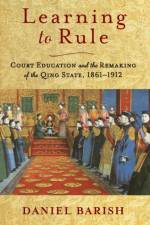
Daniel Barish explores debates surrounding the education of the final three Qing emperors, showing how imperial curricula became proxy battles for divergent visions of how to restabilize the country. Through the lens of the education of young emperors, Learning to Rule develops a new understanding of the late Qing era.
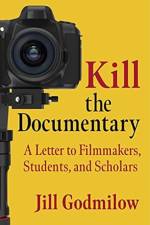
In Kill the Documentary, the award-winning director Jill Godmilow issues an urgent call for a new kind of nonfiction filmmaking. In place of the conventional documentary, she advocates for a "postrealist" cinema.
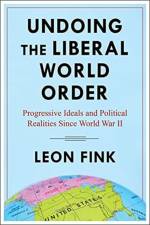
Leon Fink examines key cases of progressive influence on postwar U.S. foreign policy, tracing the tension between liberal aspirations and the political realities that stymie them. A diplomatic history that emphasizes the roles of class, labor, race, and grassroots activism, this book suggests new directions for progressive foreign policy.
Mark Shirk examines historical and contemporary state responses to transnational violence to develop a new account of the making of global orders. He considers a series of crises that plagued the state system: piracy in the eighteenth century, anarchist "propagandists of the deed" at the turn of the twentieth, and al Qaeda in recent years.
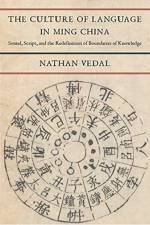
The scholarly culture of Ming dynasty China is often seen as prioritizing philosophy over concrete textual study. Nathan Vedal uncovers the preoccupation among Ming thinkers with specialized linguistic learning, a field typically associated with the intellectual revolution of the eighteenth century.
Nicole Iturriaga offers an ethnographic examination of how Spanish human rights activists use forensic methods to challenge dominant histories, reshape collective memory, and create new forms of transitional justice. Exhuming Violent Histories sheds new light on how science and technology intersect with human rights and collective memory.
This book tells the dramatic story of the Wuhan lockdown in the voices of the city's own people. Using a vast archive of more than 6,000 diaries, the sociologist Guobin Yang vividly depicts how the city coped during the crisis.
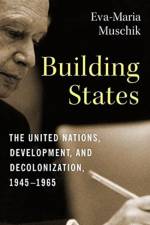
Building States examines how the UN tried to manage the dissolution of European empires in the 1950s and 1960s-and helped transform the practice of international development and the meaning of state sovereignty in the process. Eva-Maria Muschik traces how UN personnel pioneered a new kind of state building in the midst of decolonization.
Abonner på vårt nyhetsbrev og få rabatter og inspirasjon til din neste leseopplevelse.
Ved å abonnere godtar du vår personvernerklæring.