

Gjør som tusenvis av andre bokelskere
Abonner på vårt nyhetsbrev og få rabatter og inspirasjon til din neste leseopplevelse.
Ved å abonnere godtar du vår personvernerklæring.Du kan når som helst melde deg av våre nyhetsbrev.

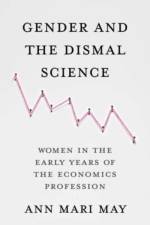
This book is a groundbreaking account of the role of women during the formative years of American economics. Blending rich historical detail with extensive empirical data, Ann Mari May examines the structural and institutional factors that excluded women, from graduate education to academic publishing to university hiring practices.
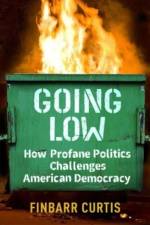
Going Low examines how the offensive style of contemporary politics challenges liberal democratic institutions. Considering the rise of illiberal politics and debates about the limits of free speech, Finbarr Curtis draws on the insights of religious studies to rethink provocation and transgression.
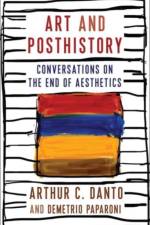
From the 1990s until just before his death, the legendary art critic and philosopher Arthur C. Danto carried out extended conversations about contemporary art with the prominent Italian critic Demetrio Paparoni. Art and Posthistory presents these rich dialogues and correspondence, testifying to the ongoing importance of Danto's ideas.
Kevin Munger marshals novel data and survey evidence to argue that generational conflict will define the politics of the next decade. He shows that a common "cohort consciousness" binds aging Boomer voters into a bloc-but a shared identity and purpose among Millennials and Gen Z could topple Boomer power.
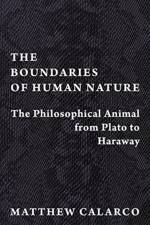
Matthew Calarco explores key issues in the philosophy of animals and their significance for our contemporary world. The Boundaries of Human Nature shows readers why philosophy can help transform not just the way we think about animals but also how we interact with them.
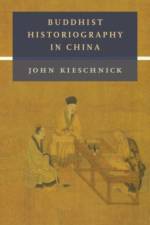
John Kieschnick provides an innovative, expansive account of how Chinese Buddhists have sought to understand their history through a Buddhist lens. Exploring a series of themes in mainstream Buddhist historiographical works from the fifth to the twentieth century, he looks for what they tell us about their compilers' understanding of history.
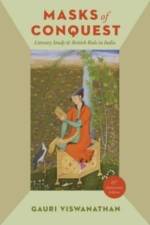
Describes the introduction of English studies in India under British rule and its function as an effective form of political control
Vol. 5: "A personal name index, by Janet Krompart."
Revisiting the philosopher's key texts, Lumsden calls attention to Hegel's reformulation of liberal and Cartesian conceptions of subjectivity, identifying a critical though unrecognized continuity between poststructuralism and German idealism
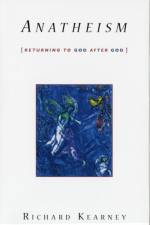
Has the passing of the old God paved the way for a new kind of religious project, a more responsible way to seek, sound, and love the things we call divine? Has the suspension of dogmatic certainties and presumptions opened a space in which we can encounter religious wonder anew? Situated at the split between theism and atheism, we now have the opportunity to respond in deeper, freer ways to things we cannot fathom or prove. Distinguished philosopher Richard Kearney calls this condition ana-theos, or God after God-a moment of creative "e;not knowing"e; that signifies a break with former sureties and invites us to forge new meanings from the most ancient of wisdoms. Anatheism refers to an inaugural event that lies at the heart of every great religion, a wager between hospitality and hostility to the stranger, the other the sense of something "e;more."e; By analyzing the roots of our own anatheistic moment, Kearney shows not only how a return to God is possible for those who seek it but also how a more liberating faith can be born. Kearney begins by locating a turn toward sacred secularity in contemporary philosophy, focusing on Maurice Merleau-Ponty and Paul Ricoeur. He then marks "e;epiphanies"e; in the modernist masterpieces of James Joyce, Marcel Proust, and Virginia Woolf. Kearney concludes with a discussion of the role of theism and atheism in conflict and peace, confronting the distinction between sacramental and sacrificial belief or the God who gives life and the God who takes it away. Accepting that we can never be sure about God, he argues, is the only way to rediscover a hidden holiness in life and to reclaim an everyday divinity.
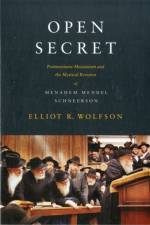
Menahem Mendel Schneerson (1902-1994) was the seventh and seemingly last Rebbe of the Habad-Lubavitch dynasty. Marked by conflicting tendencies, Schneerson was a radical messianic visionary who promoted a conservative political agenda, a reclusive contemplative who built a hasidic sect into an international movement, and a man dedicated to the exposition of mysteries who nevertheless harbored many secrets. Schneerson astutely masked views that might be deemed heterodox by the canons of orthodoxy while engineering a fundamentalist ideology that could subvert traditional gender hierarchy, the halakhic distinction between permissible and forbidden, and the social-anthropological division between Jew and Gentile. While most literature on the Rebbe focuses on whether or not he identified with the role of Messiah, Elliot R. Wolfson, a leading scholar of Jewish mysticism and the phenomenology of religious experience, concentrates instead on Schneerson's apocalyptic sensibility and his promotion of a mystical consciousness that undermines all discrimination. For Schneerson, the ploy of secrecy is crucial to the dissemination of the messianic secret. To be enlightened messianically is to be delivered from all conceptual limitations, even the very notion of becoming emancipated from limitation. The ultimate liberation, or true and complete redemption, fuses the believer into an infinite essence beyond all duality, even the duality of being emancipated and not emancipated an emancipation, in other words, that emancipates one from the bind of emancipation. At its deepest level, Schneerson's eschatological orientation discerned that a spiritual master, if he be true, must dispose of the mask of mastery. Situating Habad's thought within the evolution of kabbalistic mysticism, the history of Western philosophy, and Mahayana Buddhism, Wolfson articulates Schneerson's rich theology and profound philosophy, concentrating on the nature of apophatic embodiment, semiotic materiality, hypernomian transvaluation, nondifferentiated alterity, and atemporal temporality.
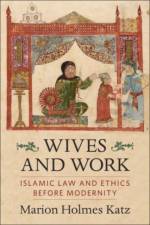
It is widely held today that classical Islamic law denies that wives have any obligation to do housework. Marion Holmes Katz offers a new account of debates on wives' domestic labor that recasts the historical relationship between Islamic law and ethics.
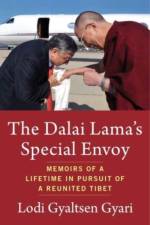
Lodi Gyaltsen Gyari spent decades striving for resolution of the Tibetan-Chinese conflict. He was the Dalai Lama's special envoy and chief negotiator with the People's Republic of China in the formal negotiations over the status of Tibet. In this revealing memoir, Gyari chronicles his lifetime of service to the Dalai Lama and the Tibetan cause.
Combining poetic observation with philosophical contemplation and scientific evidence, Adrian Parr offers a moving vision of a world in upheaval and a potent manifesto for survival. Earthlings is both a joyful celebration of the magnificence of the biosphere and an urgent call for action to save it.
Wai-yee Li traces notions of the pleasures and dangers of things in the literature and thought of late imperial China. She considers core oppositions-people and things, elegance and vulgarity, real and fake, lost and found-to tease out the ambiguities of material culture.
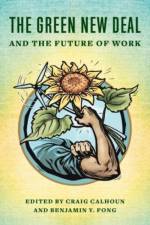
This book brings together leading experts to explore the possibilities of the Green New Deal, emphasizing the future of work. They examine transformations that are already underway and put forth bold new proposals that can provide jobs while reducing carbon consumption-building a world that is sustainable both economically and ecologically.
This book brings together leading experts to explore the possibilities of the Green New Deal, emphasizing the future of work. They examine transformations that are already underway and put forth bold new proposals that can provide jobs while reducing carbon consumption-building a world that is sustainable both economically and ecologically.
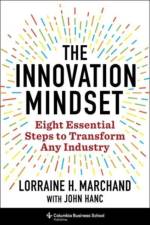
Lorraine Marchand lays out a step-by-step framework for spurring success. She shares her eight laws of innovation, a formula for driving significant and lasting transformation in any organization.
What Really Counts is an essential, firsthand story of the promise and challenges of accounting for social, economic, and environmental benefits. Ronald Colman recounts two decades of working with three governments to adopt measures capable of quantifying factors that GDP overlooks.
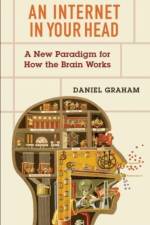
The computational neuroscientist Daniel Graham offers an innovative paradigm for understanding the brain. He argues that the brain is not like a single computer-it is a communication system, like the internet.
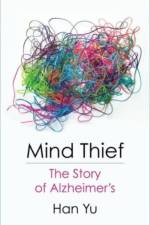
Mind Thief is a comprehensive and engaging history of Alzheimer's that demystifies efforts to understand the disease. Beginning with the discovery of "presenile dementia" in the early twentieth century, Han Yu examines over a century of research and controversy.
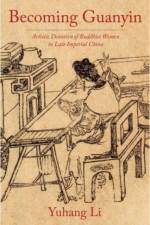
Yuhang Li examines how lay Buddhist women in late imperial China forged a connection with the subject of their devotion, arguing that women used their own bodies to echo that of Guanyin. She combines empirical research with theoretical insights from both art history and Buddhist studies.
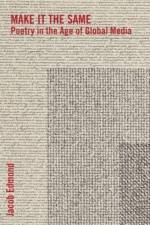
Jacob Edmond examines the turn toward repetition in poetry, using the explosion of copying to offer a deeply inventive account of modern and contemporary literature. Make It the Same explores how poetry is increasingly made from other texts through sampling, appropriation, and other forms of repetition.
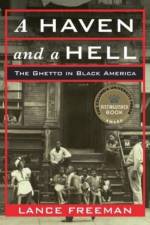
Lance Freeman traces the evolving role of predominantly black neighborhoods in northern cities from the late nineteenth century through the present day. He reveals the forces that caused the ghetto's role as haven or hell to wax and wane.
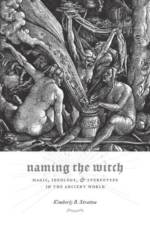
Investigates the cultural and ideological motivations behind early imaginings of the magician, the sorceress, and the witch in the ancient world. This book highlights the degree to which these ancient cultures shared ideas about power and legitimate authority, even while constructing and deploying those ideas in different ways.
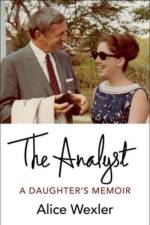
The Analyst is an intimate and searching portrait of Milton Wexler, written by his daughter, an acclaimed historian. Alice Wexler illuminates her father's intense private life and explores how his life and work illuminate the broader reaches of Freudian ideas in the United States.
Ruth DeFries argues that a surprising set of time-tested strategies from the natural world can help humanity weather contemporary crises. Exploring the lessons that life on Earth can teach us about coping with complexity, What Would Nature Do? offers timely options for civilization to reorganize for a safe and prosperous future.
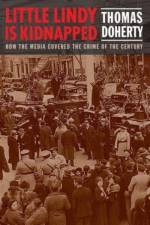
Thomas Doherty offers a lively and comprehensive cultural history of the media coverage of the abduction of the child of Charles and Anne Lindbergh and its aftermath. He traces how newspapers, radio, and newsreels reported on what was dubbed the "crime of the century."
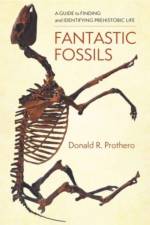
In Fantastic Fossils, Donald R. Prothero offers an accessible, entertaining, and richly illustrated guide to the paleontologist's journey. He details the best places to look for fossils, the art of how to find them, and how to classify the major types.
Abonner på vårt nyhetsbrev og få rabatter og inspirasjon til din neste leseopplevelse.
Ved å abonnere godtar du vår personvernerklæring.