



















Gjør som tusenvis av andre bokelskere
Abonner på vårt nyhetsbrev og få rabatter og inspirasjon til din neste leseopplevelse.
Ved å abonnere godtar du vår personvernerklæring.Du kan når som helst melde deg av våre nyhetsbrev.

Scholarship on early China has traditionally focused on a core group of canonical texts. However, understudied sources have the potential to shift perspectives on fundamental aspects of Chinese intellectual, religious, and political history. Yegor Grebnev examines crucial noncanonical texts preserved in the Yi Zhou shu (Neglected Zhou Scriptures) and the Grand Duke traditions, which represent scriptural traditions influential during the Warring States period but sidelined in later history. He develops an innovative framework for the study and interpretation of these texts, focusing on their role in the mediation of royal legitimacy and their formative impact on early Daoism.Grebnev demonstrates the centrality of the Yi Zhou shu in Chinese intellectual history by highlighting its simultaneous connections to canonical traditions and esoteric Daoism. He also shows that the Daoist rituals of textual transmission embedded in the Grand Duke traditions bear an imprint of the courtly environment of the Warring States period, where early Daoists strove for prestige and power, offering legitimacy through texts ascribed to the mythical sage rulers. These rituals appear to have emerged at the same period as the core Daoist philosophical texts and not several centuries later as conventionally believed, which calls for a reassessment of the history of Daoism's interrelated religious and philosophical strands. Offering a far-reaching reconsideration of early Chinese intellectual and religious history, Mediation of Legitimacy in Early China sheds new light on the foundations of the Chinese textual tradition.
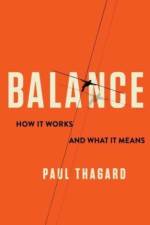
Living is a balancing act. Ordinary activities like walking, running, or riding a bike require the brain to keep the body in balance. A dancer's poised elegance and a tightrope walker's breathtaking performance are feats of balance. Language abounds with expressions and figures of speech that invoke balance. People fret over work-life balance or try to eat a balanced diet. The concept crops up from politics-checks and balances, the balance of power, balanced budgets-to science, in which ideas of equilibrium are crucial. Why is balance so fundamental, and how do physical and metaphorical balance shed light on each other?Paul Thagard explores the physiological workings and metaphorical resonance of balance in the brain, the body, and society. He describes the neural mechanisms that keep bodies balanced and explains why their failures can result in nausea, falls, or vertigo. Thagard connects bodily balance with leading ideas in neuroscience, including the nature of consciousness. He analyzes balance metaphors across science, medicine, economics, the arts, and philosophy, showing why some aid understanding but others are misleading or harmful. Thagard contends that balance is ultimately a matter of making sense of the world. In both literal and metaphorical senses, balance is what enables people to solve the puzzles of life by turning sensory signals or an incongruous comparison into a coherent whole.Bridging philosophy, psychology, and neuroscience, Balance shows how an unheralded concept's many meanings illuminate the human condition.
Abonner på vårt nyhetsbrev og få rabatter og inspirasjon til din neste leseopplevelse.
Ved å abonnere godtar du vår personvernerklæring.