















Gjør som tusenvis av andre bokelskere
Abonner på vårt nyhetsbrev og få rabatter og inspirasjon til din neste leseopplevelse.
Ved å abonnere godtar du vår personvernerklæring.Du kan når som helst melde deg av våre nyhetsbrev.

A survey of female monasticism that begins with the first communities of Late Antiquity and ends with the Reformation. It focuses on the visual culture of female monasticism in the European Middle Ages.
Features essays by scholars and practitioners in the arena of US-Taiwan-Chinese relations. This book clarifies historical developments, examines myths about past and present policies, and assesses issues facing policymakers. It examines a variety of issues, including the movement for independence and its place in Taiwanese domestic politics.
In this illustrated work, Kurten offers a vivid panorama of vertebrate animal life as it unfolded during the more than three million years before humans came to the New World.
Describes the basic structure, concepts, and application of deterministic and probabilistic seismic hazard analysis from a perspective useful to earth scientists, engineers, and decision-makers dealing with hazard evaluation. Draws on Reiter's long experience with government agencies concerned with
Asks whether profit maximization and the generation of value for shareholders is compatible with policies that support social and environmental goals. This book presents an examination of how social and environmental performance affects a corporation's profitability and how the stock market reacts to a firm's social and environmental behavior.
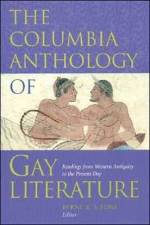
Here at last is a single volume that reveals the bright thread of gay literature throughout the Western tradition. With hundreds of works by authors ranging from Ovid to James Baldwin, from Plato to Oscar Wilde, The Columbia Anthology of Gay Literature presents a wide range of poetry, fiction, essays, and autobiography that depict love, friendship, intimacy, desire, and sex between men.
Japanese Zen often implies that textual learning (gakumon) in Buddhism and personal experience (taiken) in Zen are separate, but the career and writings of the Chinese Tang dynasty Chan master Guifeng Zongmi (780-841) undermine this division. For the first time in English, Jeffrey Broughton presents an annotated translation of Zongmi's magnum opus, the Chan Prolegomenon, along with translations of his Chan Letter and Chan Notes. The Chan Prolegomenon persuasively argues that Chan "axiom realizations" are identical to the teachings embedded in canonical word and that one who transmits Chan must use the sutras and treatises as a standard. Japanese Rinzai Zen has, since the Edo period, marginalized the sutra-based Chan of the Chan Prolegomenon and its successor text, the Mind Mirror (Zongjinglu) of Yongming Yanshou (904-976). This book contains the first in-depth treatment in English of the neglected Mind Mirror, positioning it as a restatement of Zongmi's work for a Song dynasty audience. The ideas and models of the Chan Prolegomenon, often disseminated in East Asia through the conduit of the Mind Mirror, were highly influential in the Chan traditions of Song and Ming China, Korea from the late Koryo onward, and Kamakura-Muromachi Japan. In addition, Tangut-language translations of Zongmi's Chan Prolegomenon and Chan Letter constitute the very basis of the Chan tradition of the state of Xixia. As Broughton shows, the sutra-based Chan of Zongmi and Yanshou was much more normative in the East Asian world than previously believed, and readers who seek a deeper, more complete understanding of the Chan tradition will experience a surprising reorientation in this book.
How does bison meat taste after being frozen for 30,000 years? Were Ice Age cave painters trying to create "art" or just record history? How did ancient oil spills occur, before oil companies existed? Those are just some of the questions renowned paleontologist Bjorn Kurten answers in these lighthearted essays on fossils, ancient life, and related topics.
The sensuous human form-elegant and eye-catching-is the dominant feature of premodern Indian art. From the powerful god Shiva, greatest of all yogis and most beautiful of all beings, to stone dancers twisting along temple walls, the body in Indian art is always richly adorned. Alankara (ornament) protects the body and makes it complete and attractive; to be unornamented is to invite misfortune. In The Body Adorned, Vidya Dehejia, who has dedicated her career to the study of Indian art, draws on the literature of court poets, the hymns of saints and acharyas, and verses from inscriptions to illuminate premodern India's unique treatment of the sculpted and painted form. She focuses on the coexistence of sacred and sensuous images within the common boundaries of Buddhist, Jain, and Hindu "sacred spaces," redefining terms like "sacred" and "secular" in relation to Indian architecture. She also considers the paradox of passionate poetry, in which saints praised the sheer bodily beauty of the divine form, and nonsacred Rajput painted manuscripts, which freely inserted gods into the earthly realm of the courts. By juxtaposing visual and literary sources, Dehejia demonstrates the harmony between the sacred and the profane in classical Indian culture. Her synthesis of art, literature, and cultural materials not only generates an all-inclusive picture of the period but also revolutionizes our understanding of the cultural ethos of premodern India.
Abonner på vårt nyhetsbrev og få rabatter og inspirasjon til din neste leseopplevelse.
Ved å abonnere godtar du vår personvernerklæring.