





Gjør som tusenvis av andre bokelskere
Abonner på vårt nyhetsbrev og få rabatter og inspirasjon til din neste leseopplevelse.
Ved å abonnere godtar du vår personvernerklæring.Du kan når som helst melde deg av våre nyhetsbrev.

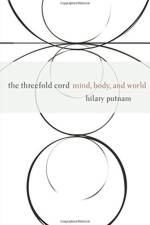
Offers solutions to some of philosophy's vexing problems. This book examines the problem of realism: Is objective truth possible? It acknowledges the impasse between empirical and idealist approaches to this question, critiquing them both, however, by highlighting the false assumption they share, that we cannot perceive the world directly.
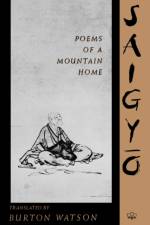
Gathers two hundred poems by the twelfth-century Japanese poet, and offers a brief introduction to his life and the traditions of Japanese court poetry.
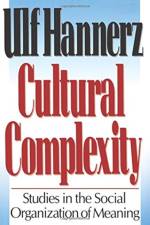
A rich, witty, and accessible introduction to the anthropology of contemporary cultures, Cultural Complexity emphasizes that culture is organized in terms of states, markets, and movements.
In this interdisciplinary volume, a group of prominent international scholars considers alternative political formations to the nation-state, discussing their ability to preserve and expand the achievements of democratic constitutionalism in the twenty-first century and their capacity to deal with deep societal differences.
Critical Theory at a Crossroads presents conversations with prominent theorists about the crises that have marked the past years and the use of the term "crisis" in political discourse. They offer their views on contemporary challenges and how we might address them, candidly discussing the alternatives that new social movements have offered.
This volume is a comprehensive sourcebook of newly translated texts from the Safavid, Ottoman, and Mughal empires of the fifteenth through eighteenth centuries, accompanied by scholarly essays, that aims to provide a new model for the study and teaching of the early modern history of the Near East and India.
In a time of reckoning with wrongdoing in high places, this year's National Magazine Awards finalists and winners focus on abuse of power in all its forms.
Hitchcock Annual, volume 22, contains essays on Muybridge and Vertigo; undoing propaganda in Yeats, Hitchcock, and de Man; three newspaper articles Hitchcock wrote after visiting Hollywood in 1938; interviews with screenwriters Arthur Laurents and Howard Fast; and a review article on several new books on Hitchcock.
Mathias Thaler articulates a novel perspective on the study of violence that demonstrates why the imagination matters for political theory. He explores how narrative art, thought experiments, and historical events can challenge and enlarge our existing ways of thinking about violence.
This book brings together essays on Alan Brinkley's major works and ideas as well as personal reminiscences from leading historians and thinkers beyond the academy. They chronicle the life and thought of a working historian, the development of historical scholarship in our time, and the role that history plays in our public life.
In this interdisciplinary volume, a group of prominent international scholars considers alternative political formations to the nation-state, discussing their ability to preserve and expand the achievements of democratic constitutionalism in the twenty-first century and their capacity to deal with deep societal differences.
Critical Theory at a Crossroads presents conversations with prominent theorists about the crises that have marked the past years and the use of the term "crisis" in political discourse. They offer their views on contemporary challenges and how we might address them, candidly discussing the alternatives that new social movements have offered.
Troubling Transparency brings together leading scholars from different disciplines to analyze freedom of information policies in the United States and abroad-how they are working, how they are failing, and how they might be improved, especially the mixed legacy and effectiveness of the U.S. Freedom of Information Act (FOIA).
Troubling Transparency brings together leading scholars from different disciplines to analyze freedom of information policies in the United States and abroad-how they are working, how they are failing, and how they might be improved, especially the mixed legacy and effectiveness of the U.S. Freedom of Information Act (FOIA).
Elizabeth A. Segal explains how we can develop our ability to understand one another and have compassion toward different social groups. A useful explanation of an often misunderstood concept, Social Empathy brings together sociology, psychology, social work, and cognitive neuroscience to illustrate how to become better advocates for justice.
This book seek to understand modern China and India through an unprecedented comparative analysis of their long histories. Using new sources, making new connections, and reexamining old assumptions, noted scholars of China and India pair up in each chapter to tackle major questions by combining their expertise.
This book seek to understand modern China and India through an unprecedented comparative analysis of their long histories. Using new sources, making new connections, and reexamining old assumptions, noted scholars of China and India pair up in each chapter to tackle major questions by combining their expertise.
Leading scholars consider crucial aspects of Harlem's social, political, and intellectual history, its artistic, cultural, and economic life, and its representation across an array of media and genres. Race Capital? models new Harlem scholarship that interrogates exceptionalism while taking seriously the importance of place and locality.
In this groundbreaking book, leading Arab and Jewish intellectuals examine how and why the Holocaust and the Nakba are interlinked without blurring fundamental differences between them. It searches for a new historical and political grammar for relating and narrating their complicated intersections.
Distinguished scholars evaluate the contribution pragmatism can make to a viable naturalism, exploring what distinguishes pragmatic naturalism from other naturalisms. They examine pragmatism's distinctive form of nonreductive naturalism and consider its merits for the study of religion, democratic theory, and as a general philosophical orientation.
This volume is a comprehensive sourcebook of newly translated texts from the Safavid, Ottoman, and Mughal empires of the fifteenth through eighteenth centuries, accompanied by scholarly essays, that aims to provide a new model for the study and teaching of the early modern history of the Near East and India.
Stanley Kubrick's The Shining (1980) is both a successful mainstream horror film and an esoteric object for cult audiences who are convinced that the film means something totally different. This book investigates what has made The Shining a key cult film while also addressing the range of meanings and interpretations assigned to it.
William H. Hill traces the development of the post-Cold War European security order to explain today's tensions, showing how attempts to include Russia were overshadowed by the domination of NATO and the EU. Closing with war in Ukraine, No Place for Russia argues that the post-Cold War order in Europe has been irrevocably shattered.
Donald Trump's election has called into question many fundamental assumptions about politics and society. Collecting a wide range of perspectives from leading scholars, Chaos in the Liberal Order explores the global trends that led to Trump's stunning victory and the impact his presidency will have on the international political landscape.
Donald Trump's election has called into question many fundamental assumptions about politics and society. Collecting a wide range of perspectives from leading scholars, Chaos in the Liberal Order explores the global trends that led to Trump's stunning victory and the impact his presidency will have on the international political landscape.
Coping with the Climate Crisis brings together leading experts from academia and policy circles to explore issues related to the implementation of the COP21 Paris Agreement and the challenges of accelerating the transition toward sustainable development. The book synthesizes the key insights of climate change economics in an accessible guide.
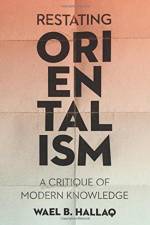
Wael B. Hallaq takes critique of Orientalism as a point of departure for rethinking the modern project. A remarkably ambitious attempt to overturn the foundations of a wide range of academic disciplines, Restating Orientalism exposes the depth of academia's lethal complicity in modern forms of capitalism, colonialism, and hegemonic power.
Abonner på vårt nyhetsbrev og få rabatter og inspirasjon til din neste leseopplevelse.
Ved å abonnere godtar du vår personvernerklæring.