















Gjør som tusenvis av andre bokelskere
Abonner på vårt nyhetsbrev og få rabatter og inspirasjon til din neste leseopplevelse.
Ved å abonnere godtar du vår personvernerklæring.Du kan når som helst melde deg av våre nyhetsbrev.

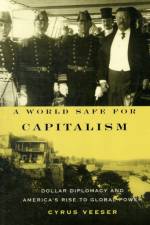
This award-winning book provides a unique window on how America began to intervene in world affairs. In exploring what might be called the prehistory of Dollar Diplomacy, Cyrus Veeser brings together developments in New York, Washington, Santo Domingo, Brussels, and London. Theodore Roosevelt plays a leading role in the story as do State Department officials, Caribbean rulers, Democratic party leaders, bankers, economists, international lawyers, sugar planters, and European bondholders, among others. The book recounts a little-known incident: the takeover by the Santo Domingo Improvement Company (SDIC) of the foreign debt, national railroad, and national bank of the Dominican Republic. The inevitable conflict between private interest and public policy led President Roosevelt to launch a sweeping new policy that became known as the Roosevelt corollary to the Monroe Doctrine. The corollary gave the U. S. the right to intervene anywhere in Latin American that "e;wrongdoing or impotence"e; (in T. R.'s words) threatened "e;civilized society."e; The "e;wrongdoer"e; in this case was the SDIC. Imposing government control over corporations was launched and became a hallmark of domestic policy. By proposing an economic remedy to a political problem, the book anticipates policies embodied in the Marshall Plan, the International Monetary Fund, and the World Bank.
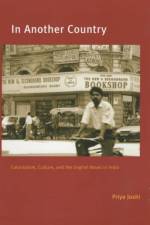
In a work of stunning archival recovery and interpretive virtuosity, Priya Joshi illuminates the cultural work performed by two kinds of English novels in India during the colonial and postcolonial periods. Spanning the nineteenth and twentieth centuries, readers and writers, empire and nation, consumption and production, In Another Country vividly explores a process by which first readers and then writers of the English novel indigenized the once imperial form and put it to their own uses. Asking what nineteenth-century Indian readers chose to read and why, Joshi shows how these readers transformed the literary and cultural influences of empire. By subsequently analyzing the eventual rise of the English novel in India, she further demonstrates how Indian novelists, from Krupa Satthianadhan to Salman Rushdie, took an alien form in an alien language and used it to address local needs. Taken together in this manner, reading and writing reveal the complex ways in which culture is continually translated and transformed in a colonial and postcolonial context.
The idea of social capital allows scholars to assess the quality of relationships among people within a particular community and show how that quality affects the ability to achieve shared goals. With evidence collected from sixty-nine villages in India, Krishna investigates what social capital is, how it operates in practice, and what results it can be expected to produce. Does social capital provide a viable means for advancing economic development, promoting ethnic peace, and strengthening democratic governance? The world is richer than ever before, but more than a fifth of its people are poor and miserable. Civil wars and ethnic strife continue to mar prospects for peace. Democracy is in place in most countries, but large numbers of citizens do not benefit from it. How can development, peace and democracy become more fruitful for the ordinary citizen? This book shows how social capital is a crucial dimension of any solution to these problems.
Adam of Bremen's history of the see of Hamburg and of Christian missions in northern Europe from the late eighth to the late eleventh century is the primary source of our knowledge of the history, geography, and ethnography of the Scandinavian and Baltic regions and their peoples before the thirteenth century. Arriving in Bremen in 1066 and soon falling under the tutelage of Archbishop Adalbert, who figures prominently in the narrative, Adam recorded the centuries-long campaign by his church to convert Slavic and Scandinavian peoples. His History vividly reflects the firsthand accounts he received from travelers, traders, and missionaries on the peripheries of medieval Europe.
Why? is the simple, impulsive question we ask when confronted by horrible acts of hatred and violence. Why do students shoot fellow students or employees their coworkers? Why do mothers drown their children or husbands stalk and kill their wives? Love to Hate challenges us to turn this question upon ourselves at a deeper level. Why, as a culture, are we so fascinated by these acts? Why do we bestow celebrity on the perpetrators, while allowing the victims to fade into a second death of obscurity? Are we, as Pope John Paul II famously accused, "e;a culture of death"e;? And if so, how can we break free of this unacknowledged aspect of the cycle of violence? Unlike those who point solely to media imagery, splintered families, or lax gun control laws in search of the roots of America's endemic violence, Jody M. Roy suggests that we all must be held responsible. She argues that we reveal our love affair with hatred and violence in the ways we think and speak in our daily lives and in our popular culture. The very words we use function as building blocks of callousness and contempt, betraying our immersion in subtexts of violence and hatred. These subtexts are further revealed in our complex attitudes toward street gangs, school shooters, serial killers, and hate groups and the paroxysms of violence they unleash. As spectators, driven by our impulse to watch, we become an integral part of the equation of violence. In the book's final section, "e;Freeing Ourselves of Our Obsession with Hatred and Violence,"e; Roy offers practical steps we can take-as parents, consumers, and voters-to free ourselves from linguistic and cultural complicity and to help create in America a culture of life.
The medieval Buddhist poet-monk Tonna (1289-1372) was regarded as the leading poet of his day and a prominent scholar and critic. Despite his commoner status, he was assigned the task of acting as compiler for an imperial anthology of poetry and counted a number of prominent courtiers among his students and patrons. And yet his works, which remained required reading for virtually all serious poets in Japan for five hundred years after his death, have until recently received little scholarly attention in either Japan or the West. This anthology contains translations of 134 of Tonna's uta (the classical poetic form) and 16 linked verse couplets (renga) from his Grass Hut Collection and selections from a work of prose criticism, From a Frog at the Bottom of a Well, along with an introduction and explanatory notes, a glossary of important names and places, and a list of sources for the poems.
Designed to trick the eye and stimulate the imagination, special effects have changed the way we look at films and the worlds created in them. Computer-generated imagery (CGI), as seen in Hollywood blockbusters like Star Wars, Terminator 2, Jurassic Park, Independence Day, Men in Black, and The Matrix, is just the latest advance in the evolution of special effects. Even as special effects have been marveled at by millions, this is the first investigation of their broader cultural reception. Moving from an exploration of nineteenth-century popular science and magic to the Hollywood science fiction cinema of our time, Special Effects examines the history, advancements, and connoisseurship of special effects, asking what makes certain types of cinematic effects special, why this matters, and for whom. Michele Pierson shows how popular science magazines, genre filmzines, and computer lifestyle magazines have articulated an aesthetic criticism of this emerging art form and have helped shape how these hugely popular on-screen technological wonders have been viewed by moviegoers.
Whether discussing habitat placement for the northern spotted owl or black-tailed prairie dog or strategies for controlling exotic pests, this book explains how capturing ecological relationships across a landscape with pragmatic optimization models can be applied to real world problems. Using linear programming, Hof and Bevers show how it is possible for the researcher to include many thousands of choice variables and many thousands of constraints and still be quite confident of being able to solve the problem in hand with widely available software. The authors' emphasis is to preserve optimality and explore how much ecosystem function can be captured, stressing the solvability of large problems such as those in real world case studies.
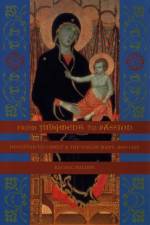
Devotion to the crucified Christ is one of the most familiar, yet most disconcerting artifacts of medieval European civilization. How and why did the images of the dying God-man and his grieving mother achieve such prominence, inspiring unparalleled religious creativity as well such imitative extremes as celibacy and self-flagellation? To answer this question, Rachel Fulton ranges over developments in liturgical performance, private prayer, doctrine, and art. She considers the fear occasioned by the disappointed hopes of medieval Christians convinced that the apocalypse would come soon, the revulsion of medieval Jews at being baptized in the name of God born from a woman, the reform of the Church in light of a new European money economy, the eroticism of the Marian exegesis of the Song of Songs, and much more. Devotion to the crucified Christ is one of the most familiar yet disconcerting artifacts of medieval European civilization. How and why did the images of the dying God-man and his grieving mother achieve such prominence, inspiring unparalleled religious creativity and emotional artistry even as they fostered such imitative extremes as celibacy, crusade, and self-flagellation?Magisterial in style and comprehensive in scope, From Judgment to Passion is the first systematic attempt to explain the origins and initial development of European devotion to Christ in his suffering humanity and Mary in her compassionate grief. Rachel Fulton examines liturgical performance, doctrine, private prayer, scriptural exegesis, and art in order to illuminate and explain the powerful desire shared by medieval women and men to identify with the crucified Christ and his mother.The book begins with the Carolingian campaign to convert the newly conquered pagan Saxons, in particular with the effort to explain for these new converts the mystery of the Eucharist, the miraculous presence of Christ's body at the Mass. Moving on to the early eleventh century, when Christ's failure to return on the millennium of his Passion (A.D. 1033) necessitated for believers a radical revision of Christian history, Fulton examines the novel liturgies and devotions that arose amid this apocalyptic disappointment. The book turns finally to the twelfth century when, in the wake of the capture of Jerusalem in the First Crusade, there occurred the full flowering of a new, more emotional sensibility of faith, epitomized by the eroticism of the Marian exegesis of the Song of Songs and by the artistic and architectural innovations we have come to think of as quintessentially high medieval.In addition to its concern with explaining devotional change, From Judgment to Passion presses a second, crucial question: How is it possible for modern historians to understand not only the social and cultural functions but also the experience of faith-the impulsive engagement with the emotions, sometimes ineffable, of prayer and devotion? The answer, magnificently exemplified throughout this book's narrative, lies in imaginative empathy, the same incorporation of self into story that lay at the heart of the medieval effort to identify with Christ and Mary in their love and pain.
From modest chapels to majestic cathedrals, and historic synagogues to modern mosques and Buddhist temples: this photo-filled, pocket-size guidebook presents 1,079 houses of worship in Manhattan and lays to rest the common perception that skyscrapers, bridges, and parks are the only defining moments in the architectural history of New York City. With his exhaustive research of the city's religious buildings, David W. Dunlap has revealed (and at times unearthed) an urban history that reinforces New York as a truly vibrant center of community and cultural diversity.Published in conjunction with a New-York Historical Society exhibition, From Abyssinian to Zion is a sometimes quirky, always intriguing journey of discovery for tourists as well as native New Yorkers. Which popular pizzeria occupies the site of the cradle of the Christian and Missionary Alliance movement, the Gospel Tabernacle? And where can you find the only house of worship in Manhattan built during the reign of Caesar Augustus? Arranged alphabetically, this handy guide chronicles both extant and historical structures and includes* 650 original photographs and 250 photographs from rarely seen archives* 24 detailed neighborhood maps, pinpointing the location of each building* concise listings, with histories of the congregations, descriptions of architecture, and accounts of prominent priests, ministers, rabbis, imams, and leading personalities in many of the congregations
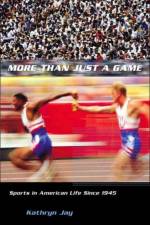
More Than Just a Game tracks the explosion of the sports industry in the United States since 1945 and how it has shaped class, racial, gender, and national identities. By examining both professional and intercollegiate sports such as baseball, football, basketball, golf, tennis, and stock car racing, Kathryn Jay looks at the impact of packaging, salary, hype, corporate sponsorship, drug use, and the presence of women and African American players. Jay also considers the persistent belief that sports encourage good citizenship and morality despite a rise in cheating and violent behavior and an unabashed emphasis on financial gain. More Than Just a Game is a fascinating exploration of a phenomenon that has engaged the American imagination and thrilled fans for decades.
What happens when a critique of modernity-a "e;revolt against the traditions of the Western world"e;-is situated within a non-European context, where the concept of the modern has been inevitably tied to the image of the West?Seiji M. Lippit offers the first comprehensive study in English of Japanese modernist fiction of the 1920s and 1930s. Through close readings of four leading figures of this movement- Akutagawa, Yokomitsu, Kawabata, and Hayashi-Lippit aims to establish a theoretical and historical framework for the analysis of Japanese modernism.The 1920s and 1930s witnessed a general sense of crisis surrounding the institution of literature, marked by both the radical politicization of literary practice and the explosion of new forms of cultural production represented by mass culture. Against this backdrop, this study traces the heterogeneous literary topographies of modernist writings. Through an engagement with questions of representation, subjectivity, and ideology, it situates the disintegration of literary form in these texts within the writers' exploration of the fluid borderlines of Japanese modernity.
The Columbia Guide to East African Literature in English Since 1945 challenges the conventional belief that the English-language literary traditions of East Africa are restricted to the former British colonies of Kenya, Uganda, and Tanzania. Instead, these traditions stretch far into such neighboring countries as Somalia and Ethiopia.Simon Gikandi and Evan Mwangi assemble a truly inclusive list of major writers and trends. They begin with a chronology of key historical events and an overview of the emergence and transformation of literary culture in the region. Then they provide an alphabetical list of major writers and brief descriptions of their concerns and achievements. Some of the writers discussed include the Kenyan novelists Grace Ogot and Ngugi wa Thiong'o, Ugandan poet and essayist Taban Lo Liyong, Ethiopian playwright and poet Tsegaye Gabre-Medhin, Tanzanian novelist and diplomat Peter Palangyo, Ethiopian novelist Berhane Mariam Sahle-Sellassie, and the novelist M. G. Vassanji, who portrays the Indian diaspora in Africa, Europe, and North America. Separate entries within this list describe thematic concerns, such as colonialism, decolonization, the black aesthetic, and the language question; the growth of genres like autobiography and popular literature; important movements like cultural nationalism and feminism; and the impact of major forces such as AIDS/HIV, Christian missions, and urbanization. Comprehensive and richly detailed, this guide offers a fresh perspective on the role of East Africa in the development of African and world literature in English and a new understanding of the historical, cultural, and geopolitical boundaries of the region.
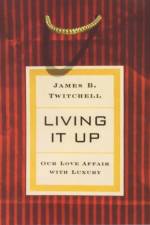
Economic downturns and terrorist attacks notwithstanding, America's love affair with luxury continues unabated. Over the last several years, luxury spending in the United States has been growing four times faster than overall spending. It has been characterized by political leaders as vital to the health of the American economy as a whole, even as an act of patriotism. Accordingly, indices of consumer confidence and purchasing seem unaffected by recession. This necessary consumption of unnecessary items and services is going on at all but the lowest layers of society: J.C. Penney now offers day spa treatments; Kmart sells cashmere bedspreads. So many products are claiming luxury status today that the credibility of the category itself is strained: for example, the name "e;pashmina"e; had to be invented to top mere cashmere.We see luxury everywhere: in storefronts, advertisements, even in the workings of our imaginations. But what is it? How is it manufactured on the factory floor and in the minds of consumers? Who cares about it and who buys it? And how concerned should we be that luxuries are commanding a larger and larger percentage of both our disposable income and our aspirations?Trolling the upscale malls of America, making his way toward the Mecca of Las Vegas, James B. Twitchell comes to some remarkable conclusions. The democratization of luxury, he contends, has been the single most important marketing phenomenon of our times. In the pages of Living It Up, Twitchell commits the academic heresy of paying respect to popular luxury consumption as a force that has united the country and the globe in a way that no war, movement, or ideology ever has. What's more, he claims, the shopping experience for Americans today has its roots in the spiritual, the religious, and the transcendent.Deft and subtle writing, audacious ideas, and a fine sense of humor inform this entertaining and insightful book.
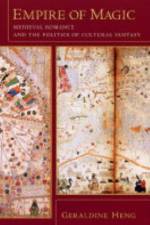
Empire of Magic offers a genesis and genealogy for medieval romance and the King Arthur legend through the history of Europe's encounters with the East in crusades, travel, missionizing, and empire formation. It also produces definitions of "e;race"e; and "e;nation"e; for the medieval period and posits that the Middle Ages and medieval fantasies of race and religion have recently returned.Drawing on feminist and gender theory, as well as cultural analyses of race, class, and colonialism, this provocative book revises our understanding of the beginnings of the nine hundred-year-old cultural genre we call romance, as well as the King Arthur legend. Geraldine Heng argues that romance arose in the twelfth century as a cultural response to the trauma and horror of taboo acts-in particular the cannibalism committed by crusaders on the bodies of Muslim enemies in Syria during the First Crusade. From such encounters with the East, Heng suggests, sprang the fantastical episodes featuring King Arthur in Geoffrey of Monmouth's chronicle The History of the Kings of England, a work where history and fantasy collide and merge, each into the other, inventing crucial new examples and models for romances to come. After locating the rise of romance and Arthurian legend in the contact zones of East and West, Heng demonstrates the adaptability of romance and its key role in the genesis of an English national identity. Discussing Jews, women, children, and sexuality in works like the romance of Richard Lionheart, stories of the saintly Constance, Arthurian chivralic literature, the legend of Prester John, and travel narratives, Heng shows how fantasy enabled audiences to work through issues of communal identity, race, color, class and alternative sexualities in socially sanctioned and safe modes of cultural discussion in which pleasure, not anxiety, was paramount. Romance also engaged with the threat of modernity in the late medieval period, as economic, social, and technological transformations occurred and awareness grew of a vastly enlarged world beyond Europe, one encompassing India, China, and Africa. Finally, Heng posits, romance locates England and Europe within an empire of magic and knowledge that surveys the world and makes it intelligible-usable-for the future.Empire of Magic is expansive in scope, spanning the eleventh to the fifteenth centuries, and detailed in coverage, examining various types of romance-historical, national, popular, chivalric, family, and travel romances, among others-to see how cultural fantasy responds to changing crises, pressures, and demands in a number of different ways. Boldly controversial, theoretically sophisticated, and historically rooted, Empire of Magic is a dramatic restaging of the role romance played in the culture of a period and world in ways that suggest how cultural fantasy still functions for us today.
Bill Grueskin, Ava Seave, and Lucas Graves spent close to a year tracking the reporting of on-site news organizations some of which were founded over a century ago and others established only in the past year or two and found in their traffic and audience engagement patterns, allocation of resources, and revenue streams ways to increase the profits of digital journalism. In chapters covering a range of concerns, from advertising models and alternative platforms to the success of paywalls, the benefits and drawbacks to aggregation, and the character of emerging news platforms, this volume identifies which digital media strategies make money, which do not, and which new approaches look promising. The most comprehensive analysis to date of digital journalism's financial outlook, this text confronts business challenges both old and new, large and small, suggesting news organizations embrace the unique opportunities of the internet rather than adapt web offerings to legacy business models. The authors ultimately argue that news organizations and their audiences must learn to accept digital platforms and their constant transformation, which demand faster and more consistent innovation and investment.
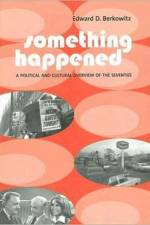
In both the literal and metaphorical senses, it seemed as if 1970s America was running out of gas. The decade not only witnessed long lines at gas stations but a citizenry that had grown weary and disillusioned. High unemployment, runaway inflation, and the energy crisis, caused in part by U.S. dependence on Arab oil, characterized an increasingly bleak economic situation. As Edward D. Berkowitz demonstrates, the end of the postwar economic boom, Watergate, and defeat in Vietnam led to an unraveling of the national consensus. During the decade, ideas about the United States, how it should be governed, and how its economy should be managed changed dramatically. Berkowitz argues that the postwar faith in sweeping social programs and a global U.S. mission was replaced by a more skeptical attitude about government's ability to positively affect society.From Woody Allen to Watergate, from the decline of the steel industry to the rise of Bill Gates, and from Saturday Night Fever to the Sunday morning fervor of evangelical preachers, Berkowitz captures the history, tone, and spirit of the seventies. He explores the decade's major political events and movements, including the rise and fall of detente, congressional reform, changes in healthcare policies, and the hostage crisis in Iran. The seventies also gave birth to several social movements and the "e;rights revolution,"e; in which women, gays and lesbians, and people with disabilities all successfully fought for greater legal and social recognition. At the same time, reaction to these social movements as well as the issue of abortion introduced a new facet into American political life-the rise of powerful, politically conservative religious organizations and activists.Berkowitz also considers important shifts in American popular culture, recounting the creative renaissance in American film as well as the birth of the Hollywood blockbuster. He discusses how television programs such as All in the Family and Charlie's Angels offered Americans both a reflection of and an escape from the problems gripping the country.
No Return Address is a vivid memoir of a life in exile and a poignant meditation on pleasure and loss, repression and transgression, and the complexities of love under harsh human conditions. In recounting her life's journey from Romania to Paris and Brussels, then on to the United States, Anca Vlasopolos writes movingly of the peculiar attributes of displacement in the contemporary world-the hyphenated, ambiguous identities; the purgatory in which immigrants await transfer to another country; the mysterious nostalgia for places and events dimly recalled. Throughout, she describes the constant search for a place to truly call home.Vlasopolos renders a clear and loving portrait of her mother, an Auschwitz survivor courageously raising a young girl by herself after the death of her husband, a political dissident. She details their years of limbo in Brussels and Paris and of settlement in Detroit, Michigan, as well as her ultimate decision to identify the United States as home, inspired by the strong multicultural quality that allows so many others to do the same.
Analytic philosophy is difficult to define since it is not so much a specific doctrine as a loose concatenation of approaches to problems. As well as having strong ties to scientism -the notion that only the methods of the natural sciences give rise to knowledge -it also has humanistic ties to the great thinkers and philosophical problems of the past. Moreover, no single feature characterizes the activities of analytic philosophers. Undaunted by these difficulties, Avrum Stroll investigates the "e;family resemblances"e; between that impressive breed of thinkers known as analytic philosophers. In so doing, he grapples with the point and purpose of doing philosophy: What is philosophy? What are its tasks? What kind of information, illumination, and understanding is it supposed to provide if it is not one of the natural sciences? Imbued with clarity, liveliness, and philosophical sophistication, Stroll's book presents a synoptic picture of the main developments in logic, philosophy of language, epistemology, and metaphysics in the past century. It does this by concentrating on the individual thinkers whose ideas have been most influential. Major themes in Twentieth-Century Analytic Philosophy include: * the innovation of mathematical logic by Gottlob Frege at the close of the nineteenth century and its independent development by Bertrand Russell; * the impact of advancements in science on the world of philosophy and its importance for understanding such doctrines as logical positivism, philosophy of language, philosophy of mind, and eliminative materialism; * the refusal by such thinkers as Wittgenstein, Moore, and Austin to treat logic as an ideal language superior to natural languages; and * a conjecture about which, if any, of the philosophers discussed in the book will enter the pantheon of philosophical gods. Along the way, Stroll also covers the theories of Rudolf Carnap, W. V. O. Quine, Gilbert Ryle, J. L. Austin, Hilary Putnam, Saul Kripke, John Searle, Ruth Marcus, and Patricia and Paul Churchland. Stroll's approach to his subject treats the critical movements in analytic philosophy in terms of the philosophers who defined them. The notoriously complex realm of analytic philosophy emerges less as an abstract enterprise than as a domain of personalities and their competing methods and arguments. The book's inventive presentations of complex logical doctrines relate them to the traditional problems of philosophy, seeking the continuity between them rather than polemical distinctions so as to bring the true differences of their respective achievements into sharper focus.
White men still hold most of the political and economic cards in the United States; yet stories about wounded and traumatized men dominate popular culture. Why are white men jumping on the victim bandwagon? Examining novels by Philip Roth, John Updike, James Dickey, John Irving, and Pat Conroy and such films as Deliverance, Misery, and Dead Poets Society-as well as other writings, including The Closing of the American Mind-Sally Robinson argues that white men are tempted by the possibilities of pain and the surprisingly pleasurable tensions that come from living in crisis.
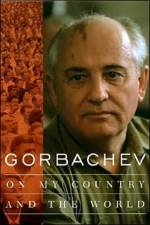
Here is the whole sweep of the Soviet experiment and experience as told by its last steward. Drawing on his own experience, rich archival material, and a keen sense of history and politics, Mikhail Gorbachev speaks his mind on a range of subjects concerning Russia's past, present, and future place in the world. Here is Gorbachev on the October Revolution, Gorbachev on the Cold War, and Gorbachev on key figures such as Lenin, Stalin, and Yeltsin. The book begins with a look back at 1917. While noting that tsarist Russia was not as backward as it is often portrayed, Gorbachev argues that the Bolshevik Revolution was inevitable and that it did much to modernize Russia. He strongly argues that the Soviet Union had a positive influence on social policy in the West, while maintaining that the development of socialism was cut short by Stalinist totalitarianism. In the next section, Gorbachev considers the fall of the USSR. What were the goals of perestroika? How did such a vast superpower disintegrate so quickly? From the awakening of ethnic tensions, to the inability of democrats to unite, to his own attempts to reform but preserve the union, Gorbachev retraces those fateful days and explains the origins of Russia's present crisis. But Gorbachev does not just train his critical eye on the past. He lays out a blueprint for where Russia needs to go in the next century, suggesting ways to strengthen the federation and achieve meaningful economic and political reforms. In the final section of the book, Gorbachev examines the "e;new thinking"e; in foreign policy that helped to end the Cold War and shows how such approaches could help resolve a range of current crises, including NATO expansion, the role of the UN, the fate of nuclear weapons, and environmental problems.Gorbachev: On My Country and the World reveals the unique vision of a man who was a powerful actor on the world stage and remains a keen observer of Russia's experience in the twentieth century.
Marking the centennial of the founding of Columbia University's school of journalism, this candid history of the school's evolution is set against the backdrop of the ongoing debate over whether journalism can-or should-be taught in America's universities.Originally known as "e;the Pulitzer School"e; in honor of its chief benefactor, the newspaper magnate Joseph Pulitzer, Columbia's school of journalism has long been a significant and highly visible presence in the journalism community. But at the turn of the twentieth century, when the school was originally conceived, journalism was taught either during an apprenticeship at a newspaper office or as a vocational elective at a few state universities-no Ivy League institution had yet dared to teach a common "e;trade"e; such as journalism. It was Pulitzer's vision, and Columbia's decision to embrace and cultivate his novel idea, that would eventually help legitimize and transform the profession. Yet despite its obvious influence and prestige, the school has experienced a turbulent, even contentious history. Critics have assailed the school for being disengaged from the real world of working journalists, for being a holding tank for the mediocre and a citadel of the establishment, while supporters-with equal passion-have hailed it for upholding journalism's gold standard and for nurturing many of the profession's most successful practitioners.The debate over the school's merits and shortcomings has been strong, and at times vehement, even into the twenty-first century. In 2002, the old argument was reopened and the school found itself publicly scrutinized once again. Had it lived up to Pulitzer's original vision of a practical, uncompromising, and multifaceted education for journalists? Was its education still relevant to the needs of contemporary journalists? Yet after all the ideological arguments, and with its future still potentially in doubt, the school has remained a magnet for the ambitious and talented, an institution that provides intensive training in the skills and folkways of journalism. Granted unprecedented access to archival records, James Boylan has written the definitive account of the struggles and enduring legacy of America's premiere school of journalism.
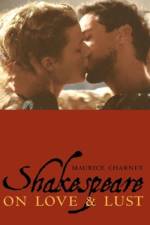
The complex and sometimes contradictory expressions of love in Shakespeare's works-ranging from the serious to the absurd and back again-arise primarily from his dramatic and theatrical flair rather than from a unified philosophy of love. Untangling his witty, bawdy (and ambiguous) treatment of love, sex, and desire requires a sharp eye and a steady hand. In Shakespeare on Love and Lust, noted scholar Maurice Charney delves deeply into Shakespeare's rhetorical and thematic development of this largest of subjects to reveal what makes his plays and poems resonate with contemporary audiences. The paradigmatic star-crossed lovers of Romeo and Juliet, the comic confusions of couples wandering through the wood in A Midsummer Night's Dream, Othello's tragic jealousy, the homoerotic ways Shakespeare played with cross-dressing on the Elizabethan stage-Charney explores the world in which Shakespeare lived, and how it is reflected and transformed in the one he created.While focusing primarily on desire between young lovers, Charney also explores themes of love in marriage (Brutus and Portia) and in same-sex pairings (Antonio and Sebastian). Against the conventions of Renaissance literature, Shakespeare qualified the Platonic view that true love transcends the physical. Instead, as Charney demonstrates, love in Shakespeare's work is almost always sexual as well as spiritual, and the full range of desire's dramatic possibilities is displayed.Shakespeare on Love and Lust begins by considering the ways in which Shakespeare drew upon and satirized the conventions of Petrarchan Renaissance love poetry in plays like Romeo and Juliet, then explores how courtship is woven into the basic plot formula of the comedies. Next, Charney examines love in the tragedies and the enemies of love (Iago, for example). Later chapters cover the gender complications in such plays as Macbeth and The Taming of the Shrew as well as the homoerotic themes woven into many of the poems and plays. Charney concludes with a lively discussion of paradoxes and ambivalences about love expressed by Shakespeare's word play and sexual innuendoes.
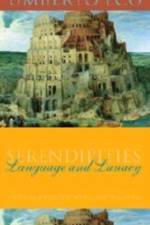
Best-selling author Umberto Eco's latest work unlocks the riddles of history in an exploration of the "e;linguistics of the lunatic,"e; stories told by scholars, scientists, poets, fanatics, and ordinary people in order to make sense of the world. Exploring the "e;Force of the False,"e; Eco uncovers layers of mistakes that have shaped human history, such as Columbus's assumption that the world was much smaller than it is, leading him to seek out a quick route to the East via the West and thus fortuitously "e;discovering"e; America. The fictions that grew up around the cults of the Rosicrucians and Knights Templar were the result of a letter from a mysterious "e;Prester John"e;-undoubtedly a hoax-that provided fertile ground for a series of delusions and conspiracy theories based on religious, ethnic, and racial prejudices. While some false tales produce new knowledge (like Columbus's discovery of America) and others create nothing but horror and shame (the Rosicrucian story wound up fueling European anti-Semitism) they are all powerfully persuasive.In a careful unraveling of the fabulous and the false, Eco shows us how serendipities-unanticipated truths-often spring from mistaken ideas. From Leibniz's belief that the I Ching illustrated the principles of calculus to Marco Polo's mistaking a rhinoceros for a unicorn, Eco tours the labyrinth of intellectual history, illuminating the ways in which we project the familiar onto the strange.Eco uncovers a rich history of linguistic endeavor-much of it ill-conceived-that sought to "e;heal the wound of Babel."e; Through the Middle Ages and the Renaissance, Greek, Hebrew, Chinese, and Egyptian were alternately proclaimed as the first language that God gave to Adam, while-in keeping with the colonial climate of the time-the complex language of the Amerindians in Mexico was viewed as crude and diabolical. In closing, Eco considers the erroneous notion of linguistic perfection and shrewdly observes that the dangers we face lie not in the rules we use to interpret other cultures but in our insistence on making these rules absolute.With the startling combination of erudition and wit, bewildering anecdotes and scholarly rigor that are Eco's hallmarks, Serendipities is sure to entertain and enlighten any reader with a passion for the curious history of languages and ideas.
Posthumanism in Art and Science is an anthology of indispensable statements and artworks featuring groundbreaking theorists as well as innovative, influential artists and curators. Their provocative and compelling works speak to the ongoing conceptual and political challenge of posthuman theories in a time of cultural and environmental crises.
Posthumanism in Art and Science is an anthology of indispensable statements and artworks featuring groundbreaking theorists as well as innovative, influential artists and curators. Their provocative and compelling works speak to the ongoing conceptual and political challenge of posthuman theories in a time of cultural and environmental crises.
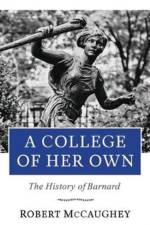
A College of Her Own offers a comprehensive and lively narrative of Barnard from its beginnings to the present day. Through the stories of presidents and leading figures as well as students and faculty, Robert McCaughey recounts Barnard's history and development.
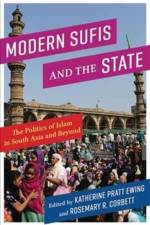
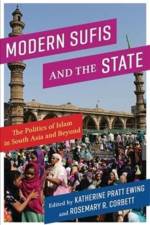
In recent years, Sufism has been held up as a supposedly peaceful alternative to forms of Islam associated with violence, an embodiment of tolerance and pluralism. Modern Sufism and the State brings together a range of scholars, including anthropologists, historians, and religious-studies specialists, to challenge common assumptions.
In recent years, Sufism has been held up as a supposedly peaceful alternative to forms of Islam associated with violence, an embodiment of tolerance and pluralism. Modern Sufism and the State brings together a range of scholars, including anthropologists, historians, and religious-studies specialists, to challenge common assumptions.
Abonner på vårt nyhetsbrev og få rabatter og inspirasjon til din neste leseopplevelse.
Ved å abonnere godtar du vår personvernerklæring.