














Gjør som tusenvis av andre bokelskere
Abonner på vårt nyhetsbrev og få rabatter og inspirasjon til din neste leseopplevelse.
Ved å abonnere godtar du vår personvernerklæring.Du kan når som helst melde deg av våre nyhetsbrev.

Twenty-five thousand years ago, sea level fell more than 400 feet below its present position as a consequence of the growth of immense ice sheets in the Northern Hemisphere. A dry plain stretching 1,000 miles from the Arctic Ocean to the Aleutians became exposed between northeast Asia and Alaska, and across that plain, most likely, walked the first people of the New World. This book describes what is known about these people and the now partly submerged land, named Beringia, which they settled during the final millennia of the Ice Age.Humans first occupied Beringia during a twilight period when rising sea levels had not yet caught up with warming climates. Although the land bridge between northeast Asia and Alaska was still present, warmer and wetter climates were rapidly transforming the Beringian steppe into shrub tundra. This volume synthesizes current research-some previously unpublished-on the archaeological sites and rapidly changing climates and biota of the period, suggesting that the absence of woody shrubs to help fire bone fuel may have been the barrier to earlier settlement, and that from the outset the Beringians developed a postglacial economy similar to that of later northern interior peoples.The book opens with a review of current research and the major problems and debates regarding the environment and archaeology of Beringia. It then describes Beringian environments and the controversies surrounding their interpretation; traces the evolving adaptations of early humans to the cold environments of northern Eurasia, which set the stage for the settlement of Beringia; and provides a detailed account of the archaeological record in three chapters, each of which is focused on a specific slice of time between 15,000 and 11,500 years ago. In conclusion, the authors present an interpretive summary of the human ecology of Beringia and discuss its relationship to the wider problem of the peopling of the New World.
Nancy Armstrong argues that the history of the novel and the history of the modern individual are, quite literally, one and the same. She suggests that certain works of fiction created a subject, one displaying wit, will, or energy capable of shifting the social order to grant the exceptional person a place commensurate with his or her individual worth. Once the novel had created this figure, readers understood themselves in terms of a narrative that produced a self-governing subject.In the decades following the revolutions in British North America and France, the major novelists distinguished themselves as authors by questioning the fantasy of a self-made individual. To show how novels by Defoe, Austen, Scott, Bronte, Dickens, Eliot, Hardy, Haggard, and Stoker participated in the process of making, updating, and perpetuating the figure of the individual, Armstrong puts them in dialogue with the writings of Locke, Hume, Rousseau, Malthus, Darwin, Kant, and Freud. Such theorists as Althusser, Balibar, Foucault, and Deleuze help her make the point that the individual was not one but several different figures. The delineation and potential of the modern subject depended as much upon what it had to incorporate as what alternatives it had to keep at bay to address the conflicts raging in and around the British novel.
The members of the literary circle known as the Violet Quill-Andrew Holleran, Felice Picano, Edmund White, Christopher Cox, Michael Grumley, Robert Ferro, and George Whitmore-collectively represent the aspirations and the achievement of gay writing during and after the gay liberation movement. David Bergman's social history shows how the works of these authors reflected, advanced, and criticized the values, principles, and prejudices of the culture of gay liberation. In spinning many of the most important stories gay men told of themselves in the short period between the 1969 Stonewall Riots and the devastation of the AIDS epidemic during the 1980s, the Violet Quill exerted an enormous influence on gay culture. The death toll of the AIDS epidemic, including four of the Violet Quill's seven members, has made putting such recent events into a historical context all the more important and difficult. The work of the Violet Quill expresses the joy, suffering, grief, hope, activism, and caregiving of their generation. The Violet Hour meets the urgent need for a history of the men who bore witness not only to the birth but also to the decimation of a culture.
From the outset, South Africa's history has been marked by division and conflict along racial and ethnic lines. From 1948 until 1994, this division was formalized in the National Party's policy of apartheid. Because apartheid intruded on every aspect of private and public life, South African literature was preoccupied with the politics of race and social engineering. Since the release from prison of Nelson Mandela in 1990, South Africa has been a new nation-in-the-making, inspired by a nonracial idealism yet beset by poverty and violence. South African writers have responded in various ways to Njabulo Ndebele's call to "e;rediscover the ordinary."e; The result has been a kaleidoscope of texts in which evolving cultural forms and modes of identity are rearticulated and explored.An invaluable guide for general readers as well as scholars of African literary history, this comprehensive text celebrates the multiple traditions and exciting future of the South African voice. Although the South African Constitution of 1994 recognizes no fewer than eleven official languages, English has remained the country's literary lingua franca. This book offers a narrative overview of South African literary production in English from 1945 to the postapartheid present. An introduction identifies the most interesting and noteworthy writing from the period. Alphabetical entries provide accurate and objective information on genres and writers. An appendix lists essential authors published before 1945.
And as I groped in darkness and felt the pain of millions,gradually, like day driving night across the continent,I saw dawn upon them like the sun a vision.-Dudley Randall, from "e;Roses and Revolutions"e;In 1963, the African American poet Dudley Randall (1914-2000) wrote "e;The Ballad of Birmingham"e; in response to the bombing of a church in Alabama that killed four young black girls, and "e;Dressed All in Pink,"e; about the assassination of President Kennedy. When both were set to music by folk singer Jerry Moore in 1965, Randall published them as broadsides. Thus was born the Broadside Press, whose popular chapbooks opened the canon of American literature to the works of African American writers. Dudley Randall, one of the great success stories of American small-press history, was also poet laureate of Detroit, a civil-rights activist, and a force in the Black Arts Movement. Melba Joyce Boyd was an editor at Broadside, was Randall's friend and colleague for twenty-eight years, and became his authorized biographer. Her book is an account of the interconnections between urban and labor politics in Detroit and the broader struggles of black America before and during the Civil Rights era. But also, through Randall's poetry and sixteen years of interviews, the narrative is a multipart dialogue between poets, Randall, the author, and the history of American letters itself, and it affords unique insights into the life and work of this crucial figure.
In Oklahoma in the 1980s and 1990s, suicide-not accident as previously assumed-was the leading cause of agricultural fatalities among farmers. Men were five times more likely to die by suicide than by accident. What was causing these men-but not women-to want to kill themselves? Ramirez-Ferrero suggests that the root causes lie not in purely economic or personal factors but rather in the processes of modernization. He shows how cultural and social changes have a dramatic effect on men's identities as providers, stewards, and community members. Using emotions and gender as modes of analysis, he locates these men's stories in the wider context of American history, agricultural economics and politics, capitalism, and Christianity.
The societies of the Vaupes region are now among the most documented indigenous cultures of the New World, in part because they are thought to resemble earlier civilizations lost during initial colonial conflict. Here at last is the eagerly awaited publication of a posthumous work by the man widely regarded as the preeminent authority on Vaupes Amazonian societies. Cubeo Hehenewa Religious Thought will be the definitive account of the religious worldview of a significant Amazonian culture. Cubeo religious thought incorporates ideas about the nature of the cosmos, society, and human life; the individual's orientation to the world; the use of hallucinogenic substances; and a New World metaphysics. This volume was substantially completed before Irving Goldman's death, but Peter Wilson has edited it for publication, providing a thorough introduction to Goldman's work. Stephen Hugh-Jones has contributed an afterword, setting the work in the context of contemporary Vaupes ethnography.
Covering newsworthy aspects of contemporary biology-gene therapy, the Human Genome Project, DNA testing, and genetic engineering-as well as fundamental concepts, this book, written specifically for nonbiologists, discusses classical and molecular genetics, quantitative and population genetics-including cloning and genetic diseases-and the many applications of genetics to the world around us, from genetically modified foods to genetic testing. With minimal technical terminology and jargon, Genes and DNA facilitates conceptual understanding. Eschewing the organization of traditional genetics texts, the authors have provided an organic progression of information: topics are introduced as needed, within a broader framework that makes them meaningful for nonbiologists. The book encourages the reader to think independently, always stressing scientific background and current facts.
This far-ranging and ambitious attempt to rethink postcolonial theory's discussion of the nation and nationalism brings the problems of the postcolonial condition to bear on the philosophy of freedom. Closely identified with totalitarianism and fundamentalism, the nation-state has a tainted history of coercion, ethnic violence, and even, as in ultranationalist Nazi Germany, genocide. Most contemporary theorists are therefore skeptical, if not altogether dismissive, of the idea of the nation and the related metaphor of the political body as an organism. Going against orthodoxy, Pheng Cheah retraces the universal-rationalist foundations and progressive origins of political organicism in the work of Kant and its development in philosophers in the German tradition such as Fichte, Hegel, and Marx. Cheah argues that the widespread association of freedom with the self-generating dynamism of life and culture's power of transcendence is the most important legacy of this tradition. Addressing this legacy's manifestations in Fanon and Cabral's theories of anticolonial struggle and contemporary anticolonial literature, including the Buru Quartet by Indonesian writer Pramoedya Ananta Toer, and the Kenyan writer Ngugi Wa Thiong'o's nationalist novels, Cheah suggests that the profound difficulties of achieving freedom in the postcolonial world indicate the need to reconceptualize freedom in terms of the figure of the specter rather than the living organism.
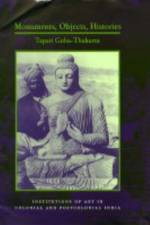
Art history as it is largely practiced in Asia as well as in the West is a western invention. In India, works of art-sculptures, monuments, paintings-were first viewed under colonial rule as archaeological antiquities, later as architectural relics, and by the mid-20th century as works of art within an elaborate art-historical classification. Tied to these views were narratives in which the works figured, respectively, as sources from which to recover India's history, markers of a lost, antique civilization, and symbols of a nation's unique aesthetic, reflecting the progression from colonialism to nationalism. The nationalist canon continues to dominate the image of Indian art in India and abroad, and yet its uncritical acceptance of the discipline's western orthodoxies remains unquestioned, the original motives and means of creation unexplored. The book examines the role of art and art history from both an insider and outsider point of view, always revealing how the demands of nationalism have shaped the concept and meaning of art in India. The author shows how western custodianship of Indian "e;antiquities"e; structured a historical interpretation of art; how indigenous Bengali scholarship in the late 19th and early 20th centuries attempted to bring Indian art into the nationalist sphere; how the importance of art as a representation of national culture crystallized in the period after Independence; and how cultural and religious clashes in modern India have resulted in conflicting "e;histories"e; and interpretations of Indian art. In particular, the author uses the depiction of Hindu goddesses to elicit conflicting scenarios of condemnation and celebration, both of which have at their core the threat and lure of the female form, which has been constructed and narrativized in art history. Monuments, Objects, Histories is a critical survey of the practices of archaeology, art history, and museums in nineteenth- and twentieth-century India. The essays gathered here look at the processes of the production of lost pasts in modern India: pasts that come to be imagined around a growing corpus of monuments, archaeological relics, and art objects. They map the scholarly and institutional authority that emerged around such structures and artifacts, making of them not only the chosen objects of art and archaeology but also the prime signifiers of the nation's civilization and antiquity. The close imbrication of the "e;colonial"e; and the "e;national"e; in the making of India's archaeological and art historical pasts and their combined legacy for the postcolonial present form one of the key themes of the book. Monuments, Objects, Histories offers both an insider's and an outsider's perspective on the growth of these scholarly fields and their institutional apparatus, analyzing the ways they have constituted and recast their objects of study. The book moves from a period that saw the consolidation of western expertise and custodianship of India's "e;antiquities,"e; to the projection over the twentieth century of varying regional, nativist, and national claims around the country's architectural and artistic inheritance, into a current period that has pitched these objects and fields within a highly contentious politics of nationhood. Monuments, Objects, Histories traces the framing of an official national canon of Indian art through these different periods, showing how the workings of disciplines and institutions have been tied to the pervasive authority of the nation. At the same time, it addresses the radical reconfiguration in recent times of the meaning and scope of the "e;national,"e; leading to the kinds of exclusions and chauvinisms that lie at the root of the current endangerment of these disciplines and the monuments and art objects they encompass.
During their lifetimes, Alfred Russel Wallace and Charles Darwin shared credit and fame for the independent and near-simultaneous discovery of natural selection. Together, the two men spearheaded one of the greatest intellectual revolutions in modern history, and their rivalry, usually amicable but occasionally acrimonious, forged modern evolutionary theory. Yet today, few people today know much about Wallace.The Heretic in Darwin's Court explores the controversial life and scientific contributions of Alfred Russel Wallace-Victorian traveler, scientist, spiritualist, and co-discoverer with Charles Darwin of natural selection. After examining his early years, the biography turns to Wallace's twelve years of often harrowing travels in the western and eastern tropics, which place him in the pantheon of the greatest explorer-naturalists of the nineteenth century. Tracing step-by-step his discovery of natural selection-a piece of scientific detective work as revolutionary in its implications as the discovery of the structure of DNA-the book then follows the remaining fifty years of Wallace's eccentric and entertaining life. In addition to his divergence from Darwin on two fundamental issues-sexual selection and the origin of the human mind-he pursued topics that most scientific figures of his day conspicuously avoided, including spiritualism, phrenology, mesmerism, environmentalism, and life on Mars.Although there may be disagreement about his conclusions, Wallace's intellectual investigations into the origins of life, consciousness, and the universe itself remain some of the most inspired scientific accomplishments in history. This authoritative biography casts new light on the life and work of Alfred Russel Wallace and the importance of his twenty-five-year relationship with Charles Darwin.
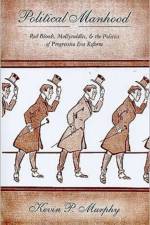
In a 1907 lecture to Harvard undergraduates, Theodore Roosevelt warned against becoming "e;too fastidious, too sensitive to take part in the rough hurly-burly of the actual work of the world."e; Roosevelt asserted that colleges should never "e;turn out mollycoddles instead of vigorous men,"e; and cautioned that "e;the weakling and the coward are out of place in a strong and free community."e; A paradigm of ineffectuality and weakness, the mollycoddle was "e;all inner life,"e; whereas his opposite, the "e;red blood,"e; was a man of action. Kevin P. Murphy reveals how the popular ideals of American masculinity coalesced around these two distinct categories. Because of its similarity to the emergent "e;homosexual"e; type, the mollycoddle became a powerful rhetorical figure, often used to marginalize and stigmatize certain political actors. Issues of masculinity not only penetrated the realm of the elite, however. Murphy's history follows the redefinition of manhood across a variety of classes, especially in the work of late nineteenth-century reformers, who trumpeted the virility of the laboring classes. By highlighting this cross-class appropriation, Murphy challenges the oppositional model commonly used to characterize the relationship between political "e;machines"e; and social and municipal reformers at the turn of the twentieth century. He also revolutionizes our understanding of the gendered and sexual meanings attached to political and ideological positions of the Progressive Era.
How does law come to be stated as substantive rules, and then how does it change? In this collection of discussions from the James S. Carpentier Lectures in legal history and criticism, one of Britain's most acclaimed legal historians S. F. C. Milsom focuses on the development of English common law-the intellectually coherent system of substantive rules that courts bring to bear on the particular facts of individual cases-from which American law was to grow. Milsom discusses the differences between the development of land law and that of other kinds of law and, in the latter case, how procedural changes allowed substantive rules first to be stated and then to be circumvented. He examines the invisibility of early legal change and how adjustment to conditions was hidden behind such things as the changing meaning of words. Milsom points out that legal history may be more prone than other kinds of history to serious anachronism. Nobody ever states his assumptions, and a legal writer, addressing his contemporaries, never provided a glossary to warn future historians against attributing their own meanings to his words and therefore their own assumptions to his world. Formal continuity has enabled nineteenth-century assumptions to be carried back, in some respects as far back as the twelfth century. This book brings together Milsom's efforts to understand the uncomfortable changes that lie beneath that comforting formal surface. Those changes were too large to have been intended by anyone at the time and too slow to be perceived by historians working within the short periods now imposed by historical convention. The law was made not by great men making great decisions but by man-sized men unconcerned with the future and thinking only about their own immediate everyday difficulties. King Henry II, for example, did not intend the changes attributed to him in either land law or criminal law; the draftsman of De Donis did not mean to create the entail; nobody ever dreamed up a fiction with intent to change the law.
Since the end of the Cold War, conventional militaries and their political leaders have confronted a new, brutal type of warfare in which non-state armed groups use asymmetrical tactics to successfully fight larger, technologically superior forces. In order to prevent future bloodshed and political chaos, it is crucial to understand how these unconventional armed groups think and to adapt to their methods of combat.Richard H. Shultz Jr. and Andrea J. Dew investigate the history and politics of modern asymmetrical warfare. By focusing on four specific hotbeds of instability-Somalia, Chechnya, Afghanistan, and Iraq-Shultz and Dew conduct a careful analysis of tribal culture and the value of clan associations. They examine why these "e;traditional"e; or "e;tribal"e; warriors fight, how they recruit, where they find sanctuary, and what is behind their strategy. Traveling across two centuries and several continents, Shultz and Dew examine the doctrinal, tactical, and strategic advantages and consider the historical, cultural, and anthropological factors behind the motivation and success of the warriors of contemporary combat.In their provocative argument, Shultz and Dew propose that war in the post-Cold War era cannot be waged through traditional Western methods of combat, especially when friendly states and outside organizations like al-Qaeda serve as powerful allies to the enemy. Thoroughly researched and highly readable, Insurgents, Terrorists, and Militias examines how non-state armies fight, identifies the patterns and trends of their combat, and recommends how conventional militaries can defeat these irregular yet highly effective organizations.
A critical rethinking of theories of national imagination, The Dawn That Never Comes offers the most detailed reading to date in English of one of modern Japan's most influential poets and novelists, Shimazaki Toson (1872-1943). It also reveals how Toson's works influenced the production of a fluid, shifting form of national imagination that has characterized twentieth-century Japan. Analyzing Toson's major works, Michael K. Bourdaghs demonstrates that the construction of national imagination requires a complex interweaving of varied-and sometimes contradictory-figures for imagining the national community. Many scholars have shown, for example, that modern hygiene has functioned in nationalist thought as a method of excluding foreign others as diseased. This study explores the multiple images of illness appearing in Toson's fiction to demonstrate that hygiene employs more than one model of pathology, and it reveals how this multiplicity functioned to produce the combinations of exclusion and assimilation required to sustain a sense of national community. Others have argued that nationalism is inherently ambivalent and self-contradictory; Bourdaghs shows more concretely both how this is so and why it is necessary and provides, in the process, a new way of thinking about national imagination. Individual chapters take up such issues as modern medicine and the discourses of national health; ideologies of the family and its representation in modern literary works; the gendering of the canon of national literature; and the multiple forms of space and time that narratives of national history require.
Possible Lives uses the saints'lives written by humanists of the Italian Renaissance to explore the intertwining of classical and religious cultures on the eve of the European Reformation. The lives of saints were among the most reproduced and widely distributed literatures of medieval and early modern Europe. During the century before the Reformation, these narratives of impossible goodness fell into the hands of classicizing intellectuals known as humanists. This study examines how the humanist authors received, criticized, and rewrote the traditional stories of exemplary virtue for patrons and audiences who were surprisingly open to their textual experiments. Drawn from a newly constructed catalog of primary sources in manuscript and print, the cases in this book range from the lure of martyrdom as the West confronted Islam to the use of saints'lives in local politics and the rhetorician's classroom. Frazier discusses the writers'perceptions of historical sanctity, the commanding place of the mendicant friars, and one unique account of a contemporary holy woman.Possible Lives shows that the classical Renaissance was also a saintly Renaissance, as humanists deployed their rhetorical and philological skills to "e;renew the persuasive force of Christian virtue"e; and "e;save the cult of the saints."e; Combining quantitative and anecdotal approaches in a highly readable series of case studies, Frazier reveals the contextual richness of this little-known and unexpectedly large body of Latin hagiography.
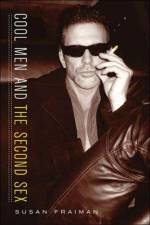
Academic superstars Andrew Ross, Edward Said, and Henry Louis Gates Jr. Bad boy filmmakers Quentin Tarantino, Spike Lee, and Brian de Palma. What do these influential contemporary figures have in common? In Cool Men and the Second Sex, Susan Fraiman identifies them all with "e;cool masculinity"e; and boldly unpacks the gender politics of their work. According to Fraiman, "e;cool men"e; rebel against a mainstream defined as maternal. Bad boys resist the authority of women and banish mothers to the realm of the uncool. As a result, despite their hipness-or because of it-these men too often feel free to ignore the insights of feminist thinkers. Through subtle close readings, Fraiman shows that even Gates, champion of black women's writing, and even queer theorists bent on undoing gender binaries, at times end up devaluing women in favor of men and masculinity.A wide-ranging and fair-minded analysis, Cool Men acknowledges the invaluable contributions of its subjects while also deciphering the gender codes and baring the contradictions implicit in their work. Affirming the legacy of second-wave feminist scholars and drawing as well on the intersectional work of third-wavers, Cool Men helps to reinvent feminist critique for the twenty-first century.
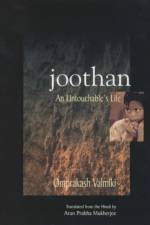
Omprakash Valmiki describes his life as an untouchable, or Dalit, in the newly independent India of the 1950s. "e;Joothan"e; refers to scraps of food left on a plate, destined for the garbage or animals. India's untouchables have been forced to accept and eat joothan for centuries, and the word encapsulates the pain, humiliation, and poverty of a community forced to live at the bottom of India's social pyramid. Although untouchability was abolished in 1949, Dalits continued to face discrimination, economic deprivation, violence, and ridicule. Valmiki shares his heroic struggle to survive a preordained life of perpetual physical and mental persecution and his transformation into a speaking subject under the influence of the great Dalit political leader, B. R. Ambedkar. A document of the long-silenced and long-denied sufferings of the Dalits, Joothan is a major contribution to the archives of Dalit history and a manifesto for the revolutionary transformation of society and human consciousness.
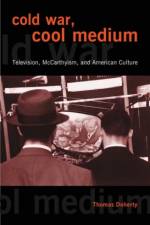
Conventional wisdom holds that television was a co-conspirator in the repressions of Cold War America, that it was a facilitator to the blacklist and handmaiden to McCarthyism. But Thomas Doherty argues that, through the influence of television, America actually became a more open and tolerant place. Although many books have been written about this period, Cold War, Cool Medium is the only one to examine it through the lens of television programming. To the unjaded viewership of Cold War America, the television set was not a harbinger of intellectual degradation and moral decay, but a thrilling new household appliance capable of bringing the wonders of the world directly into the home. The "e;cool medium"e; permeated the lives of every American, quickly becoming one of the most powerful cultural forces of the twentieth century. While television has frequently been blamed for spurring the rise of Senator Joseph McCarthy, it was also the national stage upon which America witnessed-and ultimately welcomed-his downfall. In this provocative and nuanced cultural history, Doherty chronicles some of the most fascinating and ideologically charged episodes in television history: the warm-hearted Jewish sitcom The Goldbergs; the subversive threat from I Love Lucy; the sermons of Fulton J. Sheen on Life Is Worth Living; the anticommunist series I Led 3 Lives; the legendary jousts between Edward R. Murrow and Joseph McCarthy on See It Now; and the hypnotic, 188-hour political spectacle that was the Army-McCarthy hearings. By rerunning the programs, freezing the frames, and reading between the lines, Cold War, Cool Medium paints a picture of Cold War America that belies many black-and-white cliches. Doherty not only details how the blacklist operated within the television industry but also how the shows themselves struggled to defy it, arguing that television was preprogrammed to reinforce the very freedoms that McCarthyism attempted to curtail.
The increase in environmentally induced diseases and the loosening of regulation and safety measures have inspired a massive challenge to established ways of looking at health and the environment. Communities with disease clusters, women facing a growing breast cancer incidence rate, and people of color concerned about the asthma epidemic have become critical of biomedical models that emphasize the role of genetic makeup and individual lifestyle practices. Likewise, scientists have lost patience with their colleagues' and government's failure to adequately address environmental health issues and to safeguard research from corporate manipulation.Focusing specifically on breast cancer, asthma, and Gulf War-related health conditions-"e;contested illnesses"e; that have generated intense debate in the medical and political communities-Phil Brown shows how these concerns have launched an environmental health movement that has revolutionized scientific thinking and policy. Before the last three decades of widespread activism regarding toxic exposures, people had little opportunity to get information. Few sympathetic professionals were available, the scientific knowledge base was weak, government agencies were largely unprepared, laypeople were not considered bearers of useful knowledge, and ordinary people lacked their own resources for discovery and action.Brown argues that organized social movements are crucial in recognizing and acting to combat environmental diseases. His book draws on environmental and medical sociology, environmental justice, environmental health science, and social movement studies to show how citizen-science alliances have fought to overturn dominant epidemiological paradigms. His probing look at the ways scientific findings are made available to the public and the changing nature of policy offers a new perspective on health and the environment and the relationship among people, knowledge, power, and authority.
In 1981, while working as New Mexico State Historian, Stanley M. Hordes began to hear stories of Hispanos who lit candles on Friday night and abstained from eating pork. Puzzling over the matter, Hordes realized that these practices might very well have been passed down through the centuries from early crypto-Jewish settlers in New Spain. After extensive research and hundreds of interviews, Hordes concluded that there was, in New Mexico and the Southwest, a Sephardic legacy derived from the converso community of Spanish Jews.In To the End of the Earth, Hordes explores the remarkable story of crypto-Jews and the tenuous preservation of Jewish rituals and traditions in Mexico and New Mexico over the past five hundred years. He follows the crypto-Jews from their Jewish origins in medieval Spain and Portugal to their efforts to escape persecution by migrating to the New World and settling in the far reaches of the northern Mexican frontier. Drawing on individual biographies (including those of colonial officials accused of secretly practicing Judaism), family histories, Inquisition records, letters, and other primary sources, Hordes provides a richly detailed account of the economic, social and religious lives of crypto-Jews during the colonial period and after the annexation of New Mexico by the United States in 1846. While the American government offered more religious freedom than had the Spanish colonial rulers, cultural assimilation into Anglo-American society weakened many elements of the crypto-Jewish tradition. Hordes concludes with a discussion of the reemergence of crypto-Jewish culture and the reclamation of Jewish ancestry within the Hispano community in the late twentieth century. He examines the publicity surrounding the rediscovery of the crypto-Jewish community and explores the challenges inherent in a study that attempts to reconstruct the history of a people who tried to leave no documentary record.
Why do people commit crimes? How can crime be prevented? And what can society and criminal justice professionals do to implement constructive responses to criminal behavior? Summarizing what he has learned about crime and criminals during his long career, one of social work's most distinguished theoreticians speculates about the factors that lead to crime and considers what we can do to prevent and respond to it meaningfully. Criminal Lessons is based on more than thirteen thousand cases in which Frederic G. Reamer has been involved as a parole board member, a role that was supplemented by his earlier experiences working in a federal correctional facility, a state penitentiary, and a forensic unit in a state psychiatric hospital. Reamer presents an original and compelling typology of crime that classifies offenders on the basis of the circumstances that led to their offenses. He isolates seven categories, tracing crime to desperation, greed, rage, revenge, frolic, addiction, or mental illness. Using actual case studies to illustrate these patterns of 'criminal circumstances,' Reamer presents a model for the prevention of, and response to, crime and throughout the book offers recommendations related to social services, criminal justice, and public policy.
Focusing on the work of four contemporary filmmakers-Ang Lee, Edward Yang, Hou Hsiao-hsien, and Tsai Ming-liang-the authors explore how these filmmakers broke from tradition, creating a cinema that is both personal and insistent on examining Taiwan's complex history. Featuring stills, anecdotes, and close readings of films, the authors consider the influence of Hong Kong and martial arts films, directors' experiments with autobiography, the shifting fortunes of the Taiwanese film industry, and Taiwan cinema in the context of international cinema's aesthetics and business practices.
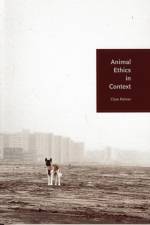
It is widely agreed that because animals feel pain we should not make them suffer gratuitously. Some ethical theories go even further: because of the capacities that they possess, animals have the right not to be harmed or killed. These views concern what not to do to animals, but we also face questions about when we should, and should not, assist animals that are hungry or distressed. Should we feed a starving stray kitten? And if so, does this commit us, if we are to be consistent, to feeding wild animals during a hard winter? In this controversial book, Clare Palmer advances a theory that claims, with respect to assisting animals, that what is owed to one is not necessarily owed to all, even if animals share similar psychological capacities. Context, history, and relation can be critical ethical factors. If animals live independently in the wild, their fate is not any of our moral business. Yet if humans create dependent animals, or destroy their habitats, we may have a responsibility to assist them. Such arguments are familiar in human cases-we think that parents have special obligations to their children, for example, or that some groups owe reparations to others. Palmer develops such relational concerns in the context of wild animals, domesticated animals, and urban scavengers, arguing that different contexts can create different moral relationships.
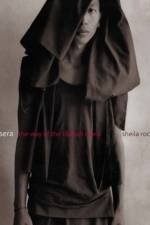
Tibet was once home to thousands of thriving Buddhist monasteries. But in 1959, following a Tibetan uprising against China's long occupation, nearly all were destroyed by the Chinese military, the practice of Buddhism was outlawed, and the Dalai Lama was forced into exile. In March of that year, Chinese tanks bombarded the 540-year-old Sera Jey Monastery in Lhasa, Tibet, killing hundreds of monks and destroying ancient texts and invaluable artifacts that had been collected over centuries. Thousands of survivors fled over perilous mountain passes to neighboring India, many with only thin robes and light footwear to shield them from the harsh winter conditions of the Himalayas.The Sera Jey Monastery, reestablished near Mysore, India, now houses 5,000 Buddhist monks living in exile-including many who escaped the attack on the Tibetan monastery in 1959, and many more who have never known their ancestral homeland. Providing an intimate glimpse of this rarely seen world, Sera: The Way of the Tibetan Monk evokes the subtle moods and rhythms of this Buddhist community that has steadfastly carried on the legacy of the original Sera Jey. More than 100 duotone photographs capture daily rituals and sacred ceremonies, serious moments and playful gestures, compassionate faces and expressions of inspired serenity. Moving and unforgettable, Sheila Rock's portraits celebrate the tranquility, simple joys, and unadorned beauty of the ascetic life, offering a powerful testament to the strength and resilience of a persecuted people. A percentage of the royalties from this book go to the Sera Jhe Health Care Committee in aid of various humanitarian projects
Howard T. Odum possessed one of the most innovative minds of the twentieth century. He pioneered the fields of ecological engineering, ecological economics, and environmental accounting, working throughout his life to better understand the interrelationships of energy, environment, and society and their importance to the well-being of humanity and the planet.This volume is a major modernization of Odum's classic work on the significance of power and its role in society, bringing his approach and insight to a whole new generation of students and scholars. For this edition Odum refines his original theories and introduces two new measures: emergy and transformity. These concepts can be used to evaluate and compare systems and their transformation and use of resources by accounting for all the energies and materials that flow in and out and expressing them in equivalent ability to do work. Natural energies such as solar radiation and the cycling of water, carbon, nitrogen, and oxygen are diagrammed in terms of energy and emergy flow. Through this method Odum reveals the similarities between human economic and social systems and the ecosystems of the natural world. In the process, we discover that our survival and prosperity are regulated as much by the laws of energetics as are systems of the physical and chemical world.
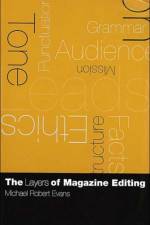
Unlike the myriad writing manuals that emphasize grammar, sentence structure, and other skills necessary for entry-level editing jobs, this engaging book adopts a broader view, beginning with the larger topics of audience, mission, and tone, and working its way down, layer by layer, to the smaller questions of grammar and punctuation. Based on Michael Evans's years of experience as an editor and supplemented by invaluable observations from the editors of more than sixty magazines-including The Atlantic, Better Homes and Gardens, Ebony, Esquire, and National Geographic-this book reveals the people-oriented nature of the job.
During the first part of the twentieth century thousands of working-class New Yorkers flocked to Coney Island in search of a release from their workaday lives and the values of bourgeois society. On the other side of the Atlantic, British workers headed off to the beach resort of Blackpool for entertainment and relaxation. However, by the middle of the century, a new type of park began to emerge, providing well-ordered, squeaky-clean, and carefully orchestrated corporate entertainment. Contrasting the experiences of Coney Island and Blackpool with those of Disneyland and Beamish, Gary S. Cross and John K. Walton explore playful crowds and the pursuit of pleasure in the twentieth century to offer a transatlantic perspective on changing ideas about leisure, class, and mass culture. Blackpool and Coney Island were the definitive playgrounds of the industrial working class. Teeming crowds partook of a gritty vulgarity that offered a variety of pleasures and thrills from roller coaster rides and freak shows to dance halls and dioramas of exotic locales. Responding to the new money and mobility of the working class, the purveyors of Coney Island and Blackpool offered the playful crowd an "e;industrial saturnalia."e;Cross and Walton capture the sights and sounds of Blackpool and Coney Island and consider how these "e;Sodoms by the sea"e; flouted the social and cultural status quo. The authors also examine the resorts' very different fates as Coney Island has now become a mere shadow of its former self while Blackpool continues to lure visitors and offer new attractions. The authors also explore the experiences offered at Disneyland and Beamish, a heritage park that celebrates Britain's industrial and social history. While both parks borrowed elements from their predecessors, they also adapted to the longings and concerns of postwar consumer culture. Appealing to middle-class families, Disney provided crowds a chance to indulge in child-like innocence and a nostalgia for a simpler time. At Beamish, crowds gathered to find an escape from the fragmented and hedonistic life of modern society in a reconstructed realm of the past where local traditions and nature prevail.
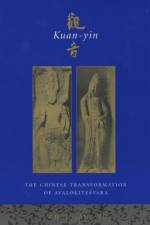
By far one of the most important objects of worship in the Buddhist traditions, the bodhisattva Avalokitesvara is regarded as the embodiment of compassion. He has been widely revered throughout the Buddhist countries of Asia since the early centuries of the Common Era. While he was closely identified with the royalty in South and Southeast Asia, and the Tibetans continue to this day to view the Dalai Lamas as his incarnations, in China he became a she-Kuan-yin, the "e;Goddess of Mercy"e;-and has a very different history. The causes and processes of this metamorphosis have perplexed Buddhist scholars for centuries.In this groundbreaking, comprehensive study, Chun-fang Yu discusses this dramatic transformation of the (male) Indian bodhisattva Avalokitesvara into the (female) Chinese Kuan-yin-from a relatively minor figure in the Buddha's retinue to a universal savior and one of the most popular deities in Chinese religion. Focusing on the various media through which the feminine Kuan-yin became constructed and domesticated in China, Yu thoroughly examines Buddhist scriptures, miracle stories, pilgrimages, popular literature, and monastic and local gazetteers-as well as the changing iconography reflected in Kuan-yin's images and artistic representations-to determine the role this material played in this amazing transformation. The book eloquently depicts the domestication of Kuan-yin as a case study of the indigenization of Buddhism in China and illuminates the ways this beloved deity has affected the lives of all Chinese people down the ages.
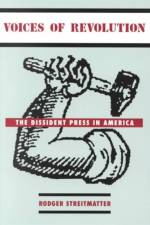
Streitmatter tells the stories of dissident American publications and press movements of the last two centuries, and of the colorful individuals behind them. From publications that fought for the disenfranchised to those that promoted social reform, Voices of Revolution examines the abolitionist and labor press, black power publications of the 1960s, the crusade against the barbarism of lynching, the women's movement, and antiwar journals. Streitmatter also discusses gay and lesbian publications, contemporary on-line journals, and counterculture papers like The Kudzu and The Berkeley Barb that flourished in the 1960s. Voices of Revolution also identifies and discusses some of the distinctive characteristics shared by the genres of the dissident press that rose to prominence-from the early nineteenth century to the late twentieth century. For far too long, mainstream journalists and even some media scholars have viewed radical, leftist, or progressive periodicals in America as "e;rags edited by crackpots."e; However, many of these dissident presses have shaped the way Americans think about social and political issues.
Abonner på vårt nyhetsbrev og få rabatter og inspirasjon til din neste leseopplevelse.
Ved å abonnere godtar du vår personvernerklæring.