

























Gjør som tusenvis av andre bokelskere
Abonner på vårt nyhetsbrev og få rabatter og inspirasjon til din neste leseopplevelse.
Ved å abonnere godtar du vår personvernerklæring.Du kan når som helst melde deg av våre nyhetsbrev.

This book is the first to utilize the empowerment approach of social work practice with substance-abusing clients, bridging clinical, community, and social policy approaches in order to place individual addiction in its sociopolitical context. As Lorraine Gutierrez points out in her foreword, the book "e;challenges us to transform our thinking about substance abuse and move beyond our existing focus on individual deficits."e; Arguing that pathology-focused definitions of substance abuse tend to transform people into their problems, Freeman instead advocates for strengths-centered policies and regulations as the means to empower clients, communities, and society as a whole.Freeman outlines basic empowerment principles and practices, then details the service delivery processes; offers a context for power, policy, and funding decisions; and examines the needs of special populations. Case examples supplement each chapter, and the final part examines four exemplary programs that demonstrate the empowerment process in action.
As case management has replaced institutional care for mental health patients in recent decades, case management theory has grown in complexity and variety of models. But how are these models translated into real experience? How do caseworkers use both textbook and practical knowledge to assist clients with managing their medication and their money? Using ethnographic and historical-sociological methods, Meds, Money, and Manners: The Case Management of Severe Mental Illness uncovers unexpected differences between written and oral accounts of case management in practice. In the process, it suggests the possibility of small acts of resistance and challenges the myth of social workers as agents of state power and social control.
On the most important occasions of our lives, we often find ourselves at a loss for words; when we want to console, celebrate, explain, inspire, or thank, we end up repeating such uninspiring, uninformative phrases as "e;Words cannot express how I feel."e; To help us find the right words, Catherine Frank has compiled this handy compendium of quotations that capture the mundane and the magnificent, the everyday and extraordinary moments of our lives.The three sections of the book cover 150 occasions. "e;Every Year"e; offers quotations on all the special dates in the calendar from New Year's Day to New Year's Eve, including Martin Luther King Day, Valentine's Day, Ramadan, Mother's Day, Thanksgiving, Kwanzaa, and Christmas. "e;Occasionally"e; presents quotations on such occasions as giving a speech, having an interview, becoming a parent, getting engaged, welcoming someone, and saying goodbye. "e;Once in a Lifetime"e; provides quotations on such momentous events as confirmation, coming out, turning 16, graduation, and retirement. A sampling:* Plato, John Donne, and Woody Allen give their words of wisdom on death.* Betty Ford writes eloquently on recovery.* Martina Navratilova ruminates on her first sexual encounter... and Holden Caufield on his.* Ralph Waldo Emerson, Mark Twain, and Frederick Douglass ponder Independence Day.* Amy Tan reflects on the meaning of the Chinese New Year.* Samuel Taylor Coleridge and Susan Sontag offer poignant descriptions of pain and illness.Whether you are offering consolation or congratulations, condolences or confessions, Quotations for All Occasions has the perfect words for every occasion.
More than an ethnography, this book clarifies one of the most important current debates in anthropology: How should anthropologists regard culture, history, and the power process?Since the 1980s, the Thakali of Nepal have searched for an identity and a clarification of their "e;true"e; culture and history in the wake of their rise to political power and achievement of economic success. Although united in this search, the Thakali are divided as to the answers that have been proposed: the "e;Hinduization"e; of religious practices, the promotion of Tibetan Buddhism, the revival of practices associated with the Thakali shamans, and secularization. Ironically, the attempts by the Thakali to define their identity reveal that to return to tradition they must first re-create it-but this process of re-creation establishes it in a way in which it has never existed. To return to "e;tradition"e;-to become Thakali again-is, in a way, to become Thakali for the very first time.
An intriguing "e;intellectual portrait"e; of a generation of Soviet reformers, this book is also a fascinating case study of how ideas can change the course of history. In most analyses of the Cold War's end the ideological aspects of Gorbachev's "e;new thinking"e; are treated largely as incidental to the broader considerations of power-as gloss on what was essentially a retreat forced by crisis and decline. Robert English makes a major contribution by demonstrating that Gorbachev's foreign policy was in fact the result of an intellectual revolution. English analyzes the rise of a liberal policy-academic elite and its impact on the Cold War's end. English worked in the archives of the USSR Foreign Ministry and also gained access to the restricted collections of leading foreign-policy institutes. He also conducted nearly 400 interviews with Soviet intellectuals and policy makers-from Khrushchev- and Brezhnev-era Politburo members to Perestroika-era notables such as Eduard Shevardnadze and Gorbachev himself. English traces the rise of a "e;Westernizing"e; worldview from the post-Stalin years, through a group of liberals in the late1960s-70s, to a circle of close advisers who spurred Gorbachev's most radical reforms.
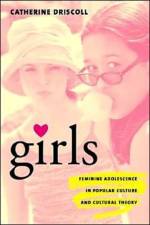
The Spice Girls, Tank Girl comicbooks, Sailor Moon, Courtney Love, Grrl Power: do such things really constitute a unique "e;girl culture?"e; Catherine Driscoll begins by identifying a genealogy of "e;girlhood"e; or "e;feminine adolescence,"e; and then argues that both "e;girls"e; and "e;culture"e; as ideas are too problematic to fulfill any useful role in theorizing about the emergence of feminine adolescence in popular culture. She relates the increasing public visibility of girls in western and westernized cultures to the evolution and expansion of theories about feminine adolescence in fields such as psychoanalysis, sociology, anthropology, history, and politics. Presenting her argument as a Foucauldian genealogy, Driscoll discusses the ways in which young women have been involved in the production and consumption of theories and representations of girls, feminine adolescence, and the "e;girl market."e;
At the end of the sixteenth century and the turn of the first Islamic millennium, the powerful Mughal emperor Akbar declared himself the most sacred being on earth. The holiest of all saints and above the distinctions of religion, he styled himself as the messiah reborn. Yet the Mughal emperor was not alone in doing so. In this field-changing study, A. Azfar Moin explores why Muslim sovereigns in this period began to imitate the exalted nature of Sufi saints. Uncovering a startling yet widespread phenomenon, he shows how the charismatic pull of sainthood (wilayat)-rather than the draw of religious law (sharia) or holy war (jihad)-inspired a new style of sovereignty in Islam. A work of history richly informed by the anthropology of religion and art, The Millennial Sovereign traces how royal dynastic cults and shrine-centered Sufism came together in the imperial cultures of Timurid Central Asia, Safavid Iran, and Mughal India. By juxtaposing imperial chronicles, paintings, and architecture with theories of sainthood, apocalyptic treatises, and manuals on astrology and magic, Moin uncovers a pattern of Islamic politics shaped by Sufi and millennial motifs. He shows how alchemical symbols and astrological rituals enveloped the body of the monarch, casting him as both spiritual guide and material lord. Ultimately, Moin offers a striking new perspective on the history of Islam and the religious and political developments linking South Asia and Iran in early-modern times.
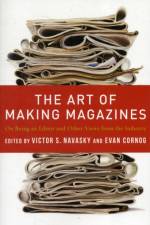
In this entertaining anthology, editors, writers, art directors, and publishers from such magazines as Vanity Fair, The New Yorker, The New Republic, Elle, and Harper's draw on their varied, colorful experiences to explore a range of issues concerning their profession. Combining anecdotes with expert analysis, these leading industry insiders speak on writing and editing articles, developing great talent, effectively incorporating art and design, and the critical relationship between advertising dollars and content. They emphasize the importance of fact checking and copyediting; share insight into managing the interests (and potential conflicts) of various departments; explain how to parlay an entry-level position into a masthead title; and weigh the increasing influence of business interests on editorial decisions. In addition to providing a rare, behind-the-scenes look at the making of successful and influential magazines, these contributors address the future of magazines in a digital environment and the ongoing importance of magazine journalism. Full of intimate reflections and surprising revelations, The Art of Making Magazines is both a how-to and a how-to-be guide for editors, journalists, students, and anyone hoping for a rare peek between the lines of their favorite magazines. The chapters are based on talks delivered as part of the George Delacorte Lecture Series at the Columbia School of Journalism.Essays include: "e;Talking About Writing for Magazines (Which One Shouldn't Do)"e; by John Gregory Dunne; "e;Magazine Editing Then and Now"e; by Ruth Reichl; "e;How to Become the Editor in Chief of Your Favorite Women's Magazine"e; by Roberta Myers; "e;Editing a Thought-Leader Magazine"e; by Michael Kelly; "e;Fact-Checking at The New Yorker"e; by Peter Canby; "e;A Magazine Needs Copyeditors Because...."e; by Barbara Walraff; "e;How to Talk to the Art Director"e; by Chris Dixon; "e;Three Weddings and a Funeral"e; by Tina Brown; "e;The Simpler the Idea, the Better"e; by Peter W. Kaplan; "e;The Publisher's Role: Crusading Defender of the First Amendment or Advertising Salesman?"e; by John R. MacArthur; "e;Editing Books Versus Editing Magazines"e; by Robert Gottlieb; and "e;The Reader Is King"e; by Felix Dennis
This book is a comprehensive, chronologically ordered review of China's vertebrate fossil record. It also presents a history of vertebrate paleontological studies in China and an entree to some important issues of systematics, evolutionary history, paleoecology, taphonomy, and functional anatomy best elucidated by China's fossils.
Why has child care legislation developed along its present course? How did the political players influence lawmakers? What do the politics of child care legislation over the past thirty years indicate for the future? Based on more than one hundred interviews with legislators and executive branch officials, archival research, and secondary sources, this book looks at the politics behind child care legislation, rather than analyzing child care as a work and family issue. Identifying key junctures at which major child care bills were introduced and debated (1971, 1990, and 1996), Sally Cohen examines the politics surrounding each of these events and identifies the political structures and negotiations that evolved in the intervening years. In addition, Cohen looks at the impact the election of President Clinton has had on child care policymaking, and how child care legislation became part of other issues, including welfare reform, crime prevention, school readiness, and tax policy revisions.
Can techniques traditionally thought to be outside the scope of literature, including word processing, databasing, identity ciphering, and intensive programming, inspire the reinvention of writing? The Internet and the digital environment present writers with new challenges and opportunities to reconceive creativity, authorship, and their relationship to language. Confronted with an unprecedented amount of texts and language, writers have the opportunity to move beyond the creation of new texts and manage, parse, appropriate, and reconstruct those that already exist. In addition to explaining his concept of uncreative writing, which is also the name of his popular course at the University of Pennsylvania, Goldsmith reads the work of writers who have taken up this challenge. Examining a wide range of texts and techniques, including the use of Google searches to create poetry, the appropriation of courtroom testimony, and the possibility of robo-poetics, Goldsmith joins this recent work to practices that date back to the early twentieth century. Writers and artists such as Walter Benjamin, Gertrude Stein, James Joyce, and Andy Warhol embodied an ethos in which the construction or conception of a text was just as important as the resultant text itself. By extending this tradition into the digital realm, uncreative writing offers new ways of thinking about identity and the making of meaning.
The Swiss linguist Ferdinand de Saussure (1857-1913) revolutionized the study of language, signs, and discourse in the twentieth century. He successfully reconstructed the proto-Indo-European vowel system, advanced a conception of language as a system of arbitrary signs made meaningful through kinetic interrelationships, and developed a theory of the anagram so profound it gave rise to poststructural literary criticism.The roots of these disparate, even contradictory achievements lie in the thought of Early German Romanticism, which Saussure consulted for its insight into the nature of meaning and discourse. Conducting the first comprehensive analysis of Saussure's intellectual heritage, Boris Gasparov links Sassurean notions of cognition, language, and history to early Romantic theories of cognition and the transmission of cultural memory. In particular, several fundamental categories of Saussure's philosophy of language, such as the differential nature of language, the mutability and immutability of semiotic values, and the duality of the signifier and the signified, are rooted in early Romantic theories of "e;progressive"e; cognition and child cognitive development. Consulting a wealth of sources only recently made available, Gasparov casts the seeming contradictions and paradoxes of Saussure's work as a genuine tension between the desire to bring linguistics and semiotics in line with modernist epistemology on the one hand, and Jena Romantics' awareness of language's dynamism and its transcendence of the boundaries of categorical reasoning on the other. Advancing a radical new understanding of Saussure, Gasparov reveals aspects of the intellectual's work previously overlooked by both his followers and his postmodern critics.
When he sold his first short story to The New Yorker in 1979, Alan Cheuse was hardly new to the literary world. He had studied at Rutgers under John Ciardi, worked at the Breadloaf Writing Workshops with Robert Frost and Ralph Ellison, written hundreds of reviews for Kirkus Reviews, and taught alongside John Gardner and Bernard Malamud at Bennington College for nearly a decade. Soon after the New Yorker story appeared, Cheuse wrote a freelance magazine piece about a new, publicly funded broadcast network called National Public Radio, and a relationship of reviewer and radio was born. In Listening to the Page, Alan Cheuse takes a look back at some of the thousands of books he has read, reviewed, and loved, offering retrospective pieces on modern American literary figures such as Hemingway, Thomas Wolfe, Bernard Malamud, and John Steinbeck, as well as contemporary writers like Elizabeth Tallent and Vassily Aksyonov. Other essays explore landscape in All the Pretty Horses, the career of James Agee, Mario Vargas Llosa and naturalism, and the life and work of Robert Penn Warren.
Alasdair Cochrane introduces an entirely new theory of animal rights grounded in their interests as sentient beings. He then applies this theory to different and underexplored policy areas, such as genetic engineering, pet-keeping, indigenous hunting, and religious slaughter. In contrast to other proponents of animal rights, Cochrane claims that because most sentient animals are not autonomous agents, they have no intrinsic interest in liberty. As such, he argues that our obligations to animals lie in ending practices that cause their suffering and death and do not require the liberation of animals. Cochrane's "e;interest-based rights approach"e; weighs the interests of animals to determine which is sufficient to impose strict duties on humans. In so doing, Cochrane acknowledges that sentient animals have a clear and discernable right not to be made to suffer and not to be killed, but he argues that they do not have a prima facie right to liberty. Because most animals possess no interest in leading freely chosen lives, humans have no moral obligation to liberate them. Moving beyond theory to the practical aspects of applied ethics, this pragmatic volume provides much-needed perspective on the realities and responsibilities of the human-animal relationship.
Daniel McCool not only chronicles the history of water development agencies in America and the way in which special interests have abused rather than preserved the country's rivers, he also narrates the second, brighter act in this ongoing story: the surging, grassroots movement to bring these rivers back to life and ensure they remain pristine for future generations. The culmination of ten years of research and observation, McCool's book confirms the surprising news that America's rivers are indeed returning to a healthier, free-flowing condition. The politics of river restoration demonstrates how strong grassroots movements can challenge entrenched powers and win. Through passion and dedication, ordinary people are reclaiming the American landscape, forming a "e;river republic"e; of concerned citizens from all backgrounds and sectors of society. As McCool shows, the history, culture, and fate of America is tied to its rivers, and their restoration is a microcosm mirroring American beliefs, livelihoods, and an increasing awareness of what two hundred years of environmental degradation can do. McCool profiles the individuals he calls "e;instigators,"e; who initiated the fight for these waterways and, despite enormous odds, have succeeded in the near-impossible task of challenging and changing the status quo. Part I of the volume recounts the history of America's relationship to its rivers; part II describes how and why Americans "e;parted"e; them out, destroying their essence and diminishing their value; and part III shows how society can live in harmony with its waterways while restoring their well-being-and, by extension, the well-being of those who depend on them.
As the international art market globalizes the indigenous image, it changes its identity, status, value, and purpose in local and larger contexts. Focusing on a school of Australian Aboriginal painting that has become popular in the contemporary art world, Robyn Ferrell traces the influence of cultural exchanges on art, the self, and attitudes toward the other.Aboriginal acrylic painting, produced by indigenous women artists of the Australian Desert, bears a superficial resemblance to abstract expressionism and is often read as such by viewers. Yet to see this art only through a Western lens is to miss its unique ontology, logics of sensation, and rich politics and religion. Ferrell explores the culture that produces these paintings and connects its aesthetic to the brutal environmental and economic realities of its people. From here, she travels to urban locales, observing museums and department stores as they traffic interchangeably in art and commodities. Ferrell ties the history of these desert works to global acts of genocide and dispossession. Rethinking the value of the artistic image in the global market and different interpretations of the sacred, she considers photojournalism, ecotourism, and other sacred sites of the western subject, investigating the intersection of modern art and postmodern culture. She ultimately challenges the primacy of the "e;European gaze"e; and its fascination with sacred cultures, constructing a more balanced intercultural dialogue that deemphasizes the aesthetic of the real championed by western philosophy.
Over the past half century in America, Buddhism has grown from a transplanted philosophy to a full-fledged religious movement, rich in its own practices, leaders, adherents, and institutions. Long favored as an essential guide to this history, Buddhism in America covers the three major groups that shape the tradition-an emerging Asian immigrant population, native-born converts, and old-line Asian American Buddhists-and their distinct, yet spiritually connected efforts to remake Buddhism in a Western context. This edition updates existing text and adds three new essays on contemporary developments in American Buddhism, particularly the aging of the baby boom population and its effect on American Buddhism's modern character. New material includes revised information on the full range of communities profiled in the first edition; an added study of a second generation of young, Euro-American leaders and teachers; an accessible look at the increasing importance of meditation and neurobiological research; and a provocative consideration of the mindfulness movement in American culture. The volume maintains its detailed account of South and East Asian influences on American Buddhist practices, as well as instances of interreligious dialogue, socially activist Buddhism, and complex gender roles within the community. Introductory chapters describe Buddhism's arrival in America with the nineteenth-century transcendentalists and rapid spread with the Beat poets of the 1950s. The volume now concludes with a frank assessment of the challenges and prospects of American Buddhism in the twenty-first century.
Analyzing the critical juncture of family-centered policy and practice, this book places the universal institution of the family in a global context. By including a conceptual framework as well as practice components, the authors offer an original multimodal approach toward understanding family-centered policy practice from an international perspective. It provides grassroots strategies for activists and practical guides for both students and practitioners and includes cutting-edge interpretations of the impact of globalization on families, social workers, and other helping professionals and advocates.
Descriptions of Indian peoples of the Northeast date to the Norse sagas, centuries before permanent European settlement, and the region has been the setting for a long history of contact, conflict, and accommodation between natives and newcomers. The focus of an extraordinarily vital field of scholarship, the Northeast is important both historically and theoretically: patterns of Indian-white relations that developed there would be replicated time and again over the course of American history. Today the Northeast remains the locus of cultural negotiation and controversy, with such subjects as federal recognition, gaming, land claims, and repatriation programs giving rise to debates directly informed by archeological and historical research of the region.The Columbia Guide to American Indians of the Northeast is a concise and authoritative reference resource to the history and culture of the varied indigenous peoples of the region. Encompassing the very latest scholarship, this multifaceted volume is divided into four parts. Part I presents an overview of the cultures and histories of Northeastern Indian people and surveys the key scholarly questions and debates that shape this field. Part II serves as an encyclopedia, alphabetically listing important individuals and places of significant cultural or historic meaning. Part III is a chronology of the major events in the history of American Indians in the Northeast. The expertly selected resources in Part IV include annotated lists of tribes, bibliographies, museums and sites, published sources, Internet sites, and films that can be easily accessed by those wishing to learn more.
Stories of rape, murder, adultery, and conquest raise crucial issues in the Hebrew Bible, and their interpretation helps societies form their religious and moral beliefs. From the sacrifice of Isaac to the adultery of David, narratives of sin engender vivid analysis and debate, powering the myths that form the basis of the religious covenant, or the relationship between a people and their God. Rereading these stories in their different forms and varying contexts, Alan F. Segal demonstrates the significance of sinning throughout history and today. Drawing on literary and historical theory, as well as research in the social sciences, he explores the motivation for creating sin stories, their prevalence in the Hebrew Bible, and their possible meaning to Israelite readers and listeners. After introducing the basics of his approach and outlining several hermeneutical concepts, Segal conducts seven linked studies of specific narratives, using character and text to clarify problematic terms such as "e;myth,"e; "e;typology,"e; and "e;orality."e; Following the reappearance and reinterpretation of these narratives in later compositions, he proves their lasting power in the mythology of Israel and the encapsulation of universal, perennially relevant themes. Segal ultimately positions the Hebrew Bible as a foundational moral text and a history book, offering uncommon insights into the dating of biblical events and the intentions of biblical authors.
The most significant shift in environmental governance over the last thirty years has been the convergence of environmental and liberal economic norms toward "e;liberal environmentalism"e;-which predicates environmental protection on the promotion and maintenance of a liberal economic order. Steven Bernstein assesses the reasons for this historical shift, introduces a socio-evolutionary explanation for the selection of international norms, and considers the implications for our ability to address global environmental problems.The author maintains that the institutionalization of "e;sustainable development"e; at the 1992 United Nations Conference on Environment and Development (UNCED) legitimized the evolution toward liberal environmentalism. Arguing that most of the literature on international environmental politics is too rationalist and problem-specific, Bernstein challenges the mainstream thinking on international cooperation by showing that it is always for some purpose or goal. His analysis of the norms that guide global environmental policy also challenges the often-presumed primacy of science in environmental governance.
Contemporary Myanmar faces a number of political challenges, and it is unclear how other nations should act in relation to the country. Prioritizing the opinions of local citizens and reading them against the latest scholarship on this issue, Ian Holliday affirms the importance of foreign interests in Myanmar's democratic awakening, yet only through committed, grassroots strategies of engagement encompassing foreign states, international aid agencies, and global corporations.Holliday supports his argument by using multiple sources and theories, particularly ones that take historical events, contemporary political and social investigations, and global justice literature into account, as well as studies that focus on the effects of democratic transition, the aid industry, and socially responsible corporate investing and sanctions. One of the only volumes to apply broad-ranging global justice theories to a real-world nation in flux, Burma Redux will appeal to professionals researching Burma/Myanmar; political advisers and advocacy groups; nonspecialists interested in Southeast Asian politics and society and the local and international problems posed by pariah states; general readers who seek a richer understanding of the country beyond journalistic accounts; and the Burmese people themselves-both within the country and in diaspora. Burma Redux is also the first book-length study on the nation to be completed after the contentious general elections of 2010.
Has the international movement for democracy and human rights gone from being a weapon against power to part of the arsenal of power itself? Nicolas Guilhot explores this question in his penetrating look at how the U.S. government, the World Bank, political scientists, NGOs, think tanks, and various international organizations have appropriated the movement for democracy and human rights to export neoliberal policies throughout the world. His work charts the various symbolic, ideological, and political meanings that have developed around human rights and democracy movements. Guilhot suggests that these shifting meanings reflect the transformation of a progressive, emancipatory movement into an industry, dominated by "e;experts,"e; ensconced in positions of power.Guilhot's story begins in the 1950s when U.S. foreign policy experts promoted human rights and democracy as part of a "e;democratic international"e; to fight the spread of communism. Later, the unlikely convergence of anti-Stalinist leftists and the nascent neoconservative movement found a place in the Reagan administration. These "e;State Department Socialists,"e; as they were known, created policies and organizations that provided financial and technical expertise to democratic movements, but also supported authoritarian, anti-communist regimes, particularly in Latin America.Guilhot also traces the intellectual and social trajectories of key academics, policymakers, and institutions, including Seymour M. Lipset, Jeane Kirkpatrick, the "e;Chicago Boys,"e; including Milton Friedman, the National Endowment for Democracy, and the Ford Foundation. He examines the ways in which various individuals, or "e;double agents,"e; were able to occupy pivotal positions at the junction of academe, national, and international institutions, and activist movements. He also pays particular attention to the role of the social sciences in transforming the old anti-Communist crusades into respectable international organizations that promoted progressive and democratic ideals, but did not threaten the strategic and economic goals of Western governments and businesses.Guilhot's purpose is not to disqualify democracy promotion as a conspiratorial activity. Rather he offers new perspectives on the roles of various transnational human rights institutions and the policies they promote. Ultimately, his work proposes a new model for understanding the international politics of legitimate democratic order and the relation between popular resistance to globalization and the "e;Washington Consensus."e;
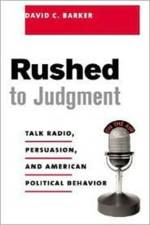
Convenient, entertaining, and provocative, talk radio today is unapologetically ideological. Focusing on Rush Limbaugh-the medium's most influential talk show-Rushed to Judgment systematically examines the politics of persuasion at play on our nation's radio airwaves and asks a series of important questions. Does listening to talk radio change the way people think about politics, or are listeners' attitudes a function of the self-selecting nature of the audience? Does talk radio enhance understanding of public issues or serve as a breeding ground for misunderstanding? Can talk radio serve as an agent of deliberative democracy, spurring Americans to open, public debate? Or will talk radio only aggravate the divisive partisanship many Americans decry in poll after poll? The time is ripe to evaluate the effects of a medium whose influence has yet to be fully reckoned with.
Waves and tides, wind and storms, sea-level rise and shore erosion: these are the forces that shape our beaches, and beach lovers of all stripes can benefit from learning more about how these coastal processes work. With animation and clarity, The Beach Book tells sunbathers why beaches widen and narrow, and helps boaters and anglers understand why tidal inlets migrate. It gives home buyers insight into erosion rates and provides natural-resource managers and interested citizens with rich information on beach nourishment and coastal-zone development. And for all of us concerned about the long-term health of our beaches, it outlines the latest scientific information on sea-level rise and introduces ways to combat not only the erosion of beaches but also the decline of other coastal habitats. The more we learn about coastline formation and maintenance, Carl Hobbs argues, the better we can appreciate and cultivate our shores. Informed by the latest research and infused with a passion for its subject, The Beach Book provides a wide-ranging introduction to the shore, and all of us who love the beach and its associated environments will find it timely and useful.
The question "e;Where do we come from?"e; has fascinated philosophers, scientists, and artists for generations. This book reorients the question of the matrix as a place where everything comes from (chora, womb, incubator) by recasting it in terms of acts of "e;matrixial/maternal hospitality"e; producing space and matter of and for the other. Irina Aristarkhova theorizes such hospitality with the potential to go beyond tolerance in understanding self/other relations. Building on and critically evaluating a wide range of historical and contemporary scholarship, she applies this theoretical framework to the science, technology, and art of ectogenesis (artificial womb, neonatal incubators, and other types of generation outside of the maternal body) and proves the question "e;Can the machine nurse?"e; is critical when approaching and understanding the functional capacities and failures of incubating technologies, such as artificial placenta. Aristarkhova concludes with the science and art of male pregnancy, positioning the condition as a question of the hospitable man and newly defined fatherhood and its challenge to the conception of masculinity as unable to welcome the other.
Cholly Atkins's career has spanned an extraordinary era of American dance. He began performing during Prohibition and continued his apprenticeship in vaudeville, in nightclubs, and in the army during World War II. With his partner, Honi Coles, Cholly toured the country, performing with such jazz masters as Louis Armstrong, Cab Calloway, and Count Basie. As tap reached a nadir in the fifties, Cholly created the new specialization of "e;vocal choreography,"e; teaching rhythm-and-blues singers how to perform their music by adding rhythmical dance steps drawn from twentieth-century American dance, from the Charleston to rhythm tap. For the burgeoning Motown record label, Cholly taught such artists as the Supremes, Smokey Robinson and the Miracles, the Temptations, Gladys Knight and the Pips, and Marvin Gaye to command the stage in ways that would enhance their performances and "e;sell"e; their songs.Class Act tells of Cholly's boyhood and coming of age, his entry into the dance world of New York City, his performing triumphs and personal tragedies, and the career transformations that won him gold records and a Tony for choreographing Black and Blue on Broadway. Chronicling the rise, near demise, and rediscovery of tap dancing, the book is both an engaging biography and a rich cultural history.
While environmentalists insist that lower rates of consumption of natural resources are essential for a sustainable future, many economists dismiss the notion that resource limits act to constrain modern, creative societies. The conflict between these views tinges political debate at all levels and hinders our ability to plan for the future.Supply-Side Sustainability offers a fresh approach to this dilemma by integrating ecological and social science approaches in an interdisciplinary treatment of sustainability. Written by two ecologists and an anthropologist, this book discusses organisms, landscapes, populations, communities, biomes, the biosphere, ecosystems and energy flows, as well as patterns of sustainability and collapse in human societies, from hunter-gatherer groups to empires to today's industrial world. These diverse topics are integrated within a new framework that translates the authors' advances in hierarchy and complexity theory into a form useful to professionals in science, government, and business.The result is a much-needed blueprint for a cost-effective management regime, one that makes problem-solving efforts themselves sustainable over time. The authors demonstrate that long-term, cost-effective resource management can be achieved by managing the contexts of productive systems, rather than by managing the commodities that natural systems produce.
Richard W. Bulliet has long been a leading figure in the study of human-animal relations, and in his newest work, Hunters, Herders, and Hamburgers, he offers a sweeping and engaging perspective on this dynamic relationship from prehistory to the present. By considering the shifting roles of donkeys, camels, cows, and other domesticated animals in human society, as well as their place in the social imagination, Bulliet reveals the different ways various cultures have reinforced, symbolized, and rationalized their relations with animals. Bulliet identifies and explores four stages in the history of the human-animal relationship-separation, predomesticity, domesticity, and postdomesticity. He begins with the question of when and why humans began to consider themselves distinct from other species and continues with a fresh look at how a few species became domesticated. He demonstrates that during the domestic era many species fell from being admired and even worshipped to being little more than raw materials for various animal-product industries. Throughout the work, Bulliet discusses how social and technological developments and changing philosophical, religious, and aesthetic viewpoints have shaped attitudes toward animals.Our relationship to animals continues to evolve in the twenty-first century. Bulliet writes, "e;We are today living through a new watershed in human-animal relations, one that appears likely to affect our material, social, and imaginative lives as profoundly as did the original emergence of domestic species."e; The United States, Britain, and a few other countries are leading a move from domesticity, marked by nearly universal familiarity with domestic species, to an era of postdomesticity, in which dependence on animal products continues but most people have no contact with producing animals. Elective vegetarianism and the animal-liberation movement have combined with new attitudes toward animal science, pets, and the presentation of animals in popular culture to impart a distinctive moral, psychological, and spiritual tone to postdomestic life.
In 1995, promising a more active political presence for unions, John Sweeney was elected president of the AFL-CIO. Labor would develop a "e;new voice,"e; one that could not be ignored or taken for granted by Democratic and Republican politicians. However, by the summer of 2005 opposition to Sweeney's leadership threatened to divide the labor movement. In The Future of Organized Labor in American Politics, Peter L. Francia discusses the effects of Sweeney's controversial tenure as president and assesses labor's influence on American political elections and legislation. Drawing on interviews with union and business leaders, as well as campaign-finance and public-opinion data, Francia argues that Sweeney has employed a more effective and expansive grassroots political operation than his predecessors. He challenges critics who dismiss Sweeney's efforts as a failure but cautions that the decline in union membership presents a serious crisis for the labor movement.When unions emphasize "e;grassroots"e; strategies they can effectively compete against the financial power of big business and can make a significant difference in congressional politics. Francia analyzes organized labor's political activities, its coalitions with other interest groups, and its influence on voter turnout, election results, and votes in Congress. He also examines the effects of Sweeney's embrace of progressive causes and labor's increasing willingness to challenge Democrats who vote against labor's interests. For all his successes, Sweeney's tenure has not been without its problems. Labor's presence in American politics is threatened by shrinking membership in unions. Francia suggests that if unions want to remain a viable political force in congressional politics, they must devote more resources to organizing workers.
Abonner på vårt nyhetsbrev og få rabatter og inspirasjon til din neste leseopplevelse.
Ved å abonnere godtar du vår personvernerklæring.