






















Gjør som tusenvis av andre bokelskere
Abonner på vårt nyhetsbrev og få rabatter og inspirasjon til din neste leseopplevelse.
Ved å abonnere godtar du vår personvernerklæring.Du kan når som helst melde deg av våre nyhetsbrev.

Thomas Philipp's study of Acre combines the most extensive use to date of local Arabic sources with commercial records in Europe to shed light on a region and power center many identify as the beginning of modern Palestinian history. The third largest city in eighteenth-century Syria-after Aleppo and Damascus-Acre was the capital of a politically and economically unique region on the Mediterranean coast that included what is today northern Israel and southern Lebanon. In the eighteenth century, Acre grew dramatically from a small fishing village to a fortified city of some 25,000 inhabitants. Cash crops (first cotton, then grain) made Acre the center of trade and political power and linked it inextricably to the world economy. Acre was markedly different from other cities in the region: its urban society consisted almost exclusively of immigrants seeking their fortune. The rise and fall of Acre in the eighteenth and nineteenth centuries, Thomas Philipp argues, must be seen against the background of the decay of central power in the Ottoman empire. Destabilization of imperial authority allowed for the resurfacing of long-submerged traditional power centers and the integration of Arab regions into European and world economies. This larger imperial context proves the key to addressing many questions about the local history of Acre and its peripheries. How were the new sources of wealth and patterns of commerce that remade Acre reconciled with traditional forms of political power and social organization? Were these forms really traditional? Or did entirely new classes develop under the circumstances of an immigrant society and new commercial needs? And why did Acre, after such propitious beginnings as a center of export trade and political and military power strong enough to defy Napoleon, give way to the dazzling rise of Beirut in the nineteenth century? For centuries the object of the Crusader's fury and the trader's envy, Acre is here restored to its full significance at a crucial moment in Middle Eastern history.
On March 13, 1989, the entire Quebec power grid collapsed, automatic garage doors in California suburbs began to open and close without apparent reason, and microchip production came to a halt in the Northeast; in space, communications satellites had to be manually repointed after flipping upside down, and pressure readings on hydrogen tank supplies on board the Space Shuttle Discovery peaked, causing NASA to consider aborting the mission. What was the cause of all these seemingly disparate events? Sten Odenwald gives convincing evidence of the mischievous-and potentially catastrophic-power of solar storms and the far-reaching effects of the coming "e;big one"e; brewing in the sun and estimated to culminate in the twenty-third cycle in the year 2001 and beyond. When the sun undergoes its cyclic "e;solar maximum,"e; a time when fierce solar flares and storms erupt, fantastic auroras will be seen around the world. But the breathtaking spectacles will herald a potentially disastrous chain of events that merit greater preparation than Y2K. Is anyone listening?The 23rd Cycle traces the previously untold history of solar storms and the ways in which they were perceived by astronomers-and even occasionally covered up by satellite companies. Punctuated with an insert containing dramatic color images showing the erupting sun, the book also includes a history of the record of auroral sightings, accounts of communications blackouts from the twentieth century, a list of industries sensitive to solar storms, and information about radiation and health issues.
How "e;public"e; is public television if only a small percentage of the American people tune in on a regular basis? When public television addresses "e;viewers like you,"e; just who are you? Despite the current of frustration with commercial television that runs through American life, most TV viewers bypass the redemptive "e;oasis of the wasteland"e; represented by PBS and turn to the sitcoms, soap operas, music videos, game shows, weekly dramas, and popular news programs produced by the culture industries. Viewers Like You? traces the history of public broadcasting in the United States, questions its priorities, and argues that public TV's tendency to reject popular culture has undermined its capacity to serve the people it claims to represent. Drawing from archival research and cultural theory, the book shows that public television's perception of what the public needs is constrained by unquestioned cultural assumptions rooted in the politics of class, gender, and race.
Offering a multidimensional approach to one of the most important episodes of the twentieth century, The Columbia Guide to the Holocaust offers readers and researchers a general history of the Holocaust while delving into the core issues and debates in the study of the Holocaust today. Each of the book's five distinct parts stands on its own as valuable research aids; together, they constitute an integrated whole. Part I provides a narrative overview of the Holocaust, placing it within the larger context of Nazi Germany and World War II. Part II examines eight critical issues or controversies in the study of the Holocaust, including the following questions: Were the Jews the sole targets of Nazi genocide, or must other groups, such as homosexuals, the handicapped, Gypsies, and political dissenters, also be included? What are the historical roots of the Holocaust? How and why did the "e;Final Solution"e; come about? Why did bystanders extend or withhold aid? Part III consists of a concise chronology of major events and developments that took place surrounding the Holocaust, including the armistice ending World War I, the opening of the first major concentration camp at Dachau, Germany's invasion of Poland, the failed assassination attempt against Hitler, and the formation of Israel.Part IV contains short descriptive articles on more than two hundred key people, places, terms, and institutions central to a thorough understanding of the Holocaust. Entries include Adolf Eichmann, Anne Frank, the Warsaw Ghetto, Aryanization, the SS, Kristallnacht, and the Catholic Church. Part V presents an annotated guide to the best print, video, electronic, and institutional resources in English for further study.Armed with the tools contained in this volume, students or researchers investigating this vast and complicated topic will gain an informed understanding of one of the greatest tragedies in world history.
This insightful analysis of the ways in which South Korean economic development strategies have reshaped the country's national identity gives specific attention to the manner in which women, as the primary agents of consumption, have been affected by this transformation. Past scholarship on the culture of nationalism has largely focused on the ways in which institutions utilize memory and "e;history"e; to construct national identity. In a provocative departure, Laura C. Nelson challenges these assumptions with regard to South Korea, arguing that its identity has been as much tied to notions of the future as rooted in a recollection of the past. Following a backlash against consumerism in the late 1980s, the government spearheaded a program of frugality that eschewed imported goods and foreign travel in order to strengthen South Korea's national identity. Consumption-with its focus on immediate gratification-threatened the state's future-oriented discourse of national unity. In response to this perceived danger, Nelson asserts, the government cast women as the group whose "e;excessive desires"e; for material goods were endangering the nation.
Pursuing Privacy in Cold War America explores the relationship between confessional poetry and constitutional privacy doctrine, both of which emerged at the end of the 1950s. While the public declarations of the Supreme Court and the private declamations of the lyric poet may seem unrelated, both express the upheavals in American notions of privacy that marked the Cold War era. Nelson situates the poetry and legal decisions as part of a far wider anxiety about privacy that erupted across the social, cultural, and political spectrum during this period. She explores the panic over the "e;death of privacy"e; aroused by broad changes in postwar culture: the growth of suburbia, the advent of television, the popularity of psychoanalysis, the arrival of computer databases, and the spectacles of confession associated with McCarthyism.Examining this interchange between poetry and law at its most intense moments of reflection in the 1960s, '70s, and '80s, Deborah Nelson produces a rhetorical analysis of a privacy concept integral to postwar America's self-definition and to bedrock contradictions in Cold War ideology. Nelson argues that the desire to stabilize privacy in a constitutional right and the movement toward confession in postwar American poetry were not simply manifestations of the anxiety about privacy. Supreme Court justices and confessional poets such as Anne Sexton, Robert Lowell, W. D. Snodgrass, and Sylvia Plath were redefining the nature of privacy itself. Close reading of the poetry alongside the Supreme Court's shifting definitions of privacy in landmark decisions reveals a broader and deeper cultural metaphor at work.
How and why have Americans living at particular times and places used and transformed their environment? How have political systems dealt with conflicts over resources and conservation? This is the only major reference work to explore all the major themes and debates of the burgeoning field of environmental history. Humanity's relationship with the natural world is one of the oldest and newest topics in human history. The issue emerged as a distinct field of scholarship in the early 1970s and has been growing steadily ever since. The discipline's territory and sources are rich and varied and include climactic and geological data, court records, archaeological digs, and the writings of naturalists, as well as federal and state economic and resource development and conservation policy. Environmental historians investigate how and why natural and human-created surroundings affect a society's development. Merchant provides a context-setting overview of American environmental history from the beginning of the millennium; an encyclopedia of important concepts, people, agencies, and laws; a chronology of major events; and an extensive bibliography including films, videos, CD-Roms, and websites. This concise "e;first stop"e; reference for students and general readers contains an accessible overview of environmental history; a mini-encyclopedia of ideas, people, legislation, and agencies; a chronology of events and their significance; and a bibliography of books, magazines, and journals as well as films, videos, CD-ROMs, and online resources. In addition to providing a wealth of factual information, The Columbia Guide to American Environmental History explores contentious issues in this much-debated field, from the idea of wilderness to global warming. How and why have Americans living at particular times and places used and transformed their environment? How have political systems dealt with conflicts over resources and conservation? This is the only major reference work to explore all the major themes and debates in the burgeoning field of environmental history. Humanity's relationship with the natural world is one of the oldest and newest topics in human history. The issue emerged as a distinct field of scholarship in the early 1970s and has been growing steadily ever since. The discipline's territory and sources are rich and varied and include climatic and geological data, court records, archaeological digs, and the writings of naturalists, as well as federal and state economic and resource development and conservation policy. Environmental historians investigate how and why natural and human-created surroundings affect a society's development. Merchant provides a context-setting overview of American environmental history from the precolonial land-use practice of Native Americans and concluding with twenty-first concerns over global warming. The book also includes a glossary of important concepts, people, agencies, and legislation; a chronology of major events; and an extensive bibliography including films, videos, CD-ROMs, and websites.This concise reference for students and general readers contains an accessible overview of American environmental history; a mini-encyclopedia of ideas, people, legislation, and agencies; a chronology of events and their significance; and a bibliography of books, magazines, and journals as well as films, videos, CD-ROMs, and online resources. In addition to providing a wealth of factual information, The Columbia Guide to American Environmental History explores contentious issues in this much-debated field, from the idea of wilderness to global warming.
By the last decades of the nineteenth century, more people were making more speeches to greater numbers in a wider variety of venues than at any previous time. This book argues that a recognizably modern public life was created in Victorian Britain largely through the instrumentality of public speech. Shedding new light on the careers of many of the most important figures of the Victorian era and beyond, including Gladstone, Disraeli, Sir Robert Peel, John Bright, Joseph Chamberlain, Winston Churchill, Lloyd George, Charles Haddon Spurgeon, and Canon Liddon, the book traces the ways in which oratory came to occupy a central position in the conception and practice of Victorian public life. Not a study of rhetoric or a celebration of great oratory, the book stresses the social developments that led to the production and consumption of these speeches.
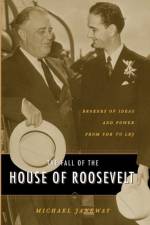
In the 1930s a band of smart and able young men, some still in their twenties, helped Franklin D. Roosevelt transform an American nation in crisis. They were the junior officers of the New Deal. Thomas G. Corcoran, Benjamin V. Cohen, William O. Douglas, Abe Fortas, and James Rowe helped FDR build the modern Democratic Party into a progressive coalition whose command over power and ideas during the next three decades seemed politically invincible. This is the first book about this group of Rooseveltians and their linkage to Lyndon Johnson's Great Society and the Vietnam War debacle. Michael Janeway grew up inside this world. His father, Eliot Janeway, business editor of Time and a star writer for Fortune and Life magazines, was part of this circle, strategizing and practicing politics as well as reporting on these men. Drawing on his intimate knowledge of events and previously unavailable private letters and other documents, Janeway crafts a riveting account of the exercise of power during the New Deal and its aftermath. He shows how these men were at the nexus of reform impulses at the electoral level with reform thinking in the social sciences and the law and explains how this potent fusion helped build the contemporary American state. Since that time efforts to reinvent government by "e;brains trust"e; have largely failed in the U.S. In the last quarter of the twentieth century American politics ceased to function as a blend of broad coalition building and reform agenda setting, rooted in a consensus of belief in the efficacy of modern government.Can a progressive coalition of ideas and power come together again? The Fall of the House of Roosevelt makes such a prospect both alluring and daunting.
Rapid growth, reduced poverty, and stable societies: the announced benefits of the world economy celebrated by neoliberal proponents of "e;the Washington consensus"e; have failed to materialize. What does this failure mean for future world order and the U.S. role as global hegemon? Addressing this crucial question, William Tabb argues that global economic institutions such as the World Bank and the International Monetary Fund constitute a nascent international state for which all previous models of sovereignty, accountability and equity are inadequate. Integrating economics and political science, Tabb traces the emergence of this global state from the closing days of World War II and examines its future prospects.Even as the United States will continue to dominate the emerging structures of world governance, Tabb maintains, it will have to change the assumptions behind its championing of classical models of international free trade. A new financial architecture must encompass debt forgiveness, multilateral agreements on investment, and a more inclusive model of growth in the twenty-first century.
When is military force an acceptable tool of foreign policy? Why do democracies use force against each other? David R. Mares argues that the key factors influencing political leaders in all types of polities are the costs to their constituencies of using force and whether the leader can survive their displeasure if the costs exceed what they are willing to pay. Violent Peace proposes a conceptual scheme for analyzing militarized conflict and supports this framework with evidence from the history of Latin America. His model has greater explanatory power when applied to this conflict-ridden region than a model emphasizing U.S. power, levels of democracy, or the balance of power.Mares takes conflict as a given in international relations but does not believe that large-scale violence must inevitably result, arguing that it is the management of conflict, and not necessarily its resolution, that should be the focus of students, scholars, and practitioners of international relations. Mares argues that deterrence represents the key to conflict management by directly affecting the costs of using force. Conflicts escalate to violence when leaders ignore the requisites for credible and ongoing deterrence. Successful deterrence, he suggests, lies in a strategy that combines diplomatic and military incentives, allowing competition among heterogenous states to be managed in a way that minimizes conflict and maximizes cooperation.
During the early modern period, hundreds of Turks and Moors traded in English and Welsh ports, dazzled English society with exotic cuisine and Arabian horses, and worked small jobs in London, while the "e;Barbary Corsairs"e; raided coastal towns and, if captured, lingered in Plymouth jails or stood trial in Southampton courtrooms. In turn, Britons fought in Muslim armies, traded and settled in Moroccan or Tunisian harbor towns, joined the international community of pirates in Mediterranean and Atlantic outposts, served in Algerian households and ships, and endured captivity from Salee to Alexandria and from Fez to Mocha.In Turks, Moors, and Englishmen, Nabil Matar vividly presents new data about Anglo-Islamic social and historical interactions. Rather than looking exclusively at literary works, which tended to present unidimensional stereotypes of Muslims-Shakespeare's "e;superstitious Moor"e; or Goffe's "e;raging Turke,"e; to name only two-Matar delves into hitherto unexamined English prison depositions, captives' memoirs, government documents, and Arabic chronicles and histories. The result is a significant alternative to the prevailing discourse on Islam, which nearly always centers around ethnocentrism and attempts at dominance over the non-Western world, and an astonishing revelation about the realities of exchange and familiarity between England and Muslim society in the Elizabethan and early Stuart periods.Concurrent with England's engagement and "e;discovery"e; of the Muslims was the "e;discovery"e; of the American Indians. In an original analysis, Matar shows how Hakluyt and Purchas taught their readers not only about America but about the Muslim dominions, too; how there were more reasons for Britons to venture eastward than westward; and how, in the period under study, more Englishmen lived in North Africa than in North America. Although Matar notes the sharp political and colonial differences between the English encounter with the Muslims and their encounter with the Indians, he shows how Elizabethan and Stuart writers articulated Muslim in terms of Indian, and Indian in terms of Muslim. By superimposing the sexual constructions of the Indians onto the Muslims, and by applying to them the ideology of holy war which had legitimated the destruction of the Indians, English writers prepared the groundwork for orientalism and for the eighteenth- and nineteenth-century conquest of Mediterranean Islam.Matar's detailed research provides a new direction in the study of England's geographic imagination. It also illuminates the subtleties and interchangeability of stereotype, racism, and demonization that must be taken into account in any responsible depiction of English history.
Providing comparisons to the United States and Britain, this book examines Japan's postwar consumer protection movement. Organized largely by and for housewives and spurred by major cases of price gouging and product contamination, the movement led to the passage of basic consumer protection legislation in 1968. Although much of the story concerns the famous "e;iron triangle"e; of big business, national bureaucrats, and conservative party politics, Maclachlan takes a broader perspective. She points to the importance of activity at the local level, the role of minority parties, the limited utility of the courts, and the place of lawyers and academics in providing access to power. These mild social strategies have resulted in a significant amount of consumer protection.
This book emphasizes family-centered, social network, and school-based interventions in the preparation of social workers for direct and indirect practice with clients from vulnerable populations, especially the poor, people of color, and recent immigrant groups. With an eye to recent changes in social work practice and service delivery, including the impact of welfare reform and managed care on vulnerable families and children, Social Work Practice with Families and Children helps social work students and practitioners understand the increasingly complex needs of their clients. Three valuable appendixes include information about tools and instruments to support practice, child welfare resource centers, and electronic resources pertaining to the field.
The gap between academics and practitioners in international relations has widened in recent years, according to the authors of this book. Many international relations scholars no longer try to reach beyond the ivory tower and many policymakers disdain international relations scholarship as arcane and irrelevant. Joseph Lepgold and Miroslav Nincic demonstrate how good international relations theory can inform policy choices. Globalization, ethnic conflict, and ecological threats have created a new set of issues that challenge policymakers, and cutting-edge scholarship can contribute a great deal to the diagnosis and handling of potentially explosive situations.
As a result of immigration from Asia in the wake of the passage of the 1965 Hart-Celler Immigration Act, the fastest-growing religions in America-faster than all Christian groups combined-are Islam, Hinduism, Buddhism, and Sikhism. In this remarkable book, a leading scholar of religion asks how these new faiths have changed or have been changed by the pluralist face of American civil society. How have these new religious minorities been affected by the deep-rooted American ambivalence toward foreign traditions? Bruce Lawrence casts a comparativist eye on the American religious scene and explores the ways in which various groups of Asian immigrants have, and sometimes have not, been integrated into the American polity. In the process, he offers several important correctives. Too often, Lawrence argues, profiles of Asian American experience focus exclusively on immigrants from East Asia, to the exclusion of South Asian and West Asian voices.New Faiths, Old Fears seeks to make all Asians equally important and to break free of traditional geographic markers, most reflecting nineteenth-century imperial values, that artificially divide the people of the "e;Middle East"e; from the rest of Asia, with whom they share certain religious and cultural ties. Iranian Americans, in particular, emerge as a vital bridge group whose experience tells us much about how Asians of many different backgrounds have found their way in their new nation.Beyond simply expanding and refining our conception of who Asian Americans are, Lawrence draws instructive comparisons between Asian Americans' experience and those of Native, African, and Hispanic Americans, exposing undercurrents of racial and class antagonisms. He concludes that we cannot fully comprehend the contours and valences of culture and religion in America without understanding how this racialized class prejudice shapes the views of the dominant class toward immigrants and other marginal groups.
Representational technologies including photography, phonography, and the cinema have helped define modernity itself. Since the nineteenth century, these technologies have challenged our trust of sensory perception, given the ephemeral unprecedented parity with the eternal, and created profound temporal and spatial displacements. But current approaches to representational and cultural history often neglect to examine these technologies. James Lastra seeks to remedy this neglect.Lastra argues that we are nowhere better able to track the relations between capital, science, and cultural practice than in photography, phonography, and the cinema. In particular, he maps the development of sound recording from its emergence to its confrontation with and integration into the Hollywood film.Reaching back into the late eighteenth century, to natural philosophy, stenography, automata, and human physiology, Lastra follows the shifting relationships between our senses, technology, and representation.
When we think of the Italian Mafia, we think of Marlon Brando, Tony Soprano, and the Corleones iconic actors and characters who give shady dealings a mythical pop presence. Yet these sensational depictions take us only so far. The true story of the Mafia reveals both an organization and mindset dedicated to the preservation of tradition. It is no accident that the rise of the Mafia coincided with the unification of Italy and the influx of immigrants into America. The Mafia means more than a horse head under the sheets it functions as an alternative to the state, providing its own social and political justice.Combining a nuanced history with a unique counternarrative concerning stereotypes of the immigrant, Salvatore Lupo, a leading historian of modern Italy and a major authority on its criminal history, has written the definitive account of the Sicilian Mafia from 1860 to the present. Consulting rare archival sources, he traces the web of associations, both illicit and legitimate, that have defined Cosa Nostra during its various incarnations. He focuses on several crucial periods of transition: the Italian unification of 1860 to 1861, the murder of noted politician Notarbartolo, fascist repression of the Mafia, the Allied invasion of 1943, social conflicts after each world war, and the major murders and trials of the 1980s. Lupo identifies the internal cultural codes that define the Mafia and places these codes within the context of social groups and communities. He also challenges the belief that the Mafia has grown more ruthless in recent decades. Rather than representing a shift from "e;honorable"e; crime to immoral drug trafficking and violence, Lupo argues the terroristic activities of the modern Mafia signify a new desire for visibility and a distinct break from the state. Where these pursuits will take the family adds a fascinating coda to Lupo's work.
In this long-awaited work, Samir Khalaf analyzes the history of civil strife and political violence in Lebanon and reveals the inherent contradictions that have plagued that country and made it so vulnerable to both inter-Arab and superpower rivalries. How did afairly peaceful and resourceful society, with an impressive history of viablepluralism, coexistence, and republicanism, become the site of so muchbarbarism and incivility? Khalaf argues that historically internal grievances have been magnified or deflected to become the source of international conflict. From the beginning, he shows, foreign interventions have consistently exacerbated internal problems.Lebanon's fragmented political culture is a byproduct of two general features. First, it reflects the traditional forces and political conflicts caused by striking differences in religious beliefs and communal and sectarian loyalties that continue to split the society and reinforce its factional character. Second, and superimposed on these, are new forms of socioeconomic and cultural stress caused by Lebanon's role in the continuing international conflicts in the region. Khalaf concludes that Lebanon is now at a crossroads in its process of political and social transformation, and proposes some strategies to re-create a vibrant civil and political culture that can accommodate profound transformations in the internal, domestic sphere as well as mediate developments taking place internationally. Throughout, Khalaf demonstrates how the internal and external currents must be considered simultaneously in order to understand the complex and tragic history of the country. This deeply considered and subtle analysis of the interplay of complex historical forces helps us to imagine a viable future not only for Lebanon but also for the Middle East as a whole.
The regime of Kim Jong-Il has been called "e;mad,"e; "e;rogue,"e; even, by the Wall Street Journal, the equivalent of an "e;unreformed serial killer."e; Yet, despite the avalanche of television and print coverage of the Pyongyang government's violation of nuclear nonproliferation agreements and existing scholarly literature on North Korean policy and security, this critical issue remains mired in political punditry and often misleading sound bites. Victor Cha and David Kang step back from the daily newspaper coverage and cable news commentary and offer a reasoned, rational, and logical debate on the nature of the North Korean regime. Coming to the issues from different perspectives-Kang believes the threat posed by Pyongyang has been inflated and endorses a more open approach, while Cha is more skeptical and advocates harsher measures-the authors together have written an essential work of clear-eyed reflection and authoritative analysis. They refute a number of misconceptions and challenge much faulty thinking that surrounds the discussion of North Korea, particularly the idea that North Korea is an irrational nation. Cha and Kang contend that however provocative, even deplorable, the Pyongyang government's behavior may at times be, it is not incomprehensible or incoherent. Neither is it "e;suicidal,"e; they argue, although crisis conditions could escalate to a degree that provokes the North Korean regime to "e;lash out"e; as the best and only policy, the unintended consequence of which are suicide and/or collapse. Further, the authors seek to fill the current scholarly and policy gap with a vision for a U.S.-South Korea alliance that is not simply premised on a North Korean threat, not simply derivative of Japan, and not eternally based on an older, "e;Korean War generation"e; of supporters.This book uncovers the inherent logic of the politics of the Korean peninsula, presenting an indispensable context for a new policy of engagement. In an intelligent and trenchant debate, the authors look at the implications of a nuclear North Korea for East Asia and U.S. homeland security, rigorously assessing historical and current U.S. policy, and provide a workable framework for constructive policy that should be followed by the United States, Japan, and South Korea if engagement fails to stop North Korean nuclear proliferation.
In this rethinking of Marxism and its blind spots, Dick Howard argues that the collapse of European communism in 1989 should not be identified with a victory for capitalism and makes possible a wholesale reevaluation of democratic politics in the U.S. and abroad. The author turns to the American and French Revolutions to uncover what was truly "e;revolutionary"e; about those events, arguing that two distinct styles of democratic life emerged, the implications of which were misinterpreted in light of the rise of communism.Howard uses a critical rereading of Marx as a theorist of democracy to offer his audience a new way to think about this political ideal. He argues that it is democracy, rather than Marxism, that is radical and revolutionary, and that Marx could have seen this but did not. In Part I, Howard explores the attraction Marxism held for intellectuals, particularly French intellectuals, and he demonstrates how the critique of totalitarianism from a Marxist viewpoint allowed these intellectuals to see the radical nature of democracy. Part II examines two hundred years of democratic political life-comparing America's experience as a democracy to that of France. Part III offers a rethinking of Marx's contribution to democratic politics. Howard concludes that Marx was attempting a "e;philosophy by other means,"e; and that paradoxically, just because he was such an astute philosopher, Marx was unable to see the radical political implications of his own analyses. The philosophically justified "e;revolution"e; turns out to be the basis of an anti-politics whose end was foreshadowed by the fall of European communism in 1989.
Arabs and Israelis have battled one another in political and military arenas, seemingly continuously, for some fifty years. The 1991 Madrid Peace Conference sought to change this pattern, launching bilateral and multilateral tracks in the Arab-Israeli peace process. As a result, a broad group of Arab states sat down with Israel and began to cooperate on a wide range of regional issues in what became known as the Middle East multilaterals. Yet why did enemies reluctant even to recognize one another choose to cooperate on regional problems? And once this process began, what drove the parties to continue such cooperation or, in some cases, halt their cooperative efforts? Beyond the Handshake addresses these fundamental questions, exploring the origins of the multilaterals and the development of multilateral cooperation in the areas of arms control and regional security, economic development, water management, and the environment. Dalia Dassa Kaye, challenging conventional concepts of cooperation, argues that multilateral cooperation in the Middle East must be appreciated as a process of interaction rather than solely as a set of outcomes. Presenting theoretical insights of value to students of regional and international relations, Beyond the Handshake provides a unique look at the evolving nature of Arab-Israeli relations and exposes the foundation the multilateral peace process laid for future regional cooperation in the Middle East.
From the preeminent writer of Taiwanese nativist fiction and the leading translator of Chinese literature come these poignant accounts of everyday life in rural and small-town Taiwan. Huang is frequently cited as one of the most original and gifted storytellers in the Chinese language, and these selections reveal his genius. In "e;The Two Sign Painters,"e; TV reporters ambush two young workers from the country taking a break atop a twenty-four-story building. "e;His Son's Big Doll"e; introduces the tortured soul inside a walking advertisement, and in "e;Xiaoqi's Cap"e; a dissatisfied pressure-cooker salesman is fascinated by a young schoolgirl.Huang's characters-generally the uneducated and disadvantaged who must cope with assaults on their traditionalism, hostility from their urban brethren and, of course, the debilitating effects of poverty-come to life in all their human uniqueness, free from idealization.
Much has been written on how masculinity shapes international relations, but little feminist scholarship has focused on how international relations shape masculinity. Charlotte Hooper draws from feminist theory to provide an account of the relationship between masculinity and power. She explores how the theory and practice of international relations produces and sustains masculine identities and masculine rivalries.This volume asserts that international politics shapes multiple masculinities rather than one static masculinity, positing an interplay between a "e;hegemonic masculinity"e; (associated with elite, western male power) and other subordinated, feminized masculinities (typically associated with poor men, nonwestern men, men of color, and/or gay men). Employing feminist analyses to confront gender-biased stereotyping in various fields of international political theory-including academic scholarship, journals, and popular literature like The Economist-Hooper reconstructs the nexus of international relations and gender politics during this age of globalization.
Has black inclusion in the political process changed political institutions and led to more black influence in the governmental process? How do African American legislators balance racial interests with broader issues of government? And how is their effectiveness subjectively perceived and objectively evaluated?In one of the first book-length studies to analyze the behavior of African American state legislators in multiple legislative sessions across five states, Kerry Haynie has compiled a wealth of valuable data that reveals the dynamics and effectiveness of black participation in the legislative process. Owing to the increasing role of state government in administering what he defines as key "e;black issues"e;- education, healthcare, poverty/social welfare, civil rights, and children's issues-Haynie focuses on bills introduced in these categories in Arkansas, Illinois, Maryland, New Jersey, and North Carolina.The book reveals how responsive political institutions have been to the nation's largest minority group. It explores the question of how legislators deal with the "e;duality dilemma"e;-which requires them to be both responsible legislators and race representatives-and whether agendas should be "e;deracialized"e; in order to appeal to a broader constituency. Along with numerous statistical charts illustrating everything from representation on house standing committees to a ranking of the fifteen legislative sessions by quartiles of African American political incorporation, a useful and revealing portrait emerges-one that will fuel debate and inform future discussions of the role of African Americans in the political process.
What explains the international mobility of workers from developing to advanced societies? Why do workers move from one region to another? Theoretically, the supply of workers in a given region and the demand for them in another account for the international mobility of laborers. Job seekers from less developed regions migrate to more advanced countries where technological and productive transformations have produced a shortage of laborers. Using the Dominican labor force in New York as a case study, Ramona Hernandez challenges this presumption of a straightforward relationship between supply and demand in the job markets of the receiving society. She contends that the traditional correlation between migration and economic progress does not always hold true. Once transplanted in New York City, Hernandez shows, Dominicans have faced economic hardship as the result of high levels of unemployment and underemployment and the reality of a changing labor market that increasingly requires workers with skills and training they do not have. Rather than responding to a demand in the labor market, emigration from the Dominican Republic was the result of a de facto government policy encouraging poor and jobless people to leave-a policy in which the United States was an accomplice because the policy suited its economic and political interests in the region.
Absent fathers, the breakdown of the nuclear family, and single-mother households are often blamed for the poor quality of life experienced by many African American children. Jennifer F. Hamer challenges both the imposition of an inappropriate value system and the resulting ineffectual social policies. Most of what we know about fathers who do not live with their children is based on interviews with the mothers; this book is based on interviews with the fathers themselves. How do these fathers perceive their roles and responsibilities? This myth-shattering book challenges stereotypes of negotiating parenthood within the context of poverty, live-away status, and black American manhood. Hamer has collected the voices of eighty-eight men who participated in this study by first examining the macro or cultural elements that encompass men's daily lives. As part 1 explores these larger forces that define the social world of fathers, part 2 looks at what significant others expect of men as fathers and how they behave under these circumstances. Part 3 analyzes the particular parenting roles and functions of fathers, using narratives of individual men to tell their own stories. In this book, contemporary black live-away fathers talk about their goals, walk us through their workplaces, allow us to meet their families and children, and enable us to view the world of parenthood through their eyes.
The past is not just, as has been famously said, another country with foreign customs: it is a contested and colonized terrain. Indigenous histories have been expropriated, eclipsed, sometimes even wholly eradicated, in the service of imperialist aims buttressed by a distinctly Western philosophy of history. Ranajit Guha, perhaps the most influential figure in postcolonial and subaltern studies at work today, offers a critique of such historiography by taking issue with the Hegelian concept of World-history. That concept, he contends, reduces the course of human history to the amoral record of states and empires, great men and clashing civilizations. It renders invisible the quotidian experience of ordinary people and casts off all that came before it into the nether-existence known as "e;Prehistory."e;On the Indian subcontinent, Guha believes, this Western way of looking at the past was so successfully insinuated by British colonization that few today can see clearly its ongoing and pernicious influence. He argues that to break out of this habit of mind and go beyond the Eurocentric and statist limit of World-history historians should learn from literature to make their narratives doubly inclusive: to extend them in scope not only to make room for the pasts of the so-called peoples without history but to address the historicality of everyday life as well. Only then, as Guha demonstrates through an examination of Rabindranath Tagore's critique of historiography, can we recapture a more fully human past of "e;experience and wonder."e;
A half century ago gay men and lesbians were all but invisible in the media and, in turn, popular culture. With the lesbian and gay liberation movement came a profoundly new sense of homosexual community and empowerment and the emergence of gay people onto the media's stage. And yet even as the mass media have been shifting the terms of our public conversation toward a greater acknowledgment of diversity, does the emerging "e;visibility"e; of gay men and women do justice to the complexity and variety of their experience? Or is gay identity manipulated and contrived by media that are unwilling-and perhaps unable-to fully comprehend and honor it? While positive representations of gays and lesbians are a cautious step in the right direction, media expert Larry Gross argues that the entertainment and news media betray a lingering inability to break free from proscribed limitations in order to embrace the complex reality of gay identity. While noting major advances, like the opening of the Oscar Wilde Memorial Bookstore-the first gay bookstore in the country-or the rise of The Advocate from small newsletter to influential national paper, Gross takes the measure of somewhat more ambiguous milestones, like the first lesbian kiss on television or the first gay character in a newspaper comic strip.
Chikamatsu Monzaemon (1653-1725), often referred to as "e;Japan's Shakespeare"e; and a "e;god of writers,"e; was arguably the most famous playwright in Japanese history and wrote more than 100 plays for the kabuki and bunraku theaters. Today, the plays of this major literary figure are performed on kabuki and bunraku stages as well as in the modern theater, and forty-nine films of his plays have been made, thirty-one of them from the silent era.Translations of Chikamatsu's plays are available, but we have few examples of his late work, in which he increasingly incorporated stylistic elements of his shorter, contemporary dramas into his longer period pieces. Translator C. Andrew Gerstle argues that in these mature history plays, Chikamatsu depicted the tension between the private and public spheres of society by combining the rich character development of his contemporary pieces with the larger political themes of his period pieces. In this volume Gerstle translates five plays-four histories and one contemporary piece-never before available in English that complement other collections of Chikamatsu's work, revealing new dimensions to the work of this great Japanese playwright and artist.
Abonner på vårt nyhetsbrev og få rabatter og inspirasjon til din neste leseopplevelse.
Ved å abonnere godtar du vår personvernerklæring.