
























Gjør som tusenvis av andre bokelskere
Abonner på vårt nyhetsbrev og få rabatter og inspirasjon til din neste leseopplevelse.
Ved å abonnere godtar du vår personvernerklæring.Du kan når som helst melde deg av våre nyhetsbrev.

Why did a group from the Iraqi army seize control of the government and wage a disastrous war against Great Britain, rejecting British and liberal values for those of a militaristic Germany? What impact did these actions have on the thirty-year regime of Saddam Hussein?Departing from previous studies explaining modern Iraqi history in terms of class theory, Reeva Simon shows that cultural and ideological factors played an equal, if not more important, role in shaping events. In 1921 the British created Iraq, and an entourage of ex-Ottoman army officers, the Sharifians, became the new ruling elite. Simon contends that this elite, returning to an Iraq made up of different ethnic, religious, and social groups, had to weld these disparate elements into a nation. Pan-Arabism was to be the new ideological source of unity and loyalty. Schools and the army became the means through which to implant it, and a series of military coups gave the officers the chance to act in its name. The result was an abortive revolt against Britain in 1941. And the legacy of the revolt is still apparent in the next two generations of Iraqi officers that led to the regime of Saddam Hussein.This updated edition locates the sources of Iraqi nationalism in the experience of these ex-Ottoman army officers who used the emergent pan-Arabism to weld a disparate population into a nation. Simon shows that the relationships forged between Iraqi officers and Germans in Istanbul before WWI left deep legacies that go a long way toward explaining the disastrous war against Great Britain in 1941, the rejection of liberal values, the revolution of 1958 in which the military finally seized power, and the outlook of the leadership recently overthrown by American and British armies.
The Columbia Guide to Online Style is the standard resource for citing electronic and electronically accessed sources. It is also a critical style guide for creating documents electronically for submission for print or electronic publication. Updated and expanded, this guide now explains how to cite technologies such as Web logs and pod casts; provides more guidance on translating the elements of Columbia Online Style (COS) citations for use with existing print-based formats (such as MLA, APA, and Chicago); and features additional guidelines for producing online and print documents based on new standards of markup language and publication technologies.This edition also includes new bibliographic styles for humanities and scientific projects; examples of footnotes and endnotes for Chicago-style papers; greater detail regarding in-text and parenthetic reference and footnote styles; an added chapter on how to locate and evaluate sources for research in the electronic age; and new examples for citing full-text or full-image articles from online library databases, along with information on how to credit the source of graphics and multimedia files.Staying ahead of rapidly evolving technologies, The Columbia Guide to Online Style continues to be a vital tool for online researchers.
From one of China's most celebrated contemporary novelists comes this riveting tale of a young woman's emotional and sexual awakening. Set in the turbulent decades of the Cultural Revolution and the Tian'anmen Square incident, A Private Life exposes the complex and fantastical inner life of a young woman growing up during a time of intense social and political upheaval.At the age of twenty-six, Ni Niuniu has come to accept pain and loss. She has suffered the death of her mother and a close friend and neighbor, Mrs. Ho. She has long been estranged from her tyrannical father, while her boyfriend-a brilliant and handsome poet named Yin Nan-was forced to flee the country. She has survived a disturbing affair with a former teacher, a mental breakdown that left her in a mental institution for two years, and a stray bullet that tore through the flesh of her left leg. Now living in complete seclusion, Niuniu shuns a world that seems incapable of accepting her and instead spends her days wandering in vivid, dreamlike reveries where her fractured recollections and wild fantasies merge with her inescapable feelings of melancholy and loneliness. Yet this eccentric young woman-caught between the disappearing traditions of the past and a modernizing Beijing, a flood of memories and an unknowable future, her chosen solitude and her irrepressible longing-discovers strength and independence through writing, which transforms her flight from the hypocrisy of urban life into a journey of self-realization and rebirth. First published in 1996 to widespread critical acclaim, Chen Ran's controversial debut novel is a lyrical meditation on memory, sexuality, femininity, and the often arbitrary distinctions between madness and sanity, alienation and belonging, nature and society. As Chen leads the reader deep into the psyche of Ni Niuniu-into her innermost secrets and sexual desires-the borders separating narrator and protagonist, writer and subject dissolve, exposing the shared aspects of human existence that transcend geographical and cultural differences.
Mention the phrase Homeland Security and heated debates emerge about state uses and abuses of legal authority. This timely book is a comprehensive treatise on the constitutional and legal history behind the power of the modern state to police its citizens.Dubber explores the roots of the power to police-the most expansive and least limitable of governmental powers-by focusing on its most obvious and problematic manifestation: criminal law. He argues that the defining characteristics of this power, including the inability to accurately define it, reflect its origins in the discretionary and virtually limitless patriarchal power of the householder over his household. The paradox of patriarchal police power as the most troubling yet least scrutinized of governmental powers can begin to be resolved by subjecting this branch of government to the critical analysis it merits. Dubber shows us that the question must become how can the police power and criminal law together serve the goals of social equity that define and give direction to contemporary democratic societies? This book goes to the heart of this neglected but crucial topic.
In Tropical Forests, Rudel analyzes hundreds of local studies from the past twenty years to develop a much-needed, global perspective on deforestation. With separate chapters on individual regions, including South and Central America, the Caribbean, and Africa, Rudel's work offers an up-to-date assessment of the world's tropical forests. In the concluding chapter, Rudel considers the implications of these trends and describes policy directions for conserving biodiversity and promoting sustainable development in each region.
In October and November of 2001, small numbers of soldiers from the Army Special Forces entered Afghanistan, linked up with elements of the Northern Alliance (an assortment of Afghanis opposed to the Taliban), and, in a remarkably short period of time, destroyed the Taliban regime. Trained to work with indigenous forces and personnel like the Northern Alliance, these soldiers, sometimes riding on horseback, combined modern military technology with ancient techniques of central Asian warfare in what was later described as "e;the first cavalry charge of the twenty-first century."e;In this engaging book, two national security experts and Department of Defense insiders put the exploits of America's special operation forces in historical and strategic context. David Tucker and Christopher J. Lamb offer an incisive overview of America's turbulent experience with special operations. Using in-depth interviews with special operators at the forefront of the current war on terrorism and providing a detailed account of how they are selected and trained, the authors illustrate the diversity of modern special operations forces and the strategic value of their unique attributes.From the first chapter, this book builds toward a set of recommendations for reforms that would allow special operations forces to make a greater contribution to the war on terrorism and play a more strategic role in safeguarding the nation's security. Along the way, the authors explain why special operations forces are:"e; Distinguished by characteristics not equally valued by their own leadership"e; Strategically crucial because of two mutually supporting but undeniably distinct sets of capabilities not found in conventional forces"e; Not to be confused with the CIA and so-called paramilitary forces, nor with the Marines and other elite forces"e; Unable to learn from the 1993 failed intervention in Somalia and the national-oversight issues it revealed"e; Better integrated into the nation's military strategy and operations than ever before but confused about their core missions in the war on terror"e; Not "e;transformed"e; for future challenges as many assert but rather in need of organizational reforms to realize their strategic potentialDespite longstanding and growing public fascination with special operators, these individuals and the organizations that employ them are little understood. With this book, Tucker and Lamb dispel common misconceptions and offer a penetrating analysis of how these unique and valuable forces can be employed to even better effect in the future.
What circumstances lead someone to commit murder, rape, or acts of child molestation? Why does society have such a deep-seated wish for vengeance against perpetrators of heinous crimes? Can those found guilty of such crimes ever be rehabilitated? What are the long-term consequences of incarceration, for inmates and society? Officials of the criminal justice system, politicians, and ordinary citizens argue about possible answers to these controversial and vital questions, with little agreement. Violent crime and overflowing prisons continue to be unfortunate aspects of our society as the criminal justice system struggles to develop a coherent strategy to deal with heinous crimes. This book offers innovative perspectives on the difficult issues concerning a civilized society's response to offenders guilty of heinous crimes. It considers specific cases and the chilling accounts of victims and the criminals themselves. In providing detailed strategies for prevention and rehabilitation, Frederic G. Reamer draws on his extensive experience as a member of the Rhode Island Parole Board, where he has heard more than 13,000 cases, and as a social worker in correctional facilities. He examines the psychological and social factors that lead individuals to commit reprehensible crimes, arguing that a fuller understanding of different criminal types is crucial to developing successful answers to the problem of heinous crimes. Closely looking at various criminal typologies, Reamer examines the effectiveness and rationale of various responses, including revenge and retribution, imprisonment for public safety, rehabilitation, and restorative justice.
"e;Queer theory,"e; asserts Linda Garber, "e;alternately buries and vilifies lesbian feminism, missing its valuable insights and ignoring its rich contributions."e; Rejecting the either/or choice between lesbianism and queer theory, she favors an inclusive approach that defies current factionalism. In an eloquent challenge to the privileging of queer theory in the academy, Garber calls for recognition of the historical-and intellectually significant-role of lesbian poets as theorists of lesbian identity and activism. The connections, Garber shows, are most clearly seen when looking at the pivotal work of working-class lesbians/lesbians of color whose articulations of multiple, simultaneous identity positions and activist politics both belong to lesbian feminism and presage queer theory. Identity Poetics includes a critical overview of recent historical writing about the women's and lesbian-feminist movements of the 1970s; discussions of the works of Judy Grahn, Pat Parker, Audre Lorde, Adrienne Rich, and Gloria Anzaldua; and, finally, a chapter on the rise and hegemony of queer theory within lesbigay studies.
Yosano Akiko (1878-1942) was one of Japan's greatest poets and translators from classical Japanese. Her output was extraordinary, including twenty volumes of poetry and the most popular translation of the ancient classic The Tale of Genji into modern Japanese. The mother of eleven children, she was a prominent feminist and frequent contributor to Japan's first feminist journal of creative writing, Seito (Blue stocking).In 1928 at a highpoint of Sino-Japanese tensions, Yosano was invited by the South Manchurian Railway Company to travel around areas with a prominent Japanese presence in China's northeast. This volume, translated for the first time into English, is her account of that journey. Though a portrait of China and the Chinese, the chronicle is most revealing as a portrait of modern Japanese representations of China-and as a study of Yosano herself.
New species are discovered every day-and cataloguing all of them has grown into a nearly insurmountable task worldwide. Now, this definitive reference manual acts as a style guide for writing and filing species descriptions. New collecting techniques and new technology have led to a dramatic increase in the number of species that are discovered. Explorations of unstudied regions and new habitats for almost any group of organisms can result in a large number of new species discoveries-and hence the need to be described. Yet there is no one source a student or researcher can readily consult to learn the basic practical aspects of taxonomic procedures.Species description can present a variety of difficulties: Problems arise when new species are not given names because their discoverers do not know how to write a formal species description or when these species are poorly described. Biologists may also have to deal with nomenclatural problems created by previous workers or resulting from new information generated by their own research. This practical resource for scientists and students contains instructions and examples showing how to describe newly discovered species in both the animal and plant kingdoms.With special chapters on publishing taxonomic papers and on ecology in species description, as well as sections covering subspecies, genus-level, and higher taxa descriptions, Describing Species enhances any writer's taxonomic projects, reports, checklists, floras, faunal surveys, revisions, monographs, or guides.The volume is based on current versions of the International Codes of Zoological and Botanical Nomenclature and recognizes that systematics is a global and multicultural exercise. Though Describing Species has been written for an English-speaking audience, it is useful anywhere Taxonomy is spoken and will be a valuable tool for professionals and students in zoology, botany, ecology, paleontology, and other fields of biology.
Today many view Sigmund Freud as an elitist whose psychoanalytic treatment was reserved for the intellectually and financially advantaged. However, in this new work Elizabeth Ann Danto presents a strikingly different picture of Freud and the early psychoanalytic movement. Danto recovers the neglected history of Freud and other analysts' intense social activism and their commitment to treating the poor and working classes.Danto's narrative begins in the years following the end of World War I and the fall of the Habsburg Empire. Joining with the social democratic and artistic movements that were sweeping across Central and Western Europe, analysts such as Freud, Wilhelm Reich, Erik Erikson, Karen Horney, Erich Fromm, and Helene Deutsch envisioned a new role for psychoanalysis. These psychoanalysts saw themselves as brokers of social change and viewed psychoanalysis as a challenge to conventional political and social traditions. Between 1920 and 1938 and in ten different cities, they created outpatient centers that provided free mental health care. They believed that psychoanalysis would share in the transformation of civil society and that these new outpatient centers would help restore people to their inherently good and productive selves.Drawing on oral histories and new archival material, Danto offers vivid portraits of the movement's central figures and their beliefs. She explores the successes, failures, and challenges faced by free institutes such as the Berlin Poliklinik, the Vienna Ambulatorium, and Alfred Adler's child-guidance clinics. She also describes the efforts of Wilhelm Reich's Sex-Pol, a fusion of psychoanalysis and left-wing politics, which provided free counseling and sex education and aimed to end public repression of private sexuality.In addition to situating the efforts of psychoanalysts in the political and cultural contexts of Weimar Germany and Red Vienna, Danto also discusses the important treatments and methods developed during this period, including child analysis, short-term therapy, crisis intervention, task-centered treatment, active therapy, and clinical case presentations. Her work illuminates the importance of the social environment and the idea of community to the theory and practice of psychoanalysis.
What has been the fate of Christianity since Nietzsche's famous announcement of the "e;death of God"e;? What is the possibility of religion, specifically Christianity, thriving in our postmodern era? In this provocative new book, Gianni Vattimo, leading Italian philosopher, politician, and framer of the European constitution, addresses these critical questions. When Vattimo was asked by a former teacher if he still believed in God, his reply was, "e;Well, I believe that I believe."e; This paradoxical declaration of faith serves as the foundation for a brilliant exposition on Christianity in the new millennium-an age characterized by a deep uncertainty of opinion-and a personal account of how Vattimo himself recovered his faith through Nietzsche and Heidegger. He first argues that secularization is in fact the fulfillment of the central Christian message, and prepares us for a new mode of Christianity. He then explains that Nietzsche's thesis concerns only the "e;moral god"e; and leaves room for the emergence of "e;new gods."e; Third, Vattimo claims that the postmodern condition of fragmentation, anti-Eurocentrism, and postcolonialism can be usefully understood in light of Joachim of Fiore's thesis concerning the "e;Spiritual Age"e; of history. Finally, Vattimo argues for the idea of "e;weak thought."e; Because philosophy in the postmetaphysical age can only acknowledge that "e;all is interpretation,"e; that the "e;real"e; is always relative and not the hard and fast "e;truth"e; we once thought it to be, contemporary thought must recognize itself and its claims as "e;weak"e; as opposed to "e;strong"e; foundationalist claims of the metaphysical past. Vattimo concludes that these factors make it possible for religion and God to become a serious topic for philosophy again, and that philosophy should now formally engage religion.
The most comprehensive resource to date on the methods of empowerment with lesbian and gay clients, this book explores the history and politics of gay identity and explains the basis and development of the empowerment approach in social work practice in the United States. After analyzing the different types of homophobia (individual, institutional, and internalized) and how these are manifested in real life situations, Tully addresses the special needs and issues particular to three age groups: gay and lesbian youth, adults, and older clients. The author offers practical applications for the social worker and client at the micro-, mezzo-, and macro-levels, from helping a teenage client to discover a personal sexual orientation (micro), to organizing a social event for lesbians and gays (mezzo), to building a community coalition (macro). Eye-opening case studies are provided for each age group and cover everything from defining problems, identifying the underlying issues causing them, understanding the role of homophobia, and the application of the empowerment perspective.
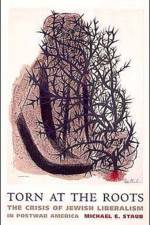
When Jewish neoconservatives burst upon the political scene, many people were surprised. Conventional wisdom held that Jews were uniformly liberal. This book explodes the myth of a monolithic liberal Judaism. Michael Staub tells the story of the many fierce battles that raged in postwar America over what the authentically Jewish position ought to be on issues ranging from desegregation to Zionism, from Vietnam to gender relations, sexuality, and family life. Throughout the three decades after 1945, Michael Staub shows, American Jews debated the ways in which the political commitments of Jewish individuals and groups could or should be shaped by their Jewishness. Staub shows that, contrary to conventional wisdom, the liberal position was never the obvious winner in the contest.By the late 1960s left-wing Jews were often accused by their conservative counterparts of self-hatred or of being inadequately or improperly Jewish. They, in turn, insisted that right-wing Jews were deaf to the moral imperatives of both the Jewish prophetic tradition and Jewish historical experience, which obliged Jews to pursue social justice for the oppressed and the marginalized. Such declamations characterized disputes over a variety of topics: American anticommunism, activism on behalf of African American civil rights, imperatives of Jewish survival, Israel and Israeli-Palestinian relations, the 1960s counterculture, including the women's and gay and lesbian liberation movements, and the renaissance of Jewish ethnic pride and religious observance. Spanning these controversies, Staub presents not only a revelatory and clear-eyed prehistory of contemporary Jewish neoconservatism but also an important corrective to investigations of "e;identity politics"e; that have focused on interethnic contacts and conflicts while neglecting intraethnic ones. Revising standard assumptions about the timing of Holocaust awareness in postwar America, Staub charts how central arguments over the Holocaust's purported lessons were to intra-Jewish political conflict already in the first two decades after World War II. Revisiting forgotten artifacts of the postwar years, such as Jewish marriage manuals, satiric radical Zionist cartoons, and the 1970s sitcom about an intermarried couple entitled Bridget Loves Bernie, and incidents such as the firing of a Columbia University rabbi for supporting anti-Vietnam war protesters and the efforts of the Miami Beach Hotel Owners Association to cancel an African Methodist Episcopal Church convention, Torn at the Roots sheds new light on an era we thought we knew well.
Taking as its starting point the long-standing characterization of Milton as a "e;Hebraic"e; writer, Milton and the Rabbis probes the limits of the relationship between the seventeenth-century English poet and polemicist and his Jewish antecedents. Shoulson's analysis moves back and forth between Milton's writings and Jewish writings of the first five centuries of the Common Era, collectively known as midrash. In exploring the historical and literary implications of these connections, Shoulson shows how Milton's text can inform a more nuanced reading of midrash just as midrash can offer new insights into Paradise Lost.Shoulson is unconvinced of a direct link between a specific collection of rabbinic writings and Milton's works. He argues that many of Milton's poetic ideas that parallel midrash are likely to have entered Christian discourse not only through early modern Christian Hebraicists but also through Protestant writers and preachers without special knowledge of Hebrew. At the heart of Shoulson's inquiry lies a fundamental question: When is an idea, a theme, or an emphasis distinctively Judaic or Hebraic and when is it Christian? The difficulty in answering such questions reveals and highlights the fluid interaction between ostensibly Jewish, Hellenistic, and Christian modes of thought not only during the early modern period but also early in time when rabbinic Judaism and Christianity began.
Korea Between Empires chronicles the development of a Korean national consciousness. It focuses on two critical periods in Korean history and asks how key concepts and symbols were created and integrated into political programs to create an original Korean understanding of national identity, the nation-state, and nationalism. Looking at the often-ignored questions of representation, narrative, and rhetoric in the construction of public sentiment, Andre Schmid traces the genealogies of cultural assumptions and linguistic turns evident in Korea's major newspapers during the social and political upheavals of the late nineteenth and early twentieth centuries.Newspapers were the primary location for the re-imagining of the nation, enabling readers to move away from the conceptual framework inherited from a Confucian and dynastic past toward a nationalist vision that was deeply rooted in global ideologies of capitalist modernity. As producers and disseminators of knowledge about the nation, newspapers mediated perceptions of Korea's precarious place amid Chinese and Japanese colonial ambitions and were vitally important to the rise of a nationalist movement in Korea.
In the early 1990s, when organizations representing the 2.6 million U.S. nationals living abroad appealed to Congress for their own non-voting representative, the response of one Senator was to dismiss these "e;moans of the mink-swathed Americans abroad."e; However, the image of a life of luxury abroad is usually a harsher reality complicated by income taxes, military duty, and legal jurisdiction. What exactly is the obligation of a state toward citizens who live outside its borders? Bargaining with the State from Afar traces the relationship between the United States federal government and sojourning Americans living in the colonial enclaves of pre-World War II China. This group of Americans was not subject to Chinese law, but rather to an amalgam of laws borrowed from the District of Columbia and other territorial codes, as well as to local ordinances enacted by foreigners themselves. Scully explores U.S. government efforts to police this anomalous zone in the American policy and places the struggle between federal officials and sojourning U.S. nationals in the larger context of changing international law and modern citizenship regimes.She argues that the American experience with extraterritorial justice in China offers an important new vantage point from which to examine a singular area in the history of modern states. This case study of U.S. consular jurisdiction reveals the legal, political, and cultural process through which modern states have struggled to govern citizens outside their borders. Scully's examination of the U. S. Court for China is one of the first serious analysis of this anomalous institution.
Ethnic conflicts have created crises within NATO and between NATO and Russia, produced massive flows of refugees, destabilized neighboring countries, and increased the risk of nuclear war between Pakistan and India. Interventions have cost the United States, the United Nations, and other actors billions of dollars.While scholars and policymakers have devoted considerable attention to this issue, the question of why states take sides in other countries' ethnic conflicts has largely been ignored. Most attention has been directed at debating the value of particular techniques to manage ethnic conflict, including partition, prevention, mediation, intervention, and the like. However, as the Kosovo dispute demonstrated, one of the biggest obstacles to resolving ethnic conflicts is getting the outside actors to cooperate. This book addresses this question.Saideman argues that domestic political competition compels countries to support the side of an ethnic conflict with which constituents share ethnicities. He applies this argument to the Congo Crisis, the Nigerian Civil War, and Yugoslavia's civil wars. He then applies quantitative analyses to ethnic conflicts in the 1990s. Finally, he discusses recent events in Kosovo and whether the findings of these case studies apply more broadly.
Challenging Freud's assumption that an individual first develops intrapsychically and is only later confronted with the demands of external reality, Carolyn Saari posits that human beings initially construct a picture of their immediate environment and then construct their identities within that environment. The Environment is an argument in three parts. Part 1 discusses psychoanalytic and developmental theory, showing that while such theory has assumed the existence of an environment, it has taken for granted and therefore left unexamined its role in human development. Michel Foucault's theory of social control provides the framework for Part 2, which examines psychotherapy's capacity either to liberate or to repress the client. Part 3 relates the practical benefits and broader implications of an inclusion of environmental considerations in the practice of psychotherapy.
American social policy today largely serves global corporate interests rather than the general public, according to William Roth. Based on incisive analyses of economic globalization, class, politics, and bureaucracy, The Assault on Social Policy argues that the perfection of the free market is a myth. Roth analyzes the rhetoric used to make poverty seem acceptable, shows how corporations affect the distribution of wealth and other resources, and considers the effect on disabled people, criminals, children, and health care. He concludes that increased transnational corporate power has created the need for large-scale systematic public policy changes.
Joseph Walser provides the first examination of Nagarjuna's life and writings in the context of the religious and monastic debates of the second century CE. Walser explores how Nagarjuna secured the canonical authority of Mahayana teachings and considers his use of rhetoric to ensure the transmission of his writings by Buddhist monks. Drawing on close textual analysis of Nagarjuna's writings and other Buddhist and non-Buddhist sources, Walser offers an original contribution to the understanding of Nagarjuna and the early history of Buddhism.
A comprehensive, A-to-Z set of task planners for more than one hundred psychosocial problems from alcoholism and anxiety to domestic violence and sexual abuse. Each entry includes a menu of actions the client can undertake to affect resolution, a guide to the practitioner's role in facilitating these actions, and a reference list. An accompanying disk allows social workers to update the task planners they are working with and enables keyword searches for specific topics.
Should a therapist counsel a former lover or accept a client's gift? If so, has a boundary been crossed? Some boundary issues, like beginning a sexual relationship with a client, are obvious pitfalls to avoid, but what about more subtle issues, like hugging a client or disclosing personal information to a client? What are the boundaries of maintaining a friendship with a former client or the relative of a client? When do conflicts of interest overburden the client-practitioner relationship?Frederic Reamer, a leading authority on professional ethics, offers a definitive and up-to-date analysis of boundary issues, a rapidly emerging topic in the field of human services. One of the only works in the field to provide a conceptual framework for the dual relationship between practitioner and client, this book provides an in-depth look at the complex forms these relationships take. It also gives practical risk-management models to aid human service professionals in the prevention of problematic situations and the managing of dual relationships. Reamer examines the ethics involving intimate and sexual relationships with clients and former clients, practitioners' self-disclosure, giving and receiving favors and gifts, bartering for services, and unavoidable and unanticipated circumstances such as social encounters and geographical proximity. Case vignettes that help illustrate important points are also included in each chapter.
This book is a call to action to parents, youth workers, policymakers-anyone who works for and worries about the next generation-to recognize and promote the values of caring in public and private life. It is about teenagers-those who no longer need the care given to babies and children but who still need support and guidance. Diana Mendley Rauner offers a rare focus on youth development as a process of experiencing care and learning social responsibility. Much public discussion of youth focuses on individual achievement and a limited set of markers of success, on the one hand, and increasingly punitive responses to failure on the other. Missing from these discussions is an appreciation for the importance of caring and social responsibility both in the environments we create for young people and in our expectations of how they should act and what they should become. "e;They Still Pick Me Up When I Fall"e; develops ideals for caring interaction, articulating specific behaviors and habits for practitioners as well as policies and practices that characterize caring organizations and caring societies. Each chapter begins with a profile of a youth-serving organization, drawn from the fields of education, youth work, and counseling. Throughout, an intellectual framework for care is interwoven with the voices and experiences of the youth workers and young people involved in the struggle to create a caring society.
The Progressives-those reformers responsible for the shape of many American institutions, from the Federal Reserve Board to the New School for Social Research-have always presented a mystery. What prompted middle-class citizens to support fundamental change in American life? Eric Rauchway shows that like most of us, the reformers took their inspiration from their own lives-from the challenges of forming a family.Following the lives and careers of Charles and Mary Beard, Wesley Clair and Lucy Sprague Mitchell, and Willard and Dorothy Straight, the book moves from the plains of the Midwest to the plains of Manchuria, from the trade-union halls of industrial Britain to the editorial offices of the New Republic in Manhattan. Rauchway argues that parenting was a kind of elitism that fulfilled itself when it undid itself, and this vision of familial responsibility underlay Progressive approaches to foreign policy, economics, social policy, and education.
Moving deftly among literary and visual arts, as well as the modern critical canon, Christopher Prendergast's book explores the meaning and value of representation as both a philosophical challenge (What does it mean to create an image that "e;stands for"e; something absent?) and a political issue (Who has the right to represent whom?).The Triangle of Representation raises a range of theoretical, historical, and aesthetic questions, and offers subtle readings of such cultural critics as Raymond Williams, Paul de Man, Edward Said, Walter Benjamin, and Helene Cixous, in addition to penetrating investigations of visual artists like Gros, Ingres, and Matisse and significant insights into Proust and the onus of translating him. Above all, Prendergast's work is a striking display of how a firm grounding in theory is essential for the exploration of art and literature.
Few would argue that presidential policies and performance would have been the same whether John F. Kennedy or Richard Nixon became president in 1960, or if Jimmy Carter instead of Ronald Reagan had won the White House in 1980. Indeed, in recent elections, the character, prior policy experience, or personalities of candidates have played an increasing role in our assessments of their "e;fit"e; for the Oval Office. Further, these same characteristics are often used to explain an administration's success or failure in policy making. Obviously, who the president is-and what he is like-matters.This book, a new approach to the study of the personal presidency, links the characteristics of six modern American presidents-their personalities and their prior policy-making experience-to their leadership styles, advisory arrangements, and decision making in the White House. Thomas Preston uses M. G. Hermann's Personality Assessment-at-a-Distance (PAD) profiling technique, as well as exhaustive archival research and interviews with former advisors, to develop a leadership style typology. He then compares his model's expectations against the actual policy record of six past presidents, using foreign policy episodes: Korea (1950) for Truman, Dien Bien Phu (1954) for Eisenhower, Cuba (1962) for Kennedy, Vietnam (1967-68) for Johnson, the Gulf War (1990-91) for Bush, and North Korea/Haiti/Bosnia (1994-95) for Clinton.
Black & White & Noir explores America's pulp modernism through penetrating readings of the noir sensibility lurking in an eclectic array of media: Office of War Information photography, women's experimental films, and African-American novels, among others. It traces the dark edges of cultural detritus blowing across the postwar landscape, finding in pulp a political theory that helps explain America's fascination with lurid spectacles of crime. We are accustomed to thinking of noir as a film form popularized in movies like The Maltese Falcon, The Big Sleep, and, more recently, Quentin Tarantino's Pulp Fiction. But it is also, Paula Rabinowitz argues, an avenue of social and political expression. This book offers an unparalleled historical and theoretical overview of the noir shadows cast when the media's glare is focused on the unseen and the unseemly in our culture. Through far-ranging discussions of the Starr Report, movies such as Double Indemnity and The Big Heat, and figures as various as Barbara Stanwyck, Kenneth Fearing, and Richard Wright, Rabinowitz finds in film noir the representation of modern America's attempt to submerge and mask its violent history of racial and class anatagonisms. Black & White & Noir also explores the theory and practice of stilettos, the ways in which girls in the 1950s viewed film noir as a secret language about their mothers' pasts, the extraordinary tone-setting photographs of Esther Bubley, and the smutty aspect of social workers' case studies, among other unexpected twists and provocative turns.
Social work practice with refugees and immigrants requires specialized knowledge of these populations, and specialized adaptations and applications of mainstream services and interventions. Because they are often confronted with cultural, linguistic, political, and socioeconomic barriers, these groups are especially vulnerable to psychological problems. Among these problems are anxiety, depression, alienation, grief, even post-traumatic stress disorder, as well as biological concerns stemming from inadequate or underutilized medical services. Best Practices for Social Work with Refugees and Immigrants is the first book to offer a comprehensive guide to social work with foreign-born clients that evaluates many different strategies in light of their methodological strengths and weaknesses. Part I sets forth the context for empirically based service approaches to such clients by describing the nature of these populations, relevant policies designed to assist them, and service delivery systems. Part II addresses specific problem areas common to refugees and immigrants and evaluates a variety of assessment and intervention techniques for each area. Maintaining a rigorous empirical and broadly pan-cultural approach throughout, Miriam Potocky-Tripodi seeks to identify the most practical, "e;best practices"e; to meet the various and pressing needs of uprooted peoples.
Though they speak several different languages and organize themselves into many distinct tribes, the Native American peoples of the Southeast share a complex ancient culture and a tumultuous history. This volume examines and synthesizes their history through each of its integral phases: the complex and elaborate societies that emerged and flourished in the Pre-Columbian period; the triple curse of disease, economic dependency, and political instability brought by the European invasion; the role of Native Americans in the inter-colonial struggles for control of the region; the removal of the "e;Five Civilized Tribes"e; to Oklahoma; the challenges and adaptations of the post-removal period; and the creativity and persistence of those who remained in the Southeast.
Abonner på vårt nyhetsbrev og få rabatter og inspirasjon til din neste leseopplevelse.
Ved å abonnere godtar du vår personvernerklæring.