












Gjør som tusenvis av andre bokelskere
Abonner på vårt nyhetsbrev og få rabatter og inspirasjon til din neste leseopplevelse.
Ved å abonnere godtar du vår personvernerklæring.Du kan når som helst melde deg av våre nyhetsbrev.

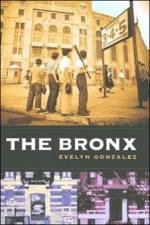
Home to the New York Yankees, the Bronx Zoo, and the Grand Concourse, the Bronx was at one time a haven for upwardly mobile second-generation immigrants eager to leave the crowded tenements of Manhattan in pursuit of the American dream. Once hailed as a "e;wonder borough"e; of beautiful homes, parks, and universities, the Bronx became-during the 1960s and 1970s-a national symbol of urban deterioration. Thriving neighborhoods that had long been home to generations of families dissolved under waves of arson, crime, and housing abandonment, turning blocks of apartment buildings into gutted, graffiti-covered shells and empty, trash-filled lots. In this revealing history of the Bronx, Evelyn Gonzalez describes how the once-infamous New York City borough underwent one of the most successful and inspiring community revivals in American history.From its earliest beginnings as a loose cluster of commuter villages to its current status as a densely populated home for New York's growing and increasingly more diverse African American and Hispanic populations, this book shows how the Bronx interacted with and was affected by the rest of New York City as it grew from a small colony on the tip of Manhattan into a sprawling metropolis. This is the story of the clattering of elevated subways and the cacophony of crowded neighborhoods, the heady optimism of industrial progress and the despair of economic recession, and the vibrancy of ethnic cultures and the resilience of local grassroots coalitions crucial to the borough's rejuvenation. In recounting the varied and extreme transformations this remarkable community has undergone, Evelyn Gonzalez argues that it was not racial discrimination, rampant crime, postwar liberalism, or big government that was to blame for the urban crisis that assailed the Bronx during the late 1960s. Rather, the decline was inextricably connected to the same kinds of social initiatives, economic transactions, political decisions, and simple human choices that had once been central to the development and vitality of the borough. Although the history of the Bronx is unquestionably a success story, crime, poverty, and substandard housing still afflict the community today. Yet the process of building and rebuilding carries on, and the revitalization of neighborhoods and a resurgence of economic growth continue to offer hope for the future.
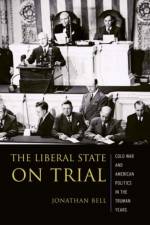
What was left, in both senses of the word, of liberalism after the death of Franklin Roosevelt? This question has aroused considerable historical debate because it raises the question of why the United States, during the Truman years, developed a much less state-centered orthodoxy than other comparable, powerful liberal states. What were the consequences of this fundamental choice that would shape the character and direction of American society during the second half of the twentieth century? This book explores the role of the Cold War in shifting the center of gravity in American politics sharply to the right in the years immediately following World War II. Jonathan Bell demonstrates that there was far more active and vibrant debate about the potential for liberal ideas before they become submerged in Cold War anti-state rhetoric than has generally been recognized. Using case studies from Senate and House races from 1946 to 1952, Bell shows how the anti-statist imagery that defined the Cold War in political debate became the key weapon among right-wing and business interest groups and their political representatives with which to discredit political figures who wanted to expand political liberalism beyond existing New Deal measures. He depicts how this process implicitly endorsed socioeconomic inequality.
Is philosophy deaf to the sound of the personal voice? While philosophy is experienced at admiring, resenting, celebrating, and, at times, renouncing language, philosophers have rarely succeeded in being intimate with it. Hagi Kenaan argues that philosophy's concern with abstract forms of linguistic meaning and the objective, propositional nature of language has obscured the singular human voice. In this strikingly original work Kenaan explores the ethical and philosophical implications of recognizing and responding to the individual presence in language.In pursuing the philosophical possibility of listening to language as the embodiment of the human voice, Kenaan explores the phenomenological notion of the "e;personal."e; He defines the personal as the irresolvable tension that exists between the public character of language, necessary for intelligibility, and the ways in which we, as individuals, remain riveted to our words in a contingently singular manner.The Present Personal fuses phenomenology and aesthetics and the traditions of Continental and Anglo-American philosophy, drawing on Wittgenstein, J. L. Austin, Kant, Kierkegaard, and Heidegger as well as literary works by Kafka, Kundera, and others. By asking new questions and charting fresh terrain, Kenaan does more than offer innovative investigations into the philosophy of language; The Present Personal, and its concern with the intimate and personal nature of language, uncovers the ethical depth of our experience with language.Kenaan begins with a discussion of Kierkegaard's existential critique of language and the ways in which the propositional structure of language does not allow the spoken to reflect the singularity of the self. He then compares two attempts to subvert the "e;hegemony of content"e;: the pragmatic turn of J. L. Austin and the poetic path of Heidegger. Kenaan concludes by turning to Kant and discovering an analogy between the experience of meaning in language and the aesthetic experience of encountering beauty. Kenaan's reconceptualization of philosophy's approach to language frees the contingent singularity of language while, at the same time, permitting it to continue to dwell within the confines of content.
For more than five centuries the shamanistic fox cult has attracted large portions of the Chinese population and appealed to a wide range of social classes. Deemed illicit by imperial rulers and clerics and officially banned by republican and communist leaders, the fox cult has managed to survive and flourish in individual homes and community shrines throughout northern China. In this new work, the first to examine the fox cult as a vibrant popular religion, Xiaofei Kang explores the manifold meanings of the fox spirit in Chinese society. Kang describes various cult practices, activities of worship, and the exorcising of fox spirits to reveal how the Chinese people constructed their cultural and social values outside the gaze of offical power and morality.
As world attention is renewed and refocused on the Israeli-Palestinian conflict at the sixtieth anniversary of its seminal year of 1948, Marda Dunsky takes a close look at how more than two dozen major American print and broadcast outlets have reported the conflict in recent years. Beginning with the failed Camp David summit of July 2000 through the waning of the second Palestinian uprising in the summer of 2004, she finds that the media omit two key contextual elements: the significant impact that U.S. policy has had and continues to have on the trajectory of the conflict, and the way international law and consensus have addressed the key issues of Israeli settlement and annexation policies and Palestinian refugees. Dunsky explores how reports of the conflict routinely take on the contours of American policy and rarely challenge the premises of this "e;Washington consensus."e; She also examines the media's responses to allegations of biased coverage and gauges the effect that mainstream news reporting has on public opinion and U.S. foreign policy.
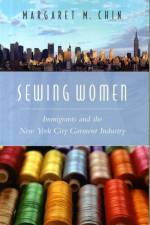
Many Latino and Chinese women who immigrated to New York City over the past several decades found work in the garment industry-an industry well known for both hiring immigrants and its harsh working conditions. In the 1990s, the garment industry was one of the largest immigrant employers in New York City and workers in Chinese- and Korean-owned factories produced 70 percent of all manufactured clothing in New York City. Based on extensive interviews with workers and employers, Margaret M. Chin offers a detailed and complex portrait of the work lives of Chinese and Latino garment workers. Chin, whose mother and aunts worked in Chinatown's garment industry, also explores how immigration status, family circumstances, ethnic relations, and gender affect the garment industry workplace. In turn, she analyzes how these factors affect whom employers hire and what wages and benefits are given to the employees.Chin's study contrasts the working conditions and hiring practices of Korean- and Chinese-owned factories. Her comparison of the two practices illuminates how ethnic ties both improve and hinder opportunities for immigrants. While both sectors take advantage of workers and are characterized by low wages and lax enforcement of safety regulations-there are crucial differences. In the Chinese sector, owners encourage employees, almost entirely female, to recruit new workers, especially friends and family. Though Chinese workers tend to be documented and unionized, this work arrangement allows owners to maintain a more paternalistic relationship with their employees. Gender also plays a major role in channeling women into the garment industry, as Chinese immigrants, particularly those with children, tend to maintain traditional gender roles in the workplace. Korean-owned shops, however, hire mostly undocumented Mexican and Ecuadorian workers, both male and female. These workers tend not to have children and are thus less tied to traditional gender roles. Unlike their Chinese counterparts, Korean employers hire workers on their own terms and would rather not allow current employees to influence their decisions.Chin's work also provides an overview of the history of the garment industry, examines immigration strategies, and concludes with a discussion of changes in the industry in the aftermath of 9/11.
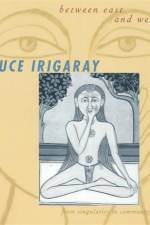
With this book we see a philosopher well steeped in the Western tradition thinking through ancient Eastern disciplines, meditating on what it means to learn to breathe, and urging us all at the dawn of a new century to rediscover indigenous Asian cultures. Yogic tradition, according to Irigaray, can provide an invaluable means for restoring the vital link between the present and eternity-and for re-envisioning the patriarchal traditions of the West. Western, logocentric rationality tends to abstract the teachings of yoga from its everyday practice-most importantly, from the cultivation of breath. Lacking actual, personal experience with yoga or other Eastern spiritual practices, the Western philosophers who have tried to address Hindu and Buddhist teachings-particularly Schopenhauer-have frequently gone astray. Not so, Luce Irigaray. Incorporating her personal experience with yoga into her provocative philosophical thinking on sexual difference, Irigaray proposes a new way of understanding individuation and community in the contemporary world. She looks toward the indigenous, pre-Aryan cultures of India-which, she argues, have maintained an essentially creative ethic of sexual difference predicated on a respect for life, nature, and the feminine. Irigaray's focus on breath in this book is a natural outgrowth of the attention that she has given in previous books to the elements-air, water, and fire. By returning to fundamental human experiences-breathing and the fact of sexual difference-she finds a way out of the endless sociologizing abstractions of much contemporary thought to rethink questions of race, ethnicity, and globalization.
Modernism and the Architecture of Private Life offers a bold new assessment of the role of the domestic sphere in modernist literature, architecture, and design. Elegantly synthesizing modernist literature with architectural plans, room designs, and decorative art, Victoria Rosner's work explores the collaborations among modern British writers, interior designers, and architects in redefining the form, function, and meaning of middle-class private life. Drawing on a host of previously unexamined archival sources and works by figures such as E. M. Forster, Roger Fry, Oscar Wilde, James McNeill Whistler, and Virginia Woolf, Rosner highlights the participation of modernist literature in the creation of an experimental, embodied, and unstructured private life, which we continue to characterize as "e;modern."e;
Of all the aspects of recovery in postwar Germany perhaps none was as critical or as complicated as the matter of dealing with Nazi criminals, and, more broadly, with the Nazi past. While on the international stage German officials spoke with contrition of their nation's burden of guilt, at home questions of responsibility and retribution were not so clear. In this masterful examination of Germany under Adenauer, Norbert Frei shows that, beginning in 1949, the West German government dramatically reversed the denazification policies of the immediate postwar period and initiated a new "e;Vergangenheitspolitik,"e; or "e;policy for the past,"e; which has had enormous consequences reaching into the present. Adenauer's Germany and the Nazi Past chronicles how amnesty laws for Nazi officials were passed unanimously and civil servants who had been dismissed in 1945 were reinstated liberally-and how a massive popular outcry led to the release of war criminals who had been condemned by the Allies. These measures and movements represented more than just the rehabilitation of particular individuals. Frei argues that the amnesty process delegitimized the previous political expurgation administered by the Allies and, on a deeper level, served to satisfy the collective psychic needs of a society longing for a clean break with the unparalleled political and moral catastrophe it had undergone in the 1940s. Thus the era of Adenauer devolved into a scandal-ridden period of reintegration at any cost. Frei's work brilliantly and chillingly explores how the collective will of the German people, expressed through mass allegiance to new consensus-oriented democratic parties, cast off responsibility for the horrors of the war and Holocaust, effectively silencing engagement with the enormities of the Nazi past.
In Buddhists, Brahmins, and Belief, Dan Arnold examines how the Brahmanical tradition of Purva Mimamsa and the writings of the seventh-century Buddhist Madhyamika philosopher Candrakirti challenged dominant Indian Buddhist views of epistemology. Arnold retrieves these two very different but equally important voices of philosophical dissent, showing them to have developed highly sophisticated and cogent critiques of influential Buddhist epistemologists such as Dignaga and Dharmakirti. His analysis-developed in conversation with modern Western philosophers like William Alston and J. L. Austin-offers an innovative reinterpretation of the Indian philosophical tradition, while suggesting that pre-modern Indian thinkers have much to contribute to contemporary philosophical debates.In logically distinct ways, Purva Mimamsa and Candrakirti's Madhyamaka opposed the influential Buddhist school of thought that emphasized the foundational character of perception. Arnold argues that Mimamsaka arguments concerning the "e;intrinsic validity"e; of the earliest Vedic scriptures are best understood as a critique of the tradition of Buddhist philosophy stemming from Dignaga. Though often dismissed as antithetical to "e;real philosophy,"e; Mimamsaka thought has affinities with the reformed epistemology that has recently influenced contemporary philosophy of religion.Candrakirti's arguments, in contrast, amount to a principled refusal of epistemology. Arnold contends that Candrakirti marshals against Buddhist foundationalism an approach that resembles twentieth-century ordinary language philosophy-and does so by employing what are finally best understood as transcendental arguments. The conclusion that Candrakirti's arguments thus support a metaphysical claim represents a bold new understanding of Madhyamaka.
This extraordinary collection of letters sheds light on one of the most important postwar American poets and on a creative woman's life from the 1950s onward. Amy Clampitt was an American original, a literary woman from a Quaker family in rural Iowa who came to New York after college and lived in Manhattan for almost forty years before she found success (or before it found her) at the age of 63 with the publication of The Kingfisher. Her letters from 1950 until her death in 1994 are a testimony to her fiercely independent spirit and her quest for various kinds of truth-religious, spiritual, political, and artistic.Written in clear, limpid prose, Clampitt's letters illuminate the habits of imagination she would later use to such effect in her poetry. She offers, with wit and intelligence, an intimate and personal portrait of life as an independent woman recently arrived in New York City. She recounts her struggle to find a place for herself in the world of literature as well as the excitement of living in Manhattan. In other letters she describes a religious conversion (and then a gradual religious disillusionment) and her work as a political activist. Clampitt also reveals her passionate interest in and fascination with the world around her. She conveys her delight in a variety of day-to-day experiences and sights, reporting on trips to Europe, the books she has read, and her walks in nature. After struggling as a novelist, Clampitt turned to poetry in her fifties and was eventually published in the New Yorker. In the last decade of her life she appeared like a meteor on the national literary scene, lionized and honored. In letters to Helen Vendler, Mary Jo Salter, and others, she discusses her poetry as well as her surprise at her newfound success and the long overdue satisfaction she obviously felt, along with gratitude, for her recognition.
Virtually all large-scale damage to the global environment is caused by economic activities, and the vast majority of economic planners in both business and government coordinate these activities on the basis of guidelines and prescriptions from neoclassical economic theory. In this hard-hitting book, Robert Nadeau demonstrates that the claim that neoclassical economics is a science comparable to the physical sciences is totally bogus and that our failure to recognize and deal with this fact constitutes the greatest single barrier to the timely resolution of the crisis in the global environment. Neoclassical economic theory is premised on the belief that the "e;invisible hand"e;- Adam Smith's metaphor for forces associated with the operation of the "e;natural laws of economics"e;-regulates the workings of market economies. Nadeau reveals that Smith's understanding of these laws was predicated on assumptions from eighteenth-century metaphysics and that the creators of neoclassical economics incorporated this view of the "e;lawful"e; mechanisms of free-market systems into a mathematical formalism borrowed wholesale from mid-nineteenth-century physics. The strategy used by these economists, all of whom had been trained as engineers, was as simple as it was absurd-they substituted economic variables for the physical variables in the equations of this physics. Strangely enough, this claim was widely accepted and the fact that neoclassical economics originated in a bastardization of mid-nineteenth-century physics was soon forgotten.Nadeau makes a convincing case that the myth that neoclassical economic theory is a science has blinded us to the fact that there is absolutely no basis in this theory for accounting for the environmental impacts of economic activities or for positing viable economic solutions to environmental problems. The unfortunate result is that the manner in which we are now coordinating global economic activities is a program for ecological disaster, and we may soon arrive at the point where massive changes in the global environment will threaten the lives of billions of people. To avoid this prospect, Nadeau argues that we must develop and implement an environmentally responsible economic theory and describes how this can be accomplished.
From where-and what-does water come? How did it become the key to life in the universe? Water from Heaven presents a state-of-the-art portrait of the science of water, recounting how the oxygen needed to form H2O originated in the nuclear reactions in the interiors of stars, asking whether microcomets may be replenishing our world's oceans, and explaining how the Moon and planets set ice-age rhythms by way of slight variations in Earth's orbit and rotation. The book then takes the measure of water today in all its states, solid and gaseous as well as liquid. How do the famous El Nino and La Nina events in the Pacific affect our weather? What clues can water provide scientists in search of evidence of climate changes of the past, and how does it complicate their predictions of future global warming? Finally, Water from Heaven deals with the role of water in the rise and fall of civilizations. As nations grapple over watershed rights and pollution controls, water is poised to supplant oil as the most contested natural resource of the new century. The vast majority of water "e;used"e; today is devoted to large-scale agriculture and though water is a renewable resource, it is not an infinite one. Already many parts of the world are running up against the limits of what is readily available. Water from Heaven is, in short, the full story of water and all its remarkable properties. It spans from water's beginnings during the formation of stars, all the way through the origin of the solar system, the evolution of life on Earth, the rise of civilization, and what will happen in the future. Dealing with the physical, chemical, biological, and political importance of water, this book transforms our understanding of our most precious, and abused, resource. Robert Kandel shows that water presents us with a series of crucial questions and pivotal choices that will change the way you look at your next glass of water.
Taking into account the changes in public policy and reductions in financial resources that have occurred over the last ten years, the fourth edition of Supervision in Social Work defines the place of supervision in the social agency, its functions, its process, and its problems. Explored in detail are topics of risk management, of countering worker burnout through supportive supervision, and the problems and stresses associated with becoming and being a supervisor.
When first published in 1947, A Short History of Opera immediately achieved international status as a classic in the field. Now, more than five decades later, this thoroughly revised and expanded fourth edition informs and entertains opera lovers just as its predecessors have.The fourth edition incorporates new scholarship that traces the most important developments in the evolution of musical drama. After surveying anticipations of the operatic form in the lyric theater of the Greeks, medieval dramatic music, and other forerunners, the book reveals the genre's beginnings in the seventeenth century and follows its progress to the present day. A Short History of Opera examines not only the standard performance repertoire, but also works considered important for the genre's development. Its expanded scope investigates opera from Eastern European countries and Finland. The section on twentieth-century opera has been reorganized around national operatic traditions including a chapter devoted solely to opera in the United States, which incorporates material on the American musical and ties between classical opera and popular musical theater. A separate section on Chinese opera is also included.With an extensive multilanguage bibliography, more than one hundred musical examples, and stage illustrations, this authoritative one-volume survey will be invaluable to students and serious opera buffs. New fans will also find it highly accessible and informative. Extremely thorough in its coverage, A Short History of Opera is now more than ever the book to turn to for anyone who wants to know about the history of this art form.
This classic of film criticism, long considered invaluable for its eloquent study of a problematic period in film history, is now substantially updated and revised by the author to include chapters beyond the Reagan era and into the twenty-first century. For the new edition, Robin Wood has written a substantial new preface that explores the interesting double context within which the book can be read-that in which it was written and that in which we find ourselves today. Among the other additions to this new edition are a celebration of modern "e;screwball"e; comedies like My Best Friend's Wedding, and an analysis of '90s American and Canadian teen movies in the vein of American Pie, Can't Hardly Wait, and Rollercoaster. Also included are a chapter on Hollywood today that looks at David Fincher and Jim Jarmusch (among others) and an illuminating essay on Day of the Dead.
Hollywood-crossroads of filmmaking, mythmaking, and politics-was dominated by one man more than any other for most of its history. It was William Randolph Hearst who understood how to use cinema to exploit the public's desire for entertainment and to create film propaganda to further his own desire for power. From the start, Hearst saw his future and the future of Hollywood as one and the same. He pioneered and capitalized on the synergistic relationship between yellow journalism and advertising and motion pictures. He sent movie cameramen to the inauguration of William McKinley and the front lines of the Spanish-American War. He played a prominent role in organizing film propaganda for both sides fighting World War I. By the 1910s, Hearst was producing his own pictures-he ran one of the first animation studios and made many popular and controversial movie serials, including The Perils of Pauline (creating both the scenario and the catchphrase title) and Patria. As a feature film producer, Hearst was responsible for some of the most talked-about movies of the 1920s and 1930s. Behind the scenes in Hollywood, Hearst had few equals-he was a much-feared power broker from the Silent Era to the Blacklisting Era.Hearst Over Hollywood draws on hundreds of previously unpublished letters and memos, FBI Freedom of Information files, and personal interviews to document the scope of Hearst's power in Hollywood. Louis Pizzitola tells the hidden story of Hearst's shaping influence on both film publicity and film censorship-getting the word out and keeping it in check-as well as the growth of the "e;talkies,"e; and the studio system. He details Hearst's anti-Semitism and anti-Communism, used to retaliate for Citizen Kane and to maintain dominance in the film industry, and exposes his secret film deal with Germany on the eve of World War II. The author also presents new insights into Hearst's relationships with Marion Davies, Will Hays, Louis B. Mayer, Franklin D. Roosevelt, Mussolini, Hitler, and the Kennedys. Hearst Over Hollywood is a tour de force of biography, cultural study, and film history that reveals as never before the brilliance and darkness of Hearst's prophetic connection with Hollywood.
This essential text presents a "e;task-centered"e; methodology-a structured, short-term problem-solving approach-applicable across systems at five levels of practice: the individual, the family, the group, organizations, and communities. The second edition offers more information on systems theories and includes case studies and practice questions with each chapter, as well as checklists for each level of practice and exercises to help students monitor their understanding and skill development.
How and why did the academic style of writing, with its emphasis on criticism and correctness, develop? Seth Lerer suggests that the answer lies in medieval and Renaissance philology and, more specifically, in mistakes. For Lerer, erring is not simply being wrong, but being errant, and this book illuminates the wanderings of exiles, emigres, dissenters, and the socially estranged as they helped form the modern university disciplines of philology and rhetoric, literary criticism, and literary theory. Examining a diverse group that includes Thomas More, Stephen Greenblatt, George Hickes, Seamus Heaney, George Eliot, and Paul de Man, Error and the Academic Self argues that this critical abstraction from society and retreat into ivory towers allowed estranged individuals to gain both a sense of private worth and the public legitimacy of a professional identity.
The New Yorker has called Donald Keene "e;America's preeminent scholar of Japanese literature."e; Now he presents a new book that serves as both a superb introduction to modern Japanese fiction and a memoir of his own lifelong love affair with Japanese literature and culture. Five Modern Japanese Novelistsprofiles five prominent writers whom Donald Keene knew personally: Tanizaki Jun'ichiro, Kawabata Yasunari, Mishima Yukio, Abe Kobo, and Shiba Ryotaro. Keene masterfully blends vignettes describing his personal encounters with these famous men with autobiographical observations and his trademark learned literary and cultural analysis. Keene opens with a confession: before arriving in Japan in 1953, despite having taught Japanese for several years at Cambridge, he knew the name of only one living Japanese writer: Tanizaki. Keene's training in classical Japanese literature and fluency in the language proved marvelous preparation, though, for the journey of literary discovery that began with that first trip to Japan, as he came into contact, sometimes quite fortuitously, with the genius of a generation. It is a journey that will fascinate experts and newcomers alike
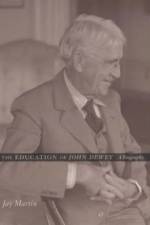
During John Dewey's lifetime (1859-1952), one public opinion poll after another revealed that he was esteemed to be one of the ten most important thinkers in American history. His body of thought, conventionally identified by the shorthand word "e;Pragmatism,"e; has been the distinctive American philosophy of the last fifty years. His work on education is famous worldwide and is still influential today, anticipating as it did the ascendance in contemporary American pedagogy of multiculturalism and independent thinking. His University of Chicago Laboratory School (founded in 1896) thrives still and is a model for schools worldwide, especially in emerging democracies. But how was this lifetime of thought enmeshed in Dewey's emotional experience, in his joys and sorrows as son and brother, husband and father, and in his political activism and spirituality? Acclaimed biographer Jay Martin recaptures the unity of Dewey's life and work, tracing important themes through the philosopher's childhood years, family history, religious experience, and influential friendships. Based on original sources, notably the vast collection of unpublished papers in the Center for Dewey Studies, this book tells the full story, for the first time, of the life and times of the eminent American philosopher, pragmatist, education reformer, and man of letters. In particular, The Education of John Dewey highlights the importance of the women in Dewey's life, especially his mother, wife, and daughters, but also others, including the reformer Jane Addams and the novelist Anzia Yezierska. A fitting tribute to a master thinker, Martin has rendered a tour de force portrait of a philosopher and social activist in full, seamlessly reintegrating Dewey's thought into both his personal life and the broader historical themes of his time.
More than a quarter of a century after the last Marine Corps Huey left the American embassy in Saigon, the lessons and legacies of the most divisive war in twentieth-century American history are as hotly debated as ever. Why did successive administrations choose little-known Vietnam as the "e;test case"e; of American commitment in the fight against communism? Why were the "e;best and brightest"e; apparently blind to the illegitimacy of the state of South Vietnam? Would Kennedy have pulled out had he lived? And what lessons regarding American foreign policy emerged from the war?The Columbia Guide to the Vietnam War helps readers understand this tragic and complex conflict. The book contains both interpretive information and a wealth of facts in easy-to-find form. Part I provides a lucid narrative overview of contested issues and interpretations in Vietnam scholarship. Part II is a mini-encyclopedia with descriptions and analysis of individuals, events, groups, and military operations. Arranged alphabetically, this section enables readers to look up isolated facts and specialized terms. Part III is a chronology of key events. Part IV is an annotated guide to resources, including films, documentaries, CD-ROMs, and reliable Web sites. Part V contains excerpts from historical documents and statistical data.
During and especially after the Second World War, a group of leading scholars who had been perilously close to the war's devastation joined others fortunate enough to have been protected by distance in an effort to redefine and reinvigorate Western liberal ideals for a radically new age. Treating evil as an analytical category, they sought to discover the sources of twentieth-century horror and the potentialities of the modern state in the wake of western desolation. In the process, they devised strikingly new ways to understand politics, sociology and history that reverberate still. In this major intellectual history, Ira Katznelson examines the works of Hannah Arendt, Robert Dahl, Richard Hofstadter, Harold Lasswell, Charles Lindblom, Karl Polanyi, and David Truman, detailing their engagement with the larger project of reclaiming the West's moral bearing. In light of their epoch's calamities these intellectuals insisted that the tradition of Enlightenment thought required a new realism, a good deal of renovation, and much recommitment. This array of historians, political philosophers, and social scientists understood that a simple reassertion of liberal modernism had been made radically insufficient by the enormities and moral catastrophes of war, totalitarianism, and holocaust. Confronting their period's dashed hopes for reason and knowledge, they asked not just whether the Enlightenment should define modernity, but which Enlightenment we should wish to have. Decades later, in the midst of a new type of war and reanimated discussions of the concept of evil, we share no small stake in assessing their successes and limitations.
Traditionally, two clinical models have been dominant in psychoanalysis: the classical paradigm, which views the analyst as an objective mirror, and the participant-observation paradigm, which views the analyst as an intersubjective participant-observer. According to John Fiscalini, an evolutionary shift in psychoanalytic consciousness has been taking place, giving rise to coparticipant inquiry, a third paradigm that represents a dramatic shift in analytic clinical theory and that has profound clinical implications.Coparticipant inquiry integrates the individualistic focus of the classical tradition and the social focus of the participant-observer perspective. It is marked by a radical emphasis on analysts' and patients' analytic equality, emotional reciprocity, psychic symmetry, and relational mutuality. Unlike the previous two paradigms, coparticipant inquiry suggests that we are all inherently communal beings and, yet, are simultaneously innately self-fulfilling, unique individuals. The book looks closely at the therapeutic dialectics of the personal and interpersonal selves and discusses narcissism-the perversion of the self-within its clinical role as the neurosis that contextualizes all other neuroses. Thus the goal of this book is to define coparticipant inquiry; articulate its major principles; analyze its implications for a theory of the self and the treatment of narcissism; and discuss the therapeutic potential of the coparticipant field and the coparticipant nature of transference, resistance, therapeutic action, and analytic vitality. Fiscalini explores "e;analytic space,"e; which marks the psychic limit of coparticipant activity; the "e;living through process,"e; which, he suggests, subtends all analytic change; and "e;openness to singularity,"e; which is essential to analytic vitality.Coparticipant Psychoanalysis brings crucial insights to clinical theory and practice and is an invaluable resource for psychoanalysts and therapists, as well as students and practitioners of psychology, psychiatry, and social work.
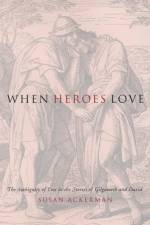
Toward the end of the Mesopotamian Epic of Gilgamesh King Gilgamesh laments the untimely death of his comrade Enkidu, "e;my friend whom I loved dearly."e; Similarly in the Bible, David mourns his companion, Jonathan, whose "e;love to me was wonderful, greater than the love of women."e; These passages, along with other ambiguous erotic and sexual language found in the Gilgamesh epic and the biblical David story, have become the object of numerous and competing scholarly inquiries into the sexual nature of the heroes' relationships. Susan Ackerman's innovative work carefully examines the stories' sexual and homoerotic language and suggests that its ambiguity provides new ways of understanding ideas of gender and sexuality in the ancient Near East and its literature. In exploring the stories of Gilgamesh and Enkidu and David and Jonathan, Ackerman cautions against applying modern conceptions of homosexuality to these relationships. Drawing on historical and literary criticism, Ackerman's close readings analyze the stories of David and Gilgamesh in light of contemporary definitions of sexual relationships and gender roles. She argues that these male relationships cannot be taken as same-sex partnerships in the modern sense, but reflect the ancient understanding of gender roles, whether in same- or opposite-sex relationships, as defined as either active (male) or passive (female). Her interpretation also considers the heroes' erotic and sexual interactions with members of the opposite sex.Ackerman shows that the texts' language and erotic imagery suggest more than just an intense male bonding. She argues that, though ambiguous, the erotic imagery and language have a critical function in the texts and serve the political, religious, and aesthetic aims of the narrators. More precisely, the erotic language in the story of David seeks to feminize Jonathan and thus invalidate his claim to Israel's throne in favor of David. In the case of Gilgamesh and Enkidu, whose egalitarian relationship is paradoxically described using the hierarchically dependent language of sexual relationships, the ambiguous erotic language reinforces their status as liminal figures and heroes in the epic tradition.
Please Do Not Annoy, torment, pester, plague, molest, worry, badger, harry, persecute, irk, bullyrag, vex, disquiet, grate, beset, bother, tease, nettle, tantalize or ruffle the Animals.-sign at zooSince the early days of traveling menageries and staged attractions that included animal acts, balloon ascents, and pyrotechnic displays, zoos have come a long way. The Menagerie du Jardin des Plantes in Paris, founded in 1793, didn't offer its great apes lessons in parenting or perform dental surgery on leopards. Certainly the introduction of veterinary care in the nineteenth century-and its gradual integration into the twentieth-has had much to do with this. Today, we expect more of zoos as animal welfare concerns have escalated along with steady advances in science, medicine, and technology. Life at the Zoo is an eminent zoo veterinarian's personal account of the challenges presented by the evolution of zoos and the expectations of their visitors. Based on fifteen years of work at the world-famous San Diego Zoo, this charming book reveals the hazards and rewards of running a modern zoo. Zoos exist outside of the "e;natural"e; order in which the worlds of humans and myriad exotic animals would rarely, if ever, collide. But this unlikely encounter is precisely why today's zoos remain the sites of much humor, confusion, and, occasionally, danger. This book abounds with insights on wildlife (foulmouthed parrots, gum-chewing chimps, stinky flamingoes), human behavior (the fierce competition for zookeeper jobs, the well-worn shtick of tour guides), and the casualties-both animal and human-of ignorance and carelessness. Phillip Robinson shows how animal exhibits are developed and how illnesses are detected and describes the perils of working around dangerous creatures. From escaping the affections of a leopard that thought he was a lap cat to training a gorilla to hold her newborn baby gently (instead of scrubbing the floor with it) and from operating on an anesthetized elephant ("e;I had the insecure sensation of working under a large dump truck with a wobbly support jack"e;) to figuring out why a zoo's polar bears were turning green in color, Life at the Zoo tells irresistible stories about zoo animals and zoo people.
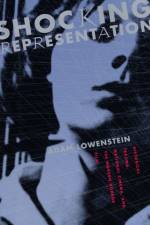
In this imaginative new work, Adam Lowenstein explores the ways in which a group of groundbreaking horror films engaged the haunting social conflicts left in the wake of World War II, Hiroshima, and the Vietnam War. Lowenstein centers Shocking Representation around readings of films by Georges Franju, Michael Powell, Shindo Kaneto, Wes Craven, and David Cronenberg. He shows that through allegorical representations these directors' films confronted and challenged comforting historical narratives and notions of national identity intended to soothe public anxieties in the aftermath of national traumas.Borrowing elements from art cinema and the horror genre, these directors disrupted the boundaries between high and low cinema. Lowenstein contrasts their works, often dismissed by contemporary critics, with the films of acclaimed "e;New Wave"e; directors in France, England, Japan, and the United States. He argues that these "e;New Wave"e; films, which were embraced as both art and national cinema, often upheld conventional ideas of nation, history, gender, and class questioned by the horror films. By fusing film studies with the emerging field of trauma studies, and drawing on the work of Walter Benjamin, Adam Lowenstein offers a bold reassessment of the modern horror film and the idea of national cinema.
With monumental changes in the last two decades, Taiwan is making itself anew. The process requires remapping not only the country's recent political past, but also its literary past. Taiwanese literature is now compelled to negotiate a path between residual high culture aspirations and the emergent reality of market domination in a relatively autonomous, increasingly professionalized field. This book argues that the concept of a field of cultural production is essential to accounting for the ways in which writers and editors respond to political and economic forces. It traces the formation of dominant concepts of literature, competing literary trends, and how these ideas have met political and market challenges.Contemporary Taiwanese literature has often been neglected and misrepresented by literary historians both inside and outside of Taiwan. Chang provides a comprehensive and fluent history of late twentieth-century Taiwanese literature by placing this vibrant tradition within the contexts of a modernizing local economy, a globalizing world economy, and a postcolonial and post-Cold War world order.
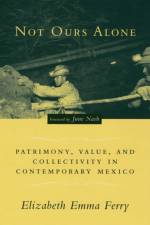
Elizabeth Ferry explores how members of the Santa Fe Cooperative, a silver mine in Mexico, give meaning to their labor in an era of rampant globalization. She analyzes the cooperative's practices and the importance of patrimonio (patrimony) in their understanding of work, tradition, and community. More specifically, she argues that patrimonio, a belief that certain resources are inalienable possessions of a local collective passed down to subsequent generations, has shaped and sustained the cooperative's sense of identity.
Noted coastal geologist Orrin Pilkey and environmental scientist Linda Pilkey-Jarvis show that the quantitative mathematical models policy makers and government administrators use to form environmental policies are seriously flawed. Based on unrealistic and sometimes false assumptions, these models often yield answers that support unwise policies. Writing for the general, nonmathematician reader and using examples from throughout the environmental sciences, Pilkey and Pilkey-Jarvis show how unquestioned faith in mathematical models can blind us to the hard data and sound judgment of experienced scientific fieldwork. They begin with a riveting account of the extinction of the North Atlantic cod on the Grand Banks of Canada. Next they engage in a general discussion of the limitations of many models across a broad array of crucial environmental subjects. The book offers fascinating case studies depicting how the seductiveness of quantitative models has led to unmanageable nuclear waste disposal practices, poisoned mining sites, unjustifiable faith in predicted sea level rise rates, bad predictions of future shoreline erosion rates, overoptimistic cost estimates of artificial beaches, and a host of other thorny problems. The authors demonstrate how many modelers have been reckless, employing fudge factors to assure "e;correct"e; answers and caring little if their models actually worked.A timely and urgent book written in an engaging style, Useless Arithmetic evaluates the assumptions behind models, the nature of the field data, and the dialogue between modelers and their "e;customers."e;
Abonner på vårt nyhetsbrev og få rabatter og inspirasjon til din neste leseopplevelse.
Ved å abonnere godtar du vår personvernerklæring.