






















Gjør som tusenvis av andre bokelskere
Abonner på vårt nyhetsbrev og få rabatter og inspirasjon til din neste leseopplevelse.
Ved å abonnere godtar du vår personvernerklæring.Du kan når som helst melde deg av våre nyhetsbrev.

Muslim enclaves within non-Islamic polities are commonly believed to have been beleaguered communities undergoing relentless cultural and religious decline. Cut off from the Islamic world, these Muslim groups, it is assumed, passively yielded to political, social, and economic forces of assimilation and acculturation before finally accepting Christian dogma. Kathryn A. Miller radically reconceptualizes what she calls the exclave experience of medieval Muslim minorities. By focusing on the legal scholars (faqihs) of fifteenth-century Aragonese Muslim communities and translating little-known and newly discovered texts, she unearths a sustained effort to connect with Muslim coreligionaries and preserve practice and belief in the face of Christian influences. Devoted to securing and disseminating Islamic knowledge, these local authorities intervened in Christian courts on behalf of Muslims, provided Arabic translations, and taught and advised other Muslims. Miller follows the activities of the faqihs, their dialogue with Islamic authorities in nearby Muslim polities, their engagement with Islamic texts, and their pursuit of traditional ideals of faith. She demonstrates that these local scholars played a critical role as cultural mediators, creating scholarly networks and communal solidarity despite living in an environment dominated by Christianity.
Drawing on five detailed case studies from the American West, the authors explore and clarify how to expedite a transition toward adaptive governance and break the gridlock in natural resource policymaking. Unlike scientific management, which relies on science as the foundation for policies made through a central bureaucratic authority, adaptive governance integrates various types of knowledge and organizations. Adaptive governance relies on open decision-making processes recognizing multiple interests, community-based initiatives, and an integrative science in addition to traditional science. Case studies discussed include a program to protect endangered fish in the Colorado River with the active participation of water developers and environmentalists; a district ranger's innovative plan to manage national forestland in northern New Mexico; and how community-based forestry groups are affecting legislative change in Washington, D.C.
Some critical theorists understand the self as constituted by power relations, while others insist upon the self's autonomous capacities for critical reflection and deliberate self-transformation. Up to now, it has all too often been assumed that these two understandings of the self are incompatible. In her bold new book, Amy Allen argues that the capacity for autonomy is rooted in the very power relations that constitute the self. Allen's theoretical framework illuminates both aspects of what she calls, following Foucault, the "e;politics of our selves."e; It analyzes power in all its depth and complexity, including the complicated phenomenon of subjection, without giving up on the ideal of autonomy. Drawing on original and critical readings of a diverse group of theorists, including Michel Foucault, Jurgen Habermas, Judith Butler, and Seyla Benhabib, Allen shows how the self can be both constituted by power and capable of an autonomous self-constitution. Her argument is a significant and vital contribution to feminist theory and to critical social theory, both of which have long grappled with the relationship between power and agency.If critical theory is to be truly critical, Allen argues, it will have to pay greater attention to the phenomenon of subjection, and will have to think through the challenges that the notion of subjection poses for the critical-theoretical conception of autonomy. In particular, Allen discusses in detail how the normative aspirations of Habermasian critical theory need to be recast in light of Foucault's and Butler's account of subjection. This book is original both in its attempt to think of power and autonomy simultaneously and in its effort to bring the work of Foucault and Habermas into a productive dialogue.
"e;A new liberal theory awaits, one that properly acknowledges the fundamental values and commitments of theocrats and liberals alike."e;-from The Liberal of ConscienceIn recent years, the battle between liberalism and theocracy has taken center stage around the globe. To many it is a dispute that can only end in a confrontation of competing values and worldviews. In this bold new work, Lucas Swaine combines discussions of political philosophy and real-world events to provide solutions to this seemingly intractable conflict. By opening a dialogue between theocracy and liberalism and offering strategies for interacting with politically ambitious theocrats, Swaine offers new and vital perspectives on the role of religion in liberal, multicultural societies.Swaine begins by exploring the nature and development of theocratic communities and the moral and political challenges they pose to liberal societies. He argues that in their treatment of theocratic communities, liberal societies have failed to uphold their own stated principles of religious toleration. They have also neglected to formulate a suitable schema for treating theocratic communities ensconced in liberal democracies and to provide reasons for theocrats to affirm liberal institutions. Swaine calls upon liberals to redefine and reassert the fundamental importance of liberty of conscience. By doing so, liberal societies will reinvigorate their own traditions, while also assuaging religious conflict. In addition to philosophical arguments, Swaine proposes a new legal standard that offers theocratic communities quasi sovereignty within liberal democracies.Theocrats also have much to gain from embracing liberalism and the principle of liberty of conscience. Swaine argues that liberalism can be made more appealing to the values and concerns of theocrats if the liberal commitment to freedom of conscience is clarified and modified and if liberals take a fresh approach to conceptualizing and promulgating liberal principles, institutions, and laws.
Like the cracking of the genetic code and the creation of the atomic bomb, the discovery of how the brain's neurons work is one of the fundamental scientific developments of the twentieth century. The discovery of neurotransmitters revolutionized the way we think about the brain and what it means to be human yet few people know how they were discovered, the scientists involved, or the fierce controversy about whether they even existed. The War of the Soups and the Sparks tells the saga of the dispute between the pharmacologists, who had uncovered the first evidence that nerves communicate by releasing chemicals, and the neurophysiologists, experts on the nervous system, who dismissed the evidence and remained committed to electrical explanations.The protagonists of this story are Otto Loewi and Henry Dale, who received Nobel Prizes for their work, and Walter Cannon, who would have shared the prize with them if he had not been persuaded to adopt a controversial theory (how that happened is an important part of this history). Valenstein sets his story of scientific discovery against the backdrop of two world wars and examines the fascinating lives of several scientists whose work was affected by the social and political events of their time. He recounts such stories as Loewi's arrest by Nazi storm troopers and Dale's efforts at helping key scientists escape Germany. The War of the Soups and the Sparks reveals how science and scientists work. Valenstein describes the observations and experiments that led to the discovery of neurotransmitters and sheds light on what determines whether a novel concept will gain acceptance among the scientific community. His work also explains the immense importance of Loewi, Dale, and Cannon's achievements in our understanding of the human brain and the way mental illnesses are conceptualized and treated.
Law and Order offers a valuable new study of the political and social history of the 1960s. It presents a sophisticated account of how the issues of street crime and civil unrest enhanced the popularity of conservatives, eroded the credibility of liberals, and transformed the landscape of American politics. Ultimately, the legacy of law and order was a political world in which the grand ambitions of the Great Society gave way to grim expectations.In the mid-1960s, amid a pervasive sense that American society was coming apart at the seams, a new issue known as law and order emerged at the forefront of national politics. First introduced by Barry Goldwater in his ill-fated run for president in 1964, it eventually punished Lyndon Johnson and the Democrats and propelled Richard Nixon and the Republicans to the White House in 1968. In this thought-provoking study, Michael Flamm examines how conservatives successfully blamed liberals for the rapid rise in street crime and then skillfully used law and order to link the understandable fears of white voters to growing unease about changing moral values, the civil rights movement, urban disorder, and antiwar protests.Flamm documents how conservatives constructed a persuasive message that argued that the civil rights movement had contributed to racial unrest and the Great Society had rewarded rather than punished the perpetrators of violence. The president should, conservatives also contended, promote respect for law and order and contempt for those who violated it, regardless of cause. Liberals, Flamm argues, were by contrast unable to craft a compelling message for anxious voters. Instead, liberals either ignored the crime crisis, claimed that law and order was a racist ruse, or maintained that social programs would solve the "e;root causes"e; of civil disorder, which by 1968 seemed increasingly unlikely and contributed to a loss of faith in the ability of the government to do what it was above all sworn to do-protect personal security and private property.
The conflict between politics and antipolitics has replayed throughout Western history and philosophical thought. From the beginning, Plato's quest for absolute certainty led him to denounce democracy, an anti-political position challenged by Aristotle. In his wide-ranging narrative, Dick Howard puts this dilemma into fresh perspective, proving our contemporary political problems are not as unique as we think.Howard begins with democracy in ancient Greece and the rise and fall of republican politics in Rome. In the wake of Rome's collapse, political thought searched for a new medium, and the conflict between politics and antipolitics reemerged through the contrasting theories of Saint Augustine and Saint Thomas. During the Renaissance and Reformation, the emergence of the modern individual again transformed the terrain of the political. Even so, politics vs. antipolitics dominated the period, frustrating even Machiavelli, who sought to reconceptualize the nature of political thought. Hobbes and Locke, theorists of the social contract, then reenacted the conflict, which Rousseau sought (in vain) to overcome. Adam Smith and the growth of modern economic liberalism, the radicalism of the French revolution, and the conservative reaction of Edmund Burke subsequently marked the triumph of antipolitics, while the American Revolution momentarily offered the potential for a renewal of politics. Taken together, these historical examples, viewed through the prism of philosophy, reveal the roots of today's political climate and the trajectory of battles yet to come.
Is Hitchcock a superficial, though brilliant, entertainer or a moralist? Do his films celebrate the ideal of romantic love or subvert it? In a new interpretation of the director's work, Richard Allen argues that Hitchcock orchestrates the narrative and stylistic idioms of popular cinema to at once celebrate and subvert the ideal of romance and to forge a distinctive worldview-the amoral outlook of the romantic ironist or aesthete. He describes in detail how Hitchcock's characteristic tone is achieved through a titillating combination of suspense and black humor that subverts the moral framework of the romantic thriller, and a meticulous approach to visual style that articulates the lure of human perversity even as the ideal of romance is being deliriously affirmed. Discussing more than thirty films from the director's English and American periods, Allen explores the filmmaker's adoption of the idioms of late romanticism, his orchestration of narrative point of view and suspense, and his distinctive visual strategies of aestheticism and expressionism and surrealism.
In Buying Military Transformation, Peter Dombrowski and Eugene Gholz analyze the United States military's ongoing effort to capitalize on information technology. New ideas about military doctrine derived from comparisons to Internet Age business practices can be implemented only if the military buys technologically innovative weapons systems. Buying Military Transformation examines how political and military leaders work with the defense industry to develop the small ships, unmanned aerial vehicles, advanced communications equipment, and systems-of-systems integration that will enable the new military format.Dombrowski and Gholz's analysis integrates the political relationship between the defense industry and Congress, the bureaucratic relationship between the firms and the military services, and the technical capabilities of different types of businesses. Many government officials and analysts believe that only entrepreneurial start-up firms or leaders in commercial information technology markets can produce the new, network-oriented military equipment. But Dombrowski and Gholz find that the existing defense industry will be best able to lead military-technology development, even for equipment modeled on the civilian Internet. The U.S. government is already spending billions of dollars each year on its "e;military transformation"e; program-money that could be easily misdirected and wasted if policymakers spend it on the wrong projects or work with the wrong firms.In addition to this practical implication, Buying Military Transformation offers key lessons for the theory of "e;Revolutions in Military Affairs."e; A series of military analysts have argued that major social and economic changes, like the shift from the Agricultural Age to the Industrial Age, inherently force related changes in the military. Buying Military Transformation undermines this technologically determinist claim: commercial innovation does not directly determine military innovation; instead, political leadership and military organizations choose the trajectory of defense investment. Militaries should invest in new technology in response to strategic threats and military leaders' professional judgments about the equipment needed to improve military effectiveness. Commercial technological progress by itself does not generate an imperative for military transformation.Clear, cogent, and engaging, Buying Military Transformation is essential reading for journalists, legislators, policymakers, and scholars.
This collection of studies by anthropologists, botanists, ecologists, and biologists is an important contribution to the emerging field of historical ecology. The book combines cutting-edge research with new perspectives to emphasize the close relationship between humans and their natural environment.Contributors examine how alterations in the natural world mirror human cultures, societies, and languages. Treating the landscape like a text, these researchers decipher patterns and meaning in the Ecuadorian Andes, Amazonia, the desert coast of Peru, and other regions in the neotropics. They show how local peoples have changed the landscape over time to fit their needs by managing and modifying species diversity, enhancing landscape heterogeneity, and controlling ecological disturbance. In turn, the environment itself becomes a form of architecture rich with historical and archaeological significance. Time and Complexity in Historical Ecology explores thousands of years of ecological history while also addressing important contemporary issues, such as biodiversity and genetic variation and change. Engagingly written and expertly researched, this book introduces and exemplifies a unique method for better understanding the link between humans and the biosphere.
In Understanding Environmental Policy, Steven Cohen introduces an innovative, multidimensional framework for developing effective environmental policy within the United States and around the world. He demonstrates his approach through an analysis of four case studies representing current local, national, and international environmental challenges: New York City's garbage crisis; the problem of leaks from underground storage units; toxic waste contamination and the Superfund program; and global climate change. He analyzes the political, scientific, technological, organizational, and moral import of these environmental issues and the nature of the policy surrounding them. He also places a specific focus on the response from the George W. Bush administration. Cohen considers how our current environmental policy and problems reflect the value we place on our ecosystems; whether science and technology can solve the environmental problems they create; and what policy is necessary to reduce environmentally damaging behaviors. Cohen's multifaceted approach is essential reading for analysts, managers, activists, students, and scholars of environmental policy.
How did everything around us-the air, the land, the sea, and the stars-originate? What is the source of order, form, and structure characterizing all material things? These are just some of the grand scientific questions Eric J. Chaisson, author of the classic work Cosmic Dawn, explores in his enthralling and illuminating history of the universe. Explaining new discoveries and a range of cutting-edge ideas and theories, Chaisson provides a creative and coherent synthesis of current scientific thinking on the universe's beginnings. He takes us on a tour of the seven ages of the cosmos, from the formless era of radiation through the origins of human culture. Along the way he examines the development of the most microscopic and the most immense aspects of our universe and the complex ways in which they interact. Drawing on recent breakthroughs in astrophysics and biochemistry, Chaisson discusses the contemporary scientific view that all objects-from quarks and quasars to microbes and the human mind-are interrelated. Researchers in all the natural sciences are beginning to identify an underlying pattern penetrating the fabric of existence-a sweepingly encompassing view of the formation, structure, and function of all objects in our multitudinous universe. Moreover, as Chaisson demonstrates, by deciphering the scenario of cosmic evolution, scientists can also determine how living organisms managed to inhabit the land, generate language, and create culture.Epic of Evolution offers a stunning view of how various changes, operating across almost incomprehensible domains of space and nearly inconceivable stretches of time and through the evolutionary combination of necessity and chance, have given rise to our galaxy, our star, our planet, and ourselves.
Xiaoming Wang and Richard H. Tedford have spent the past 20 years studying the evolutionary history of the family Canidae. Both are well known for having established the modern framework for the evolutionary relationship of canids. Combining their research with Mauricio Anton's impeccable reconstructions of both extinct and extant species, Wang and Tedford present a remarkably detailed and nuanced portrait of the origin and evolution of canids over the past 40 million years. The authors cull their history from the most recent scientific research conducted on the vast collections of the American Museum of Natural History and other leading institutions. The fossil record of the Canidae, particularly those from their birth place in North America, are the strongest of their kind among known groups of carnivorans. Such a wonderfully detailed evolutionary history provides access to a natural history that is not possible with many other groups of carnivorans.With their rich fossil record, diverse adaptations to various environments, and different predatory specializations, canids are an ideal model organism for the mapping of predator behavior and morphological specializations. They also offer an excellent contrast to felids, which remain entrenched in extreme predatory specializations. The innovative illustrated approach in this book is the perfect accompaniment to an extremely important branch of animal and fossil study. It transforms the science of paleontology into a thrilling visual experience and provides an unprecedented reference for anyone fascinated by dogs.
C. Wright Mills (1916-1962) was a pathbreaking intellectual who transformed the independent American Left in the 1940s and 1950s. Often challenging the established ideologies and approaches of fellow leftist thinkers, Mills was central to creating and developing the idea of the "e;public intellectual"e; in postwar America and laid the political foundations for the rise of the New Left in the 1960s. Written by Stanley Aronowitz, a leading sociologist and critic of American culture and politics, Taking It Big reconstructs this icon's formation and the new dimension of American political life that followed his work.Aronowitz revisits Mills's education and its role in shaping his outlook and intellectual restlessness. Mills defined himself as a maverick, and Aronowitz tests this claim (which has been challenged in recent years) against the work and thought of his contemporaries. Aronowitz describes Mills's growing circle of contacts among the New York Intellectuals and his efforts to reenergize the Left by encouraging a fundamentally new theoretical orientation centered on more ambitious critiques of U.S. society. Blurring the rigid boundaries among philosophy, history, and social theory and between traditional orthodoxies and the radical imagination, Mills became one of the most admired and controversial thinkers of his time and was instrumental in inspiring the student and antiwar movements of the 1960s. In this book, Aronowitz not only reclaims this critical thinker's reputation but also emphasizes his ongoing significance to debates on power in American democracy.
Since their inception, nuclear weapons have multiplied at an alarming rate, leaving everyone from policymakers to concerned citizens wondering what it will take to slow, stop, or even reverse their spread. With clarity and expertise, Joseph Cirincione presents an even-handed look at the history of nuclear proliferation and an optimistic vision of its future, providing a comprehensive survey of the wide range of critical perspectives.Cirincione begins with the first atomic discoveries of the 1930s and covers the history of their growth all the way to current crisis with Iran. He unravels the science, strategy, and politics that have fueled the development of nuclear stockpiles and increased the chance of a nuclear terrorist attack. He also explains why many nations choose not to pursue nuclear weapons and pulls from this the outlines of a solution to the world's proliferation problem: a balance of force and diplomacy, enforcement and engagement that yields a steady decrease in these deadly arsenals. Though nuclear weapons have not been used in war since August 1945, there is no guarantee this good fortune will continue. A unique blend of history, theory, and security analysis, Bomb Scare is an engaging text that not only supplies the general reader and student with a clear understanding of this issue but also provides a set of tools policymakers and scholars can use to prevent the cataclysmic consequences of another nuclear attack.
What happens to members of the United States Armed Forces after they die? Why do soldiers endanger their lives to recover the remains of their comrades? Why does the military spend enormous resources and risk further fatalities to recover the bodies of the fallen, even decades after the cessation of hostilities? Soldier Dead is the first book to fully address the complicated physical, social, religious, economic, and political issues concerning the remains of men and women who die while serving their country. In doing so, Michael Sledge reveals the meanings of the war dead for families, soldiers, and the nation as a whole.Why does recovering the remains of servicepeople matter? Soldier Dead examines this question and provides a thorough analysis of the processes of recovery, identification, return, burial, and remembrance of the dead. Sledge traces the ways in which the handling of our Soldier Dead has evolved over time and how these changes have reflected not only advances in technology and capabilities but also the shifting attitudes of the public, government, and military. He also considers the emotional stress experienced by those who handle the dead; the continuing efforts to retrieve bodies from Korea and elsewhere; and how unresolved issues regarding the treatment of enemy dead continue to affect U.S. foreign relations. Skillfully incorporating excerpts from interviews, personal correspondence and diaries, military records, and journalistic accounts-as well as never-before-published photographs and his own reflections-Michael Sledge presents a clear, concise, and compassionate story about what the dead mean to the living. Throughout Soldier Dead, the voices of the fallen are heard, as are those of family members and military personnel responsible for the dead before final disposition. At times disturbing and at other times encouraging, they are always powerful as they speak of danger, duty, courage, commitment, and care.
Few philosophers are as widely read or as widely misunderstood as Friedrich Nietzsche. When Danto's classic study was first published in 1965, many regarded Nietzsche as a brilliant but somewhat erratic thinker. Danto, however, presented a radically different picture, arguing that Nietzsche offered a systematic and coherent philosophy that anticipated many of the questions that define contemporary philosophy. Danto's clear and insightful commentaries helped canonize Nietzsche as a philosopher and continue to illuminate subtleties in Nietzsche's work as well as his immense contributions to the philosophies of science, language, and logic.This new edition, which includes five additional essays, not only further enhances our understanding of Nietzsche's philosophy; it responds to the misunderstandings that continue to muddy his intellectual reputation. Even today, Nietzsche is seen as everything from a precursor of feminism and deconstruction to a prophetic writer and spokesperson for disgruntled teenage boys. As Danto points out in his preface, Nietzsche's writings have purportedly inspired recent acts of violence and school shootings. Danto counters these misreadings by elaborating an anti-Nietzschian philosophy from within Nietzsche's own philosophy "e;in the hope of disarming the rabid Nietzsche and neutralizing the vivid frightening images that have inspired sociopaths for over a century."e;The essays also consider specific works by Nietzsche, including Human, All Too Human and The Genealogy of Morals, as well as the philosopher's artistic metaphysics and semantical nihilism.
Moving far beyond the realm of traditional "e;church history,"e; Patrick Allitt here offers a vigorous and erudite survey of the broad canvas of American religion since World War II. Identifying the major trends and telling moments within major denominations and also in less formal religious movements, he asks how these religious groups have shaped, and been shaped by, some of the most important and divisive issues and events of the last half century: the Cold War, the Civil Rights Movement, the Vietnam War, feminism and the sexual revolution, abortion rights, the antinuclear and environmentalist movements, and many others. Allitt argues that the boundaries between religious and political discourse have become increasingly blurred in the last fifty years. Having been divided along denominational lines in the early postwar period, religious Americans had come by the 1980s to be divided along political lines instead, as they grappled with the challenges of modernity and secularism. Partly because of this politicization, and partly because of the growing influence of Asian, Latino, and other ethnic groups, the United States is anomalous among the Western industrialized nations, as church membership and religious affiliation generally increased during this period. Religion in America Since 1945 is a masterful analysis of this dynamism and diversity and an ideal starting point for any exploration of the contemporary religious scene.
In a groundbreaking work that draws on anthropology, history, philosophy, business and law, Parry links firsthand knowledge of the operation of the bioprospecting industry to a sophisticated analysis of broader economic, regulatory, and technological transformations to reveal the complex economic and political dynamics that underpin the new global trade in bio-information.
The fossil record on Mesozoic mammals has expanded by orders of magnitude over the past quarter century. New specimens, some of them breathtakingly complete, have been found in nearly all parts of the globe at a rapid pace. Coupled with the application of new scientific approaches and techniques, these exciting discoveries have led to profound changes in our interpretation of early mammal history. Mesozoic mammals have come into their own as a rich source of information for evolutionary biology. Their record of episodic, successive radiations speaks to the pace and mode of evolution. Early mammals were small, but they provide key information on the morphological transformations that led to modern mammals, including our own lineage of Placentalia. Significant and fast-evolving elements of the terrestrial biota for much of the Mesozoic, early mammals have played an increasingly important role in studies of paleoecology, faunal turnover, and historical biogeography. The record of early mammals occupies center stage for testing molecular evolutionary hypotheses on the timing and sequence of mammalian radiations. Organized according to phylogeny, this book covers all aspects of the anatomy, paleobiology, and systematics of all early mammalian groups, in addition to the extant mammalian lineages extending back into the Mesozoic.
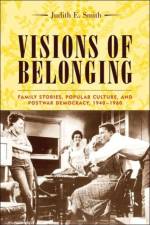
Visions of Belonging explores how beloved and still-remembered family stories-A Tree Grows in Brooklyn, I Remember Mama, Gentleman's Agreement, Death of a Salesman, Marty, and A Raisin in the Sun-entered the popular imagination and shaped collective dreams in the postwar years and into the 1950s. These stories helped define widely shared conceptions of who counted as representative Americans and who could be recognized as belonging. The book listens in as white and black authors and directors, readers and viewers reveal divergent, emotionally textured, and politically charged social visions. Their diverse perspectives provide a point of entry into an extraordinary time when the possibilities for social transformation seemed boundless. But changes were also fiercely contested, especially as the war's culture of unity receded in the resurgence of cold war anticommunism, and demands for racial equality were met with intensifying white resistance. Judith E. Smith traces the cultural trajectory of these family stories, as they circulated widely in bestselling paperbacks, hit movies, and popular drama on stage, radio, and television. Visions of Belonging provides unusually close access to a vibrant conversation among white and black Americans about the boundaries between public life and family matters and the meanings of race and ethnicity. Would the new appearance of white working class ethnic characters expand Americans'understanding of democracy? Would these stories challenge the color line? How could these stories simultaneously show that black families belonged to the larger "e;family"e; of the nation while also representing the forms of danger and discriminations that excluded them from full citizenship? In the 1940s, war-driven challenges to racial and ethnic borderlines encouraged hesitant trespass against older notions of "e;normal."e; But by the end of the 1950s, the cold war cultural atmosphere discouraged probing of racial and social inequality and ultimately turned family stories into a comforting retreat from politics. The book crosses disciplinary boundaries, suggesting a novel method for cultural history by probing the social history of literary, dramatic, and cinematic texts. Smith's innovative use of archival research sets authorial intent next to audience reception to show how both contribute to shaping the contested meanings of American belonging.
Each year in the United States, millions of mass-produced greeting cards proclaim their occasional messages: "e;For My Loving Daughter,"e; "e;On the Occasion of Your Marriage,"e; and "e;It's a Boy!"e; For more than 150 years, greeting cards have tapped into and organized a shared language of love, affection, and kinship, becoming an integral part of American life and culture. Contemporary incarnations of these emotional transactions performed through small bits of decorated paper are often dismissed as vacuous cliches employing worn-out stereotypes. Nevertheless, the relationship of greeting cards to systems of material production is well worth studying and understanding, for the modern greeting card is the product of an industry whose values and aims seem to contradict the sentiments that most cards express. In fact, greeting cards articulate shifting forms of love and affiliation experienced by people whose lives have been shaped by the major economic changes of the late nineteenth and twentieth centuries. A Token of My Affection shows in fascinating detail how the evolution of the greeting card reveals the fundamental power of economic organization to enable and constrain experiences of longing, status, desire, social connectedness, and love and to structure and partially determine the most private, internal, and intimate of feelings.Beautifully illustrated, A Token of My Affection follows the development of the modern greeting card industry from the 1840s, as a way of recovering that most elusive of things-the emotional subjectivity of another age. Barry Shank charts the evolution of the greeting card from an afterthought to a traditional printing and stationery business in the mid-nineteenth century to a multibillion-dollar industry a hundred years later. He explains what an industry devoted to emotional sincerity means for the lives of all Americans. Blending archival research in business history with a study of surviving artifacts and a literary analysis of a broad range of relevant texts and primary sources, Shank demonstrates the power of business to affect love and the ability of love to find its way in the marketplace of consumer society.
To serve the increasing numbers of individuals who have survived interpersonal and domestic violence, or as refugees, have sought asylum from political violence, armed conflict, or torture, Transforming the Legacy presents an innovative relationship-based and culturally informed couple therapy practice model that is grounded in a synthesis of psychological and social theories. This unique couple therapy model encompasses three phases of clinical practice: Phase I entails a process of establishing safety, stabilization, and a context for changing legacies of emotional, sexual, and/or physical abuse. Phase II guides reflection on the trauma narrative. The goal of phase III is to consolidate new perspectives, attitudes, and behaviors. Within these phases, the model-illustrated with rich case studies-focuses on specific issues, including: intersubjectivity between the client and clinician (such as transference and countertransference, vicarious traumatization, and racial identity development); intrapersonal, interactional, and institutional factors; the role of the "e;victim-victimizer-bystander"e; dynamic in the couple and therapeutic relationships; preserving a locus of control with clients; flexibility in decisionmaking regarding clinical processes; and specific practice themes, such as the composition of a couple, the role of violence, parenting, sexuality, affairs, dual diagnoses, and dissociation. A dramatic departure from formulaic therapeutic approaches, this biopsychosocial model emphasizes the crafting of specific treatment plans and specific clinical interventions to show how couple therapy can transform the legacies of childhood traumatic events for a wide range of populations, including military couples and families, gay lesbian/bisexual/transgendered couples and families, and immigrant and refugee couples and families. This thorough attention to issues of cultural diversity distinguish Transforming the Legacy from the current literature and make it an invaluable resource for clinicians in a wide range of professional disciplines.
In the present electronic torrent of MTV and teen flicks, Nintendo and Air Jordan advertisements, consumer culture is an unmistakably important-and controversial-dimension of modern childhood. Historians and social commentators have typically assumed that the child consumer became significant during the postwar television age. But the child consumer was already an important phenomenon in the early twentieth century. The family, traditionally the primary institution of child socialization, began to face an array of new competitors who sought to put their own imprint on children's acculturation to consumer capitalism. Advertisers, children's magazine publishers, public schools, child experts, and children's peer groups alternately collaborated with, and competed against, the family in their quest to define children's identities.At stake in these conflicts and collaborations was no less than the direction of American consumer society-would children's consumer training rein in hedonistic excesses or contribute to the spread of hollow, commercial values? Not simply a new player in the economy, the child consumer became a lightning rod for broader concerns about the sanctity of the family and the authority of the market in modern capitalist culture. Lisa Jacobson reveals how changing conceptions of masculinity and femininity shaped the ways Americans understood the virtues and vices of boy and girl consumers-and why boys in particular emerged as the heroes of the new consumer age. She also analyzes how children's own behavior, peer culture, and emotional investment in goods influenced the dynamics of the new consumer culture. Raising Consumers is a provocative examination of the social, economic, and cultural forces that produced and ultimately legitimized a distinctive children's consumer culture in the early twentieth century.
Anarchy makes it easy for terrorists to set up shop. Yet the international community has been reluctant to commit the necessary resources to peacekeeping-with devastating results locally and around the globe. This daring new work argues that modern peacekeeping operations and military occupations bear a surprising resemblance to the imperialism practiced by liberal states a century ago. Motivated by a similar combination of self-interested and humanitarian goals, liberal democracies in both eras have wanted to maintain a presence on foreign territory in order to make themselves more secure, while sharing the benefits of their own cultures and societies. Yet both forms of intervention have inevitably been undercut by weak political will, inconsistent policy choices, and their status as a low priority on the agenda of military organizations. In more recent times, these problems are compounded by the need for multilateral cooperation-something even NATO finds difficult to achieve but is now necessary for legitimacy. Drawing lessons from this provocative comparison, Kimberly Zisk Marten argues that the West's attempts to remake foreign societies in their own image-even with the best of intentions-invariably fail. Focusing on operations in Haiti, Bosnia, Kosovo, and East Timor in the mid- to late 1990s, while touching on both post-war Afghanistan and the occupation of Iraq, Enforcing the Peace compares these cases to the colonial activities of Great Britain, France, and the United States at the turn of the twentieth century. The book weaves together examples from these cases, using interviews Marten conducted with military officers and other peacekeeping officials at the UN, NATO, and elsewhere. Rather than trying to control political developments abroad, Marten proposes, a more sensible goal of foreign intervention is to restore basic security to unstable regions threatened by anarchy. The colonial experience shows that military organizations police effectively if political leaders prioritize the task, and the time has come to raise the importance of peacekeeping on the international agenda.
Until the events of September 11 and the anthrax attacks of 2001, biological weapons had never been a major public concern in the United States. Today, the possibility of their use by terrorists against Western states looms large as an international security concern. In Biological Weapons, Jeanne Guillemin provides a highly accessible and compelling account of the circumstances under which scientists, soldiers, and statesmen were able to mobilize resources for extensive biological weapons programs and also analyzes why such weapons, targeted against civilians, were never used in a major conflict. This book is essential for understanding the relevance of the historical restraints placed on the use of biological weapons for today's world. It serves as an excellent introduction to the problems biological weapons pose for contemporary policymakers and public officials, particularly in the United States. How can we best deter the use of such weapons? What are the resulting policies of the Department of Homeland Security? How can we constrain proliferation? Jeanne Guillemin wisely points out that these are vitally important questions for all Americans to consider and investigate-all the more so because the development of these weapons has been carried out under a veil of secrecy, with their frightening potential open to exploitation by the media and government. Public awareness through education can help calm fears in today's tension-filled climate and promote constructive political action to reduce the risks of a biological weapons catastrophe.Biological Weapons is required reading for every concerned citizen, government policymaker, public health official, and national security analyst who wants to understand this complex and timely issue.
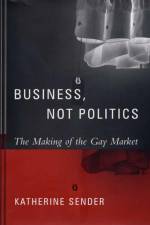
In a hard-hitting book that refutes conventional wisdom, Katherine Sender explores the connection between the business of marketing to gay consumers and the politics of gay rights and identity. She disputes some marketers'claims that marketing appeals to gay and lesbian consumers are a matter of "e;business, not politics"e; and that the business of gay marketing can be considered independently of the politics of gay rights, identity, and visibility. She contends that the gay community is not a preexisting entity that marketers simply tap into; rather it is a construction, an imagined community formed not only through political activism but also through a commercially supported media. She argues that marketing has not only been formative in the constitution of a GLBT community and identity but also has had significant impact on the visibility of gays and lesbians.
In May 1936, Abe Sada committed the most notorious crime in twentieth-century Japan-the murder and emasculation of her lover. What made her do it? And why was she found guilty of murder yet sentenced to only six years in prison? Why have this woman and her crime remained so famous for so long, and what does her fame have to say about attitudes toward sex and sexuality in modern Japan?Despite Abe Sada's notoriety and the depictions of her in film and fiction (notably in the classic In the Realm of the Senses), until now, there have been no books written in English that examine her life and the forces that pushed her to commit the crime. Along with a detailed account of Sada's personal history, the events leading up to the murder, and its aftermath, this book contains transcripts of the police interrogations after her arrest-one of the few existing first-person records of a woman who worked in the Japanese sex industry during the 1920s and 1930s-as well as a memoir by the judge and police records. Geisha, Harlot, Strangler, Star steps beyond the simplistic view of Abe Sada as a sexual deviate or hysterical woman to reveal a survivor of rape, a career as a geisha and a prostitute, and a prison sentence for murder. Sada endured discrimination and hounding by paparazzi until her disappearance in 1970. Her story illustrates a historical collision of social and sexual values-those of the samurai class and imported from Victorian Europe against those of urban and rural Japanese peasants.
Why, after a childhood of emotional neglect and abuse, would a man move next door to the very parents who caused him pain? And how can a woman emerge from her mother's control in order to form healthy adult relationships?Giving up family attachments that failed to meet our needs as children, David Celani argues, is the hardest psychological task an adult can undertake. Yet the reality is that many adults re-create the most painful aspects of their early relationships with their parents in new relationships with peers and romantic partners, frustrating themselves and discouraging them from leaving their family of origin. Leaving Home emphasizes the life-saving benefits of separating from destructive parents and offers a viable program for personal emancipation.Celani's program is based on Object-Relations Theory, a branch of psychoanalysis developed by Scottish analyst Ronald Fairbairn. The human personality, Fairbairn argued, is not the result of inherited (and thus immutable) instincts. Rather, the developing child builds internal relational templates that guide his future interactions with others based on the conscious and unconscious memories he internalized from his primary relationship-the one he experienced with his parents. While a child's attachment to parents who were neglectful or even abusive is not uncommon, there is a way out. Articulate, sensitive, and replete with examples from Celani's twenty-six years of clinical practice, this book outlines the practical steps to leaving home.
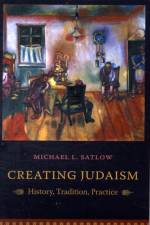
How can we define "e;Judaism,"e; and what are the common threads uniting ancient rabbis, Maimonides, the authors of the Zohar, and modern secular Jews in Israel? Michael L. Satlow offers a fresh perspective on Judaism that recognizes both its similarities and its immense diversity. Presenting snapshots of Judaism from around the globe and throughout history, Satlow explores the links between vastly different communities and their Jewish traditions. He studies the geonim, rabbinical scholars who lived in Iraq from the ninth to twelfth centuries; the intellectual flourishing of Jews in medieval Spain; how the Hasidim of nineteenth-century Eastern Europe confronted modernity; and the post-World War II development of distinct American and Israeli Jewish identities. Satlow pays close attention to how communities define themselves, their relationship to biblical and rabbinic texts, and their ritual practices. His fascinating portraits reveal the amazingly creative ways Jews have adapted over time to social and political challenges and continue to remain a "e;Jewish family."e;
Abonner på vårt nyhetsbrev og få rabatter og inspirasjon til din neste leseopplevelse.
Ved å abonnere godtar du vår personvernerklæring.