












Gjør som tusenvis av andre bokelskere
Abonner på vårt nyhetsbrev og få rabatter og inspirasjon til din neste leseopplevelse.
Ved å abonnere godtar du vår personvernerklæring.Du kan når som helst melde deg av våre nyhetsbrev.

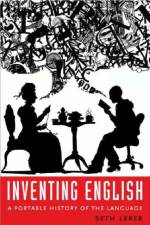
Why is there such a striking difference between English spelling and English pronunciation? How did our seemingly relatively simple grammar rules develop? What are the origins of regional dialect, literary language, and everyday speech, and what do they have to do with you? Seth Lerer's Inventing English is a masterful, engaging history of the English language from the age of Beowulf to the rap of Eminem. Many have written about the evolution of our grammar, pronunciation, and vocabulary, but only Lerer situates these developments in the larger history of English, America, and literature.Lerer begins in the seventh century with the poet Caedmon learning to sing what would become the earliest poem in English. He then looks at the medieval scribes and poets who gave shape to Middle English. He finds the traces of the Great Vowel Shift in the spelling choices of letter writers of the fifteenth century and explores the achievements of Samuel Johnson's Dictionary of 1755 and The Oxford English Dictionary of the late nineteenth and early twentieth centuries. He describes the differences between English and American usage and, through the example of Mark Twain, the link between regional dialect and race, class, and gender. Finally, he muses on the ways in which contact with foreign languages, popular culture, advertising, the Internet, and e-mail continue to shape English for future generations. Each concise chapter illuminates a moment of invention-a time when people discovered a new form of expression or changed the way they spoke or wrote. In conclusion, Lerer wonders whether globalization and technology have turned English into a world language and reflects on what has been preserved and what has been lost. A unique blend of historical and personal narrative, Inventing English is the surprising tale of a language that is as dynamic as the people to whom it belongs.
Gerontological Practice for the Twenty-first Century meets the need for state-of-the-art information on practice approaches with older patients that are age-specific and empirically based, blend "e;micro"e; and "e;macro"e; views, and reflect current themes in the aging and social work fields. The book is designed as a text for students and as a professional resource for practitioners. Clearly written, the book offers an expert and comprehensive review of the current literature and focuses on issues relating to the most vulnerable older people. Gerontological Practice for the Twenty-first Century also features case illustrations throughout and brief end-of-chapter questions for review. The book has four parts. Part 1 reviews current and classic theories of aging and proposes an original framework for an integrative approach to practice with older people that incorporates both individual and policy-level interventions. The approach is based on current themes such as a life course perspective, heterogeneity, diversity, and inequality. Part 2 covers such common and important psychological problems among older individuals, as anxiety, depression, suicide, substance abuse, and dementia, and describes appropriate, evidence-based interventions. Part 3 considers the social psychological picture by discussing working with older families, end-of-life care, bereavement, and work and retirement. Part 4 focuses on core sociopolitical issues in the lives of older people: economic policy, poverty, health policy, quality-of-life concerns, and social services.Current, authoritative, and original, this single-volume gerontology resource will be of valuable use to graduate students and practitioners.
Once seen as threats to mainstream society, Irish Americans have become an integral part of the American story. More than 40 million Americans claim Irish descent, and the culture and traditions of Ireland and Irish Americans have left an indelible mark on U.S. society. Timothy J. Meagher fuses an overview of Irish American history with an analysis of historians' debates, an annotated bibliography, a chronology of critical events, and a glossary discussing crucial individuals, organizations, and dates. He addresses a range of key issues in Irish American history from the first Irish settlements in the seventeenth century through the famine years in the nineteenth century to the volatility of 1960s America and beyond. The result is a definitive guide to understanding the complexities and paradoxes that have defined the Irish American experience. Throughout the work, Meagher invokes comparisons to Irish experiences in Canada, Britain, and Australia to challenge common perceptions of Irish American history. He examines the shifting patterns of Irish migration, discusses the role of the Catholic church in the Irish immigrant experience, and considers the Irish American influence in U.S. politics and modern urban popular culture. Meagher pays special attention to Irish American families and the roles of men and women, the emergence of the Irish as a "e;governing class"e; in American politics, the paradox of their combination of fervent American patriotism and passionate Irish nationalism, and their complex and sometimes tragic relations with African and Asian Americans.
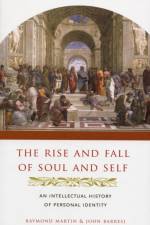
This book traces the development of theories of the self and personal identity from the ancient Greeks to the present day. From Plato and Aristotle to Freud and Foucault, Raymond Martin and John Barresi explore the works of a wide range of thinkers and reveal the larger intellectual trends, controversies, and ideas that have revolutionized the way we think about ourselves.The authors open with ancient Greece, where the ideas of Plato, Aristotle, and the materialistic atomists laid the groundwork for future theories. They then discuss the ideas of the church fathers and medieval and Renaissance philosophers, including St. Paul, Philo, Augustine, Aquinas, and Montaigne. In their coverage of the emergence of a new mechanistic conception of nature in the seventeenth century, Martin and Barresi note a shift away from religious and purely philosophical notions of self and personal identity to more scientific and social conceptions, a trend that has continued to the present day. They explore modern philosophy and psychology, including the origins of different traditions within each discipline, and explain both the theoretical relevance of feminism and gender and ethnic studies and also the ways that Derrida and other recent thinkers have challenged the very idea that a unified self or personal identity even exists. Martin and Barresi cover a number of issues broached by philosophers and psychologists, such as the existence of a fixed and unchanging self and whether the concept of the soul has a use outside of religious contexts. They address the question of whether notions of the soul and the self are still viable in today's world. Together, they reveal the fascinating ways in which great thinkers have grappled with these and other questions and the astounding impact their ideas have had on the development of self-understanding in the west.
"e;If you ask men if they spend any time hiding, they usually look at you as if you're nuts. 'What, me hide?' But if you ask women whether men hide, they immediately know what you mean."e;-from Where Men HideWhere Men Hide is a spirited tour of the dark and often dirty places men go to find comfort, camaraderie, relaxation, and escape. Ken Ross's striking photographs and James Twitchell's lively analysis trace the evolution of these virtual caves, and question why they are rapidly disappearing.Ross documents both traditional and contemporary male haunts, such as bars, barbershops, lodges, pool halls, strip clubs, garages, deer camps, megachurches, the basement Barcalounger, and Twitchell examines their provenance, purpose, and appeal. He finds that for centuries men have met with each other in underground lairs and clubhouses to conduct business or, in the case of strip clubs and the modern rec room, to bond and indulge in shady entertainments. In these secret dens, certain rules are abandoned while others are obeyed. However, Twitchell sees this less as exclusionary behavior and more as the result of social anxiety: when women want to get together, they just do it; when men get together, it's a production.Drawing on literary, historical, and pop cultural sources, Twitchell connects the places men hide with figures like Hemingway and Huck Finn, Frederick Jackson Turner's theory of the American frontier, and the mythological interpretations of Joseph Campbell and Robert Bly. Instead of blaming the disappearance of the man-cave solely on feminism, simple fair play, or the demands of Title IX, Twitchell believes this evaporation is due as well to the rise of solitary pursuits such as driving, watching television, and playing videogames.By blending together anecdote, research, and keen observation, Ross and Twitchell bring this little-discussed and controversial phenomenon to light.
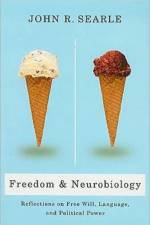
Our self-conception derives mostly from our own experience. We believe ourselves to be conscious, rational, social, ethical, language-using, political agents who possess free will. Yet we know we exist in a universe that consists of mindless, meaningless, unfree, nonrational, brute physical particles. How can we resolve the conflict between these two visions?In Freedom and Neurobiology, the philosopher John Searle discusses the possibility of free will within the context of contemporary neurobiology. He begins by explaining the relationship between human reality and the more fundamental reality as described by physics and chemistry. Then he proposes a neurobiological resolution to the problem by demonstrating how various conceptions of free will have different consequences for the neurobiology of consciousness. In the second half of the book, Searle applies his theory of social reality to the problem of political power, explaining the role of language in the formation of our political reality. The institutional structures that organize, empower, and regulate our lives-money, property, marriage, government-consist in the assignment and collective acceptance of certain statuses to objects and people. Whether it is the president of the United States, a twenty-dollar bill, or private property, these entities perform functions as determined by their status in our institutional reality. Searle focuses on the political powers that exist within these systems of status functions and the way in which language constitutes them.Searle argues that consciousness and rationality are crucial to our existence and that they are the result of the biological evolution of our species. He addresses the problem of free will within the context of a neurobiological conception of consciousness and rationality, and he addresses the problem of political power within the context of this analysis. A clear and concise contribution to the free-will debate and the study of cognition, Freedom and Neurobiology is essential reading for students and scholars of the philosophy of mind.
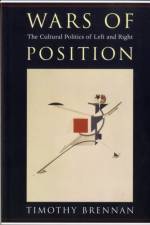
Taking stock of contemporary social, cultural, and political currents, Timothy Brennan explores key turning points in the recent history of American intellectual life. He contends that a certain social-democratic vision of politics has been banished from public discussion, leading to an unlikely convergence of the political right and the academic left and a deadening of critical opposition. Brennan challenges the conventional view that affiliations based on political belief, claims upon the state, or the public interest have been rendered obsolete by the march of events in the years before and after Reagan. Instead, he lays out a new path for a future infused with a sense of intellectual and political possibility.In highlighting the shift in America's intellectual culture, Brennan makes the case for seeing belief as an identity. As much as race or ethnicity, political belief, Brennan argues, is itself an identity-one that remains unrecognized and without legal protections while possessing its own distinctive culture. Brennan also champions the idea of cosmopolitanism and critiques those theorists who relegate the left to the status of postcolonial "e;other."e;Wars of Position documents how alternative views were chased from the public stage by strategic acts of censorship, including within supposedly dissident wings of the humanities. He explores how the humanities entered the cultural and political mainstream and settled into an awkward secular religion of the "e;middle way."e; In a series of interrelated chapters, Brennan considers narratives of the fall of the Berlin Wall and the Clinton impeachment; reexamines Salman Rushdie's pre-fatwa writing to illuminate its radical social leanings; presents a startling new interpretation of Edward Said; looks at the fatal reception of Antonio Gramsci within postcolonial history and criticism; and offers a stinging critique of Hardt and Negri's Empire and the influence of Italian radicalism on contemporary cultural theory. Throughout the work, Brennan also draws on and critiques the ideas and influence of Heidegger, Lyotard, Kristeva, and other influential theorists.
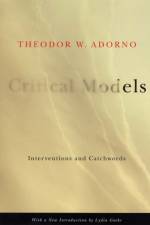
Critical Models combines into a single volume two of Adorno's most important postwar works - Interventions: Nine Critical Models (1963) and Catchwords: Critical Models II (1969). Written after his return to Germany in 1949, the articles, essays, and radio talks included in this volume speak to the pressing political, cultural, and philosophical concerns of the postwar era. The pieces in Critical Models reflect the intellectually provocative as well as the practical Adorno as he addresses such issues as the dangers of ideological conformity, the fragility of democracy, educational reform, the influence of television and radio, and the aftermath of fascism. This new edition includes an introduction by Lydia Goehr, a renowned scholar in philosophy, aesthetic theory, and musicology. Goehr illuminates Adorno's ideas as well as the intellectual, historical, and critical contexts that shaped his postwar thinking.
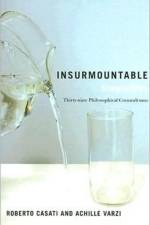
"e;Perhaps not all the stories that follow are true. They could, however, be true, and the Reader is invited to ponder this."e;So begins Insurmountable Simplicities, Roberto Casati and Achille Varzi's colorful incarnation of the many philosophical conundrums that hide in the wrinkles of everyday life. Why do mirrors seem to invert left and right but not up and down? How do we know whether strawberries taste the same for everyone? Where is it written that we must observe the law, and if it is not written, why should we observe it? What if we could swap brains-or the rest of our bodies? Insurmountable Simplicities is filled with stories, dialogues, and epistolary exchanges that cover a range of themes-such as personal identity, causality and responsibility, fortune, the nature of things, the paradoxes of time and space, the interface between logic and language-in captivating and inventive ways.Clear, concise, and intellectually engaging, this internationally acclaimed book brilliantly demonstrates that the beauty of philosophy resides in its thorough engagement with the simplicities of the world, insurmountable as they might initially appear.
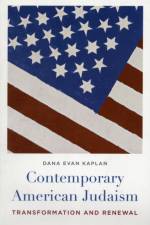
No longer controlled by a handful of institutional leaders based in remote headquarters and rabbinical seminaries, American Judaism is being transformed by the spiritual decisions of tens of thousands of Jews living all over the United States. A pulpit rabbi and himself an American Jew, Dana Evan Kaplan follows this religious individualism from its postwar suburban roots to the hippie revolution of the 1960s and the multiple postmodern identities of today. From Hebrew tattooing to Jewish Buddhist meditation, Kaplan describes the remaking of historical tradition in ways that channel multiple ethnic and national identities. While pessimists worry about the vanishing American Jew, Kaplan focuses on creative responses to contemporary spiritual trends that have made a Jewish religious renaissance possible. He believes that the reorientation of American Judaism has been a "e;bottom up"e; process, resisted by elites who have reluctantly responded to the demands of the "e;spiritual marketplace."e; The American Jewish denominational structure is therefore weakening at the same time that religious experimentation is rising, leading to the innovative approaches supplanting existing institutions. The result is an exciting transformation of what it means to be a religious American Jew in the twenty-first century.
Head, Eyes, Flesh, and Blood is the first comprehensive study of a central narrative theme in premodern South Asian Buddhist literature: the Buddha's bodily self-sacrifice during his previous lives as a bodhisattva. Conducting close readings of stories from Sanskrit, Pali, Chinese, and Tibetan literature written between the third century BCE and the late medieval period, Reiko Ohnuma argues that this theme has had a major impact on the development of Buddhist philosophy and culture.Whether he takes the form of king, prince, ascetic, elephant, hare, serpent, or god, the bodhisattva repeatedly gives his body or parts of his flesh to others. He leaps into fires, drowns himself in the ocean, rips out his tusks, gouges out his eyes, and lets mosquitoes drink from his blood, always out of selflessness and compassion and to achieve the highest state of Buddhahood. Ohnuma places these stories into a discrete subgenre of South Asian Buddhist literature and approaches them like case studies, analyzing their plots, characterizations, and rhetoric. She then relates the theme of the Buddha's bodily self-sacrifice to major conceptual discourses in the history of Buddhism and South Asian religions, such as the categories of the gift, the body (both ordinary and extraordinary), kingship, sacrifice, ritual offering, and death. Head, Eyes, Flesh, and Blood reveals a very sophisticated and influential perception of the body in South Asian Buddhist literature and highlights the way in which these stories have provided an important cultural resource for Buddhists. Combined with her rich and careful translations of classic texts, Ohnuma introduces a whole new understanding of a vital concept in Buddhists studies.
Rogue states pursue weapons of mass destruction, support terrorism, violate human rights, engage in acts of territorial aggression, and pose a threat to the international community. Recent debates and policy shifts regarding Iraq, North Korea, Syria, Iran, and Afghanistan reflect the uneven attempts to contend with regimes that pursue deviant behavior. In this timely new work, Miroslav Nincic illuminates the complex issues and policy choices surrounding clashes between international society and states that challenge the majority's espoused interests and values. As conventional approaches to international relations lose their relevance in a changing world, Nincic's work provides new and necessary frameworks and perspectives.Nincic explores recent events and develops theoretical models of contemporary asymmetrical power relations among states to offer a systematic account of the genesis, trajectory, and motivations of renegade regimes. He discusses how the pursuit of policies that defy international norms is often motivated by a regime's desire for greater domestic control. From this starting point, Nincic considers states' deviant behavior through two stages: the first is the initial decision to defy key aspects of the international normative order, and the second is the manner in which subsequent behavior is shaped by the international community's responses.In addressing attempts to control pariah states, Nincic assesses the effectiveness of sanctions and military responses. He provocatively argues that comprehensive economic sanctions can lead to a restructuring of the renegade regime's ideology and economy that ultimately strengthens its grip on power. In his chapter on military intervention, Nincic argues that force or the threat of force against a rogue state frequently triggers a protective reflex among its citizens, inspiring them to rally around the government's goals and values. Military threats, Nincic concludes, produce several kinds of consequences and their impact needs to be better understood.
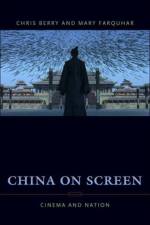
In China on Screen, Chris Berry and Mary Farquhar, leaders in the field of Chinese film studies, explore more than one hundred years of Chinese cinema and nation. Providing new perspectives on key movements, themes, and filmmakers, Berry and Farquhar analyze the films of a variety of directors and actors, including Chen Kaige, Zhang Yimou, Hou Hsiao Hsien, Bruce Lee, Jackie Chan, Maggie Cheung, Gong Li, Wong Kar-wai, and Ang Lee. They argue for the abandonment of "e;national cinema"e; as an analytic tool and propose "e;cinema and the national"e; as a more productive framework. With this approach, they show how movies from China, Hong Kong, Taiwan, and the Chinese diaspora construct and contest different ideas of Chinese nation-as empire, republic, or ethnicity, and complicated by gender, class, style, transnationalism, and more. Among the issues and themes covered are the tension between operatic and realist modes, male and female star images, transnational production and circulation of Chinese films, the image of the good foreigner-all related to different ways of imagining nation. Comprehensive and provocative, China on Screen is a crucial work of film analysis.
In five richly imaginative novellas and a short story, Zhu Wen depicts the violence, chaos, and dark comedy of China in the post-Mao era. A frank reflection of the seamier side of his nation's increasingly capitalist society, Zhu Wen's fiction offers an audaciously plainspoken account of the often hedonistic individualism that is feverishly taking root.Set against the mundane landscapes of contemporary China-a worn Yangtze River vessel, cheap diners, a failing factory, a for-profit hospital operating by dated socialist norms-Zhu Wen's stories zoom in on the often tragicomic minutiae of everyday life in this fast-changing country. With subjects ranging from provincial mafiosi to nightmarish families and oppressed factory workers, his claustrophobic narratives depict a spiritually bankrupt society, periodically rocked by spasms of uncontrolled violence. For example, I Love Dollars, a story about casual sex in a provincial city whose caustic portrayal of numb disillusionment and cynicism, caused an immediate sensation in the Chinese literary establishment when it was first published. The novella's loose, colloquial voice and sharp focus on the indignity and iniquity of a society trapped between communism and capitalism showcase Zhu Wen's exceptional ability to make literary sense of the bizarre, ideologically confused amalgam that is contemporary China.Julia Lovell's fluent translation deftly reproduces Zhu Wen's wry sense of humor and powerful command of detail and atmosphere. The first book-length publication of Zhu Wen's fiction in English, I Love Dollars and Other Stories of China offers readers access to a trailblazing author and marks a major contribution to Chinese literature in English.
Community-based forest management (CBFM) is a model of forest management in which a community takes part in decision making and implementation, and monitoring of activities affecting the natural resources around them. CBFM provides a framework for a community members to secure access to the products and services that flow from the landscape in which they live and has become an essential component of any comprehensive approach to forest management. In this volume, Nicholas K. Menzies looks at communities in China, Zanzibar, Brazil, and India where, despite differences in landscape, climate, politics, and culture, common challenges and themes arise in making a transition from forest management by government agencies to CBFM. The stories of these four distinct places highlight the difficulties communities face when trying to manage their forests and negotiate partnerships with others interested in forest management, such as the commercial forest sector or conservation and environmental organizations. These issues are then considered against a growing body of research concerning what constitutes successful CBFM.Drawing on published and unpublished case studies, project reports, and his own rich experience, Menzies analyzes how CBFM fits into the broader picture of the management of natural resources, highlighting the conditions that bring about effective practices and the most just and equitable stewardship of resources. A critical companion for students, researchers, and practitioners, Our Forest, Your Ecosystem, Their Timber provides a singular resource on the emergence and evolution of CBFM.
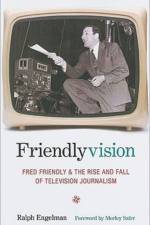
Fred Friendly (1915-1998) was the single most important personality in news and public affairs programming during the first four decades of American television. Portrayed by George Clooney in the film Good Night and Good Luck, Friendly, together with Edward R. Murrow, invented the television documentary format and subsequently oversaw the birth of public television. Juggling the roles of producer, policy maker, and teacher, Friendly had an unprecedented impact on the development of CBS in its heyday, wielded extensive influence at the Ford Foundation under the presidency of McGeorge Bundy, and trained a generation of journalists at Columbia University during a tumultuous period of student revolt.Ralph Engelman's biography is the first comprehensive account of Friendly's life and work. Known as a "e;brilliant monster,"e; Friendly stood at the center of television's unique response to McCarthyism, Watergate, and the Vietnam War, and the pitched battles he fought continue to resonate in the troubled world of television news. Engelman's fascinating psychological portrait explores the sources of Friendly's legendary rage and his extraordinary achievement. Drawing on private papers and interviews with colleagues, family members, and friends, Friendlyvision is the definitive story of broadcast journalism's infamous "e;wild man,"e; providing a crucial perspective on the past and future character of American journalism.
Social workers, planners, health professionals, and human-service administrators spend much of their time in meetings, working in and with groups. What meaning does participation in these groups have for members? Some of the events that are most important for members of the various professions, and those whom they serve, take place within these groups. Health and human services depend upon their working groups for their development and allocation of resources, their standards of quality, and the evaluation of their success or failure. In short, these groups are relied upon to come up with creative solutions to complex problems. Despite the amount of time spent in meetings, committees, and so on, very little has been written about the skills necessary for effective participation and leadership within working groups. With that in mind, Ephross and Vassil combine innovative group theory and practice in this "e;how-to"e; guide for professionals who take a variety of roles within the group. They draw on examples from social agencies, a hospital, a low-income community, and the boardroom, providing practical principles for day-to-day group life based on a democratic model. This revised edition also explores the changes that have taken place in the structure and operation of working groups in recent years and the heightened expectations for groups within large organizations.
For more than twenty years Sheila H. Akabas and Paul A. Kurzman have written extensively about workers and work organizations, and given leadership to the occupational social welfare movement worldwide. Recognized as leaders in their field, Akabas and Kurzman offer an invaluable and comprehensive look at the innovative ways in which management, labor organizations, government, and social workers can better respond to the needs of workers, their families, and communities.The authors consider the social, psychological, and economic conditions in the world of work; the domino impact of unemployment upon individuals, families, organizations, and communities; and the inadequacy of insurance, benefit and support systems, intended to respond to personal and systematic crises. They also provide case histories that illustrate how collaboration among management, labor, social work, and government opens new options for workers, their families, and those seeking entry into the workplace. The authors' discussion provides contemporary illustrations of evidence-based best practices that respond to the needs of the modern workplace. They analyze the barriers to entry into the workforce; the tension between work and family obligations; the sometime unsupportive nature of many jobs and settings; and work implications for persons with chronic or acute illnesses. In the concluding chapter, the authors assess current trends as they offer an optimistic review of the possibilities and positive future potential represented by career counseling, pre-retirement preparation, disability management, executive coaching, manpower programming, and managed care. Throughout the book, Akabas and Kurzman include case studies to illustrate innovative practice and provide study questions for each chapter.
Kristin Norget explores the practice and meanings of death rituals in poor urban neighborhoods on the outskirts of the southern Mexican city of Oaxaca. Drawing on her extensive fieldwork in Oaxaca City, Norget provides vivid descriptions of the Day of the Dead and other popular religious practices. She analyzes how the rites and beliefs associated with death shape and reflect poor Oaxacans' values and social identity. Norget also considers the intimate relationship that is perceived to exist between the living and the dead in Oaxacan popular culture. She argues that popular death rituals, which lie largely outside the sanctioned practices of the Catholic Church, establish and reinforce an ethical view of the world in which the dead remain with the living and in which the poor (as opposed to the privileged classes) do right by one another and their dead. For poor Oaxacans, these rituals affirm a set of social beliefs and practices, based on fairness, egalitarianism, and inclusiveness.
For centuries, the ancient Chinese philosophical text the Daodejing (Tao Te Ching) has fascinated and frustrated its readers. While it offers a wealth of rich philosophical insights concerning the cultivation of one's body and attaining one's proper place within nature and the cosmos, its teachings and structure can be enigmatic and obscure. Hans-Georg Moeller presents a clear and coherent description and analysis of this vaguely understood Chinese classic. He explores the recurring images and ideas that shape the work and offers a variety of useful approaches to understanding and appreciating this canonical text. Moeller expounds on the core philosophical issues addressed in the Daodejing, clarifying such crucial concepts as Yin and Yang and Dao and De. He explains its teachings on a variety of subjects, including sexuality, ethics, desire, cosmology, human nature, the emotions, time, death, and the death penalty. The Daodejing also offers a distinctive ideal of social order and political leadership and presents a philosophy of war and peace.An illuminating exploration, The Daodejing is an interesting foil to the philosophical outlook of Western humanism and contains surprising parallels between its teachings and nontraditional contemporary philosophies.
Electric Sounds brings to vivid life an era when innovations in the production, recording, and transmission of sound revolutionized a number of different media, especially the radio, the phonograph, and the cinema. The 1920s and 1930s marked some of the most important developments in the history of the American mass media: the film industry's conversion to synchronous sound, the rise of radio networks and advertising-supported broadcasting, the establishment of a federal regulatory framework on which U.S. communications policy continues to be based, the development of several powerful media conglomerates, and the birth of a new acoustic commodity in which a single story, song, or other product was made available to consumers in multiple media forms and formats.But what role would this new media play in society? Celebrants saw an opportunity for educational and cultural uplift; critics feared the degradation of the standards of public taste. Some believed acoustic media would fulfill the promise of participatory democracy by better informing the public, while others saw an opportunity for manipulation. The innovations of this period prompted not only a restructuring and consolidation of corporate mass media interests and a shift in the conventions and patterns of media consumption but also a renegotiation of the social functions assigned to mass media forms. Steve J. Wurtzler's impeccably researched history adds a new dimension to the study of sound media, proving that the ultimate form technology takes is never predetermined. Rather, it is shaped by conflicting visions of technological possibility in economic, cultural, and political realms. Electric Sounds also illustrates the process through which technologies become media and the ways in which media are integrated into American life.
Why were white bourgeois gay male writers so interested in spies, espionage, and treason in the twentieth century? Erin G. Carlston believes such figures and themes were critical to exploring citizenship and its limits, requirements, and possibilities in the modern Western state. Through close readings of Marcel Proust's novels, W. H. Auden's poetry, and Tony Kushner's play Angels in America, which all reference real-life espionaage cases involving Jews, homosexuals, or Communists, Carlston connects gay men's fascination with spying to larger debates about the making and contestation of social identity. Carlston argues that in the modern West, a distinctive position has been assigned to those perceived to be marginal to the nation because of non-visible religious, political, or sexual differences. Because these "e;invisible Others"e; existed somewhere between the wholly alien and the fully normative, they evoked acute anxieties about the security and cohesion of the nation-state. Incorporating readings of nonliterary cultural artifacts, such as trial transcripts, into her analysis, Carlston pinpoints moments in which national self-conceptions in France, England, and the United States grew unstable. Concentrating specifically on the Dreyfus affair in France, the defections of Communist spies in the U.K., and the Rosenberg case in the United States, Carlston directly links twentieth-century tensions around citizenship to the social and political concerns of three generations of influential writers.
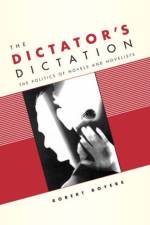
In these elegant essays, many of them originally written for The New Republic and Harper's, Robert Boyers examines the role of the political imagination in shaping the works of such important contemporary writers as W. G. Sebald and Philip Roth, Nadine Gordimer and Mario Vargas Llosa, Natalia Ginzburg and Pat Barker, J. M. Coetzee and John Updike, V. S. Naipaul and Anita Desai. Occasionally he finds that politics actually figures very little in works that only pretend to be interested in politics. Elsewhere he discovers that certain writers are not equal to the political issues they take on or that their work is fatally compromised by complacency or wishful thinking.In the main, though, Boyers writes as a lover of great literature who wishes to understand how the best writers do justice to their own political obsessions without suggesting that everything is reducible to politics. Resisting the notion that novels can be effectively translated into ideas or positions, he resists as well the notion that art and politics must be held apart, lest works of fiction somehow be contaminated by their association with "e;real life"e; or public issues. The essays offer a combination of close reading, argument, and assessment.What, Boyers asks, is the relationship between form and substance in a work whose formal properties are particularly striking? Is it reasonable to think of a particular writer as "e;reactionary"e; merely because he presents an unflattering portrait of revolutionary activists or because he is less than optimistic about the future of newly independent societies? What is the status of private life in works set in politically tumultuous times? Can the novelist be "e;responsible"e; if he consistently refuses to engage the conditions that affect even the intimate lives of his characters?Such questions inform these essays, which strive to be true to the essential spirit of the works they discuss and to interrogate, as sympathetically as possible, the imagination of writers who negotiate the unstable relationships between society and the individual, art and ideas.
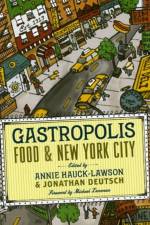
Whether you're digging into a slice of cherry cheesecake, burning your tongue on a piece of fiery Jamaican jerk chicken, or slurping the broth from a juicy soup dumpling, eating in New York City is a culinary adventure unlike any other in the world.An irresistible sampling of the city's rich food heritage, Gastropolis explores the personal and historical relationship between New Yorkers and food. Beginning with the origins of cuisine combinations, such as Mt. Olympus bagels and Puerto Rican lasagna, the book describes the nature of food and drink before the arrival of Europeans in 1624 and offers a history of early farming practices. Essays trace the function of place and memory in Asian cuisine, the rise of Jewish food icons, the evolution of food enterprises in Harlem, the relationship between restaurant dining and identity, and the role of peddlers and markets in guiding the ingredients of our meals. They share spice-scented recollections of Brooklyn, Queens, and the Bronx, and colorful vignettes of the avant-garde chefs, entrepreneurs, and patrons who continue to influence the way New Yorkers eat.Touching on everything from religion, nutrition, and agriculture to economics, politics, and psychology, Gastropolis tells a story of immigration, amalgamation, and assimilation. This rich interplay between tradition and change, individual and society, and identity and community could happen only in New York.
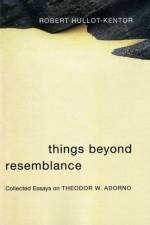
Theodor W. Adorno was a major twentieth-century philosopher and social critic whose writings on oppositional culture in art, music, and literature increasingly stand at the center of contemporary intellectual debate. In this excellent collection, Robert Hullot-Kentor, widely regarded as the most distinguished American translator and commentator on Adorno, gathers together sixteen essays he has written about the philosopher over the past twenty years. The opening essay, "e;Origin Is the Goal,"e; pursues Adorno's thesis of the dialectic of enlightenment to better understand the urgent social and political situation of the United States. "e;Back to Adorno"e; examines Adorno's idea that sacrifice is the primordial form of human domination; "e;Second Salvage"e; reconstructs Adorno's unfinished study of the transformation of music in radio transmission; and "e;What Is Mechanical Reproduction"e; revisits Adorno's criticism of Walter Benjamin. Further essays cover a broad range of topics: Adorno's affinities with Wallace Stevens and Nabokov, his complex relationship with Kierkegaard and psychoanalysis, and his critical study of popular music.Many of these essays have been revised, with new material added that emphasizes the relevance of Adorno's thought to the United States today. Things Beyond Resemblance is a timely and richly analytical collection crucial to the study of critical theory, aesthetics, continental philosophy, and Adorno.
The Mystique of Transmission is a close reading of a late-eighth-century Chan/Zen Buddhist hagiographical work, the Lidai fabao ji (Record of the Dharma-Jewel Through the Generations), and is its first English translation. The text is the only remaining relic of the little-known Bao Tang Chan school of Sichuan, and combines a sectarian history of Buddhism and Chan in China with an account of the eighth-century Chan master Wuzhu in Sichuan.Chinese religions scholar Wendi Adamek compares the Lidai fabao ji with other sources from the fourth through eighth centuries, chronicling changes in the doctrines and practices involved in transmitting medieval Chinese Buddhist teachings. While Adamek is concerned with familiar Chan themes like patriarchal genealogies and the ideology of sudden enlightenment, she also highlights topics that make Lidai fabao ji distinctive: formless practice, the inclusion of female practitioners, the influence of Daoist metaphysics, and connections with early Tibetan Buddhism.The Lidai fabao ji was unearthed in the early twentieth century in the Mogao caves at the Silk Road oasis of Dunhuang in northwestern China. Discovery of the Dunhuang manuscripts has been compared with the discovery of the Dead Sea Scrolls, as these documents have radically changed our understanding of medieval China and Buddhism. A crucial volume for students and scholars, The Mystique of Transmission offers a rare glimpse of a lost world and fills an important gap in the timeline of Chinese and Buddhist history.
Frances F. Dunwell presents a rich portrait of the Hudson and of the visionary people whose deep relationship with the river inspires changes in American history and culture. Lavishly illustrated with color plates of Hudson River School paintings, period engravings, and glass plate photography, The Hudson captures the spirit of the river through the eyes of its many admirers. It shows the crucial role of the Hudson in the shaping of Manhattan, the rise of the Empire State, and the trajectory of world trade and global politics, as well as the river's influence on art and architecture, engineering, and conservation.
Joan Johnson-Freese argues that the race for space weapons and the U.S. quest for exclusive or at least dominant ownership of strategic space assets have alienated the very allies that the United States needs in order to maintain its leading role in space exploration. Taking a balanced look at the issues that have contributed to the decline of America's manned space program, such as lack of political support and funding, Johnson-Freese offers not only a critique but also a plan for enhancing U.S. space security through cooperation rather than competition.She begins with a brief overview of the history of international space development through four eras: before Sputnik, the space race, after Apollo, and globalization. Then she focuses on how policy changes of the mid-1990s have changed the nation, examining why the United States has grown obsessed with the development of space technology not just as a tool for globalization but as a route toward expanding an already dominant arsenal of weapons. Johnson-Freese claims that these policy choices have greatly affected the attitudes and actions of other countries, and in the fight to achieve security, the United States has instead put itself at greater peril.Johnson-Freese explains complex technical issues in clear, accessible terms and suggests a way forward that is comprehensive rather than partisan. America is not the only country with space ambitions, but it is unique in viewing space as a battlefield and the technological advancements of other nations as a dire threat. Urgent and persuasive, Space as a Strategic Asset underscores the danger of allowing our space program to languish and the crucial role of cooperation in protecting the security of our country and the world.
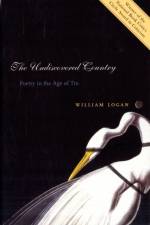
William Logan has been called both the "e;preeminent poet-critic of his generation"e; and the "e;most hated man in American poetry."e; For more than a quarter century, in the keen-witted and bare-knuckled reviews that have graced the New York Times Book Review, the Times Literary Supplement (London), and other journals, William Logan has delivered razor-sharp assessments of poets present and past. Logan, whom James Wolcott of Vanity Fair has praised as being "e;the best poetry critic in America,"e; vividly assays the most memorable and most damning features of a poet's work. While his occasionally harsh judgments have raised some eyebrows and caused their share of controversy (a number of poets have offered to do him bodily harm), his readings offer the fresh and provocative perspectives of a passionate and uncompromising critic, unafraid to separate the tin from the gold.The longer essays in The Undiscovered Country explore a variety of poets who have shaped and shadowed contemporary verse, measuring the critical and textual traditions of Shakespeare's sonnets, Whitman's use of the American vernacular, the mystery of Marianne Moore, and Milton's invention of personality, as well as offering a thorough reconsideration of Robert Lowell and a groundbreaking analysis of Sylvia Plath's relationship to her father.Logan's unsparing "e;verse chronicles"e; present a survey of the successes and failures of contemporary verse. Neither a poet's tepid use of language nor lackadaisical ideas nor indulgence in grotesque sentimentality escapes this critic's eye. While railing against the blandness of much of today's poetry (and the critics who trumpet mediocre work), Logan also celebrates Paul Muldoon's high comedy, Anne Carson's quirky originality, Seamus Heaney's backward glances, Czeslaw Milosz's indictment of Polish poetry, and much more.Praise for Logan's previous works:Desperate Measures (2002)"e;When it comes to separating the serious from the fraudulent, the ambitious from the complacent, Logan has consistently shown us what is wheat and what is chaff.... The criticism we remember is neither savage nor mandarin.... There is no one in his generation more likely to write it than William Logan."e;-Adam Kirsch, Oxford AmericanReputations of the Tongue (1999)"e;Is there today a more stringent, caring reader of American poetry than William Logan? Reputations of the Tongue may, at moments, read harshly. But this edge is one of deeply considered and concerned authority. A poet-critic engages closely with his masters, with his peers, with those whom he regards as falling short. This collection is an adventure of sensibility."e;-George Steiner"e;William Logan's critical bedevilments-as well as his celebrations-are indispensable."e;-Bill Marx, Boston GlobeAll the Rage (1998)"e;William Logan's reviews are malpractice suits."e;-Dennis O'Driscoll, Verse"e;William Logan is the best practical critic around."e;-Christian Wiman, Poetry
Will Mormonism be the next world faith, one that will rival Catholicism, Islam, and other major religions in terms of numbers and global appeal? This was the question Rodney Stark addressed in his much-discussed and much-debated article, "e;The Rise of a New World Faith"e; (1984), one of several essays on Mormonism included in this new collection. Examining the religion's growing appeal, Rodney Stark concluded that Mormons could number 267 million members by 2080. In what would become known as "e;the Stark argument,"e; Stark suggested that the Mormon Church offered contemporary sociologists and historians of religion an opportunity to observe a rare event: the birth of a new world religion.In the years following that article, Stark has become one of the foremost scholars of Mormonism and the sociology of religion. This new work, the first to collect his influential writings on the Mormon Church, includes previously published essays, revised and rewritten for this volume. His work sheds light on both the growth of Mormonism and on how and why certain religions continue to grow while others fade away. Stark examines the reasons behind the spread of Mormonism, exploring such factors as cultural continuity with the faiths from which it seeks converts, a volunteer missionary force, and birth rates. He explains why a demanding faith like Mormonism has such broad appeal in today's world and considers the importance of social networks in finding new converts. Stark's work also presents groundbreaking perspectives on larger issues in the study of religion, including the nature of revelation and the reasons for religious growth in an age of modernization and secularization.
Abonner på vårt nyhetsbrev og få rabatter og inspirasjon til din neste leseopplevelse.
Ved å abonnere godtar du vår personvernerklæring.