











Gjør som tusenvis av andre bokelskere
Abonner på vårt nyhetsbrev og få rabatter og inspirasjon til din neste leseopplevelse.
Ved å abonnere godtar du vår personvernerklæring.Du kan når som helst melde deg av våre nyhetsbrev.

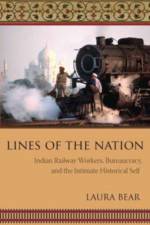
Lines of the Nation radically recasts the history of the Indian railways, which have long been regarded as vectors of modernity and economic prosperity. From the design of carriages to the architecture of stations, employment hierarchies, and the construction of employee housing, Laura Bear explores the new public spaces and social relationships created by the railway bureaucracy. She then traces their influence on the formation of contemporary Indian nationalism, personal sentiments, and popular memory. Her probing study challenges entrenched beliefs concerning the institutions of modernity and capitalism by showing that these rework older idioms of social distinction and are legitimized by forms of intimate, affective politics. Drawing on historical and ethnographic research in the company town at Kharagpur and at the Eastern Railway headquarters in Kolkata (Calcutta), Bear focuses on how political and domestic practices among workers became entangled with the moralities and archival technologies of the railway bureaucracy and illuminates the impact of this history today. The bureaucracy has played a pivotal role in the creation of idioms of family history, kinship, and ethics, and its special categorization of Anglo-Indian workers still resonates. Anglo-Indians were formed as a separate railway caste by Raj-era racial employment and housing policies, and other railway workers continue to see them as remnants of the colonial past and as a polluting influence. The experiences of Anglo-Indians, who are at the core of the ethnography, reveal the consequences of attempts to make political communities legitimate in family lines and sentiments. Their situation also compels us to rethink the importance of documentary practices and nationalism to all family histories and senses of relatedness. This interdisciplinary anthropological history throws new light not only on the imperial and national past of South Asia but also on the moral life of present technologies and economic institutions.
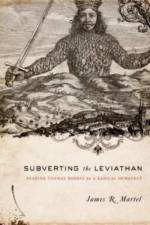
In Leviathan, Thomas Hobbes's landmark work on political philosophy, James Martel argues that although Hobbes pays lip service to the superior interpretive authority of the sovereign, he consistently subverts this authority throughout the book by returning it to the reader. Martel demonstrates that Hobbes's radical method of reading not only undermines his own authority in the text, but, by extension, the authority of the sovereign as well. To make his point, Martel looks closely at Hobbes's understanding of religious and rhetorical representation. In Leviathan, idolatry is not just a matter of worshipping images but also a consequence of bad reading. Hobbes speaks of the "e;error of separated essences,"e; in which a sign takes precedence over the idea or object it represents, and warns that when the sign is given such agency, it becomes a disembodied fantasy leading to a "e;kingdom of darkness."e; To combat such idolatry, Hobbes offers a method of reading in which one resists the rhetorical manipulation of figures and tropes and recognizes the codes and structures of language for what they are-the only way to convey a fundamental inability to ever know "e;the thing itself."e; Making the leap to politics, Martel suggests that following Hobbes's argument, the sovereign can also be seen as idolatrous a separated essence a figure who supplants the people it purportedly represents, and that learning to be better readers enables us to challenge, if not defeat, the authority of the sovereign.
Available for the first time in English, Azaleas is a captivating collection of poems by a master of the early Korean modernist style. Published in 1925, Azaleas is the only collection Kim Sowol (1902-1934) produced during his brief life, yet he remains one of Korea's most beloved and well-known poets. His work is a delightful and sophisticated blend of the images, tonalities, and rhythms of traditional Korean folk songs with surprisingly modern forms and themes. Sowol is also known for his unique and sometimes unsettling perspective, expressed through loneliness, longing, and a creative use of dream imagery-a reflection of Sowol's engagement with French Symbolist poetry.Azaleas recounts the journey of a young Korean as he travels from the northern P'yongyang area near to the cosmopolitan capital of Seoul. Told through an array of voices, the poems describe the young man's actions as he leaves home, his experiences as a student and writer in Seoul, and his return north. Although considered a landmark of Korean literature, Azaleas speaks to readers from all cultures. An essay by Sowol's mentor, the poet Kim Ok, concludes the collection and provides vital insight into Sowol's work and life. This elegant translation by David R. McCann, an expert on modern Korean poetry, maintains the immediacy and richness of Sowol's work and shares with English-language readers the quiet beauty of a poet who continues to cast a powerful spell on generations of Korean readers.
Zeami (1363-1443), Japan's most celebrated actor and playwright, composed more than thirty of the finest plays of no drama. He also wrote a variety of texts on theater and performance that have, until now, been only partially available in English. Zeami: Performance Notes presents the full range of Zeami's critical thought on this subject, which focused on the aesthetic values of no and its antecedents, the techniques of playwriting, the place of allusion, the training of actors, the importance of patronage, and the relationship between performance and broader intellectual and critical concerns. Spanning over four decades, the texts reflect the essence of Zeami's instruction under his famous father, the actor Kannami, and the value of his long and challenging career in medieval Japanese theater. Tom Hare, who has conducted extensive studies of no academically and on stage, begins with a comprehensive introduction that discusses Zeami's critical importance in Japanese culture. He then incorporates essays on the performance of no in medieval Japan and the remarkable story of the transmission and reproduction of Zeami's manuscripts over the past six centuries. His eloquent translation is fully annotated and includes Zeami's diverse and exquisite anthology of dramatic songs, Five Sorts of Singing, presented both in English and in the original Japanese.
Over the past twenty years, paleontologists have made tremendous fossil discoveries, including fossils that mark the growth of whales, manatees, and seals from land mammals and the origins of elephants, horses, and rhinos. Today there exists an amazing diversity of fossil humans, suggesting we walked upright long before we acquired large brains, and new evidence from molecules that enable scientists to decipher the tree of life as never before.The fossil record is now one of the strongest lines of evidence for evolution. In this engaging and richly illustrated book, Donald R. Prothero weaves an entertaining though intellectually rigorous history out of the transitional forms and series that dot the fossil record. Beginning with a brief discussion of the nature of science and the "e;monkey business of creationism,"e; Prothero tackles subjects ranging from flood geology and rock dating to neo-Darwinism and macroevolution. He covers the ingredients of the primordial soup, the effects of communal living, invertebrate transitions, the development of the backbone, the reign of the dinosaurs, the mammalian explosion, and the leap from chimpanzee to human. Prothero pays particular attention to the recent discovery of "e;missing links"e; that complete the fossil timeline and details the debate between biologists over the mechanisms driving the evolutionary process.Evolution is an absorbing combination of firsthand observation, scientific discovery, and trenchant analysis. With the teaching of evolution still an issue, there couldn't be a better moment for a book clarifying the nature and value of fossil evidence. Widely recognized as a leading expert in his field, Prothero demonstrates that the transformation of life on this planet is far more awe inspiring than the narrow view of extremists.
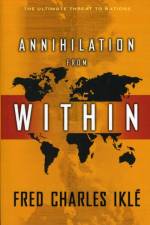
In this eloquent and impassioned book, defense expert Fred Ikle predicts a revolution in national security that few strategists have grasped; fewer still are mindful of its historic roots. We are preoccupied with suicide bombers, jihadist terrorists, and rogue nations producing nuclear weapons, but these menaces are merely distant thunder that foretells the gathering storm. It is the dark side of technological progress that explains this emerging crisis. Globalization guarantees the spread of new technologies, whether beneficial or destructive, and this proliferation reaches beyond North Korea, Iran, and other rogue states. Our greatest threat is a cunning tyrant gaining possession of a few weapons of mass destruction. His purpose would not be to destroy landmarks, highjack airplanes, or attack railroad stations. He would annihilate a nation's government from within and assume dictatorial power. The twentieth century offers vivid examples of tyrants who have exploited major national disasters by rallying violent followers and intimidating an entire nation. To explain how we have become so vulnerable, Ikle turns to history. Some 250 years ago, science was freed from political and religious constraints, causing a cultural split in which one part of our culture remained animated by religion and politics while the other became guided by science. Since then, technological progress and the evolving political order march to different drummers. Science advances at an accelerating pace while religion and politics move along a zigzag course. This divergence will widen and endanger the survival of all nations.Drawing on his experience as a Washington insider, Ikle outlines practical measures that could readily be implemented to help us avert the worst disaster.
Lois Gordon's absorbing biography tells the story of a writer, activist, and cultural icon who embodied the dazzling energy and tumultuous spirit of her age, and whom William Carlos Williams once called "e;one of the major phenomena of history."e;Nancy Cunard (1896-1965) led a life that surpasses Hollywood fantasy. The only child of an English baronet (and heir to the Cunard shipping fortune) and an American beauty, Cunard abandoned the world of a celebrated socialite and Jazz Age icon to pursue a lifelong battle against social injustice as a wartime journalist, humanitarian aid worker, and civil rights champion.Cunard fought fascism on the battlefields of Spain and reported firsthand on the atrocities of the French concentration camps. Intelligent and beautiful, she romanced the great writers of her era, including three Nobel Prize winners, and was the inspiration for characters in the works of Ezra Pound, T. S. Eliot, Aldous Huxley, Pablo Neruda, Samuel Beckett, and Ernest Hemingway, among others. Cunard was also a prolific poet, publisher, and translator and, after falling in love with a black American jazz pianist, became deeply committed to fighting for black rights. She edited the controversial anthology Negro, the first comprehensive study of the achievement and plight of blacks around the world. Her contributors included Langston Hughes, W. E. B. Du Bois, and Zora Neale Hurston, among scores of others.Cunard's personal life was as complex as her public persona. Her involvement with the civil rights movement led her to be ridiculed and rejected by both family and friends. Throughout her life, she was plagued by insecurities and suffered a series of breakdowns, struggling with a sense of guilt over her promiscuous behavior and her ability to survive so much war and tragedy. Yet Cunard's writings also reveal an immense kindness and wit, as well as her renowned, often flamboyant defiance of prejudiced social conventions.Drawing on diaries, correspondence, historical accounts, and the remembrances of others, Lois Gordon revisits the major movements of the first half of the twentieth century through the life of a truly gifted and extraordinary woman. She also returns Nancy Cunard to her rightful place as a major figure in the historical, social, and artistic events of a critical era.
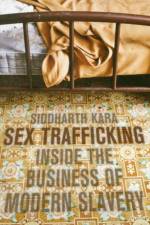
Every year, hundreds of thousands of women and children are abducted, deceived, seduced, or sold into forced prostitution, coerced to service hundreds if not thousands of men before being discarded. These trafficked sex slaves form the backbone of one of the world's most profitable illicit enterprises and generate huge profits for their exploiters, for unlike narcotics, which must be grown, harvested, refined, and packaged, sex slaves require no such "e;processing,"e; and can be repeatedly "e;consumed."e;Kara first encountered the horrors of slavery in a Bosnian refugee camp in 1995. Subsequently, in the first journey of its kind, he traveled across four continents to investigate these crimes and take stock of their devastating human toll. Kara made several trips to India, Nepal, Burma, Thailand, Laos, Vietnam, the United Kingdom, Italy, the Netherlands, Denmark, Albania, Moldova, Mexico, and the United States. He witnessed firsthand the sale of human beings into slavery, interviewed over four hundred slaves, and confronted some of those who trafficked and exploited them.In this book, Kara provides a riveting account of his journey into this unconscionable industry, sharing the moving stories of its victims and revealing the shocking conditions of their exploitation. He draws on his background in finance, economics, and law to provide the first ever business analysis of contemporary slavery worldwide, focusing on its most profitable and barbaric form: sex trafficking. Kara describes the local factors and global economic forces that gave rise to this and other forms of modern slavery over the past two decades and quantifies, for the first time, the size, growth, and profitability of each industry. Finally, he identifies the sectors of the sex trafficking industry that would be hardest hit by specifically designed interventions and recommends the specific legal, tactical, and policy measures that would target these vulnerable sectors and help to abolish this form of slavery, once and for all.The author will donate a portion of the proceeds of this book to the anti-slavery organization, Free the Slaves.
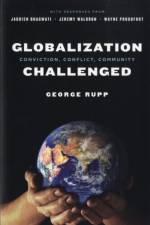
In Globalization Challenged, George Rupp, president of the International Rescue Committee, outlines the steps necessary to engage the contemporary conflict between traditional religious belief and Western secularism. According to Rupp, the key objective is to build a community that is inclusive without denying the validity of particular commitments. While he acknowledges the threat of "e;resurgent fundamentalism,"e; Rupp also criticizes secularists who fail to recognize or acknowledge the role of religion and its ideological equivalents in influencing public policy. All views, he asserts, are subject to comparative appraisal. The challenge is to develop ways to evaluate different approaches responsibly, leading to a greater understanding of one's own convictions as well as the positions of others.Rupp reinforces his critical and theoretical analysis with dramatic accounts of recent events in Afghanistan, the Democratic Republic of Congo, and Sudan-places where the International Rescue Committee operates. He then addresses the role of globalization in fueling instability worldwide. Inadequately regulated privatization has compromised health care, education, and social programs in many countries, whereas an inclusive community would encourage a more equitable distribution of resources.Essays by Jagdish Bhagwati, Jeremy Waldron, and Wayne Proudfoot expand Rupp's arguments, and in a final chapter Rupp responds to the issues they raise. Essential reading for anyone who hopes to understand the roots of today's geopolitical tensions, Globalization Challenged asks that we shed our complacency, recognize the legitimate role of conviction, and take actions to shape a more just and inclusive society.
For the sake of salt, Rome created a system of remuneration (from which we get the word "e;salary"e;), nomads domesticated the camel, the Low Countries revolted against their Spanish oppressors, and Gandhi marched against the tyranny of the British. Through the ages, salt has conferred status, preserved foods, and mingled in the blood, sweat, and tears of humanity. Today, chefs of haute cuisine covet it in its most exotic forms-underground salt deposits, Hawaiian black lava salt, glittery African crystals, and pink Peruvian salt from the sea carried in bricks on the backs of llamas.From proverbs to technical arguments, from anecdotes to examples of folklore, chemist and philosopher Pierre Laszlo takes us through the kingdom of "e;white gold."e; With "e;enthusiasm and freshness"e; (Le Monde) he mixes literary analysis, history, anthropology, biology, physics, economics, art history, political science, chemistry, ethnology, and linguistics to create a full body of knowledge about the everyday substance that rocked the world and brings zest to the ordinary. Laszlo explains the history behind Morton Salt's slogan "e;When it rains, it pours!"e; and looks into the plight of the salt miner, as well as spectroscopy and nuclear magnetic resonance. Salt is a tour de force about a chemical compound that is one of the very foundations of civilization.
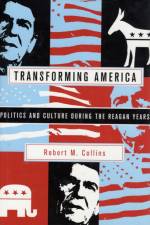
By the end of the 1980s, the "e;malaise"e; that had once pervaded American society was replaced by a renewed sense of confidence and national purpose. However, beneath this veneer of optimism was a nation confronting the effects of massive federal deficits, a reckless foreign policy, AIDS, homelessness, and a growing "e;cultural war."e; In Transforming America, renowned historian Robert Collins examines the decade's critical and controversial developments and the unmistakable influence of Ronald Reagan. Moving beyond conventional depictions that either demonize or sanctify Reagan, Collins offers fresh insights into his thought and influence. He portrays Reagan as a complex political figure who combined ideological conservatism with political pragmatism to achieve many of his policy aims. Collins demonstrates how Reagan's policies helped to limit the scope of government, control inflation, reduce the threat of nuclear war, and defeat communism. Collins also shows how the simultaneous ascendancy of the right in politics and the left in culture created a divisive legacy. The 1980s witnessed other changes, including the advent of the personal computer, a revolution in information technology, a more globalized national economy, and a restructuring of the American corporation. In the realm of culture, the creation of MTV, the popularity of self-help gurus, and the rise of postmodernism in American universities were the realization of the cultural shifts of the postwar era. These developments, Collins suggests, created a conflict in American society that continues today, pitting cultural conservatism against a secular and multicultural view of the world.Entertaining and erudite, Transforming America explores the events, movements, and ideas that defined a turbulent decade and profoundly changed the shape and direction of American culture and politics.
Leela Prasad's riveting book presents everyday stories on subjects such as deities, ascetics, cats, and cooking along with stylized, publicly delivered ethical discourse, and shows that the study of oral narrative and performance is essential to ethical inquiry. Prasad builds on more than a decade of her ethnographic research in the famous Hindu pilgrimage town of Sringeri, Karnataka, in southwestern India, where for centuries a vibrant local culture has flourished alongside a tradition of monastic authority. Oral narratives and the seeing-and-doing orientations that are part of everyday life compel the question: How do individuals imagine the normative, and negotiate and express it, when normative sources are many and diverging? Moral persuasiveness, Prasad suggests, is intimately tied to the aesthetics of narration, and imagination plays a vital role in shaping how people create, refute, or relate to "e;text,"e; "e;moral authority,"e; and "e;community."e; Lived understandings of ethics keep notions of text and practice in flux and raise questions about the constitution of "e;theory"e; itself. Prasad's innovative use of ethnography, poetics, philosophy of language, and narrative and performance studies demonstrates how the moral self, with a capacity for artistic expression, is dynamic and gendered, with a historical presence and a political agency.
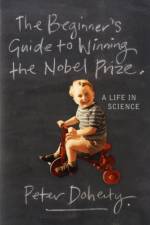
In The Beginner's Guide to Winning the Nobel Prize, Doherty recounts his unlikely path to becoming a Nobel Laureate. Beginning with his humble origins in Australia, he tells how he developed an interest in immunology and describes his award-winning, influential work with Rolf Zinkernagel on T-cells and the nature of immune defense. In prose that is at turns amusing and astute, Doherty reveals how his nonconformist upbringing, sense of being an outsider, and search for different perspectives have shaped his life and work.Doherty offers a rare, insider's look at the realities of being a research scientist. He lucidly explains his own scientific work and how research projects are selected, funded, and organized; the major problems science is trying to solve; and the rewards and pitfalls of a career in scientific research. For Doherty, science still plays an important role in improving the world, and he argues that scientists need to do a better job of making their work more accessible to the public. Throughout the book, Doherty explores the stories of past Nobel winners and considers some of the crucial scientific debates of our time, including the safety of genetically modified foods and the tensions between science and religion. He concludes with some "e;tips"e; on how to win a Nobel Prize, including advice on being persistent, generous, and culturally aware, and he stresses the value of evidence. The Beginner's Guide to Winning the Noble Prize is essential reading for anyone interested in a career in science.
"e;In the beginning, all the world was America."e; John LockeIn the beginning, everything was America, but where did America begin? In many narratives of American nationalism (both popular and academic), the United States begins in print-with the production, dissemination, and consumption of major printed texts like Common Sense , the Declaration of Independence, newspaper debates over ratification, and the Constitution itself. In these narratives, print plays a central role in the emergence of American nationalism, as Americans become Americans through acts of reading that connect them to other like-minded nationals.In The Republic in Print, however, Trish Loughran overturns this master narrative of American origins and offers a radically new history of the early republic and its antebellum aftermath. Combining a materialist history of American nation building with an intellectual history of American federalism, Loughran challenges the idea that print culture created a sense of national connection among different parts of the early American union and instead reveals the early republic as a series of local and regional reading publics with distinct political and geographical identities.Focusing on the years between 1770 and 1870, Loughran develops two richly detailed and provocative arguments. First, she suggests that it was the relative lack of a national infrastructure (rather than the existence of a tightly connected print network) that actually enabled the nation to be imagined in 1776 and ratification to be secured in 1787-88. She then describes how the increasingly connected book market of the 1830s, 1840s, and 1850s unexpectedly exposed cracks in the evolving nation, especially in regards to slavery, exacerbating regional differences in ways that ultimately contributed to secession and civil war.Drawing on a range of literary, historical, and archival materials-from essays, pamphlets, novels, and plays, to engravings, paintings, statues, laws, and maps The Republic in Print provides a refreshingly original cultural history of the American nation-state over the course of its first century.
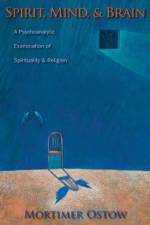
Preeminent psychoanalyst Mortimer Ostow believes that early childhood emotional attachments form the cognitive underpinnings of spiritual experience and religious motivation. His hypothesis, which is verifiable, relies on psychological and neurobiological evidence but is respectful of the human need for spiritual value. Ostow begins by classifying the three parts of the spiritual experience: awe, Spirituality proper, and mysticism. After he pinpoints the psychological origins of these feelings in infancy, he discusses the foundations of religious sentiment and practice and the brain processes associated with spiritual experience. He then focuses on spirituality's relationship to mood regulation, and the role of negative spirituality in fostering religious fundamentalism and demonic possession.Ostow concludes with an analysis of an essay by the psychoanalyst Donald M. Marcus, who recounts his own spiritual experience during a Native American-style "e;vision quest"e; in the woods. Marcus's account demonstrates the constructive potential of spirituality and the way in which spirituality retrieves and recapitulates feelings of attachment to the mother.Persuasively and brilliantly argued, Spirit, Mind, and Brain brings the disciplines of religion, behavorial neuroscience, and philosophy to bear on a groundbreaking new method for understanding religious ritual and belief.
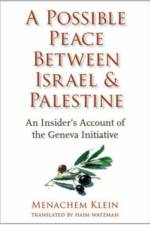
In 2003, after two years of negotiations, a group of prominent Israelis and Palestinians signed a model peace treaty. The document, popularly called the Geneva Initiative, contained detailed provisions resolving all outstanding issues between Israel and the Palestinian people, including drawing a border between Israel and Palestine, dividing Jerusalem, and determining the status of the Palestinian refugees.The negotiators presented this citizens' initiative to the Israeli and Palestinian peoples and urged them to accept it. One of the Israeli negotiators was Menachem Klein, a political scientist who has written extensively about the Jerusalem issue in the context of peace negotiations. Although the Geneva Initiative was not endorsed by the governments of either side, it became a fundamental term of reference for solving the Middle East conflict. In this firsthand account, Klein explains how and why these groups were able to achieve agreement. He directly addresses the formation of the Israeli and Palestinian teams, how they managed their negotiations, and their communications with both governments. He also discusses the role of third-party facilitators and the strategy behind marketing the Geneva Initiative to the public.A scholar and participant in the Geneva negotiations, Klein is able to provide both an inside perspective and an impartial analysis of the diplomatic efforts behind this historic compromise. He compares the negotiations to previous Israeli-Palestinian talks both formal and informal and the resolution of conflicts in South Africa and Algeria. Klein hopes that by treating the event as a case study we can learn a tremendous amount about the needs and approaches of both parties and the necessary shape peace must take between them.
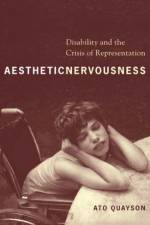
Focusing primarily on the work of Samuel Beckett, Toni Morrison, Wole Soyinka, and J. M. Coetzee, Ato Quayson launches a thoroughly cross-cultural, interdisciplinary study of the representation of physical disability. Quayson suggests that the subliminal unease and moral panic invoked by the disabled is refracted within the structures of literature and literary discourse itself, a crisis he terms "e;aesthetic nervousness."e; The disabled reminds the able-bodied that the body is provisional and temporary and that normality is wrapped up in certain social frameworks. Quayson expands his argument by turning to Greek and Yoruba writings, African American and postcolonial literature, depictions of deformed characters in early modern England and the plays of Shakespeare, and children's films, among other texts. He considers how disability affects interpersonal relationships and forces the character and the reader to take an ethical standpoint, much like representations of violence, pain, and the sacred. The disabled are also used to represent social suffering, inadvertently obscuring their true hardships.
In 1995, an Okinawan schoolgirl was brutally raped by several U.S. servicemen. The incident triggered a chain of protests by women's groups, teachers' associations, labor unions, reformist political parties, and various grassroots organizations across Okinawa prefecture. Reaction to the crime culminated in a rally attended by some 85,000 people, including business leaders and conservative politicians who had seldom raised their voices against the U.S. military presence.Using this event as a point of reference, Inoue explores how Okinawans began to regard themselves less as a group of uniformly poor and oppressed people and more as a confident, diverse, middle-class citizenry embracing the ideals of democracy, human rights, and women's equality. As this identity of resistance has grown, however, the Japanese government has simultaneously worked to subvert it, pressuring Okinawans to support a continued U.S. presence. Inoue traces these developments as well, revealing the ways in which Tokyo has assisted the United States in implementing a system of governance that continues to expand through the full participation and cooperation of residents.Inoue deftly connects local social concerns with the larger political processes of the Japanese nation and the global strategies of the United States. He critically engages social-movement literature along with postmodern/structural/colonial discourses and popular currents and themes in Okinawan and Japanese studies. Rich in historical and ethnographical detail, this volume is a nuanced portrait of the impact of Japanese colonialism, World War II, and U.S. military bases on the formation of contemporary Okinawan identity.
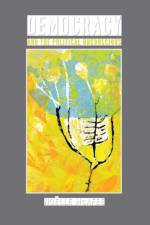
Political philosopher Noelle McAfee proposes a powerful new political theory for our post-9/11 world, in which an old pathology-the repetition compulsion-has manifested itself in a seemingly endless war on terror. McAfee argues that the quintessentially human desire to participate in a world with others is the key to understanding the public sphere and to creating a more democratic society, a world that all members can have a hand in shaping. But when some are effectively denied this participation, whether through trauma or terror, instead of democratic politics, there arises a political unconscious, an effect of desires unarticulated, failures to sublimate, voices kept silent, and repression reenacted. Not only is this condition undemocratic and unjust, it may lead to further trauma. Unless its troubles are worked through, a political community risks continual repetition and even self-destruction.McAfee deftly weaves together her experience as an observer of democratic life with an array of intellectual schemas, from poststructural psychoanalysis to Rawlsian and Habermasian democratic theories, as well as semiotics, civic republicanism, and American pragmatism. She begins with an analysis of the traumatic effects of silencing members of a political community. Then she explores the potential of deliberative dialogue and other "e;talking cures"e; and public testimonies, such as the South African Truth and Reconciliation Commission, to help societies work through, rather than continually act out, their conflicts. Democracy and the Political Unconscious is rich in theoretical insights, but it is also grounded in the practical problems of those who are trying to process the traumas of oppression, terror, and brutality and create more decent and democratic societies. Drawing on a breathtaking range of theoretical frameworks and empirical observations, Democracy and the Political Unconscious charts a course for democratic transformation in a world sorely lacking in democratic practice.
The tragic events of September 11, 2001, and the false assessment of Saddam Hussein's weapons arsenal were terrible reminders that good information is essential to national security. These failures convinced the American public that their intelligence system was broken and prompted a radical reorganization of agencies and personnel, but as Richard K. Betts argues in this book, critics and politicians have severely underestimated the obstacles to true reform. One of the nation's foremost political scientists, Betts draws on three decades of work within the U.S. intelligence community to illuminate the paradoxes and problems that frustrate the intelligence process. Unlike America's efforts to improve its defenses against natural disasters, strengthening its strategic assessment capabilities means outwitting crafty enemies who operate beyond U.S. borders. It also requires looking within to the organizational and political dynamics of collecting information and determining its implications for policy. Combining academic research with personal experience, Betts outlines strategies for better intelligence gathering and assessment. He describes how fixing one malfunction can create another; in what ways expertise can be both a vital tool and a source of error and misjudgment; the pitfalls of always striving for accuracy in intelligence, which in some cases can render it worthless; the danger, though unavoidable, of "e;politicizing"e; intelligence; and the issue of secrecy when it is excessive, when it is insufficient, and how limiting privacy can in fact protect civil liberties. Betts argues that when it comes to intelligence, citizens and politicians should focus less on consistent solutions and more on achieving a delicate balance between conflicting requirements. He also emphasizes the substantial success of the intelligence community, despite its well-publicized blunders, and highlights elements of the intelligence process that need preservation and protection. Many reformers are quick to respond to scandals and failures without detailed, historical knowledge of how the system works. Grounding his arguments in extensive theory and policy analysis, Betts takes a comprehensive and realistic look at how knowledge and power can work together to face the intelligence challenges of the twenty-first century.
Conflict, Conquest, and Conversion surveys two thousand years of the Christian missionary enterprise in the Middle East within the context of the region's political evolution. Its broad, rich narrative follows Christian missions as they interacted with imperial powers and as the momentum of religious change shifted from Christianity to Islam and back, adding new dimensions to the history of the region and the nature of the relationship between the Middle East and the West.Historians and political scientists increasingly recognize the importance of integrating religion into political analysis, and this volume, using long-neglected sources, uniquely advances this effort. It surveys Christian missions from the earliest days of Christianity to the present, paying particular attention to the role of Christian missions, both Protestant and Catholic, in shaping the political and economic imperialism of the nineteenth and twentieth centuries. Eleanor H. Tejirian and Reeva Spector Simon delineate the ongoing tensions between conversion and the focus on witness and "e;good works"e; within the missionary movement, which contributed to the development and spread of nongovernmental organizations. Through its conscientious, systematic study, this volume offers an unparalleled encounter with the social, political, and economic consequences of such trends.
The Enlightenment commitment to reason naturally gave rise to a belief in the perfectibility of man. Influenced by John Locke and Jean-Jacques Rousseau, many eighteenth-century writers argued that the proper education and upbringing breeding could make any man a member of the cultural elite. Yet even in this egalitarian environment, the concept of breeding remained tied to theories of blood lineage, caste distinction, and biological difference. Turning to the works of Locke, Rousseau, Swift, Defoe, and other giants of the British Enlightenment, Jenny Davidson revives the debates that raged over the husbandry of human nature and highlights their critical impact on the development of eugenics, the emergence of fears about biological determinism, and the history of the language itself. Combining rich historical research with a keen sense of story, she links explanations for the physical resemblance between parents and children to larger arguments about culture and society and shows how the threads of this compelling conversation reveal the character of a century. A remarkable intellectual history, Breeding not only recasts the fundamental concerns of the Enlightenment but also uncovers the seeds of thought that bloomed into contemporary notions of human perfectibility.
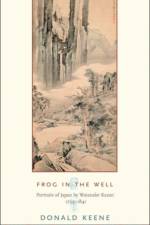
Frog in the Well is a vivid and revealing account of Watanabe Kazan, one of the most important intellectuals of the late Tokugawa period. From his impoverished upbringing to his tragic suicide in exile, Kazan's life and work reflected a turbulent period in Japan's history. He was a famous artist, a Confucian scholar, a student of Western culture, a samurai, and a critic of the shogunate who, nevertheless, felt compelled to kill himself for fear that he had caused his lord anxiety. During this period, a typical Japanese scholar or artist refused to acknowledge the outside world, much like a "e;frog in the well that knows nothing of the ocean,"e; but Kazan actively sought out Western learning. He appreciated European civilization and bought every scrap of European art that was available in Japan. He became a painter to help his family out of poverty and, by employing the artistic techniques of the West, achieved great success with his realistic and stylistically advanced portraits.Although he remained a nationalist committed to the old ways, Kazan called on the shogunate to learn from the West or risk disaster. He strove to improve the agricultural and economic conditions of his province and reinforce its defenses, but his criticisms and warnings about possible coastal invasions ultimately led to his arrest and exile. Frog in the Well is the first full-length biography of Kazan in English, and, in telling his life's story, renowned scholar Donald Keene paints a fascinating portrait of the social and intellectual milieus of the late Tokugawa period. Richly illustrated with Kazan's paintings, Frog in the Well illuminates a life that is emblematic of the cultural crises affecting Japan in the years before revolution.
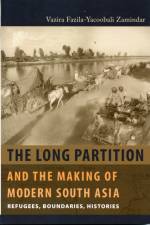
Nation-states often shape the boundaries of historical enquiry, and thus silence the very histories that have sutured nations to territorial states. "e;India"e; and "e;Pakistan"e; were drawn onto maps in the midst of Partition's genocidal violence and one of the largest displacements of people in the twentieth century. Yet this historical specificity of decolonization on the very making of a nationalized cartography of modern South Asia has largely gone unexamined. In this remarkable study based on more than two years of ethnographic and archival research, Vazira Fazila-Yacoobali Zamindar argues that the combined interventions of the two postcolonial states were enormously important in shaping these massive displacements. She examines the long, contentious, and ambivalent process of drawing political boundaries and making distinct nation-states in the midst of this historic chaos.Zamindar crosses political and conceptual boundaries to bring together oral histories with north Indian Muslim families divided between the two cities of Delhi and Karachi with extensive archival research in previously unexamined Urdu newspapers and government records of India and Pakistan. She juxtaposes the experiences of ordinary people against the bureaucratic interventions of both postcolonial states to manage and control refugees and administer refugee property. As a result, she reveals the surprising history of the making of the western Indo-Pak border, one of the most highly surveillanced in the world, which came to be instituted in response to this refugee crisis, in order to construct national difference where it was the most blurred.In particular, Zamindar examines the "e;Muslim question"e; at the heart of Partition. From the margins and silences of national histories, she draws out the resistance, bewilderment, and marginalization of north Indian Muslims as they came to be pushed out and divided by both emergent nation-states. It is here that Zamindar asks us to stretch our understanding of "e;Partition violence"e; to include this long, and in some sense ongoing, bureaucratic violence of postcolonial nationhood, and to place Partition at the heart of a twentieth century of border-making and nation-state formation.
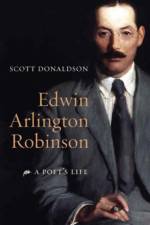
At the time of his death in 1935, Edwin Arlington Robinson was regarded as the leading American poet-the equal of Frost and Stevens. In this biography, Scott Donaldson tells the intriguing story of this poet's life, based in large part on a previously unavailable trove of more than 3,000 personal letters, and recounts his profoundly important role in the development of modern American literature. Born in 1869, the youngest son of a well-to-do family in Gardiner, Maine, Robinson had two brothers: Dean, a doctor who became a drug addict, and Herman, an alcoholic who squandered the family fortune. Robinson never married, but he fell in love as many as three times, most lastingly with the woman who would become his brother Herman's wife. Despite his shyness, Robinson made many close friends, and he repeatedly went out of his way to give them his support and encouragement. Still, it was always poetry that drove him. He regarded writing poems as nothing less than his calling-what he had been put on earth to do. Struggling through long years of poverty and neglect, he achieved a voice and a subject matter all his own. He was the first to write about ordinary people and events-an honest butcher consumed by grief, a miser with "e;eyes like little dollars in the dark,"e; ancient clerks in a dry goods store measuring out their days like bolts of cloth. In simple yet powerful rhetoric, he explored the interior worlds of the people around him. Robinson was a major poet and a pivotal figure in the course of modern American literature, yet over the years his reputation has declined. With his biography, Donaldson returns this remarkable talent to the pantheon of great American poets and sheds new light on his enduring legacy.
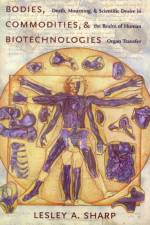
In the United States today, the human body defines a lucrative site of reusable parts, ranging from whole organs to minuscule and even microscopic tissues. Although the medical practices that enable the transfer of parts from one body to another most certainly relieve suffering and extend lives, they have also irrevocably altered perceptions of the cultural values assigned to the body. Organ transfer is rich terrain to investigate-especially in the American context, where sophisticated technological interventions have significantly shaped understandings of health and well-being, suffering, and death. In Bodies, Commodities, and Biotechnologies, Lesley Sharp probes the ideological assumptions underlying the transfer of body parts, the social significance of donors' deaths, and the medico-scientific desires surrounding complex forms of body repair. Sharp also considers the experimental realm, in which nonhuman species and artificial devices present further opportunities for recovery and for controversy. A compelling scientific investigation and social critique, Bodies, Commodities, and Biotechnologies explores the pervasive, and at times pernicious, practices shaping American biomedicine in the twenty-first century.
Focusing on late nineteenth- and twentieth-century stories of detection, policing, and espionage by British and South Asian writers, Yumna Siddiqi presents an original and compelling exploration of the cultural anxieties created by imperialism. She suggests that while colonial writers use narratives of intrigue to endorse imperial rule, postcolonial writers turn the generic conventions and topography of the fiction of intrigue on its head, launching a critique of imperial power that makes the repressive and emancipatory impulses of postcolonial modernity visible.Siddiqi devotes the first part of her book to the colonial fiction of Arthur Conan Doyle and John Buchan, in which the British regime's preoccupation with maintaining power found its voice. The rationalization of difference, pronouncedly expressed through the genre's strategies of representation and narrative resolution, helped to reinforce domination and, in some cases, allay fears concerning the loss of colonial power. In the second part, Siddiqi argues that late twentieth-century South Asian writers also underscore the state's insecurities, but unlike British imperial writers, they take a critical view of the state's authoritarian tendencies. Such writers as Amitav Ghosh, Michael Ondaatje, Arundhati Roy, and Salman Rushdie use the conventions of detective and spy fiction in creative ways to explore the coercive actions of the postcolonial state and the power dynamics of a postcolonial New Empire. Drawing on the work of leading theorists of imperialism such as Edward Said, Frantz Fanon, and the Subaltern Studies historians, Siddiqi reveals how British writers express the anxious workings of a will to maintain imperial power in their writing. She also illuminates the ways South Asian writers portray the paradoxes of postcolonial modernity and trace the ruses and uses of reason in a world where the modern marks a horizon not only of hope but also of economic, military, and ecological disaster.
Kimberley Patton examines the environmental crises facing the world's oceans from the perspective of religious history. Much as the ancient Greeks believed, and Euripides wrote, that "e;the sea can wash away all evils,"e; a wide range of cultures have sacralized the sea, trusting in its power to wash away what is dangerous, dirty, and morally contaminating. The sea makes life on land possible by keeping it "e;pure."e;Patton sets out to learn whether the treatment of the world's oceans by industrialized nations arises from the same faith in their infinite and regenerative qualities. Indeed, the sea's natural characteristics, such as its vast size and depth, chronic motion and chaos, seeming biotic inexhaustibility, and unique composition of powerful purifiers-salt and water-support a view of the sea as a "e;no place"e; capable of swallowing limitless amounts of waste. And despite evidence to the contrary, the idea that the oceans could be harmed by wasteful and reckless practices has been slow to take hold. Patton believes that environmental scientists and ecological advocates ignore this relationship at great cost. She bases her argument on three influential stories: Euripides' tragedy Iphigenia in Tauris; an Inuit myth about the wild and angry sea spirit Sedna who lives on the ocean floor with hair dirtied by human transgression; and a disturbing medieval Hindu tale of a lethal underwater mare. She also studies narratives in which the sea spits back its contents-sins, corpses, evidence of guilt long sequestered-suggesting that there are limits to the ocean's vast, salty heart. In these stories, the sea is either an agent of destruction or a giver of life, yet it is also treated as a passive receptacle. Combining a history of this ambivalence toward the world's oceans with a serious scientific analysis of modern marine pollution, Patton writes a compelling, cross-disciplinary study that couldn't be more urgent or timely.
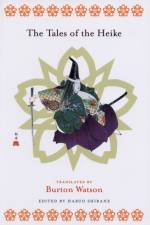
The Tales of the Heike is one of the most influential works in Japanese literature and culture, remaining even today a crucial source for fiction, drama, and popular media. Originally written in the mid-thirteenth century, it features a cast of vivid characters and chronicles the epic Genpei war, a civil conflict that marked the end of the power of the Heike and changed the course of Japanese history. The Tales of the Heike focuses on the lives of both the samurai warriors who fought for two powerful twelfth-century Japanese clans-the Heike (Taira) and the Genji (Minamoto)-and the women with whom they were intimately connected.The Tales of the Heike provides a dramatic window onto the emerging world of the medieval samurai and recounts in absorbing detail the chaos of the battlefield, the intrigue of the imperial court, and the gradual loss of a courtly tradition. The book is also highly religious and Buddhist in its orientation, taking up such issues as impermanence, karmic retribution, attachment, and renunciation, which dominated the Japanese imagination in the medieval period.In this new, abridged translation, Burton Watson offers a gripping rendering of the work's most memorable episodes. Particular to this translation are the introduction by Haruo Shirane, the woodblock illustrations, a glossary of characters, and an extended bibliography.
Ann Burack-Weiss explores a rich variety of published memoirs by authors who cared for ill or disabled family members. Contrary to the common belief that caregiving is nothing more than a stressful situation to be endured, memoirs describe a life transforming experience-self-discovery, a reordering of one's priorities, and a changed view of the world. The Caregiver's Tale offers insight and comfort to individuals caring for a loved one and is a valuable resource for all health care professionals.Identifying common themes, Burack-Weiss describes how the illness career and social meaning of cancer, dementia, HIV/AIDS, mental illness, and chemical dependence affect the caregiving experience. She applies the same method to an examination of family roles: parents caring for ailing children, couples and siblings caring for one another, and adult children caring for aging parents. Jamaica Kincaid, Sue Miller, Paul Monette, Kenzaburo Oe, and Philip Roth are among the many authors who share their caregiving stories. Burack-Weiss provides an annotated bibliography of the more than one hundred memoirs and an accompanying chart to help readers locate those of greatest interest to them.
Abonner på vårt nyhetsbrev og få rabatter og inspirasjon til din neste leseopplevelse.
Ved å abonnere godtar du vår personvernerklæring.