















Gjør som tusenvis av andre bokelskere
Abonner på vårt nyhetsbrev og få rabatter og inspirasjon til din neste leseopplevelse.
Ved å abonnere godtar du vår personvernerklæring.Du kan når som helst melde deg av våre nyhetsbrev.

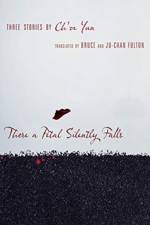
Ch'oe Yun is a Korean author known for her breathtaking versatility, subversion of authority, and bold exploration of the inner life. Readers celebrate her creative play with fantasy and admire her deep engagement with trauma, history, and the vagaries of remembrance.In this collection's title work, There a Petal Silently Falls, Ch'oe explores both the genesis and the aftershocks of historical outrages such as the Kwangju Massacre of 1980, in which a reported 2,000 civilians were killed for protesting government military rule. The novella follows the wanderings of a girl traumatized by her mother's murder and strikes home the injustice of state-sanctioned violence against men and especially women. "e;Whisper Yet"e; illuminates the harsh treatment of leftist intellectuals during the years of national division, at the same time offering the hope of reconciliation between ideological enemies. The third story, "e;The Thirteen-Scent Flower,"e; satirizes consumerism and academic rivalries by focusing on a young man and woman who engender an exotic flower that is coveted far and wide for its various fragrances. Elegantly crafted and quietly moving, Ch'oe Yun's stories are among the most incisive portrayals of the psychological and spiritual reality of post-World War II Korea. Her fiction, which began to appear in the late 1980s, represents a turn toward a more experimental, deconstructionist, and postmodern Korean style of writing, and offers a new focus on the role of gender in the making of Korean history.
The Present as History is a rare opportunity to hear world-renowned scholars speak on the new imperialism, feminism and human rights, secularism and Islam, post-colonialism, and the global economy. They treat the United States as an object to be historically and politically interrogated rather than as the norm from which all else is to be evaluated and assess the Third World through its history of colonialism and neocolonialism rather than focusing on issues of culture and morality. Amartya Sen discusses the shortcomings of the development agenda as it was conceived at the close of the Second World War, while Joseph Stiglitz explains economic globalization and the power of the International Monetary Fund in guiding its trajectory. Sanjay Reddy argues that global poverty estimates are flawed, and Helena Norberg-Hodge uses her experience in Tibet to lay bare the problems with development practice. Political scientists Partha Chatterjee, Mahmood Mamdani, and Anatol Lieven chart the growth of hegemonic power from the colonial to the postcolonial period. Chatterjee examines the enduring effects of colonial administrative and governing practices, while Mamdani, focusing on the present global dispensation, explains the growth of terrorist movements around the world in the context of the Cold War. Lieven looks at the different strains of American nationalism and the continuities and ruptures between nineteenth-century empires and the present one. Iranian human rights lawyer Shirin Ebadi elaborates the relationship between Islam, democracy, and human rights while anthropologists Lila Abu-Lughod and Saba Mahmood respectively trace the historical use of women as an excuse for imperial intervention and discuss the relationship between liberalism, Islam, and secularism. Literary theorist and cultural critic Gayatri Chakravorty Spivak looks at the legacy of colonialism in the domain of language and education, and isolates the problems associated with human rights discourse and practice.In conclusion, Talal Asad traces the genealogy of the term secularism, the special place of Islam within it, and its relationship to modernity. Gil Anidjar considers the distinction between religion and politics and elaborates the historical links between secularism and Christianity. Taken together, these interviews offer a valuable understanding of world history and a corrective to predominant conventional discourses on global power and justice.
Born in 1941, Tubten Khetsun is a nephew of the Gyatso Tashi Khendrung, one of the senior government officials taken prisoner after the Tibetan peoples' uprising of March 10, 1959. Khetsun himself was arrested while defending the Dalai Lama's summer palace, and after four years in prisons and labor camps, he spent close to two decades in Lhasa as a requisitioned laborer and "e;class enemy."e; In this eloquent autobiography, Khetsun describes what life was like during those troubled years. His account is one of the most dispassionate, detailed, and readable firsthand descriptions yet published of Tibet under the Communist occupation. Khetsun talks of his prison experiences as well as the state of civil society following his release, and he offers keenly observed accounts of well-known events, such as the launch of the Cultural Revolution, as well as lesser-known aspects of everyday life in occupied Lhasa. Since Communist China continues to occupy Tibet, the facts of this era remain obscure, and few of those who lived through it have recorded their experiences at length. Khetsun's story will captivate any reader seeking a refreshingly human account of what occurred during the Maoists' shockingly brutal regime.
Whether depicting humans battling aliens or a brave geologist saving lives as a volcano erupts, science-fiction films are an exciting visual and sensuous introduction to the workings of science and technology. These films explore a range of complex topics in vivid and accessible ways, from space travel and laser technology to genetic engineering, global warming, and the consequences of nuclear weaponry. Though actual scientific lab work might not be as exciting, science fiction is an engaging yet powerful way for a wide audience to explore some of the most pressing issues and ideas of our time.In this book, a scientist and dedicated film enthusiast discusses the portrayal of science in more than one hundred films, including science fiction, scientific biographies, and documentaries. Beginning with early films like Voyage to the Moon and Metropolis and concluding with more recent offerings like The Matrix, War of the Worlds, A Beautiful Mind, and An Inconvenient Truth, Sidney Perkowitz questions how much faith we can put into Hollywood's depiction of scientists and their work; how accurately these films capture scientific fact and theory; whether cataclysms like our collision with a comet can actually happen; and to what extent these films influence public opinion about science and the future. Movies, especially science-fiction films, temporarily remove viewers from the world as they know it and show them the world as it might be, providing special perspective on human nature and society. Yet "e;Hollywood science"e; can be erroneous, distorting fact for dramatic effect and stereotyping scientists as remote and nerdy, evil, or noble, doing little to improve the relationship between science and society. Bringing together history, scientific theory, and humorous observation, Hollywood Science features dozens of film stills and a list of the all-time best and worst science-fiction movies. Just as this genre appeals to all types of viewers, this book will resonate with anyone who has been inspired by science-fiction films and would like to learn how fantasy compares to fact.
By studying the many ways diverse peoples have changed, shaped, and conserved the natural world over time, environmental historians provide insight into humanity's unique relationship with nature and, more importantly, are better able to understand the origins of our current environmental crisis. Beginning with the precolonial land-use practice of Native Americans and concluding with our twenty-first century concerns over our global ecological crisis, American Environmental History addresses contentious issues such as the preservation of the wilderness, the expulsion of native peoples from national parks, and population growth, and considers the formative forces of gender, race, and class. Entries address a range of topics, from the impact of rice cultivation, slavery, and the growth of the automobile suburb to the effects of the Russian sea otter trade, Columbia River salmon fisheries, the environmental justice movement, and globalization. This illustrated reference is an essential companion for students interested in the ongoing transformation of the American landscape and the conflicts over its resources and conservation. It makes rich use of the tools and resources (climatic and geological data, court records, archaeological digs, and the writings of naturalists) that environmental historians rely on to conduct their research. The volume also includes a compendium of significant people, concepts, events, agencies, and legislation, and an extensive bibliography of critical films, books, and Web sites.
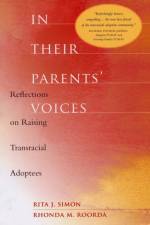
Rita J. Simon and Rhonda M. Roorda's In Their Own Voices: Transracial Adoptees Tell Their Stories shared the experiences of twenty-four black and biracial children who had been adopted into white families in the late 1960s and 70s. The book has since become a standard resource for families and practitioners, and now, in this sequel, we hear from the parents of these remarkable families and learn what it was like for them to raise children across racial and cultural lines.These candid interviews shed light on the issues these parents encountered, what part race played during thirty plus years of parenting, what they learned about themselves, and whether they would recommend transracial adoption to others. Combining trenchant historical and political data with absorbing firsthand accounts, Simon and Roorda once more bring an academic and human dimension to the literature on transracial adoption.
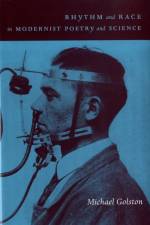
In the half-century between 1890 and 1950, a variety of fields and disciplines, from musicology and literary studies to biology, psychology, genetics, and eugenics, expressed a profound interest in the subject of rhythm. In this book, Michael Golston recovers much of the work done in this area and situates it in the society, politics, and culture of the Modernist period. He then filters selected Modernist poems through this archive to demonstrate that innovations in prosody, form, and subject matter are based on a largely forgotten ideology of rhythm and that beneath Modernist prosody is a science and an accompanying technology.In his analysis, Golston first examines psychological and physiological experiments that purportedly proved that races responded differently to rhythmic stimuli. He then demonstrates how poets like Ezra Pound, W. B. Yeats, Mina Loy, and William Carlos Williams either absorbed or echoed the information in these studies, using it to hone the innovative edge of Modernist practice and fundamentally alter the way poetry was written. Golston performs close readings of canonical texts such as Pound's Cantos, Yeats's "e;Lake Isle of Innisfree,"e; and William Carlos Williams's Paterson, and examines the role the sciences of rhythm played in racist discourses and fascist political thinking in the years leading up to World War II. Recovering obscure texts written in France, Germany, England, and America, Golston argues that "e;Rhythmics"e; was instrumental in generating an international modern art and should become a major consideration in our reading of reactionary avant-garde poetry.
Riverside Park is an illustrated tribute to Frederick Law Olmsted's "e;other"e; New York City sanctuary. Since its conception in the 1870s, the park has undergone a number of transformations and suffered from periods of misuse and neglect, but in 1984, much-needed renovations turned this city oasis into what is today one of Manhattan's most beautiful attractions."e;If the West Side does not stir you, you are a clod, past redemption."e;-Robert MosesMillions visit the Upper West Side landmark annually, and despite the heavy use, thousands of volunteers keep the grounds pristine. The park is now being extended southward as part of Manhattan's plan to reclaim the island's six hundred miles of waterfront, and Riverside Drive-Olmsted's curving thoroughfare flanking the park-has long been one of Manhattan's premier addresses."e;I often feel drawn to the Hudson River.... I never get tired of looking at it; it hypnotizes me."e;-Joseph Mitchell, from The RivermenFrom the time it was carved out of an unpromising landscape, Riverside Park has continued to reinvent itself. Using photographs (both contemporary and historical), illustrations, poems, and original and excerpted narrative, Edward Grimm and E. Peter Schroeder tell the intriguing story of a symbol of the modern revitalization of New York City. "e;Riverside Park will be a genuine riverside reservation, dedicated forever to the use of the people, beautiful in the highest sense."e;-The New York World, April 24, 1892*Includes the official Riverside Park Fund Map of 2007*
Bridging the gap between the world of science and the realm of the spiritual, B. Alan Wallace introduces a natural theory of human consciousness that has its roots in contemporary physics and Buddhism. Wallace's "e;special theory of ontological relativity"e; suggests that mental phenomena are conditioned by the brain, but do not emerge from it. Rather, the entire natural world of mind and matter, subjects and objects, arises from a unitary dimension of reality that is more fundamental than these dualities, as proposed by Wolfgang Pauli and Carl Jung.To test his hypothesis, Wallace employs the Buddhist meditative practice of samatha, refining one's attention and metacognition, to create a kind of telescope to examine the space of the mind. Drawing on the work of the physicist John Wheeler, he then proposes a more general theory in which the participatory nature of reality is envisioned as a self-excited circuit. In comparing these ideas to the Buddhist theory known as the Middle Way philosophy, Wallace explores further aspects of his "e;general theory of ontological relativity,"e; which can be investigated by means of vipasyana, or insight, meditation. Wallace then focuses on the theme of symmetry in reference to quantum cosmology and the "e;problem of frozen time,"e; relating these issues to the theory and practices of the Great Perfection school of Tibetan Buddhism. He concludes with a discussion of the general theme of complementarity as it relates to science and religion.The theories of relativity and quantum mechanics were major achievements in the physical sciences, and the theory of evolution has had an equally deep impact on the life sciences. However, rigorous scientific methods do not yet exist to observe mental phenomena, and naturalism has its limits for shedding light on the workings of the mind. A pioneer of modern consciousness research, Wallace offers a practical and revolutionary method for exploring the mind that combines the keenest insights of contemporary physicists and philosophers with the time-honored meditative traditions of Buddhism.
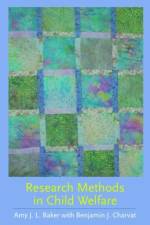
Social service agencies are facing the same expectations in quality management and outcomes as private companies, compelling staff members and researchers to provide and interpret valid and useful research to stakeholders at all levels in the field. Child welfare agencies are particularly scrutinized. In this textbook, two highly experienced researchers offer the best techniques for conducting sound research in the field. Covering not only the methodological challenges but also the real-life constraints of research in child welfare settings, Amy J. L. Baker and Benjamin J. Charvat present a volume that can be used both for general research methods and as a practical guide for conducting research in the field of child welfare. Baker and Charvat devote an entire chapter to ethical issues involved in researching children and their families and the limits of confidentiality within this population. They weave a discussion of ethics throughout the book, and each chapter begins with a scenario that presents a question or problem to work through, enabling readers to fully grasp the methods in the context of a specific setting or area of concern. Special sections concentrate on the value of continuous quality-improvement activities, which enable the collection and analysis of data outside of the strictures of publishable research, and the implementation of program evaluations, which can be helpful in obtaining further research and programmatic funding.
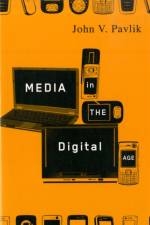
Digital technologies have fundamentally altered the nature and function of media in our society, reinventing age-old practices of public communication and at times circumventing traditional media and challenging its privileged role as gatekeepers of news and entertainment. Some critics believe these technologies keep the public involved in an informed discourse on matters of public importance, but it isn't clear this is happening on a large scale. Propaganda disguised as news is flourishing, and though interaction with the digital domain teaches children valuable skills, it can also expose them to grave risks. John V. Pavlik critically examines our current digital innovations blogs, podcasting, peer-to-peer file sharing, on-demand entertainment, and the digitization of television, radio, and satellites and their positive and negative implications. He focuses on present developments, but he also peers into the future, foreseeing a media landscape dominated by a highly fragmented, though active audience, intense media competition, and scarce advertising dollars. By embracing new technologies, however, Pavlik shows how professional journalism and media can hold on to their role as a vital information lifeline and continue to operate as the tool of a successful democracy.
Despite advances in feminism, the "e;law of the father"e; remains the dominant model of Western psychological and cultural analysis, and the law of the mother continues to exist as an underdeveloped and marginal concept. In her radical rereading of the Greek myth, Oresteia, Amber Jacobs hopes to rectify the occlusion of the mother and reinforce her role as an active agent in the laws that determine and reinforce our cultural organization.According to Greek myth, Metis, Athena's mother, was Zeus's first wife. Zeus swallowed Metis to prevent her from bearing children who would overthrow him. Nevertheless, Metis bore Zeus a child-Athena-who sprang forth fully formed from his head. In Aeschylus's Oresteia, Athena's motherless status functions as a crucial justification for absolving Orestes of the crime of matricide. In his defense of Orestes, Zeus argues that the father is more important than the mother, using Athena's "e;motherless"e; birth as an example. Conducting a close reading of critical works on Aeschylus's text, Jacobs reveals that psychoanalytic theorists have unwittingly reproduced the denial of Metis in their own critiques. This repression, which can be found in the work of Sigmund Freud and Melanie Klein as well as in the work of more contemporary theorists such as Andre Green and Luce Irigaray, has resulted in both an incomplete analysis of Oresteia and an inability to account for the fantasies and unconscious processes that fall outside the oedipal/patricidal paradigm. By bringing the story of Athena's mother, Metis, to the forefront, Jacobs challenges the primacy of the Oedipus myth in Western culture and psychoanalysis and introduces a bold new theory of matricide and maternal law. She finds that the Metis myth exists in cryptic forms within Aeschylus's text, uncovering what she terms the "e;latent content of the Oresteian myth,"e; and argues that the occlusion of the law of the mother is proof of the patriarchal structures underlying our contemporary social and psychic realities. Jacobs's work not only provides new insight into the Oresteian trilogy but also advances a postpatriarchal model of the symbolic order that has strong ramifications for psychoanalysis, feminism, and theories of representation, as well as for clinical practice and epistemology.
Throughout the past three decades East Asia has seen more peace and stability than at any time since the Opium Wars of 1839-1841. During this period China has rapidly emerged as a major regional power, averaging over nine percent economic growth per year since the introduction of its market reforms in 1978. Foreign businesses have flocked to invest in China, and Chinese exports have begun to flood the world. China is modernizing its military, has joined numerous regional and international institutions, and plays an increasingly visible role in international politics. In response to this growth, other states in East Asia have moved to strengthen their military, economic, and diplomatic relations with China. But why have these countries accommodated rather than balanced China's rise?David C. Kang believes certain preferences and beliefs are responsible for maintaining stability in East Asia. Kang's research shows how East Asian states have grown closer to China, with little evidence that the region is rupturing. Rising powers present opportunities as well as threats, and the economic benefits and military threat China poses for its regional neighbors are both potentially huge; however, East Asian states see substantially more advantage than danger in China's rise, making the region more stable, not less. Furthermore, although East Asian states do not unequivocally welcome China in all areas, they are willing to defer judgment regarding what China wants and what its role in East Asia will become. They believe that a strong China stabilizes East Asia, while a weak China tempts other states to try to control the region. Many scholars downplay the role of ideas and suggest that a rising China will be a destabilizing force in the region, but Kang's provocative argument reveals the flaws in contemporary views of China and the international relations of East Asia and offers a new understanding of the importance of sound U.S. policy in the region.
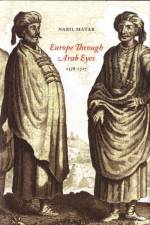
Traveling to archives in Tunisia, Morocco, France, and England, with visits to Egypt, Jordan, Lebanon, and Spain, Nabil Matar assembles a rare history of Europe's rise to power as seen through the eyes of those who were later subjugated by it. Many historians of the Middle East believe Arabs and Muslims had no interest in Europe during this period of Western discovery and empire, but in fact these groups were very much engaged with the naval and industrial development, politics, and trade of European Christendom. Beginning in 1578 with a major Moroccan victory over a Portuguese invading army, Matar surveys this early modern period, in which Europeans and Arabs often shared common political, commercial, and military goals. Matar concentrates on how Muslim captives, ransomers, traders, envoys, travelers, and rulers pursued those goals while transmitting to the nonprint cultures of North Africa their knowledge of the peoples and societies of Spain, France, Britain, Holland, Italy, and Malta. From the first non-European description of Queen Elizabeth I to early accounts of Florence and Pisa in Arabic, from Tunisian descriptions of the Morisco expulsion in 1609 to the letters of a Moroccan Armenian ambassador in London, the translations of the book's second half draw on the popular and elite sources that were available to Arabs in the early modern period. Letters from male and female captives in Europe, chronicles of European naval attacks and the taqayid (newspaper) reports on Muslim resistance, and descriptions of opera and quinine appear here in English for the first time. Matar notes that the Arabs of the Maghrib and the Mashriq were eager to engage Christendom, despite wars and rivalries, and hoped to establish routes of trade and alliances through treaties and royal marriages. However, the rise of an intolerant and exclusionary Christianity and the explosion of European military technology brought these advances to an end. In conclusion, Matar details the decline of Arab-Islamic power and the rise of Britain and France.
Whether it's the Vatican addressing its role in the Second World War or the United States atoning for its treatment of native Hawai'ian islanders, apologizing for history has become a standard feature of the international political scene. As Alexis Dudden makes clear, interrogating this process is crucial to understanding the value of the political apology to the state. When governments apologize for past crimes, they take away the substance of apology that victims originally wanted for themselves. They rob victims of the dignity they seek while affording the state a new means with which to legitimize itself.Examining the interplay between political apology and apologetic history, Dudden focuses on the problematic relationship binding Japanese imperialism, South Korean state building, and American power in Asia. She examines this history through diplomatic, cultural, and social considerations in the postwar era and argues that the process of apology has created a knot from which none of these countries can escape without undoing decades of mythmaking.
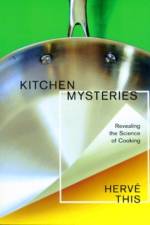
An international celebrity and founder of molecular gastronomy, or the scientific investigation of culinary practice, Herve This is known for his ground-breaking research into the chemistry and physics behind everyday cooking. His work is consulted widely by amateur cooks and professional chefs and has changed the way food is approached and prepared all over the world. In Kitchen Mysteries, Herve This offers a second helping of his world-renowned insight into the science of cooking, answering such fundamental questions as what causes vegetables to change color when cooked and how to keep a souffle from falling. He illuminates abstract concepts with practical advice and concrete examples for instance, how sauteing in butter chemically alters the molecules of mushrooms so that cooks of every stripe can thoroughly comprehend the scientific principles of food. Kitchen Mysteries begins with a brief overview of molecular gastronomy and the importance of understanding the physiology of taste. A successful meal depends as much on a cook's skilled orchestration of taste, odors, colors, consistencies, and other sensations as on the delicate balance of ingredients. Herve then dives into the main course, discussing the science behind many meals' basic components: eggs, milk, bread, sugar, fruit, yogurt, alcohol, and cheese, among other items. He also unravels the mystery of tenderizing enzymes and gelatins and the preparation of soups and stews, salads and sauces, sorbet, cakes, and pastries. Herve explores the effects of boiling, steaming, braising, roasting, deep-frying, sauteing, grilling, salting, and microwaving, and devotes a chapter to kitchen utensils, recommending the best way to refurbish silverware and use copper.By sharing the empirical principles chefs have valued for generations, Herve This adds another dimension to the suggestions of cookbook authors. He shows how to adapt recipes to available ingredients and how to modify proposed methods to the utensils at hand. His revelations make difficult recipes easier to attempt and allow for even more creativity and experimentation. Promising to answer your most compelling kitchen questions, Herve This continues to make the complex science of food digestible to the cook.
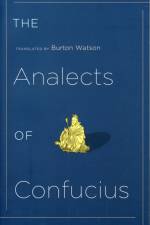
Compiled by disciples of Confucius in the centuries following his death in 479 B.C.E., The Analects of Confucius is a collection of aphorisms and historical anecdotes embodying the basic values of the Confucian tradition: learning, morality, ritual decorum, and filial piety. Reflecting the model eras of Chinese antiquity, the Analects offers valuable insights into successful governance and the ideal organization of society. Filled with humor and sarcasm, it reads like a casual conversation between teacher and student, emphasizing the role of the individual in the attainment of knowledge and the value of using historical events and people to illuminate moral and political concepts. Confucius's teachings focus on cultural and peaceful pursuits and the characteristics of benevolent and culturally distinguished government. He also discusses ancestor worship and other rites performed for the spirits of the dead. The single most influential philosophical work in all of Chinese history, The Analects of Confucius has shaped the thought and customs of China and neighboring countries for centuries. Burton Watson's concise translation uses the pinyin romanization system and keeps explanatory notes to a minimum, yet his intimate knowledge of the Confucian tradition and precise attention to linguistic detail capture the original text's elegance, cogency, and wit.
In Neuroscience and Philosophy three prominent philosophers and a leading neuroscientist clash over the conceptual presuppositions of cognitive neuroscience. The book begins with an excerpt from Maxwell Bennett and Peter Hacker's Philosophical Foundations of Neuroscience (Blackwell, 2003), which questions the conceptual commitments of cognitive neuroscientists. Their position is then criticized by Daniel Dennett and John Searle, two philosophers who have written extensively on the subject, and Bennett and Hacker in turn respond.Their impassioned debate encompasses a wide range of central themes: the nature of consciousness, the bearer and location of psychological attributes, the intelligibility of so-called brain maps and representations, the notion of qualia, the coherence of the notion of an intentional stance, and the relationships between mind, brain, and body. Clearly argued and thoroughly engaging, the authors present fundamentally different conceptions of philosophical method, cognitive-neuroscientific explanation, and human nature, and their exchange will appeal to anyone interested in the relation of mind to brain, of psychology to neuroscience, of causal to rational explanation, and of consciousness to self-consciousness.In his conclusion Daniel Robinson (member of the philosophy faculty at Oxford University and Distinguished Professor Emeritus at Georgetown University) explains why this confrontation is so crucial to the understanding of neuroscientific research. The project of cognitive neuroscience, he asserts, depends on the incorporation of human nature into the framework of science itself. In Robinson's estimation, Dennett and Searle fail to support this undertaking; Bennett and Hacker suggest that the project itself might be based on a conceptual mistake. Exciting and challenging, Neuroscience and Philosophy is an exceptional introduction to the philosophical problems raised by cognitive neuroscience.
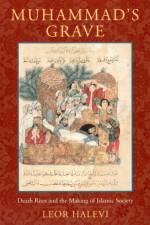
In his probing study of the role of death rites in the making of Islamic society, Leor Halevi imaginatively plays prescriptive texts against material culture and advances new ways of interpreting highly contested sources. His original research reveals that religious scholars of the early Islamic period produced codes of funerary law not only to define the handling of a Muslim corpse but also to transform everyday urban practices. Relying on oral traditions, these scholars established new social patterns in the cities of Arabia, Mesopotamia, and the eastern Mediterranean. They distinguished Islamic rites from Christian, Jewish, and Zoroastrian rites and changed the way men and women interacted publicly and privately.In each chapter Halevi explores a different layer of human interaction, following the movement of the corpse from the deathbed to the grave. In the process he analyzes the real and imaginary relationships between husbands and wives, prayer leaders and mourners, and even dreamers and the dead. He describes how Muslims wailed for the deceased, prepared corpses for burial, marched in funerary processions, and prayed for the dead, highlighting the specific economic and political factors involved in these rituals as well as key religious and sexual divisions. Offering a unique perspective on the making of Islamic social and religious ideals during this early period, Halevi forges a fascinating link between the development of funerary rites and the efforts of an emerging religion to carve out its own, distinct identity. Muhammad's Grave is a groundbreaking history of the rise of Islam and the roots of contemporary Muslim attitudes toward the body and society.
In this groundbreaking comparative study, Matthew Bagger investigates the role of paradox in Western and Asian religious discourse. Drawing on both philosophy and social scientific theory, he offers a naturalistic explanation of religion's oft-noted propensity to sublime paradox and argues that religious thinkers employ intractable paradoxes as the basis for various techniques of self-transformation. Considering the writings of Kierkegaard, Pseudo-Dionysus, St. John of the Cross, N?g?rjuna, and Chuang-tzu, among others, Bagger identifies two religious uses of paradox: cognitive asceticism, which wields the psychological discomfort of paradox as an instrument of self-transformation, and mysticism, which seeks to transform the self through an alleged extraordinary cognition that ineffably comprehends paradox. Bagger contrasts these techniques of self-transformation with skepticism, which cultivates the appearance of contradiction in order to divest a person of beliefs altogether. Bagger further contends that a thinker's social attitudes determine his or her response to paradox. Attitudes concerning crossing the boundary of a social group prefigure attitudes concerning supposed truths that lie beyond the boundaries of understanding. Individuals who fear crossing the boundary of their social group and would prohibit them tend to use paradox ascetically, while individuals who find the controlled incorporation of outsiders enriching commonly find paradox revelatory. Although scholars have long noted that religious discourse seems to cultivate and perpetuate paradox, their scholarship tends to ratify religious attitudes toward paradox instead of explaining the unusual reaction paradox provokes. A vital contribution to discussions of mystical experience, The Uses of Paradox reveals how much this experience relies on social attitudes and cosmological speculation.
In this provocative book, Anthony Hutchison challenges the belief that the American novel is "e;antipolitical"e; and condemns the relative absence of American literature in studies of the political novel. In Hutchison's view, our fiction is always informed by the complexities of the American political tradition, and to acknowledge this is to introduce a new, rewarding chapter of critical inquiry into the study of American literature.Focusing on the works of Herman Melville, Gore Vidal, Russell Banks, Lionel Trilling, and Philip Roth, Hutchison finds a critique of liberalism put forth by classical republicanism, transcendentalism, Marxism, and neoconservatism at their respective moments of historical ascent. He shows how these authors take very specific historical periods and episodes for their subject matter and interrogate, critique, and contextualize pivotal moments in the intellectual history of American liberalism. In their work, liberalism reconstitutes itself in the face of competing ideological pressures, demonstrating that the novel is very much characterized by a "e;republican"e; concern with the health of the polity.Considering such artists, philosophers, and theorists as Ralph Waldo Emerson, Fyodor Dostoevsky, Hannah Arendt, and John Dewey, alongside numerous contemporary commentators and historians, Hutchison repositions American novelists as serious political thinkers. He reveals Melville's Moby Dick to be the formal template for the American political novel and compares and contrasts its embodiment of "e;republican"e; fiction with the "e;democratic"e; mode Mikhail Bakhtin associates with Dostoevsky. He especially draws attention to the meaning of republicanism in the early national period, the place of abolitionism in the Civil War, and the post-1930s liberal retreat from Left radicalism. By concentrating on the tension between issues of liberalism and morality in the political thought of these American novelists, Hutchison hopes to advance a more nuanced and textured understanding of the U.S. political tradition. He scrutinizes a number of critical studies and makes a cogent case for a more interdisciplinary approach to the American political novel that focuses less on the politics of representation and more on the representation of politics.
The denunciation of fundamentalism in France, embodied in the law against the veil and the deportation of imams, has shifted into a systematic attack on all Muslims and Islam. This hostility is rooted in the belief that Islam cannot be integrated into French and, consequently, secular and liberal-society. However, as Olivier Roy makes clear in this book, Muslim intellectuals have made it possible for Muslims to live concretely in a secularized world while maintaining the identity of a "e;true believer."e; They have formulated a language that recognizes two spaces: that of religion and that of secular society.Western society is unable to recognize this process, Roy argues, because of a cultural bias that assumes religious practice is embedded within a specific, traditional culture that must be either erased entirely or forced to coexist in a neutral, multicultural space. Instead, Roy shows that new forms of religiosity, such as Islamic fundamentalism and Christian evangelicalism, have come to thrive in post-traditional, secular contexts precisely because they remain detached from any cultural background. In recognizing this, Roy recasts the debate concerning Islam and democracy. Analyzing the French case in particular, in which the tension between Islam and the conception of Western secularism is exacerbated, Roy makes important distinctions between Arab and non-Arab Muslims, hegemony and tolerance, and the role of the umma and the sharia in Muslim religious life. He pits Muslim religious revivalism against similar movements in the West, such as evangelical Protestantism and Jehovah's Witnesses, and refutes the myth of a single "e;Muslim community"e; by detailing different groups and their inability to overcome their differences. Roy's rare portrait of the realities of immigrant Muslim life offers a necessary alternative to the popular specter of an "e;Islamic threat."e; Supporting his arguments with his extensive research on Islamic history, sociology, and politics, Roy brilliantly demonstrates the limits of our understanding of contemporary Islamic religious practice in the West and the role of Islam as a screen onto which Western societies project their own identity crisis.
In these original readings of Albert Camus' novels, short stories, and political essays, David Carroll concentrates on Camus' conflicted relationship with his Algerian background and finds important critical insights into questions of justice, the effects of colonial oppression, and the deadly cycle of terrorism and counterterrorism that characterized the Algerian War and continues to surface in the devastation of postcolonial wars today. During France's "e;dirty war"e; in Algeria, Camus called for an end to the violence perpetrated against civilians by both France and the Algerian National Liberation Front (FLN) and supported the creation of a postcolonial, multicultural, and democratic Algeria. His position was rejected by most of his contemporaries on the Left and has, ironically, earned him the title of colonialist sympathizer as well as the scorn of important postcolonial critics. Carroll rescues Camus' work from such criticism by emphasizing the Algerian dimensions of his literary and philosophical texts and by highlighting in his novels and short stories his understanding of both the injustice of colonialism and the tragic nature of Algeria's struggle for independence. By refusing to accept that the sacrifice of innocent human lives can ever be justified, even in the pursuit of noble political goals, and by rejecting simple, ideological binaries (West vs. East, Christian vs. Muslim, "e;us"e; vs. "e;them,"e; good vs. evil), Camus' work offers an alternative to the stark choices that characterized his troubled times and continue to define our own. "e;What they didn't like, was the Algerian, in him,"e; Camus wrote of his fictional double in The First Man. Not only should "e;the Algerian"e; in Camus be "e;liked,"e; Carroll argues, but the Algerian dimensions of his literary and political texts constitute a crucial part of their continuing interest. Carroll's reading also shows why Camus' critical perspective has much to contribute to contemporary debates stemming from the global "e;war on terror."e;
Food expert and celebrated food historian Andrew F. Smith recounts in delicious detail the creation of contemporary American cuisine. The diet of the modern American wasn't always as corporate, conglomerated, and corn-rich as it is today, and the style of American cooking, along with the ingredients that compose it, has never been fixed. With a cast of characters including bold inventors, savvy restaurateurs, ruthless advertisers, mad scientists, adventurous entrepreneurs, celebrity chefs, and relentless health nuts, Smith pins down the truly crackerjack history behind the way America eats.Smith's story opens with early America, an agriculturally independent nation where most citizens grew and consumed their own food. Over the next two hundred years, however, Americans would cultivate an entirely different approach to crops and consumption. Advances in food processing, transportation, regulation, nutrition, and science introduced highly complex and mechanized methods of production. The proliferation of cookbooks, cooking shows, and professionally designed kitchens made meals more commercially, politically, and culturally potent. To better understand these trends, Smith delves deeply and humorously into their creation. Ultimately he shows how, by revisiting this history, we can reclaim the independent, locally sustainable roots of American food.
Despite its impressive size and population, economic vitality, and drive to upgrade its military, China remains a vulnerable nation surrounded by powerful rivals and potential foes. Understanding China's foreign policy means fully appreciating these geostrategic challenges, which persist even as the country gains increasing influence over its neighbors. Andrew J. Nathan and Andrew Scobell analyze China's security concerns on four fronts: at home, with its immediate neighbors, in surrounding regional systems, and in the world beyond Asia. By illuminating the issues driving Chinese policy, they offer a new perspective on the country's rise and a strategy for balancing Chinese and American interests in Asia. Though rooted in the present, Nathan and Scobell's study makes ample use of the past, reaching back into history to illuminate the people and institutions shaping Chinese strategy today. They also examine Chinese views of the United States; explain why China is so concerned about Japan; and uncover China's interests in such problematic countries as North Korea, Iran, and the Sudan. The authors probe recent troubles in Tibet and Xinjiang and explore their links to forces beyond China's borders. They consider the tactics deployed by mainland China and Taiwan, as Taiwan seeks to maintain autonomy in the face of Chinese advances toward unification. They evaluate the strengths and weaknesses of China's three main power resources-economic power, military power, and soft power. The authors conclude with recommendations for the United States as it seeks to manage China's rise. Chinese policymakers understand that their nation's prosperity, stability, and security depend on cooperation with the United States. If handled wisely, the authors believe, relations between the two countries can produce mutually beneficial outcomes for both Asia and the world.
In this book, Shlomo Biderman examines the views, outlooks, and attitudes of two distinct cultures: the West and classical India. He turns to a rich and varied collection of primary sources: the Rg Veda, the Upanishads, and texts by the Buddhist philosophers Nagarjuna and Vasubandhu, among others. In studying the West, Biderman considers the Bible and its commentaries, the writings of such philosophers as Plato, Descartes, Berkeley, Kant, and Derrida, and the literature of Kafka, Melville, and Orwell. Additional sources are Mozart's Don Giovanni and seminal films like Ingmar Bergman's Persona.Biderman uses concrete examples from religion and literature to illustrate the formal aspects of the philosophical problems of transcendence, language, selfhood, and the external world and then demonstrates their plausibility in actual situations. Though his method of analysis is comparative, Biderman does not adopt the disinterested stance of an "e;ideal"e; spectator. Rather, Biderman approaches ancient Indian thought and culture from a Western philosophical standpoint to uncover cultural presuppositions that can be difficult to expose from within the culture in question. The result is a fascinating landmark in the study of Indian and Western thought. Through his comparative prism, Biderman explores the most basic ideas underlying human culture, and his investigation not only sheds light on India's philosophical traditions but also facilitates a deeper understanding of our own.
Zoographies challenges the anthropocentrism of the Continental philosophical tradition and advances the position that, while some distinctions are valid, humans and animals are best viewed as part of an ontological whole. Matthew Calarco draws on ethological and evolutionary evidence and the work of Heidegger, who called for a radicalized responsibility toward all forms of life. He also turns to Levinas, who raised questions about the nature and scope of ethics; Agamben, who held the "e;anthropological machine"e; responsible for the horrors of the twentieth century; and Derrida, who initiated a nonanthropocentric ethics. Calarco concludes with a call for the abolition of classical versions of the human-animal distinction and asks that we devise new ways of thinking about and living with animals.
A prominent and respected philosopher of animal rights law and ethical theory, Gary L. Francione is known for his criticism of animal welfare laws and regulations, his abolitionist theory of animal rights, and his promotion of veganism and nonviolence as the baseline principles of the abolitionist movement. In this collection, Francione advances the most radical theory of animal rights to date. Unlike Peter Singer, Francione maintains that we cannot morally justify using animals under any circumstances, and unlike Tom Regan, Francione's theory applies to all sentient beings, not only to those who have more sophisticated cognitive abilities.
Edward W. Said locates Joseph Conrad's fear of personal disintegration in his constant re-narration of the past. Using the author's personal letters as a guide to understanding his fiction, Said draws an important parallel between Conrad's view of his own life and the manner and form of his stories. The critic also argues that the author, who set his fiction in exotic locations like East Asia and Africa, projects political dimensions in his work that mirror a colonialist preoccupation with "e;civilizing"e; native peoples. Said then suggests that this dimension should be considered when reading all of Western literature. First published in 1966, Said's critique of the Western self's struggle with modernity signaled the beginnings of his groundbreaking work, Orientalism, and remains a cornerstone of postcolonial studies today.
In the mid-1990s, as many as one million North Koreans died in one of the worst famines of the twentieth century. The socialist food distribution system collapsed primarily because of a misguided push for self-reliance, but was compounded by the regime's failure to formulate a quick response-including the blocking of desperately needed humanitarian relief. As households, enterprises, local party organs, and military units tried to cope with the economic collapse, a grassroots process of marketization took root. However, rather than embracing these changes, the North Korean regime opted for tentative economic reforms with ambiguous benefits and a self-destructive foreign policy. As a result, a chronic food shortage continues to plague North Korea today. In their carefully researched book, Stephan Haggard and Marcus Noland present the most comprehensive and penetrating account of the famine to date, examining not only the origins and aftermath of the crisis but also the regime's response to outside aid and the effect of its current policies on the country's economic future. Their study begins by considering the root causes of the famine, weighing the effects of the decline in the availability of food against its poor distribution. Then it takes a close look at the aid effort, addressing the difficulty of monitoring assistance within the country, and concludes with an analysis of current economic reforms and strategies of engagement.North Korea's famine exemplified the depredations that can arise from tyrannical rule and the dilemmas such regimes pose for the humanitarian community, as well as the obstacles inherent in achieving economic and political reform. To reveal the state's culpability in this tragic event is a vital project of historical recovery, one that is especially critical in light of our current engagement with the "e;North Korean question."e;
Abonner på vårt nyhetsbrev og få rabatter og inspirasjon til din neste leseopplevelse.
Ved å abonnere godtar du vår personvernerklæring.