

















Gjør som tusenvis av andre bokelskere
Abonner på vårt nyhetsbrev og få rabatter og inspirasjon til din neste leseopplevelse.
Ved å abonnere godtar du vår personvernerklæring.Du kan når som helst melde deg av våre nyhetsbrev.

Richard Eldridge explores the ability of dense and formally interesting literature to respond to the complexities of modern life. Beyond simple entertainment, difficult modern works cultivate reflective depth and help their readers order and interpret their lives as subjects in relation to complex economies and technological systems. By imagining themselves in the role of the protagonist or the authorial persona, readers become immersed in structures of sustained attention, under which concrete possibilities of meaningful life, along with difficulties that block their realization, are tracked and clarified. Literary form, Eldridge argues, generates structures of care, reflection, and investment within readers, shaping if not stabilizing their interactions with everyday objects and events. Through the experience of literary forms of attention, readers may come to think and live more actively, more fully engaging with modern life, rather than passively suffering it. Eldridge considers the thought of Descartes, Kant, Adorno, Benjamin, Stanley Cavell, and Charles Taylor in his discussion of Goethe, Wordsworth, Rilke, Stoppard, and Sebald, advancing a philosophy of literature that addresses our desire to read and the meaning and satisfaction that literary attention brings to our fragmented modern lives.
The collapse of an empire can result in the division of families and the redrawing of geographical boundaries. New leaders promise the return of people and territories that may have been lost in the past, often advocating aggressive foreign policies that can result in costly and devastating wars. The final years of the Austro-Hungarian and Ottoman empires, the end of European colonization in Africa and Asia, and the demise of the Soviet Union were all accompanied by war and atrocity.These efforts to reunite lost kin are known as irredentism-territorial claims based on shared ethnic ties made by one state to a minority population residing within another state. For Kin or Country explores this phenomenon, investigating why the collapse of communism prompted more violence in some instances and less violence in others. Despite the tremendous political and economic difficulties facing all former communist states during their transition to a market democracy, only Armenia, Croatia, and Serbia tried to upset existing boundaries. Hungary, Romania, and Russia practiced much more restraint. The authors examine various explanations for the causes of irredentism and for the pursuit of less antagonistic policies, including the efforts by Western Europe to tame Eastern Europe. Ultimately, the authors find that internal forces drive irredentist policy even at the risk of a country's self-destruction and that xenophobia may have actually worked to stabilize many postcommunist states in Eastern Europe.Events in Russia and Eastern Europe in 2014 have again brought irredentism into the headlines. In a new Introduction, the authors address some of the events and dynamics that have developed since the original version of the book was published. By focusing on how nationalist identity interact with the interests of politicians, For Kin or Country explains why some states engage in aggressive irredentism and when others forgo those opportunities that is as relevant to Russia and Ukraine in 2014 as it was for Serbia, Croatia, and Armenia in the 1990s.
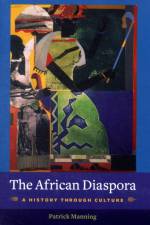
Patrick Manning refuses to divide the African diaspora into the experiences of separate regions and nations. Instead, he follows the multiple routes that brought Africans and people of African descent into contact with one another and with Europe, Asia, and the Americas. In weaving these stories together, Manning shows how the waters of the Atlantic Ocean, the Mediterranean Sea, and the Indian Ocean fueled dynamic interactions among black communities and cultures and how these patterns resembled those of a number of connected diasporas concurrently taking shape across the globe. Manning begins in 1400 and traces five central themes: the connections that enabled Africans to mutually identify and hold together as a global community; discourses on race; changes in economic circumstance; the character of family life; and the evolution of popular culture. His approach reveals links among seemingly disparate worlds. In the mid-nineteenth century, for example, slavery came under attack in North America, South America, southern Africa, West Africa, the Ottoman Empire, and India, with former slaves rising to positions of political prominence. Yet at the beginning of the twentieth century, the near-elimination of slavery brought new forms of discrimination that removed almost all blacks from government for half a century. Manning underscores the profound influence that the African diaspora had on world history, demonstrating the inextricable link between black migration and the rise of modernity, especially in regards to the processes of industrialization and urbanization. A remarkably inclusive and far-reaching work, The African Diaspora proves that the advent of modernity cannot be imaginatively or comprehensively engaged without taking the African peoples and the African continent as a whole into account.
An internationally renowned chemist, popular television personality, and bestselling author, Herve This heads the first laboratory devoted to molecular gastronomy the scientific exploration of cooking and eating. By testing recipes that have guided cooks for centuries, and the various dictums and maxims on which they depend, Herve This unites the head with the hand in order to defend and transform culinary practice.With this new book, Herve This's scientific project enters an exciting new phase. Considering the preparation of six bistro favorites hard-boiled egg with mayonnaise, simple consomme, leg of lamb with green beans, steak with French fries, lemon meringue pie, and chocolate mousse he isolates the exact chemical properties that tickle our senses and stimulate our appetites. More important, he connects the mind and the stomach, identifying methods of culinary construction that appeal to our memories, intelligence, and creativity. By showing that the creation of a meal is as satisfying as its consumption, Herve This recalibrates the balance between food and our imaginations. The result is a revolutionary perspective that will tempt even the most casual cooks to greater flights of experimentation.
America's independent films often seem to defy classification. Their strategies of storytelling and representation range from raw, no-budget projects to more polished releases of Hollywood's "e;specialty"e; divisions. Yet understanding American indies involves more than just considering films. Filmmakers, distributors, exhibitors, festivals, critics, and audiences all shape the art's identity, which is always understood in relation to the Hollywood mainstream.By locating the American indie film in the historical context of the "e;Sundance-Miramax"e; era (the mid-1980s to the end of the 2000s), Michael Z. Newman considers indie cinema as an alternative American film culture. His work isolates patterns of character and realism, formal play, and oppositionality and the functions of the festivals, art houses, and critical media promoting them. He also accounts for the power of audiences to identify indie films in distinction to mainstream Hollywood and to seek socially emblematic characters and playful form in their narratives. Analyzing films such as Welcome to the Dollhouse (1996), Lost in Translation (2003), Pulp Fiction (1994), and Juno (2007), along with the work of Nicole Holofcener, Jim Jarmusch, John Sayles, Steven Soderbergh, and the Coen brothers, Newman investigates the conventions that cast indies as culturally legitimate works of art. He binds these diverse works together within a cluster of distinct viewing strategies and invites a reevaluation of the difference of independent cinema and its relationship to class and taste culture.
"e;I sometimes think that if, as the result of an accident, I were to lose my knowledge of Japanese, there would not be much left for me. Japanese, which at first had no connection with my ancestors, my literary tastes, or my awareness of myself as a person, has become the central element of my life."e;In this eloquent and wholly absorbing memoir, the renowned scholar Donald Keene shares more than half a century of his extraordinary adventures as a student of Japan. Keene begins with an account of his bittersweet childhood in New York; then he describes his initial encounters with Asia and Europe and the way in which World War II complicated that experience. He captures the sights, scents, and sounds of Japan as they first enveloped him, and talks of the unique travels and well-known intellectuals who later shaped the contours of his academic career.Keene traces the movement of his passions with delicacy and subtlety, deftly weaving his love for Japan into a larger narrative about identity and home and the circumstances that led a Westerner to find solace in a country on the opposite side of the world. Chronicles of My Life is not only a fascinating tale of two cultures colliding, but also a thrilling account of the emotions and experiences that connect us all, regardless of our individual origins.
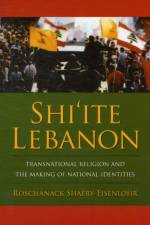
By recasting the relationship between religion and nationalism in the Middle East, Roschanack Shaery-Eisenlohr proposes a new framework for understanding Shi'ite politics in Lebanon. Her study draws on a variety of untapped sources, reconsidering not only the politics of the established leadership of Shi'ites but also institutional and popular activities of identity production. Shaery-Eisenlohr traces current Shi'ite politics of piety and authenticity to the coexistence formula in Lebanon and argues that engaging in the discourses of piety and coexistence is a precondition to cultural citizenship in Lebanon. As she demonstrates, debates over the nature of Christianity and Islam and Christian-Muslim dialogue are in fact intertwined with power struggles at the state level.Since the 1970s, debates in the transnational Shi'ite world have gradually linked Shi'ite piety with the support of the Palestinian cause. Iran's religious elite has backed this piety project in multiple ways, but in doing so it has assisted in the creation of a variety of Lebanese Shi'ite nationalisms with competing claims to religious and national authenticity. Shaery-Eisenlohr argues that these ties to Iran have in fact strengthened the position of Lebanese Shi'ites by providing, as is recognized, economic, military, and ideological support for Hizbullah, as well as by compelling Lebanese Shi'ites to foreground the Lebanese components of their identity more forcefully than ever before. Shaery-Eisenlohr challenges the belief that Shi'ite identity politics only serve to undermine the Lebanese national project. She also makes clear that the expression of Lebanese Shi'ite identity is a nationalist expression and an unintended result of Iranian efforts to influence the politics of Lebanon.
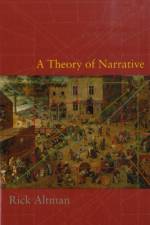
Narrative is a powerful element of human culture, storing and sharing the cherished parts of our personal memories and giving structure to our laws, entertainment, and history. We experience narrative in words, pictures, and film, yet regardless of how the tale is told, story remains independent from the media that makes it concrete. Narrative follows humans wherever they travel and adapts readily to new forms of communication. Constantly evolving and always up-to-date, narrative is a necessary strategy of human expression and a fundamental component of human identity.In order to understand human interaction, award-winning scholar Rick Altman launches a close study of narrative's nature, its variation in different contexts, and the method through which it makes meaning. Altman's approach breaks away from traditional forms of analysis, identifying three basic strategies: single-focus, dual-focus, and multiple-focus. Unpacking an intentionally diverse selection of texts, Altman demonstrates how these strategies function in context and illustrates their theoretical and practical applications in terms of textual analysis, literary and film history, social organization, religion, and politics. He employs inventive terminology and precise analytical methods throughout his groundbreaking work, making this volume ideal for teaching literary and film theory and for exploring the anatomy of narrative on a more general level.
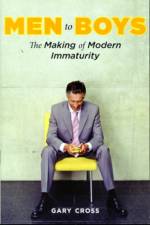
Adam Sandler movies, HBO's Entourage, and such magazines as Maxim and FHM all trade in and appeal to one character the modern boy-man. Addicted to video games, comic books, extreme sports, and dressing down, the boy-man would rather devote an afternoon to Grand Theft Auto than plan his next career move. He would rather prolong the hedonistic pleasures of youth than embrace the self-sacrificing demands of adulthood. When did maturity become the ultimate taboo? Men have gone from idolizing Cary Grant to aping Hugh Grant, shunning marriage and responsibility well into their twenties and thirties. Gary Cross, renowned cultural historian, identifies the boy-man and his habits, examining the attitudes and practices of three generations to make sense of this gradual but profound shift in American masculinity. Cross matches the rise of the American boy-man to trends in twentieth-century advertising, popular culture, and consumerism, and he locates the roots of our present crisis in the vague call for a new model of leadership that, ultimately, failed to offer a better concept of maturity.Cross does not blame the young or glorify the past. He finds that men of the "e;Greatest Generation"e; might have embraced their role as providers but were confused by the contradictions and expectations of modern fatherhood. Their uncertainty gave birth to the Beats and men who indulged in childhood hobbies and boyish sports. Rather than fashion a new manhood, baby-boomers held onto their youth and, when that was gone, embraced Viagra. Without mature role models to emulate or rebel against, Generation X turned to cynicism and sensual intensity, and the media fed on this longing, transforming a life stage into a highly desirable lifestyle. Arguing that contemporary American culture undermines both conservative ideals of male maturity and the liberal values of community and responsibility, Cross concludes with a proposal for a modern marriage of personal desire and ethical adulthood.
In the 1830s an Irishman named James F. O'Connell acquired a full-body tattoo while living as a castaway in the Pacific. The tattoo featured traditional patterns that, to native Pohnpeians, defined O'Connell's life; they made him wholly human. Yet upon traveling to New York, these markings singled him out as a freak. His tattoos frightened women and children, and ministers warned their congregations that viewing O'Connell's markings would cause the ink to transfer to the skin of their unborn children. In many ways, O'Connell's story exemplifies the unique history of the modern tattoo, which began in the Pacific and then spread throughout the world. No matter what form it has taken, the tattoo has always embodied social standing, aesthetics, ethics, culture, gender, and sexuality. Tattoos are personal and corporate, private and public. They mark the profane and the sacred, the extravagant and the essential, the playful and the political. From the Pacific islands to the world at large, tattoos are a symbolic and often provocative form of expression and communication.Tattooing the World is the first book on tattoo literature and culture. Juniper Ellis traces the origins and significance of modern tattoo in the works of nineteenth- and twentieth-century artists, travelers, missionaries, scientists, and such writers as Herman Melville, Margaret Mead, Albert Wendt, and Sia Figiel. Traditional Pacific tattoo patterns are formed using an array of well-defined motifs. They place the individual in a particular community and often convey genealogy and ideas of the sacred. However, outside of the Pacific, those who wear and view tattoos determine their meaning and interpret their design differently. Reading indigenous historiography alongside Western travelogue and other writings, Ellis paints a surprising portrait of how culture has been etched both on the human form and on a body of literature.
Philosophical arguments for and against the existence of God have been crucial to Euro-American and South Asian philosophers for over a millennium. Critical to the history of philosophy in India, were the centuries-long arguments between Buddhist and Hindu philosophers about the existence of a God-like being called Isvara and the religious epistemology used to support them. By focusing on the work of Ratnakirti, one of the last great Buddhist philosophers of India, and his arguments against his Hindu opponents, Parimal G. Patil illuminates South Asian intellectual practices and the nature of philosophy during the final phase of Buddhism in India.Based at the famous university of Vikramasila, Ratnakirti brought the full range of Buddhist philosophical resources to bear on his critique of his Hindu opponents' cosmological/design argument. At stake in his critique was nothing less than the nature of inferential reasoning, the metaphysics of epistemology, and the relevance of philosophy to the practice of religion. In developing a proper comparative approach to the philosophy of religion, Patil transcends the disciplinary boundaries of religious studies, philosophy, and South Asian studies and applies the remarkable work of philosophers like Ratnakirti to contemporary issues in philosophy and religion.
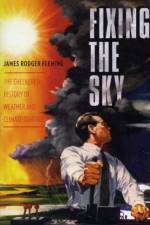
As alarm over global warming spreads, a radical idea is gaining momentum. Forget cuts in greenhouse gas emissions, some scientists argue. Instead, bounce sunlight back into space by pumping reflective nanoparticles into the atmosphere. Launch mirrors into orbit around the Earth. Make clouds thicker and brighter to create a "e;planetary thermostat."e;These ideas might sound like science fiction, but in fact they are part of a very old story. For more than a century, scientists, soldiers, and charlatans have tried to manipulate weather and climate, and like them, today's climate engineers wildly exaggerate what is possible. Scarcely considering the political, military, and ethical implications of managing the world's climate, these individuals hatch schemes with potential consequences that far outweigh anything their predecessors might have faced.Showing what can happen when fixing the sky becomes a dangerous experiment in pseudoscience, James Rodger Fleming traces the tragicomic history of the rainmakers, rain fakers, weather warriors, and climate engineers who have been both full of ideas and full of themselves. Weaving together stories from elite science, cutting-edge technology, and popular culture, Fleming examines issues of health and navigation in the 1830s, drought in the 1890s, aircraft safety in the 1930s, and world conflict since the 1940s. Killer hurricanes, ozone depletion, and global warming fuel the fantasies of today. Based on archival and primary research, Fleming's original story speaks to anyone who has a stake in sustaining the planet.
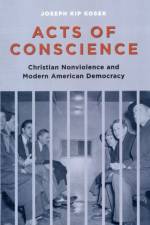
In response to the massive bloodshed that defined the twentieth century, American religious radicals developed a modern form of nonviolent protest, one that combined Christian principles with new uses of mass media. Greatly influenced by the ideas of Mohandas Gandhi, these "e;acts of conscience"e; included sit-ins, boycotts, labor strikes, and conscientious objection to war. Beginning with World War I and ending with the ascendance of Martin Luther King Jr., Joseph Kip Kosek traces the impact of A. J. Muste, Richard Gregg, and other radical Christian pacifists on American democratic theory and practice. These dissenters found little hope in the secular ideologies of Wilsonian Progressivism, revolutionary Marxism, and Cold War liberalism, all of which embraced organized killing at one time or another. The example of Jesus, they believed, demonstrated the immorality and futility of such violence under any circumstance and for any cause. Yet the theories of Christian nonviolence are anything but fixed. For decades, followers have actively reinterpreted the nonviolent tradition, keeping pace with developments in politics, technology, and culture. Tracing the rise of militant nonviolence across a century of industrial conflict, imperialism, racial terror, and international warfare, Kosek recovers radical Christians' remarkable stance against the use of deadly force, even during World War II and other seemingly just causes. His research sheds new light on an interracial and transnational movement that posed a fundamental, and still relevant, challenge to the American political and religious mainstream.
Contemporary philosopher-analytic as well as continental tend to feel uneasy about Ernst Tugendhat, who, though he positions himself in the analytic field, poses questions in the Heideggerian style. Tugendhat was one of Martin Heidegger's last pupils and his least obedient, pursuing a new and controversial critical technique. Tugendhat took Heidegger's destruction of Being as presence and developed it in analytic philosophy, more specifically in semantics. Only formal semantics, according to Tugendhat, could answer the questions left open by Heidegger.Yet in doing this, Tugendhat discovered the latent "e;hermeneutic nature of analytic philosophy"e; its post-metaphysical dimension-in which "e;there are no facts, but only true propositions."e; What Tugendhat seeks to answer is this: What is the meaning of thought following the linguistic turn? Because of the rift between analytic and continental philosophers, very few studies have been written on Tugendhat, and he has been omitted altogether from several histories of philosophy. Now that these two schools have begun to reconcile, Tugendhat has become an example of a philosopher who, in the words of Richard Rorty, "e;built bridges between continents and between centuries."e;Tugendhat is known more for his philosophical turn than for his phenomenological studies or for his position within analytic philosophy, and this creates some confusion regarding his philosophical propensities. Is Tugendhat analytic or continental? Is he a follower of Wittgenstein or Heidegger? Does he belong in the culture of analysis or in that of tradition? Santiago Zabala presents Tugendhat as an example of merged horizons, promoting a philosophical historiography that is concerned more with dialogue and less with classification. In doing so, he places us squarely within a dialogic culture of the future and proves that any such labels impoverish philosophical research.
Individual donors play a critical role in financing congressional elections, accounting for more than half of all money raised in House campaigns. But significant donors (defined here as those contributing more than $200) are the least understood participants in the system. Defenders assert that contributing money to campaigns is part of a broader pattern of civic involvement and is free speech that gives a voice to various interests. Detractors argue that these contributions are undemocratic, enabling wealthy citizens to overwhelm the voices of the many and to promote narrow business and policy interests. These divergent assessments were raised in connection with the Bipartisan Campaign Finance Reform Act of 2002 and continue to characterize the debate over campaign finance reform.So who really contributes and why? How much and to how many candidates? What are the strategies used by political campaigns to elicit contributions and how do the views of significant donors impact the campaign-finance system? What do donors think about campaign-finance reform? This book investigates these vital questions, describing the influence of congressional financiers in American politics.
Since its publication in the late 1950s, Mountains Painted with Turmeric has struck a chord in the hearts of hundreds of thousands of Nepali readers. Set in the hills of far eastern Nepal, the novel offers readers a window into the lives of the people by depicting in subtle detail the stark realities of village life.Carefully translated from the original text, Mountains Painted with Turmeric tells the story of a peasant farmer named Dhane (which means, ironically, "e;wealthy one"e;) who is struggling to provide for his wife and son and arrange the marriage of his beautiful younger sister. Unable to keep up with the financial demands of the "e;big men"e; who control his village, Dhane and his family suffer one calamity after another, and a series of quarrels with fellow villagers forces them into exile. In haunting prose, Lil Bahadur Chettri portrays the dukha, or suffering and sorrow, endured by ordinary peasants; the exploitation of the poor by the rich and powerful; and the social conservatism that twists a community into punishing a woman for being the victim of a crime. Chettri describes the impoverishment, dispossession, and banishment of Dhane's family to expose profound divisions between those who prosper and those who are slowly stripped of their meager possessions. Yet he also conveys the warmth and intimacy of village society, from which Dhane and his family are ultimately excluded.
Progressive governments in poor countries fear that if they undertake measures to enhance real wages and working conditions, rising labor costs would cause wealthier countries to import from and invest elsewhere. Yet if the world trading system were designed to facilitate or even reward measures to promote labor standards, poor countries could undertake them without fear.In this book, Christian Barry and Sanjay G. Reddy propose ways in which the international trading system can support poor countries in promoting the well-being of their peoples. Reforms to the trading system can lessen the collective-action problem among poor countries, increasing their freedom to pursue policy that better serves the interests of their people. Incorporating the right kind of linkage between trading opportunities and the promotion of labor standards could empower countries, allowing them greater effective sovereignty and enabling them to improve the circumstances of the less advantaged. Barry and Reddy demonstrate how linkage can be made acceptable to all players, and they carefully defend these ideas against those who might initially disagree. Their volume is accessible to general readers but draws on sophisticated economic and philosophical arguments and includes responses from leading labor activists, economists, and philosophers, including Kyle Bagwell, Robert Goodin, Rohini Hensman, and Roberto Mangabeira Unger.
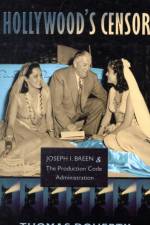
From 1934 to 1954 Joseph I. Breen, a media-savvy Victorian Irishman, reigned over the Production Code Administration, the Hollywood office tasked with censoring the American screen. Though little known outside the ranks of the studio system, this former journalist and public relations agent was one of the most powerful men in the motion picture industry. As enforcer of the puritanical Production Code, Breen dictated "e;final cut"e; over more movies than anyone in the history of American cinema. His editorial decisions profoundly influenced the images and values projected by Hollywood during the Great Depression, World War II, and the Cold War. Cultural historian Thomas Doherty tells the absorbing story of Breen's ascent to power and the widespread effects of his reign. Breen vetted story lines, blue-penciled dialogue, and excised footage (a process that came to be known as "e;Breening"e;) to fit the demands of his strict moral framework. Empowered by industry insiders and millions of like-minded Catholics who supported his missionary zeal, Breen strove to protect innocent souls from the temptations beckoning from the motion picture screen. There were few elements of cinematic production beyond Breen's reach he oversaw the editing of A-list feature films, low-budget B movies, short subjects, previews of coming attractions, and even cartoons. Populated by a colorful cast of characters, including Catholic priests, Jewish moguls, visionary auteurs, hardnosed journalists, and bluenose agitators, Doherty's insightful, behind-the-scenes portrait brings a tumultuous era and an individual both feared and admired to vivid life.
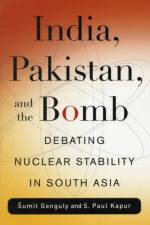
In May 1998, India and Pakistan put to rest years of speculation as to whether they possessed nuclear technology and openly tested their weapons. Some believed nuclearization would stabilize South Asia; others prophesized disaster. Authors of two of the most comprehensive books on South Asia's new nuclear era, Sumit Ganguly and S. Paul Kapur, offer competing theories on the transformation of the region and what these patterns mean for the world's next proliferators. Ganguly begins with an outcome-based approach emphasizing the results of militarized conflict. In his opinion, nuclear weapons have prevented Indo-Pakistani disputes from blossoming into full-scale war. Kapur counters with a process-based approach stressing the specific pathways that lead to conflict and escalation. From his perspective, nuclear weapons have fueled a violent cycle of Pakistani provocation and Indian response, giving rise to a number of crises that might easily have spun into chaos. Kapur thus believes nuclear weapons have been a destabilizing force in South Asia and could similarly affect other parts of the world. With these two major interpretations, Ganguly and Kapur tackle all sides of an urgent issue that has profound regional and global consequences. Sure to spark discussion and debate, India, Pakistan, and the Bomb thoroughly maps the potential impact of nuclear proliferation.
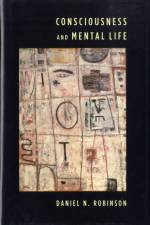
In recent decades, issues that reside at the center of philosophical and psychological inquiry have been absorbed into a scientific framework variously identified as "e;brain science,"e; "e;cognitive science,"e; and "e;cognitive neuroscience."e; Scholars have heralded this development as revolutionary, but a revolution implies an existing method has been overturned in favor of something new. What long-held theories have been abandoned or significantly modified in light of cognitive neuroscience? Consciousness and Mental Life questions our present approach to the study of consciousness and the way modern discoveries either mirror or contradict understandings reached in the centuries leading up to our own. Daniel N. Robinson does not wage an attack on the emerging discipline of cognitive science. Rather, he provides the necessary historical context to properly evaluate the relationship between issues of consciousness and neuroscience and their evolution over time. Robinson begins with Aristotle and the ancient Greeks and continues through to Rene Descartes, David Hume, William James, Daniel Dennett, John Searle, Richard Rorty, Hilary Putnam, and Derek Parfit. Approaching the issue from both a philosophical and a psychological perspective, Robinson identifies what makes the study of consciousness so problematic and asks whether cognitive neuroscience can truly reveal the origins of mental events, emotions, and preference, or if these occurrences are better understood by studying the whole person, not just the brain. Well-reasoned and thoroughly argued, Consciousness and Mental Life corrects many claims made about the success of brain science and provides a valuable historical context for the study of human consciousness.
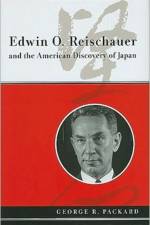
In 1961, President Kennedy named Edwin O. Reischauer the U.S. Ambassador to Japan. Already deeply intimate with the country, Reischauer hoped to establish a more equal partnership with Japan, which had long been maligned in the American imagination. Reischauer pushed his fellow citizens to abandon caricature and stereotype and recognize Japan as a peace-loving democracy. Though his efforts were often condemned for being "e;too soft,"e; the immensity of his influence (and the truth of his arguments) can be felt today. Having worked as Reischauer's special assistant in Tokyo, George R. Packard writes the definitive and first biography of this rare, charismatic talent. Reischauer reset the balance between two powerful nations. During World War II, he analyzed intelligence and trained American codebreakers in Japanese. He helped steer Japan toward democracy and then wrote its definitive English-language history. Reischauer's scholarship supplied the foundations for future East Asian disciplines, and his prescient research foretold America's missteps with China and involvement in Vietnam. At the time of his death in 1990, Reischauer warned the U.S. against adopting an attitude toward Asia that was too narrow and self-centered. India, Pakistan, and North Korea are now nuclear powers, and Reischauer's political brilliance has become more necessary and trenchant than ever.
In October of 2002, a series of sniper attacks paralyzed the Washington Beltway, turning normally placid gas stations, parking lots, restaurants, and school grounds into chaotic killing fields. After the spree, ten people were dead and several others wounded. The perpetrators were forty-one-year-old John Allen Muhammad and his seventeen-year-old protege, Lee Boyd Malvo. Called in by the judge to serve on Malvo's defense team, social worker Carmeta Albarus was instructed by the court to uncover any information that might help mitigate the death sentence the teen faced. Albarus met with Malvo numerous times and repeatedly traveled back to his homeland of Jamaica, as well as to Antigua, to interview his parents, family members, teachers, and friends. What she uncovered was the story of a once promising, intelligent young man, whose repeated abuse and abandonment left him detached from his biological parents and desperate for guidance and support. In search of a father figure, Malvo instead found John Muhammad, a veteran of the first Gulf War who intentionally shaped his protege through a ruthlessly efficient campaign of brainwashing, sniper training, and race hatred, turning the susceptible teen into an angry, raging, and dissociated killer with no empathy for his victims.In this intimate and carefully documented account, Albarus details the nature of Malvo's tragic attachment to his perceived "e;hero father,"e; his indoctrination, and his subsequent dissociation. She recounts her role in helping to extricate Malvo from the psychological clutches of Muhammad, which led to a dramatic courtroom confrontation with the man who manipulated and exploited him. Psychologist Jonathan H. Mack identifies and analyzes the underlying clinical psychological and behavioral processes that led to Malvo's dissociation and turn toward serial violence. With this tragic tale, the authors emphasize the importance of parental attachment and the need for positive and loving relationships during the critical years of early childhood development. By closely examining the impact of Lee Boyd Malvo's childhood on his later development, they reach out to parents, social workers, and the community for greater awareness and prevention.
Practitioners who work with clients at the end of their lives face difficult decisions concerning the client's self-determination, the kind of death he or she will have, and the prolongation of life. They must also remain sensitive to the beliefs and needs of family members and the legal, ethical, and spiritual ramifications of the client's death. Featuring twenty-three decision cases based on interviews with professional social workers, this unique volume allows students to wrestle with the often incomplete and conflicting information, ethical issues, and time constraints of actual cases. Instead of offering easy solutions, this book provides detailed accounts that provoke stimulating debates among students, enabling them to confront their own responses, beliefs, and uncertainties to hone their critical thinking and decision making skills for professional practice.*Please note: Teaching Notes for this volume will be available from Electronic Hallway in Spring 2010.To access the Teaching Notes, you must first become a member of the Electronic Hallway. The main Electronic Hallway web page is at https://hallway.org/index.php. To join, click Become a Hallway Member in the Get Involved category or point your browser directly to https://hallway.org/involved/join.php and provide the required information. After your instructor status has been confirmed, you will receive an e-mail granting access to the Electronic Hallway. Once logged on to Electronic Hallway as a member, click Case Search in the Cases and Resources category on themain web page. Enter "e;death, dying, bereavement"e; (without the quotation marks) in the search box, select "e;all of the words"e; in the drop down menu, and click Submit. The search process will generate a list of Teaching Notes for cases from Dying, Death, and Bereavement in Social Work Practice: Decision Cases for Advanced Practice.
Gary Steiner argues that ethologists and philosophers in the analytic and continental traditions have largely failed to advance an adequate explanation of animal behavior. Critically engaging the positions of Marc Hauser, Daniel Dennett, Donald Davidson, John Searle, Martin Heidegger, and Hans-Georg Gadamer, among others, Steiner shows how the Western philosophical tradition has forced animals into human experiential categories in order to make sense of their cognitive abilities and moral status and how desperately we need a new approach to animal rights. Steiner rejects the traditional assumption that a lack of formal rationality confers an inferior moral status on animals vis-a-vis human beings. Instead, he offers an associationist view of animal cognition in which animals grasp and adapt to their environments without employing concepts or intentionality. Steiner challenges the standard assumption of liberal individualism according to which humans have no obligations of justice toward animals. Instead, he advocates a "e;cosmic holism"e; that attributes a moral status to animals equivalent to that of people. Arguing for a relationship of justice between humans and nature, Steiner emphasizes our kinship with animals and the fundamental moral obligations entailed by this kinship.
Valentinus was a popular, influential, and controversial early Christian teacher. His school flourished in the second and third centuries C.E. Yet because his followers ascribed the creation of the visible world not to a supreme God but to an inferior and ignorant Creator-God, they were from early on accused of heresy, and rumors were spread of their immorality and sorcery.Beyond Gnosticism suggests that scholars approach Valentinians as an early Christian group rather than as a representative of ancient "e;Gnosticism"e;-a term notoriously difficult to define. The study shows that Valentinian myths of origin are filled with references to lifestyle (such as the control of emotions), the Christian community, and society, providing students with ethical instruction and new insights into their position in the world. While scholars have mapped the religio-historical and philosophical backgrounds of Valentinian myth, they have yet to address the significance of these mythmaking practices or emphasize the practical consequences of Valentinians' theological views. In this groundbreaking study, Ismo Dunderberg provides a comprehensive portrait of a group hounded by other Christians after Christianity gained a privileged position in the Roman Empire.Valentinians displayed a keen interest in mythmaking and the interpretation of myths, spinning complex tales about the origin of humans and the world. As this book argues, however, Valentinian Christians did not teach "e;myth for myth's sake."e; Rather, myth and practice were closely intertwined. After a brief introduction to the members of the school of Valentinus and the texts they left behind, Dunderberg focuses on Valentinus's interpretation of the biblical creation myth, in which the theologian affirmed humankind's original immortality as a present, not lost quality and placed a special emphasis on the "e;frank speech"e; afforded to Adam by the supreme God. Much like ancient philosophers, Valentinus believed that the divine Spirit sustained the entire cosmic chain and saw evil as originating from conspicuous "e;matter."e; Dunderberg then turns to other instances of Valentinian mythmaking dominated by ethical concerns. For example, the analysis and therapy of emotions occupy a prominent place in different versions of the myth of Wisdom's fall, proving that Valentinians, like other educated early Christians, saw Christ as the healer of emotions. Dunderberg also discusses the Tripartite Tractate, the most extensive account to date of Valentinian theology, and shows how Valentinians used cosmic myth to symbolize the persecution of the church in the Roman Empire and to create a separate Christian identity in opposition to the Greeks and the Jews.
Juggling Identities is an extensive ethnography of the crypto-Jews who live deep within the Hispanic communities of the American Southwest. Critiquing scholars who challenge the cultural authenticity of these individuals, Seth D. Kunin builds a solid link between the crypto-Jews of New Mexico and their Spanish ancestors who secretly maintained their Jewish identity after converting to Catholicism, offering the strongest evidence yet of their ethnic and religious origins. Kunin adopts a unique approach to the lives of modern crypto-Jews, concentrating primarily on their understanding of Jewish tradition and the meaning they ascribe to ritual. He illuminates the complexity of this community, in which individuals and groups perform the same practice in diverse ways. Kunin supplements his ethnographic research with broader theories concerning the nature of identity and memory, which is especially applicable to crypto-Jews, whose culture resides mainly in memory. Kunin's work has wider implications, not only for other forms of crypto-Judaism (such as that found in the former Soviet Union) but also for the study of Judaism's fluid nature, which helps adherents adapt to new circumstances and knowledge. Kunin draws fascinating comparisons between the intricate ancestry of crypto-Jews and those of other ethnic communities living in the United States.
"e;This is one of the few books on Montaigne that fuses analytical skill with humane awareness of why Montaigne matters."e; Harold Bloom, Sterling Professor of Humanities, Yale University"e;In this exhilarating and learned book on Montaigne's essays, Lawrence D. Kritzman contemporizes the great writer. Reading him from today's deconstructive America, Kritzman discovers Montaigne always already deep into a dialogue with Jacques Derrida and psychoanalysis. One cannot but admire this fabulous act of translation."e; Helene Cixous"e;Throughout his career, Lawrence D. Kritzman has demonstrated an intimate knowledge of Montaigne's essays and an engagement with French philosophy and critical theory. The Fabulous Imagination sheds precious new light on one of the founders of modern individualism and on his crucial quest for self-knowledge."e; Jean Starobinski, professor emeritus of French literature, University of GenevaMichel de Montaigne's (1533-1592) Essais was a profound study of human subjectivity. More than three hundred years before the advent of psychoanalysis, Montaigne embarked on a remarkable quest to see and imagine the self from a variety of vantages. Through the questions How shall I live? How can I know myself? he explored the significance of monsters, nightmares, and traumatic memories; the fear of impotence; the fragility of gender; and the act of anticipating and coping with death. In this book, Lawrence D. Kritzman traces Montaigne's development of the Western concept of the self. For Montaigne, imagination lies at the core of an internal universe that influences both the body and the mind. Imagination is essential to human experience. Although Montaigne recognized that the imagination can confuse the individual, "e;the fabulous imagination"e; can be curative, enabling the mind's "e;I"e; to sustain itself in the face of hardship. Kritzman begins with Montaigne's study of the fragility of gender and its relationship to the peripatetic movement of a fabulous imagination. He then follows with the essayist's examination of the act of mourning and the power of the imagination to overcome the fear of death. Kritzman concludes with Montaigne's views on philosophy, experience, and the connection between self-portraiture, ethics, and oblivion. His reading demonstrates that the mind's I, as Montaigne envisioned it, sees by imagining that which is not visible, thus offering an alternative to the logical positivism of our age.
By revisiting the past hundred years of shared Palestinian and Jewish-Israeli history, Baruch Kimmerling reveals surprising relations of influence between a stateless indigenous society and the settler-immigrants who would later form the state of Israel. Shattering our assumptions about these two seemingly irreconcilable cultures, Kimmerling composes a sophisticated portrait of one side's behavior and characteristics and the way in which they irrevocably shaped those of the other.Kimmerling focuses on the clashes, tensions, and complementarities that link Jewish, Palestinian, and Israeli identities. He explores the phenomena of reciprocal relationships between Jewish and Arab communities in mandatory Palestine, relations between state and society in Israel, patterns of militarism, the problems of jurisdiction in an immigrant-settler society, and the ongoing struggle of Israel to achieve legitimacy as both a Jewish and a democratic state. By merging Israeli and Jewish studies with a vast body of scholarship on Palestinians and the Middle East, Kimmerling introduces a unique conceptual framework for analyzing the cultural, political, and material overlap of both societies. A must read for those concerned with Israel and the relations between Jews and Arabs, Clash of Identities is a provocative exploration of the ever-evolving, always-contending identities available to Israelis and Palestinians and the fascinating contexts in which they take form.
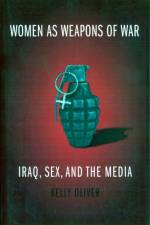
Ever since Eve tempted Adam with her apple, women have been regarded as a corrupting and destructive force. The very idea that women can be used as interrogation tools, as evidenced in the infamous Abu Ghraib torture photos, plays on age-old fears of women as sexually threatening weapons, and therefore the literal explosion of women onto the war scene should come as no surprise. From the female soldiers involved in Abu Ghraib to Palestinian women suicide bombers, women and their bodies have become powerful weapons in the Afghanistan and Iraq wars. In Women as Weapons of War, Kelly Oliver reveals how the media and the administration frequently use metaphors of weaponry to describe women and female sexuality and forge a deliberate link between notions of vulnerability and images of violence. Focusing specifically on the U.S. campaigns in Afghanistan and Iraq, Oliver analyzes contemporary discourse surrounding women, sex, and gender and the use of women to justify America's decision to go to war. For example, the administration's call to liberate "e;women of cover,"e; suggesting a woman's right to bare arms is a sign of freedom and progress. Oliver also considers what forms of cultural meaning, or lack of meaning, could cause both the guiltlessness demonstrated by female soldiers at Abu Ghraib and the profound commitment to death made by suicide bombers. She examines the pleasure taken in violence and the passion for death exhibited by these women and what kind of contexts created them. In conclusion, Oliver diagnoses our cultural fascination with sex, violence, and death and its relationship with live news coverage and embedded reporting, which naturalizes horrific events and stymies critical reflection. This process, she argues, further compromises the borders between fantasy and reality, fueling a kind of paranoid patriotism that results in extreme forms of violence.
Jews have been a religious and cultural presence in America since the colonial era, and the community of Jews in the United States today-some six million people-continues to make a significant contribution to the American religious landscape. Emphasizing developments in American Judaism in the last quarter century among active participants in Jewish worship, this book provides both a look back into the 350-year history of Judaic life and a well-crafted portrait of a multifaceted tradition today. Combining extensive research into synagogue archival records and secondary sources as well as interviews and observations of worship services at more than a hundred Jewish congregations across the country, Raphael's study distinguishes itself as both a history of the Judaic tradition and a witness to the vitality and variety of contemporary American Judaic life. Beginning with a chapter on beliefs, festivals, and life-cycle events, both traditional and non-traditional, and an explanation of the enormous variation in practice, Raphael then explores Jewish history in America, from the arrival of the first Jews to the present, highlighting the emergence and development of the four branches: Orthodox, Conservative, Reconstructionist, and Reform. After documenting the considerable variety among the branches, the book addresses issues of some controversy, notably spirituality, conversion, homosexuality, Jewish education, synagogue architecture, and the relationship to Israel. Raphael turns next to a discussion of eight American Jews whose thoughts and/or activities made a huge impact on American Judaism. The final chapter focuses on the return to tradition in every branch of Judaism and examines prospects for the future.
Abonner på vårt nyhetsbrev og få rabatter og inspirasjon til din neste leseopplevelse.
Ved å abonnere godtar du vår personvernerklæring.