

























Gjør som tusenvis av andre bokelskere
Abonner på vårt nyhetsbrev og få rabatter og inspirasjon til din neste leseopplevelse.
Ved å abonnere godtar du vår personvernerklæring.Du kan når som helst melde deg av våre nyhetsbrev.

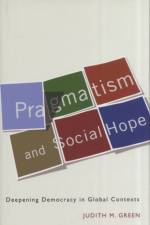
Since 9/11, citizens of all nations have been searching for a democratic public philosophy that provides practical and inspiring answers to the problems of the twenty-first century. Drawing on the wisdom of past and present pragmatist thinkers, Judith M. Green maps a contemporary form of citizenship that emphasizes participation and cooperation and reclaims the critical role of social movements and nongovernmental organizations. Starting with empowering processes of storytelling, truth and reconciliation, and collaborative vision-questing that allow individuals to give voice and new meaning to their loss, anxiety, and hope, Green frames cooperative inquiries to guide transformative actions. From this "e;second strand"e; of the democratic experience, leaders and participating citizens can help to shape a more desirable democratic future.In dialogue with Richard Rorty, Judith Butler, James Baldwin, Martin Luther King Jr., Elie Wiesel, Viktor Frankl, Cornel West, and other contemporary thinkers, Green defines the need for deeper understanding and fulfillment of the potentials of the democratic ideal. Drawing insights from Thomas Jefferson, Walt Whitman, William James, John Dewey, Jane Adams, and other earlier thinkers, Green frames a pragmatist understanding of emerging realities and possibilities, growing wells of shared truths, multifaceted histories, and mutually transformative experiences of citizenship. Employing examples from America's complex history and from recent world events, Green locates four sites for effective citizen activism: government at all levels, nonprofit organizations, issue-focused campaigns and social movements, and daily urban living. Green shows how citizens can revive social hope and deepen the democratic experience by drawing on their own knowledge and developing their capabilities through inclusive civic participation.
Premodern Buddhists are sometimes characterized as veritable "e;mind scientists"e; whose insights anticipate modern research on the brain and mind. Aiming to complicate this story, Dan Arnold confronts a significant obstacle to popular attempts at harmonizing classical Buddhist and modern scientific thought: since most Indian Buddhists held that the mental continuum is uninterrupted by death (its continuity is what Buddhists mean by "e;rebirth"e;), they would have no truck with the idea that everything about the mental can be explained in terms of brain events. Nevertheless, a predominant stream of Indian Buddhist thought, associated with the seventh-century thinker Dharmakirti, turns out to be vulnerable to arguments modern philosophers have leveled against physicalism.By characterizing the philosophical problems commonly faced by Dharmakirti and contemporary philosophers such as Jerry Fodor and Daniel Dennett, Arnold seeks to advance an understanding of both first-millennium Indian arguments and contemporary debates on the philosophy of mind. The issues center on what modern philosophers have called intentionality-the fact that the mind can be about (or represent or mean) other things. Tracing an account of intentionality through Kant, Wilfrid Sellars, and John McDowell, Arnold argues that intentionality cannot, in principle, be explained in causal terms.Elaborating some of Dharmakirti's central commitments (chiefly his apoha theory of meaning and his account of self-awareness), Arnold shows that despite his concern to refute physicalism, Dharmakirti's causal explanations of the mental mean that modern arguments from intentionality cut as much against his project as they do against physicalist philosophies of mind. This is evident in the arguments of some of Dharmakirti's contemporaneous Indian critics (proponents of the orthodox Brahmanical Mimasa school as well as fellow Buddhists from the Madhyamaka school of thought), whose critiques exemplify the same logic as modern arguments from intentionality. Elaborating these various strands of thought, Arnold shows that seemingly arcane arguments among first-millennium Indian thinkers can illuminate matters still very much at the heart of contemporary philosophy.
In this classic text, Peter Maguire follows America's legal relationship with war, both before and after the Nuremberg trials of the 1940s. Maguire argues that the precedents set by the trials were nothing less than revolutionary, and he traces the development of these new attitudes throughout American history. The text has been revised throughout, with a new preface and postscript discussing the George W. Bush administration's attempt to rewrite the laws of war after 9/11. Maguire connects these efforts to the decline in American power and reputation.Praise for the previous edition: "e;[An] intriguing historical analysis."e;-Harvard Law Review"e;Outstanding... impressive... a terrific book."e;-American Historical Review"e;A five-star accomplishment that will intrigue the reader and prove that, in history, truth is often more fascinating than fiction."e;-H. W. William Caming, former Nuremberg prosecutor"e;Perceptive."e;-Journal of American History"e;An important and fascinating study, marked by impressive research and moral passion."e;-Ronald Steel, University of Southern California"e;A 'must read' for all those interested in international criminal law, war crimes, and war crime trials."e;-J. C. Watkins Jr., University of Alabama"e;A sobering exploration of the hypocrisy and double standards that shape the laws of war. Maguire reveals the conflict between American ideology and American imperialism, the Faustian compromises made by our leaders during their elusive quest for justice."e;-Iris Chang, author of The Rape of Nanking"e;A pioneering account.... Law and War goes back to the middle of the nineteenth century to trace the history of modern war crimes, their shock value, and the efforts made to bring their perpetrators to account."e;-Thomas Keenan, Bardian
Climate Change is geared toward a variety of students and general readers who seek the real science behind global warming. Exquisitely illustrated, the text introduces the basic science underlying both the natural progress of climate change and the effect of human activity on the deteriorating health of our planet. Noted expert and author Edmond A. Mathez synthesizes the work of leading scholars in climatology and related fields, and he concludes with an extensive chapter on energy production, anchoring this volume in economic and technological realities and suggesting ways to reduce greenhouse-gas emissions.Climate Change opens with the climate system fundamentals: the workings of the atmosphere and ocean, their chemical interactions via the carbon cycle, and the scientific framework for understanding climate change. Mathez then brings the climate of the past to bear on our present predicament, highlighting the importance of paleoclimatology in understanding the current climate system. Subsequent chapters explore the changes already occurring around us and their implications for the future. In a special feature, Jason E. Smerdon, associate research scientist at Lamont-Doherty Earth Observatory of Columbia University, provides an innovative appendix for students.
This new work offers a clear and thorough account of the threats posed by bioterrorism from the perspective of biologists. The authors examine thirteen disease-causing agents, including those responsible for anthrax, the plague, smallpox, influenza, and SARS. Each chapter considers a particular pathogen from the standpoint of its history, molecular biology, pathology, clinical presentation, diagnosis, weaponization, and defenses. The book also examines strategies for making vaccines and protecting the population in a bioterror attack.
When Emperor Meiji began his rule, in 1867, Japan was a splintered empire, dominated by the shogun and the daimyos, who ruled over the country's more than 250 decentralized domains and who were, in the main, cut off from the outside world, staunchly antiforeign, and committed to the traditions of the past. Before long, the shogun surrendered to the emperor, a new constitution was adopted, and Japan emerged as a modern, industrialized state. Despite the length of his reign, little has been written about the strangely obscured figure of Meiji himself, the first emperor ever to meet a European. Most historians discuss the period that takes his name while barely mentioning the man, assuming that he had no real involvement in affairs of state. Even Japanese who believe Meiji to have been their nation's greatest ruler may have trouble recalling a single personal accomplishment that might account for such a glorious reputation. Renowned Japan scholar Donald Keene sifts the available evidence to present a rich portrait not only of Meiji but also of rapid and sometimes violent change during this pivotal period in Japan's history. In this vivid and engrossing biography, we move with the emperor through his early, traditional education; join in the formal processions that acquainted the young emperor with his country and its people; observe his behavior in court, his marriage, and his relationships with various consorts; and follow his maturation into a "e;Confucian"e; sovereign dedicated to simplicity, frugality, and hard work. Later, during Japan's wars with China and Russia, we witness Meiji's struggle to reconcile his personal commitment to peace and his nation's increasingly militarized experience of modernization. Emperor of Japan conveys in sparkling prose the complexity of the man and offers an unrivaled portrait of Japan in a period of unique interest.
The strong nexus between law and social work is beyond dispute: the law informs day-to-day social work practice and administration, and social workers are employed by the courts. Moreover, they work collaboratively with attorneys in legal aid offices, public defenders'offices, and other law enforcement settings, interviewing clients, preparing reports for use in court, interpreting social science information, and providing consultation on how best to approach client problems. This book addresses the relationship between the professions of social work and law and helps social workers develop the knowledge necessary to practice in a legal environment. The author focuses on how the law affects the day-to-day practice of social work; the creation, administration, and operation of social service agencies; and the ways in which social workers and attorneys collaborate to serve the public.
As a linguist, Julia Kristeva has pioneered a revolutionary theory of the sign in its relation to social and political emancipation; as a practicing psychoanalyst, she has produced work on the nature of the human subject and sexuality, and on the "e;new maladies"e; of today's neurotic. The Portable Kristeva is the only fully comprehensive compilation of Kristeva's key writings. The second edition includes added material from Kristeva's most important works of the past five years, including The Sense and Non-Sense of Revolt, Intimate Revolt, and Hannah Arendt. Editor Kelly Oliver has also added new material to the introduction, summarizing Kristeva's latest intellectual endeavors and updating the bibliography.
The 1960s continue to be the subject of passionate debate and political controversy, a touchstone in struggles over the meaning of the American past and the direction of the American future. Amid the polemics and the myths, making sense of the Sixties and its legacies presents a challenge. This book is for all those who want to take it on. Because there are so many facets to this unique and transformative era, this volume offers multiple approaches and perspectives.The first section gives a lively narrative overview of the decade's major policies, events, and cultural changes. The second presents ten original interpretative essays from prominent historians about significant and controversial issues from the Vietnam War to the sexual revolution, followed by a concise encyclopedia articles organized alphabetically. This section could stand as a reference work in itself and serves to supplement the narrative. Subsequent sections include short topical essays, special subjects, a brief chronology, and finally an extensive annotated bibliography with ample information on books, films, and electronic resources for further exploration.With interesting facts, statistics, and comparisons presented in almanac style as well as the expertise of prominent scholars, The Columbia Guide to America in the 1960s is the most complete guide to an enduringly fascinating era.
Sources of Japanese Tradition is a best-selling classic, unrivaled for its wide selection of source readings on history, society, politics, education, philosophy, and religion in the Land of the Rising Sun. In this long-awaited second edition, the editors have revised or retranslated most of the texts in the original 1958 edition, and added a great many selections not included or translated before. They have also restructured volume 1 to span the period from the early Japanese chronicles to the end of the sixteenth century. New additions include:* readings on early and medieval Shinto and on the tea ceremony,* readings on state Buddhism and Chinese political thought influential in Japan, and * sections on women's education, medieval innovations in the uses of history, and laws and precepts of the medieval warrior houses. Together, the selections shed light on the development of Japanese civilization in its own terms, without reference to Western parallels, and will continue to assist generations of students and lay readers in understanding Japanese culture.
To the renowned psychoanalyst, philosopher, and linguist Julia Kristeva, Melanie Klein (1882-1960) was the most original innovator, male or female, in the psychoanalytic arena. Klein pioneered psychoanalytic practice with children and made major contributions to our understanding of both psychosis and autism. Along the way, she successfully introduced a new approach to the theory of the unconscious without abandoning the principles set forth by Freud. In her first biography of a fellow psychoanalyst, the prolific Kristeva considers Klein's life and intellectual development, weaving a narrative that covers the history of psychoanalysis and illuminates Kristeva's own life and work. Kristeva tells the remarkable story of Klein's life: an unhappy wife and mother who underwent analysis, and-without a medical or other advanced degree-became an analyst herself at the age of 40. In examining her work, Kristeva proposes that Klein's "e;break"e; with Freud was really an attempt to complete his theory of the unconscious. Kristeva addresses Klein's numerous critics, and, in doing so, bridges the wide gulf between the clinical and theoretical worlds of psychoanalysis. Klein is celebrated here as the first person to see the mother as the source of not only creativity, but of thought itself, and the first to consider the place of matricide in psychic development. As such, Klein is a seminal figure in the evolution of the provocative ideas about motherhood and the psyche for which Kristeva is most famous. Klein is thus, in a sense, a mother to Kristeva, making this book an account of the development of Kristeva's own thought as well as Klein's.
Frederick Douglass Opie deconstructs and compares the foodways of people of African descent throughout the Americas, interprets the health legacies of black culinary traditions, and explains the concept of soul itself, revealing soul food to be an amalgamation of West and Central African social and cultural influences as well as the adaptations blacks made to the conditions of slavery and freedom in the Americas.Sampling from travel accounts, periodicals, government reports on food and diet, and interviews with more than thirty people born before 1945, Opie reconstructs an interrelated history of Moorish influence on the Iberian Peninsula, the African slave trade, slavery in the Americas, the emergence of Jim Crow, the Great Migration, the Great Depression, and the Civil Rights and Black Power movements. His grassroots approach reveals the global origins of soul food, the forces that shaped its development, and the distinctive cultural collaborations that occurred among Africans, Asians, Europeans, and Americans throughout history. Opie shows how food can be an indicator of social position, a site of community building and cultural identity, and a juncture at which different cultural traditions can develop and impact the collective health of a community.
Judith Butler follows Edward Said's late suggestion that through a consideration of Palestinian dispossession in relation to Jewish diasporic traditions a new ethos can be forged for a one-state solution. Butler engages Jewish philosophical positions to articulate a critique of political Zionism and its practices of illegitimate state violence, nationalism, and state-sponsored racism. At the same time, she moves beyond communitarian frameworks, including Jewish ones, that fail to arrive at a radical democratic notion of political cohabitation. Butler engages thinkers such as Edward Said, Emmanuel Levinas, Hannah Arendt, Primo Levi, Martin Buber, Walter Benjamin, and Mahmoud Darwish as she articulates a new political ethic. In her view, it is as important to dispute Israel's claim to represent the Jewish people as it is to show that a narrowly Jewish framework cannot suffice as a basis for an ultimate critique of Zionism. She promotes an ethical position in which the obligations of cohabitation do not derive from cultural sameness but from the unchosen character of social plurality. Recovering the arguments of Jewish thinkers who offered criticisms of Zionism or whose work could be used for such a purpose, Butler disputes the specific charge of anti-Semitic self-hatred often leveled against Jewish critiques of Israel. Her political ethic relies on a vision of cohabitation that thinks anew about binationalism and exposes the limits of a communitarian framework to overcome the colonial legacy of Zionism. Her own engagements with Edward Said and Mahmoud Darwish form an important point of departure and conclusion for her engagement with some key forms of thought derived in part from Jewish resources, but always in relation to the non-Jew.Butler considers the rights of the dispossessed, the necessity of plural cohabitation, and the dangers of arbitrary state violence, showing how they can be extended to a critique of Zionism, even when that is not their explicit aim. She revisits and affirms Edward Said's late proposals for a one-state solution within the ethos of binationalism. Butler's startling suggestion: Jewish ethics not only demand a critique of Zionism, but must transcend its exclusive Jewishness in order to realize the ethical and political ideals of living together in radical democracy.
Inderjeet Parmar reveals the complex interrelations, shared mindsets, and collaborative efforts of influential public and private organizations in the building of American hegemony. Focusing on the involvement of the Ford, Rockefeller, and Carnegie foundations in U.S. foreign affairs, Parmar traces the transformation of America from an "e;isolationist"e; nation into the world's only superpower, all in the name of benevolent stewardship.Parmar begins in the 1920s with the establishment of these foundations and their system of top-down, elitist, scientific giving, which focused more on managing social, political, and economic change than on solving modern society's structural problems. Consulting rare documents and other archival materials, he recounts how the American intellectuals, academics, and policy makers affiliated with these organizations institutionalized such elitism, which then bled into the machinery of U.S. foreign policy and became regarded as the essence of modernity. America hoped to replace Britain in the role of global hegemon and created the necessary political, ideological, military, and institutional capacity to do so, yet far from being objective, the Ford, Rockefeller, and Carnegie foundations often advanced U.S. interests at the expense of other nations. Incorporating case studies of American philanthropy in Nigeria, Chile, and Indonesia, Parmar boldly exposes the knowledge networks underwriting American dominance in the twentieth century.
Contrary to an optimistic vision of a world "e;flattened"e; by the virtues of globalization, the sustainability and positive outcomes of economic and political homogenization are far from guaranteed. For better and for worse, globalization has become the most powerful force shaping the world's geopolitical landscape, whether it has meant integration or fragmentation, peace or war. The future partly depends on how new economic giants such as China, India, and others make use of their power. It also depends on how well Western democracies can preserve their tenuous hold on leadership, cohesion, and the pursuit of the common good.Offering the most comprehensive analysis of world politics to date, Laurent Cohen-Tanugi takes on globalization's cheerleaders and detractors, who, in their narrow focus, have failed to recognize the full extent to which globalization has become a geopolitical phenomenon. Offering an interpretative framework for thought and action, Cohen-Tanugi suggests how we should approach our new "e;multipolar"e; world a world that is anything but the balanced and harmonious system many welcomed as a desirable alternative to the "e;American Empire."e; Cohen-Tanugi's point is not that the major trends of economic globalization, technological revolution, regional integration, and democratic progress are no longer at work. His argument is that economic globalization exists in a complex dialectic with the traditional geopolitics it has, ironically, helped to revive. This tension has created an ambivalent world that requires democracies to operate in two realms: the realm of economic integration and multilateralism or peaceful, astrategic, "e;postmodern"e; internationalism and the more traditional, even regressive realm of confrontation between national and regional strategies of power fought against a background of terrorism, civil wars, and nuclear proliferation.
No nation in recent history has placed greater emphasis on the role of technology in planning and waging war than the United States. In World War II the wholesale mobilization of American science and technology culminated in the detonation of the atomic bomb. Competition with the Soviet Union during the Cold War, combined with the U.S. Navy's culture of distributed command and the rapid growth of information technology, spawned the concept of network-centric warfare. And America's post-Cold War conflicts in Iraq, the former Yugoslavia, and Afghanistan have highlighted America's edge.From the atom bomb to the spy satellites of the Cold War, the strategic limitations of the Vietnam War, and the technological triumphs of the Gulf war, Thomas G. Mahnken follows the development and integration of new technologies into the military and emphasizes their influence on the organization, mission, and culture of the armed services. In some cases, advancements in technology have forced different branches of the military to develop competing or superior weaponry, but more often than not the armed services have molded technology to suit their own purposes, remaining resilient in the face of technological challenges. Mahnken concludes with an examination of the reemergence of the traditional American way of war, which uses massive force to engage the enemy. Tying together six decades of debate concerning U.S. military affairs, he discusses how the armed forces might exploit the unique opportunities of the information revolution in the future.
In the summer of 1996, Ruth Ray, a gerontologist in her forties, befriended an eighty-two-year-old man suffering from Parkinson's. The two remained close until the end of his life, sharing stories and memories while building a deep relationship. Part memoir, part biography, Endnotes explores how people construct meaning through their interactions with others. With grace and wit, Ray situates her friend's past experiences and present relationships within the theories and literature of gerontology, providing a deeper understanding of autonomy at the end of life. She also delves into the complexities of sexuality and intimacy in old age, communication across disabilities and age groups, the disabling nature of nursing homes, and the trials of death and dying. Writing as both a woman and a gerontologist, Ray finds that the "e;quality of care"e; we provide for others requires not only an understanding of the relationships that have given a person's life meaning but also a willingness to accept and share deeply in the emotional process of physical and mental decline.
Founder of the Left Bank bookstore Shakespeare and Company and the first publisher of James Joyce's Ulysses, Sylvia Beach had a legendary facility for nurturing literary talent. In this first collection of her letters, we witness Beach's day-to-day dealings as bookseller and publisher to expatriate Paris. Friends and clients include Ernest Hemingway, Gertrude Stein, H. D., Ezra Pound, Janet Flanner, William Carlos Williams, F. Scott Fitzgerald, James Joyce, and Richard Wright. As librarian, publicist, publisher, and translator, Beach carved out a unique space for herself in English and French letters. This collection reveals Beach's charm and resourcefulness, sharing her negotiations with Marianne Moore to place Joyce's work in The Dial; her battle to curb the piracy of Ulysses in the United States; her struggle to keep Shakespeare and Company afloat during the Depression; and her complicated affair with the French bookstore owner Adrienne Monnier. These letters also recount Beach's childhood in New Jersey; her work in Serbia with the American Red Cross; her internment in a German prison camp; and her friendship with a new generation of expatriates in the 1950s and 1960s. Beach was the consummate American in Paris and a tireless champion of the avant-garde. Her warmth and wit made the Rue de l'Odeon the heart of modernist Paris.
National DNA databanks were initially established to catalogue the identities of violent criminals and sex offenders. However, since the mid-1990s, forensic DNA databanks have in some cases expanded to include people merely arrested, regardless of whether they've been charged or convicted of a crime. The public is largely unaware of these changes and the advances that biotechnology and forensic DNA science have made possible. Yet many citizens are beginning to realize that the unfettered collection of DNA profiles might compromise our basic freedoms and rights.Two leading authors on medical ethics, science policy, and civil liberties take a hard look at how the United States has balanced the use of DNA technology, particularly the use of DNA databanks in criminal justice, with the privacy rights of its citizenry. Krimsky and Simoncelli analyze the constitutional, ethical, and sociopolitical implications of expanded DNA collection in the United States and compare these findings to trends in the United Kingdom, Japan, Australia, Germany, and Italy. They explore many controversial topics, including the legal precedent for taking DNA from juveniles, the search for possible family members of suspects in DNA databases, the launch of "e;DNA dragnets"e; among local populations, and the warrantless acquisition by police of so-called abandoned DNA in the search for suspects. Most intriguing, Krimsky and Simoncelli explode the myth that DNA profiling is infallible, which has profound implications for criminal justice.
Since DNA has replaced blood as the medium through which we establish kinship, how do we determine with whom we are kin? Who counts among those we care for? The distinction between these categories is constantly in flux. How do we come to decide those we may kiss and those we may kill?Focusing on narratives of kinship as they are defined in contemporary film, literature, and news media, Frances Bartkowski discusses the impact of "e;stories of origin"e; on our regard for nonhuman species. She locates the role of "e;totems and taboos"e; in forming and re-forming kinship categories-groupings that enable us to tie the personal to the social-and explores the bestiary, among the oldest of literary forms. The bestiary is the realm in which we allegorize the place of humans and other species, a menagerie encompassing animals we know as well as human-animal chimeras and other beings that challenge the "e;natural"e; order of the world. Yet advances in reproductive technologies, the mapping of genomes, and the study of primates continually destabilize these categories and recast the dynamic between the natural and the cultural.Bartkowski highlights the arbitrariness of traditional kinship arrangements and asks us to rethink our notions of empathy and ethics. She shows how current dialogues concerning ethics and desire determine contemporary attitudes toward issues of care, and suggests a new framework for negotiating connection and conflict.
Angela Ki Che Leung's meticulous study begins with the classical annals of the imperial era, which contain the first descriptions of a feared and stigmatized disorder modern researchers now identify as leprosy. She then tracks the relationship between the disease and China's social and political spheres (theories of contagion prompted community and statewide efforts at segregation); religious traditions (Buddhism and Daoism ascribed redemptive meaning to those suffering from the disease), and evolving medical discourse (Chinese doctors have contested the disease's etiology for centuries). Leprosy even pops up in Chinese folklore, attributing the spread of the contagion to contact with immoral women.Leung next places the history of leprosy into a global context of colonialism, racial politics, and "e;imperial danger."e; A perceived global pandemic in the late nineteenth century seemed to confirm Westerners' fears that Chinese immigration threatened public health. Therefore battling to contain, if not eliminate, the disease became a central mission of the modernizing, state-building projects of the late Qing empire, the nationalist government of the first half of the twentieth century, and the People's Republic of China. Stamping out the curse of leprosy was the first step toward achieving "e;hygienic modernity"e; and erasing the cultural and economic backwardness associated with the disease. Leung's final move connects China's experience with leprosy to a larger history of public health and biomedical regimes of power, exploring the cultural and political implications of China's Sino-Western approach to the disease.
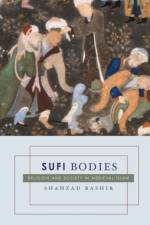
Between 1300 and 1500 C.E. a new form of Sufi Islam took hold among central Islamic peoples, joining individuals through widespread networks resembling today's prominent paths and orders. Understanding contemporary Sufism requires a sophisticated analysis of these formative years. Moving beyond a straight account of leaders and movements, Shahzad Bashir weaves a rich history around the depiction of bodily actions by Sufi masters and disciples, primarily in Sufi literature and Persian miniature paintings of the period.Focusing on the Persianate societies of Iran and Central Asia, Bashir explores medieval Sufis' conception of the human body as the primary shuttle between interior (batin) and exterior (zahir) realities. Drawing on literary, historical, and anthropological approaches to corporeality, he studies representations of Sufi bodies in three personal and communal arenas: religious activity in the form of ritual, asceticism, rules of etiquette, and a universal hierarchy of saints; the deep imprint of Persian poetic paradigms on the articulation of love, desire, and gender; and the reputation of Sufi masters for working miracles, which empowered them in all domains of social activity. Bashir's novel perspective illuminates complex relationships between body and soul, body and gender, body and society, and body and cosmos. It highlights love as an overarching, powerful emotion in the making of Sufi communities and situates the body as a critical concern in Sufi thought and practice. Bashir's work ultimately offers a new methodology for extracting historical information from religious narratives, especially those depicting extraordinary and miraculous events.
In his previous books Allen Guttmann has provided incisive perspectives on Avery Brundage's role in the Olympic movement and on the nature of modern sports. Now, in his latest book, the accomplished historian of sport turns his attention from the playing field to the grandstand. Sports Spectators, the first historical study of the subject from antiquity to today, is at once erudite and entertaining; comprehensive and succint.Guttmann first examines the history of sports spectators, starting with Ancient Greece and Rome. He then moves on to the Renaissance and traces three early sports -the tournament, archery, and early versions of football. The author then focuses on the emergenece of sports in post-Renaissance England, and discusses the curious spectacle of animal sports (bear- and bull-baiting and cockfighting), as well as the first appearance of combat sports such as sword fighting, stick fighting, and boxing. The book concludes its historical view by exploring contemporary baseball, football, rowing, tennis, and golf.From his chronological narrative, Guttmann shifts to detailed analysis of the economic, sociological, and psychological aspects of sports spectatorship. Who were, and are, sports spectators? What is their gender and social class? Have they normally been participants as well as fans? What are the political functions of sports-watching? What are the social dynamics of spectatorship?Guttmann provides fresh insights which will be useful to scholars and fascinating to everyone. Sports Spectators also looks at the dramatic transformations radio and television have made, and offers an incisive critique of today's sports-related violence, including the increasingly frequent incidences of spectator hooliganism. How violent (or peaceful) have spectators traditionally been? Has spectator violence increased or decreased?You needn't be a season ticket-holder to enjoy Sports Spectators. Allen Guttmann makes the history of fandom come alive for any reader interested in Western culture and what forms of entertainment reveal about us, as well as those concerned with the recent growth of spectator violence.
Originally published in 1978, From Ritual to Record was one of the first books to recognize the importance of sports as a lens on the fundamental structure of societies. In this reissue, Guttmann emphasizes the many ways that modern sports, dramatically different from the sports of previous eras, have profoundly shaped contemporary life.
Loren Ghiglione recounts the fascinating life and tragic suicide of Don Hollenbeck, the controversial newscaster who became a primary target of McCarthyism's smear tactics. Drawing on unsealed FBI records, private family correspondence, and interviews with Walter Cronkite, Mike Wallace, Charles Collingwood, Douglas Edwards, and more than one hundred other journalists, Ghiglione writes a balanced biography that cuts close to the bone of this complicated newsman and chronicles the stark consequences of the anti-Communist frenzy that seized America in the late 1940s and 1950s.Hollenbeck began his career at the Lincoln, Nebraska Journal (marrying the boss's daughter) before becoming an editor at William Randolph Hearst's rip-roaring Omaha Bee-News. He participated in the emerging field of photojournalism at the Associated Press; assisted in creating the innovative, ad-free PM newspaper in New York City; reported from the European theater for NBC radio during World War II; and anchored television newscasts at CBS during the era of Edward R. Murrow. Hollenbeck's pioneering, prize-winning radio program, CBS Views the Press (1947-1950), was a declaration of independence from a print medium that had dominated American newsmaking for close to 250 years. The program candidly criticized the prestigious New York Times, the Daily News (then the paper with the largest circulation in America), and Hearst's flagship Journal-American and popular morning tabloid Daily Mirror. For this honest work, Hollenbeck was attacked by conservative anti-Communists, especially Hearst columnist Jack O'Brian, and in 1954, plagued by depression, alcoholism, three failed marriages, and two network firings (and worried about a third), Hollenbeck took his own life. In his investigation of this amazing American character, Ghiglione reveals the workings of an industry that continues to fall victim to censorship and political manipulation. Separating myth from fact, CBS's Don Hollenbeck is the definitive portrait of a polarizing figure who became a symbol of America's tortured conscience.
In this comprehensive and insightful study, Christian K. Messenger contends that American writers have always created characters at play in the sure knowledge that to be active in sport in America is to be in touch with its people, their traditions, and their fantasy lives.This is the first inclusive critical study of sport in American fiction with chapters on individual authors such as Hawthorne, Lardner, Fitzgerald, Hemingway, and Faulkner, as well as studies of sport in the literature of the frontier and in boys' formula fiction. A work of literary criticism, Sport and the Spirit of Play in American Fiction also draws on the cultural history of American sport and leisure and on a century of American literature.
In her latest work of personal criticism, Nancy K. Miller tells the story of how a girl who grew up in the 1950s and got lost in the 1960s became a feminist critic in the 1970s. As in her previous books, Miller interweaves pieces of her autobiography with the memoirs of contemporaries in order to explore the unexpected ways that the stories of other people's lives give meaning to our own. The evolution she chronicles was lived by a generation of literary girls who came of age in the midst of profound social change and, buoyed by the energy of second-wave feminism, became writers, academics, and activists. Miller's recollections form one woman's installment in a collective memoir that is still unfolding, an intimate page of a group portrait in process.
Intrigued by a slide showing a woman breast-feeding a monkey, anthropologist Loretta A. Cormier spent fifteen months living among the Guaja, a foraging people in a remote area of Brazil. The result is this ethnographic study of the extraordinary relationship between the Guaja Indians and monkeys. While monkeys are a key food source for the Guaja, certain pet monkeys have a quasi-human status. Some infant monkeys are adopted and nurtured as human children while others are consumed in accordance with the "e;symbolic cannibalism"e; of their belief system.The apparent contradiction of this predator/protector relationship became the central theme of Cormier's research: How can monkeys be both eaten as food and nurtured as children? Her research reveals that monkeys play a vital role in Guaja society, ecology, economy, and religion. In Guaja animistic beliefs, all forms of plant and animal life-especially monkeys-have souls and are woven into a comprehensive kinship system. Therefore, all consumption can be considered a form of cannibalism.Cormier sets the stage for this enlightening study by examining the history of the Guaja and the ecological relationships between human and nonhuman primates in Amazonia. She also addresses the importance of monkeys in Guaja ecological adaptation as well as their role in the Guaja kinship system. Cormier then looks at animism and life classification among the Guaja and the role of pets, which provide a context for understanding "e;symbolic cannibalism"e; and how the Guaja relate to various forms of life in their natural and supernatural world. The book concludes with a discussion of the implications of ethnoprimatology beyond Amazonia, including Western perceptions of primates.
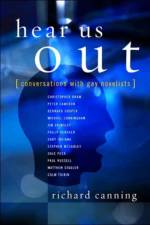
The author of the acclaimed Gay Fiction Speaks brings us new interviews with twelve prominent gay writers who have emerged in the last decade. Hear Us Out demonstrates how in recent decades the canon of gay fiction has developed, diversified, and expanded its audience into the mainstream. Readers will recognize names like Michael Cunningham, whose Pulitzer Prize-winning novel The Hours inspired the hit movie; and others like Christopher Bram, Bernard Cooper, Stephen McCauley, and Matthew Stadler. These accounts explore the vicissitudes of writing on gay male themes in fiction over the last thirty years-prejudices of the literary marketplace; social and political questions; the impact of AIDS; commonalities between gay male and lesbian fiction... and even some delectable bits of gossip.
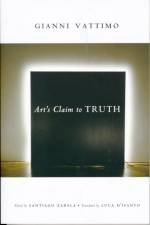
First collected in Italy in 1985, Art's Claim to Truth is considered by many philosophers to be one of Gianni Vattimo's most important works. Newly revised for English readers, the book begins with a challenge to Plato, Aristotle, Kant, and Hegel, who viewed art as a metaphysical aspect of reality rather than a futuristic anticipation of it. Following Martin Heidegger's interpretation of the history of philosophy, Vattimo outlines the existential ontological conditions of aesthetics, paying particular attention to the works of Kandinsky, which reaffirm the ontological implications of art.Vattimo then builds on Hans-Georg Gadamer's theory of aesthetics and provides an alternative to a rationalistic-positivistic criticism of art. This is the heart of Vattimo's argument, and with it he demonstrates how hermeneutical philosophy reaffirms art's ontological status and makes clear the importance of hermeneutics for aesthetic studies. In the book's final section, Vattimo articulates the consequences of reclaiming the ontological status of aesthetics without its metaphysical implications, holding Aristotle's concept of beauty responsible for the dissolution of metaphysics itself. In its direct engagement with the works of Gadamer, Heidegger, and Luigi Pareyson, Art's Claim to Truth offers a better understanding of the work of Vattimo and a deeper knowledge of ontology, hermeneutics, and the philosophical examination of truth.
Abonner på vårt nyhetsbrev og få rabatter og inspirasjon til din neste leseopplevelse.
Ved å abonnere godtar du vår personvernerklæring.