



















Gjør som tusenvis av andre bokelskere
Abonner på vårt nyhetsbrev og få rabatter og inspirasjon til din neste leseopplevelse.
Ved å abonnere godtar du vår personvernerklæring.Du kan når som helst melde deg av våre nyhetsbrev.

Analyzing a range of South African and West African films inspired by African and non-African literature, Lindiwe Dovey identifies a specific trend in contemporary African filmmaking-one in which filmmakers are using the embodied audiovisual medium of film to offer a critique of physical and psychological violence. Against a detailed history of the medium's savage introduction and exploitation by colonial powers in two very different African contexts, Dovey examines the complex ways in which African filmmakers are preserving, mediating, and critiquing their own cultures while seeking a united vision of the future. More than merely representing socio-cultural realities in Africa, these films engage with issues of colonialism and postcolonialism, "e;updating"e; both the history and the literature they adapt to address contemporary audiences in Africa and elsewhere. Through this deliberate and radical re-historicization of texts and realities, Dovey argues that African filmmakers have developed a method of filmmaking that is altogether distinct from European and American forms of adaptation.
This book is the first to provide strategies for effective advocacy and placement within the foster care and kinship care systems. It also takes a rare look at the dynamics of the foster and kinship relationship, not just among children and the agency workers and service providers who intervene on their behalf, but also between children and those who take in and care for them as permanency develops. Drawing on their experience interacting with and writing about the institution of foster care, Mitchell Rosenwald and Beth N. Riley have composed a unique text that helps practitioners, foster parents, and relative caregivers realize successful transitions for youth, especially considering the traumas these children may suffer both before and after placement.Advocating for a child's best interests must begin early and remain consistent throughout assignment and adjustment. For practitioners, Rosenwald and Riley emphasize the best techniques for assessing a family's capabilities and for guiding families through the challenges of foster care. Part one details the steps potential foster parents and kinship caregivers must take, with the assistance of practitioners, to prepare themselves for placement. Part two describes tactics for successful advocacy within the court system, social service agencies, schools, and the medical and mental health establishments. Part three describes how to lobby for change at the agency and legislative levels, as well as within a given community. The authors illustrate recommendations through real-life scenarios and devote an entire chapter to brokering positive partnerships among practitioners, families, and other teams working to protect and transition children.
The Beijing Olympics will be remembered as the largest, most expensive, and most widely watched event of the modern Olympic era. But did China present itself as a responsible host and an emergent international power, much like Japan during the 1964 Tokyo Games and South Korea during the 1988 Seoul Games? Or was Beijing in 2008 more like Berlin in 1936, when Germany took advantage of the global spotlight to promote its political ideology at home and abroad?Beyond the Final Score takes an original look at the 2008 Beijing games within the context of the politics of sport in Asia. Asian athletics are bound up with notions of national identity and nationalism, refracting political intent and the processes of globalization. Sporting events can generate diplomatic breakthroughs (as with the results of Nixon and Mao's "e;ping-pong diplomacy"e;) or breakdowns (as when an athlete defects to another country). For China, the Beijing Games introduced a liberalizing ethos that its authoritative regime could ignore only at its peril. Victor D. Cha former director of Asian affairs for the White House evaluates Beijing's contention with this pressure considering the intense scrutiny China already faced on issues of counterproliferation, global warming, and free trade. He begins with the arguments that tie Asian sport to international affairs and follows with an explanation of athletics as they relate to identity, diplomacy, and transformation. Enhanced by Cha's remarkable facility with the history and politics of sport, Beyond the Final Score is the definitive examination of the events both good and bad that took place during the Beijing Olympics.
Kim Yong shares his harrowing account of life in a labor camp a singularly despairing form of torture carried out by the secret state. Although it is known that gulags exist in North Korea, little information is available about their organization and conduct, for prisoners rarely escape both incarceration and the country alive. Long Road Home shares the remarkable story of one such survivor, a former military official who spent six years in a gulag and experienced firsthand the brutality of an unconscionable regime. As a lieutenant colonel in the North Korean army, Kim Yong enjoyed unprecedented privilege in a society that closely monitored its citizens. He owned an imported car and drove it freely throughout the country. He also encountered corruption at all levels, whether among party officials or Japanese trade partners, and took note of the illicit benefits that were awarded to some and cruelly denied to others. When accusations of treason stripped Kim Yong of his position, the loose distinction between those who prosper and those who suffer under Kim Jong-il became painfully clear. Kim Yong was thrown into a world of violence and terror, condemned to camp No. 14 in Hamkyeong province, North Korea's most notorious labor camp. As he worked a constant shift 2,400 feet underground, daylight became Kim's new luxury; as the months wore on, he became intimately acquainted with political prisoners, subhuman camp guards, and an apocalyptic famine that killed millions. After years of meticulous planning, and with the help of old friends, Kim escaped and came to the United States via China, Mongolia, and South Korea. Presented here for the first time in its entirety, his story not only testifies to the atrocities being committed behind North Korea's wall of silence but also illuminates the daily struggle to maintain dignity and integrity in the face of unbelievable hardship. Like the work of Solzhenitsyn, this rare portrait tells a story of resilience as it reveals the dark forms of oppression, torture, and ideological terror at work in our world today.
The Earth's climate is already warming due to increased concentrations of human-produced greenhouse gases in the atmosphere, and the specter of rising sea level is one of global warming's most far-reaching threats. Sea level will keep rising long after greenhouse gas emissions have ceased, because of the delay in penetration of surface warming to the ocean depths and because of the slow dissipation of excess atmospheric carbon dioxide. Adopting a long perspective that interprets sea level changes both underway and expected in the near future, Vivien Gornitz completes a highly relevant and necessary study of an unprecedented age in Earth's history.Gornitz consults past climate archives to help better anticipate future developments and prepare for them more effectively. She focuses on several understudied historical events, including the Paleocene-Eocene Thermal Anomaly, the Messinian salinity crisis, the rapid filling of the Black Sea (which may have inspired the story of Noah's flood), and the Storrega submarine slide, an incident possibly connected to a sea level occurrence roughly 8,000 years old. By examining dramatic variations in past sea level and climate, Gornitz concretizes the potential consequences of rapid, human-induced warming. She builds historical precedent for coastal hazards associated with a higher ocean level, such as increased damage from storm surge flooding, even if storm characteristics remain unchanged. Citing the examples of Rotterdam, London, New York City, and other forward-looking urban centers that are effectively preparing for higher sea level, Gornitz also delineates the difficult economic and political choices of curbing carbon emissions while underscoring, through past geological analysis, the urgent need to do so.
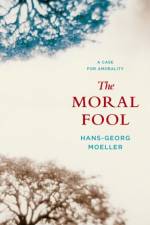
Justice, equality, and righteousness these are some of our greatest moral convictions. Yet in times of social conflict, morals can become rigid, making religious war, ethnic cleansing, and political purges possible. Morality, therefore, can be viewed as pathology-a rhetorical, psychological, and social tool that is used and abused as a weapon. An expert on Eastern philosophies and social systems theory, Hans-Georg Moeller questions the perceived goodness of morality and those who claim morality is inherently positive. Critiquing the ethical "e;fanaticism"e; of Western moralists, such as Immanuel Kant, Lawrence Kohlberg, John Rawls, and the utilitarians, Moeller points to the absurd fundamentalisms and impracticable prescriptions arising from definitions of good. Instead he advances a theory of "e;moral foolishness,"e; or moral asceticism, extracted from the "e;amoral"e; philosophers of East Asia and such thinkers as Ludwig Wittgenstein and Niklas Luhmann. The moral fool doesn't understand why ethics are necessarily good, and he isn't convinced that the moral perspective is always positive. In this way he is like most people, and Moeller defends this foolishness against ethical pathologies that support the death penalty, just wars, and even Jerry Springer's crude moral theater. Comparing and contrasting the religious philosophies of Christianity, Daoism, and Zen Buddhism, Moeller presents a persuasive argument in favor of amorality.
Our interactive world can take a creative product, such as a Hollywood film, Bollywood song, or Latin American telenovela, and transform it into a source of cultural anxiety. What does this artwork say about the artist or the world she works in? How will these artworks evolve in the global market? Film, music, television, and the performing arts enter the same networks of exchange as other industries, and the anxiety they produce informs a fascinating area of study for art, culture, and global politics.Focusing on the confrontation between global politics and symbolic creative expression, J. P. Singh shows how, by integrating themselves into international markets, entertainment industries give rise to far-reaching cultural anxieties and politics. With examples from Hollywood, Bollywood, French grand opera, Latin American television, West African music, postcolonial literature, and even the Thai sex trade, Singh cites not only the attempt to address cultural discomfort but also the effort to deny entertainment acts as cultural. He connects creative expression to clashes between national identities, and he details the effect of cultural policies, such as institutional patronage and economic incentives, on the making and incorporation of art into the global market. Ultimately, Singh shows how these issues affect the debates on cultural trade being waged by the World Trade Organization, UNESCO, and the developing world.
The history of the book in Tibet involves more than literary trends and trade routes. Functioning as material, intellectual, and symbolic object, the book has been an instrumental tool in the construction of Tibetan power and authority, and its history opens a crucial window onto the cultural, intellectual, and economic life of an immensely influential Buddhist society.Spanning the fourteenth to the eighteenth centuries, Kurtis R. Schaeffer envisions the scholars and hermits, madmen and ministers, kings and queens who produced Tibet's massive canons. He describes how Tibetan scholars edited and printed works of religion, literature, art, and science and what this indicates about the interrelation of material and cultural practices. The Tibetan book is at once the embodiment of the Buddha's voice, a principal means of education, a source of tradition and authority, an economic product, a finely crafted aesthetic object, a medium of Buddhist written culture, and a symbol of the religion itself. Books stood at the center of debates on the role of libraries in religious institutions, the relative merits of oral and written teachings, and the economy of religion in Tibet.A meticulous study that draws on more than 150 understudied Tibetan sources, The Culture of the Book in Tibet is the first volume to trace this singular history. Through a single object, Schaeffer accesses a greater understanding of the Tibetan plateau.
This monumental collection of correspondence between Gertrude Stein and critic, novelist, and photographer Carl Van Vechten provides crucial insight into Stein's life, art, and artistic milieu as well as Van Vechten's support of major cultural projects, such as the Harlem Renaissance. From their first meeting in 1913, Stein and Van Vechten formed a unique and powerful relationship, and Van Vechten worked vigorously to publish and promote Stein's work. Existing biographies of Stein-including her own autobiographical writings-omit a great deal about her experiences and thought. They lack the ordinary detail of what Stein called "e;daily everyday living"e;: the immediate concerns, objects, people, and places that were the grist for her writing. These letters not only vividly represent those details but also showcase Stein and Van Vechten's private selves as writers. Edward Burns's extensive annotations include detailed cross-referencing of source materials.
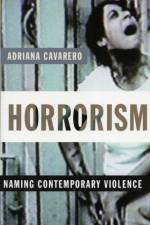
Words like "e;terrorism"e; and "e;war"e; no longer encompass the scope of contemporary violence. With this explosive book, Adriana Cavarero, one of the world's most provocative feminist theorists and political philosophers, effectively renders such terms obsolete. She introduces a new word "e;horrorism"e; to capture the experience of violence. Unlike terror, horrorism is a form of violation grounded in the offense of disfiguration and massacre. Numerous outbursts of violence fall within Cavarero's category of horrorism, especially when the phenomenology of violence is considered from the perspective of the victim rather than that of the warrior. Cavarero locates horrorism in the philosophical, political, literary, and artistic representations of defenseless and vulnerable victims. She considers both terror and horror on the battlefields of the Iliad, in the decapitation of Medusa, and in the murder of Medea's children. In the modern arena, she forges a link between horror, extermination, and massacre, especially the Nazi death camps, and revisits the work of Primo Levi, Hannah Arendt's thesis on totalitarianism, and Arendt's debate with Georges Bataille on the estheticization of violence and cruelty. In applying the horroristic paradigm to the current phenomena of suicide bombers, torturers, and hypertechnological warfare, Cavarero integrates Susan Sontag's views on photography and the eroticization of horror, as well as ideas on violence and the state advanced by Thomas Hobbes and Carl Schmitt. Through her searing analysis, Caverero proves that violence against the helpless claims a specific vocabulary, one that has been known for millennia, and not just to the Western tradition. Where common language fails to form a picture of atrocity, horrorism paints a brilliant portrait of its vivid reality.
For Elisabeth Roudinesco, a historian of psychoanalysis and one of France's leading intellectuals, Canguilhem, Sartre, Foucault, Althusser, Deleuze, and Derrida represent a "e;great generation"e; of French philosophers who accomplished remarkable work and lived incredible lives. These troubled and innovative thinkers endured World War II and the cultural and political revolution of the 1960s, and their cultural horizon was dominated by Marxism and psychoanalysis, though they were by no means strict adherents to the doctrines of Marx and Freud. Roudinesco knew many of these intellectuals personally, and she weaves an account of their thought through lived experience and reminiscences. Canguilhem, for example, was a distinguished philosopher of science who had a great influence on Foucault's exploration of sanity and madness-themes Althusser lived in a notorious personal drama. And in dramatizing the life of Freud for the screen, Sartre fundamentally altered his own philosophical approach to psychoanalysis.Roudinesco launches a passionate defense of Canguilhem, Sartre, Foucault, Althusser, Deleuze, and Derrida against the "e;new philosophers"e; of the late 1970s and 1980s, who denounced the work-and sometimes the private lives-of this great generation. Roudinesco refutes attempts to tar them, as well as the Marxist and left-wing tradition in general, with the brush of Soviet-style communism. In Freudian theory and the philosophy of radical commitment, she sees a bulwark against the kind of manipulative, pill-prescribing, and normalizing psychology that aims to turn individuals into mindless consumers. Intense, clever, and persuasive, Philosophy in Turbulent Times captivates with the dynamism of French thought in the twentieth century.
Set on an island in the South Pacific during the final days of World War II, when the tide has turned against Japan and the war has unmistakably become one of attrition, The Breaking Jewel offers a rare depiction of the Pacific War from the Japanese side and captures the essence of Japan's doomed imperial aims. The novel opens as a small force of Japanese soldiers prepares to defend a tiny and ultimately insignificant island from a full-scale assault by American forces. Its story centers on squad leader Nakamura, who resists the Americans to the end, as he and his comrades grapple with the idea of gyokusai (translated as "e;the breaking jewel"e; or the "e;pulverization of the gem"e;), the patriotic act of mass suicide in defense of the homeland. Well known for his antiestablishment and antiwar sentiments, Makuto Oda gradually and subtly develops a powerful critique of the war and the racialist imperial aims that proved Japan's undoing.
Harwood Fisher argues against neuroscientific and cognitive scientific explanations of mental states, for they fail to account for the gaps between actions in the brain, cognitive operations, linguistic mapping, and an individual's account of experience. Fisher probes a rich array of thought from the primitive and the dream to the artistic figure of speech, and extending to the scientific metaphor. He draws on first-person methodologies to restore the conscious self to a primary function in the generation of figurative thinking. How does the individual originate and organize terms and ideas? How can we differentiate between different types of thought and account for their origins? Fisher depicts the self as mediator between trope and logical form. Conversely, he explicates the creation and articulation of the self through interplay between logic and icon. Fisher explains how the "e;I"e; can step out of scripted roles. The self is neither a discursive agent of postmodern linguistics nor a socially determined entity. Rather, it is a historically situated, dynamically constituted place at the crossroads of conscious agency and unconscious actions and evolving contextual logics and figures.
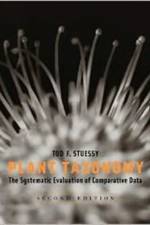
The field of plant taxonomy has transformed rapidly over the past fifteen years, especially with regard to improvements in cladistic analysis and the use of new molecular data. The second edition of this popular resource reflects these far-reaching and dramatic developments with more than 3,000 new references and many new figures. Synthesizing current research and trends, Plant Taxonomy now provides the most up-to-date overview in relation to monographic, biodiversity, and evolutionary studies, and continues to be an essential resource for students and scholars.This text is divided into two parts: Part 1 explains the principles of taxonomy, including the importance of systematics, characters, concepts of categories, and different approaches to biological classification. Part 2 outlines the different types of data used in plant taxonomic studies with suggestions on their efficacy and modes of presentation and evaluation. This section also lists the equipment and financial resources required for gathering each type of data. References throughout the book illuminate the historical development of taxonomic terminology and philosophy while citations offer further study. Plant Taxonomy is also a personal story of what it means to be a practicing taxonomist and to view these activities within a meaningful conceptual framework. Tod F. Stuessy recalls the progression of his own work and shares his belief that the most creative taxonomy is done by those who have a strong conceptual grasp of their own research.
The purpose of migration, regardless of the distance involved, is to exploit two or more environments suitable for survival or reproduction over time, usually on a seasonal basis. Yet individual organisms can practice the phenomenon differently, and birds deploy unique patterns of movement over particular segments of time. Incorporating the latest research on bird migration, this concise, critical assessment offers contemporary readers a firm grasp of what defines an avian migrant, how the organism came to be, what is known about its behavior, and how we can resolve its enduring mysteries.John H. Rappole's sophisticated survey of field data clarifies key ecological, biological, physiological, navigational, and evolutionary concerns. He begins with the very first migrants, who traded a home environment of greater stability for one of greater seasonality, and uses the structure of the annual cycle to examine the difference between migratory birds and their resident counterparts. He ultimately connects these differences to evolutionary milestones that have shaped a migrant lifestyle through natural selection. Rather than catalogue and describe various aspects of bird migration, Rappole considers how the avian migrant fits within a larger ecological frame, enabling a richer understanding of the phenomenon and its critical role in sustaining a hospitable and productive environment. Rappole concludes with a focus on population biology and conservation across time periods, considering the link between bird migration and the spread of disease among birds and humans, and the effects of global warming on migrant breeding ranges, reaction norms, and macroecology.
In the early twentieth century, the life philosophy of Henri Bergson summoned the elan vital, or vital force, as the source of creative evolution. Bergson also appealed to intuition, which focused on experience rather than discursive thought and scientific cognition. Particularly influential for the literary and political Negritude movement of the 1930s, which opposed French colonialism, Bergson's life philosophy formed an appealing alternative to Western modernity, decried as "e;mechanical,"e; and set the stage for later developments in postcolonial theory and vitalist discourse. Revisiting narratives on life that were produced in this age of machinery and war, Donna V. Jones shows how Bergson, Nietzsche, and the poets Leopold Senghor and Aime Cesaire fashioned the concept of life into a central aesthetic and metaphysical category while also implicating it in discourses on race and nation. Jones argues that twentieth-century vitalism cannot be understood separately from these racial and anti-Semitic discussions. She also shows that some dominant models of emancipation within black thought become intelligible only when in dialogue with the vitalist tradition. Jones's study strikes at the core of contemporary critical theory, which integrates these older discourses into larger critical frameworks, and she traces the ways in which vitalism continues to draw from and contribute to its making.
The roots of environmental aesthetics reach back to the ideas of eighteenth-century thinkers who found nature an ideal source of aesthetic experience. Today, having blossomed into a significant subfield of aesthetics, environmental aesthetics studies and encourages the appreciation of not just natural environments but also human-made and human-modified landscapes. Nature and Landscape is an important introduction to this rapidly growing area of aesthetic understanding and appreciation. Allen Carlson begins by tracing the development of the field's historical background, and then surveys contemporary positions on the aesthetics of nature, such as scientific cognitivism, which holds that certain kinds of scientific knowledge are necessary for a full appreciation of natural environments. Carlson next turns to environments that have been created or changed by humans and the dilemmas that are posed by the appreciation of such landscapes. He examines how to aesthetically appreciate a variety of urban and rural landscapes and concludes with a discussion of whether there is, in general, a correct way to aesthetically experience the environment.
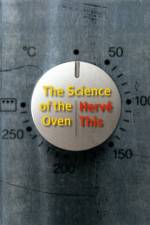
Mayonnaise "e;takes"e; when a series of liquids form a semisolid consistency. Eggs, a liquid, become solid as they are heated, whereas, under the same conditions, solids melt. When meat is roasted, its surface browns and it acquires taste and texture. What accounts for these extraordinary transformations?The answer: chemistry and physics. With his trademark eloquence and wit, Herve This launches a wry investigation into the chemical art of cooking. Unraveling the science behind common culinary technique and practice, Herve This breaks food down to its molecular components and matches them to cooking's chemical reactions. He translates the complex processes of the oven into everyday knowledge for professional chefs and casual cooks, and he demystifies the meaning of taste and the making of flavor. He describes the properties of liquids, salts, sugars, oils, and fats and defines the principles of culinary practice, which endow food with sensual as well as nutritional value.For fans of Herve This's popular volumes and for those new to his celebrated approach, The Science of the Oven expertly expands the possibilities of the kitchen, fusing the physiology of taste with the molecular structure of bodies and food.
This user-friendly resource is the perfect reference for English-language readers who are eager to explore fiction from around the world. Profiling hundreds of titles and authors from 1945 to today, with an emphasis on fiction published in the past two decades, this guide introduces the styles, trends, and genres of the world's literatures, from Scandinavian crime thrillers and cutting-edge Chinese works to Latin American narco-fiction and award-winning French novels.The book's critical selection of titles defines the arc of a country's literary development. Entries illuminate the fiction of individual nations, cultures, and peoples, while concise biographies sketch the careers of noteworthy authors. Compiled by M. A. Orthofer, an avid book reviewer and the founder of the literary review site the Complete Review, this reference is perfect for readers who wish to expand their reading choices and knowledge of contemporary world fiction.
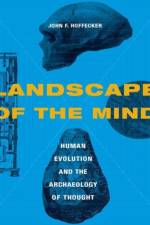
In Landscape of the Mind, John F. Hoffecker explores the origin and growth of the human mind, drawing on archaeology, history, and the fossil record. He suggests that, as an indirect result of bipedal locomotion, early humans developed a feedback relationship among their hands, brains, and tools that evolved into the capacity to externalize thoughts in the form of shaped stone objects. When anatomically modern humans evolved a parallel capacity to externalize thoughts as symbolic language, individual brains within social groups became integrated into a "e;neocortical Internet,"e; or super-brain, giving birth to the mind.Noting that archaeological traces of symbolism coincide with evidence of the ability to generate novel technology, Hoffecker contends that human creativity, as well as higher order consciousness, is a product of the superbrain. He equates the subsequent growth of the mind with human history, which began in Africa more than 50,000 years ago. As anatomically modern humans spread across the globe, adapting to a variety of climates and habitats, they redesigned themselves technologically and created alternative realities through tools, language, and art. Hoffecker connects the rise of civilization to a hierarchical reorganization of the super-brain, triggered by explosive population growth. Subsequent human history reflects to varying degrees the suppression of the mind's creative powers by the rigid hierarchies of nationstates and empires, constraining the further accumulation of knowledge. The modern world emerged after 1200 from the fragments of the Roman Empire, whose collapse had eliminated a central authority that could thwart innovation. Hoffecker concludes with speculation about the possibility of artificial intelligence and the consequences of a mind liberated from its organic antecedents to exist in an independent, nonbiological form.
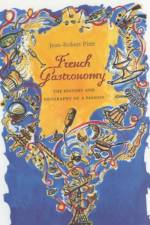
This we can be sure of: when a restaurant in the western world is famous for its cooking, it is the tricolor flag that hangs above the stove, opined one French magazine, and this is by no means an isolated example of such crowing. Indeed, both linguistically and conceptually, the restaurant itself is a French creation. Why are the French recognized by themselves and others the world over as the most enlightened of eaters, as the great gourmets? Why did the passion for food-gastronomy-originate in France? In French Gastronomy, geographer and food lover Jean-Robert Pitte uncovers a novel answer. The key, it turns out, is France herself. In her climate, diversity of soils, abundant resources, and varied topography lie the roots of France's food fame. Pitte masterfully reveals the ways in which cultural phenomena surrounding food and eating in France relate to space and place. He points out that France has some six hundred regions, or microclimates, that allow different agricultures, to flourish, and fully navigable river systems leading from peripheral farmlands directly to markets in the great gastronomic centers of Paris and Lyon. With an eye to this landscape, Pitte wonders: Would the great French burgundies enjoy such prestige if the coast they came from were not situated close to the ancient capital for the dukes and a major travel route for medieval Europe? Yet for all the shaping influence of earth and climate, Pitte demonstrates that haute cuisine, like so much that is great about France, can be traced back to the court of Louis XIV. It was the Sun King's regal gourmandise-he enacted a nightly theater of eating, dining alone but in full view of the court-that made food and fine dining a central affair of state. The Catholic Church figures prominently as well: gluttony was regarded as a "e;benign sin"e; in France, and eating well was associated with praising God, fraternal conviviality, and a respect for the body. These cultural ingredients, in combination with the bounties of the land, contributed to the full flowering of French foodways. This is a time of paradox for French gourmandism. Never has there been so much literature published on the subject of culinary creativity, never has there been so much talk about good food, and never has so little cooking been done at home. Each day new fast-food places open. Will French cuisine lose its charm and its soul? Will discourse become a substitute for reality? French Gastronomy is a delightful celebration of what makes France unique, and a call to everyone who loves French food to rediscover its full flavor.
We know where he went, what he wrote, and even what he wore, but what in the world did Christopher Columbus eat? The Renaissance and the age of discovery introduced Europeans to exotic cultures, mores, manners, and ideas. Along with the cross-cultural exchange of Old and New World, East and West, came new foodstuffs, preparations, and flavors. That kitchen revolution led to the development of new utensils and table manners. Some of the impact is still felt-and tasted-today.Giovanni Rebora has crafted an elegant and accessible history filled with fascinating information and illustrations. He discusses the availability of resources, how people kept from starving in the winter, how they farmed, how tastes developed and changed, what the lower classes ate, and what the aristocracy enjoyed. The book is divided into brief chapters covering the history of bread, soups, stuffed pastas, the use of salt, cheese, meat, fish, fruits and vegetables, the arrival of butter, the quest for sugar, new world foods, setting the table, and beverages, including wine and tea. A special appendix, "e;A Meal with Columbus,"e; includes a mini-anthology of recipes from the countries where he lived: Italy, Portugal, Spain, and England.Entertaining and enlightening, Culture of the Fork will interest scholars of history and gastronomy-and everyone who eats.
Considering texts by Henry James, Gertrude Stein, James Weldon Johnson, F. Scott Fitzgerald, Ralph Ellison, Richard Wright, James Agee, and William Carlos Williams, alongside film, painting, music, and popular culture, Mark Goble explores the development of American modernism as it was shaped by its response to technology and an attempt to change how literature itself could communicate.Goble's original readings reinterpret the aesthetics of modernism in the early twentieth century, when new modes of communication made the experience of technology an occasion for profound experimentation and reflection. He follows the assimilation of such "e;old"e; media technologies as the telegraph, telephone, and phonograph and their role in inspiring fantasies of connection, which informed a commitment to the materiality of artistic mediums. Describing how relationships made possible by technology became more powerfully experienced with technology, Goble explores a modernist fetish for media that shows no signs of abating. The "e;mediated life"e; puts technology into communication with a series of shifts in how Americans conceive the mechanics and meanings of their connections to one another, and therefore to the world and to their own modernity.
Why do some people still choose psychoanalysis-Freud's so-called talking cure-when numerous medications are available that treat the symptoms of psychic distress so much faster? Elisabeth Roudinesco tackles this difficult question, exploring what she sees as a "e;depressive society"e;: an epidemic of distress addressed only by an increasing reliance on prescription drugs. Far from contesting the efficacy of new medications like Prozac, Zoloft, and Viagra in alleviating the symptoms of any number of mental or nervous conditions, Roudinesco argues that the use of such drugs fails to solve patients' real problems. In the man who takes Viagra without ever wondering why he is suffering from impotence and the woman who is given antidepressants to deal with the loss of a loved one, Roudinesco sees a society obsessed with efficiency and desperate for the quick fix.She argues that "e;the talking cure"e; and pharmacology represent not just different approaches to psychiatry, but different worldviews. The rush to treat symptoms is itself symptomatic of an antiseptic and depressive culture in which thought is reduced to the firing of neurons and desire is just a chemical secretion. In contrast, psychoanalysis testifies to human freedom and the power of language.
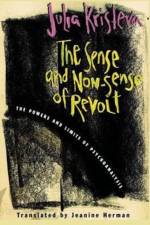
Linguist, psychoanalyst, and cultural theorist, Julia Kristeva is one of the most influential and prolific thinkers of our time. Her writings have broken new ground in the study of the self, the mind, and the ways in which we communicate through language. Her work is unique in that it skillfully brings together psychoanalytic theory and clinical practice, literature, linguistics, and philosophy.In her latest book on the powers and limits of psychoanalysis, Kristeva focuses on an intriguing new dilemma. Freud and psychoanalysis taught us that rebellion is what guarantees our independence and our creative abilities. But in our contemporary "e;entertainment"e; culture, is rebellion still a viable option? Is it still possible to build and embrace a counterculture? For whom-and against what-and under what forms?Kristeva illustrates the advances and impasses of rebel culture through the experiences of three twentieth-century writers: the existentialist John Paul Sartre, the surrealist Louis Aragon, and the theorist Roland Barthes. For Kristeva the rebellions championed by these figures-especially the political and seemingly dogmatic political commitments of Aragon and Sartre-strike the post-Cold War reader with a mixture of fascination and rejection. These theorists, according to Kristeva, are involved in a revolution against accepted notions of identity-of one's relation to others. Kristeva places their accomplishments in the context of other revolutionary movements in art, literature, and politics. The book also offers an illuminating discussion of Freud's groundbreaking work on rebellion, focusing on the symbolic function of patricide in his Totem and Taboo and discussing his often neglected vision of language, and underscoring its complex connection to the revolutionary drive.
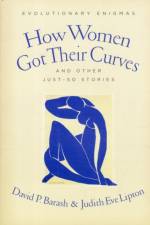
So how did women get their curves? Why do they have breasts, while other mammals only develop breast tissue while lactating, and why do women menstruate, when virtually no other beings do so? What are the reasons for female orgasm? Why are human females kept in the dark about their own time of ovulation and maximum fertility, and why are they the only animals to experience menopause?David P. Barash and Judith Eve Lipton, coauthors of acclaimed books on human sexuality and gender, discuss the theories scientists have advanced to explain these evolutionary enigmas (sometimes called "e;Just-So stories"e; by their detractors) and present hypotheses of their own. Some scientific theories are based on legitimate empirical data, while others are pure speculation. Barash and Lipton distinguish between what is solid and what remains uncertain, skillfully incorporating their expert knowledge of biology, psychology, animal behavior, anthropology, and human sexuality into their entertaining critiques. Inviting readers to examine the evidence and draw their own conclusions, Barash and Lipton tell an evolutionary suspense story that captures the excitement and thrill of true scientific detection.
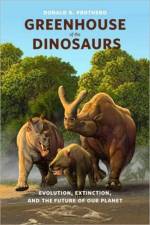
Donald R. Prothero's science books combine leading research with first-person narratives of discovery, injecting warmth and familiarity into a profession that has much to offer nonspecialists. Bringing his trademark style and wit to an increasingly relevant subject of concern, Prothero links the climate changes that have occurred over the past 200 million years to their effects on plants and animals. In particular, he contrasts the extinctions that ended the Cretaceous period, which wiped out the dinosaurs, with those of the later Eocene and Oligocene epochs.Prothero begins with the "e;greenhouse of the dinosaurs,"e; the global-warming episode that dominated the Age of Dinosaurs and the early Age of Mammals. He describes the remarkable creatures that once populated the earth and draws on his experiences collecting fossils in the Big Badlands of South Dakota to sketch their world. Prothero then discusses the growth of the first Antarctic glaciers, which marked the Eocene-Oligocene transition, and shares his own anecdotes of excavations and controversies among colleagues that have shaped our understanding of the contemporary and prehistoric world. The volume concludes with observations about Nisqually Glacier and other locations that show how global warming is happening much quicker than previously predicted, irrevocably changing the balance of the earth's thermostat. Engaging scientists and general readers alike, Greenhouse of the Dinosaurs connects events across thousands of millennia to make clear the human threat to natural climate change.
Critics and cultural historians take Japan's postwar insularity for granted, rarely acknowledging the role of Cold War concerns in the shaping of Japanese society and culture. Nuclear anxiety, polarized ideologies, gendered tropes of nationhood, and new myths of progress, among other developments, profoundly transformed Japanese literature, criticism, and art during this era and fueled the country's desire to recast itself as a democratic nation and culture. By rereading the pivotal events, iconic figures, and crucial texts of Japan's literary and artistic life through the lens of the Cold War, Ann Sherif places this supposedly insular nation at the center of a global battle. Each of her chapters focuses on a major moment, spectacle, or critical debate highlighting Japan's entanglement with cultural Cold War politics. Film director Kurosawa Akira, atomic bomb writer Hara Tamiki, singer and movie star Ishihara Yujiro, and even Godzilla and the Japanese translation of Lady Chatterley's Lover all reveal the trends and controversies that helped Japan carve out a postwar literary canon, a definition of obscenity, an idea of the artist's function in society, and modern modes of expression and knowledge. Sherif's comparative approach not only recontextualizes seemingly anomalous texts and ideas, but binds culture firmly to the domestic and international events that defined the decades following World War II. By integrating the art and criticism of Japan into larger social fabrics, Japan's Cold War offers a truly unique perspective on the critical and creative acts of a country remaking itself in the aftermath of war.
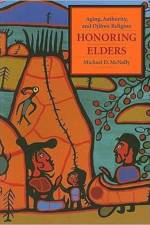
Like many Native Americans, Ojibwe people esteem the wisdom, authority, and religious significance of old age, but this respect does not come easily or naturally. It is the fruit of hard work, rooted in narrative traditions, moral vision, and ritualized practices of decorum that are comparable in sophistication to those of Confucianism. Even as the dispossession and policies of assimilation have threatened Ojibwe peoplehood and have targeted the traditions and the elders who embody it, Ojibwe and other Anishinaabe communities have been resolute and resourceful in their disciplined respect for elders. Indeed, the challenges of colonization have served to accentuate eldership in new ways.Using archival and ethnographic research, Michael D. McNally follows the making of Ojibwe eldership, showing that deference to older women and men is part of a fuller moral, aesthetic, and cosmological vision connected to the ongoing circle of life a tradition of authority that has been crucial to surviving colonization. McNally argues that the tradition of authority and the authority of tradition frame a decidedly indigenous dialectic, eluding analytic frameworks of invented tradition and naive continuity. Demonstrating the rich possibilities of treating age as a category of analysis, McNally provocatively asserts that the elder belongs alongside the priest, prophet, sage, and other key figures in the study of religion.
While moral perfectionists rank conscious beings according to their cognitive abilities, Paola Cavalieri launches a more inclusive defense of all forms of subjectivity. In concert with Peter Singer, J. M. Coetzee, Harlan B. Miller, and other leading animal studies scholars, she expands our understanding of the nonhuman in such a way that the derogatory category of "e;the animal"e; becomes meaningless. In so doing, she presents a nonhierachical approach to ethics that better respects the value of the conscious self.Cavalieri opens with a dialogue between two imagined philosophers, laying out her challenge to moral perfectionism and tracing its influence on our attitudes toward the "e;unworthy."e; She then follows with a roundtable "e;multilogue"e; which takes on the role of reason in ethics and the boundaries of moral status. Coetzee, Nobel Prize winner for Literature and author of The Lives of Animals, emphasizes the animality of human beings; Miller, a prominent analytic philosopher at Virginia Polytechnic Institute, dismantles the rationalizations of human bias; Cary Wolfe, professor of English at Rice University, advocates an active exposure to other worlds and beings; and Matthew Calarco, author of Zoographies: The Question of the Animal from Heidegger to Derrida, extends ethical consideration to entities that traditionally have little or no moral status, such as plants and ecosystems. As Peter Singer writes in his foreword, the implications of this conversation extend far beyond the issue of the moral status of animals. They "e;get to the heart of some important differences about how we should do philosophy, and how philosophy can relate to our everyday life."e; From the divergences between analytical and continental approaches to the relevance of posthumanist thinking in contemporary ethics, the psychology of speciesism, and the practical consequences of an antiperfectionist stance, The Death of the Animal confronts issues that will concern anyone interested in a serious study of morality.
Abonner på vårt nyhetsbrev og få rabatter og inspirasjon til din neste leseopplevelse.
Ved å abonnere godtar du vår personvernerklæring.