














Gjør som tusenvis av andre bokelskere
Abonner på vårt nyhetsbrev og få rabatter og inspirasjon til din neste leseopplevelse.
Ved å abonnere godtar du vår personvernerklæring.Du kan når som helst melde deg av våre nyhetsbrev.

This richly textured, critically acclaimed portrait of American Muslims introduces the basic tenets of the Muslim faith, surveys the history of Islam in North America, and profiles the lifestyles, religious practices, and worldviews of Muslims in the United States. The volume focuses specifically on the difficulty of living faithfully and adhering to tradition while adapting to an American way of life and addresses the role of women in Muslim culture, the raising and education of children, appropriate dress and behavior, and incidences of prejudice and unfair treatment. The second edition of Islam in America features a new chapter on post-9/11 realities, which covers infringements on civil rights and profiling, participation in politics, transformations in Islamic law, pluralism and identity issues, foreign influences, anti-Islamic sentiment, intra-Islamic tensions, and the quest for a moderate Islam. Source notes, glossary, and additional resources also reflect recent developments and scholarship.
Adolescents in Public Housing incorporates data from multiple public-housing sites in large U.S. cities to shine much-needed light on African American youth living in non-HOPE VI public-housing neighborhoods. With findings grounded in research, the book gives practitioners and policy makers a solid grasp of the attitudes toward deviance, alcohol and drug abuse, and depressive symptoms characterizing these communities, and links them explicitly to gaps in policy and practice. A long-overdue study of a system affecting not just a minority of children but the American public at large, Adolescents in Public Housing initiates new, productive paths for research on this vulnerable population and contributes to preventive interventions that may improve the lives of affected youth.
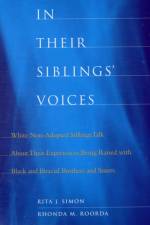
In Their Siblings' Voices shares the stories of twenty white non-adopted siblings who grew up with black or biracial brothers and sisters in the late 1960s and 1970s. Belonging to the same families profiled in Rita J. Simon and Rhonda M. Roorda's In Their Own Voices: Transracial Adoptees Tell Their Stories and In Their Parents' Voices: Reflections on Raising Transracial Adoptees, these siblings offer their perspectives on the multiracial adoption experience, which, for them, played out against the backdrop of two tumultuous, politically charged decades. Simon and Roorda question whether professionals and adoption agencies adequately trained these children in the challenges presented by blended families, and they ask if, after more than thirty years, race still matters. Few books cover both the academic and the human dimensions of this issue. In Their Siblings' Voices helps readers fully grasp the dynamic of living in a multiracial household and its effect on friends, school, and community.
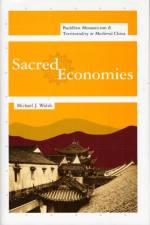
Buddhist monasteries in medieval China employed a variety of practices to ensure their ascendancy and survival. Most successful was the exchange of material goods for salvation, as in the donation of land, which allowed monks to spread their teachings throughout China. By investigating a variety of socioeconomic spaces produced and perpetuated by Chinese monasteries, Michael J. Walsh reveals the "e;sacred economies"e; that shaped early Buddhism and its relationship with consumption and salvation.Centering his study on Tiantong, a Buddhist monastery that has thrived for close to seventeen centuries in southeast China, Walsh follows three main topics: the spaces monks produced, within and around which a community could pursue a meaningful existence; the social and economic avenues through which monasteries provided diverse sacred resources and secured the primacy of Buddhist teachings within an agrarian culture; and the nature of "e;transactive"e; participation within monastic spaces, which later became a fundamental component of a broader Chinese religiosity. Unpacking these sacred economies and repositioning them within the history of religion in China, Walsh encourages a different approach to the study of Chinese religion, emphasizing the critical link between religious exchange and the production of material culture.
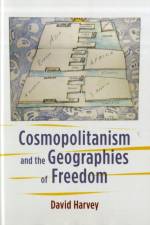
Liberty and freedom are frequently invoked to justify political action. Presidents as diverse as Woodrow Wilson, Franklin Delano Roosevelt, John F. Kennedy, Ronald Reagan, and George W. Bush have built their policies on some version of these noble values. Yet in practice, idealist agendas often turn sour as they confront specific circumstances on the ground. Demonstrated by incidents at Abu Ghraib and Guantanamo Bay, the pursuit of liberty and freedom can lead to violence and repression, undermining our trust in universal theories of liberalism, neoliberalism, and cosmopolitanism.Combining his passions for politics and geography, David Harvey charts a cosmopolitan order more appropriate to an emancipatory form of global governance. Political agendas tend to fail, he argues, because they ignore the complexities of geography. Incorporating geographical knowledge into the formation of social and political policy is therefore a necessary condition for genuine democracy. Harvey begins with an insightful critique of the political uses of freedom and liberty, especially during the George W. Bush administration. Then, through an ontological investigation into geography's foundational concepts space, place, and environment he radically reframes geographical knowledge as a basis for social theory and political action. As Harvey makes clear, the cosmopolitanism that emerges is rooted in human experience rather than illusory ideals and brings us closer to achieving the liberation we seek.
Simone Weil once wrote that "e;the vulnerability of precious things is beautiful because vulnerability is a mark of existence,"e; establishing a relationship between vulnerability, beauty, and existence transcending the separation of species. Her conception of a radical ethics and aesthetics could be characterized as a new poetics of species, forcing a rethinking of the body's significance, both human and animal. Exploring the "e;logic of flesh"e; and the use of the body to mark species identity, Anat Pick reimagines a poetics that begins with the vulnerability of bodies, not the omnipotence of thought. Pick proposes a "e;creaturely"e; approach based on the shared embodiedness of humans and animals and a postsecular perspective on human-animal relations. She turns to literature, film, and other cultural texts, challenging the familiar inventory of the human: consciousness, language, morality, and dignity. Reintroducing Weil's elaboration of such themes as witnessing, commemoration, and collective memory, Pick identifies the animal within all humans, emphasizing the corporeal and its issues of power and freedom. In her poetics of the creaturely, powerlessness is the point at which aesthetic and ethical thinking must begin.
Kari Weil provides a critical introduction to the field of animal studies as well as an appreciation of its thrilling acts of destabilization. Examining real and imagined confrontations between human and nonhuman animals, she charts the presumed lines of difference between human beings and other species and the personal, ethical, and political implications of those boundaries. Weil's considerations recast the work of such authors as Kafka, Mann, Woolf, and Coetzee, and such philosophers as Nietzsche, Heidegger, Derrida, Deleuze, Agamben, Cixous, and Hearne, while incorporating the aesthetic perspectives of such visual artists as Bill Viola, Frank Noelker, and Sam Taylor-Wood and the "e;visual thinking"e; of the autistic animal scientist Temple Grandin. She addresses theories of pet keeping and domestication; the importance of animal agency; the intersection of animal studies, disability studies, and ethics; and the role of gender, shame, love, and grief in shaping our attitudes toward animals. Exposing humanism's conception of the human as a biased illusion, and embracing posthumanism's acceptance of human and animal entanglement, Weil unseats the comfortable assumptions of humanist thought and its species-specific distinctions.
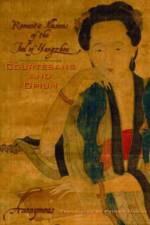
In his preface, the anonymous author of Courtesans and Opium describes his book as an act of penance for thirty years spent patronizing the brothels of Yangzhou. Written in the 1840s, his story is filled with vice and dark consequence, portraying the hazards of the city's seedy underbelly and warning others against the example of the Fool.Chinese literature's first true "e;city novel,"e; Courtesans and Opium recounts the illustrious career of a debauched soul enveloped by enthralling pursuits and romantic illusions. While socially acceptable marriages were arranged and often loveless, brothels offered men accomplished courtesans who served as both enchanting companions and sensual lovers. These professional sirens dressed in the latest styles and dripped with gold, silver, and jewels. From an early age, they were taught to excel at various arts and graces, which transformed the brothel into a kind of club for men to meet, exchange gossip, and smoke opium at their leisure.The Fool's fable follows five sworn brothers and their respective relationships with Yangzhou courtesans, revealing in acute detail the lurid materialism of this dangerous world-its violence and corruption as well as its seductive but illusory promise. Never before translated into English, Courtesans and Opium offers a brilliant window into the decadence of nineteenth-century China.
The nation didn't know it, but 1960 would change American film forever, and the revolution would occur nowhere near a Hollywood set. With the opening of the New Yorker Theater, a cinema located at the heart of Manhattan's Upper West Side, cutting-edge films from around the world were screened for an eager audience, including the city's most influential producers, directors, critics, and writers. Woody Allen, Martin Scorsese, Susan Sontag, Andrew Sarris, and Pauline Kael, among many others, would make the New Yorker their home, trusting in the owners' impeccable taste and incorporating much of what they viewed into their work. In this irresistible memoir, Toby Talbot, co-owner and proud "e;matron"e; of the New Yorker Theater, reveals the story behind Manhattan's wild and wonderful affair with art-house film. With her husband Dan, Talbot showcased a range of eclectic films, introducing French New Wave and New German cinema, along with other groundbreaking genres and styles. As Vietnam protests and the struggle for civil rights raged outside, the Talbots also took the lead in distributing political films, such as Bernard Bertolucci's Before the Revolution, and documentaries, such as Shoah and Point of Order.Talbot enhances her stories with selections from the New Yorker's essential archives, including program notes by Jack Kerouac, Jules Feiffer, Peter Bogdanovich, Jonas Mekas, Jack Gelber, and Harold Humes. These artifacts testify to the deeply engaged and collaborative spirit behind each showing, and they illuminate the myriad and often entertaining aspects of theater operation. All in all, Talbot's tales capture the highs and lows of a thrilling era in filmmaking.
Money and support tend to flow in the direction of economics, science, and other academic departments that demonstrate measurable "e;progress."e; The humanities, on the other hand, offer more abstract and uncertain outcomes. A humanist's objects of study are more obscure in certain ways than pathogens and cells. Consequently, it seems as if the humanities never truly progress. Is this a fair assessment?By comparing objects of science, such as the brain, the galaxy, the amoeba, and the quark, with objects of humanistic inquiry, such as the poem, the photograph, the belief, and the philosophical concept, Volney Gay reestablishes a fundamental distinction between science and the humanities. He frees the latter from its pursuit of material-based progress and restores its disciplines to a place of privilege and respect. Using the metaphor of magnification, Gay shows that, while we can investigate natural objects to the limits of imaging capacity, magnifying cultural objects dissolves them into noise. In other words, cultural objects can be studied only within their contexts and through the prism of metaphor and narrative. Gathering examples from literature, art, film, philosophy, religion, science, and psychoanalysis, Gay builds a new justification for the humanities. By revealing the unseen and making abstract ideas tangible, the arts create meaningful wholes, which itself is a form of progress.
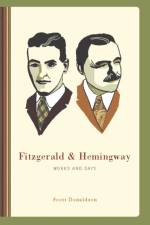
F. Scott Fitzgerald and Ernest Hemingway might have been contemporaries, but our understanding of their work often rests on simple differences. Hemingway wrestled with war, fraternity, and the violence of nature. Fitzgerald satirized money and class and the never-ending pursuit of a material tomorrow. Through the provocative arguments of Scott Donaldson, however, the affinities between these two authors become brilliantly clear. The result is a reorientation of how we read twentieth-century American literature.Known for his penetrating studies of Fitzgerald and Hemingway, Donaldson traces the creative genius of these authors and the surprising overlaps among their works. Fitzgerald and Hemingway both wrote fiction out of their experiences rather than about them. Therefore Donaldson pursues both biography and criticism in these essays, with a deep commitment to close reading. He traces the influence of celebrity culture on the legacies of both writers, matches an analysis of Hemingway's Spanish Civil War writings to a treatment of Fitzgerald's left-leaning tendencies, and contrasts the averted gaze in Hemingway's fiction with the role of possessions in The Great Gatsby. He devotes several essays to four novels, Gatsby, Tender Is the Night, The Sun Also Rises, and A Farewell to Arms, and others to lesser-known short stories. Based on years of research in the Fitzgerald and Hemingway archives and brimming with Donaldson's trademark wit and insight, this irresistible anthology moves the study of American literature in bold new directions.
Disaster responders treat more than just the immediate emotional and psychological trauma of victims: they empower individuals and families to heal themselves long into a disaster's aftermath. This requires helping survivors to rebuild their ability to meet their emotional and psychological needs, not only for themselves but also for others, which necessitates a careful consideration of survivors' social, economic, and political realities as their communities heal and recover.This comprehensive book integrates Western mental health approaches and international models of psychosocial capacity building within a social ecology framework, providing practitioners and volunteers with a blueprint for individual, family, group, and community interventions. Joshua L. Miller focuses on a range of disasters at local, regional, national, and international levels. Global case studies explore the social, psychological, economic, political, and cultural issues affecting various reactions to disaster and illustrate the importance of drawing on local cultural practices to promote empowerment and resiliency. Miller encourages developing people's capacity to direct their own recovery, using a social ecology framework to conceptualize disasters and their consequences. He also considers sources of vulnerability and how to support individual, family, and community resiliency; adapt and implement traditional disaster mental health interventions in different contexts; use groups and activities to facilitate recovery as part of a larger strategy of psychosocial capacity building; and foster collective grieving and memorializing. Miller's text examines the unique dynamics of intergroup conflict and the relationship between psychosocial healing, social justice, and peace and reconciliation. Each chapter ends with a mindfulness exercise, and a section reviews practitioner self-care.
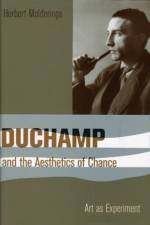
Marcel Duchamp is often viewed as an "e;artist-engineer-scientist,"e; a kind of rationalist who relied heavily on the ideas of the French mathematician and philosopher Henri Poincare. Yet a complete portrait of Duchamp and his multiple influences draws a different picture. In his 3 Standard Stoppages (1913-1914), a work that uses chance as an artistic medium, we see how far Duchamp subverted scientism in favor of a radical individualistic aesthetic and experimental vision.Unlike the Dadaists, Duchamp did more than dismiss or negate the authority of science. He pushed scientific rationalism to the point where its claims broke down and alternative truths were allowed to emerge. With humor and irony, Duchamp undertook a method of artistic research, reflection, and visual thought that focused less on beauty than on the notion of the "e;possible."e; He became a passionate advocate of the power of invention and thinking things that had never been thought before. The 3 Standard Stoppages is the ultimate realization of the play between chance and dimension, visibility and invisibility, high and low art, and art and anti-art. Situating Duchamp firmly within the literature and philosophy of his time, Herbert Molderings recaptures the spirit of a frequently misread artist-and his thrilling aesthetic of chance.
Set among a remote cluster of cave dwellings in Shanxi province, There's Nothing I Can Do When I Think of You Late at Night is a genre-defying expose of rural communism. In a series of vivid, interlocking vignettes, several narrators speak of adultery, bestiality, incest, and vice, revealing the consequences of desire in a world of necessity.The Wen Clan Caves are based on an isolated village where the author, Cao Naiqian, lived during the Cultural Revolution. The land is hard and unforgiving and the people suffer in poverty and ignorance. Through the individual perspectives of the Wen Clan denizens, a complete portrait of village life takes shape. Dark yet lyrical, Cao's snapshots range from pastoral stories of childhood innocence to shocking accounts of brutality and terror. His work echoes William Faulkner's Go Down, Moses and Sherwood Anderson's Winesburg, Ohio, yet the author's depictions of elemental passions and regional mores make the book entirely his own. Celebrated for its economy of expression, flashes of humor, and an emphasis on understatement rarely found in Chinese fiction, There's Nothing I Can Do When I Think of You Late at Night is an excellent introduction to the power and craft of Cao Naiqian. His vivid personalities and unflinching realism herald the haunting work of an original literary force.
By establishing a dialogue in which the meditative practices of Buddhism and Christianity speak to the theories of modern philosophy and science, B. Alan Wallace reveals the theoretical similarities underlying these disparate disciplines and their unified approach to making sense of the objective world. Wallace begins by exploring the relationship between Christian and Buddhist meditative practices. He outlines a sequence of meditations the reader can undertake, showing that, though Buddhism and Christianity differ in their belief systems, their methods of cognitive inquiry provide similar insight into the nature and origins of consciousness. From this convergence Wallace then connects the approaches of contemporary cognitive science, quantum mechanics, and the philosophy of the mind. He links Buddhist and Christian views to the provocative philosophical theories of Hilary Putnam, Charles Taylor, and Bas van Fraassen, and he seamlessly incorporates the work of such physicists as Anton Zeilinger, John Wheeler, and Stephen Hawking. Combining a concrete analysis of conceptions of consciousness with a guide to cultivating mindfulness and profound contemplative practice, Wallace takes the scientific and intellectual mapping of the mind in exciting new directions.
Laying waste to the notion that Abner Doubleday established the modern game of baseball, acclaimed biographer Jay Martin makes a bold case for A. J. Cartwright (1820-1892), an entrepreneur, philanthropist, and avid ballplayer whose keen perception and restless spirit codified the rules of the sport and engineered its rapid spread throughout the country.Consulting Cartwright's personal correspondence and papers, Martin shows how this American archetype synthesized a number of elements from popular ballgames into the program, bylaws, and positions we find on the field today. After formalizing his blueprint, Cartwright worked tirelessly to promote baseball nationwide, appealing to both upper- and lower-class spectators and ballplayers and weaving a trail of influence across nineteenth-century America. Addressing the controversy that has roiled for years around the claims for Doubleday and Cartwright, Martin revisits the original arguments behind each camp and throws into sharp relief the competing ambitions of these figures during a time of aggressive westward expansion and unparalleled opportunities for individual reinvention. Martin's story of modern baseball not only offers a fascinating window into a thoroughly American phenomenon but also accesses a rare history of American ideals.
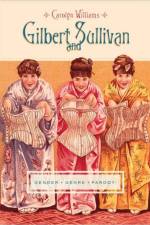
Long before the satirical comedy of The Daily Show and The Colbert Report, the comic operas of W. S. Gilbert and Arthur Sullivan were the hottest send-ups of the day's political and cultural obsessions. Gilbert and Sullivan's productions always rose to the level of social commentary, despite being impertinent, absurd, or inane. Some viewers may take them straight, but what looks like sexism or stereotype was actually a clever strategy of critique. Parody was a powerful weapon in the culture wars of late-nineteenth-century England, and with defiantly in-your-face sophistication, Gilbert and Sullivan proved that popular culture can be intellectually as well as politically challenging.Carolyn Williams underscores Gilbert and Sullivan's creative and acute understanding of cultural formations. Her unique perspective shows how anxiety drives the troubled mind in the Lord Chancellor's "e;Nightmare Song"e; in Iolanthe and is vividly realized in the sexual and economic phrasing of the song's patter lyrics. The modern body appears automated and performative in the "e;Junction Song"e; in Thespis, anticipating Charlie Chaplin's factory worker in Modern Times. Williams also illuminates the use of magic in The Sorcerer, the parody of nautical melodrama in H.M.S. Pinafore, the ridicule of Victorian aesthetic and idyllic poetry in Patience, the autoethnography of The Mikado, the role of gender in Trial by Jury, and the theme of illegitimacy in The Pirates of Penzance. With her provocative reinterpretation of these artists and their work, Williams recasts our understanding of creativity in the late nineteenth century.
The most notorious poet-critic of his generation, William Logan has defined our view of poets good and bad, interesting and banal, for more than three decades. Featured in the New York Times Book Review, the Times Literary Supplement, and the New Criterion, among other journals, Logan's eloquent, passionate prose never fails to provoke readers and poets, reminding us of the value and vitality of the critic's savage art.Like The Undiscovered Country: Poetry in the Age of Tin, which won the National Book Critics Circle Award in Criticism, Our Savage Art features the corrosive wit and darkly discriminating critiques that have become the trademarks of Logan's style. Opening with a defense of the critical eye, this collection features essays on Robert Lowell's correspondence, Elizabeth Bishop's unfinished poems, the inflated reputation of Hart Crane, the loss of the New Critics, and a damning-and already highly controversial-indictment of an edition of Robert Frost's notebooks. Logan also includes essays on Derek Walcott and Geoffrey Hill, two crucial figures in the divided world of contemporary poetry, and an attempt to rescue the reputation of the nineteenth-century poet John Townsend Trowbridge. Short reviews consider John Ashbery, Anne Carson, Billy Collins, Rita Dove, Louise Gluck, Jorie Graham, Robert Hass, Seamus Heaney, and dozens of others. Though he might be called a cobra with manners, Logan is a fervent advocate for poetry, and Our Savage Art continues to raise the standard of what the critic can do.
While it's easy to blame globalization for shrinking job opportunities, dangerous declines in labor standards, and a host of related discontents, the "e;flattening"e; of the world has also created unprecedented opportunities for worker organization. By expanding employment in developing countries, especially for women, globalization has formed a basis for stronger workers' rights, even in remote sites of production. Using India's labor movement as a model, Rohini Hensman charts the successes and failures, strengths and weaknesses, of the struggle for workers' rights and organization in a rich and varied nation. As Indian products gain wider acceptance in global markets, the disparities in employment conditions and union rights between such regions as the European Union and India's vast informal sector are exposed, raising the issue of globalization's implications for labor. Hensman's study examines the unique pattern of "e;employees' unionism,"e; which emerged in Bombay in the 1950s, before considering union responses to recent developments, especially the drive to form a national federation of independent unions. A key issue is how far unions can resist protectionist impulses and press for stronger global standards, along with the mechanisms to enforce them. After thoroughly unpacking this example, Hensman zooms out to trace the parameters of a global labor agenda, calling for a revival of trade unionism, the elimination of informal labor, and reductions in military spending to favor funding for comprehensive welfare and social security systems.
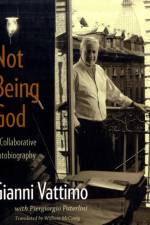
Gianni Vattimo, a leading philosopher of the continental school, has always resisted autobiography. But in this intimate memoir, the voice of Vattimo as thinker, political activist, and human being finds its expression on the page. With Piergiorgio Paterlini, a noted Italian writer and journalist, Vattimo reflects on a lifetime of politics, sexual radicalism, and philosophical exuberance in postwar Italy. Turin, the city where he was born and one of the intellectual capitals of Europe (also the city in which Nietzsche went mad), forms the core of his reminiscences, enhanced by fascinating vignettes of studying under Hans Georg Gadamer, teaching in the United States, serving as a public intellectual and interlocutor of Habermas and Derrida, and working within the European Parliament to unite Europe.Vattimo's status as a left-wing faculty president paradoxically made him a target of the Red Brigades in the 1970s, causing him to flee Turin for his life. Left-wing terrorism did not deter the philosopher from his quest for social progress, however, and in the 1980s, he introduced a daring formulation called "e;weak thought,"e; which stripped metaphysics, science, religion, and all other absolute systems of their authority. Vattimo then became notorious both for his renewed commitment to the core values of Christianity (he was trained as a Catholic intellectual) and for the Vatican's denunciation of his views. Paterlini weaves his interviews with Vattimo into an utterly candid first-person portrait, creating a riveting text that is destined to become one of the most compelling accounts of homosexuality, history, politics, and philosophical invention in the twentieth century.
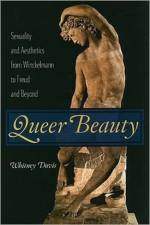
The pioneering work of Johann Winckelmann (1717-1768) identified a homoerotic appreciation of male beauty in classical Greek sculpture, a fascination that had endured in Western art since the Greeks. Yet after Winckelmann, the value (even the possibility) of art's queer beauty was often denied. Several theorists, notably the philosopher Immanuel Kant, broke sexual attraction and aesthetic appreciation into separate or dueling domains. In turn, sexual desire and aesthetic pleasure had to be profoundly rethought by later writers. Whitney Davis follows how such innovative thinkers as John Addington Symonds, Michel Foucault, and Richard Wollheim rejoined these two domains, reclaiming earlier insights about the mutual implication of sexuality and aesthetics. Addressing texts by Arthur Schopenhauer, Charles Darwin, Oscar Wilde, Vernon Lee, and Sigmund Freud, among many others, Davis criticizes modern approaches, such as Kantian idealism, Darwinism, psychoanalysis, and analytic aesthetics, for either reducing aesthetics to a question of sexuality or for removing sexuality from the aesthetic field altogether. Despite these schematic reductions, sexuality always returns to aesthetics, and aesthetic considerations always recur in sexuality. Davis particularly emphasizes the way in which philosophies of art since the late eighteenth century have responded to nonstandard sexuality, especially homoeroticism, and how theories of nonstandard sexuality have drawn on aesthetics in significant ways. Many imaginative and penetrating critics have wrestled productively, though often inconclusively and "e;against themselves,"e; with the aesthetic making of sexual life and new forms of art made from reconstituted sexualities. Through a critique that confronts history, philosophy, science, psychology, and dominant theories of art and sexuality, Davis challenges privileged types of sexual and aesthetic creation imagined in modern culture-and assumed today.
Concern about the size of the world's population did not begin with the "e;population bomb"e; in 1968. It arose in the aftermath of World War I and was understood as an issue with far-reaching ecological, agricultural, economic, and geopolitical consequences. The world population problem concerned the fertility of soil as much as the fertility of women, always involving both "e;earth"e; and "e;life."e;Global Population traces the idea of a world population problem as it evolved from the 1920s through the 1960s. The growth and distribution of the human population over the planet's surface came deeply to shape the characterization of "e;civilizations"e; with different standards of living. It forged the very ideas of development, demographically defined three worlds, and, for some, an aspirational "e;one world."e;Drawing on international conference transcripts and personal and organizational archives, this book reconstructs the twentieth-century population problem in terms of migration, colonial expansion, globalization, and world food plans. Population was a problem in which international relations and intimate relations were one. Global Population ultimately shows how a geopolitical problem about sovereignty over land morphed into a biopolitical solution, entailing sovereignty over one's person.
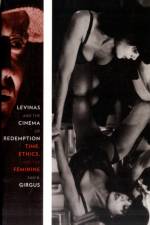
In his philosophy of ethics and time, Emmanuel Levinas highlighted the tension that exists between the "e;ontological adventure"e; of immediate experience and the "e;ethical adventure"e; of redemptive relationships-associations in which absolute responsibility engenders a transcendence of being and self. In an original commingling of philosophy and cinema study, Sam B. Girgus applies Levinas's ethics to a variety of international films. His efforts point to a transnational pattern he terms the "e;cinema of redemption"e; that portrays the struggle to connect to others in redeeming ways. Girgus not only reveals the power of these films to articulate the crisis between ontological identity and ethical subjectivity. He also locates time and ethics within the structure and content of film itself. Drawing on the work of Luce Irigaray, Tina Chanter, Kelly Oliver, and Ewa Ziarek, Girgus reconsiders Levinas and his relationship to film, engaging with a feminist focus on the sexualized female body. Girgus offers fresh readings of films from several decades and cultures, including Frank Capra's Mr. Smith Goes to Washington (1939), Federico Fellini's La dolce vita (1959), Michelangelo Antonioni's L'avventura (1960), John Huston's The Misfits (1961), and Philip Kaufman's The Unbearable Lightness of Being (1988).
Women have performed the vast majority of often unpaid friendship labor for centuries. Embodying the freedom, equality, and ideals of the Constitution, civic friendship emerges as a necessary condition for genuine justice. Through a critical examination of social and political relationships from ancient times to today, Sibyl Schwarzenbach develops a truly innovative, feminist theory of the democratic state. Beginning with an analysis of Aristotle's notion of political friendship, Schwarzenbach brings the philosopher's insights to bear on the social and political requirements of the modern state. She elaborates a conception of civic friendship that, with its ethical reproductive praxis, functions differently from male-centered notions of fraternity and, with its female participants, remains fundamentally separate from generalized, male-inflected claims of Marxist solidarity. Schwarzenbach also distinguishes civic friendship from feminist calls for public care, arguing that friendship, unlike care, not only is reciprocal but also seeks to establish and maintain equality. Schwarzenbach concludes with various public institutions-economic, legal, and social-that can promote civic friendship without sacrificing crucial liberties. In fact, women's entrance into the public sphere en masse makes such ideals realistic within a competitive, individualistic society.
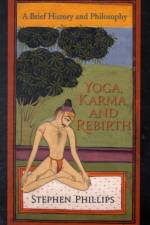
For serious yoga practitioners curious to know the ancient origins of the art, Stephen Phillips, a professional philosopher and sanskritist with a long-standing personal practice, lays out the philosophies of action, knowledge, and devotion as well as the processes of meditation, reasoning, and self-analysis that formed the basis of yoga in ancient and classical India and continue to shape it today. In discussing yoga's fundamental commitments, Phillips explores traditional teachings of hatha yoga, karma yoga, bhakti yoga, and tantra, and shows how such core concepts as self-monitoring consciousness, karma, nonharmfulness (ahimsa), reincarnation, and the powers of consciousness relate to modern practice. He outlines values implicit in bhakti yoga and the tantric yoga of beauty and art and explains the occult psychologies of koshas, skandhas, and chakras. His book incorporates original translations from the early Upanishads, the Bhagavad Gita, the Yoga Sutra (the entire text), the Hatha Yoga Pradipika, and seminal tantric writings of the tenth-century Kashmiri Shaivite, Abhinava Gupta. A glossary defining more than three hundred technical terms and an extensive bibliography offer further help to nonscholars. A remarkable exploration of yoga's conceptual legacy, Yoga, Karma, and Rebirth crystallizes ideas about self and reality that unite the many incarnations of yoga.
In this fascinating study, Muhsin J. al-Musawi shows how deeply Islamic heritage and culture is embedded in the tales of The Thousand and One Nights (known to many as the Arabian Nights) and how this integration invites readers to make an Islamic milieu. Conservative Islam dismisses The Thousand and One Nights as facile popular literature, and liberal views disregard the rich Islamic context of the text. Approaching the text with a fresh and unbiased eye, al-Musawi reads the tales against Islamic schools of thought and theology and recovers persuasive historical evidence to reveal the cultural and religious struggle over Islam that drives the book's narrative tension and binds its seemingly fragmented stories.Written by a number of authors over a stretch of centuries, The Thousand and One Nights depicts a burgeoning, urban Islamic culture in all its variety and complexity. As al-Musawi demonstrates, the tales document their own places and periods of production, reflecting the Islamic individual's growing exposure to a number of entertainments and temptations and their conflict with the obligations of faith. Aimed at a diverse audience, these stories follow a narrative arc that begins with corruption and ends with redemption, conforming to a paradigm that concurs with the sociological and religious concerns of Islam and the Islamic state. By emphasizing Islam in his analysis of these entertaining and instructional tales, al-Musawi not only illuminates the work's consistent equation between art and life, but he also sheds light on its underlying narrative power. His study offers a brilliant portrait of medieval Islam as well, especially its social, political, and economic institutions and its unique practices of storytelling.
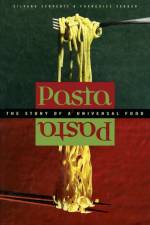
Ranging from the imperial palaces of ancient China and the bakeries of fourteenth-century Genoa and Naples all the way to the restaurant kitchens of today, Pasta tells a story that will forever change the way you look at your next plate of vermicelli. Pasta has become a ubiquitous food, present in regional diets around the world and available in a host of shapes, sizes, textures, and tastes. Yet, although it has become a mass-produced commodity, it remains uniquely adaptable to innumerable recipes and individual creativity. Pasta: The Story of a Universal Food shows that this enormously popular food has resulted from of a lengthy process of cultural construction and widely diverse knowledge, skills, and techniques.Many myths are intertwined with the history of pasta, particularly the idea that Marco Polo brought pasta back from China and introduced it to Europe. That story, concocted in the early twentieth century by the trade magazine Macaroni Journal, is just one of many fictions umasked here. The true homelands of pasta have been China and Italy. Each gave rise to different but complementary culinary traditions that have spread throughout the world. From China has come pasta made with soft wheat flour, often served in broth with fresh vegetables, finely sliced meat, or chunks of fish or shellfish. Pastasciutta, the Italian style of pasta, is generally made with durum wheat semolina and presented in thick, tomato-based sauces. The history of these traditions, told here in fascinating detail, is interwoven with the legacies of expanding and contracting empires, the growth of mercantilist guilds and mass industrialization, and the rise of food as an art form. Whether you are interested in the origins of lasagna, the strange genesis of the Chinese pasta bing or the mystique of the most magnificent pasta of all, the timballo, this is the book for you. So dig in!
Factory of Strategy is the last of Antonio Negri's major political works to be translated into English. Rigorous and accessible, it is both a systematic inquiry into the development of Lenin's thought and an encapsulation of a critical shift in Negri's theoretical trajectory.Lenin is the only prominent politician of the modern era to seriously question the "e;withering away"e; and "e;extinction"e; of the state, and like Marx, he recognized the link between capitalism and modern sovereignty and the need to destroy capitalism and reconfigure the state. Negri refrains from portraying Lenin as a ferocious dictator enforcing the proletariat's reappropriation of wealth, nor does he depict him as a mere military tool of a vanguard opposed to the Ancien Regime. Negri instead champions Leninism's ability to adapt to different working-class configurations in Russia, China, Latin America, and elsewhere. He argues that Lenin developed a new political figuration in and beyond modernity and an effective organization capable of absorbing different historical conditions. He ultimately urges readers to recognize the universal application of Leninism today and its potential to institutionally-not anarchically-dismantle centralized power.
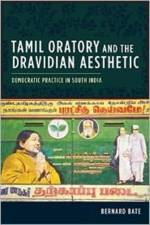
This is a book about the newness of old things. It concerns an oratorical revolution, a transformation of oratorical style linked to larger transformations in society at large. It explores the aesthetics of Tamil oratory and its vital relationship to one of the key institutions of modern society: democracy. Therefore this book also bears on the centrality of language to the modern human condition.Though Tamil oratory is a relatively new practice in south India, the Dravidian (or Tamil nationalist) style employs archaic forms of Tamil that suggest an ancient mode of speech. Beginning with the advent of mass democratic politics in the 1940s, a new generation of politician adopted this style, known as "e;fine,"e; or "e;beautiful Tamil"e; (centamil), for its distinct literary virtuosity, poesy, and alluring evocation of a pure Tamil past. Bernard Bate explores the centamil phenomenon, arguing that the genre's spectacular literacy and use of ceremonial procession, urban political ritual, and posters, praise poetry are critical components in the production of a singularly Tamil mode of political modernity: a Dravidian neoclassicism. From his perspective, the centamil revolution and Dravidian neoclassicism suggest that modernity is not the mere successor of tradition but the production of tradition, and that this production is a primary modality of modernity, a new newness-albeit a newness of old things.
For years, the librarians at the New-York Historical Society have kept a record of the questions posed to them by curious New Yorkers and visitors to the city. Who was the first woman to run for mayor of New York? Why are beavers featured on the city's official seal? Is it true that a nineteenth-century New Yorker built a house out of spite? These questions involve people, places, buildings, monuments, rumors, and urban myths. They concern sports, food, transportation, the arts, politics, nature, and Central Park, among many other subjects. Taken together, they attest to the infinite stories hidden within the most intriguing metropolis in the world.In When Did the Statue of Liberty Turn Green? the staff of the New-York Historical Society Library answer more than a hundred of the most popular and compelling queries. The endlessly entertaining entries in this book feature hard-to-find data and unforgettable profiles, sharing snapshots of New York's secret history for all to enjoy. Drawing on the library's extensive collections, the staff reveal when the first book was printed in New York, whether the story of Harlem residents presenting rats to government officials is true, who exactly were the Collyer brothers and why were they famous, and why premature babies were once displayed in Coney Island. For readers who love trivia, urban history, strange tales, and, of course, New York City, this book will delight with its rich, informative, and surprising stories.Look inside to learn:How "e;Peg-Leg"e; Peter Stuyvesant lost his right leg Whether Manhattan used to have cowboysHow the New York Yankees got their nameWho was Pig Foot MaryWhy the Manhattan House of Detention is called the TombsWho was Topsy and how she electrified New York CityHow many speakeasies were open during ProhibitionWhat occurred every May in the nineteenth century to cause so much commotionWhen penguins were stolen from the Coney Island Aquarium
Abonner på vårt nyhetsbrev og få rabatter og inspirasjon til din neste leseopplevelse.
Ved å abonnere godtar du vår personvernerklæring.