













Gjør som tusenvis av andre bokelskere
Abonner på vårt nyhetsbrev og få rabatter og inspirasjon til din neste leseopplevelse.
Ved å abonnere godtar du vår personvernerklæring.Du kan når som helst melde deg av våre nyhetsbrev.

In order to avoid another Enron, WorldCom, or Tyco, company directors have assumed a bold and independent role in the boardroom, monitoring the actions and day-to-day operations of the CEO. This dramatic shift has created a new dynamic, one that requires careful negotiation from both parties to get the job done. Giving directors, executives, investors, and stakeholders the tools to make this relationship work, William M. Klepper describes the best techniques for building a productive partnership and establishing a plan of action for a variety of businesses and settings.Klepper, an executive educator, has worked with AT&T, Bausch & Lomb, Johnson & Johnson, Sony, Sun Microsystems, and a host of other corporations. He knows what makes a healthy partnership between a board and its CEO and the consequences of a bad fit. In this book, he details the eight practices of successful executives, such as facilitating innovation, motivating change, and developing leadership skills, and he explains what directors need to evaluate, such as working style, social behavior, and the handling of stress, before they commit to hiring a CEO. The most critical element is the social contract, in which directors and their CEOs agree to be transparent, continually reassess their company's risk, maintain core company values, and make a commitment to their stakeholders. These include employees, shareholders, customers, and the community. In this essential volume, Klepper encourages directors to embrace their independence, and he teaches executives to value tough love.
Representing a new generation of theorists reaffirming the radical dimensions of art, Gail Day launches a bold critique of late twentieth-century art theory and its often reductive analysis of cultural objects. Exploring core debates in discourses on art, from the New Left to theories of "e;critical postmodernism"e; and beyond, Day counters the belief that recent tendencies in art fail to be adequately critical. She also challenges the political inertia that results from these conclusions.Day organizes her defense around critics who have engaged substantively with emancipatory thought and social process: T. J. Clark, Manfredo Tafuri, Fredric Jameson, Benjamin H. D. Buchloh, and Hal Foster, among others. She maps the tension between radical dialectics and left nihilism and assesses the interpretation and internalization of negation in art theory. Chapters confront the claim that exchange and equivalence have subsumed the use value of cultural objects and with it critical distance and interrogate the proposition of completed nihilism and the metropolis put forward in the politics of Italian operaismo. Day covers the debates on symbol and allegory waged within the context of 1980s art and their relation to the writings of Walter Benjamin and Paul de Man. She also examines common conceptions of mediation, totality, negation, and the politics of anticipation. A necessary unsettling of received wisdoms, Dialectical Passions recasts emancipatory reflection in aesthetics, art, and architecture.
Theorists of Orientalism and postcolonialism argue that novelists betray political and cultural anxieties when characterizing "e;the Other."e; Shameem Black takes a different stance. Turning a fresh eye toward several key contemporary novelists, she reveals how "e;border-crossing"e; fiction represents socially diverse groups without resorting to stereotype, idealization, or other forms of imaginative constraint. Focusing on the work of J. M. Coetzee, Amitav Ghosh, Jeffrey Eugenides, Ruth Ozeki, Charles Johnson, Gish Jen, and Rupa Bajwa, Black introduces an interpretative lens that captures the ways in which these authors envision an ethics of representing social difference. They not only offer sympathetic portrayals of the lives of others but also detail the processes of imagining social difference. Whether depicting the multilingual worlds of South and Southeast Asia, the exportation of American culture abroad, or the racial tension of postapartheid South Africa, these transcultural representations explore social and political hierarchies in constructive ways. Boldly confronting the orthodoxies of recent literary criticism, Fiction Across Borders builds upon such seminal works as Edward Said's Orientalism and offers a provocative new study of the late twentieth-century novel.
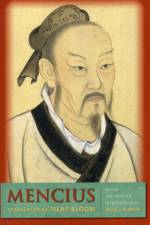
Known throughout East Asia as Mengzi, or "e;Master Meng,"e; Mencius (391-308 B.C.E.) was a Chinese philosopher of the late Zhou dynasty, an instrumental figure in the spread of the Confucian tradition, and a brilliant illuminator of its ideas. Mencius was active during the Warring States Period (403-221 B.C.E.), in which competing powers sought to control the declining Zhou empire. Like Confucius, Mencius journeyed to one feudal court after another, searching for a proper lord who could put his teachings into practice. Only a leader who possessed the moral qualities of a true king could unify China, Mencius believed, and in his defense of Zhou rule and Confucian philosophy, he developed an innovative and highly nuanced approach to understanding politics, self-cultivation, and human nature, profoundly influencing the course of Confucian thought and East Asian culture.Mencius is a record of the philosopher's conversations with warring lords, disciples, and adversaries of the Way, as well as a collection of pronouncements on government, human nature, and a variety of other philosophical and political subjects. Mencius is largely concerned with the motivations of human actors and their capacity for mutual respect. He builds on the Confucian idea of ren, or humaneness, and places it alongside the complementary principle of yi, or rightness, advancing a complex notion of what is right for certain individuals as they perform distinct roles in specific situations. Consequently, Mencius's impact was felt not only in the thought of the intellectual and social elite but also in the value and belief systems of all Chinese people.
The Confucian gentleman scholars of the Choson dynasty (1392-1910) often published short anecdotes exemplifying their values and aesthetic concerns. In modern Seoul one scholar in particular would excel at adapting this style to a contemporary readership: Yi T'aejun.Yi T'aejun was a prolific and influential writer of colonial Korea and an acknowledged master of the short story and essay. He also wrote numerous novels and was an influential editor of cultural news. Born in northern Korea in 1904, Yi T'aejun settled in Seoul after a restless youth that included several years of study in Japan. In 1946, he moved to Soviet-occupied northern Korea, but by 1956, a purge of southern communists forced him into exile. His subsequent whereabouts cannot be confirmed, though rumors claim Yi returned to Pyongyang, only to be exiled once more. It is believed Yi T'aejun passed away between 1960 and 1980, but his works were not made available until 1988, when South Korean censorship laws concerning authors who had sided with the north were eased. The essays in this collection reflect Yi's distinct voice and lyrical expression, revealing thoughts on a variety of subjects, from gardens to immigrant villages in Manchuria, from antiques to colonial assimilation, and from fishing to the recovery of Korea's past. Yi laments the passing of tradition with keen sensibility yet, at the same time, celebrates human perseverance in the face of loss and change. Most important, his essays recount the author's attempt to re-experience the past and keep it alive against absorption into the Japanese nation. Janet Poole faithfully reproduces Yi's complex craft, retaining his idiosyncratic tone and narrative. A brilliant introduction to a remarkable prose stylist, Eastern Sentiments eloquently complicates the historical, political, and aesthetic concerns of Orientalism.
The Sathya Sai global civil religious movement incorporates Hindu and Muslim practices, Buddhist, Christian, and Zoroastrian influences, and "e;New Age"e;-style rituals and beliefs. Shri Sathya Sai Baba, its charismatic and controversial leader, attracts several million adherents from various national, ethnic, and religious backgrounds. In a dynamic account of the Sathya Sai movement's explosive growth, Winged Faith argues for a rethinking of globalization and the politics of identity in a religiously plural world. This study considers a new kind of cosmopolitanism located in an alternate understanding of difference and contestation. It considers how acts of "e;sacred spectating"e; and illusion, "e;moral stakeholding"e; and the problems of community are debated and experienced. A thrilling study of a transcultural and transurban phenomenon that questions narratives of self and being, circuits of sacred mobility, and the politics of affect, Winged Faith suggests new methods for discussing religion in a globalizing world and introduces readers to an easily critiqued yet not fully understood community.
Michel Foucault was the first to embed the roots of human sexuality in discipline and biopolitics, therefore revolutionizing our conception of sex and its relationship to society, economics, and culture. Yet over the past two decades, scholars have limited themselves to the study of Foucault's History of Sexuality, volume 1 paying lesser attention to his equally explosive History of Madness. In this earlier volume, Foucault recasts Western rationalism as a project that both produces and represses sexual deviants, calling out the complicity of modern science and the exclusionary nature of family morality. By reclaiming these deft moves, Lynne Huffer teases out exciting new strands of Foucauldian thought. She then revisits the theorist's ethical work in light of these discoveries, divining an ethics of eros that sees sexuality as a lived experience we are repeatedly called on to remember. Throughout her study, Huffer weaves her own experiences together with Foucault's, sampling from unpublished interviews and other archived materials in order to intimately rework the problem of sexuality as a product of reason.
Philosophy reads humanity against animality, arguing that "e;man"e; is man because he is separate from beast. Deftly challenging this position, Kelly Oliver proves that, in fact, it is the animal that teaches us to be human. Through their sex, their habits, and our perception of their purpose, animals show us how not to be them. This kinship plays out in a number of ways. We sacrifice animals to establish human kinship, but without the animal, the bonds of "e;brotherhood"e; fall apart. Either kinship with animals is possible or kinship with humans is impossible. Philosophy holds that humans and animals are distinct, but in defending this position, the discipline depends on a discourse that relies on the animal for its very definition of the human. Through these and other examples, Oliver does more than just establish an animal ethics. She transforms ethics by showing how its very origin is dependent upon the animal. Examining for the first time the treatment of the animal in the work of Heidegger, Merleau-Ponty, Derrida, Agamben, Freud, Lacan, and Kristeva, among others, Animal Lessons argues that the animal bites back, thereby reopening the question of the animal for philosophy.
Advanced Clinical Social Work Practice traces the development of relational ideas from their origin in object relations and self psychology to their evolution in current relational, intersubjectivity, and attachment theory. Relational treatment emphasizes openness and collaboration between client and therapist, mutual impact, the client's subjectivity, and the therapist's empathy, genuineness, and use of the self in therapeutic interaction. The approach treats the relationship and dialogue between client and therapist as crucial to the change process and shows how the therapeutic relationship can be used to help clients and therapists bridge differences, examine similarities, overcome impasses, and manage enactments. The relational emphasis on the subjective experience of both client and therapist is beautifully illustrated throughout this book as the authors draw from their clinical work with clients from diverse backgrounds, including gay and lesbian clients, immigrants, and clients of color. They demonstrate how relational principles and techniques can be applied to multiple problems in social work practice for example, life crises and transitions, physical and sexual abuse, mental disorders, drug addiction, and the loss of a loved one. The authors also discuss the integration of relational constructs in short-term treatment and with families and groups. This volume opens with a historical perspective on the role of relational thinking in social work and the evolution of relational theory. It presents an overview of the key concepts in relational theory and its application throughout the treatment process with diverse clients and in different practice modalities. The book concludes with a discussion of the challenges in learning and teaching new theoretical and practice paradigms, particularly in creating a more mutual exchange in the classroom and during supervision.
In this wide-ranging and acclaimed book, Stephen F. Cohen challenges conventional wisdom about the course of Soviet and post-Soviet history. Reexamining leaders from Nikolai Bukharin, Stalin's preeminent opponent, and Nikita Khrushchev to Mikhail Gorbachev and his rival Yegor Ligachev, Cohen shows that their defeated policies were viable alternatives and that their tragic personal fates shaped the Soviet Union and Russia today. Cohen's ramifying arguments include that Stalinism was not the predetermined outcome of the Communist Revolution; that the Soviet Union was reformable and its breakup avoidable; and that the opportunity for a real post-Cold War relationship with Russia was squandered in Washington, not in Moscow. This is revisionist history at its best, compelling readers to rethink fateful events of the twentieth and early twenty-first centuries and the possibilities ahead.In his new epilogue, Cohen expands his analysis of U.S. policy toward post-Soviet Russia, tracing its development in the Clinton and Obama administrations and pointing to its initiation of a "e;new Cold War"e; that, he implies, has led to a fateful confrontation over Ukraine.
The old saying does often seem to hold true: the rich get richer while the poor get poorer, creating a widening gap between those who have more and those who have less. The sociologist Robert K. Merton called this phenomenon the Matthew effect, named after a passage in the gospel of Matthew. Yet the more closely we examine the sociological effects of this principle, the more complicated the idea becomes. Initial advantage doesn't always lead to further advantage, and disadvantage doesn't necessarily translate into failure. Does this theory need to be revisited?Merton's arguments have significant implications for our conceptions of equality and justice, and they challenge our beliefs about culture, education, and public policy. His hypothesis has been examined across a variety of social arenas, including science, technology, politics, and schooling, to see if, in fact, advantage begets further advantage. Daniel Rigney is the first to evaluate Merton's theory of cumulative advantage extensively, considering both the conditions that uphold the Matthew effect and the circumstances that cause it to fail. He explores whether growing inequality is beyond human control or disparity is socially constructed and subject to change. Reexamining our core assumptions about society, Rigney causes us to rethink the sources of inequity.
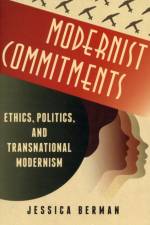
Jessica Berman demonstrates how modernist narrative connects ethical attitudes and responsibilities to the active creation of political relationships and the way we imagine justice. She challenges divisions between "e;modernist"e; and "e;committed"e; writing, arguing that a continuum of political engagement undergirds modernisms worldwide and that it is strengthened rather than hindered by formal experimentation. In addition to making the case for a transnational model of modernism, Berman shows how modernism's play with formal matters, its challenge to the boundaries between fact and fiction, its incorporation of vernacular and folkways, and its engagement with embodied experience and intimacy offer not only an expanded account of modernist texts and commitments but a new way of thinking about what modernism is and can do.
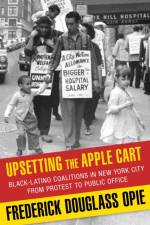
Upsetting the Apple Cart surveys the history of black-Latino coalitions in New York City from 1959 to 1989. In those years, African American and Latino Progressives organized, mobilized, and transformed neighborhoods, workplaces, university campuses, and representative government in the nation's urban capital. Upsetting the Apple Cart makes new contributions to our understanding of protest movements and strikes in the 1960s and 1970s and reveals the little-known role of left-of-center organizations in New York City politics as well as the influence of Jesse Jackson's 1984 and 1988 presidential campaigns on city elections. Frederick Douglass Opie provides a social history of black and Latino working-class collaboration in shared living and work spaces and exposes racist suspicion and divisive jockeying among elites in political clubs and anti-poverty programs. He ultimately offers a different interpretation of the story of the labor, student, civil rights, and Black Power movements than has been traditionally told. His work highlights both the largely unknown agents of historic change in the city and the noted politicians, political strategists, and union leaders whose careers were built on this history. Also, as Napoleon said, "e;An army marches on its stomach,"e; and Opie's history equally delves into the role that food plays in social movements, with representative recipes from the American South and the Caribbean included throughout.
Writers have represented 9/11 and its aftermath with varying degrees of success. In Out of the Blue, Kristiaan Versluys focuses on novels that move beyond patriotic cliches and cheap sensationalism and provide new insights into the emotional and ethical impact of these traumatic events and what it means to depict them. Versluys focuses on Don DeLillo's Falling Man, Art Spiegelman's In the Shadow of No Towers, Jonathan Safran Foer's Extremely Loud and Incredibly Close, Frederic Beigbeder's Windows on the World, and John Updike's Terrorist. He scrutinizes how these writers affirm the humanity of the disoriented individual, as opposed to the cocksure killer or politician, and retranslate hesitation, stuttering, or stammering into a precarious act of defiance. Versluys also discusses works by Ian McEwan, Anita Shreve, Martin Amis, and Michael Cunningham, arguing for the novel's distinct power in rendering the devastation of 9/11.
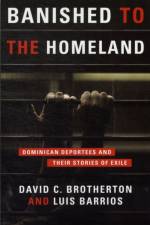
The 1996 U.S. Immigration Reform and Responsibility Act has led to the forcible deportation of tens of thousands of Dominicans from the United States. Following thousands of these individuals over a seven-year period, David C. Brotherton and Luis Barrios use a unique combination of sociological and criminological reasoning to isolate the forces that motivate emigrants to leave their homeland and then commit crimes in the Unites States violating the very terms of their stay. Housed in urban landscapes rife with gangs, drugs, and tenuous working conditions, these individuals, the authors find, repeatedly play out a tragic scenario, influenced by long-standing historical injustices, punitive politics, and increasingly conservative attitudes undermining basic human rights and freedoms. Brotherton and Barrios conclude that a simultaneous process of cultural inclusion and socioeconomic exclusion best explains the trajectory of emigration, settlement, and rejection, and they mark in the behavior of deportees the contradictory effects of dependency and colonialism: the seductive draw of capitalism typified by the American dream versus the material needs of immigrant life; the interests of an elite security state versus the desires of immigrant workers and families to succeed; and the ambitions of the Latino community versus the political realities of those designing crime and immigration laws, which disadvantage poor and vulnerable populations. Filled with riveting life stories and uncommon ethnographic research, this volume relates the modern deportee's journey to broader theoretical studies in transnationalism, assimilation, and social control.
"e;On Friendship, with its total of one hundred sayings, is the perfect gift for friends."e; Feng Yingjing, renowned scholar and civic official, 1601Matteo Ricci (1552-1610) is best known as the Italian Jesuit missionary who brought Christianity to China. He also published a landmark text on friendship the first book to be written in Chinese by a European that instantly became a late Ming best seller. On Friendship distilled the best ideas on friendship from Renaissance Latin texts into one hundred pure and provocative Chinese maxims. Written in a masterful classical style, Ricci's sayings established his reputation as a great sage and the sentiments still ring true.Available for the first time in English, On Friendship matches a carefully edited Chinese text with a facing-page English translation and includes notes on sources and biographical, historical, and cultural information. Still admired in China for its sophistication and inspirational wisdom, On Friendship is a delightful cross-cultural work by a crucial and fascinating historical figure. It is also an excellent tool for learning Chinese, pairing a superb model of the classical language with an accessible and accurate translation.
Wallace Stevens once described the "e;malady of the quotidian,"e; lamenting the dull weight of everyday regimen. Yet he would later hail "e;that which is always beginning, over and over"e; recognizing, if not celebrating, the possibility of fresh invention. Focusing on the poems of Wallace Stevens, Robert Frost, Elizabeth Bishop, and James Merrill, Siobhan Phillips positions everyday time as a vital category in modernist aesthetics, American literature, and poetic theory. She eloquently reveals how, through particular but related means, each of these poets converts the necessity of quotidian experience into an aesthetic and experiential opportunity. In Stevens, Phillips analyzes the implications of cyclic dualism. In Frost, she explains the theoretical depth of a habitual "e;middle way."e; In Bishop's work, she identifies the attempt to turn recurrent mornings into a "e;ceremony"e; rather than a sentence, and in Merrill, she shows how cosmic theories rely on daily habits. Phillips ultimately demonstrates that a poetics of everyday time contributes not only to a richer understanding of these four writers but also to descriptions of their era, estimations of their genre, and ongoing reconfigurations of the issues that literature reflects and illuminates.
W. R. D. Fairbairn (1889-1964) challenged the dominance of Freud's drive theory with a psychoanalytic theory based on the internalization of human relationships. Fairbairn assumed that the unconscious develops in childhood and contains dissociated memories of parental neglect, insensitivity, and outright abuse that are impossible the children to tolerate consciously. In Fairbairn's model, these dissociated memories protect developing children from recognizing how badly they are being treated and allow them to remain attached even to physically abusive parents. Attachment is paramount in Fairbairn's model, as he recognized that children are absolutely and unconditionally dependent on their parents. Kidnapped children who remain attached to their abusive captors despite opportunities to escape illustrate this intense dependency, even into adolescence. At the heart of Fairbairn's model is a structural theory that organizes actual relational events into three self-and-object pairs: one conscious pair (the central ego, which relates exclusively to the ideal object in the external world) and two mostly unconscious pairs (the child's antilibidinal ego, which relates exclusively to the rejecting parts of the object, and the child's libidinal ego, which relates exclusively to the exciting parts of the object). The two dissociated self-and-object pairs remain in the unconscious but can emerge and suddenly take over the individual's central ego. When they emerge, the "e;other"e; is misperceived as either an exciting or a rejecting object, thus turning these internal structures into a source of transferences and reenactments. Fairbairn's central defense mechanism, splitting, is the fast shift from central ego dominance to either the libidinal ego or the antilibidinal ego-a near perfect model of the borderline personality disorder.In this book, David Celani reviews Fairbairn's five foundational papers and outlines their application in the clinical setting. He discusses the four unconscious structures and offers the clinician concrete suggestions on how to recognize and respond to them effectively in the heat of the clinical interview. Incorporating decades of experience into his analysis, Celani emphasizes the internalization of the therapist as a new "e;good"e; object and devotes entire sections to the treatment of histrionic, obsessive, and borderline personality disorders.
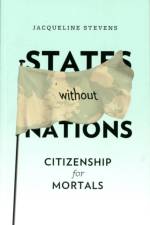
As citizens, we hold certain truths to be self-evident: that the rights to own land, marry, inherit property, and especially to assume birthright citizenship should be guaranteed by the state. The laws promoting these rights appear not only to preserve our liberty but to guarantee society remains just. Yet considering how much violence and inequality results from these legal mandates, Jacqueline Stevens asks whether we might be making the wrong assumptions. Would a world without such laws be more just?Arguing that the core laws of the nation-state are more about a fear of death than a desire for freedom, Jacqueline Stevens imagines a world in which birthright citizenship, family inheritance, state-sanctioned marriage, and private land ownership are eliminated. Would chaos be the result? Drawing on political theory and history and incorporating contemporary social and economic data, she brilliantly critiques our sentimental attachments to birthright citizenship, inheritance, and marriage and highlights their harmful outcomes, including war, global apartheid, destitution, family misery, and environmental damage. It might be hard to imagine countries without the rules of membership and ownership that have come to define them, but as Stevens shows, conjuring new ways of reconciling our laws with the condition of mortality reveals the flaws of our present institutions and inspires hope for moving beyond them.
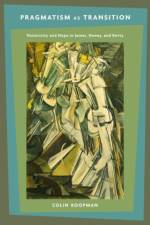
Pragmatism is America's best-known native philosophy. It espouses a practical set of beliefs and principles that focus on the improvement of our lives. Yet the split between classical and contemporary pragmatists has divided the tradition against itself. Classical pragmatists, such as John Dewey and William James, believed we should heed the lessons of experience. Neopragmatists, including Richard Rorty, Hilary Putnam, and Jurgen Habermas, argue instead from the perspective of a linguistic turn, which makes little use of the idea of experience. Can these two camps be reconciled in a way that revitalizes a critical tradition?Colin Koopman proposes a recovery of pragmatism by way of "e;transitionalist"e; themes of temporality and historicity which flourish in the work of the early pragmatists and continue in contemporary neopragmatist thought. "e;Life is in the transitions,"e; James once wrote, and, in following this assertion, Koopman reveals the continuities uniting both phases of pragmatism. Koopman's framework also draws from other contemporary theorists, including Michel Foucault, Pierre Bourdieu, Bernard Williams, and Stanley Cavell. By reflecting these voices through the prism of transitionalism, a new understanding of knowledge, ethics, politics, and critique takes root. Koopman concludes with a call for integrating Dewey and Foucault into a model of inquiry he calls genealogical pragmatism, a mutually informative critique that further joins the analytic and continental schools.
Are good and bad outcomes significantly affected by the decision-making process itself? Indeed they are, in that certain decision-making techniques and practices limit the ability of policymakers to achieve their goals and advance the national interest. The success of policy often turns on the quality of the decision-making process. Mark Schafer and Scott Crichlow identify the factors that contribute to good and bad policymaking, such as the personalities of political leaders, the structure of decision-making groups, and the nature of the exchange between participating individuals. Analyzing thirty-nine foreign-policy cases across nine administrations and incorporating both statistical analyses and case studies, including a detailed examination of the decision to invade Iraq in 2003, the authors pinpoint the factors that are likely to lead to successful or failed decision making, and they suggest ways to improve the process. Schafer and Crichlow show how the staffing of key offices and the structure of central decision-making bodies determine the path of an administration even before topics are introduced. Additionally, they link the psychological characteristics of leaders to the quality of their decision processing. There is no greater work available on understanding and improving the dynamics of contemporary decision making.
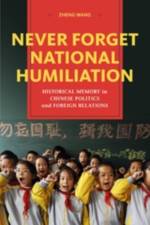
How could the Chinese Communist Party (CCP) not only survive but even thrive, regaining the support of many Chinese citizens after the Tiananmen Square crackdown of 1989? Why has popular sentiment turned toward anti-Western nationalism despite the anti-dictatorship democratic movements of the 1980s? And why has China been more assertive toward the United States and Japan in foreign policy but relatively conciliatory toward smaller countries in conflict?Offering an explanation for these unexpected trends, Zheng Wang follows the Communist government's ideological reeducation of the public, which relentlessly portrays China as the victim of foreign imperialist bullying during "e;one hundred years of humiliation."e; By concentrating on the telling and teaching of history in today's China, Wang illuminates the thinking of the young patriots who will lead this rising power in the twenty-first century.Wang visits China's primary schools and memory sites and reads its history textbooks, arguing that China's rise should not be viewed through a single lens, such as economics or military growth, but from a more comprehensive perspective that takes national identity and domestic discourse into account. Since it is the prime raw material for constructing China's national identity, historical memory is the key to unlocking the inner mystery of the Chinese. From this vantage point, Wang tracks the CCP's use of history education to glorify the party, reestablish its legitimacy, consolidate national identity, and justify one-party rule in the post-Tiananmen and post-Cold War era. The institutionalization of this manipulated historical consciousness now directs political discourse and foreign policy, and Wang demonstrates its important role in China's rise.
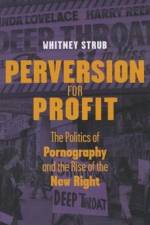
While America is not alone in its ambivalence toward sex and its depictions, the preferences of the nation swing sharply between toleration and censure. This pattern has grown even more pronounced since the 1960s, with the emergence of the New Right and its attack on the "e;floodtide of filth"e; that was supposedly sweeping the nation. Antipornography campaigns became the New Right's political capital in the 1960s, laying the groundwork for the "e;family values"e; agenda that shifted the country to the right. Perversion for Profit traces the anatomy of this trend and the crucial function of pornography in constructing the New Right agenda, which has emphasized social issues over racial and economic inequality. Conducting his own extensive research, Whitney Strub vividly recreates the debates over obscenity that consumed members of the ACLU in the 1950s and revisits the deployment of obscenity charges against purveyors of gay erotica during the cold war, revealing the differing standards applied to heterosexual and homosexual pornography. He follows the rise of the influential Citizens for Decent Literature during the 1960s and the pivotal events that followed: the sexual revolution, feminist activism, the rise of the gay rights movement, the "e;porno chic"e; moment of the early 1970s, and resurgent Christian conservatism, which now shapes public policy far beyond the issue of sexual decency. Strub also examines the ways in which the left failed to mount a serious or sustained counterattack to the New Right's use of pornography as a political tool. As he demonstrates, this failure put the Democratic Party at the mercy of Republican rhetoric. In placing debates about pornography at the forefront of American postwar history, Strub revolutionizes our understanding of sex and American politics.
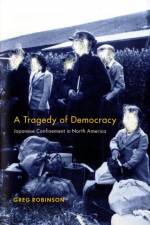
The confinement of some 120,000 Japanese Americans during World War II, often called the Japanese American internment, has been described as the worst official civil rights violation of modern U. S. history. Greg Robinson not only offers a bold new understanding of these events but also studies them within a larger time frame and from a transnational perspective. Drawing on newly discovered material, Robinson provides a backstory of confinement that reveals for the first time the extent of the American government's surveillance of Japanese communities in the years leading up to war and the construction of what officials termed "e;concentration camps"e; for enemy aliens. He also considers the aftermath of confinement, including the place of Japanese Americans in postwar civil rights struggles, the long movement by former camp inmates for redress, and the continuing role of the camps as touchstones for nationwide commemoration and debate. Most remarkably, A Tragedy of Democracy is the first book to analyze official policy toward West Coast Japanese Americans within a North American context. Robinson studies confinement on the mainland alongside events in wartime Hawaii, where fears of Japanese Americans justified Army dictatorship, suspension of the Constitution, and the imposition of military tribunals. He similarly reads the treatment of Japanese Americans against Canada's confinement of 22,000 citizens and residents of Japanese ancestry from British Columbia. A Tragedy of Democracy recounts the expulsion of almost 5,000 Japanese from Mexico's Pacific Coast and the poignant story of the Japanese Latin Americans who were kidnapped from their homes and interned in the United States. Approaching Japanese confinement as a continental and international phenomenon, Robinson offers a truly kaleidoscopic understanding of its genesis and outcomes. The confinement of some 120,000 Japanese Americans during World War II, often called the Japanese American internment, has been described as the worst official civil rights violation of modern U. S. history. Greg Robinson not only offers a bold new understanding of these events but also studies them within a larger time frame and from a transnational perspective. Drawing on newly discovered material, Robinson provides a backstory of confinement that reveals for the first time the extent of the American government's surveillance of Japanese communities in the years leading up to war and the construction of what officials termed "e;concentration camps"e; for enemy aliens. He also considers the aftermath of confinement, including the place of Japanese Americans in postwar civil rights struggles, the long movement by former camp inmates for redress, and the continuing role of the camps as touchstones for nationwide commemoration and debate. Most remarkably, A Tragedy of Democracy is the first book to analyze official policy toward West Coast Japanese Americans within a North American context. Robinson studies confinement on the mainland alongside events in wartime Hawaii, where fears of Japanese Americans justified Army dictatorship, suspension of the Constitution, and the imposition of military tribunals. He similarly reads the treatment of Japanese Americans against Canada's confinement of 22,000 citizens and residents of Japanese ancestry from British Columbia. A Tragedy of Democracy recounts the expulsion of almost 5,000 Japanese from Mexico's Pacific Coast and the poignant story of the Japanese Latin Americans who were kidnapped from their homes and interned in the United States. Approaching Japanese confinement as a continental and international phenomenon, Robinson offers a truly kaleidoscopic understanding of its genesis and outcomes.
Sex and World Peace unsettles a variety of assumptions in political and security discourse, demonstrating that the security of women is a vital factor in the security of the state and its incidence of conflict and war. The authors compare micro-level gender violence and macro-level state peacefulness in global settings, supporting their findings with detailed analyses and color maps. Harnessing an immense amount of data, they call attention to discrepancies between national laws protecting women and the enforcement of those laws, and they note the adverse effects on state security of abnormal sex ratios favoring males, the practice of polygamy, and inequitable realities in family law, among other gendered aggressions. The authors find that the treatment of women informs human interaction at all levels of society. Their research challenges conventional definitions of security and democracy and shows that the treatment of gender, played out on the world stage, informs the true clash of civilizations. In terms of resolving these injustices, the authors examine top-down and bottom-up approaches to healing wounds of violence against women, as well as ways to rectify inequalities in family law and the lack of parity in decision-making councils. Emphasizing the importance of an R2PW, or state responsibility to protect women, they mount a solid campaign against women's systemic insecurity, which effectively unravels the security of all.
It was believed that September 11th would make certain kinds of films obsolete, such as action thrillers crackling with explosions or high-casualty blockbusters where the hero escapes unscathed. While the production of these films did ebb, the full impact of the attacks on Hollywood's creative output is still taking shape. Did 9/11 force filmmakers and screenwriters to find new methods of storytelling? What kinds of movies have been made in response to 9/11, and are they factual? Is it even possible to practice poetic license with such a devastating, broadly felt tragedy?Stephen Prince is the first scholar to trace the effect of 9/11 on the making of American film. From documentaries like Fahrenheit 9/11 (2004) to zombie flicks, and from fictional narratives such as The Kingdom (2007) to Mike Nichols's Charlie Wilson's War (2007), Prince evaluates the extent to which filmmakers have exploited, explained, understood, or interpreted the attacks and the Iraq War that followed, including incidents at Abu Ghraib. He begins with pre-9/11 depictions of terrorism, such as Alfred Hitchcock's Sabotage (1936), and follows with studio and independent films that directly respond to 9/11. He considers documentary portraits and conspiracy films, as well as serial television shows (most notably Fox's 24) and made-for-TV movies that re-present the attacks in a broader, more intimate way. Ultimately Prince finds that in these triumphs and failures an exciting new era of American filmmaking has taken shape.
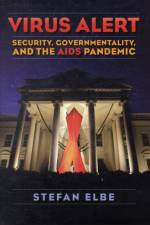
Bound up with the human cost of HIV/AIDS is the critical issue of its impact on national and international security, yet attempts to assess the pandemic's complex risk fail to recognize the political dangers of construing the disease as a security threat. The securitization of HIV/AIDS not only affects the discussion of the disease in international policy debates, but also transforms the very nature and function of security within global politics.In his analysis of the security implications of HIV/AIDS, Stefan Elbe addresses three concerns: the empirical evidence that justifies framing HIV/AIDS as a security issue, the meaning of the term "e;security"e; when used in relation to the disease, and the political consequences of responding to the AIDS pandemic in the language of security. His book exposes the dangers that accompany efforts to manage the global spread of HIV/AIDS through the policy frameworks of national security, human security, and risk management. Beyond developing strategies for mitigating these dangers, Elbe's research reveals that, in construing the AIDS pandemic as a threat, policymakers and international institutions also implicitly seek to integrate current security practices within a particular rationalization of political rule. Elbe identifies this transformation as the "e;governmentalization"e; of security and, by drawing on the recently translated work of Michel Foucault, develops a framework for analyzing its key elements and consequences.
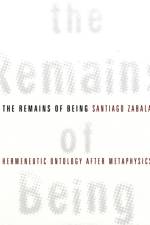
In Basic Concepts, Heidegger claims that "e;Being is the most worn-out"e; and yet also that Being "e;remains constantly available."e; Santiago Zabala radicalizes the consequences of these little known but significant affirmations. Revisiting the work of Jacques Derrida, Reiner Schurmann, Jean-Luc Nancy, Hans-Georg Gadamer, Ernst Tugendhat, and Gianni Vattimo, he finds these remains of Being within which ontological thought can still operate. Being is an event, Zabala argues, a kind of generosity and gift that generates astonishment in those who experience it. This sense of wonder has fueled questions of meaning for centuries-from Plato to the present day. Postmetaphysical accounts of Being, as exemplified by the thinkers of Zabala's analysis, as well as by Nietzsche, Dewey, and others he encounters, don't abandon Being. Rather, they reject rigid, determined modes of essentialist thought in favor of more fluid, malleable, and adaptable conceptions, redefining the pursuit and meaning of philosophy itself.
In the fall of 2005, Mark C. Taylor, the controversial public intellectual and widely respected scholar, suddenly fell critically ill. For two days a team of forty doctors, many of whom thought he would not live, fought to save him. Taylor would eventually recover, but only to face a new threat: surgery for cancer. "e;These experiences have changed me in ways I am still struggling to understand,"e; Taylor writes in this absorbing memoir. "e;After the past year, I am persuaded that I have done enough fieldwork to write a book that combines philosophical and theological reflection with autobiographical narrative. Writing is not only possible but actually seems necessary."e;Field Notes from Elsewhere is Taylor's unforgettable, inverted journey from death to life. Each of his memoir's fifty-two chapters and accompanying photographs recounts a morning-to-evening experience with sickness and convalescence, mingling humor and hope with a deep exploration of human frailty and, conversely, resilience. When we confront the end of life, Taylor explains, the axis of the lived world shifts, and everything must be reevaluated. As Taylor sorts through his remembrances, much that once seemed familiar becomes strange, paradoxical, and contradictory. He reads his experience with and against ghosts from his past, recasting the meaning of mortality, sacrifice, solitude, and abandonment, along with a host of other issues, in light of modern ways of dying. "e;You never come back from elsewhere,"e; Taylor concludes, "e;because elsewhere always comes back with you."e;
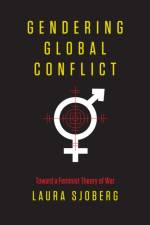
Laura Sjoberg positions gender and gender subordination as key factors in the making and fighting of global conflict. Through the lens ofgender, she examines the meaning, causes, practices, and experiences of war, building a more inclusive approach to the analysis of violent conflict between states.Considering war at the international, state, substate, and individual levels, Sjoberg's feminist perspective elevates a number of causal variables in war decision-making. These include structural gender inequality, cycles of gendered violence, state masculine posturing, the often overlooked role of emotion in political interactions, gendered understandings of power, and states' mistaken perception of their own autonomy and unitary nature. Gendering Global Conflict also calls attention to understudied spaces that can be sites of war, such as the workplace, the household, and even the bedroom. Her findings show gender to be a linchpin of even the most tedious and seemingly bland tactical and logistical decisions in violent conflict. Armed with that information, Sjoberg undertakes the task of redefining and reintroducing critical readings of war's political, economic, and humanitarian dimensions, developing the beginnings of a feminist theory of war.
Abonner på vårt nyhetsbrev og få rabatter og inspirasjon til din neste leseopplevelse.
Ved å abonnere godtar du vår personvernerklæring.